Blog Archives
Bad Americans: Part I


Bad Americans: Part I is a big collage of stories wrapped inside a wild and strange summer retreat. Twelve Americans head to the Hamptons during the first Covid summer, brought together by a billionaire who wants them to share meals, go on dates, compete in games, and tell stories every night. Their tales reveal pieces of pandemic life, cultural friction, loneliness, and hope. The frame narrative follows the guests as they argue, flirt, bond, and judge one another. Inside that frame sit the stories they tell, each one capturing a different slice of American life during a time when everything felt fragile. The book moves from hospitals overflowing with fear to city streets full of noise and protest.
I was pulled in by the bold mix of voices. The writing jumped between tones and moods, and sometimes it caught me off guard in the best way. One minute I was laughing at a character’s dry remark, and the next I felt a lump in my throat as someone described a loss. The author writes with an energy that propels you forward, and I liked that. The moments with Andrea, the nurse, especially resonated with me. Her story about the ICU felt authentic and honest, and I could almost hear the alarms and taste the fatigue that soaked every shift. The book’s choice to set these heavy stories inside a glitzy mansion made everything feel even stranger, and somehow more real.
The author leans into the messiness of America. People squabble over politics, race, class, and identity. They misread one another. They cling to their own truths. I wished the dialogue would slow down sometimes, but I think that constant rush was the point. The country has not been quiet for a long time. The book mirrors that noise, and it does it with heart. I respected the risks it took.
I would recommend Bad Americans: Part I to readers who like big casts, sharp contrasts, and stories that jump from tender to chaotic without apology. Anyone interested in how fiction can capture a national mood would get a lot out of this book. It is not a simple read. But it is full of life, and it stirs emotions that stay with you for a while afterwards.
Pages: 390 | ASIN : B0FF5DZ7GV

Teach Me How to Die. A Novella and Other Stories

Teach Me How to Die opens with a quiet but striking premise. A small group of strangers gather in a New York rehearsal studio to attend a master class on writing suicide notes. Their teacher, Professor Scott Mirrormord, runs the class with a mix of dry humor, unsettling calm, and sudden flashes of emotion. Each character carries a private storm. The Violinist trembles under his own sensitivity, the Hunter bristles at the world that has rejected him, the Accountant clings to order like a life raft, the Poet aches for beauty, the Loser sinks under the weight of lifelong disappointment, and the Philosopher hovers above them all with cool detachment. Across several sessions, their stories unravel in ways that feel surreal, funny, raw, and sometimes painfully honest. The novella blends this unusual setup with short stories that explore gender identity, empathy, loneliness, and the strange ways people hold themselves together when the world feels inverted.
The writing feels theatrical in the best sense. Scenes move with quick beats, like spotlights snapping on and off, and the dialogue carries a rhythm that made me imagine the characters speaking just inches away. Sometimes the tone shifts fast. One moment I laughed at Scott’s odd habits. The next I felt a sharp ache when the Poet revealed the quiet desperation behind her romantic bravado. The emotions hit hard because author Lisa Monde does not overcomplicate them. She keeps them human. There were times I wanted the prose to hurry because the tension between characters felt so tight it made me restless. Still, that uneven pulse worked. It mirrored the way real people think when they are standing at the edge of something dark and trying to talk themselves back toward the light.
The book treats suicide with seriousness and compassion. It does not glamorize it. It does not trivialize it. Instead, it asks why a person might arrive at such a thought and what might pull them away from it. The Poet’s loneliness shook me the hardest. She sees beauty everywhere, yet cannot see herself reflected in anyone else. I also found myself oddly moved by the Accountant, who tries so hard to appear composed while cracking open from the inside. Even the humor carries weight. It softens the darkness without hiding it. The stories that follow the novella expand the book’s themes in unexpected directions. Some felt warm. Some felt strange. All of them carried a heartbeat that stayed with me after I closed the pages.
Teach Me How to Die would be a meaningful read for anyone who enjoys character-driven stories that ask real questions about why people suffer and how they heal. It is also a good fit for readers who appreciate theater and intimate ensemble pieces. For readers willing to sit with tough emotions and still look for hope, this book will land with force.
Pages: 216 | ASIN : B0FXNNRLR3
Final Curtain

Final Curtain is a rich and eerie collection that gathers voices from across time and imagination and sets them wandering through the long shadow of The Phantom of the Opera. Each story pulls a thread from Leroux’s world and spins it into something new. Sometimes it feels dreamy. Sometimes it slips into horror so quietly that you only notice once you’ve already shivered. The book opens with Steve Berman’s thoughtful introduction, setting the stage for the authors’ explorations of obsession, beauty, grief, and the strange spell of performance, and then moves through an eclectic lineup of tales that echo the Phantom’s myth without ever repeating it.
The memoir-style opening by Nadia Bulkin really resonated with me. The voice of the Countess trembles with longing and dread, and I found that mix weirdly relatable. Her fear of mirrors and her slow unraveling got under my skin. I could feel her confusion and her sorrow settling over me as if I were living in that drafty house with her. Other stories came at the Phantom from sideways angles, and that variety kept me on my toes. One moment, the writing felt delicate and sad. The next, it felt sharp and uncomfortable. I liked that. I liked not knowing what emotional corner I’d be pushed into next.
The book’s ideas were intriguing, maybe even more than its plots. So many of the stories are really about the ache of wanting something you can’t have or the way art can consume you before you even realize you’ve handed it your soul. There were times when the writing made me slow down and sit with a feeling for a bit. Some pieces were more lyrical than others, and some wandered off into tonal experiments that didn’t always land cleanly for me, but even when I wasn’t fully connecting, I still admired the nerve of the attempt. I found myself rooting for the writers as much as for the characters.
I’d recommend Final Curtain to readers who enjoy moody stories that riff on classics without getting trapped in imitation. It’s a great pick for anyone who likes gothic atmospheres, emotional messiness, or tales that play with memory, love, and the dark edges of creativity.
Pages: 302 | ASIN : B0G4MWKX56
Six Stories Up- Tales of Whimsy, Imagination, and Hey, A Little Satisfying Comeuppance

Six Stories Up is a lively collection of short tales that bounce between playful fantasy, sharp humor, and a soft punch of moral comeuppance. Each story stands on its own, from the rain-soaked artistic swirl of 1920s Paris to a Vietnam vet’s barroom confession, to a smart-mouthed seagull convincing a fisherman to take a swim. The book wanders through imagination with a kind of wink that says, stay loose, anything can happen here. There is trickery at times and reflection at others, and by the end of each tale, I felt that small, satisfying click of a truth landing where it should.
I enjoyed the author’s voice. It feels relaxed and mischievous, almost like someone at the far end of a bar spinning stories just for the fun of it. The writing moves fast and never takes itself too seriously. I got pulled in by the rhythm of it. Scenes like the boisterous café in Paris or the smoky bar in Seattle feel alive because the dialogue snaps and the characters talk like people who actually exist. I was grinning at the chaos around Tinkham in Paris, and then sinking into the slower, thoughtful mood of the old veteran’s tale in The Doppelganger War. The book shifts tones with ease, and I enjoyed that unpredictability. It kept me alert, never quite sure where the next turn would land.
And the ideas, honestly, surprised me. At first, I thought I was settling in for pure entertainment. Instead, I found myself thinking about belief, about luck, about the lies we tell ourselves to get through life. That talking seagull cracked me up, but it also made a point about trusting the wrong voices. The stories play with morality in a lighthearted way, but they still sting a little when the consequences show up. I liked that combination. I could sense the author having real fun with these characters while still nudging me to look a little closer. That balance made the whole collection feel richer than I expected.
I would recommend Six Stories Up to readers who love quirky short fiction with personality. People who enjoy clever twists, fast dialogue, and a mix of humor with heart will get a kick out of this book. It is great for anyone who wants something playful yet thoughtful, something that can make them laugh and then make them pause for a second. I had a good time with it, and I think anyone who likes stories that wander off the well-worn path will too.
Pages: 251 | ASIN : B08KXSX4WP

The Capricious Nature of Being

The Capricious Nature of Being is a collection of short stories about the unpredictable turns life takes, and how ordinary people stumble, resist, adapt, or come undone as fate nudges them down unexpected paths. The book opens by framing life as a kind of “Secret Santa,” full of surprises we never signed up for, and the stories that follow lean into that idea with characters who face moments they never planned for and can’t control. In story after story, we meet people caught between who they thought they were and who life seems determined to make them become.
As I read, I kept pausing to absorb the way author Richard Plinke writes about internal struggle. His characters are flawed in ways that feel human rather than dramatic. They think too much. Or too little. They cling to old hurts or old hopes. In “The Safe,” Hope’s entire life tilts because of a single discovered date, and the writing lets her unravel in a quiet, almost tender way. I found myself nodding along, feeling that tug between wanting the truth and wanting the comfort of not knowing. Plinke seems to enjoy letting readers sit in discomfort, not to punish us but to remind us that most turning points in real life aren’t big cinematic events. They’re small realizations that land with surprising weight.
What struck me in many of the stories is how the author uses familiar settings to explore less familiar emotional terrain. A sales manager on a bike ride. A widow cleaning out a house. Someone facing the remains of a broken relationship or a restless conscience. The ideas in the book aren’t complicated, but they’re honest, and the writing doesn’t hide behind fancy language. Sometimes the sentences hit like a quick tap on the shoulder. Other times they stretch out, winding through a character’s history the way a person might ramble when they finally feel safe enough to tell the truth.
By the time I finished the last story, I felt like I’d been listening to a friend talk through the strange business of being alive. That’s probably what I appreciated most. The book has a reflective quality that never slips into preaching. Instead, it invites you to think about your own unexpected turns and how you handled them, or didn’t. If you enjoy character-driven fiction, if you like stories that pause on the small moments where everything quietly shifts, or if you simply want a collection that feels both grounded and thoughtful, this one will likely speak to you.
Pages: 357 | ASIN : B0FFWGLNP7
Too Complex: It’s a (Enter Difficulty Setting Here) Life
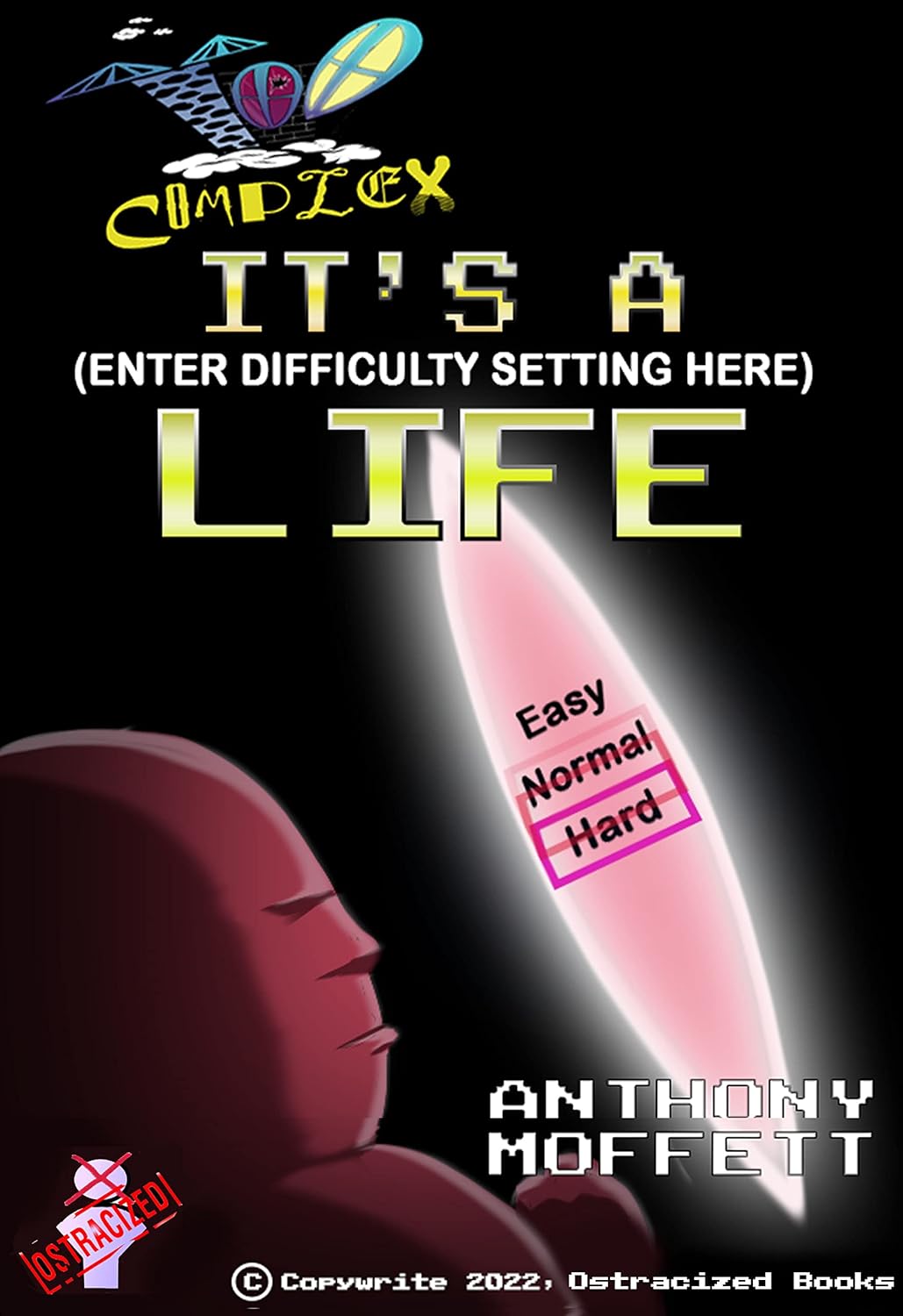
Cody Redbond lives to game. Addiction defines him. His fixation centers on Fantasy Estate, an online battle royale that consumes his days and erases everything else. Hours disappear. Priorities collapse. The game becomes his only reality, while the world beyond his screen loses all appeal. Employment slips away. Social skills erode. Eventually, eviction follows. Even then, Cody refuses to move on. He is too deeply embedded in the digital realm to disengage on his own.
Enter leasing agent Mavirna Holmes and property manager Corey Dwellen. Their task is simple in theory and nightmarish in practice: reach Cody and reclaim the apartment. Doing so requires navigating a living space that has deteriorated into absolute chaos, a physical manifestation of Cody’s inward retreat.
Too Complex: It’s a (Enter Difficulty Setting Here) Life, by Anthony Moffett, is a compact and sharply comic work that blends prose with illustrations. It occupies a space somewhere between novella and graphic novel, using visuals to punctuate its humor and heighten its absurdity.
At its core, the book is an absurdist adventure tailored to video game enthusiasts, but its reach extends further. It functions as a satire of modern adulthood, skewering burnout, disconnection, and the quiet despair that drives escapism. As Cody’s story unfolds, sympathy becomes inevitable. He has not merely abandoned reality; he has replaced it with something brighter, louder, and more responsive. Ironically, the so-called real world offers little incentive to return. It appears dull, unforgiving, and deeply uninspiring by comparison.
This contrast captures the enduring appeal of video games. They promise immersion without consequence, excitement without monotony. When everyday life feels hollow or exhausting, fantasy becomes irresistible. Mavirna and Corey, the unfortunate duo assigned to retrieve Cody, find themselves on a quest of their own, one that mirrors the very games Cody adores. The ultimate irony lies in the aftermath of his obsession. The artificial world he clung to has reshaped reality itself, transforming his apartment into a grotesque, pest-ridden dungeon.
The result is a book that is unabashedly fun. It is silly, unhinged, and gleefully excessive. Beneath the humor, however, lies a pointed warning. Too Complex entertains first, but it also lingers, offering a sharp and thoughtful reflection on escapism, avoidance, and the cost of choosing fantasy over life. I highly recommend this humorous and highly relatable tale to gamers and non-gamers alike.
Pages: 73 | ASIN : B0BR4J3L9Y
Freedom

Have You Heard This One Before is a lively mix of short stories that swing between mystery, humor, horror, sentiment, and quiet reflection. What was the inspiration for this collection of short stories?
There were many stories and topics I wanted to write about, but they didn’t merit the length of a novel. I enjoy the short story format, but realize that most published collections are centered on a theme or genre. I didn’t want to write under restrictions on my work, e.g., that it should be all horror stories. On the other hand, I understood that the appeal of a book with multiple genres would be difficult to market. Hopefully, there are readers out there who are open to fun, imaginative, funny, frightening tales, all in one collection.
What is it you enjoy about writing short stories over longer novel formats?
I love the opportunity to explore various types of stories. When people comment on my work as an author, I often tell them I’m more of a storyteller than an author. It’s fun to see if you can engage readers quickly and provide a quick read that entertains and, possibly, even makes a longer impression. You won’t find me writing romance novels anytime in the future, but I have written a romantic short story for this book. Some other tales are not substantive enough for a novel, but they are still worth exploring. Summing up the short stories’ appeal in one word, I’d say freedom.
What was the biggest challenge you faced in putting together this collection of stories?
Placement. What should come first? Should “The Loop Two” come right after “The Loop?” Where do I put my description of a romantic encounter? What do I end with? I also wanted to make sure the more whimsical stories didn’t feel out of place. The final order of the chapters involved a lot of thought. And to make it even more difficult, I kept coming up with new story ideas.
Do you have a favorite story in the book, and if so, why does it hold special meaning for you?
I have several that could qualify as favorites: “The Loop” and “The Loop Part Two,” “Drive,” “Hippity, Hoppity, Bang” (laugh out loud funny), and “Ain’t No Sunshine When She’s Gone.” But my absolute favorite is “A Haunted Diary.” Many readers might find it too sentimental, but I believe the themes of kindness and returning home to relatives who have passed are universal. The final paragraph (spoiler alert) is one of my two favorites in the book (“Ain’t No Sunshine When She’s Gone” is the other).
Dear Diary – November 15, 2019, Friday
This will be my last entry. About three weeks of journaling, just like Mae, oddly enough. I’m heading to the hospital in an hour, and I won’t be coming home. I said goodbye to Mae. I’m sure she heard me, just as I’m sure she’s gone from the house and is saying hello to Josh right now. I’m going to hide this diary somewhere it won’t be found, until it’s needed. Then, it can reveal itself. As I reread this entry, I should make one change. I won’t be coming back to this house again, but I will be going home. And Josh will be waiting to meet me there.
All of my books include examples of the importance of kindness, even in the face of difficulty. “A Haunting Diary” is no exception.
Author Links: GoodReads | Amazon
A lighthouse that holds a spirit and his memory. A diary and haunting that links the past and present. A drive down a road that stretches longer than an ocean of dreams. Snowflakes drifting softly over a horrified snowbird in Orlando. A love story that snares two workaholics, and a horror that brings out a laugh and tears from our protagonist.
From tender to terrifying, whimsical to wicked, these stories linger long after the last page turns. Romance, regret, mystery, laughter, fear—and at least one tragedy involving the Easter Bunny!
Every story is a surprise.
Every surprise is unforgettable.
Find your favorite twist in “Have You Heard This One Before.”
Have You Heard This One Before
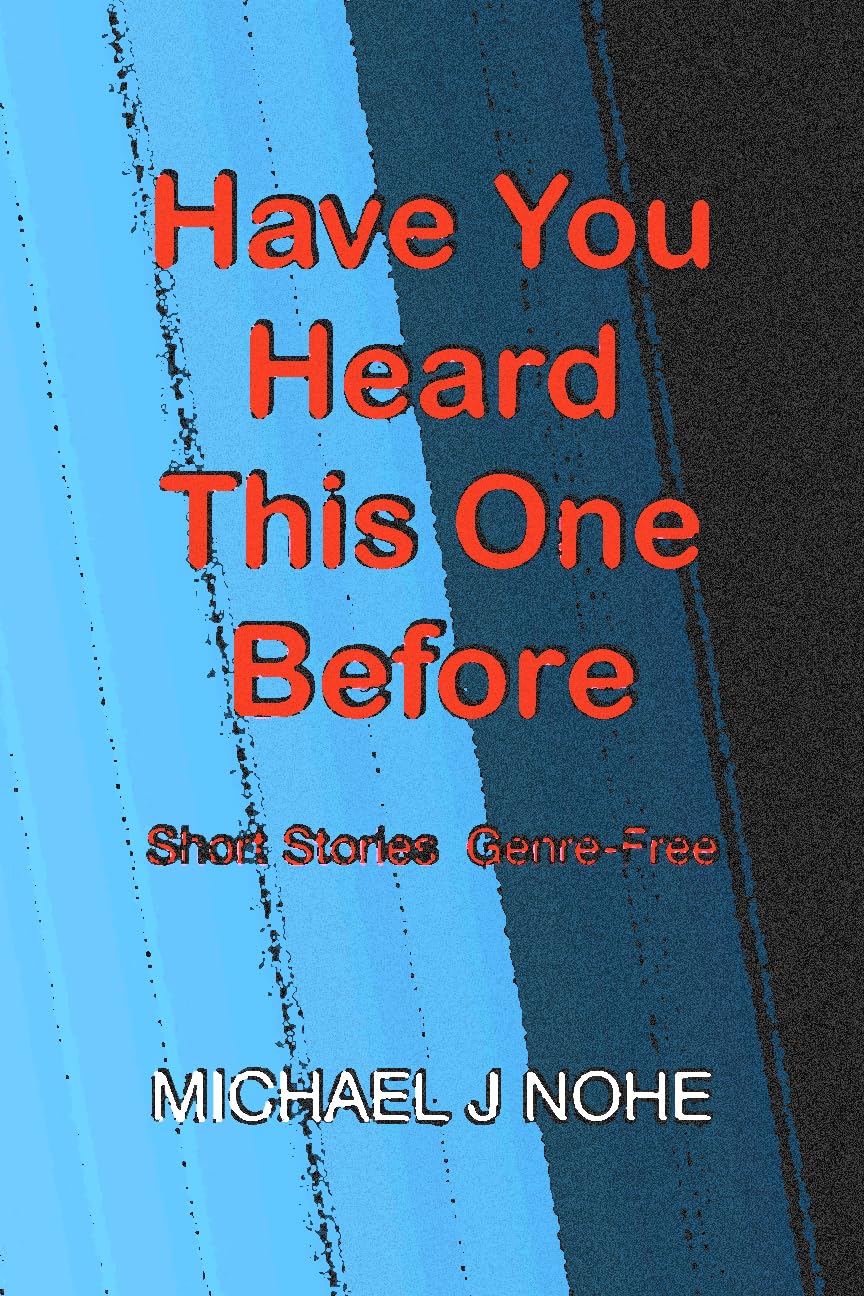

Have You Heard This One Before is a lively mix of short stories. Each tale jumps into a different mood, scene, or style, and the collection opens by proudly admitting that nothing links these stories except the author himself. You move from haunted lighthouses and eerie déjà vu to strange pumpkins with suspicious personalities and even a falling piano that changes a gambler’s life. The stories swing between mystery, humor, horror, sentiment, and quiet reflection, and they do it with a kind of carefree confidence that feels refreshing in a world obsessed with strict genres.
Reading it, I kept finding myself surprised at how quickly the tone could shift. One moment, I was following a family heading toward an old lighthouse in The Loop, and the next, I was inside a gambler’s mind as he dodged two thugs moments before a piano drops out of the sky in Surprise. The writing has a steady clarity, and the ideas land fast. Sometimes the twists feel sharp enough to make me sit back for a second. Other times, I felt a simple warmth, like the narrator in Surprise looking back on a messy young life with equal parts regret and humor.
I enjoyed the way the book leans into its own freedom. The author admits right in the foreword that he wasn’t sure who would read a genre-free collection, which almost made me root for the book before I even hit page one. That honesty softened me. Then the stories did the rest. Some ideas feel whimsical. Others dig into darker corners. A few made me laugh out loud because of how strange and blunt they were. I liked the looseness of it all. I liked that every story seemed to shrug at the idea of rules. Even when a moment made me uncomfortable or confused, I felt like the book wanted me to just ride the wave and trust it.
If you like stories that pick you up, spin you around, and drop you somewhere unexpected, this book will treat you well. Readers who crave strict genres might feel lost, yet readers who enjoy surprises, playful ideas, and quick bursts of emotion will have a good time. I’d recommend it to anyone who enjoys short stories that don’t mind being weird, heartfelt, eerie, or funny, sometimes all in the same breath.
Pages: 165 | ASIN : B0FXCKZB4W



 LITERARY TITAN