Blog Archives
The Cost of Service
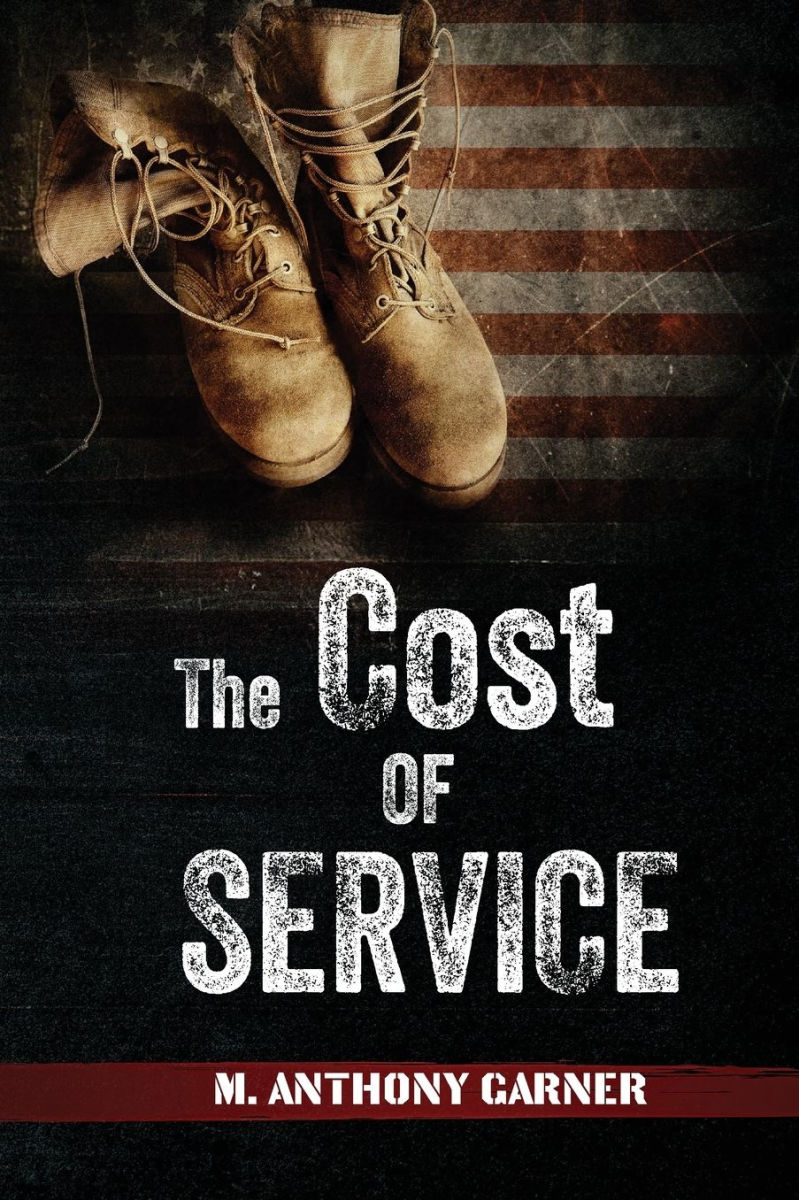

The Cost of Service tells the story of what it really costs to live a life built around serving others. It moves through the worlds of the military, law enforcement, and ministry with a mix of personal stories, quiet confessions, and raw honesty. The book lays out the emotional and spiritual wounds that often go unseen, and it does so in a way that feels deeply human. It follows the author’s journey through war zones, patrol units, and church pulpits, and shows how each role demands sacrifice from both the one who serves and the people who love them. It is a book about struggle, purpose, loss, and the long road toward healing.
As I moved through these chapters, I found myself getting pulled in by the simple directness of the writing. It is blunt in places and tender in others. The stories hit hard because they feel lived in. I kept stopping to sit with some of the moments, especially the ones where duty pressed up against heartbreak. The book doesn’t preach. It tells the truth, and it lets the truth sit there. I appreciated that. It reminded me that behind uniforms and titles are people trying to hold themselves together while holding everyone else up.
What surprised me most was how much emotion is tucked between the lines. You can feel the burnout, the loneliness, and the long, quiet ache that comes when someone keeps showing up even after they feel emptied out. The writing can feel heavy, but it is the kind of heavy that makes you reflect on how much people give without asking for anything in return. The book pushed me to consider how easily we forget the weight that service workers carry home with them every night.
By the time I reached the end, I felt grateful. This book is for anyone who loves someone in uniform or ministry, and for anyone who wants to understand why service changes a person. It is also for people who have served and may need the reminder that they are not alone in their struggles. I would recommend The Cost of Service to readers who appreciate real stories told with heart and honesty, and to anyone willing to look past the surface and hear the deeper, quieter truth of what service truly demands.
Pages: 120 | ISBN : 9798989359288

The Spiral Can Be Reversed
The Path from Hell to Heaven is a philosophical and psychological map of the ego, tracing how people spiral downward into “Hell” through fear, shame, and denial, and upward toward “Heaven” through trust, openness, and renewal. Why was this an important book for you to write?
Because ego explains nearly every human collapse and ascent, yet most people never receive a practical map for it. I wanted to translate psychological chaos—fear, shame, denial—into a recognizable model anyone could use, the same way we map complex systems in software or business architecture. This book is that missing human blueprint: a self-debugging framework that moves readers forward instead of leaving them looping in abstraction.
How did you come up with the concept of the two-sided spiral of the ego and develop this into a process that readers can implement into their own lives to find clarity and understanding of themselves?
I analyzed patterns before individuals. Ego contracts or expands; there’s no true neutral. Avoiding truth descends, openness creates lift. The spiral metaphor stuck because it captures momentum and acceleration.
To make it implementable, I structured it as an RPM self-awareness loop:
- R – Recognize the ego state you’re operating in
- P – Pause the automatic reaction loop
- M – Move with intentional correction or openness
It’s diagnostic and reversible, giving readers a clear exit path whether they’re descending or rebuilding upward.
I found the ideas presented in your book relatable and appreciated the actionable steps that readers can take to find their own clarity. What were some ideas that were important for you to share in this book?
The concepts that mattered most to me were:
- Ego itself isn’t the problem → closed ego is
- Narcissism is often unprocessed fear wearing armor
- Pain isn’t identity, it’s a turning point
- Ambition without self-awareness becomes self-sabotage
- Recognition of the loop always comes before the escape
And above all—I wanted a book that doesn’t just sound smart, but gets applied and changes outcomes.
What is one thing that you hope readers take away from The Path from Hell to Heaven?
That their ego has directions, and so do they. If they feel stuck, defensive, ashamed, or overwhelmed—it’s a state, not a life sentence. The spiral can always be reversed, rebooted, and climbed. The only real trap is believing the descent is normal and permanent.
This book is a Map of the Ego’s Double Spiral — a journey every individual, family, and society travels between Hell (closed ego) and Heaven (open ego).
Through vivid metaphors and grounded psychological insight, LANOU unveils how pain becomes protection, how protection turns to illusion, and how awakening begins when trust cracks the shell.
You’ll see yourself, groups, and even nations in these patterns:
The wound that starts the descent.
The mask that hides pain through control.
The collapse that breaks illusion.
The trust that starts renewal.
The open ego that frees love and truth.
Structured as a fractal spiral, the book reveals six repeating steps across all scales — from individuals to groups to the world itself. It blends the clarity of psychology with the simplicity of spiritual truth: hell is repetition; heaven is renewal.
Once you see the map, you cannot unsee it.
The Path from Hell to Heaven: The 2 Sided Spiral of the Ego
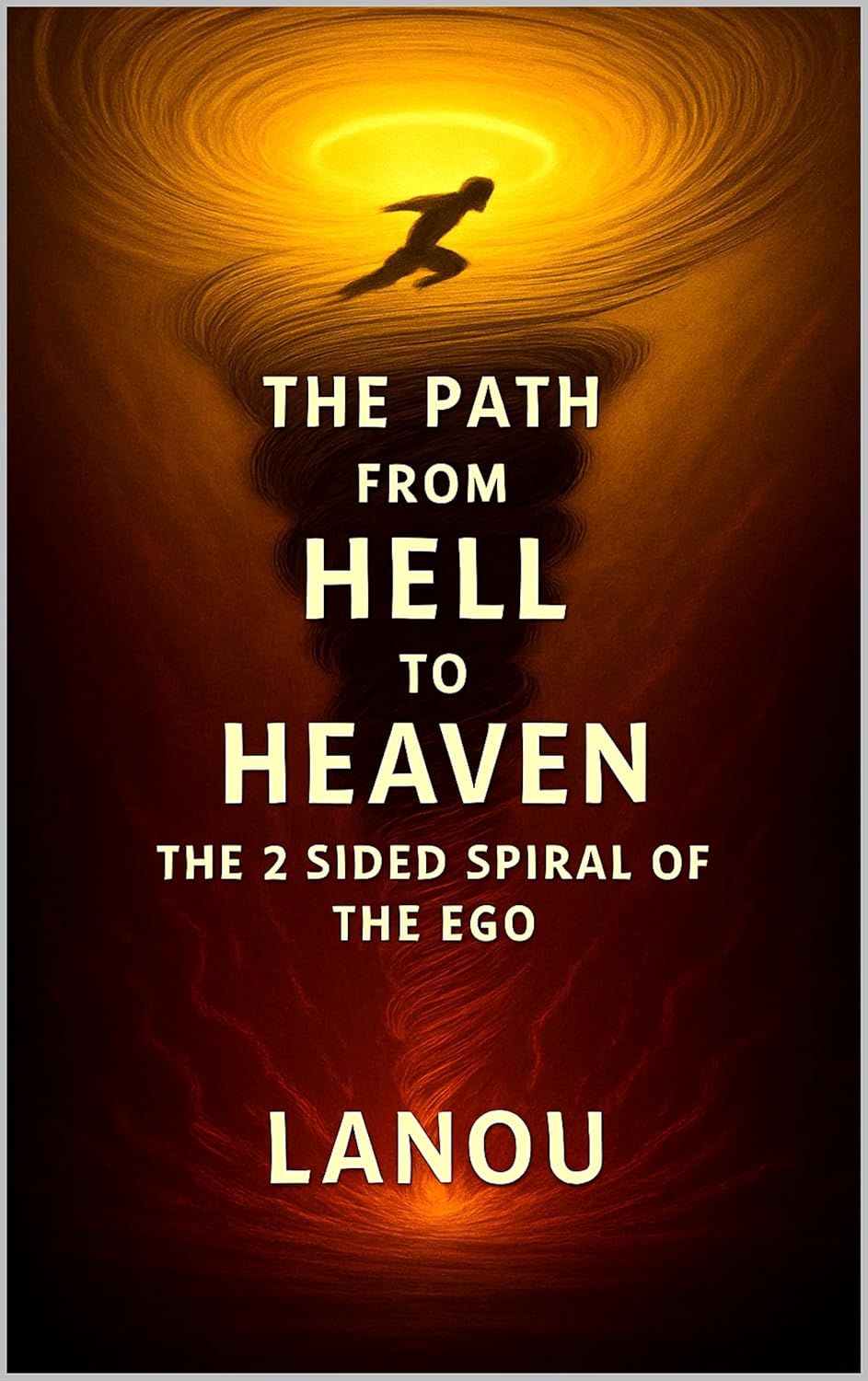
This book is a philosophical and psychological map of the ego, tracing how individuals, groups, and societies spiral downward into “Hell” through fear, shame, and denial, and how they rise toward “Heaven” through trust, openness, and renewal. It’s written like a guide for self-awareness, where the ego’s descent, wound, shell, mask, illusion, collapse, and denial are mirrored by its ascent through trust, openness, adulthood, mastery, and renewal. Each section builds on the last, connecting personal trauma to collective dysfunction and, finally, to global healing. The language is clear and rhythmic, sometimes poetic, and the structure moves like a spiral itself, repeating ideas but deepening them each time.
I liked how direct this book is and how it pointed to familiar pain without drowning in theory. The writing style blends psychology and spirituality without turning preachy. I could feel the author’s intention: to wake readers up, not to comfort them. Sometimes the simplicity of the prose makes it cut deeper than expected. It’s not a book that flatters, it exposes. At points, it felt like being called out and held at the same time. The “spiral” metaphor worked for me; it explained so much of what people repeat in life, from personal self-sabotage to entire societies collapsing under pride and denial.
The book’s tone is confident, almost absolute, which can feel heavy when you’re already raw. The ideas are strong, but their repetition across individual, group, and world scales sometimes blurs the freshness. Yet even then, I found myself underlining lines, rereading them, and thinking of people I know who live both spirals at once. The message that Heaven and Hell are not destinations but daily states of ego, sticks.
I’d recommend The Path from Hell to Heaven to people who crave clarity more than comfort. It’s for readers who think deeply about healing, leadership, and the way our inner wounds ripple into culture and politics. Therapists, activists, or anyone burned out on shallow self-help would probably find it bracing. It doesn’t tell you what to do; it shows you what you’re already doing. And if you’re willing to face that, it can be liberating.
Pages: 151 | ASIN : B0FT5HM9RS

Have Fun With Your Fandom


How to Celebrate Your Fandom is an interactive guidebook structured around 52 activities designed to help fans of any age dive deeper into their chosen fandoms, showing readers that you are never too old to find your passion. What was the inspiration for the original and fascinating idea at the center of the book?
NICHOLAS SEIDLER: We had an experience at a convention, in which we went to a panel on fanzines, and the presenters at the front of the room were talking about how difficult it is to make one. I was honestly totally disappointed in the panel, because doing a fanzine is as simple as writing down your thoughts on a piece of paper, making copies of it, and sharing it with others who are interested in the same topic. The point of entry should be so simple and available to everyone, but the fanzine editor presenters — in an attempt to make themselves a bit self-important – were giving bad advice to the audience. It actually demotivated the new and younger fans in attendance. After that panel, we had a conversation about how we needed to give fans better advice and encourage anyone to be a part of whatever fandom they are interested in!
STEVEN WARREN HILL: Together, we all became friends through our shared interest in several fandoms. We sought to express our enthusiasm for promoting “best practices” among fans by fostering positivity, encouragement, representation, and camaraderie, while rejecting the negative aspects of certain portions of fandom.
LIBBY SHEA: When I was brought into the project, the original idea for the title was “How to Be a SuperFan.” To me, that felt like we were setting a “higher level” of fan, which could very easily be used to separate and discourage those that may already feel excluded. All I could think of is 8-year-old me being told “Oh, you aren’t a superfan because you haven’t done everything in the book” and that set a negative tone for something that we all wanted to be very positive. So, we transitioned away from putting a label on fans to focusing on how to be more involved in what you enjoy. All of us (the authors) have become friends by being in the same fandom and celebrating what made our friendship as strong as it is, is the core of what inspired this book.
ROBERT WARNOCK: We’ve seen too much negativity in fandom over the years. We wanted to write something that was inclusive and non-judgmental, especially if someone was just starting out in their fandom.
What were some ideas that were important for you and the other writers to share in this book, and how did you come up with the activities you suggest?
ROBERT WARNOCK: It was important to keep the activities at the beginning fairly simple, so we didn’t intimidate new fans. We started thinking of activities in a brainstorming session at a convention.
LIBBY SHEA: Because this is a book aimed primarily at kids, teenagers, and those just entering into the fandom space, we really wanted it to be a guide of how to be an overall positive influence in fandom. So often you hear of fans taking it too far and forgetting that everyone they interact with are still people. The activities are there to give you a starting place. We originally came up with over 100 ideas, but wanted to focus on 52, so that you could do one a week for a year and allow yourself to deep dive into your fandom. They are in order from easiest to (our perceived) most difficult to complete. When coming up with our final list of ideas, we tried to keep in mind what it would actually look like for a younger child to complete them. We kept the ideas generic enough so that if you had limited money or resources, you could still have fun and feel like you’re a part of something.
STEVEN WARREN HILL: Coming up with the ideas was a lot of fun. Some of the ideas stemmed from odd things we did ourselves when younger. Once we had a long list of ideas, we grouped them in several different ways (such as by difficulty, and how much we liked each one) and also eliminated the ones that were too similar to others. As Libby said, we decided the final list should number 52, so they could be weekly goals, adding another functional facet to the book.
NICHOLAS SEIDLER: We also realized that fandom was a very broad topic – and we wanted to give advice that applies to them all. Whether someone is a bibliophile, a sci-fi fan, interested in gaming, likes to cheer for a sports team, enjoys horseback riding, music, or whatever, the advice in the book applies to their interests. We chose to select activities that everyone can do, regardless of ability, and they become more complex further into the book, as a person’s fandom and experience grows.
What are some tips you have for older generations that are just now learning to embrace the world of fandom and feel behind the curve from the younger generations, or even like a fraud for not being involved sooner?
LIBBY SHEA: It’s okay that you found your fandom when you did. It’s not about younger or older, and it’s not about how long you’ve been in the fandom. Everyone walks different paths to get to where they are. What matters is how you show up to engage today. Feel safe and confident in the knowledge that you are a fan now and that’s all that matters.
STEVEN WARREN HILL: I used to bristle somewhat at younger people joining the same fandom that I’ve been in for decades, for the usual flawed reasons, until I realized that without young people joining my fandom, the fandom would just keep aging until it died. We need to remember, first and foremost, that if someone says they are a fan of something, then they ARE, even if they enjoy it in a different way. Conversely, for older people who have privately been fans of something and are only just stepping into fandom, my number one tip is to treat all your fellow fans as equals, regardless of anything, especially their age or the extent of their knowledge.
ROBERT WARNOCK: It’s never too late to get started. Your involvement can be as immersive as you want it to be. Be observant early on in your involvement to get a lay of the land, so to speak.
NICHOLAS SEIDLER: Be your authentic self. If you love something, own it – most people will love you for it. It’s our interests and fandoms that make us interesting.
What is one thing that you hope readers take away from How to Celebrate Your Fandom?
LIBBY SHEA: Everyone has to start somewhere. When you finally get to the point of feeling fully immersed in your fandom, embrace others who are just starting out, pass this along to them, and join in their journeys.
ROBERT WARNOCK: That anyone can be involved in whatever fandom they choose, at whatever level they choose.
STEVEN WARREN HILL: That it’s okay to focus on positivity! Not just the positivity of your specific interest, but positivity among your fellow fans and across other fandoms.
NICHOLAS SEIDLER: And have fun. We interviewed over 30 fans from ages 5 to 101 years old (their interviews appear in the book) and that was the advice they each shared with us — have fun! I think that’s what our book is all about.
Author Links: GoodReads | X | Facebook | Website
Fandoms build friendships and communities through many engaging activities. With the help of this book, you can learn new ways to enjoy being a fan. Inside are numerous pathways that one can connect with others with similar pursuits! Whether it is through starting a collection, dressing in cosplay, writing a blog, or attending a convention, each of these brings happiness to those who participate.
This book also contains interviews with fans of all ages (5 to 101), who tell their stories and share how they participate in their hobbies. Celebrate your fandom and the things that you enjoy the most! Fun Things to Do! New Things to Learn! Cool Things to Try!
When Will Black Lives Truly Matter?
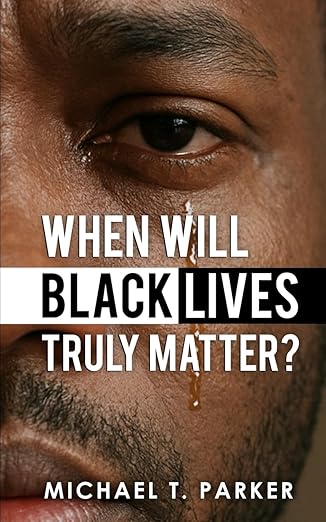
When Will Black Lives Truly Matter? tells a story that is both deeply personal and urgently collective. The author weaves together his own past, marked by crime and survival in Detroit, with broader histories of slavery, systemic racism, and the struggles and triumphs of Black America. He doesn’t just point to the harm done by outside forces. He also calls out the need for accountability within Black communities themselves. The chapters move through personal narratives, stories from across the country, well-known figures like Emmett Till, Rosa Parks, and Malcolm X, and finally toward concrete calls for reform, community building, and empowering the next generation.
The writing is raw and straightforward, which makes it hit hard. At times, it feels almost like sitting across the table from someone who has lived it all and is telling you exactly what they think, no filter. That voice has power, though occasionally it runs over details that might have deserved more depth. Still, the honesty makes up for it. Parker’s focus on personal responsibility alongside systemic reform can feel tough to wrestle with.
What I appreciated most was the balance of pain and hope. The book doesn’t just dwell on violence, racism, and despair. It shines a light on community programs, stories of people turning their lives around, and the potential of young people to lead change. The rhythm of personal anecdotes mixed with statistics and historical context kept me engaged. I respected the blunt delivery because it felt like truth spoken without polish or pretense.
I’d recommend this book to readers who want more than headlines or soundbites. It’s for people ready to sit with uncomfortable truths, people who want to hear directly from someone who has lived the complexity of these struggles. Activists, educators, and anyone working in community spaces would find it especially valuable. It’s not an easy read emotionally, but it’s a necessary one, and it leaves you thinking about what role you can play in making change.
Pages: 78 | ASIN : B0FNGMKX9J

We Can Do This Better

The Adoption Paradox weaves together your story, historical records, and interviews with nearly a hundred people from across the “adoption constellation” into an unflinching look at the industry’s ethical and emotional complexities. Why was this an important book for you to write?
I started out wanting to write a deep exploration of adoption’s emotional complexities from all sides. I’m very new to this internal awakening in my life’s journey. As an adoptee from a standard closed adoption from 1965, I had an overall good experience. As my parent’s only child, I felt loved and accepted for the most part within my family and our larger culture.
Then in 2020 with both of my adopted parents gone, I finally started to search for my birth family, which fueled the emotional curiosity that led to this work. I read books written by adoptees about their search. Then others about the birth mothers who relinquished us back in the era I was born in. What I learned shocked and saddened me. I felt this deep inner shift, and started questioning the typical storyline I’d always been fed. It was one thing to know that in ’65 my mother didn’t have the same choices I did growing up in the 1980s. It was another thing to come face to face with how badly many of these young women were treated.
There was more to tell in all of this I was sure, but I didn’t see any other books out there that had the voices and the deep research and thru lines for everyone in the adoption triad: adoptees, along with birth and adoptive parents. So, I decided to audaciously tackle that niche myself. That’s what started it all. This book is for me, in part, but my hope is that in reconciling the stories within, others find it helpful too.
What were some ideas that were important for you to share in this book?
There is no one adoption story. Ever. There are many sides, and all have this vastly diverse lived experience, even within one family. You can have an adoptee who feels completely seen and understood by the people who raise them, and another who feels isolated, lost and alone and their parents have no idea they are struggling. That’s heartbreaking. Adoption always begins with a loss, and our society completely forgets that narrative in popular culture. It’s just assumed we are lucky as adoptees, and that our families are fantastic! The truth is it’s often a mix.
There are misconceptions and oversimplifications about adoption and foster care among the general public. Adoption can heal, save lives and fulfill its potential to create a loving home for a child who needs one. But in modern times that is not generally what’s driving a relinquishment. Infant adoptions usually occur due to a lack of resources experienced by the natural parent(s). Then, understand we have allowed commercialism and an unchecked profit motive to proliferate within an industry that is responsible for the placement of children into homes. How can that possibly be beneficial for those affected or our society at large? Most people are complexly unaware of these realities. What gets lost in the shuffle of that are the needs of the adopted person. Not just as a youngster, but for their entire lives.
When we make assumptions about people, we flatten out their stories and miss the depth and nuances that are part of each and every family. I can have a good adoption story, and there is always some sadness behind it. We need to live in places of truth, both fiercely and gently with each other, and how we build or defend our families.
What was the most challenging part of writing your book, and what was the most rewarding?
Definitely stories of abuse were the hardest to hear, and it was also I think essential for those folks to feel seen and heard. Listening and sitting with them through their pain was validating for both them and me. Receiving the trust from all of those interviewed was by far the most rewarding experience.
The other bonuses have come from adoptees, adoptive parents and birth parents who unknown to me have already shared how the book has helped them feel affirmed, taught them something, or caused a shift in their mindset. They are the reason – because we can do this better.
What is one thing that you hope readers take away from The Adoption Paradox?
If parents are more informed before they adopt, their kids do better and are less likely to struggle. If natural parents and treated with dignity and fairness by our statutes then their rights are protected, because they deserve nothing less than that. My hope is the general public will understand our laws need revising and modernizing beyond the way we currently practice adoption.
In most states, we still overwrite adoptees birth certificates as part of this legal process and seal them away – inaccessible without a court order. Why can’t we create a “certificate of parentage” that doesn’t overwrite a person’s truth of who they are, where they came from, and deny them access to their medical history? Everyone in this story deserves better than these archaic systems we currently have.
I am not anti-adoption, but I am interested in our culture evolving to embrace a better future for how we practice adoption and answer the real needs of families interacting with the child welfare system. The most important thing is that we talk honestly with each other and listen. I hope my book begins and stirs that conversation. Thank you!
Author Links: GoodReads | Facebook | Website
Adoption impacts countless families worldwide, yet the voices of those directly involved—especially adoptees, the central focus of the process—are rarely highlighted. In The Adoption Paradox, nearly one hundred individuals are interviewed, from domestic, international, and transracial adoptions, as well as foster care, along with adoptive and birth parents, therapists, experts, and allies. These narratives reveal both the love and the emotional costs borne by everyone affected, exposing adoption as a complex and challenging experience. Healing is possible with the right support, but addressing adoption’s hidden issues requires activism to confront unethical practices that lack oversight. These moving stories shed light on unaddressed pain and systemic flaws, calling for a more transparent and compassionate approach to adoption.
How To Celebrate Your Fandom


How to Celebrate Your Fandom is both a guidebook and a love letter to the communities that form around shared passions. It is structured around 52 activities designed to help fans of any age dive deeper into their chosen interests. From writing an elevator speech about your fandom, to hosting watch parties, making crafts, or even creating charity projects, the book celebrates creativity, connection, and joy. The later sections include interviews with fans of all ages and backgrounds, showing just how wide and welcoming fandom culture can be. The tone is encouraging, lighthearted, and inclusive, with constant reminders that there is no “wrong” way to be a fan.
I loved the spirit of this book. It feels like a big hug from the fandom world, the kind of thing that makes you smile while reading. The writing is simple, but it’s clear that the authors want everyone to feel included and safe. I especially liked the emphasis on kindness and respect, because fandoms can sometimes get messy. The little tasks are fun and surprisingly practical. Even something as small as decorating a bag with fan art or sending someone a compliment reminded me of why I fell in love with my own fandoms in the first place. It’s not just about stuff. It’s about joy, and that comes across on every page. The charming sketch artwork scattered through the book gives it a playful, handmade feel that makes the whole thing warmer and more inviting.
Some of the activities, like “put a photo of your fandom on your phone wallpaper,” made me smile because I already do that without thinking twice. But then I realized that’s part of its charm. The book isn’t about reinventing fandom, it’s about celebrating even the small things. It’s almost childlike in tone, but there’s a sincerity here that cuts through cynicism, and in a world that’s often harsh, that kind of sincerity is refreshing.
I think this book would be a wonderful fit for younger fans just starting out, or for families who want to share fandom activities together. It’s also a sweet pick for anyone feeling jaded and looking for a reminder of why being a fan matters. If you’ve ever cheered too loudly at a game, cried at a show finale, or stayed up way too late talking about your favorite character, you’ll find something here that sparks a smile. It’s not heavy reading, but it is heartwarming, and sometimes that’s exactly what we need.
Pages: 135 | ASIN : B0DGN4VSLK
The Adoption Paradox: Putting Adoption in Perspective

Jean Kelly Widner’s The Adoption Paradox is both a sweeping history and a deeply personal exploration of adoption in America. It weaves together her own adoptee story, historical records, interviews with nearly a hundred people from across the “adoption constellation,” and an unflinching look at the industry’s ethical and emotional complexities. From the history of orphan trains and the Baby Scoop Era to the modern foster system and open adoptions, Widner covers the many ways adoption has shaped and sometimes wounded those involved. The book moves between heart-wrenching firsthand accounts, legal and cultural context, and thoughtful calls for reform, all while acknowledging the strange dualities at the heart of adoption: love and loss, gratitude and grief, hope and harm.
I was struck by the sheer variety of voices in this book, from adoptees, birth parents, and adoptive parents. Each is speaking in their own words, often with raw vulnerability. Widner doesn’t sanitize their stories, and she doesn’t steer the reader toward easy conclusions. I appreciated her willingness to admit there’s no single truth here, no one-size-fits-all narrative. There’s a tenderness in her approach, but also a certain steel; she makes it clear that the industry needs scrutiny, and that the myths we’ve been fed, especially the “all adoption is beautiful” trope, do real harm. At times, the weight of the stories struck me deeply, but that’s part of what made the reading experience so powerful.
I also found myself impressed by the way Widner balances the historical with the personal. She’ll pull you deep into archival laws or social movements, then drop you right into a living room or hospital hallway where someone’s telling the story of the day their child was taken, found, or lost forever. The shift between head and heart kept me engaged, even when the subject matter was painful.
I’d recommend The Adoption Paradox to anyone touched by adoption, whether you’re an adoptee, a birth parent, an adoptive parent, or simply someone who wants to better understand what adoption really means beyond the Hallmark version. It’s not light reading, but it’s the kind that stays with you. This is a book for people who can hold complexity, who aren’t afraid to see the cracks alongside the light. It’s a brave and necessary book.
Pages: 487 | ASIN : B0F6X136JN



 LITERARY TITAN