Blog Archives
Mixing Fantasy with Horror

In Valenfaar: The Children’s Song, characters wrestle their own inner demons as they prepare for battle against an ominous force known as The Children. Where did the idea for this novel come from?
It came from a few different places if I’m to be honest. A lot of workshopping and finding out what felt right for the story, while also brainstorming with a good friend of mine (who the book is dedicated). Ultimately, I came up with the image of the Children first and started to let ideas fly from there. As for the characters and how they struggle with the events around them, I’ve always enjoyed it when characters have a noticeable struggle with what they’ve been through. It always makes them more real and relatable for me. So I wanted to do that with my characters too: give them more depth and have them feel vulnerable mentally as well as physically.
There was a lot of time spent crafting the character traits in this novel. What was the most important factor for you to get right in your characters?
Personality. Who they are, what their backstory is, and how they talk and interact with one another. I always want everyone, even the side characters, to feel real in some respect. So I give them families, vocal ticks, ignorance in some fields vs experience in others. Keeping everyone varied while having something relatable is critical for me. I don’t want carbon copies of one person all over the place.
What intrigues you most about the horror and dark fantasy genres?
The possibilities. When mixing fantasy with horror, there are so many cool and terrifying ideas people can come up with. When I wrote The Children’s Song, I never intended for it to have a horror element. It just kind of evolved on its own. But, I take in a lot of fantasy and the pure breadth of horror possibilities is great. From zombies to vampires and werewolves, we could have undead dragons, liches, ghouls, and an amalgamation of them all. With fantasy, the sky isn’t the limit, it goes beyond that. You can make the coolest scariest stuff that can be unique compared to more traditional horror.
Can you give us a peek inside Book 3 of this series? Where will it take readers?
Absolutely! Book 3 is already out (I hope to be sending it your way soon) and readers will see the events of Crimson Plains and Children’s Song collide into one big book. Both casts of characters will be present and crossing paths frequently while they try to deal with the Thregs and the Children at the same time. Of course, we’ll also see underlying plots, such as what Varen has going on, progress even further. The side characters come fully into step with who they really are and everyone takes on a more prominent role in the events of the books. Everyone becomes more important, and EVERYONE will be there to deal with everything all at once. It’s a wild ride.
Author Links: GoodReads | Amazon
The events of Valenfaar: The Children’s Song are largely isolated from the events of the Crimson Plains and take place, simultaneously, on the opposite side of the country. If you are new to the Fall of Valenfaar series, you can read the Children’s Song without having read the Crimson Plains first.
Valenfaar: The Children’s Song


James McLean’s Valenfaar: The Children’s Song is a dark, gripping fantasy novel that plunges readers into a world on the brink of collapse. Set in the same timeline as The Crimson Plains but on the opposite side of the country, this second installment in The Fall of Valenfaar series follows the desperate struggle against the ominous force known as the Children. As war looms, characters battle not only external foes but also the demons within their own minds. From the ominous first scene of a burning orphanage to the eerie climax where the Children’s influence takes full hold, the book weaves a chilling tale of survival, duty, and moral decay.
The writing is vivid, sometimes brutally so, and McLean doesn’t shy away from the horrors of war. Scenes like the feast before battle, where soldiers drink and joke as if trying to drown out the inevitable, feel painfully real. When Garridan wrestles with his past and loses himself to nightmares, his turmoil is so raw that I found myself genuinely unsettled. The eerie song of the Children whispered throughout the novel, adds an ever-present layer of tension. Every time it was mentioned, I braced for something awful.
What really struck me was the way McLean builds his world, not just the physical setting but also the deep-seated beliefs and corrupt politics that shape Valenfaar. The moment when Jo-een realizes the king and queen are oblivious to the country’s true state is a masterful piece of storytelling. It highlights a terrifying reality: those in power often live in ignorance while the people suffer. And then there’s Varen, the High Priest, whose chilling, calculated nature makes him one of the most compelling figures in the book. His confrontation with Fenrich, where he casually explains his complete control, is both fascinating and terrifying.
If there’s one thing that didn’t completely land for me, it’s some of the side characters. While figures like Garridan and Jo-een are deeply developed, others, like Roth, sometimes feel more like placeholders for comic relief than essential parts of the narrative. That said, even the lighter moments often serve a greater purpose, like the scene where Merl sings around the campfire, giving a fleeting glimpse of innocence before chaos erupts. The book thrives in its contrasts, making its darker turns even more gut-wrenching.
Valenfaar: The Children’s Song is a heavy, emotionally intense read that will appeal to fans of dark fantasy and military epics. If you enjoy books like The Black Company or The First Law trilogy, you’ll feel right at home here. It’s not a lighthearted adventure, but if you’re looking for a story that grabs you by the throat and refuses to let go, this is it. Just be warned: once you hear the Children’s song, you won’t forget it.
Pages: 279 | ASIN : B0BV7KM279

Aldewin Hadn’t Slit a Throat in Two Days

Spring Dragon follows a former assassin seeking redemption who goes on a quest that challenges his identity when his path collides with a dragon carrying the soul of his lost beloved. What was the inspiration for the setup of your story?
Though the events of book one (somewhat) dictated the direction book two would take, several options remained.
Delving into the “minds” of the significant characters after the events of book one, Aldewin emerged as a character whose story was begging to be told.
The first line of the book, “Aldewin hadn’t slit a throat in two days,” just came to me. It hooked me and I wanted to know why Aldewin was killing people again!
To prepare for writing a novel, I “interview” the significant characters. Through this process, I learned that Aldewin was a man of faith.
As a youth, pledged to an assassins and spy league known as Fen Menir, Aldewin was raised to worship a goddess known as Sicara, the “Dread Sister,” reaper of souls. He had been devout—until circumstances severed his relationship with Fen Menir.
Then, finding his way to Val’Enara Pillar, he pledged himself to Val’Enara and its Archon. At Val’Enara, Aldewin lived a monastic life studying the “Way of Water.”
But the events of book one shattered Aldewin’s faith in the Pillar.
So here sits a guy in a bar, trying to drink away the sorrow of having lost someone he cared about deeply, and also having lost anything to believe in. He feels like a dog turd of a person. He not only broke his vows, but couldn’t prevent the terrible events at the end of book one. AND he has a lifetime of guilt for causing so much death.
And I wondered: What will get this guy to put the mug of ale down and get up off that stool?!
So I guess you could say that the inspiration is the curiosity of trying to understand this character and seeing what will happen next!
I felt that there were a lot of great twists and turns throughout the novel. Did you plan this before writing the novel, or did the twists develop organically writing?
I do not plan my twists and turns before writing. They happen organically.
My pre-writing planning revolves mainly around character development and creating powerful character arcs. I see where I want the character to “land,” but I don’t know how they’ll get there.
I had spent six months researching and developing the lore, etc. for the city-state of Partha. I had expected Aldewin to go there at the beginning of book two.
But, within the first day of writing, the story showed me that it was NOT going to take place in Partha! So, six months of world building out the door!
What scene in the book did you have the most fun writing?
I probably had the best time writing The Spring Dragon than any prior novel I’ve written (and it’s my eighth). Overall, I relaxed into this one more than most, and allowed the story to flow without as much judgement about it as I have in the past.
The last Aldewin chapter in the book is one that stands out as particularly enjoyable to write. At least it was after I got into the flow.
It’s the culminating scene, and very important to not only wrap up the arc for this book, but to set the stage for the next book as well.
And I didn’t want to f*** it up! It had rise to the occasion.
It took me about two days of working at it to finally get in the zone. Once I got into the zone, this scene flowed like the whisky I was sipping at the time! And in revision I barely changed a thing. I think it’s one of the best scenes I’ve ever penned.
What will the next book in that series be about, and when will it be published?
The next book in the series will be titled The Summer Dragon. You may see a pattern emerging…
The Spring Dragon, The Summer Dragon…
In The Spring Dragon, the element is Wood, and the themes revolve around redemption and rebirth/regeneration.
Book three, The Summer Dragon, will involve the Fire element. When we consider the fire element, we think of heat and conflict. The dual themes of conflict and passion will predominate.
In books one and two, I’ve set the stage for readers to understand that there are larger geo-political conflicts looming in this world. And readers now see that dragons and humans have a longstanding beef with each other.
The Summer Dragon will delve more directly into the conflicts among the powerful city-states of Bardivia, Partha, and Qülla, as well as conflict within the dragon culture, AND the uptick in confrontations between humans and dragons.
Phew! It’s going to be a tense one!
Author Links: GoodReads | Instagram | Facebook | Website
His youth was a tapestry of vows and oaths to gods he no longer believes in. But in Quen, Aldewin found once again someone in which to place his faith.
But then, a dragon took her soul and flew off to gods know where. Bested and feeling broken, the only thing that keeps Aldewin from giving up is his last promise—to protect Nivi, the snow tiger Quen befriended.
When old friends arrive with fresh news, Aldewin’s mandate becomes clear: To restore the love he lost, Aldewin must find the legendary Heart of Menaris.
And, Aldewin must secure its power before the Dynasty, or he’ll lose all hope of ever seeing his lover again.
Spring Dragon
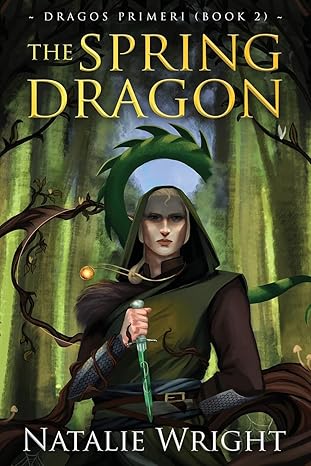
Spring Dragon delivers a tale of magic, politics, and transformation, where the destinies of humans and dragons entwine in a world on the precipice of upheaval. At its heart is Aldewin, a former assassin seeking redemption and love, drawn into an extraordinary quest that challenges his very identity. His path collides with Ishna, a dragon carrying the soul of Quen, his lost beloved. As Aldewin struggles to restore Quen, Ishna navigates the turmoil of her kind, battling external threats while Quen’s human spirit fights for dominance within her.
Wright’s prose is both immersive and evocative, conjuring vivid landscapes and nuanced characters. Aldewin’s evolution from a harbinger of death to a seeker of life is particularly compelling. His confrontation with the shadows of his past in the Dreaming, as well as the haunting memories of his childhood at Fen Menir, add rich layers to his character. These moments ground the fantastical elements in raw emotion, making his journey all the more gripping.
Themes of identity, transformation, and the tension between nature and ambition resonate throughout the novel. Quen’s fragmented existence within Ishna poses questions about humanity, free will, and the blending of souls. As Quen’s memories seep into Ishna’s consciousness, their duality takes center stage, challenging the boundaries between dragon and human, self and other.
Emotionally, Spring Dragon is as devastating as it is exhilarating. The scene in which Aldewin briefly reunites with Quen in the Dreaming, only to lose her again, is heartbreakingly poignant, a testament to Wright’s ability to craft moments of profound loss and enduring love. Ishna and Quen’s evolving dynamic adds further depth, creating a narrative rich with empathy and tension. The climax, a ritual of restoration fraught with uncertainty, leaves a lasting impact. As one journey concludes, another begins, with Pelagia’s ominous influence casting a long shadow over Ishna’s fate.
A mesmerizing fusion of fantasy and psychological depth, Spring Dragon offers a captivating exploration of morality, power, and the fluidity of identity. Fans of epic fantasy, particularly those who appreciate intricate world-building and moral complexity, will find much to admire here.
Pages: 401 | ASIN : B0DR472JL7
The Blood Tree
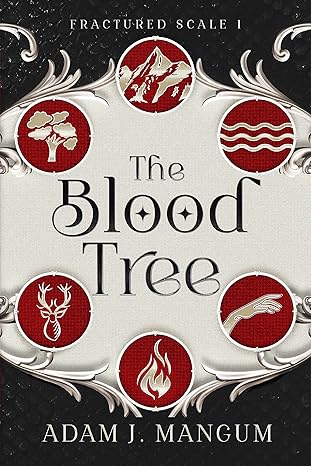

Adam J. Mangum’s The Blood Tree plunges readers into an expansive and vividly constructed fantasy world where power, survival, and the complex interplay of good and evil take center stage. The story unfolds with two enslaved protagonists, Yinashol and Verhue, whose daring escape sets them on a perilous journey across a land brimming with political intrigue, sorcery, and danger. Anchored by Mangum’s intricate world-building and a narrative that blends heart-pounding action with emotional depth, the novel unpacks themes of oppression, resilience, and destiny with raw intensity.
Mangum’s writing immediately struck me with its boldness and energy, especially in the opening chapters. Yinashol’s defiance in the face of brutal overseers jumps off the page and keeps me rooting for her. The prose here feels immediate and gritty, mirroring the characters’ harsh realities. But there were moments when the descriptions became a little heavy-handed. Yinashol’s disdain for her environment, though evocative, occasionally felt overexplained, leaving less room for readers to infer the oppressive atmosphere for themselves. The character development is deeply compelling. Verhue’s blend of scholarly intellect and quiet strength was a refreshing contrast to Yinashol’s fiery disposition. Their dynamic evolves naturally, highlighted in scenes like Verhue’s ascent up the old tree to orient himself in the wilderness. The moment when Yinashol surprises him with her agility and warmth adds a tender humanity to an otherwise grim narrative.
The book shines brightest in its handling of magic. Mangum’s depiction of Yinashol’s powers, especially her use of sorcery to manipulate plants and stones, was thrilling and visceral. The sequence where she weaponizes a bean plant to incapacitate her oppressor left me stunned—it’s rare to see magic depicted with such creativity and weight. Yet, for me, this same fascinating strength occasionally seemed overpowered. I felt it stretched believability even within the story’s fantastical framework.
The Blood Tree is a richly imagined and emotionally charged tale that will appeal to fans of high-stakes fantasy with morally complex characters. Readers who enjoy works like Brandon Sanderson’s Mistborn series or Leigh Bardugo’s Grishaverse novels will likely find much to love here. If you’re ready to be swept away by a tale of rebellion, courage, and the cost of power, this one’s worth your time.
Pages: 424 | ASIN : B0CDCLZGKB
The Wheels of Creativity


The Chimera Snare: Fragments weaves an intimate coming-of-age story into an epic cosmic battle as two teens discover they are vessels for ancient other-worldly guardians and must fight to restore a fractured reality. What was the inspiration for the setup of your story?
Shannon: The concept for this story was developed in fragments, funny enough, spanning over a decade, first beginning in high school. Much of the fundamental background was inspired by living day-to-day life and wishing for something magical to lay beyond the stars. The manga and comics I read in school (Angel Sanctuary, Seimaden, Dragonball Z, DNAngel, to name a few), coupled with music and sketching, influenced my roaming mind and helped me hammer out the first two main characters of the story, Von and Navaryn. Initially, I was planning to do a simple animation to convey the plight of the two characters. But in the end, I felt like there was a bigger story to tell, so I began writing.
After self-publishing the first iteration on my own, Edward joined the writing journey with me, and we’ve since re-crafted the TCS universe together as a team, driven by much of the same inspiration as in the beginning: music, anime/manga, and comics. Only now, with the addition of beer from time to time, to grease the wheels of creativity.
How do you divide the writing process? Do you each focus on specific characters, chapters, or aspects of the story, or is it more fluid?
Shannon: Great question! We work together to structure the basic framework of where we want the book to start and end. From there, we both storyboard the chapters in greater detail, bounce ideas off one another, and things more or less come together.
Edward: We learned early on that we both have unique writing approaches. Shannon often begins by painting the scene with description, substance, and movement before moving on to writing dialogue. I, on the other hand, do the opposite. So we assign chapters to each other, write them independently, then meld them together stylistically. And we both have characters that resonate with us. In most instances, we each take the lead with the characters we jive with, but we do switch off.
Where do your story ideas typically originate? Do you brainstorm together, or does one of you usually bring the initial concept to the table?
Shannon: I get ideas for our series in many ways, but I often find the most inspiration while listening to music and letting my mind roam free. I tend to have the best “drifting” sessions when I’m running, tending to the garden, or working on art—as long as I’m plugged into music. But yes, music is very important to us while we craft our universe.
Edward: We brainstorm both independently and together. But when it is time to craft the arc, we sit down and agree on the framework and approach. Sometimes, the writing process creates additional ideas, which we have to take back to the table again. But we stay very organized because the universe we’re creating continues to expand organically as the series unfolds.
What is the next book that you are working on, and when will it be available?
Shannon: We are working on Reflections, the second entry in the Chimera Snare series. If all goes well, it will be available in Late Spring 2026.
Edward: Seeing our readers so hungry for the next book has been very encouraging. As the saga continues, it’s definitely going to get darker, more twisted, more intense, and more powerful, so Reflections on all aspects will up the ante. We’re really excited for people to dig into it.
Author Links: GoodReads | X (Twitter) | Facebook | Website | Instagram | Amazon
Amidst mystical recollections and a wondrous magic system that shatters the veneer of their everyday lives, the two friends embark on a journey against time to connect with the Celestine guardians’ allies in hopes of freeing them from their imprisonment. Simultaneously, the shadows cast by Daeva darken. The notorious outlaw, Merisek, has positioned himself to claim dominion over the Order of Existence—a trio of powerful artifacts capable of reshaping reality. Armed with two of these relics, Merisek races against the emergence of the Celestine guardians to claim the third. The stage is set for a showdown that will determine the fate of existence itself.
Rayshell and Trish are all that stand between Merisek and his unhinged desire to twist the fabric of reality into his making. As the threads of destiny unravel, the question looms: who will be the author of existence, and what profound truths will be unveiled in the final, decisive act?
Variants of Our Future

Salvation Bleeding follows two people trapped who must pass through the Void in a desperate fight to retrieve the one artifact that can help save Utopia. What was the inspiration for the setup of your story?
The Void is where all possible futures exist. We all make decisions every day that have the potential to alter the path our lives take. Imagine facing each decision—with every possible future presented before you that flows from moment to moment—knowing that even the slightest variation in the path that looks right, could lead to your demise. The message is that the reality in which we exist is of our own creation. It is the accumulation of all our past decisions that delivers us to this moment in time. Now… whenever now is. And the next decision we make will lead to another thousand variants of our future.
When in the Void, Reyne’s choices not only impact him, but also the woman he loves, Mithany, and the future of worlds; all the while facing a malevolent being within the Void that desires to consume his soul. The representation of Reyne in the Void reflects the choices we face in our own lives every day. Our choices, knowingly or unknowingly, will lead us down a path that will not only affect us individually but all those around us as well—especially the ones we love.
And then there’s the Soul Stone. The symbolic artifact that has the power to set everything right when the past has gone wrong. Maybe not always delivering the outcome we’d expect.
This is the final book in the Utopia Falling Saga. Were you able to achieve everything you wanted with the characters in this trilogy?
Absolutely! The characters and the plot were let off the leash in book 3, Salvation Bleeding. This is an epic fantasy adventure that, at times, intentionally veers into grimdark fantasy. Reyne’s struggle with his own inner demon could only have been resolved in the way it did because of everything that preceded it. Through all the twists and turns to get there, I believe Salvation Bleeding delivers a very satisfying conclusion that the readers will love.
Do you have a favorite scene in this installment? One that was especially satisfying to craft?
There are so many scenes in this book I really enjoyed writing that it’s hard to pick just one. This being the third book in the trilogy, the need to do any extensive world-building was absent and from the first page, the plot dives right into action and doesn’t let up. BUT…if I must pick only one scene, it has to be the chapter titled “Convergence Wakes” where everything comes together in a jaw-dropping climax.
Can we look forward to more work from you soon? What are you currently writing?
Thank you for this question. Yes, I am working on two projects. The first is an omnibus edition of the complete Utopia Falling Saga trilogy that I hope to have ready as an ebook by February 2025. The second is a standalone fantasy novel that imagines what if something or someone whom we all must face one day were to write a memoir of his/her experiences. I’m about 12,000 words into what I expect will be about 75,000 when it’s finished. With a bit of luck, I hope to tease out its release later this year.
Author Links: GoodReads | Website | Amazon
Reyne must face the Void once more. But he knows an evil malevolence awaits him there, and it craves to devour his soul. If Reyne can survive the Void, if he can fend off his own inner demon, if he can kill the Devil’s Blacksmith, he will deliver Utopia its salvation, and return to Mithany, the woman he loves. … If he only had the Soul Stone! …or is it already too late?
Salvation Bleeding: Forge of the Soul Stone

The Devil’s Blacksmith teeters on the brink of annihilating Tartica, pushing Utopia to the precipice of war. Reyne, the last glimmer of hope, allies with Gina, a skilled and unrelenting assassin, in a desperate bid to halt the chaos. Believing they have reached Evidar, they are horrified to discover they remain trapped in the Void—a sinister, treacherous realm that hungers for Reyne’s soul. To save Utopia, Reyne must brave the Void once more, wrestle with his own inner turmoil, and vanquish the Devil’s Blacksmith. Without the Soul Stone, his prospects appear bleak. Yet, the thought of Mithany, his long-lost love, ignites his determination to fight on and see her again.
What stands out most in Salvation Bleeding is its grounded core, despite the fantastical backdrop. The narrative’s exploration of sacrifice and the battle with personal demons resonates deeply, underscoring the lengths to which people will go to protect those they cherish. The portrayal of the Void as an oppressive, malevolent force adds depth, serving as a poignant metaphor for political control while highlighting how a single individual’s courage can spark monumental change.
Reyne’s unwavering devotion to love and his cause makes him a compelling protagonist, someone to root for against insurmountable odds. His sacrifices prompt reflection on the human capacity to endure for the sake of others, and his sensitivity to the Soul Stone’s potential and his tendency to become ensnared in personal pursuits serve to enrich his character, making him relatable. It is worth noting, however, that Reyne’s sensitivities felt somewhat repetitive. Gina’s presence brings balance and intrigue. Her unconventional methods and razor-sharp skills make her an essential counterpoint to Reyne’s emotional intensity. Despite embodying the archetype of a cold, arrogant, and seemingly emotionless killer, her character adds depth rather than detracting from the narrative. Her dynamic with Reyne highlights growth and partnership, creating a compelling duo whose synergy drives the story forward.
Salvation Bleeding: Forge of the Soul Stone captivates with its blend of high stakes, emotional depth, and rich symbolism. It’s a tale of resilience, love, and the indomitable human spirit, leaving readers to ponder the sacrifices they’d make in their own battles.
Pages: 516 | ASIN : B0DKZB3SNW



 LITERARY TITAN