Blog Archives
Delaware at Christmas: The First State in a Merry State


Delaware at Christmas is a richly illustrated tour of how one small state has celebrated the holiday across four centuries. Author Dave Tabler moves from early Scandinavian and Dutch settlers to later British, German, Irish, Italian, Polish, Black, and Hispanic communities and shows how each group brought its own Christmas customs into Delaware life. The book then shifts to 19th-century practices like eggnog, sleigh bells, mumming, and plum pudding, before moving into the Victorian period with holly-wreath factories, Christmas seals, and toy trains. Finally, it lands in the late 20th and 21st centuries with house tours, IBM punch-card wreaths, handbell choirs, Kwanzaa, and even Christmas in July, then closes with a reflective postscript on technology and sustainability. The structure feels like a guided walk through time, with short thematic chapters, archival photographs, and clear, accessible explanations that keep the focus on place, people, and memory.
I found the writing warm, steady, and very readable. The tone stays careful and professional, yet it feels like a neighbor telling stories over coffee, not a distant professor. I appreciated the way Tabler anchors each chapter in a concrete detail, such as the Sankta Lucia procession at Old Swedes Church, the Feast of the Seven Fishes in Wilmington’s Little Italy, or the oplatek bread on Polish Christmas Eve, and then pulls back to show how that custom grew from older roots. The references to specific churches, festivals, and streets gave me a sense of real neighborhoods, real people, real weather in December. The short chapter format keeps the pace brisk, and I rarely felt bogged down, although now and then I wished for a touch more narrative glue between topics, especially when the book jumps from one ethnic group to another in quick succession. Overall, though, the style carries a lot of research without feeling heavy, and that balance impressed me.
Emotionally, the book hit me in a quiet but lasting way. It is worth noting that Tabler does not treat Christmas as a simple feel-good backdrop; he lets harder stories in, such as Antebellum Black Christmas and the rise of independent Black churches, and he gives those sections space and dignity instead of pushing them to the margins. At the same time, there is a playful curiosity in chapters on holly wreath factories, punch-card decorations, and Christmas savings clubs, and I caught myself grinning at the sheer oddity of some of those details.
The closing pages, with their focus on Delawareans adapting to online services, digital cards, and greener holiday habits, felt surprisingly tender; they invite the reader to think about their own family rituals and how those might change, or already have changed, over time. I finished the book with a mix of nostalgia, respect, and a little itch to go hunt down a local church festival and hear handbells in person.
I would recommend Delaware at Christmas to readers who love regional history, to Delaware locals and expats who want to see their home through a festive lens, and to anyone who collects books on Christmas customs and folk traditions. It will likely appeal to genealogists, church groups, and teachers who need strong, specific examples of how culture, faith, and migration shape a holiday over time. If you enjoy dipping into short, well-researched vignettes that together build a larger picture, this will be a very satisfying read.
Pages: 130 | ASIN : B0F4NJ2KTZ

You May Conquer: Facing What Others Have Met

You May Conquer tells story after story about people who faced hardship that could have crushed them, yet they rose anyway. The book moves from biblical figures to modern leaders and shows how adversity becomes a teacher rather than a punishment. It blends faith, history, and personal reflection in a way that feels steady and grounded. The whole message circles one big idea. We gain real authority only when we walk through fire and come out changed.
As I read, I felt myself pulled into the rhythm of the writing. It is direct. It is serious. It carries a calm confidence. Sometimes I wanted more softness. Other times, the sharp edges felt right because the stories themselves carry weight. I liked how the authors didn’t try to polish hardship into something pretty. They just showed it for what it is and let the lessons rise from the ashes. The mix of scripture and history worked for me. It gave the book a wide lens and made the message feel universal.
I also found myself reacting to the ideas more than the prose. The writing is clear and steady, but the ideas hit like steady waves. The book pushes you to look inward, sometimes more deeply than you expected. It doesn’t yell its point. It just keeps nudging you to ask better questions about pain, about response, about what shapes character. I appreciated that. It made me feel both challenged and comforted. And honestly, it reminded me that authority is something we grow into. It is not a badge. It is a scar that healed well.
I’d recommend it to readers who want strength more than inspiration, readers who enjoy reflection, readers who welcome faith-based themes, and readers who appreciate stories that stretch across centuries to show a single truth. If you’re carrying something heavy and want a book that doesn’t pretend life is easy but still believes you can rise, this one is for you.
Pages: 207 | ASIN : B0FXJ9941M

The Truth About Us: How America Invented Black Stereotypes
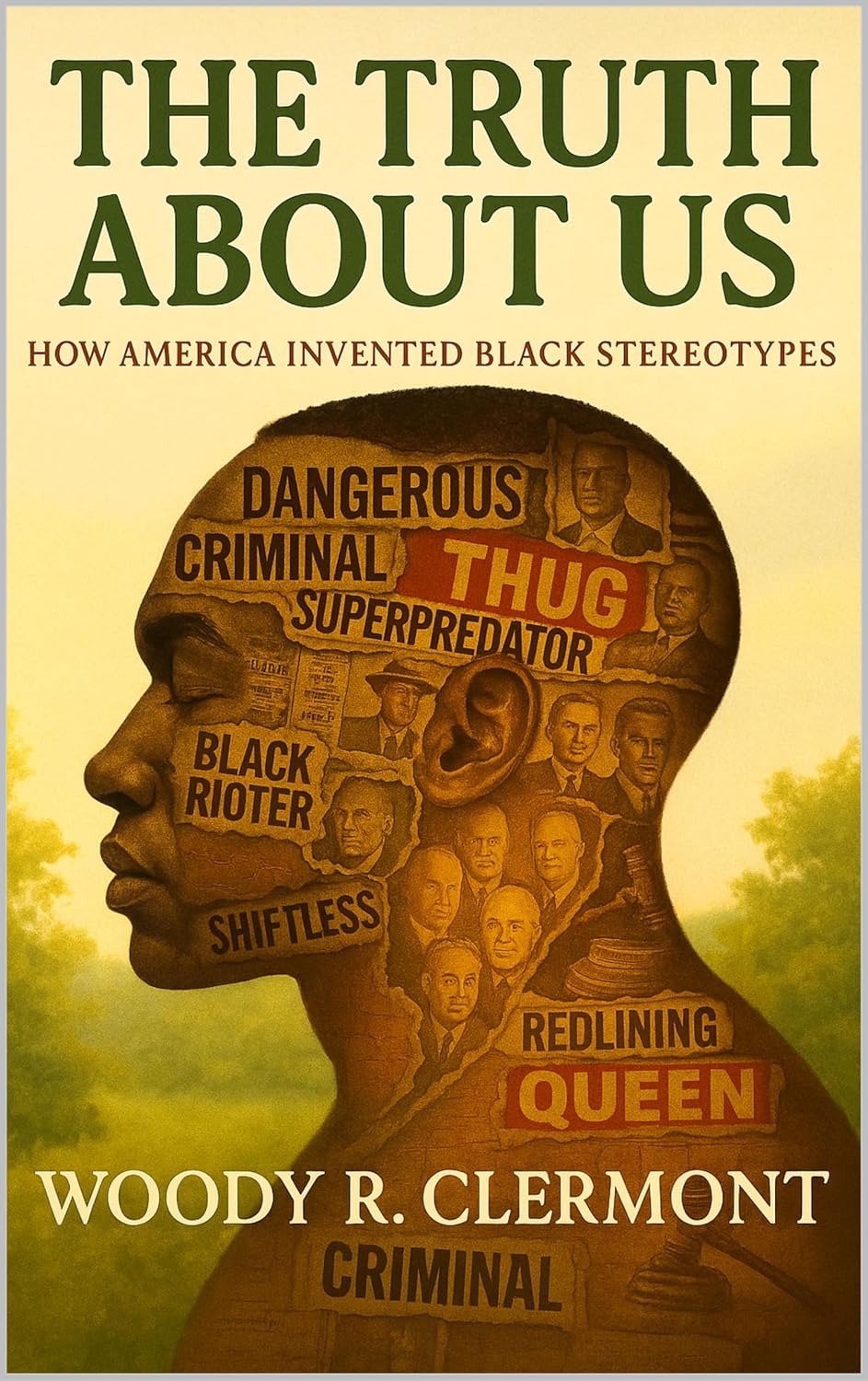
The Truth About Us lays out a clear, forceful account of how America built and sustained racist stereotypes over centuries. The book traces these lies from their earliest invention, through law, science, religion, media, economics, and public policy, and shows how they still shape modern life. It moves chapter by chapter, dismantling myths about Black laziness, violence, intellectual inferiority, family structure, and more while grounding each point in historical evidence and data. At its heart, the book argues that the stereotypes themselves, not Black people, are the real inventions, the real systems, and the real national problem.
The writing is sharp and steady, and it pulls you in quickly. The author does not hide behind jargon or distance. Instead, he speaks plainly about how propaganda became policy and how those policies still mark the country today. I appreciated the way he blended history with modern examples. He shows old lies living inside new systems, and the connections hit hard. The weight of what he described, especially the deliberate crafting of myths in science and religion, stirred something heavy in me. Yet I kept turning pages because the argument is so well built and the evidence so clear.
I also found myself moved by the emotional current that runs under the facts. The book insists that the story of Black people is far bigger than oppression, and that truth adds warmth and hope to the harder chapters. When the author talks about Black excellence as a pattern, not an exception, I felt inspired. He writes with a kind of grounded pride, and I could feel that pride rising through the pages. Even in the sections about media stereotypes or mass incarceration, I sensed a push toward something better. The writing made me feel frustrated at what has been done, but also energized by what could be repaired if people were willing to face the truth.
I think this book is powerful because it does not stop at exposing lies. It points to what must replace them. Towards the end, it reads almost like a call to rebuild the country with honesty, imagination, and real courage. I would recommend The Truth About Us to readers who want a clear understanding of how racial myths were constructed and how deeply they shaped America. It is especially good for people who think they already know this history, because it pushes past the usual surface summaries and asks you to look at the machinery underneath.
Pages: 228 | ASIN : B0G2SLZF4S
Humble, Conservative Origins

In the Shadows of the Blue Ridge is a portrait of rural life colliding with political and economic change in Loudoun County, Virginia, and how what was once a sprawling community of dairy farms was urbanized by the construction of Dulles Airport. What inspired you to write this story?
As a native of Loudoun, I’ve witnessed its development over the past 30 years firsthand. In shocking contrast to its current frenzied level of activity, when I was a child, not much happened west of Leesburg, and there weren’t yet any wineries. Indeed, I remember slower, kinder days in Loudoun – long, summer days and nights when all that could be heard were tumbling brooks, crickets, and tree frogs. That memory stands out in stark opposition to today’s traffic, retail shops, and human activity here. I suppose before too much more “progress” occurs, I wanted to remind my readers of Loudoun’s humble, conservative origins in its not-so-distant past, and also discuss the policy and political changes Loudoun County (actually the entire country and planet) is grappling with, which required a deep dive into the classical philosophies on which the U.S. was founded.
As someone who lives just outside Loudoun County, I found your book fascinating. While fictional, it brings the rich history of this area to life and shows awareness of how much it has changed in a relatively short period. What were some ideas that were important for you to share in this book?
The country has experienced rapid cultural change over the past 30 years, specifically since the introduction of Critical Theory into public colleges and universities in the mid-90s. I wanted to chronicle these changes in order to understand how we have arrived at this point of contentious divide between parties. Also, I wanted to emphasize the crucial role of parents in the education and rearing of their own children, who are tomorrow’s citizens.
What is one thing that people point out after reading your book that surprises you?
I suppose I’m surprised about the emotional connection my readers experience with my main character, “Red,” including anger, pity, and pride (the latter over his clandestine political achievements). This feeling unites me with my readers. I find it interesting that our connection is emotional, rather than academic or intellectual.
What experience in your life has had the most significant impact on your writing?
I was raised by old-world aristocratic Germans before the computer chip, when all we had was a piano, a full set of Encyclopedia Britannica, horses, chickens, and a garden. This afforded me time to dream and contemplate life’s mysteries in nature, when, as a child, I myself wandered over Loudoun’s creeks and fields. Due to my childhood, I have experienced the differences of perception and identity under European feudalism vs. American capitalism.
Author Links: GoodReads | Facebook | Amazon
The narrative includes detailed accounts of Loudoun County’s political landscape, featuring figures such as Scott York, Phyllis Randall, Dave LaRock, and Eugene Delgaudio. It highlights political conflicts, cultural shifts, and controversies over social issues, reflecting the tension between conservative and progressive values within the community. The story of Red’s involvement in local politics, legal battles, and personal vendettas illustrates the complex interplay of power, identity, and morality in Loudoun.
Originally a farming community with a focus on livestock, agriculture, and dairy farms, Loudoun County experienced rapid urbanization starting in the 1960s, especially due to the construction of Dulles Airport. This shift led to a decline in dairy farms and an increase in real estate development, significantly altering the county’s landscape and economy. The county became a technology hub, known as “Data Center Alley,” hosting major tech companies and data centers that handle approximately 70% of global internet traffic.
The book delves deeply into the philosophical underpinnings of Western law and morality, tracing ideas from Socrates, Plato, Aristotle, and Cicero to the founding principles of the United States. It emphasizes the role of Natural Law, the Cardinal Virtues (prudence, justice, fortitude, temperance), and the theological virtues (faith, hope, charity) in shaping legal and ethical frameworks. The Founding Fathers of the U.S. are portrayed as influenced by these classical and Christian ideas, embedding them in documents such as the Declaration of Independence and the Constitution.
The history of education in America, particularly in Loudoun County, is outlined, noting early religious instruction and the evolution toward compulsory public education. The document discusses contemporary debates over educational policies, including diversity, equity, inclusion (DEI), and critical theory, highlighting controversies in Loudoun County Public Schools. It also introduces Patrick Henry College, founded to prepare Christian leaders grounded in biblical values and American founding principles.
A detailed profile of George Soros is provided, including his background, philosophy, and economic theories such as reflexivity. Soros’s influence on global politics and progressive movements is discussed, with attention to his support for causes that challenge traditional biblical morality, including LGBTQ rights and abortion. The document contrasts Soros’s views with classical moral philosophy and critiques the progressive rejection of traditional virtues.
The book presents biblical narratives and teachings that emphasize natural law, the Noahide Laws, and the importance of filial piety, empathy, and moral virtue. It recounts stories from Genesis, such as Adam and Eve, Cain and Abel, and the destruction of Sodom and Gomorrah, linking them to contemporary moral debates. The role of forgiveness, reconciliation, and spiritual salvation through Christian faith is underscored as essential to personal and societal well-being.
Throughout, the book acknowledges the struggles with addiction, family dysfunction, and societal change experienced by individuals like Red. It explores themes of identity, abandonment, and redemption, and situating these personal stories within the broader historical and cultural transformations of Loudoun County.
Delaware at Christmas: The First State in a Merry State
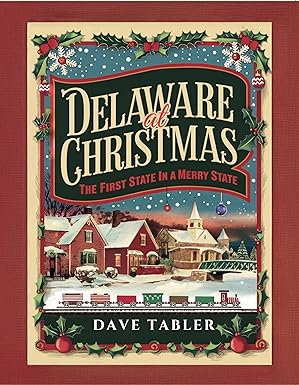
Dave Tabler’s Delaware at Christmas is a richly woven tapestry of stories, customs, and curiosities that together create a vibrant portrait of how one small state has celebrated the holiday season through centuries. Moving from the earliest Swedish settlers at Fort Christina to modern multicultural traditions, the book touches on nearly every facet of Christmas life in Delaware. It dives into the origins of local customs, such as the Sankta Lucia Festival, the Feast of the Seven Fishes, and Antebellum Black Christmas celebrations, while also exploring quirkier tales like IBM punch card wreaths and the holly industry in Milton. Along the way, it’s part history lesson, part cultural scrapbook, part gentle ode to the persistence of tradition in the face of change.
I was surprised at how much heart this book carried alongside its historical detail. Tabler doesn’t just list events or describe customs; he breathes life into them. The chapters on lesser-known practices like Finnish straw ornaments, the Irish divide between Protestant and Catholic Christmases, felt like secret treasures I’d stumbled across. His research is evident, yet it never drowns out the warmth of his storytelling. I also enjoyed the contrast between the solemn and the whimsical. One page, you’re deep in the sacred rituals of Orthodox congregations, the next, you’re smiling at the image of a turn-of-the-century Delawarean crafting elaborate outdoor “lawn trees.”
The book’s density might challenge readers expecting a breezy holiday read. The scope means that some chapters feel like they’re just getting started when they move on, and occasionally, the factual richness leaves little room for narrative pause. But in a way, that’s part of its charm. It reads like a holiday buffet where you can sample from dozens of flavors, each with its own texture. I felt my mind wandering in the best possible way, thinking about how each tradition carried its own thread into the present.
Delaware at Christmas is a gift for anyone who loves the intersection of history, culture, and seasonal joy. It will especially appeal to Delawareans, history buffs, and those who enjoy Christmas lore. The images and illustrations on nearly every page bring the stories to life, adding texture and warmth that make the history feel immediate and tangible. This isn’t a book you rush through; it’s one you savor over several evenings.
Pages: 131 | ASIN : B0F4NJ2KTZ
Extraordinary Life and Legacy

South Carolina’s Matilda Evans is a sweeping tribute to the life and legacy of Dr. Matilda Arabella Evans, the first African American woman licensed to practice medicine in South Carolina. What inspired you to tell Dr. Evan’s story?
I found inspiration to share Dr. Evans’ story upon realizing our ancestral connection through my maternal lineage. It turns out that Dr. Evans’ grandfather, Harry Corley, was the half-brother of my ancestor, Lavinia Corley Thompson. Additionally, I learned that Dr. Evans’ mother, Harriet Corley Evans, played a pivotal role as one of the founders of my maternal family church, Smyrna Missionary Baptist Church, located near Springfield, South Carolina. These familial ties, combined with Dr. Evans’ remarkable achievement as South Carolina’s first African American woman licensed to practice medicine, ignited my curiosity to delve deeper into her life. Most notably, the absence of an official record of Dr. Evans’ story motivated me to conduct further research and study her extraordinary journey.
Did you find anything in your research of this book that surprised you?
Dr. Evans impressed me with her well-rounded and innovative approach to medicine. She utilized animal bones in surgical procedures, developed a mineral spring water product called Villanova for patients with kidney issues, and established a free clinic to serve underserved communities during the Great Depression in 1930. Her clinic garnered support from prominent African American figures, including Dr. George Washington Carver and Cab Calloway, who contributed to fundraising efforts. Additionally, Dr. Evans demonstrated her compassion by caring for a child abandoned on her doorstep.
How did you decide what aspects of her life to include or leave out when telling her story, and what are the key takeaways you want readers to remember about Dr. Evans?
We aimed to showcase events and experiences that reflect the diverse life of Dr. Matilda Evans, encompassing her medical career, civic engagement, and entrepreneurial ventures. Our research drew from both primary and secondary sources, including Dr. Evans’ own insights found in her book, Martha Schofield, Pioneer Negro Educator. This biography highlights the significant contributions of her mentor, Martha Schofield, an influential African American educator who profoundly impacted the post-Civil War South. Through the extraordinary life and legacy of Dr. Matilda Evans, we hope to inspire readers to explore and appreciate the vital contributions of African Americans in South Carolina and across the nation.
What is the next book that you are writing, and when will that be published?
We are considering plans for a future sequel to the book and exploring additional projects focused on preserving and promoting the legacy of Dr. Evans.
Author Links: GoodReads | X (Twitter) | Facebook | Website | Arcadia Publishing | Amazon
Matilda Arabella Evans was born four years after the abolition of slavery and raised on a family farm in eastern Aiken County. She was the first African American woman in South Carolina to obtain a medical license and fervently championed better healthcare for African Americans, with a particular focus on children. Her early life experiences, academic accomplishments, strong religious beliefs and innovative medical approaches made her a crucial figure in enhancing healthcare accessibility for families in South Carolina, especially during the difficult era of racial segregation, when she also served as a civic advocate to uplift her local community. Authors Dr. Walter B. Curry, Beverly Aiken Muhammad and Anusha Ghosh reveal the inspirational story of Dr. Evans and her remarkable journey throughout her career.
Greed and Treachery
The Image Maker follows three men chasing opportunity, legacy, and identity in the Pennsylvania oil fields during the Civil War era, whose lives intersect during this pivotal time in history. What was the inspiration for the setup of your story?
The inspiration for the setup for the story told in The Image Maker was a conversation with a friend a couple of summers ago. Her family has a rich archive of information about their great-grandfather, who was an integral part of the processing of crude oil shortly after it was first pumped from the ground by Drake in 1859. Before this, oil was a commodity that the Indians used for salves, war paint, and to caulk their canoes. The early settlers found it a nuisance, contaminating their well water and always floating on the shallow oil creek waters.
I met, through the first family, another whose great-grandfather was a roustabout, doing all jobs required to get oil out of the ground. He became an oil scout, a spy for an oil company who hid behind bushes to find out whether the competitor’s well was a gusher or if it was a bust, often in peril of his life. He became the editor of the international oil newspaper, the Oil City Derrick, a resource for all oil people on current production, a breakdown of what was happening and where, and new tools invented on the spot to make oil production easier. Papers, photographs, and family tales from these two sources gave me the impetus to tell their stories. I added a photographer who became as famous, and Brady, who photographed the Civil War atrocities at about this same period. John Mather, glass negative by glass negative, taken in the fields, and often in danger from the gushing oil, documented the complete history of the infancy of the petroleum industry.
What intrigues you about this time period enough to write such an interesting and engaging period piece?
This time is within that of my grandparents and great grandparents, who were all alive when I was growing up, across the PA border from where this happened. Around 1880, oil was being found in the southern half of our county. So much of the background information needed to write about another period didn’t come from books or the internet, but from my 101-year-old father, a historian, who read the chapters, one by one, and helped my accuracy and added the smells and tastes of that time. His sharp mind and his love for history molded my writing career. My other books include the Book of Fretz, a 1750 historical novel on Kindle about one of my relatives coming at great risk to his life to America. I’ve also written a history book called The Bemus Point-Stow Ferry: A History about the early history of the Chautauqua Lake region. This Ferry started as a raft in 1811, crossing the narrows of the lake, and over the years became a barge carrying cars and people across the lake. It was fun showing how the whole history of our region was centered by this small ferry, now in her 114th year of continuous service. I gave the proceeds of the book to the Ferry to help with the maintenance of this aging piece of history.
What were some themes that were important for you to explore in this book?
The themes of this book included the prevailing greed and treachery of the early days of oil coming out of the ground in a very rural farming area, an area where the only export was wood from their hilly farms. The sudden wealth was mind-altering, making some folks very rich while others lost everything. The towns of only several hundred people were suddenly cities full of hotels, barrooms, brothels, and churches. Factories for processing the oil were along the shallow oil creek, while the barrels of oil, carried on barges, could only get to the deep flowing Allegany River by flooding the creek from the oil logging ponds along the way. Railroads were built, and when the independent drillers were at their best, along came Standard Oil and the underhanded buying up of all transportation, processing, and drilling businesses. You joined them, or you were doomed. The story is told from the three main characters and their families and friends. It gives the story an ability to relate to their feelings of hope, of despair, and of the importance of family. All three characters have flaws, but don’t we all?
What is the next book that you’re working on, and when can your fans expect it out?
I am currently writing a story, quite unlike The Image Maker. A friend read it and came to me saying her Great Grandmother was “something else, quite a character.” I was intrigued right away. She provided hours of family stories that I recorded, papers, short pieces written by Lila, and thousands of slides to plow through. Lila was born in 1906 in North Dakota. She got off the farm to live with her older sister in Chicago in 1930, working at Cook County Hospital in the typing pool. She was assistant to the CEO within 2 years. From there, after being jilted by her pilot boyfriend as WWII started, she joined the WACS. She went directly to Italy, where she was an administrative assistant to Patton as he took Italy and marched on to Germany. After the war, she took a job as an administrative assistant to the Army Corps of Engineers in Alaska, where she worked summers, spending her winters in San Diego. There she started going on trips, wherever the vessel went, on trawlers and freighter ships. She eventually circumnavigated the globe several times in her lifetime. She was never married but was seldom alone. What a setup! This should be out late 2027.
Author Links: GoodReads | Facebook | LinkedIn | Amazon
Ten Years of Research

Tesla’s Cottage is a beautifully woven mix of memoir, historical detective story, and tribute to Nikola Tesla’s human spirit, exploring his lesser-known years in Shoreham, Long Island, where he sought refuge and inspiration during the critical period of the Wardenclyffe project. What inspired you to share his story and its connection to you?
Too often, Nikola Tesla is seen as a strange individual who lacked human emotions. He is regarded to be a kook or even seen as an alien by some. My book focuses on Nikola Tesla as a human being: the motivations behind his work, his struggles, his warmth, his joys and happiness. It speaks to his daily life at Wardenclyffe the village where he had a lab and built his tower. Since I live in his former home there, I have a specific insight into what his life was like. I breathe the same air, see the same horizon, swim in the same water; I literally walk in his footsteps. I also have access to village lore as well as unpublished accounts written by residents who knew Tesla while he was here.
What were some ideas that were important for you to share in this book?
Tesla’s primary goal was the advancement of the human race. To this end, he invented the polyphase AC motor, wireless technology, remote control, electrotherapy applications and so, so much more. The purpose of his inventions was to achieve world peace, universal education, increased productivity, environmental sustainability, and provide abundant food to the world. Because he believed he could improve the human race in this way, he gave up everything that might be a distraction: a wife, a family, a home of his own, and personal profit.
What was the most challenging part of telling this story, and what was the most rewarding?
The most challenging aspect was probably the ten years of research that went into proving that Tesla did live in my house, discovering what his life was like, and discovering who his local friends (and enemies) were, etc. The most rewarding was coming face to face with the man, the human being behind the meme.
What is one thing that you hope readers take away from Tesla’s Cottage?
I hope that people come away with an accurate portrait of a very human person who dedicated his life for humanity. I also hope they come away with an idea that I believe Tesla would want to convey: technology is neutral. It can be used either for good or evil. Tesla believed that the only purpose of technology was to improve the human race. In today’s world, it is critical to ask if our vast technology is making us more intelligent, more compassionate, more open-minded, and safer; or, on the other hand, are we becoming intellectually lazy, more isolated, less tolerant, and more imperiled?
Author Links: GoodReads | YouTube | Website | X (Twitter) | Facebook | Amazon
Daddino set on a on a ten-year long search for answers. Was the cottage really his home? How long did he live there? What was his life like? Who were his friends, his enemies?
Daddino scours historical records and newspapers and reads Tesla’s own letters and those of his friends. Bit by bit, she pieces together the inside story of Tesla and his wonderful tower.
Alternating between past and present, the narrative wends its way through New York City during the Gilded Age, the humble beginnings of Wardenclyffe-on-Sound and the Shoreham of today to discover the man behind his inventions – his perseverance and heartbreaks, triumphs and regrets, and the quarrels and friendships history has long forgotten.
Part biography, part memoir, part detective story, Tesla’s Cottage: The Lost story of Wardenclyffe (and how it was recovered) brings Tesla to life and reveals the legacy he leaves for those of us living today.



 LITERARY TITAN