Blog Archives
The Pressure of Testing

Tokyo Juku follows an eighteen-year-old student in Japan who, while studying all night in her cram school, discovers one of her teachers has been murdered, leading to an investigation into the education system. What was the inspiration for the setup of your story?
The main inspiration comes from talking with my students. Their struggles inspired me to write about them. I teach at a university, so hearing from my seminar students about what they’ve been through really made me rethink the Japanese educational system from their perspective. One of the largest problems is the pressure of testing. Students hate tests. I mean, really hate them! My job entails evaluation, but more as individual feedback than standardized testing as social gatekeeping. Over the years, when I tell people that I teach at a university, they often cast their eyes down and mumble the name of their school, a little embarrassed at their past failings. Or, just the opposite, very proudly. That’s a sad reaction to what should be a life-transforming experience. In the novel, I wanted to take my students’ stories, my observations, and others’ experiences and condense them into the struggles of the main character, Mana. Like most Japanese, she has to learn how to navigate treacherous educational waters. As an educator and a writer, I’m on the side of improvement, but that’s easier said than done.
How has character development for Detective Hiroshi Shimizu changed for you through the series?
Hiroshi has evolved through the series. In the first novel, he had just returned from America and found the detective job through a connection. He works the job reluctantly but gradually finds he is pretty good at it, despite being resistant to crime scenes and the grittier aspects of the job. He reconnects with his college girlfriend, moves in with her, and they start a family in the latest novel. That idea of fatherhood causes him great anxiety because of what he’s seen behind the curtain. Does he want to bring a child into the world he’s glimpsed while working in homicide? But he has a knack for finding the pattern in the chaos of cases, and he’s needed.
Was it important for you to deliver a moral to readers, or was it circumstantial to deliver an effective novel?
An effective novel comes first. The moral is something that occurs in readers’ minds. I think if you push a moral or make themes too explicit, it takes away from the beautiful ambiguity of reading. As a writer, I can nudge readers in specific directions, but they will draw their own conclusions. So, if you push a moral without a compelling story, it comes across as preachy. Nobody likes that. Readers have their own reactions to the characters’ conflicts, which might yield a moral they take away, but it might also be something more complex—a conclusion or understanding that doesn’t fit into the frame of a moral. The conflicts and confusions of characters are at the heart of an effective story. I focus on that. My job as a writer is to keep them turning pages, thinking, and enjoying the ride.
Can you tell us more about what’s in store for Detective Hiroshi Shimizu and the direction of the next book?
The next book will focus on the tourist industry, which has really taken off in Japan. I have culture shock—or maybe reverse culture shock—in parts of the city swamped with visitors from abroad. That’s changing the city. I’m not against that, but the influx of tourists and tourist money has not been clearly planned for. And much of Japan is highly planned. Japan is internationalizing, in good and bad ways, so that Hiroshi will be needed even more with his English and accounting skills. He’s got plenty more cases to work on.
Author Links: GoodReads | X | Facebook | Website
Eighteen-year-old Mana pulls an all-nighter at her juku, a private Japanese cram school that specializes in helping students pass the once-a-year exams. She failed the year before but feels sure she’ll get it the second time—if she can stay awake. The Japanese saying, “Four pass, five fail,” presses her to sleep just four hours a day, and study the rest.
When she wakes up in the middle of the night, head pillowed on her notes, she takes a break down the silent hallway. A light comes from an empty classroom, and still sleepy, she pushes open the door to discover something not covered in her textbooks. Her juku teacher, the one who got her going again, lies stabbed to death below the whiteboard, with the knife still in his chest and the AV table soaked in blood.
Detective Hiroshi Shimizu is called in, and though he’s usually the forensic accountant, not the lead detective, he’s put in charge of the case. With the help of colleagues old and new, he’s determined to find the killer before the media convicts the girl in the press, the new head of homicide pins it on her, or big money interests make her the scapegoat.
Hiroshi follows up on uncooperative witnesses, financial deceptions, and the sordid details of some teachers’ private lives. Even as he gets closer, the accumulating evidence feels meager amid the vastness of the education industry, and the pressures and profits of Japan’s incessant exams.
At the outset of the investigation, Hiroshi listens as an education ministry official lectures him on how education holds the nation together, but he soon discovers how it also pulls it apart, and how deadly a little learning can be.
Tokyo Juku


Tokyo Juku begins with a bang, literally and emotionally. A young student named Mana discovers her teacher dead in a cram school classroom, his body crumpled under the sterile glow of fluorescent lights. Detective Hiroshi Shimizu and his team step into a Tokyo dense with pressure, ambition, and secrets. What follows is a layered mystery that weaves together the cutthroat world of education, the hidden costs of success, and the loneliness tucked behind the city’s polished exterior. Author Michael Pronko takes what might seem like a simple murder case and turns it into a study of human drive, shame, and survival.
The writing pulled me in right away. Pronko’s style is sharp and cinematic. The scenes snap from one point of view to another like the cuts in a film, yet nothing feels rushed. The descriptions of Tokyo at night, its cram schools glowing like lanterns, its streets humming with ambition, feel both beautiful and sad. There’s something almost tender about how he writes the city, even when it’s cruel. What I liked most was how the story balanced the crime with emotion. The mystery kept me guessing, but it was the characters’ quiet struggles, the overworked teachers, the anxious students, the tired detectives, that stuck with me. They all felt painfully real, like people you might pass on a crowded train and never think twice about.
Pronko dives deep into conversations and inner thoughts, and sometimes I wanted the story to move faster. But even then, I couldn’t stop reading. I liked how he made me feel the weight of every decision, every word unsaid. The book doesn’t just show a crime; it shows what happens to people who live inside constant expectation. It’s not only about murder, it’s about burnout, ambition, and how easily a person can crack under the strain. The writing feels clean but heavy with meaning, and that balance hit me hard.
Tokyo Juku isn’t just a detective story; it’s a mirror held up to modern Tokyo and anyone chasing success at any cost. I’d recommend it to readers who love smart mysteries with heart, and to anyone who enjoys books that make you sit back and think after you close them. It’s perfect for fans of slow-burn suspense, city stories, and those who don’t mind a little soul-searching between the clues.
Pages: 314 | ASIN : B0FLW78XTZ

1989: An Eye For An Eye


1989: An Eye for an Eye is a riveting and emotionally tangled novel that centers around a decades-old murder case that left deep scars on a small Southern town. At the heart of the story is Ingrid, a woman haunted by her hidden identity, a web of family secrets, and a burning desire to clear her father’s name. After faking her death to go underground, she returns under a new identity, determined to expose the corruption that destroyed her family. What unfolds is a suspense-filled narrative that weaves together revenge, redemption, and revelations, touching on systemic injustice, identity, and the burden of legacy. With alternating perspectives and past secrets slowly coming to light, the novel drips with tension, building a compelling mystery around who’s guilty and who deserves justice.
I found myself genuinely pulled in by Smith’s writing. It’s not fancy or highbrow, but it’s honest and raw, and that made it powerful. The dialogue feels real, like you’re eavesdropping on two people who have been through hell together. The way he builds emotional weight around every choice Ingrid makes, especially the internal tug-of-war between vengeance and doing the right thing, hits hard. That said, the book has a big cast, and a few times I had to flip back to remember who someone was. Still, the pacing and reveals kept me hooked. It’s a big story with layers of betrayal, hidden ties, and long-buried pain. Every time I thought I’d figured something out, another twist would shake it up.
What really got me was the heart underneath all the thriller elements. The relationships, especially between Ingrid and Nicole, carry the emotional muscle of the story. You see how trauma doesn’t just affect one person, it ripples through generations. And when Ingrid gets her moment to finally breathe and step out of the shadows, you feel it. You also feel the price she pays to get there. The moral ambiguity in this book is thick. You’re constantly questioning what’s justified and what isn’t. And while some characters are undeniably evil, others live in this gray space that makes them unforgettable.
It’s gripping, it’s personal, and it asks big questions without offering easy answers. I’d recommend 1989: An Eye for an Eye to anyone who loves mystery, family drama, or stories about strong women navigating impossible choices. If you’re into slow-burning revenge tales that pack a gut punch, this is your kind of read.
Pages: 278
Warrior Pose
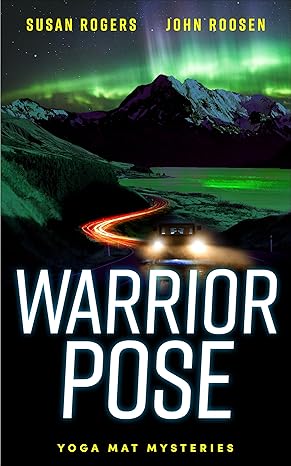
Warrior Pose is a high-stakes international thriller that kicks off with a literal bang and doesn’t let up. The story follows Ric Peters, a gritty intelligence operative juggling perilous missions, personal demons, and a complicated relationship with his partner Elaina. From the chaotic streets of Jakarta to the dripping jungles of Bali and the quieter corners of Sydney and New Zealand, the narrative intertwines espionage, betrayal, and just enough romance to keep things grounded. Along the way, the book digs into environmental crimes, global politics, and the human cost of covert operations.
Right off the bat, I was hooked. The opening scene—Patterson faceplanting into his soto soup after taking a bullet to the forehead—was cinematic and brutally efficient. It set the tone for the kind of world we were diving into: sharp, fast, and dangerous. The writing is vivid and smartly paced. Ric’s inner voice, always half-a-step from cracking, added tension and authenticity.
What I liked most was how the authors didn’t shy away from messiness—emotional or otherwise. The romance between Ric and Elaina felt lived-in and real. Their chemistry wasn’t all candlelit dinners; it was jungle ambushes, missed connections, and half-yelled arguments in sweltering heat. Elaina showing up mid-interrogation with two suspects face-down in the dirt? Wild and gutsy. But also, oddly believable for their relationship. It made me root for them, even while I questioned whether Elaina should really be getting this close to Ric’s world. Her voice added a necessary counterweight to Ric’s hardened lens.
Some parts had me grinning. Like the surprise orange wig at Delilah’s salon—a rare light moment in an otherwise intense story. It reminded me that these characters aren’t just agents and assets. They’re people. They get scared. They crack jokes. They write sweet texts like Ric’s glow-in-the-dark engagement note to Elaina. It made the action scenes feel more meaningful because you cared about who was running from the bullets. That’s not easy to pull off in a thriller.
The story packs a lot. Assassins, flash drives, family trauma, espionage, yoga studios—it’s a buffet. The story switches from Ric’s action to Elaina’s introspection. The ride was fun and rich. And Francis Holms was absolutely unhinged in the best way. His scenes were like a twisted blend of Bond villain and IT guy with a grudge.
Warrior Pose is for fans of spy thrillers who want a bit more than bullets and bodies. It’s got heart. It’s got humor. It’s got complex people doing questionable things for the right reasons—or at least convincing themselves they are. I’d recommend it to anyone who loves stories where action meets character, and where danger is never more than a few pages away. If you like Barry Eisler’s John Rain or the TV show Alias, this one’s going to hit your sweet spot.
Pages: 391 | ASIN : B0F2N8TGDM

A World of Magic and Medieval Weapons

The Missing (Raven, Romda, and Ravai) follows three battle-weary heroes who are given a mission to uncover what is happening to the people in a town where one-third of the residents have gone missing. What was the inspiration for the setup of your story?
My son came up with the bad guy in this book, and I turned it into a mystery of sorts because it made sense for this to be a cover-up. The person who does this is someone who would want to abduct people for a specific purpose. So, instead of a more action based story as I have done in the past, it works its way into a whodunit.
What was your inspiration for Raven, Romda, and Ravai’s relationship?
They are based on my son’s friendships. I wouldn’t say that they are a direct translation, but the uniqueness of individuals has always got my attention, and then I share it. To think about how normal people would navigate a world of magic and medieval weapons is highly interesting to me. The interplay between the three falls out of that. Plus, it allows for some good humorous moments as we have in our own lives.
What was one of the hardest parts in The Missing for you to write?
I don’t write mysteries where people get revealed at the end, but rather I have them found about two-thirds into the book, and then allow for a longer aftermath. So, I wasn’t quite sure when to do the reveal. I knew what I wanted to do post to that but didn’t want to rush it or make people feel like they have a long slog until the end of the book.
I hope the series continues in other books. If so, where will the story take readers?
Thank you! I have been dropping small hints about the larger story arc that I want to tell. Within the next 3 books, that arc will ramp up considerably. I think people will be more comfortable with the characters and the settings such that they are ready for some serious danger coming.
Author Links: Website | X | Facebook | GoodReads
Tree Pose

In Tree Pose, Ric’s idyllic journey to Tasmania alongside his captivating yoga instructor girlfriend, Elaina, takes a treacherous turn when they encounter a cryptic message, unraveling a web of danger stemming from Ric’s concealed past. Authored by Susan Rogers and John Roosen, this thrilling installment, the third in the Yoga Mat Series following Cobra Pose, thrusts main characters Ric and Elaina into a gripping narrative filled with suspense and action against the picturesque backdrop of Australia.
Rogers and Roosen expertly weave together a tale that seamlessly blends adventure and romance, drawing readers into the evolving relationship between Ric and Elaina amidst the mounting tension of Ric’s troubled history. While familiarity with the preceding book may enhance appreciation of the characters’ dynamics, Tree Pose stands solidly on its own as a captivating adventure-romance fusion. The authors skillfully recap previous events, ensuring new readers can readily immerse themselves in the narrative. Rich character development and a cast of compelling secondary characters elevate this installment to new heights within the series. Impeccable pacing and vivid descriptions transport readers into a world brimming with excitement and danger, making this book an essential read for fans of the action-adventure genre.
Rogers and Roosen deliver a riveting tale that resonates long after the final page, offering readers a captivating blend of thrills, romance, and intrigue. Highly recommended for those seeking a fascinating read that seamlessly builds upon its predecessors while offering a fresh and exhilarating narrative experience.
Pages: 369 | ASIN : B0CVDCLBXB
THE DARK SIDE OF WRITING

Readers often enjoy happy-ending stories, but everyone craves stories with intrigue, nail-biting dilemmas, and unusual storylines. Since the beginning of time, humans have told (as well as listened to) the tales that weave unusual and unexpected ‘dark’ threads together. Sometimes these stories become a golden fabric by the end of the weaving.
As writers, wanting to explore the entire spectrum of emotion, for this story we wanted to check out the dark side of a storyline, even if it was just to peek at that edge of murky gloom. Writing about a subject that even scares us (!) was something we wanted to try in Tree Pose.
Tree Pose follows a couple on their dream vacation to Tasmania who end up in a nightmare of mystery, murders and ghosts from the past seeking revenge. What was the inspiration for the setup of your story?
One of our favorite short stories is The Legend of Sleepy Hollow by Washington Irving. It is hard to top a headless horseman, a shaky schoolmaster named Ichabod Crane, a night of relentless shadows, a discarded hat on the ground, and the remains of a shattered pumpkin.
As one of the components of Tree Pose, we created a short ghost story. And Tasmania gave us all the elements to build that ghost story. Several Australian states were used as a penal colony starting with the arrival of the first British fleet in 1788. Tasmania was an isolated island at the lower end of Australia reserved for prisoners deemed the worst, or even just recalcitrant at being ‘transported for life’.
The mixture of a naturally beautiful island with the brutality of the prison system led to the desperation and hopelessness felt by the men, women, and children convicts locked up in Tasmania. These images provided us with a ‘ghostly’ backdrop for this embedded story. It also helped to visit the remnants of the prison buildings which are spread throughout Tasmania. Many have what are called ‘nightly ghost walks’ and guides recounting the horrid tales of the past.
Ghosts became a theme within the entire story line. Elaina picks off a leaf from Ric’s clothes that is from an iconic Australian Ghost Gum tree. There is a joke between Ric and Elaina about ‘The Ghost of Christmas Past’ and the movie Ghostbusters. The ghosts from Ric’s past have haunted him throughout the first three books.
Ric and Elaina, our protagonists, move between the joy and elation of their budding romance to dealing with a past that haunts them both. This includes dark secrets Ric cannot reveal. While Ric and Elaina share the beauty of coming together there is a darkness—from hitmen to multiple warnings, to ghost stories. These are wrapped up and delivered within the storyline.
And that is why the dedication in the eBook and Audiobook is in part: To All Ghosts – Past, Present, and Future. There is nothing like ghosts to help explore the darkness … and light within a story.
How did you come up with the idea for the antagonist in this story, and how did it change as you wrote?
There are four main antagonists in Tree Pose. Two remain a threat throughout the story, two turn out to be different than expected. We wanted to use these changing patterns contrasted against a combination of people caught in the throes of life altering events.
The events of the story help create the varying feelings of regret, hatred, seeking revenge and settling a score among the different antagonists.
Both authors have had varied backgrounds including working and living in various parts of the world. This includes military service, law enforcement, restoring a presidential yacht, cleaning up hazardous waste sites and working in Middle Eastern oil production areas with live minefields … just to name a few. With that background we have seen a variety of antagonists of varying degrees, as well as done significant research in various psychological realms. Further we drew on personal experience for the some of the emotions of the antagonists in Tree Pose.
But like all humans, changes do occur over time. The raw motive of revenge, the elements of pity, self-doubt and remorse, and finally redemption, which can turn a character from a vengeful monster into a caring human. But not all characters make this transition. Their storyline thus becomes a tragedy.
Was there a reason why you chose this location as the backdrop for your story?
The Australian island-state of Tasmania is well known as a tourist destination, a ‘go-to place’ for throngs of visitors from Australia and from all over the world. It is a stunning part of the world and like no other. While living in Australia, we became fascinated with the state and more so with its dark beginnings and history.
At one point, Tasmania was inhabited by First Nations Australians during the time of lower sea levels when the area had a land connection to the mainland of Australia. But with a sea level rise, those early inhabitants and the flora and fauna were cut off from the mainland. Imagine that for 12,000 years, a few thousand people were isolated and cut off from anyone else on the planet.
When European settlers first arrived, Tasmania was established as a penal colony for the British Government. Men, women, boys, and girls were transported by sailing ships to Tasmania shores.
The crimes were often minor, such as stealing food and clothing. Hardened criminals were also ‘transported for life’. The contrast of Tasmania as a popular destination for tourism, compared to its dark past as a penal colony actually attracted us for this very distinction.
We thought it helped provide the contrast for our main characters coming to a beautiful place to sort some things between out between them, while being met by the darkness and dangers that faced them in Tasmania. It was irresistible.
What is the next book that you are working on, and when will it be available?
We are long term planners and writers. We have produced three eBooks and three audiobooks in three years.
Our next book is Warrior Pose. This book is set in another one of our favorite locations in the world—the islands of New Zealand, and particularly, Nelson, on the South Island.
The next book is also a homecoming for Ric Peters, since he was born in New Zealand. His partner in the crime solving mystery series, Elaina Williams, will be meeting Ric’s parents while there. Does it sound like we think our characters are real? You bet!
New Zealand is an island chain of volcanoes, thermal pools, snowcapped peaks, fertile valleys, and forests spread from the tropical North Island to the cooler alpine climate and topography of the South Island. It has ‘drop dead’ gorgeous scenery, which is perfect for two crime-writers.
As expected, we will explore several themes, and a mysterious death or two. The eBook will include an audiobook some months after, as the previous writings.
As far as the upcoming books, Book 5 is Half Moon pose set in the south of France, Book 6 is Dragon Pose set in Melbourne, Australia and Book 7 is Goddess Pose centered, in Greece and the Mediterranean.
As with all our writing we ground truth all story locations as part of our research. If you see us walking around, we are the ones with cameras, notebooks, measuring tapes … and spare change for the coffees we sample along the way.
The Devil’s Island is living up to its name, serving up the ghosts of its dark past, while Ric is haunted by his own demons. The truth is unravelling, and death is closing in from all sides. And now, it’s stalking Elaina.
Ric’s past is catching up to him, with a vengeful man seeking retribution for a catastrophic blunder in Indonesia. Ric has kept a secret hidden from Elaina, fearing that she will not … cannot, forgive him. That after all they’ve been through, he’s not the man she believes him to be.
In the shadows, a hitman lurks … waiting for the time to strike, unafraid of collateral casualties.
As corrupt officials pull strings and innocents are sold, Ric and Elaina’s life together is threatened. Detective Inspector Jack McMasters races against time to piece together the clues before it’s too late.
A sociopath and an anguished man are closing in. As the lightning strikes, the uncertainties remain … revenge, redemption, or devastation?
Tree Pose is delivered hot with twists and turns, mixed with secrets and attractions, tossed with suspense and revenge, then blended with classic storytelling.
The third book in the Yoga Mat Mysteries series takes readers on a thrilling ride through the beautiful and mysterious island of Tasmania, Australia. The story follows Dead Man’s Pose, set in Sydney, and Cobra Pose, set in Brisbane.
BUY Tree Pose for a captivating mystery with murders, ghosts, and a past that won’t stay buried.



 LITERARY TITAN