Blog Archives
The Entirety of Reality

The Crisis of Ignorance is an expansive work of social criticism, memoir, educational philosophy, and civic argument organized around a central conviction that intellectual passivity carries consequences far beyond the classroom. What do you want readers to understand when you say, “Ignorance is a disease”?
Throughout my book, I argue that ignorance is not the same as a lack of education. An educated person can still be profoundly ignorant if they refuse to question what they have been taught or accept information without examination. Propaganda, censorship, misinformation, political manipulation, poor education, intellectual complacency, and the suppression of dissent can cultivate ignorance. Ignorance becomes dangerous when it is accompanied by indifference. Not knowing something is natural. Choosing not to know, particularly when the information is accessible and consequential, is something completely different. Ignorance weakens liberty; a person who cannot distinguish evidence from propaganda, or who lacks the willingness to question authority, is more vulnerable to manipulation. In that sense, ignorance can undermine the intellectual foundation a free society requires. This connects directly to the larger argument of The Crisis of Ignorance: the struggle against ignorance is ultimately a struggle for human autonomy. If individuals cannot think critically for themselves, their ability to make meaningful choices, participate in democracy, challenge authority, and defend liberty becomes increasingly compromised.
You describe yourself as once being an indifferent student who struggled with reading. What changed your relationship with learning?
I was once the student I now worry about as a teacher: indifferent, struggling with reading, and seeing school more as something to endure than an opportunity to discover something. I didn’t initially understand the value of education because I hadn’t yet found a reason to care about learning. My relationship with history changed. As I read more and understood the world beyond my immediate experience, I discovered that knowledge was not simply information to memorize for a test. Knowledge let me understand people, societies, governments, conflict, and ultimately myself. History opened a door I didn’t know existed.
Travel also changed how I understood learning. Visiting different countries and encountering people, cultures, and historical places firsthand made the world feel much larger than I had imagined. I began to understand that learning was not confined to a classroom or textbook. The world itself was a classroom. Eventually, reading stopped being an academic obligation and became a form of freedom. The more I read, the more questions I had. And the more questions I had, the less willing I became to simply accept someone else’s interpretation of the world. I began to recognize that education is not merely about acquiring answers; it is about developing the courage and ability to ask better questions.
That realization ultimately changed my life. The student who once struggled with reading eventually became a teacher, and later a researcher and writer. That transformation is one reason I wrote The Crisis of Ignorance. I know firsthand that indifference does not have to be permanent. A person can awaken intellectually. Perhaps the most important lesson I learned is that we should never confuse a student’s current relationship with learning with that student’s potential. Sometimes a student does not lack intelligence or curiosity. They simply have not yet encountered the question, experience, teacher, or idea that makes them want to know more. How has the modern information environment changed the challenge of distinguishing knowledge from misinformation? The modern information environment has fundamentally changed the nature of ignorance. In the past, one of the greatest challenges was accessing information.
Today, we face the opposite problem: we are surrounded by more information than any individual could process. The challenge is no longer simply finding information. It is determining what is true. Social media, search engines, artificial intelligence, 24-hour news, podcasts, videos, and online communities have created an environment where accurate information can exist alongside misinformation, propaganda, conspiracy theories, half-truths, and deliberately fabricated claims. What makes this especially dangerous is that misinformation does not always look like misinformation. It can be presented professionally, repeated thousands of times, paired with images or statistics, and delivered by someone who seems credible. Technology has therefore made critical thinking more important than ever. We have to ask: Who created this information? What evidence supports it? What is the source? What might the author want me to believe? Is there credible evidence that contradicts it? And perhaps most importantly, am I accepting this information because it is true, or because it confirms what I already believe? The danger is that people can now construct an information environment that continually reinforces their existing assumptions.
Algorithms can expose us to more of what attracts our attention, while social networks can create the illusion that the people around us represent the entirety of reality. We can become extremely well-informed about what we already believe while remaining profoundly ignorant of perspectives and evidence that challenge us. This is why I believe the crisis of ignorance is not solved simply by giving people more information. Information without judgment can actually deepen the problem. What we need is the intellectual discipline to evaluate information—to distinguish evidence from assertion, knowledge from opinion, and truth from manipulation. For me, this is where education becomes essential. Education cannot simply fill students with information. It must teach them how to think, question, investigate, and recognize when someone is trying to manipulate their understanding of reality.
What larger questions do you plan to explore as The War Against Ignorance Series continues?
As The War Against Ignorance Series continues, I intend to ask increasingly uncomfortable questions: Who benefits when people stop questioning? Who controls what a society remembers, what it teaches, and ultimately what its citizens are permitted to believe? And what happens to liberty when ignorance becomes easier than thinking? Volume II, The Influence of Ignorance: Teaching the Complacent Mind in an Age of Apathy, which I hope to publish in November, moves from the crisis itself to the forces that allow ignorance to take root and influence us. I examine apathy, conformity, education, technology, media, politics, and the growing willingness to accept information without questioning its source or purpose. We live in an age in which information is everywhere, yet genuine intellectual engagement seems increasingly difficult to find. The question is not whether people have access to knowledge. The question is whether they still want to seek it. Volume II asks what happens when complacency becomes a habit and students—and society—become comfortable letting someone else do the thinking for them. That leads to a darker question: Can ignorance be used as a weapon? If ignorance can be cultivated, manipulated, and passed from one generation to another, then education becomes far more than the transmission of information. It becomes a battleground for the human mind. That is where The War Against Ignorance ultimately takes us: into the struggle over who gets to shape the way we think—and whether we have the courage to think for ourselves.
Author Links: GoodReads | Website | Amazon
Not from one political party, but from both.
Across America, classrooms have become battlegrounds where history is censored, teachers are silenced, books are banned, and controversy is treated as a greater threat than ignorance itself. Every lesson is scrutinized. Every discussion is suspect. Every teacher walks a tightrope between political outrage and professional survival.
This is the story of one public school history teacher who refused to surrender the classroom.
For more than two decades, I have stood before students and asked the questions many people no longer want answered: How do free societies become authoritarian? Why do ordinary citizens surrender liberty? What happens when education stops producing critical thinkers and begins producing obedient followers?
The answers are not comforting.
Social studies teachers are more than instructors of dates and dead civilizations. They are the first line of defense against tyranny. The classroom is one of the last places where ideas can be challenged, evidence examined, and power questioned. When that freedom disappears, democracy does not collapse overnight—it slowly suffocates beneath conformity, fear, and manufactured ignorance.
We have been told that avoiding controversy creates safer schools. It does not. It creates weaker citizens.
A nation that refuses to confront difficult truths eventually loses the ability to recognize them. Students who are never allowed to wrestle with competing ideas become adults who mistake slogans for knowledge and obedience for virtue.
The greatest threat facing America is not an invading army, an economic recession, or even political division. It is ignorance—a contagion more destructive than any virus because it infects the mind. It poisons public discourse, fuels extremism, distorts history, bankrupts civic responsibility, and allows freedom to be traded away one compromise at a time.
History has already shown us how this story ends.
The only question is whether we are willing to learn from it.
The Crisis of Ignorance is both a warning and a call to action. It exposes how authoritarian societies have always transformed education into an instrument of conformity and asks whether the same warning signs are emerging today. This book challenges readers to reject complacency, reclaim critical thinking, and recognize that the battle for liberty begins not in the halls of government, but in the classrooms where the next generation learns what freedom is worth.
Because when ignorance becomes normal, liberty becomes negotiable.
And societies rarely realize what they have lost until it is too late.
Shameful Silence: What You Don’t Know About Domestic Violence


In Shameful Silence, author Alexandra Lozano argues that domestic violence against men remains painfully underrecognized, not because it’s rare or simple, but because shame, masculinity, immigration fears, legal systems, and public narratives often make it nearly unspeakable. Drawing on survivor stories, research, and her experience as an immigration attorney, Lozano widens the frame beyond physical violence to include emotional abuse, financial control, administrative abuse, false allegations, parental alienation, and the quiet devastation of men who don’t fit our cultural image of a victim.
Lozano writes with a lawyer’s urgency, but her best passages feel less like argument than witness. Miguel’s story, with the police lights outside his Burien apartment after he called for help against Guadalupe, is haunting because it turns on disbelief as much as violence. The threats of deportation, the deleted contacts, the children asleep in the next room, all of it gathers into a portrait of a man trapped by love, fear, obligation, and invisibility. Tristan’s story affected me even more. His slow erosion, taking extra jobs while being gaslit into apologizing for things he never said, captures emotional abuse as a weather system, something that changes the air until a person forgets what breathing normally feels like.
I also admired the book’s willingness to enter uncomfortable rooms without pretending they’re tidy. Lozano is careful to say that focusing on male victims doesn’t diminish the reality of violence against women, and I think that distinction matters. The strongest idea in the book is that compassion isn’t a scarce resource. I found myself wanting more exploration of the policy-heavy sections, especially around false allegations, family court, and systemic bias. Those chapters are provocative and necessary, and the arguments move fast. The writing is at its most powerful when it slows down, as it does with Bernie Fitte’s 31-year marriage, his isolation, the debt, the way escape arrives not as one cinematic revelation but as a cumulative, aching clarity.
By the end, I felt that Shameful Silence is not only a book about male victims of domestic violence, but a plea for a more honest moral imagination. It asks readers to look past the familiar scripts and recognize suffering even when it arrives in a body we haven’t been taught to pity. I’d recommend it to readers interested in domestic violence, trauma, law, gender, immigration, and family systems, as well as advocates and professionals who want to think more expansively about who needs help and why they might not ask for it. This is a difficult, compassionate, and deeply necessary book.
Pages: 240 | ISBN : 978-1394430277

From Coercion to Courage: Rising from the Ashes of Past Pain and Outdated Paradigms


From Coercion to Courage is a hybrid of memoir, moral argument, and trauma-informed exhortation. Dr. Stevie Carnegie sets out to name coercion in all the forms people too often minimize or miss, from childhood conditioning and coercive control to workplace sexual pressure, victim-blaming, and the institutional rot exposed through #MeToo and the Epstein files. The book moves from definition to testimony to ethical challenge, then finally toward recovery, arguing that what coercion damages most profoundly is not just safety but identity itself, and that healing begins when that damage is named without euphemism and met with courage rather than shame.
Carnegie doesn’t write as a detached observer. She writes as someone who has lived inside the confusion she’s trying to explain, and that gives even her more didactic passages a raw legitimacy. I found the personal material especially powerful when she describes the long afterlife of manipulation, the way an old message from childhood can become a trapdoor under adult life, or when she revisits her own #MeToo experiences with that awful mixture of self-reproach, disgust, and belated clarity. The imagined challenge in Chapter 7, where the reader is asked to stop blaming victims and inhabit their vulnerability from the inside, struck me as one of the book’s strongest moves. It’s a direct moral demand for empathy.
I think the author is at her best when she’s concrete. The distinction she draws between coercion and brainwashing is genuinely clarifying, and the family examples, particularly the story of being manipulated into making her husband’s parents her sole purpose, give the argument a bruised human texture that abstraction alone couldn’t carry. The book prefers insistence. It repeats, circles back, underlines, and capitalizes. I came to feel that the repetition is part of the book’s emotional logic. Carnegie is writing against a culture of denial, and she clearly believes some truths have to be said again and again before they penetrate. I admired the fierceness of the project, especially in its refusal to separate private suffering from systems, culture, and ethics. The final movement toward post-traumatic growth and courage as a habit of character gives the book a hopeful lift. I appreciated that she aims not merely to diagnose harm, but to imagine a life after it.
From Coercion to Courage is impassioned and sincere. I read it for the conviction and for the hard-won intelligence of someone trying to turn private pain into public clarity. I’d recommend it most strongly to readers interested in trauma, coercive control, survivor testimony, and the ethics of power, especially those who want a book that speaks plainly and feels lived rather than clinically packaged. It’s the kind of book that will matter most to readers willing to meet it heart-first.
Pages: 177 | ASIN : B0GRQ7HHB9

Kissed the Girls

Anthony Silman’s Kissed the Girls dives deep into the sleek, poisonous world of power, privilege, and corruption. The novel weaves several storylines together, a pair of ruthless lawyers, a naïve designer lured into a predator’s den, a celebrity couple undone by scandal, and a grifter who thrives in the cracks of bureaucracy. The book opens with a cry of outrage from the press against a man “beyond the law,” setting the tone for what follows: a series of interconnected tales where greed, lust, and moral rot fester beneath elegant façades. It’s satire, thriller, and social commentary rolled into one.
Reading it, I found myself both fascinated and uneasy. Silman’s writing is crisp and confident, filled with sharp dialogue that makes his characters sound alive, even when you wish they weren’t. Inigo and Archie, the slick lawyers who bend law and ethics like soft metal, are drawn with wit and venom. Suzanne Pickwick’s story hit harder for me. Her innocence, her polite compliance, the quiet horror of what she endures, it all builds slowly until you’re holding your breath. I could almost feel the weight of the room she’s in, the polished menace of the people around her. There’s anger beneath the words too, a fury aimed at the smug invulnerability of men like Omar, and it bleeds through in the best way.
At times, the story feels like a moral fable hiding behind a crime drama. Silman’s world is full of people who think they can buy decency, and for a while, they almost do. But there’s a pulse of resistance running through the book. Suzanne’s defiance, the small flickers of conscience from unexpected places, they make the darkness sharper. The style isn’t smooth or sterile. It stings, it laughs at itself, it jumps from the wickedly funny to the deeply grim. That volatility made me enjoy it more. I felt irritated, amused, disgusted, and even oddly hopeful, often within a few pages.
In the end, Kissed the Girls left me rattled but satisfied. It’s not a pretty story, and it doesn’t try to be. It’s clever and brutal, and it doesn’t let you stand comfortably on the sidelines. I’d recommend it to readers who like their fiction bold, cynical, and grounded in the uncomfortable truths of modern power. If you enjoy stories that peel back the glossy surface of success to show the greed and cruelty underneath, this one’s for you.
Pages: 408 | ASIN : B0FHQFRBGN
Interrupting Violence: One Man’s Journey to Heal the Streets and Redeem Himself

Interrupting Violence: One Man’s Journey to Heal the Streets and Redeem Himself by Cobe Williams and Josh Gryniewicz is both a memoir and a powerful call to action for change across American cities. The book chronicles the life of Cobe Williams, who was born into the gang Black Disciples and faced tremendous adversity from a young age. Despite the odds—losing his father to gang violence at age 10, dealing drugs in high school, and being wrongfully imprisoned for murder—Cobe managed to turn his life around. He became a violence interrupter, dedicating himself to saving the lives of young people on the brink of falling into the same destructive patterns.
This touching memoir is not only about personal growth but also serves as a cautionary tale and a rallying cry for those who believe they can make a difference. As a reader from a different background, I had only encountered gang-related content in movies. It was eye-opening to learn that such gangs exist in reality, with violence as pervasive as portrayed on screen. Coming from a psychology background, I recognize that these issues are deeply rooted in society and manifest globally in similar forms. Addressing violence and problematic behavior requires time and effort, much like the work Cobe and his colleagues are doing, as described in this book. Their stories will undoubtedly reach and inspire many. Reading about real-life events and the life trajectory of someone like Cobe is incredibly impressive. His transformation is a testament to the possibility of change and growth. His story teaches us that better times are always within reach if we remain determined and disciplined in our goals. The book is written in an engaging, conversational style, making readers feel as if they are hearing Cobe’s story firsthand. The authors use slang and informal grammar to reflect authentic spoken language, effectively drawing readers into the narrative.
Interrupting Violence has broadened my perspective, exposing me to realities I might not have otherwise known. I highly recommend this book to anyone looking for a compelling read that transports them into the lives of others around the world. This is a story of resilience, redemption, and the enduring possibility of positive change.
Pages: 328 | ASIN : B0C9W7JJNX
Random Musings of the Left Hemisphere
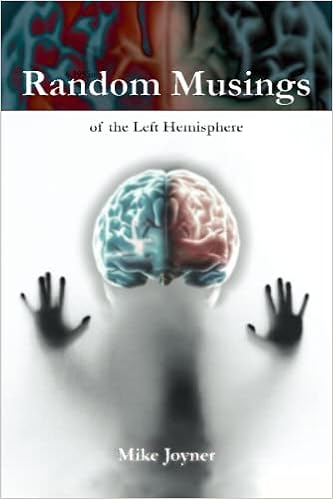
Random Musings of the Left Hemisphere by Mike Joyner serves as a comprehensive anthology of his reflective insights on a myriad of political and social issues currently permeating the United States. Joyner critically examines the cultural trend of “woke-ism” and the embracement of progressivism, contending that such movements are, paradoxically, regressing American society towards historic European models of governance that our nation’s founders fervently resisted.
The book casts a wide net, exploring topics such as the Covid-19 pandemic, gun violence, the controversial Florida voting incident, impeachment, perceived leftist privilege, the Black Lives Matter movement, and even personal anecdotes like ‘Grandpa’s dating rule.’ By incorporating elements from his personal life, Joyner forges a human connection with his readers, fostering a relatable and engaging atmosphere.
True to its title, the book is a rich tapestry of diverse thoughts, presented in succinct chapters that streamline reader comprehension while maintaining their engagement. Joyner’s profound passion for the well-being of his country and its citizens is palpable in each chapter. His candid and bold commentary, driven by his desire for a safer and fairer nation, is both refreshing and thought-provoking.
One particularly poignant chapter sees Joyner express a deep-seated protective instinct, asserting that as a father, grandfather, and husband, he would courageously place himself between a child and danger, mirroring the heartbreaking sacrifice made by teachers during the tragic incident in Florida.
Readers concerned about the future trajectory of the United States will find Joyner’s book an enlightening and conversational read. Amid an era characterized by cancel culture and a lack of tolerance for divergent views, Joyner fearlessly articulates his perspectives on where he perceives the nation is faltering and how it can strive toward improvement.
Random Musings of the Left Hemisphere offers an insightful exploration of contemporary American issues. While Joyner’s views might not resonate with everyone, they undeniably provoke thoughtful consideration. Regardless of one’s political orientation, this book provides an invaluable opportunity to enhance understanding of current American challenges and the complexities of its political landscape.
Pages: 122 | ASIN : B0C2WMQNHH
Learning To Balance Darkness And Light

Shooting Stars follows an author that meets the love of her life and realizes she must face the trauma of her past before they can live happily ever after. What was the inspiration for the setup to your story?
There’s an expression “hurt people hurt people.” Sometimes that isn’t true. Sometimes people in great pain are able to love others in extraordinary ways, and they only hurt themselves. That’s what I wanted to explore. I wanted to look at how people with both visible and invisible wounds can love each other unconditionally, and how in turn, that may help them heal.
Tess starts off confident but it is a facade, as that shell breaks away she transforms into a stronger person. What were some driving ideals behind your character’s development?
Tess is my favorite protagonist from any of my novels. In many ways, she’s an aspirational character. She’s enormously talented and successful, which has afforded her an enviable life on the surface. She’s also deeply kind—she sees the humanity in each person and treats others with grace. Despite all she has going for her, she’s haunted by trauma survived in her childhood, and for a long time she struggles to find any genuine happiness. While the details may differ and be more traumatic in Tess’s case, I think many of us carry deep wounds. So often people see our highlight reel on social media and may have a false sense of our lives, when in fact we may be struggling. So as I developed Tess, I wanted to peel back the layers, from what we see on the surface, to what she’s really dealing with on the inside.
What were some themes that were important for you to explore in this book?
For me, this is a story about learning to balance darkness and light in our lives. It’s also about the healing power of love in all forms—romance, friendship, love of art, and love of community.
What is the next book that you are working on and when will it be available?
I fell so completely in love with Tess, Jack, and all their friends that after writing Shooting Stars I wrote 5 more novels based on these characters, for 6 in total. Each novel takes place about a year later—so it follows the characters for about 7 years. Each novel has its own story and theme; however, the collection as a whole also has an overarching narrative. It’s an epic love story about balancing darkness and light so that we may ultimately live in full color. There’s romance, laughter, tears, and some unexpected twists and turns. The title is Celestial Bodies: The Tess Lee and Jack Miller Novels and it comes out June 1. I’m so proud of it. Truly, of all my work it’s what I love and revisit the most. Reading it is a bit like being wrapped in a big hug. Here’s the amazon link: https://tinyurl.com/4c5nrtvc
Author Links: Twitter | Facebook | Website



Random² Musings: A Left Hemisphere Continuum
Dec 23
Posted by Literary Titan
Random² Musings: A Left Hemisphere Continuum, presents a tapestry of personal reflections, experiences, and viewpoints from Mike Joyner on a variety of subjects including religion, social media, family dynamics, relationships, and politics. Joyner, with his accumulated wisdom, offers a transparent and unreserved discourse, unafraid to delve into topics that may spark controversy or dissent. His perspective on American politics, for example, provides a unique angle, enriching the reader’s understanding, even when one may not align with his views.
One of the book’s strengths lies in its exploration of human connections and the ephemeral nature of life, emphasizing the significance of nurturing enduring relationships. Joyner’s commentary on societal changes in America also paints a vivid picture of the nation’s evolution and shifting ideologies. Particularly noteworthy is the chapter “Truisms for Generations,” which serves as a repository of life lessons and social etiquette, alongside valuable insights gleaned from various experiences.
Joyner’s identity as a hunter adds an intriguing dimension, with his hunting narratives offering a blend of the personal and the adventurous. The book’s tone strikes a balance between being personal and informative, creating an engaging and thought-provoking read. While Joyner presents his thoughts without imposing them, I feel some readers might find it a challenge to reconcile with some of his ideas. However, this aspect only adds to the book’s appeal as a candid and unfiltered exploration of diverse topics.
Random² Musings: A Left Hemisphere Continuum, by Mike Joyner, stands out for those in search of a book that breaks away from conventional themes, offering fresh perspectives on critical issues like politics, well-being, family, and more. This book is a commendable choice for readers looking to engage with a range of ideas and possibly revisit them for a deeper understanding.
Pages: 159 | ASIN : B0CK4WH86B
Share this:
Like this:
Posted in Book Reviews, Four Stars
Leave a comment
Tags: author, book, book recommendations, book review, book reviews, book shelf, bookblogger, books, books to read, ebook, family, goodreads, indie author, kindle, kobo, literature, Mike Joyner, nook, novel, politics, Popular Culture, Random² Musings: A Left Hemisphere Continuum, read, reader, reading, social commentary, story, violence in society, writer, writing