Blog Archives
The Proxy Condition


Harrison Rose Tate’s The Proxy Condition is an ambitious work of cultural criticism about what happens when a person exists simultaneously in physical life and in the networked systems that represent, predict, and sometimes act for them. Tate calls that second presence the “proxy self,” arguing that it’s more than an online persona. It can keep operating when we’re absent, influencing recommendations, transactions, rankings, automated decisions, and other systems built from traces of our behavior. The book develops this idea through philosophy, sociology, neuroscience, technology history, personal observation, and examples ranging from social media feeds and banking systems to smart homes and AI. Its central claim is surprisingly easy to recognize once Tate has named it: we’re “living once, but existing twice,” and the strain people often experience around digital life may come partly from trying to manage those two forms of presence as though they were one.
One of the book’s strongest qualities is the seriousness with which it treats that idea. Tate doesn’t leave “proxy” as a clever metaphor. She builds a vocabulary around it, including ontological presence, fidelity, recursivity, choice conditioning, temporal jet lag, and eventually “infusus,” her term for maintaining coherence between digital and physical selves. The philosophical sections pull from thinkers such as Heidegger, Deleuze, McLuhan, Postman, and Stiegler, while later chapters move into attention, neurological reward, changing ideas of authority, digital time, and the hidden behavioral costs of supposedly free platforms. The historical timeline is especially useful because it shows the proxy condition developing gradually through email, search, social media, smartphones, personalization, surveillance, and generative AI. Tate’s recurring examples also keep some of the denser material grounded. A dormant bank account influencing an automated decision, an Amazon system deciding how to resolve a failed delivery, or a person documenting a family moment so intensely that the documentation replaces the experience all make the theory concrete.
The book is at its most compelling when it connects familiar feelings to structural features of digital systems. Tate’s discussion of “temporal jet lag,” for example, gives useful language to the peculiar experience of being physically present in one morning while mentally moving through dozens of other people’s moments, news cycles, messages, and events. Her larger framework also allows her to talk about attention without reducing the subject to self-control. Algorithms respond to our behavior, our behavior trains those systems, and the resulting systems influence what we encounter next. That feedback loop is the heart of the book. At times Tate makes large philosophical or empirical claims with more confidence than some readers will want to grant them, and the sheer number of coined concepts can make the argument feel heavily engineered. Still, the accumulation serves a purpose. By the time she reaches “infusus,” the solution feels connected to the problem she has spent the book defining: people need an internal continuity of values and agency that can travel through two very different environments without requiring those environments, or the selves inhabiting them, to become identical.
I’d recommend The Proxy Condition to readers who spend a lot of time thinking about technology’s effect on ordinary life but are tired of treating the subject as a simple question of whether screens are good or bad. People working in technology, media, education, psychology, communications, leadership, or AI will probably find plenty here to argue with and plenty to borrow. It should also appeal to readers who’ve noticed that being “offline” no longer means being absent from digital systems, or who feel that modern distraction is stranger than ordinary busyness. Tate offers a book about adaptation and authorship. Her goal is to help readers recognize that participation itself now shapes systems, and that preserving independence in that environment depends less on escaping technology than on understanding how one’s attention, values, choices, and digital traces fit together. That final emphasis on coherence gives the book its most useful recommendation: learn to recognize both versions of your presence, then become deliberate about what each one is doing.
Pages: 275 | ASIN : B0FBMKZ1JM
Recipient of the Literary Titan Book Award


Ego Degradation: Pulling Back the Veil of Illusion to See Your Mind’s Programming

Ego Degradation: Pulling Back the Veil of Illusion to See Your Mind’s Programming by Alexx Shaw is a spiritual self-help book that blends psychology, neuroscience, philosophy, trauma language, and metaphysical ideas to explain what Shaw calls “ego degradation,” a painful but potentially clarifying breakdown of the mind’s old programming. The book argues that the ego creates our perceived reality through duality, judgment, expectation, and control, and that awakening begins when we learn to see those patterns instead of blindly living through them.
The writing has a direct, almost coaching-like energy, and at times it feels less like reading a quiet guide and more like sitting across from someone who is trying to shake you awake. I appreciated that intensity, especially when the book talks about trauma, attachment, and the way people mistake old coping habits for identity. Some claims stretch into spiritual territory. The book wants to give language to experiences that can feel frightening, private, and impossible to explain.
Shaw moves between Freud, Eastern religion, brain regions, karmic lessons, mindfulness, and non-attachment, which makes the book feel wide-reaching and ambitious. Sometimes that range is energizing. The central idea kept pulling me back: what if the stories I tell myself are not facts, but programs I keep running because they once helped me survive? That is the strongest part of the book for me. Under the spiritual vocabulary, there is a very human question: how much of my suffering comes from reality, and how much comes from my grip on reality?
I would recommend this book to readers who already enjoy spiritual self-help, consciousness writing, shadow work, trauma reflection, or books that mix personal growth with metaphysical thinking. For readers who are open to inner excavation and a genre that treats healing as both emotional and spiritual work, Ego Degradation offers a challenging, candid, and sometimes bracing invitation to look more closely at the mind behind the curtain.
Pages: 264 | ISBN : 1917704607
KRISPR

KRISPR begins as the story of Aliya McKenna, a tall, gifted young woman whose life moves from modeling and New York romance into genetics, neuroscience, and the discovery of a powerful gene-editing system, and then broadens into something more combustible: a family’s confrontation with Alzheimer’s, a love story under strain, and an ethical showdown over whether a world-changing scientific tool can remain humane once money, vanity, and power get their hands on it. The novel’s own question is blunt and timely: if we can alter life, what are we entitled to do with that power?
What I liked most is that author Jennifer Handler does not treat science as decorative wallpaper. The book has real curiosity in it. Aliya’s explanations of bacteria, genomes, and the emerging logic of gene editing are unusually earnest for fiction; they’re not merely there to make the novel sound clever, but to show how discovery seduces the mind. At the same time, the book is fueled by feeling: Aliya’s devotion to Aaron, her tenderness toward her father, and the ache of watching memory erode in a family member give the story its pulse. I found that blend unexpectedly affecting. When the novel is working best, it carries the warm voltage of a campus love story and the cold gleam of a bioethics nightmare at once.
The prose often prefers abundance. It can be lush, emphatic, and unabashedly melodramatic. I think that excess is part of the book’s peculiar signature. KRISPR isn’t shy, not dry, and not interested in cool detachment. It wants beauty, grief, lust, suspense, and moral peril in the same vessel. I respected that ambition. And when the later sections pivot into conspiracy and the misuse of Aliya’s technology, the book gains a harder edge; the ethical dread that hovers near the beginning finally cashes out in plot.
I’d recommend KRISPR to readers of science thrillers, medical dramas, romantic suspense, and bioethics fiction, especially anyone who likes novels where lab work, family loyalty, and moral panic are braided together rather than kept in separate rooms. It will likely appeal most to readers who enjoy storylines about genetics, Alzheimer’s, scientific discovery, and high-stakes ethical conflict, and who do not mind a generous emotional register. In spirit, it feels less like hard-edged Michael Crichton than like a more sentimental, relationship-rich cousin to that tradition, with a little of Jodi Picoult’s issue-driven intensity folded in. This is a heartfelt, high-concept novel that is entertaining and thought-provoking.
Pages: 378 | ASIN : B0D5PZ45FV
Strength in Motion : The Next Chapter of Stroke
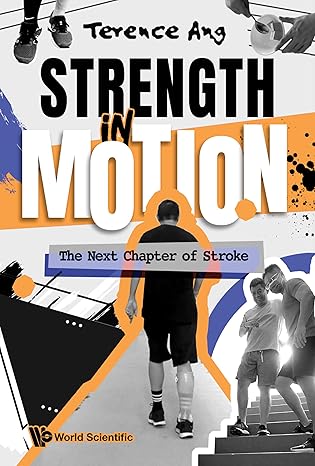
Strength in Motion, the final installment in Mr. Ang’s enlightening trilogy, delves into the nexus of exercise, physical therapy, and stroke recovery. This insightful book, enriched by contributions from several experts, extends its relevance beyond stroke survivors, advocating for a universally active lifestyle.
Mr. Ang’s narrative is rooted in his personal journey of recuperating from a stroke. He presents himself as a fortunate individual blessed with access to medical facilities, a caring support network, and a community earnestly invested in his recovery. His humility, kindness, and unwavering determination resonate deeply throughout the book, offering inspiration and hope.
A particularly poignant aspect of Strength in Motion is its contrast with the experiences of those who lack such support. This disparity is skillfully highlighted, underscoring the significance of a nurturing environment in the recovery process. Dr. Shamala Thialrajah, among others who have been part of Ang’s journey, provides valuable insights and expertise on the challenges and requirements faced by stroke survivors. The book also serves as a personal reflection for the reviewer, evoking memories of a grandfather who suffered a stroke and the painful realization of the limitations faced without a supportive network. This personal connection adds a layer of emotional depth to the review, bridging the gap between Ang’s experience and the universal challenges of stroke recovery.
Strength in Motion emerges as a significant contribution to our understanding of stroke recovery, symbolizing hope and the potential for renewal even in the face of adversity.
Pages: 159 | ASIN : B0CVVV22MK

NeuroMastery: Retraining Your Brain to Conquer Anxiety, Fear, and Panic Attacks

In the vast realm of mental health literature, NeuroMastery, by Ugochukwu Uche, stands out as an invaluable guide into the intricate world of anxiety, fear, and panic attacks. Drawing upon recent findings, the book highlights the profound effects these emotional states have on individuals, underscoring the importance of grasping the underlying neuroscience required to formulate interventions. The book artfully differentiates between anxiety, fear, and panic attacks, delving into their psychological and biological roots. Uche adeptly illustrates insights from neuroscience, helping readers better understand the reasons behind these emotional experiences and their influence on behavior. A noteworthy highlight is the concept of neuroplasticity, showcasing the brain’s incredible adaptability over one’s lifespan. Throughout the narrative, Uche champions the optimistic message that positive change and recovery are attainable.
Grounded in solid neuroscientific principles, NeuroMastery delivers a thorough analysis of anxiety, fear, and panic attacks. Beyond mere theoretical discourse, Uche emphasizes the tangible applications of these principles, making them actionable for individuals striving to manage or overcome these challenges. The introduction of Lucy’s story as an example serves as a beacon, helping readers visualize the practical application of theoretical concepts in real-life scenarios. The content, comprehensive yet digestible, is methodically arranged, breaking down intricate concepts for easy comprehension.
Ugochukwu Uche’s literary contribution is undeniably enlightening, offering a look at anxiety, fear, and panic attacks through a neuroscientific prism. The no-nonsense language and structured introduction to the subject not only set the book’s tone but also highlight the author’s unwavering professionalism throughout the narrative. The unique intertwining of emotional experiences with neuroscience renders this book invaluable. The discussion on neuroplasticity, in particular, is captivating. NeuroMastery is an essential read for those grappling with anxiety, fear, and panic attacks.
NeuroMastery: Retraining Your Brain to Conquer Anxiety, Fear, and Panic Attacks is an articulate, succinct, and methodically curated guide that demystifies a complex topic for those unfamiliar with neuroscience. Lucy’s narrative significantly enhances the reader’s engagement, making the content even more relatable. Uche’s writing, infused with hope and novel insights, promises to pave new avenues in addressing mental health challenges.
Pages: 128 | ASIN : B0CJ6DWND9
NeuroMastery: Retraining Your Brain to Conquer Anxiety, Fear, and Panic Attacks

NeuroMastery: Retraining Your Brain to Conquer Anxiety, Fear, and Panic Attacks by Ugochukwu Uche ingeniously intertwines the realms of neuroscience and psychology, crafting an enlightening resource designed to navigate through the intricate process of reshaping brain responses to anxiety, fear, and panic attacks towards a life of enhanced health and happiness. Uche, with meticulous detail, immerses the reader into an exploration of the brain’s anatomy, illustrating the intricate correlations between its various parts, emotions, and memories while shedding light on the paramount concept of neuroplasticity—our brain’s remarkable capability to adapt and establish specific patterns through time and directed training.
Uche doesn’t merely present theoretical insights but also bestows upon readers practical tools, delineating varied techniques and therapeutic approaches to assist in their self-evolvement journey. Significantly, he elucidates complex concepts by interweaving the compelling story of Lucy, a young woman navigating through the tumultuous waters of panic attacks, particularly while confronting the fears anchored in the simple act of sitting in a car’s front seat.
In an era where discussions pertaining to anxiety, fear, and panic attacks burgeon amidst their increasing prevalence, Uche’s work distinguishes itself by delving into the support of neuroscience and actual brain activities that transpire, providing a distinct perspective that transcends mere surface-level dialogues. His examination of neuroplasticity, a pivotal, albeit not widely recognized phenomenon of our nervous system, is presented with such a friendly tone that the learning experience becomes as comfortable and engaging as absorbing wisdom from a friend over a leisurely coffee.
Speaking from a psychology student’s perspective, this book has not only deepened my understanding of certain concepts encountered in academia. Still, it has also proved immensely valuable on a personal front, aiding in comprehending my stress management strategies. It inspires an active engagement in consciously altering ineffective habits, encouraging the discovery and application of more efficacious techniques to navigate through the everyday stresses of life.
I recommend NeuroMastery primarily to individuals grappling with anxiety, fear, and panic attacks. I am confident that within its pages, you will unearth a technique that resonates and assists you in your journey. Furthermore, professionals within the mental health field will find this to be a substantive and illuminating read. Uche’s book is compelling, leading readers to eagerly anticipate his future contributions to the literary and psychological realms.
Pages: 126 | ASIN : B0CH1JMZC6
Making Neuroscience Engaging & Intuitive

Baby Senses: A Sensory Neuroscience Primer for All Ages shares with readers the world of nervous systems and how they have developed into the senses we have. Why was this an important book for you to write?
Thank you for this great question! I’ve always been passionate about making science engaging, relatable, and accessible to the interested lay audience. As an artist, I’ve also found the actual forms in biology incredibly complex and beautiful. As a tutor with Reading Partners, I wanted to share my love of neuroscience, art, and reading with the kids I was tutoring, but a search of the existing neuroscience books for children left me disappointed in the lack of truly engaging neuroscience content for beginning/emerging readers. And there a germ of an idea was born – to illustrate and write a children’s neuroscience book with accurate visual representations of sensory systems. I wanted my book to also impart fundamental principles of the scientific endeavor, for example, to convey that knowledge is built over time, with many researchers from diverse backgrounds working together (or apart) to gather facts in small steps. Related to this was my desire for Baby Senses to be a stand-alone educational resource for classrooms and families laid out in a scientific format. I think than an early introduction to how diversity in nature makes all animals special is important to encourage an appreciation of our ecosystem and why its delicate balance needs to be conserved. This was coupled with the intent to spread the subtle message that what makes us different is often our strength and neurodiversity is to be celebrated.
How much research did you undertake for this book, and how much time did it take to put it all together?
As an auditory and visual neuroscientist, I was already very familiar with several sensory systems before I decided to write Baby Senses. Some of the facts included in the glossary are in fact inspired by my doctoral dissertation. There were some systems I was less familiar with before writing my book, and for these I read several research articles and textbooks to gain a deeper understanding of each of these systems. I then condensed them down into narratives and ‘fun facts’ to highlight, as well as how contemporary research into these areas relate back to the lay audiences’ daily lived experiences.
The idea of writing Baby Senses really crystallized for me during the COVID-19 global pandemic. I’d been working on creating a series of neuroart paintings since 2018. The realization that I’d created a series of paintings that tied together into a narrative about the beauty and complexity of the many ways in which brains have evolved to do extraordinary things, coupled with the realization that there are not many neuroscience books available to early readers, really motivated me to sit down and start working on this project. I took about 8 months to finish my first draft of the book including the expanded glossary, the rhyming dialogues, and all the illustrations. I then spent several months researching publishing options and timelines, choosing my publisher, revising my book, and working on the cover images. Overall, it took a year and 5 months for my book to be published from when I started working on it.
What were some goals you set for yourself as a writer in this book?
In my experience, children are easily inspired or discouraged from pursuing further learning in topics based on demographics and gender, as well as how scientific topics are taught. An important goal for me was to make neuroscience engaging and intuitive so that children are inspired to pursue it, regardless of gender or demographics. When I take a step back to look at the bigger picture, the challenges facing neuroscientific endeavors are complex and large. To solve them requires team-science efforts, new ideas, collaboration within and across diverse teams, and an open-science, data sharing approach. All of these require that people from diverse backgrounds are drawn to and remain in research careers, and in the long-run, I hope that Baby Senses will contribute to that goal.
Another major goal for me in writing Baby Senses was to use multi-modal ways to engage diverse minds (neurotypical and neuroatypical), and of all ages. I wanted to maintain the balance between writing an engaging and relatable narrative while not shying away from scientific terminology. To do so, I used subtle cues like the parent-child bond as the context of these question-and-answer conversations to make the content relatable. More scientific choices like including the full references list were also deliberate. A related goal for me was to dispel scientific misconceptions, such as the all-pervasive idea that humans only have ‘5 senses’ and that having a ‘6th sense’ was somehow an anomaly. As humans, we have more than 5 ways to sense our internal and external environments, with research still ongoing to better characterize all the ways in which we sense our environment; for instance, how our gut microbial environment influences our brains through the gut-brain axis is an active area of research.
What is the next book that you are writing, and when will that be published?
I would certainly like to write more – I’ve a couple of ideas I’m playing around with right now. As a first-time indie author, I’ve learned a lot about the publishing process and am still learning so much with Baby Senses, so I am not ready to completely move onto the next project yet. I also have ideas about further expanding the reach of Baby Senses by for example, turning it into a sing along project. A lack of ideas has never been an issue for me so stay tuned for updates on my website https://babysensesbook.com/, where you can also sign up to receive my newsletter with events and updates or follow me on social media platforms!
Author Links: GoodReads | Twitter | Facebook | Instagram | Website
Baby Senses: A Sensory Neuroscience Primer for All Ages
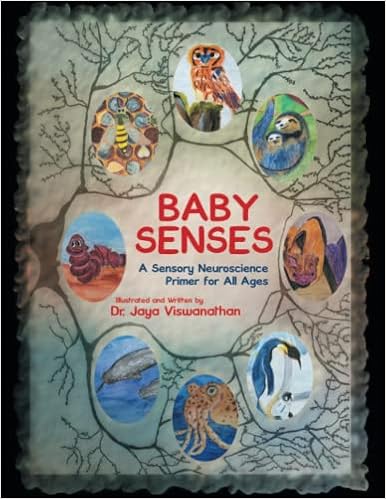
Baby Senses: A Sensory Neuroscience Primer for All Ages is an illuminating book by the creative mind of Dr. Jaya Viswanathan, an author whose passion for unraveling the intricate workings of the human brain was ignited at the remarkably young age of 14. Throughout history, the enigmatic complexities of the human brain and those exhibited by our fellow creatures have been the subjects of ceaseless fascination. Thanks to remarkable strides in scientific understanding, we stand on the precipice of delving ever deeper into the labyrinthine mechanisms governing the nervous system and the human brain itself.
In the pages of Baby Senses, a mesmerizing tapestry of creatures, from serpents to lemurs, penguins to worms, are unveiled to illuminate the 16 systems emerging from the bedrock of our five fundamental human senses: vision, hearing, touch, taste, and smell. This extraordinary odyssey unfolds through the lens of young animals inquisitively engaging their elder counterparts, who bear exceptional attributes such as night vision and reaping enlightening revelations in return.
One facet that conspicuously distinguishes this work is the inclusion of an all-encompassing glossary nestled at its conclusion. Personal encounters with sensory organ descriptors had left me grappling with their essence and role. The addition of this invaluable glossary not only demystifies these terminologies but also bestows an enriched grasp of their functionalities. The vivid and visually compelling graphics interwoven within the narrative further elevate the reading experience.
Baby Senses by Dr. Jaya Viswanathan is a wellspring of education. Beyond inspiring wonder and curiosity, this book stands as a repository of indispensable educational wisdom.
Pages: 74 | ASIN : B0C36NXZJ2