Blog Archives
Live for the Moment

Therein Lies the Pearl follows two resilient women in a medieval world ruled by men and sharpened by war who discover that survival, faith, and quiet courage can shape history just as surely as swords. What first drew you to the period surrounding the Norman Conquest?
From traditional sources, everybody knows of the events leading up to and including the Norman Conquest of 1066: the death of the childless king, the men fighting for the crown, the subsequent rebellions and invasions. But what if you could experience a past event from the perspective of someone left out of the history books? Someone whose voice had been ignored because they were not powerful, wealthy, or famous?
The origins of Therein Lies the Pearl started with a visit to Edinburgh Castle. There, a small Romanesque structure made of stone sits at its summit, the place known as St. Margaret’s Chapel.
The first time I sat on the wooden bench beneath the stained glass window, I found myself lost in thought, wondering about this woman who had been called the “Pearl of Scotland.” From my Catholic upbringing, I knew a few skeletal details of her life–like the fact that she wanted to be a nun but somehow wound up married to a king and that she later came to be known as the patron saint of mothers and families. On a more personal level, I also liked the idea that her feast day was celebrated in my own birth month of November. Beyond that, I had no concept of just how fascinating her life had been.
There was no question in my mind that I wanted to write a book about Margaret, one where she would be a central character. But let’s face it, sometimes virtuous people can be boring (from a reader’s standpoint), so I needed something to spice things up a bit.
In came Celia.
Celia is not conventionally “likable.” Why was that important to you, and what does Margaret bring to the story that contrasts with Celia?
The feisty girl from Normandy is a completely fictional character. Unlike Margaret, she is thoroughly immersed in the secular world, and her very survival depends upon pluck, grit, and daring. In the beginning, Celia served as the perfect foil to the would-be nun, but oddly enough, the more pages I wrote (in my marble notebooks), the more the two women seemed to be mirror images of one another. The circumstances that surrounded each may have been vastly different–Saxon princess vs. simple farm girl–but the truth was they each had to find ways to maneuver amidst a world that did not have their best interests at heart.
When their lives eventually did intersect, they were supposed to be enemies. At least that was the distinction placed upon them by the men in power. However, the more time they spent together, observing and evaluating one another, the easier it was to shed that imposed label. And the bond they formed, based on mutual respect and admiration, could not be broken by any king, priest, or duke. Even death itself wasn’t able to diminish their connection.
What were some themes that were important for you to explore in this book?
One of the most obvious themes, of course, is female resiliency and agency in a male-dominated world. Despite their limited power in effecting sweeping changes, Celia and Margaret have an impact on their immediate surroundings because of their uncommon courage and unwavering devotion to doing what they believe is right.
Another theme involves strength. The word itself resists a single interpretation. Celia seems to embody the stereotypical picture of the undaunted warrior, but Margaret, in her own way, is just as strong. In fact, Celia initially judges her incorrectly, thinking that Margaret’s piety and contemplative nature convey weakness. As time passes, Celia realizes how wrong she was. Margaret possesses a sustained inward power that commands respect through consistent action, not outward noise or aggression.
Lastly, I think one of the greatest messages of the novel is to live for the moment. As recounted on certain pages in the novel, what we want in life and what we get may not always match. But we mustn’t go through our days worrying about that imbalance. Instead, we must “keep reaching out toward life, blissfully thankful for the ignorance.”
Why is it important to tell history from the margins?
I think that question lies at the heart of the historical fiction genre.
If you want a telescopic version of events, pick up a non-fiction text and read a generalized presentation of what took place. Get to know all the “big names,” the movers and shakers of history. But if you want to listen to voices that, perhaps, were not given a chance to speak in such chronicles, then grab a historical fiction novel and experience the event from the microscopic lens of someone who is living, breathing, and navigating his/her way through those same events on a personal and intense level. Telling history from the margins offers the reader a more nuanced understanding of the past–like getting to experience the Norman Conquest from the perspective of two women who carve their destiny armed only with strength, resilience, and faith.
Author Links: GoodReads | X (Twitter) | Facebook | Website | Amazon
The events leading up to the Norman Conquest of 1066 are well documented in the annals of history: various men are fighting for possession of the English throne, each believing himself to be the chosen one. The situation intensifies when King Edward, childless and already in failing health, sends for his nephew, Edward the Exile, to return home. What will this mean for Harold, Earl of Wessex and East Anglia? For William, Duke of Normandy? And when Edward mysteriously dies almost immediately after coming ashore, what will become of his son Edgar, the last surviving son of the royal dynasty? This story is not of the men, however, but of two women–Celia, a resilient young girl from Normandy, and Margaret, daughter of Edward the Exile. As they struggle to survive amidst adversity, loss, and death, their disparate worlds intersect, and they soon come to realize they are kindred spirits–brave, steadfast, and true. From beyond the grave, they implore us to listen to their retelling of the events that altered the course of history forever.
Therein Lies the Pearl
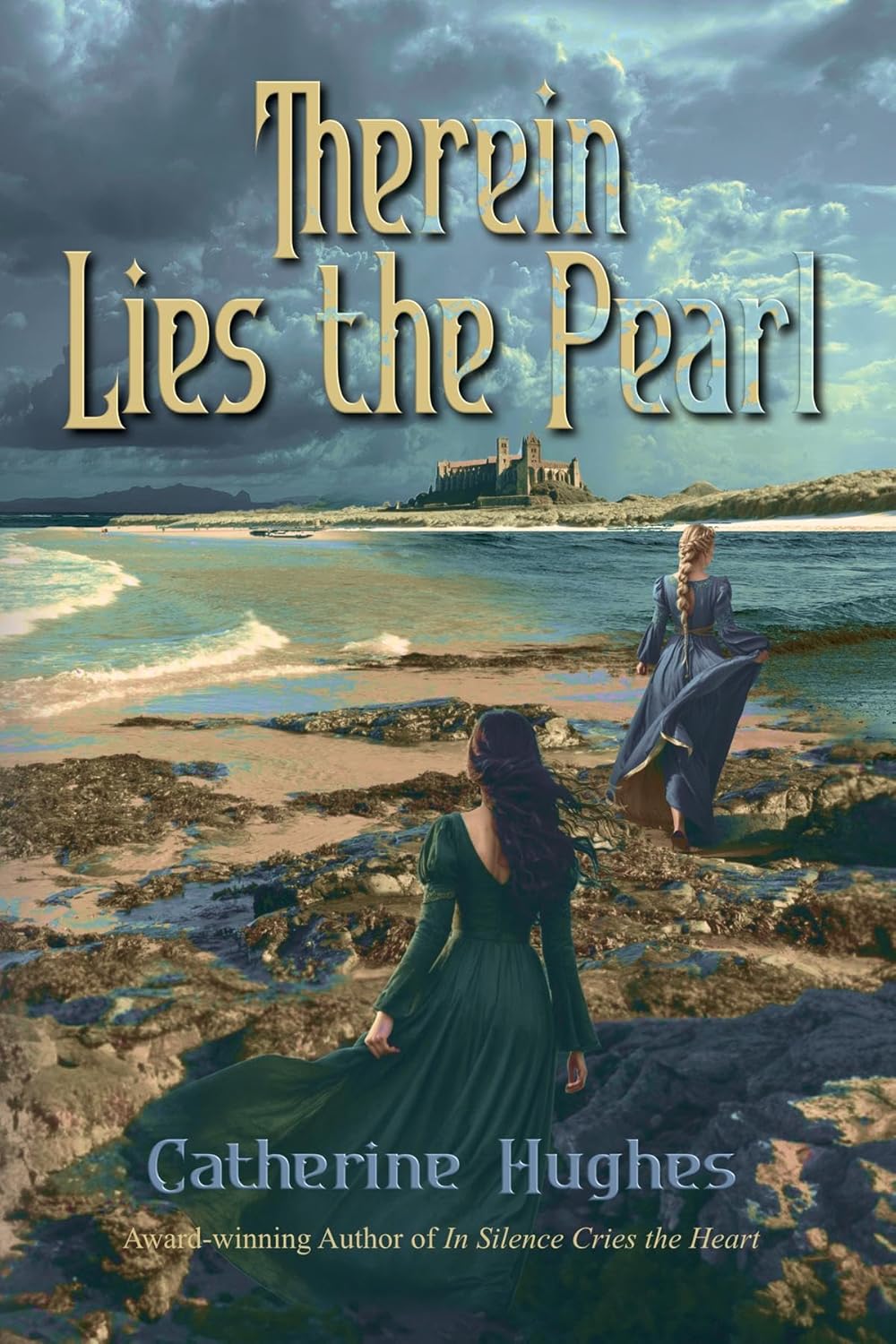

Therein Lies the Pearl by Catherine Hughes is a historical fiction novel set in the 11th century, moving from rural Normandy into the orbit of Duke William and then across the Channel into England in the years around the Norman Conquest. The story follows Celia as loss and duty harden her early, especially after her mother dies in childbirth and Celia becomes the steady center for her baby sister, Vivienne. Over time, Celia is pulled into larger forces and unfamiliar institutions, including religious life and English politics, with friendships and loyalties tested as power shifts and violence spreads. The book frames all of it with a storm at sea in 1068, a moment that feels like the story’s emotional bookend and its reckoning.
I liked the writing’s physical closeness. Hughes keeps putting your hands in the work: bailing, washing, digging, carrying, feeding. It is the kind of detail that makes survival feel earned, not symbolic. Celia, especially, is drawn with a sharp edge that I came to trust. She is not “likable” in a neat way, and that is the point. When she is tender, it lands because you have seen how hard she fights to keep tenderness alive in a world that keeps trying to stamp it out. The language is earnest and old-world without getting showy, and it often uses simple, concrete sensations to keep you grounded, like cold water, rough cloth, and the hush of spaces where people are not saying what they mean.
The author’s choices around history are interesting, too. This is not a battlefield chronicle, even though wars and rulers matter. It is a story about how big events leak into kitchens, convent halls, and friendships. One scene that was particularly impactful for me was the chaos around William’s coronation, where misunderstanding and fear turn into fire and violence, and the personal cost lands right inside the political moment. I also appreciated the way the book admits what it is doing: it is fiction inspired by historical events and family stories, not a literal record. That honesty makes it easier to relax into the novel’s emotional logic, especially when the plot shifts into court pressure, religious scrutiny, and the quiet bargaining people do with themselves to endure.
By the end, I felt like I had lived beside these characters, not just watched them. The final movement, looping back to the storm framing, brings a stark, fateful mood that fits what the story has been asking all along about agency, sacrifice, and what we owe the people we love. I would recommend this most to readers who like historical fiction that prioritizes interior life and lived detail over nonstop action, and to anyone who enjoys stories about resilient women navigating faith, family, and power without being turned into saints. If you want a medieval world that feels muddy, intimate, and emotionally serious, you’ll enjoy this novel.
Pages: 518 | ASIN : B0G67J1G46

Essential Human Longings

Valor, Book Two, follows a young woman of Druidic blood who flees her past and confronts prophecy, peril, and the awakening of her own fierce magic as she steps into a destiny shaped by sacrifice, love, and rebirth. What ideas did you want to introduce in this book that were different from Book One?
In Book One, Sacrifice, Ena—also known as Catherine—is a young woman caught between duty and desire, shaped by the rigid expectations of noble birth and Christian decorum. Her understanding of herself is narrow, inherited, and heavily prescribed. She moves through the world reacting to forces around her.
In Valor, I wanted to explore what happens when that same young woman chooses to step outside every boundary that once defined her. This book shifts the tone from repression to autonomy. Ena sheds the identity that never fit and takes responsibility for forging her own path, even when that path is treacherous, lonely, or morally complex.
So the new ideas I wanted to bring forward are rooted in personal sovereignty; claiming one’s freedom, and experiencing the profound, often painful unfolding of selfhood. Valor is more about becoming. It’s the story of a woman who confronts both the darkness behind her and the light rising within her, and discovers the courage required to inhabit her true self.
The book balances sudden bursts of violence or magic with quiet, sacred moments; how did you approach crafting that rhythm in your storytelling?
Crafting is an interesting term here. Because these quiet pauses that occur—mostly after some intense rising action—occur more organically than by any attention to planning. After scenes filled with danger, magic, or emotional upheaval, both the reader and I need a breath! I write from inside the characters’ bodies, minds, and hearts, so those quieter moments feel instinctive—almost like a spiritual exhale. They become sacred spaces within the narrative where meaning can settle, and where transformation can take root.
Mysticism and dreamlike imagery play a strong role in the book’s atmosphere. What mythologies or symbolic traditions influenced your vision for this world?
That’s a great question!
For most of my life, I’ve been fascinated by the worlds that existed before organized doctrine—mythology, symbolism, and forgotten religions, especially the Druidic traditions. Valor draws heavily from years of exploring these ideas. One major influence for this book is Hermeticism, attributed to Hermes Trismegistus, a figure who bridges Greek and Egyptian wisdom traditions. The Hermetic axiom “as above, so below,” and its counterpart “as within, so without,” form a subtle backbone in the series.
Other contributing traditions include the I Ching, Vedic wisdom, and Christian mysticism. On the surface, readers will see the conflict between paganism and the rising Holy Roman Church. But beneath that lies a deeper theme: that across cultures, religions, and mythologies, we share the same essential human longings—to understand ourselves, to find meaning, to feel love, and to experience the sacred.
What can readers expect in Book Three of The Evensong Enchantments series?
Well, lots more magic! In Book Three, Truth, Ena’s gifts continue to evolve and ultimately reach their apex. The stakes intensify when a powerful bishop sets his sights on her young son—heir to the throne—for his own personal and spiritual ambitions. This threat strikes at the core of Ena’s beliefs and forces her into a battle on multiple fronts: political, mystical, and deeply personal.
The narrative carries readers to some of the most evocative settings in medieval Europe, including the sacred crypt beneath Chartres Cathedral and the enchanted Valley of No Return within Brittany’s magical Forest of Broceliande.
Truth blends gritty medieval reality with liminal, mythic spaces where Druidic magic, Celtic lore, and Christian dogma collide. Ultimately, Ena must rely on her heritage, her allies, and her awakening powers to secure her son’s destiny and usher in a new era grounded in enlightenment, understanding, and true fellowship.
Author Links: GoodReads | X (Twitter) | Facebook | Website | Amazon
Escape to the Middle Ages with the fierce heroine of this series, as her inherited gifts come to life on a perilous journey to the Middle East.
In distant lands, Ena must confront her darkest shadows to face an ancient force that still covets her powers, while Philip, now king of the Franks, struggles with the weight of his new regime—and his undying love for her—as the First Crusade threatens to consume them both.
As her path intertwines with Bernard Ato, the enigmatic Viscount of Nîmes, his loyalty to the Church and the campaign of the Holy War is a harsh reminder of Philip’s vexing blind faith. Will Ena’s growing attraction to Bernard hinder her journey—or ignite her purpose as an instrument of the Divine Feminine?
For those who love magical realism, profound romance, and historical fiction, Valor is a must-read. If you are captivated by enchanting worlds and gripping medieval tales, you will not be able to put down this riveting blend of history, chivalry, romance, and fantasy.
Buy your copy today and be swept away in the immersive world of Valor, Book Two of The Evensong Enchantments.
Elemental Magic
Sacred Sites
The First Crusade
Slow-burn Romance
Druidic Prophecy
Strong Heroine
Potential Triggers: killing, death, war, violence, trauma, loss and grief, famine and plague, attempted rape, demonic possession, religious persecution, graphic childbirth, near death experience.
Spice level = 1 out of 5 (no smut)
Parents: This book is suitable for ADULTS ONLY.
Amazing Archer and Warrior

The Secret Rise follows a woman, her family, and allies as they face betrayal, curses, prophecy, and the unrelenting pressure of survival, all while a mysterious guiding presence known as the Lady shadows her path. What was the inspiration for the setup of your story?
Our inspiration has been ongoing … often starting with a “What if …” as the two of us starting a writing session together. The original story that began in The Secret Journey (published in 2023 was the seeding. Did we know that Nichol would become a Lady Baron or have three children, and become the amazing archer and warrior? No. It all germinated as we worked forward.
How has character development for the main characters changed for you through the series?
Nichol’s kindness and caring for others were always there. Once she escaped the ruthlessness of her mother in book 1, The Secret Journey, all our “what ifs …” were all over the place. We always remained open for something else to drop in—but with the promise that her wisdom would be shared; the justice was important; and that protecting her family and friends would be upfront.
I felt that there were a lot of great twists and turns throughout the novel. Did you plan this before writing the novel, or did the twists develop organically while writing?
Great question. We know some of the twists and turns … but also know as we write, variables will drop in. Now, we are working on book 4 The Secret Awakening. We storyboarded the major conflicts we saw coming … a huge variable is that the kids become young adults and take the lead. We knew how we would end the series … and we are marching forward to it.
Can you tell us more about what’s in store for Nichol and the direction of The Secret Awakening?
Ahhh …A huge twist is coming for Lucette and Aiden. As well as the quest for knowledge that Athena seeks with words. Lucette is truly her mother Nichol in many ways … the other two … oh my!
Author Links: GoodReads | X (Twitter) | Facebook | Website | Amazon
Will Others Seek to Destroy Her?
Nichol’s story was introduced in Book 1, The Secret Journey when her beloved papa is murdered by her mother in the year 1000 AD. The darkening cloud spiraling around her made her the next target.
Fleeing Marseilles, she develops new powers, a vision of the future, and trusts the Lady’s voice. For those around her, a new world unfolds and carries them forward.
Overflowing with scandal, tragedy, and triumph, Book 3, The Secret Rise carries Nichol’s strengths to a higher level. Again, she must outsmart and out maneuver those connected with the church. Now the mother of three, her children begin to display powers she doesn’t possess and Shadow brings wolf pups to the mix.Will Nichol continue to be hunted by Fredrik, her evil half-brother?
Does Duke Richard have hidden motives in seeking Nichol’s advice?
Can the village of Harmonie become the model for hamlets within the Kingdom of Normandy?
Do Nichol’s children have the skills that she has, or do they have new ones?
Will the Kingdom of Normandy accept her family and their rising status?
Authors Judith Briles and Brian Barnes weave book series for readers to open and fall into. It’s historical fiction that unravels the 11th century. Out of the darkness comes the empowerment of Nichol, creating a sanctuary and a revelation of what women with vision can achieve with their knowledge and skills.
The Secret Rise is Book 3 of the Harmonie Books series. Get Book 1, The Secret Journey and Book 2 The Secret Hamlet. Book 4, The Secret Awakening will be published in 2026.
“What if ….”


The Secret Hamlet follows a brave and intuitive young woman gifted with a mysterious spiritual connection who gives birth to her daughter under extraordinary circumstances, causing her and her found family to seek a life away from the threats. What was the inspiration for the setup of your story?
It started with a “What if ….”. The ongoing barrage of news and media was woven with overwhelming stories around war. Brian starting thinking … Are women starting these wars? Are they involved in the planning? What if they did … and they were. Would the world be a different place today? Women aren’t the power brokers at the war tables. They, and children, are always the victims. What if women could have a deep and ongoing voice and strength?
Originally, more books were planned, but as we dove into it, multiple changes happened. More characters evolved. They spoke to us—even challenging some of the situations we wrote and the dialogue used. Skills started to surface in book 1, The Secret Journey that weren’t originally thought of, they just bubbled up as we wrote together—never in our minds in the beginning.
Brian had a first draft and joined forces with Judith, someone who had written several books and had an expertise in writing about women. Wanting to help Brian get the book done, the characters took her over, waking her at night. She was committed to completing the book, not realizing that they had a solid series in their hands.
We write differently from other partners. One of us will start a chapter in a Word document, then it’s Zoom time where Judith becomes the wordsmith and types away as they both talk, view, and verbally write together for a two or three hour stretch nonstop in a full collaboration.
Typically, we complete a chapter within one to two sessions. During those sessions, we banter back and forth as Judith writes and talk forward as to what we see is coming or needs to be created to fill a void that has bubbled up as we work together. What works here is we are both in the same place, with the same mind/talk think., bouncing live ideas off of each other … and then a “Yeah, that works…”
I found the characters in your story to be relatable and engaging. What character did you enjoy writing for?
Always Nichol and what we could do with her. The “what if she …” was a common phrase between the two of us. Nichol became part of us, almost like family—the one who bypassed fear did what needed to be done. Judith loves to describe her as a “badass young woman who can take down four men in one minute with a bow and arrow—something that was never imagined in the beginning. As Brian says, “Why not have a young woman do great things, unexpected things … why is it always the men in stories?” We let Nichol’s vision become the roadmap for us … often not knowing what she would reveal as the writing evolved.
The monk Timo was just this kind man who was open for Nichol to be what she was and would become. His nonjudgment has become a huge strength in her … and himself. Timo was always going to be a good guy and friend. We didn’t see him as a major character and he let us know he was and will be forward in the series.
Shadow, the wolf pup introduced in the first book, The Secret Journey, was a “bubbled up” storyline that became a major in all the books. As a protector of Nichol, she’s one smart wolf, reading sign language and anticipating Nichol’s and her children’s needs.
Was there one that was more challenging to write for?
Book 1, The Secret Journey introduced three cruel characters—Astrid the cruel mother, Fredric the vicious half-brother, and Priest Loupe who dripped with everything bad about the church. Astrid withers away in The Secret Hamlet, but we allowed Fredric and Priest Loupe to gather in building turbulence throughout and we planned deliciously for their downfall. What awful things could we do? You will see in Book 3 The Secret Rise!
What were some themes that were important for you to explore in this book?
Women are hot! Women can be smart … Women can get it done. Women can meet and handle challenges. And that working together works. The theme of family and caring for others, even when they are family, is important—for them and for self. The power of building a community and creating a gathering place where the glue can be spread and trust developed.
In the beginning of The Secret Hamlet, with Nichol and her family on the run from the greedy and evil Priest Loupe, she comes across a young woman in a daze who recently gave birth from a rape and not wanting anything to do with the baby. She and the infant were thrown away by the young woman’s family. Instantly grasping the situation, Nichol, on the run herself, promises her sanctuary and saying, “Your child will become my son. All I ask is that provide him milk until he no longer needs it. I will care for him with my infant daughter.”
Where does the story go in the next book, and where do you see it going in the future?
Empowerment runs through Book 3 The Secret Rise and the mystical Lady remains with her, her three children, and those she is in close contact with. Also scandal, tragedy, and triumph. Her strengths continue to grow and she now sees variations of them within her children. Nichol becomes a trusted advisor to Duke Richard—saving his life—and Shadow has pups, introducing them to become heroes and setting the stage for Book 4, The Secret Awakening.
Author Links: X | Facebook | Website
WINNER! American Fiction Awards … Fantasy Historial Fiction
Can the Hamlet of Harmonie Remain Hidden?
It’s the 11th century and Nichol with an infant daughter must escape Paris with her extended family. In Book 2 of the Harmonie series, The Secret Hamlet, the power of Nichol is turned loose. At her side is Shadow, her wolf-dog. In the bitter winter, she has become the target of the ruthless priest Loupe and her evil brother Fredric, both in pursuit of her and her daughter, Lucette.
With her expanding vision and skills coupled with the guidance of the Lady, Nichol leads her family, and those in need, to the creation and development of Harmonie. Hidden within the Kingdom of Normandy, Harmonie abuts No Name, another hidden hamlet.
Will the jeweled dagger stay in the hands of the rightful owner?
Will Nichol’s friendship with the new Queen of England benefit both?
Will the alliance with the Duke of Normandy protect the Harmonites?
Will more secrets be revealed by Nichol, Robert, Ezra, Helene, and Timo?
And … will the alliances last? Will the Lady stay by Nichol’s side?
The Secret Hamlet is Book 2 in the Harmonie series.
Authors Brian Barnes and Judith Briles weave a book series for the reader to open and fall into. It’s historical fiction that unravels the 11th century. Out of the darkness comes the empowerment of Nichol … a sanctuary, and the revelation of what women with vision can achieve.
The Secret Hamlet

The Secret Hamlet, the second installment in The Harmonie Books Series by Brian Barnes and Judith Briles, is a sprawling historical fiction novel that blends medieval intrigue, mystical elements, and family drama in a 1000 AD setting. The story follows Nichol, a brave and intuitive young woman gifted with a mysterious spiritual connection, as she gives birth to her daughter Lucette under extraordinary circumstances. As whispers of witchcraft and danger spread, Nichol, her husband Robert, and a group of devoted allies, including a loyal dog, a monk turned farmer, and a wise matriarch, are forced to flee, seeking safety in a secret land revealed to Nichol through visions. This is a tale of survival, belief, and the forging of a new community amidst threats from both church and state.
Reading this book pulled me into a richly painted world, and I often found myself surprised by how real the characters felt. The writing flows like a familiar story told around a fire. There were moments when the dialogue felt a bit modern for the time period, but honestly, that made it more personal. What stood out most was how the authors balanced the mystical with the grounded. I didn’t expect to care so deeply about a donkey named Moki or find a newborn’s connection to light so emotionally moving, but those scenes resonated with me. The pacing slows down at times with a lot of description, but the story always picks up again with a new challenge or twist that pulled me back in.
What I really appreciated was the heart behind the ideas. This isn’t just a book about a woman escaping danger. It’s about trust, rebuilding from nothing, and holding on to light when others call it darkness. The theme of found family shines bright throughout, and that really resonated with me. I also liked that the mystical “Lady” guiding Nichol isn’t explained too much. She’s a force, not a plot device. That restraint actually made her presence more powerful. The final chapters, where they start building their new haven, gave me chills. There’s real hope in those pages.
If you love historical fiction that leans into emotion and magic without turning into a fantasy epic, this book is worth your time. It’s perfect for readers who want strong women leads, tight-knit communities, and a little mystery wrapped in old-world charm. I’d especially recommend it to book clubs. There’s so much here to talk about, from gender roles to spiritual belief to survival under persecution. This is a warm, soulful book that doesn’t shy away from darkness but still manages to feel like a candle flickering in it. I closed it feeling deeply moved.
Pages: 428 | ASIN : B0CRXRD3JH
A Rich Tapestry

The Sword and the Hearth follows a young Brittonic boy thrust into leadership and survival as Saxon invaders threaten to crush his tribe and way of life, forcing him to mature quickly and navigate the complexities of war, leadership, and personal sacrifice.
What was your writing process to ensure you captured the essence of the characters?
My writing process for capturing the essence of the characters in “The Sword and the Hearth” was deeply iterative and rooted in a blend of imagination and focused development. It started with extensive brainstorming and profiling. Before I even wrote the first chapter, I created detailed character profiles for each main character, outlining not just their physical appearance but also their backstories, core beliefs, fears, desires, quirks, and even their favorite foods. This initial immersion helped me understand them as complete individuals, especially considering the varied backgrounds and social strata present in “The Sword and the Hearth.”
Then, during the actual writing, I employed method acting for authors. I’d often pause and ask myself, “How would this character react in this exact situation?” or “What would their internal monologue sound like right now?” This involved stepping into their shoes and genuinely trying to inhabit their perspective, particularly when exploring the nuanced relationships and internal conflicts central to the story. I paid close attention to their voice—ensuring that their dialogue, vocabulary, and even their thought patterns felt distinct and authentic to them, reflecting their individual journeys and development.
Finally, revision was crucial for refinement. I’d read scenes aloud, sometimes even acting out the dialogue, to catch any inconsistencies in character voice or motivation. I also relied on trusted beta readers who would provide feedback specifically on character believability, helping me to polish their nuances until they felt truly alive on the page, like companions in the reader’s own hearth.
What were some themes that were important for you to explore in this book?
Several themes were important for me to explore in “The Sword and the Hearth,” and they often interwove to create a richer tapestry:
The Enduring Strength of Family (Chosen and Blood): Whether it’s the bonds of biological family or the connections forged with individuals who become like family through shared trials, the strength and complexities of these relationships were central to the narrative. I wanted to show how these connections can be both a source of comfort and conflict, truly forming the ‘hearth’ aspect of the title.
The Nature of Identity and Belonging: Many characters grapple with who they are, where they fit in, and what truly defines them, especially when faced with challenging circumstances or new environments. This theme often explored the tension between individual desires and societal expectations, particularly within the feudal setting.
The Power and Peril of Secrets: Secrets, both personal and generational, play a significant role. I wanted to examine how secrets can shape relationships, influence decisions, and ultimately lead to either liberation or destruction, often with far-reaching consequences for the characters and the realm.
Redemption and Second Chances: I was keen to explore the idea that even after mistakes or difficult pasts, there’s often an opportunity for characters to find redemption, to change, and to build a better future for themselves and those around them, irrespective of their station or previous choices.
Will there be a follow-up novel to this story? If so, what aspects of the story will the next book cover?
While “The Sword and the Hearth” stands as a complete narrative in its own right, the literary journey for me, Ciaran MacLeod, has continued with “Echoes of the Ancient Isle,” which serves as the next significant novel in my bibliography.
“Echoes of the Ancient Isle” explores entirely new facets of the world and delves into different aspects of fantasy. It primarily focuses on the unearthing of forgotten histories and the resurgence of ancient magic. Readers will find themselves immersed in a world where the past literally resonates through the present, uncovering secrets tied to long-lost civilizations and powerful artifacts. The story examines themes of legacy, the enduring influence of ancestral spirits, and the profound consequences of disturbing dormant forces. While it features a new cast of characters and a distinct setting, it represents the continuation of my overarching storytelling themes of discovery, personal growth through adversity, and the intricate dance between human will and destiny. It expands the scope of my fictional universe, inviting readers to explore entirely different realms and challenges.
Author Links: GoodReads | Instagram | Website
Raised in the northern hills of Britannia, Cadric must navigate the complexities of war, leadership, and personal sacrifice as he becomes the unlikely leader of his tribe. Alongside him is Maev, a woman whose strength and determination challenge Cadric’s own sense of duty and love. Together, they must face not only the violent Saxon forces gathering at their borders but also the internal struggles that threaten to tear their community apart.
Amidst brutal battles, moments of heartbreak, and triumphs of courage, The Sword and the Hearth is a tale of resilience, the ties that bind people together, and the price of leadership. Will Cadric be able to unite his people and protect the hearth of his homeland, or will the Saxons prove too powerful to resist? This is a story of honor, loyalty, and the strength to protect what truly matters.
The Sword and the Hearth


The Sword and the Hearth follows Cadric, a young Brittonic boy thrust into leadership and survival as Saxon invaders threaten to crush his tribe and way of life. From the fog-choked forests of Eboracum to the blood-soaked hillforts of ancient Britain, this novel delivers an unflinching look at resistance, loyalty, and legacy. It is as much a coming-of-age story as it is a meditation on the costs of war, culture, and identity. As Cadric transforms from a frightened adolescent into a hardened leader, the reader is taken through heart-pounding battles, devastating losses, and the ever-tightening grip of fate.
I found the writing both gritty and poetic. The prose often reads like folklore, earthy, elemental, steeped in loss and myth. There are no wasted words here. Every paragraph drips with atmosphere. The mist, the blood, the grit in Cadric’s boots, it’s all vivid, almost cinematic. And the dialogue is sparse, sharp, and realistic. It respects the silence of trauma. What hit hardest for me were the quiet moments. Cadric watching smoke rise on the horizon or whispering a promise to his dying mother. The action scenes thrum with intensity, but it’s the quiet heartbreaks that linger.
The book is heavy, relentless even. There are stretches where the despair almost chokes the page, and the pacing slows as characters dig deeper into pain and politics. But maybe that’s the point. The story doesn’t pretend there are easy answers or heroic victories. It feels honest to the bone. Cadric’s growth isn’t triumphant; it’s painful, earned in blood and grief. The portrayal of the Saxons isn’t cartoonish either. There’s nuance here, a mutual alienation and brutality that makes the conflict feel tragically human.
The Sword and the Hearth shook me. It made me angry, sad, and strangely hopeful. It’s a story for readers who want their historical fiction raw and emotionally complex, who don’t need neat endings or pretty resolutions. I’d recommend this to fans of Bernard Cornwell or Mary Renault, basically anyone who appreciates richly textured worlds, stoic characters, and the ache of endurance. It’s not a casual read, but it’s a worthy one.
Pages: 368 | ASIN : B0DKPYGZDK



