Author Archives: Literary_Titan
Everyone Is Valuable

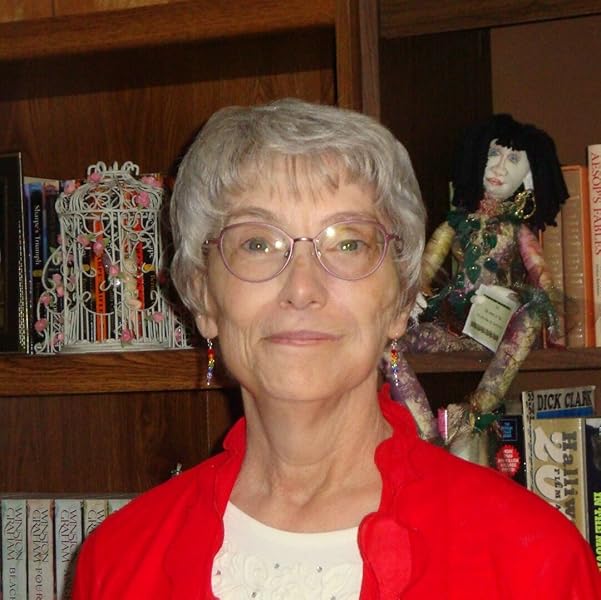
Santa’s Last Ride follows the Claus family after Santa throws out his back feeding the reindeer and decides it is time for his twelve-year-old son to take over; however, he does not want the job, but his sister does. What was the inspiration for the setup of your story?
The story originated with James. Getting tired of Christmas songs on the hours long trip to Iowa for Christmas, he began to tell this story to his kids to pass the time. He has two children – an older son and younger daughter also aged two years apart. They were his greatest inspiration.
I loved the interactions between Christopher and Kristy; they were believable and entertaining, with heartwarming moments as well. What was your approach to writing the interactions between characters?
James and I are siblings. There were five more of us growing up. We are stuffed full of sibling interactions, mostly of a humorous nature. We grew up in a rambunctious and laughter filled environment.
What were some themes that were important for you to explore in this book?
Most important is the idea that everyone is valuable in their own way and not even a disability or a perceived disability changes that. In fact, I got involved in this book when James sent me an email of a very bare bones version of the story and asked me to put it in legible form. James has dyslexia, which was why he asked for my help. After much internet interact, we added to and filled out the story until it became ‘our’ book.
Will there be a follow-up novel to this story? If so, what aspects of the story will the next book cover?
We have had feedback from a number of fans asking what comes next. Some want to know when the movie is coming out. There are a number of issues we see that could be addressed in future. Considering their new positions in the Claus family how do Chris and Kristy, still quite young, handle the adults in the world they will have to interact with? From the North Pole how do you go to school, college, or date? With the planet warming up what will the family do about a shrinking North Pole? There’s no ground under the North Pole ice. What’s next for Mr. and Mrs. Claus?
Author Links: GoodReads | Website
While Santa’s mind is fixed on training Christopher, Mrs. Claus, daughter, Kristy, and Christopher are determined to find a way to tell Santa the obvious – which he seems to be stubbornly ignoring – that Christopher is unsuitable for the job. The family is keeping Christopher’s secret and it will only be sprung on Santa on Christmas Eve. Meanwhile Kristy, just ten years old, feels she is up to the task of taking Santa’s place.
Christmas Eve finds Santa and his trainee taking off for high flying adventures around the world, including natural disasters – angry dogs, cracking ice – and some disasters not so natural – smoking chimneys, frightening encounters with jets. When Santa discovers his family has tricked him, he nearly turns the sleigh around, to end the flight. Christopher and Kristy have to impress their father with their talents. Kristy especially has to believe in herself enough to convince Santa that, working together, they just might be able to save Christmas.
We Choose Our Own Destinies
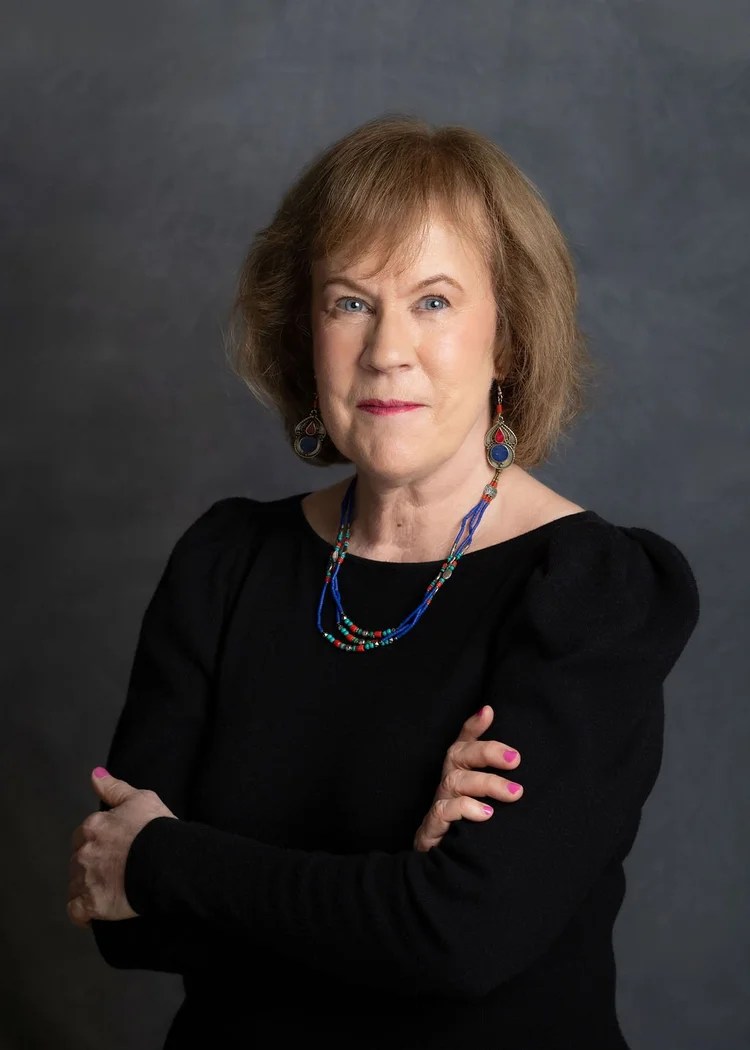
The Children of the Children follows a young man searching for answers and belonging, who found hope in an apocalyptic religious cult, one that his children would later try to escape. What was the initial idea behind this story, and how did that transform as you were writing the novel?
I got the idea for this story not long after the Cold War ended. Freedom seemed to be breaking out everywhere. What a difference a few decades have made. Authoritarianism is on the advance all over the world. So the novel became darker. Early in the story, Father Joseph says, “You give people a choice – freedom for themselves but also for their enemies, or subjugation for their enemies but also for themselves – and they’ll choose subjugation.” But it doesn’t have to be this way. I believe we choose our own destinies, both as an individual and as a society.
What kind of research did you do for this novel to ensure you captured the essence of the story’s theme?
My main research was as an observer of human behavior. I’ve watched as family and friends have joined religions and left religions, trying to understand the evolution of their views and my own. I also re-read parts of the Bible, familiar to me for years, with a more open mind, asking myself not how the words could be used to comfort or inspire, but to control. Telling people that the Bible is infallible is like putting a gun in their hands. Who knows what they’ll do with it. In fact, Father Joseph’s Letters to his followers were the easiest part of this novel to write, because there were so many verses that, read the right way (or perhaps I should say the wrong way), could be used to back up what he was saying.
What were some themes that were important for you to explore in this book?
The main theme I tried to explore was the religious theme. Religion gets to the core of who we are as human beings, offering answers to where we come from, how to live our lives, and where we go after we die. But religion can be used against us. Abuse in extremist religion isn’t just possible, it’s practically inevitable. If a religious leader’s followers believe the Bible is infallible, then that leader can use nearly anything from the Bible to justify his actions.
A second theme in the novel is how national and even international events can shape decisions that people make about their personal lives, in ways they may not realize. Danny drops out of U.S. society at the height of the Vietnam War; years later, his son tries to escape a cult as East Europeans are escaping communism. The Children of the Children is set against a backdrop of world events. This was deliberate.
Were you able to achieve everything you wanted with the characters in the novel?
I think there’s a mistaken idea that people join cults because they’re “messed up,” or had a bad childhood, or are on drugs. By telling ourselves that, we insulate ourselves from the disturbing truth: Anyone can become susceptible to cults or to cult-like thinking. I showed where Danny, Deborah, and other characters were in their lives before they joined the Fishermen, and where they ended up at the end of the novel. Yes, I achieved what I wanted to.
Author Links: GoodReads | Facebook | Website
Danny Calvert thinks part of American society is about to crash and burn. Capitalism, if he’s lucky. But when a college friend dies in jail, he joins an apocalyptic religious cult and begins printing the increasingly dark writings of its charismatic leader. Father Joseph says “unless you become like children, you will never enter the Kingdom of Heaven.”
But “become like children” means just that. Father Joseph moves his followers to Europe to avoid scrutiny, and controls them such that Danny isn’t allowed to marry Deborah, the woman he loves, but is forced to marry someone else. He has children by both women, and they’re as determined to escape the world they grew up in as Danny was to escape his own world years ago.
Set during the last years of the Cold War, and inspired by real events, The Children of the Children explores the price that people pay for following a leader who demands unquestioning belief, and the price their children pay to break free.
What If?
Waiting for Them to Come Back follows a boy growing up in a home filled with abuse and searching for love and comfort, only to be left yearning. Where did the idea for this story come from, and how did it develop over time?
I had thought about ‘what if.’ The question was ‘What if my siblings and I stopped talking to my mother?’ This is where the idea came to be, where I thought about that terrible thought over and over again. And imagined my mother looking out the window, waiting for her children to come home.
I knew I didn’t want a happy ending. I want to show that this is a reality for many people, for whatever reason. Life isn’t full of promises and happiness.
What are some things that you find interesting about the human condition that you think make for great fiction?
I think our selfishness and our ability to hurt one another are both fascinating and terrifying. What makes us human is what makes us inhuman too, for example: stubbornness, where we often learn the lesson the hard way. Pain is often a good place to start a great fiction, too.
What themes were particularly important for you to explore in this book?
Pain is a good theme for this book. Physical pain and emotional pain are what Walter experienced throughout the book. And then It was his mother’s turn.
What is the next book that you are working on, and when will it be available?
I’m working on this sci-fi (which is a departure from my first book, drama) called ‘Revenge In The Hospital.’ Hopefully, it will be available in August 2026.
Author Links: Facebook | Website
Building Healthy Connections
Coco Goes Skating follows a young girl who sees people in the park wearing shoes with wheels, and becomes curious and wants to try them for herself. What was the inspiration for your story?
My childhood memories of learning to skate about the age of seven, is the same sport I love today.
Are there any emotions or memories from your own life that you put into your story?
Yes, I had lots of fun roller skating as a child in tennis shoes roller skates, then as I got older roller blades, and winning a race as a young adult at a skating rink some years ago.
What were some educational aspects that were important for you to include in this children’s book?
Parental support helping them build healthy connections with their children through the sport of Roller skating and the journey, the process, and the fun kids can have learning to roller skate and ice skate.
What other adventures do you have planned for Coco in the future?
I am still in the formation stages of new books for her as she grows up and continues to explore new life adventures.
Author Links: GoodReads | Amazon
Coco because curious about the shoes
and wants a pair of her own.
Experienced Coco’s skating adventure
in 3D style.
as she rolls her way into lots of fun.
An Age-Old Dilemma
Emergence: The Orbit Stone Saga follows a young man recruited into an ancient order of protectors who must learn how to navigate a world of ancient magic, political intrigue, and try to prevent a genocide. What was the inspiration for the setup of your story?
Ottix’ arc was mostly inspired by my own journey into law enforcement. Much as I did, Ottix has a desire to help others, protect the innocent, and make Orbis a better place. His story is not a rags-to-riches tale though. Other characters like Glacea and Armin follow this classic trope. Ottix however, was born into a good family that cared about him and gave him opportunities. I wanted to emphasize that bad situations or upbringings do not always create good characters. Ottix came from an upper-middle class situation and through hard work, ascended further beyond that station. The elements surrounding Ottix such as magic, politics, and genocide were inspired by classic fantasy stories and real history.
I find the world you created in this novel brimming with possibilities. Where did the inspiration for the setting come from, and how did it change as you were writing?
My settings were inspired by a variety of things and places, as Orbis is a large world. I’ll start with Palagr, since it was the first region I developed. Palagr is based on my home, the southeast U.S. I wanted to share the beauty of this area with my readers. The towering pine forests and bountiful marshes are a sight few get to see and one I thought was worth sharing. Next came Mwantamba. At the time I began writing Emergence, my sister was traveling to Africa to study elephants for a college project. I researched the country’s wildlife, cultures, and history. Mwantamba is home to many fantasy creatures based on real ones. The Watu were inspired by Zulu, Maasai, and Swahili. Next came the icy homeland of the Visoibri, Vorigheim. This nation was developed with Iceland in mind. Many ancient Visoibri words are based on old Norse, such as Vorigheim which means “origin home.” I imagine the structures of Towerton to be norse inspired, though the culture relies more on magic than sea raiding as the vikings did. Every story needs a villain, and Emergence’s live in Metusol. The central land of the Azeri has a varied climate. On the west it is arid but has access to the ocean and plenty of trade routes. On the east side it is more temperate with most of the country’s agriculture. I wanted to reflect the Azeri’s split ideologies with this difference. Many of the people in Metusol just want to live a fair and happy life. But the rulers use the citizens for their own gains. My next creation was the Jah’kuls of The Paw. As I created the map, I ended up drawing an island in the southeast that kind of looked like a paw. Later on, I added an entire race, the Jah’kul, to the island. This race was inspired by the Khajit from the Elder Scrolls series. I figured if there are cat-people, why not make dog-people! Next came my favorite group of characters, the Marinites. These creatures were inspired by many things including the Zora from Zelda, Kitt Fisto from Star Wars, and Abe Sapien from Hellboy. I wanted Orbis to be connected by a large ocean, and the Marinites helped complete that goal. The other thing that connects the world is of course, the Orbit Stone ring. The magic ring of stones is the source of all magic on Orbis.
What were some themes that were important for you to explore in this book?
Throughout history there have been many examples of religion or politics creating opposing groups that are pitted against one another. I wanted to incorporate this age-old dilemma into Emergence. I also wanted to explore the themes of duty and loyalty. Characters are often torn between their loyalties to their family or nation and the greater good. I also wanted to explore how magic could be used other than in the traditional sense. The prevalence of magic and Azeri technology makes for a unique setting in which ancient magic and modern technology collide. Finally, I wanted to write about war and peace. Emergence delves into the fragility of peace and the brutal consequences of war, contrasting the ideals of unity and cooperation with the destructive nature of hatred and ambition.
Where does the story go in the next book, and where do you see it going in the future?
The second book, Convergence, will continue the story, focusing more on Razi as the new leader of the paladins. An ancient secret is revealed which changes everything. The truth about what happened to the ancient Visoibri comes to light. And the war against the Azeri rages on and eventually concludes. The second book dives deeper into the relationships between characters and even some romances. The third book, Transcendence, will take place 15 orbits after Convergence, and will focus on the paladin’s new mission after the war.
Author Links: GoodReads | Facebook | Website
The Paladins, an ancient order of protectors, rise up to counter the Azeri threat. Among them is Ottix, a young man recruited into their ranks, determined to fight for his world’s survival. As war erupts across Orbis, the Paladins lose their greatest weapon, and the future of the Republic hangs in the balance.
In the face of impending chaos, the heroes of Orbis must navigate a world of shifting allegiances, ancient magic, and political intrigue. With the stakes higher than ever, it’s unclear who will emerge victorious—and who will be lost forever.
The Orbit Stone Saga 1: Emergence is a high-stakes adult fantasy filled with complex characters, dangerous magic, and a world on the brink of war. Will Ottix rise to the challenge, or will Orbis fall into ruin?
Have Fun With Your Fandom


How to Celebrate Your Fandom is an interactive guidebook structured around 52 activities designed to help fans of any age dive deeper into their chosen fandoms, showing readers that you are never too old to find your passion. What was the inspiration for the original and fascinating idea at the center of the book?
NICHOLAS SEIDLER: We had an experience at a convention, in which we went to a panel on fanzines, and the presenters at the front of the room were talking about how difficult it is to make one. I was honestly totally disappointed in the panel, because doing a fanzine is as simple as writing down your thoughts on a piece of paper, making copies of it, and sharing it with others who are interested in the same topic. The point of entry should be so simple and available to everyone, but the fanzine editor presenters — in an attempt to make themselves a bit self-important – were giving bad advice to the audience. It actually demotivated the new and younger fans in attendance. After that panel, we had a conversation about how we needed to give fans better advice and encourage anyone to be a part of whatever fandom they are interested in!
STEVEN WARREN HILL: Together, we all became friends through our shared interest in several fandoms. We sought to express our enthusiasm for promoting “best practices” among fans by fostering positivity, encouragement, representation, and camaraderie, while rejecting the negative aspects of certain portions of fandom.
LIBBY SHEA: When I was brought into the project, the original idea for the title was “How to Be a SuperFan.” To me, that felt like we were setting a “higher level” of fan, which could very easily be used to separate and discourage those that may already feel excluded. All I could think of is 8-year-old me being told “Oh, you aren’t a superfan because you haven’t done everything in the book” and that set a negative tone for something that we all wanted to be very positive. So, we transitioned away from putting a label on fans to focusing on how to be more involved in what you enjoy. All of us (the authors) have become friends by being in the same fandom and celebrating what made our friendship as strong as it is, is the core of what inspired this book.
ROBERT WARNOCK: We’ve seen too much negativity in fandom over the years. We wanted to write something that was inclusive and non-judgmental, especially if someone was just starting out in their fandom.
What were some ideas that were important for you and the other writers to share in this book, and how did you come up with the activities you suggest?
ROBERT WARNOCK: It was important to keep the activities at the beginning fairly simple, so we didn’t intimidate new fans. We started thinking of activities in a brainstorming session at a convention.
LIBBY SHEA: Because this is a book aimed primarily at kids, teenagers, and those just entering into the fandom space, we really wanted it to be a guide of how to be an overall positive influence in fandom. So often you hear of fans taking it too far and forgetting that everyone they interact with are still people. The activities are there to give you a starting place. We originally came up with over 100 ideas, but wanted to focus on 52, so that you could do one a week for a year and allow yourself to deep dive into your fandom. They are in order from easiest to (our perceived) most difficult to complete. When coming up with our final list of ideas, we tried to keep in mind what it would actually look like for a younger child to complete them. We kept the ideas generic enough so that if you had limited money or resources, you could still have fun and feel like you’re a part of something.
STEVEN WARREN HILL: Coming up with the ideas was a lot of fun. Some of the ideas stemmed from odd things we did ourselves when younger. Once we had a long list of ideas, we grouped them in several different ways (such as by difficulty, and how much we liked each one) and also eliminated the ones that were too similar to others. As Libby said, we decided the final list should number 52, so they could be weekly goals, adding another functional facet to the book.
NICHOLAS SEIDLER: We also realized that fandom was a very broad topic – and we wanted to give advice that applies to them all. Whether someone is a bibliophile, a sci-fi fan, interested in gaming, likes to cheer for a sports team, enjoys horseback riding, music, or whatever, the advice in the book applies to their interests. We chose to select activities that everyone can do, regardless of ability, and they become more complex further into the book, as a person’s fandom and experience grows.
What are some tips you have for older generations that are just now learning to embrace the world of fandom and feel behind the curve from the younger generations, or even like a fraud for not being involved sooner?
LIBBY SHEA: It’s okay that you found your fandom when you did. It’s not about younger or older, and it’s not about how long you’ve been in the fandom. Everyone walks different paths to get to where they are. What matters is how you show up to engage today. Feel safe and confident in the knowledge that you are a fan now and that’s all that matters.
STEVEN WARREN HILL: I used to bristle somewhat at younger people joining the same fandom that I’ve been in for decades, for the usual flawed reasons, until I realized that without young people joining my fandom, the fandom would just keep aging until it died. We need to remember, first and foremost, that if someone says they are a fan of something, then they ARE, even if they enjoy it in a different way. Conversely, for older people who have privately been fans of something and are only just stepping into fandom, my number one tip is to treat all your fellow fans as equals, regardless of anything, especially their age or the extent of their knowledge.
ROBERT WARNOCK: It’s never too late to get started. Your involvement can be as immersive as you want it to be. Be observant early on in your involvement to get a lay of the land, so to speak.
NICHOLAS SEIDLER: Be your authentic self. If you love something, own it – most people will love you for it. It’s our interests and fandoms that make us interesting.
What is one thing that you hope readers take away from How to Celebrate Your Fandom?
LIBBY SHEA: Everyone has to start somewhere. When you finally get to the point of feeling fully immersed in your fandom, embrace others who are just starting out, pass this along to them, and join in their journeys.
ROBERT WARNOCK: That anyone can be involved in whatever fandom they choose, at whatever level they choose.
STEVEN WARREN HILL: That it’s okay to focus on positivity! Not just the positivity of your specific interest, but positivity among your fellow fans and across other fandoms.
NICHOLAS SEIDLER: And have fun. We interviewed over 30 fans from ages 5 to 101 years old (their interviews appear in the book) and that was the advice they each shared with us — have fun! I think that’s what our book is all about.
Author Links: GoodReads | X | Facebook | Website
Fandoms build friendships and communities through many engaging activities. With the help of this book, you can learn new ways to enjoy being a fan. Inside are numerous pathways that one can connect with others with similar pursuits! Whether it is through starting a collection, dressing in cosplay, writing a blog, or attending a convention, each of these brings happiness to those who participate.
This book also contains interviews with fans of all ages (5 to 101), who tell their stories and share how they participate in their hobbies. Celebrate your fandom and the things that you enjoy the most! Fun Things to Do! New Things to Learn! Cool Things to Try!
The Wonder of Archaeological Digs

Finders follows a group of university students on an archaeological dig in Cornwall who uncover an ornate, gem-encrusted Celtic relic filled with ancient mystery. What was the inspiration for the setup of your story?
I’ve often felt there’s something magical hiding just out of reach in the British landscape. I like walking to hillforts, standing stones, burial mounds, and the like. And I’m interested in reading about archaeological discoveries, watching videos about digs, and listening to history podcasts. All that came together in the opening of Finders.
Capturing the personalities of college students while keeping the story focused and moving forward can be a challenging task. What character did you enjoy writing for? Was there one that was more challenging to write for?
I especially enjoyed writing as Ozzie, mostly because of his wry sense of humour about the world and himself. I got stuck some way through the first draft when my bare, vague plot plan didn’t work, but Ozzie kept making me want to discover what happened next.
It was hard to express the main antagonist’s narcissistic megalomania and at the same-time make him seem like a real person rather than a moustache-twirling, melodramatic villain.
What were some themes that were important for you to explore in this book?
The fascination of exploration and discovery, particularly the discovery of what lies beyond the material realm; and, tied in with that, shifts in awareness. At least I think those are themes. To be honest, I never thought about the book’s themes until my developmental editor asked me what the central theme was . . .
Where does the story go in the next book, and where do you see it going in the future?
Mercie, Ozzie and Petroc journey through what Petroc calls “a more subtle level” of existence, where the relationship between mind and matter is different, as is the relationship between one mind and another. After confronting two of their enemies there, the three return to the dig. Now seeing the “normal” world in a new light, they confront the third of their enemies in a way they did not anticipate.
Author Links: Website | Instagram | Substack
Meaningful Work Is Messy Work
Serving the Leftovers shares with readers your journey from a fractured marriage and unfulfilling jobs into a life defined by compassion, chaos, and canine companionship. Why was this an important book for you to write?
I thought I was simply documenting the brutal mathematics of animal rescue—the endless cycle of intake and loss that defines the South’s overpopulation crisis. But somewhere between chronicling emergency calls and heartbreak, I realized I was excavating something deeper: the emotional archaeology of a life rebuilt from scratch. People think we just “like” dogs, but I was drowning in stories I couldn’t tell at dinner parties—stories that revealed I’d been rebuilding myself one rescue at a time, transforming from someone just existing through disappointment into someone living with purpose. The book became my way of honoring both the dogs we’ve saved and the ones we couldn’t, while showing readers that animal rescue isn’t charity work—it’s emergency medicine for a crisis most people never see. It is also proof that transformation can happen to anyone brave enough to follow what calls to them, no matter how impossible it seems.
What were some ideas that were important for you to share in this book?
I realized I’d documented a blueprint for quiet revolution—completely reimagining your life when everything feels impossible. The core message: the life you’re meant to live is already speaking to you. For me, it was that first dog I couldn’t turn away from. Each rescue was the universe saying, “This is your work.” Transformation doesn’t require permission or perfect timing. I started with a fractured marriage—hardly ideal conditions for a life-changing mission. Stop waiting for readiness that never comes. That thing pulling at your heart isn’t a hobby—it’s your next chapter trying to get your attention. Sometimes you have to trust the pull toward something that makes no logical sense.
Ultimately, our vision isn’t too big. Our current life is too small.
What was the most challenging part of writing your memoir, and what was the most rewarding?
Untangling the Beautiful Mess
The biggest challenge was trying to impose narrative order on what felt like controlled chaos—how do you create a coherent storyline when one day you’re fielding divorce calls while having an epiphany about purpose? Writing forced me to connect dots I’d been too busy living to notice—that every dog that changed my life had arrived exactly when I needed the lesson they carried, and that I hadn’t just been saving dogs, I’d been saving myself, one rescue at a time, building the person I needed to become to handle the life I was meant to live.
What do you hope is one thing readers take away from your story?
I hope readers walk away understanding that meaningful work is messy work—and that’s not a bug, it’s a feature. I want readers to stop waiting for a calling that comes without complications. The work that will transform your life isn’t the work that fits neatly into your existing schedule or makes sense to everyone around you. It’s the work that demands you become someone bigger than who you were yesterday—and becoming bigger always involves growing pains. The unglamorous parts aren’t obstacles to your dream—they ARE the dream. The sleepless nights, the impossible decisions, the moments when you’re too emotionally spent to remember why you started—that’s not evidence you’ve chosen wrong. That’s proof you’ve chosen something worth the fight.
Author Links: GoodReads | Facebook | Website



 LITERARY TITAN