Category Archives: Interviews
Inner Peace
Healing by His Spirit is a raw, deeply personal journey through pain, endurance, and redemption, as well as an emotional story of faith, trust, and the miracles God performed in your life. Why was this an important book for you to write?
Healing by His Spirit was important to write because it not only released the burden of shame and guilt I carried, but it also allowed me to inspire others to try and overcome their hardships through spiritual healing.
What were some ideas that were important for you to share in this book?
My travels across the globe helped me to find the inner peace I so desperately sought. It helped me to focus on who I truly am.
I appreciated the candid nature with which you told your story. What was the hardest thing for you to write about?
The hardest part for me to write about was the rape scene. Because a child was conceived from it, I had to try and make the best decision about her future, and I decided it had to be me. It took two weeks to write one paragraph, because of the flashbacks I experienced.
What do you hope is one thing readers take away from your story?
The one thing I hope readers will take away is God’s healing power. It saved my life.
Author Links: GoodReads | Amazon
Mirrors of Humanity
Terra Secundus follows a war-weary journalist sent to Titan, where humanity’s quest for discovery collides with its oldest flaws: ambition, control, and the fragile meaning of being human. What inspired you to set Terra Secundus on Titan rather than another world or moon?
In my exploration of the world of science fiction, I often encountered situations where many famous writers with multiple awards and nominations set their novels on many planets of the solar system and seldom on any satellites of the gas giants such as Jupiter, Saturn, Uranus, and Neptune. Before I decided to place my protagonist in a new world, I carefully studied the science literature about the possibilities of colonizing moons and planetoids orbiting the gas giants. Saturn’s moon Titan was a very strong contender for such an endeavour, and after studying everything I could about that unique moon, I decided to send my protagonist there, since Titan is considered a good candidate for a colony. Many scientists believe it could become a smaller version of Earth, since Titan has a thick atmosphere composed of nitrogen and other gases. Add oxygen to it, and humans could theoretically breathe its air.
The novel’s tone feels both futuristic and nostalgic. Was that a conscious stylistic choice to evoke classic science fiction?
I love classic science fiction novels and my exploration into this literary genre started with many memorable books by Ben Bova, Issac Asimov, Ray Bradbury, Arthur C. Clarke, Frank Herbert, Allen Steele, and Robert Heinlein. When writing about a future removed from our time more than 1,200 years, I tried to imagine a future society of the 32nd century to develop amazing new technologies and modify its social and religious beliefs. In this novel, I tried to use a classic style of storytelling, because for most readers it is much easier to understand. I believe that every society must learn from the past experience and try to avoid repeating tragic mistakes that led to the fall of ancient civilizations and magnificent extinct cultures. The roots of the future are in the present, and I hoped to tell this story in such a way as to entertain and educate my readers about the fascinating distant worlds, new technologies that border on magic and what it means to be human.
How did you approach writing the Artborn androids like Erika, as characters, machines, or mirrors of = humanity?
Interesting question. I like robots. Even as a kid, living in a different society during the Cold War, I liked all science fiction movies that featured cyborgs and robots. Since those days, robotics and and cybernetics both made giant strides forward, and now we see many cybernetic models starting to imitate humans. We are also witnessing the radical advances in Artificial Intelligence and autonomous systems that help us to explore other places and other planets. My approach to such characters as Artborn Erika was both scientific and philosophical. In my story, Artborns are advanced synthetic humanoids that were created to assist humanity, working in most dangerous places in space and underwater. They are essential mirrors of humanity and in some ways are better than us when it comes to programmed mission parameters and sense of duty. In my novel, androids like Erka are employed as explorers, personal servants and bodyguards but they can certainly do much more than that.
If Paul Rexton were alive today, what story would he report on Earth in 2025?
If my protagonist, Paul Rexton were alive today, I believe that he would be deeply fascinated, intrigued and disturbed by the Earth in 2025. His world is certainly very different from ours in many respects, but he would be able to understand our world and form his own unbiased opinion about it. He would no doubt be pleased about the technological progress and human rights, Very concerned about environmental pollution and deeply affected by the fact that there are still powerful evil forces exist on the planet, making life difficult for their neighbors and many other countries. He would no doubt be fascinated by our means of mass entertainment and our taditionsl and electronic libraries of vast human knowledge that contain many centuries of wisdom. I would imagine Paul Rexton standing on a hotel balcony in a quiet and beautiful Japanese village, visiting the beautiful museums of Europe or enjoying a good book at home with a glass of old, smooth, wellaged brandy.
Author Links: GoodReads | Amazon
Hope of Recovery
In Being Broken, you share the traumas of your childhood, heartbreaking losses, and how you were able to face the damage that shaped your life. Why was this an important book for you to write?
I had to understand how things could have gone so terribly wrong that my sister had to pay the ultimate price, with her life. I’m not a spiritual person, so I needed to believe that this was preventable; that there was a rational and reasonable explanation for this tragedy. Not only that, I needed to better understand my part and be able to forgive myself for either my inability to act in time, or if I had become apathetic to her plight from years of dealing with it. But the journey allowed me to view my own life from a better perspective. It allowed me to dig deep into the traumas of my past and move forward with forgiveness of myself and the fact that I was not responsible for what happened to either of us.
I appreciated the honesty and raw emotion throughout your memoir. What was the hardest thing for you to write about?
Top of that list is my sister’s death. I was so overcome with shame and guilt about not being able to save her, the only way to deal with it was to write about it. I was having a hard time articulating what I was going through, and to write it all out was relieving since the rumination during grief can be very overwhelming. However, equal to how difficult her death was, learning and writing about my sister’s rape was extremely difficult. As I wrote in the book, our parents downplayed my sister’s rape to the point where they were trying to convince me it didn’t happen. Because of their manipulation, I believed them, and the guilt and shame I felt when I read about it in her journals was heartbreaking. Knowing that I wasn’t there for her like I should have been while she was dealing with that trauma, alone, made me feel absolutely horrible. Understanding now it is not my fault, but the fault of my parents’ manipulation of me, that I wasn’t there for her during the most difficult time of her life allowed me to forgive myself.
What is one misconception you believe many people have about growing up in abusive homes?
That children, and even adults, can see and understand that they are being abused, and that escaping the situation is obvious. Many people in abusive relationships are unaware that they are experiencing abuse. I didn’t understand that my sister and I were being abused by our parents until after her death. The narcissistic front of family perfection that our parents projected out into the world made it very difficult for anyone to believe us when we talked about what was going on in that house. Further, the nature of the abuse caused us to live in fear of talking about it. To even consider sharing what was going on with us, we knew the consequences would be severe. And lastly, the amount of control my parents had over my sister’s life precluded any ability for her to escape. They had full control over everything in her life: her car, her lease/rental properties, her phone, money, even her son when she was deemed incapable of caring for him – and they constantly threatened to take it all away if she didn’t behave as they wanted. Truly understanding what was happening to us took a lot of study on my part; years of work through my sobriety, and then grief. By then, it was too late for her, but it continues to help me heal.
What is one thing you hope readers take away from your experiences?
That if you are experiencing the same type of abuse, or have in your past, that you are not alone and there is hope of recovery. The common statistic is that 1 in 4 children experiences a form of abuse. It doesn’t have to be physical or sexual abuse, the most horrific types; it could be any type of mental or emotional abuse. Everyone experiences trauma, even the same trauma, differently based on their formative childhood years. Studies show that a child who experiences repeated forms of abuse has a very altered brain than one who does not. However, through neuroplasticity, therapy, and work, we can manage the challenges of Complex Post-Traumatic Stress Disorder to rewire our brains to live healthy, improved lives and still accept and integrate what we faced as children.
Author Links: GoodReads | Bluesky | Facebook | Website | Amazon
The son, brother, stepson is the only one left to pick up the pieces. He begins a journey of the self and finds out the truth of his family. After going over letters, notes, emails, videos, and text messages, he uncovers a disturbing picture of the abuse his sister suffered at the hands of their parents. He also begins to better understand his own struggles with mental health and substance addiction because of the trauma and abuse he also suffered from their parents.
Follow the son as he looks through his family history to discover the generational abuse that trickled down through the years. Learn about how parents who suffer from narcissistic personality disorder emotionally abuse and manipulate their children. See how the abuse and trauma becomes mental illness in the abused, and how they fall into vicious traps of addiction, eating disorders, self-harm, and complex post-traumatic stress disorder. Witness the transformational change of the son as he works on the recovery of his inner child and tries to become the man he was meant to be.
Confidence, Grace, and Purpose
Successful Life Skills for Teens is a positive, practical guide for young readers who want to build confidence, manage emotions, and get their lives on track. Why was this an essential book for you to write?
I wrote Successful Life Skills for Teens to bridge the gap between what schools teach and what teenagers need to thrive in today’s world. Many young people leave the classroom with a wealth of knowledge, yet they often lack confidence, resilience, and emotional awareness. This book gives them practical tools to navigate real-life challenges with courage and clarity. It guides teens to manage stress, build strong relationships, make wise decisions, and believe in their own potential. Each chapter was carefully crafted to support teens in becoming confident, capable young adults who are prepared to approach life with strength and purpose.
What were some ideas that were important for you to share in this book?
I wanted teens to understand that success lies in growth, not perfection. Each step forward, no matter how small, builds the strength and wisdom needed to face life with confidence. The ability to manage emotions, balance responsibilities, and nurture friendships is a quiet but powerful skill that shapes character and leadership. Also, I want to remind teens and young adults that understanding mental health and resilience are signs of courage, not weakness. Developing self-awareness helps teens better understand who they are and how they respond to challenges. This understanding enables self-discipline to guide them through life’s ups and downs with confidence, grace, and purpose.
What is one thing that people point out after reading your book that surprises you?
It’s encouraging to see so many parents enthusiastically recommending this book to others. The support they provide emphasizes its importance and the positive effect it can create. They’ve told me it not only helps them understand and reinforce the principles I share but also inspires them to apply the lessons in their own lives. Many expected Successful Life Skills for Teens to benefit their teenagers, but they found the strategies on confidence, focus, and stress management just as meaningful for themselves. Hearing that the book sparks honest conversations about mindset and personal growth within families has been one of the most rewarding surprises.
What is one thing that you hope readers take away from Successful Life Skills for Teens?
I hope readers, both teens and parents, see this book as more than a bridge that brings together an understandable connection between generations. My greatest wish is for it to spark genuine conversations about confidence, stress, and self-belief, allowing these topics to be discussed at the dinner table before the struggles become too deep. I want parents to feel empowered to guide their teens with compassion and genuine connection, and for teens to recognize their parents as their most incredible supporters to cheer them on as they discover their place in the world. If this book inspires families to listen more intently, support one another, and grow stronger together, then it has achieved my hopes. True success shines brightest when understanding fuels our strength, love guides our actions, and unity becomes the bond that helps us grow together.
Author Links: GoodReads | Facebook | Website | Amazon
Every parent dreams of seeing their teen confident, capable, and ready for life but most teens are never taught the real-world skills to make that happen.
Successful Life Skills for Teens bridges that gap with practical lessons in confidence, emotional intelligence, communication, time management, and goal setting.
Packed with relatable examples and proven strategies that empower teens to overcome stress, build stronger relationships, and take control of their future.
Give your teen the tools to succeed in school, work, and life with confidence that lasts a lifetime. Trusted by parents, loved by teachers, and life-changing for teens.
The Inside Benefits:
Powerful practical strategies for building your self-confidence and developing your courage
Why it’s so important for you to recognize your emotions… and how you can use this intel to reduce your stress and anxiety and boost your friendships
What a healthy friendship looks like—plus the social skills you need to take your relationships to the next level
Clear guidance for navigating conflict and expressing yourself clearly in every context
How to become the master of your own time—with practical strategies that really work (even if you’re a chronic procrastinator!)
A practical and user-friendly guide to managing your finances… so that you understand how money works and keep more of it in your bank account!
The critical thinking techniques you need to make smart decisions and solve problems quickly, easily, and effectively
Why making a mistake is no bad thing—and what you can do to make the most of it every time
The digital literacy skills that will keep you safe and secure in an increasingly online world
Why you need “LION goals” in your life: Discover what they are and how you can use them to achieve your dreams
How to ace a job interview and get a firm foot on the career ladder (in any field)
The reason a growth mindset is going to be your superpower… and exactly how you can develop one
And much more.
You might think these are skills you can pick up as you go along, and to a certain extent, you’re right… But wouldn’t it be better to perfect them now?
You can avoid a whole lot of stress and unnecessary mistakes if you build up these skills now, and the difference you’ll feel in your confidence and certainty will be striking.
There isn’t a person in the world who doesn’t need these skills… and this is your chance to get ahead of the game.
Life is Messy and Chaotic
The Unassuming Vector follows a gifted ten-year-old child who, after the death of his parents, is taken in by a mysterious organization that fosters exceptional children to further their clandestine agenda. What was the inspiration for the setup of your story?
The inspiration for The Unassuming Vector really came from my frustration with how many stories feel too linear and predictable. Life isn’t neat or perfectly structured—it’s messy, chaotic, and often full of contradictions. I wanted to write something that reflected that truth. For me, the story is less about extraordinary events and more about the human experience within them. I wanted my characters to feel real—to be humans first, defined by their vulnerabilities and emotions before anything else. Through this lens, The Unassuming Vector became a way to explore how people, especially a child with exceptional gifts, navigate a world that tries to shape them in ways that don’t always align with who they truly are.
Gaston and Alex are at opposite ends of the spectrum in terms of their moral compass. What were some of the emotional and moral guidelines you followed when developing your characters?
I wouldn’t necessarily say Gaston and Alex are opposites in terms of their moral compass. To me, Alex is more of a victim of unchecked ambition—a reflection of what can happen when drive and potential aren’t grounded by self-awareness or compassion. Her choices took a drastic turn, but they stem from very human desires: to be seen, to achieve, and to matter. It’s also important to remember that The Unassuming Vector is part of a six-part franchise. What readers see now is only a moment in a much larger journey. While Alex’s path might seem to be at a low point, things may evolve for her later, just as Gaston’s story might take an unexpected detour. My goal was to show that morality isn’t static—it’s fluid, shaped by circumstance, emotion, and perspective.
What were some themes that were important for you to explore in this book?
One of the most important things for me in writing The Unassuming Vector was to create an evolving story—one that takes readers on a genuine emotional journey. I wanted them to experience a full spectrum of feelings as they turn the pages: compassion, pity, anger, love, and even indignation. Life isn’t static, and neither are our emotions, so I wanted the story to reflect that natural ebb and flow. Another key theme was exploring the vicissitudes of life—its constant changes and unpredictability—through the lens of a child growing into adulthood. Seeing the world evolve alongside the character allowed me to examine how experiences shape identity, morality, and resilience over time. Ultimately, I wanted readers to not just follow a story, but to feel it deeply, as though they were living it themselves.
What is the next book that you’re working on, and when can your fans expect it out?
I’m currently taking a short pause from the Vector series to work on a sports thriller that’s packed with twists and unexpected turns. Beyond the thrill and tension of the story itself, it also takes a satirical look at some of the societal issues we often overlook in competitive environments. It’s been exciting to explore a different kind of narrative energy while still staying true to my love for complex, emotionally charged storytelling. Fans of the Vector series won’t have to wait too long, though—Gaston’s story is set to make a comeback in Mid 2027. In the meantime, the sports thriller is scheduled to debut in mid-2026.
Gaston, meanwhile, leads a major Tretfax initiative to create precision-enhancing weaponry, a project that the Pentagon successfully adopts. But when the same technology is distributed to a violent faction in an African nation, resulting in widespread loss of life, Gaston becomes disillusioned. Alienated within Tretfax and wracked with guilt, he leaves the organization and joins Biomer Energy, where he spearheads a revolutionary project that reduces carbon emissions by attracting bees to carbon dioxide. Just as he begins to find purpose again, Alex—having murdered the Tretfax CEO and seized control—sets her sights on acquiring Biomer to exploit Gaston’s discovery.
Emotional Vulnerability

Thank You for the Kiss follows a traveling entrepreneur who arrives in Cuba, carrying heartbreak and longing with her, seeking an escape and a new identity for herself. Why was this an important book for you to write?
“Thank You for the Kiss” was an important book for me to write because it allowed me to explore the fragile intersection between personal longing and cultural complexity. At its core, it’s a story about emotional vulnerability -how heartbreak can push us to seek escape, reinvention, and connection in unfamiliar places. But it’s also a cautionary tale about the seductive glamour of tourism and the ease with which we can misread the world when we’re emotionally altered.
I wanted to show how, in moments of pain or disorientation, we can lose ourselves,not just in the beauty of a place, but in the illusion that we understand it. The protagonist’s journey through Cuba is not just physical; it’s a descent into the blurred lines between empathy and projection, generosity and vanity. Gina’s desire to help, to connect, to feel something real, is sincere, but it’s also tangled with misunderstanding, privilege, and the unconscious assumptions we carry when we move through cultures not our own.
Writing this story was punishing in its honesty. It forced me to confront how easy it is to let consequences drift when we’re consumed by our own emotional needs. But it also offered compassion, or the flawed ways we try to heal, for the mistakes we make when we’re trying to do good, and for the quiet hope that even in misunderstanding, there can be growth.
I appreciated the candid nature with which you told your story. What was the hardest thing for you to write about?
The hardest part of writing this story was admitting it to myself first. Revisiting those nine months meant confronting not just the events, but the emotional undercurrents that shaped them: the heartbreak, the impulsivity, the moments of vanity and misjudgment. Putting it into raw words,without softening the edges, was bruising. It exposed the flaws of the protagonist, who in many ways mirrored my own vulnerabilities.
But that candor was necessary. It allowed me to reflect with humility, to trace the journey from emotional disorientation to deeper self-awareness, and to offer readers something honest to connect with. I wanted the story to be more than just a personal reckoning,I hoped it would resonate with anyone who’s tried to help, who’s felt lost in unfamiliar terrain, and who’s learned, through discomfort, how to see with greater clarity and compassion.
What were some themes that were important for you to explore in this book?
Some of the most important themes I wanted to explore in Thank You for the Kiss were deeply personal, but also universally resonant:
EMOTIONAL INSTABILITY – I was drawn to the idea of what happens when we’re emotionally ddestabilise,how heartbreak can push us to seek new identities, new geographies, and new versions of ourselves. The protagonist’s journey is as much about internal transformation as it is about physical travel.
CROSS – CULTURALISM – A central theme was the fragility of cross-cultural encounters, especially when filtered through the lens of emotional vulnerability. I wanted to explore how easily good intentions can be misread, how privilege can distort perception, and how tourism can sometimes blur the line between connection and consumption.
GLAMOUR AND SEDUCTION – There’s a seductive quality to escape, especially in a place as visually and emotionally rich as Cuba. I wanted to show how easy it is to fall into the fantasy of a place, to romanticize it, and in doing so, lose sight of its realities and the people who live them every day.
VANITY, VULNERABILITY AND SELF-REFLECTION -This story demanded a raw honesty about the protagonist’s flaws and her desire to help, her longing to be seen, her missteps. It was important for me to write a character who is both well-meaning and deeply imperfect, because that’s where growth happens: in the tension between who we are and who we hope to be.
POWER/ A HARK BACK TO COLONIALISM AND THE NEED TO DO GOOD I also wanted to examine the complicated dynamics between those who have and those who do not. The protagonist’s attempts to help are sincere, but they’re also shaped by her own needs and assumptions. This theme was about interrogating the ethics of giving, and how easily we can project our own desires onto others under the guise of generosity.
I wanted the story to be not just about love or loss, but about the messy, beautiful, and often uncomfortable process of learning to see more clearly – both ourselves and the world around us.
What do you hope is one thing readers take away from your story?
I hope readers take away from Thank You for the Kiss, that vulnerability is not weakness ; it’s a doorway. The story invites readers to sit with discomfort, to witness the messy, imperfect ways we try to heal, connect, and understand both ourselves and others. It’s a reminder that emotional honesty, even when painful, can lead to clarity and compassion.
Author Links: GoodReads | Facebook | Website
When warrior Queen Gina arrives in Havana, she seeks to rebuild her shattered life after profound loss. But Cuba, with its vibrant chaos, becomes both a healer and a destroyer. Caught in deception, cultural misunderstandings, and the pull of forbidden love, Gina must decide: surrender to ruin, rise again as the formidable woman she was meant to be.
a raw and unforgettable memoir of grief, identity and transformation
Thank You For The Kiss, a memoir, invites readers to witness one woman’s extraordinary fight to reclaim her life and spirit.
A Female Perspective
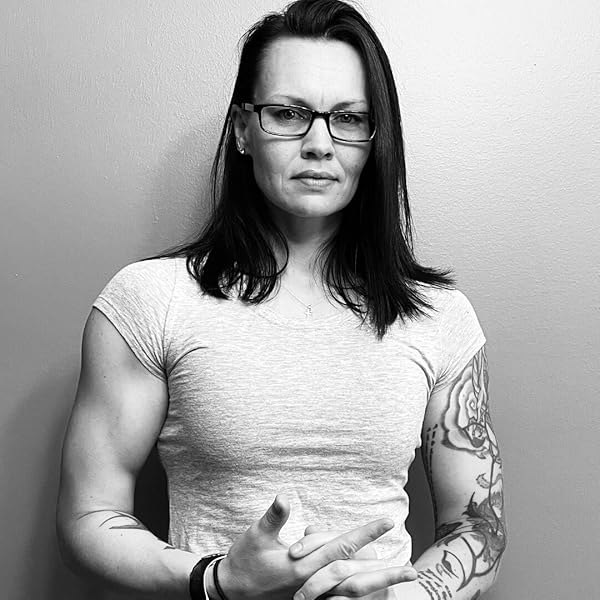
Pain Games follows the member of a Female Engagement Team on her journey from enlistment through boot camp to deployment in Iraq, capturing the brutality, absurdity, and dark humor of military life. What was the inspiration for the setup of your story?
Kate Molsin, the main character, is a Military Police Officer who’s hand-selected to lead a Female Engagement Team (FET). The original idea for what became Adrenaline Rush actually started when I was in middle school. Back then, I was sketching out the blueprints for a story about service, sacrifice, and adrenaline—but I set it aside when I enlisted in the Air National Guard. The concept stayed in the back of my mind for years, though, simmering until I found the inspiration I needed to bring it to life.
That spark came after I transferred to active-duty Army three years later. I was stationed in South Korea as a Military Police Officer, and being in that environment—serving with so many incredible men and women who became like family—gave me clarity on what I wanted the story to become. That’s when Adrenaline Rush evolved from a single story into what’s now a full series.
During my time in service, I realized how few military stories are told from a female perspective. We go into combat alongside our brothers-in-arms, shoulder-to-shoulder as equals, but we process war, trauma, and resilience differently. That contrast stuck with me, and I wanted to explore it honestly. In many ways, this series is my version of a Tom Clancy or Jack Reacher story—told through a woman’s lens. Because the truth is, men aren’t the only ones who like to blow stuff up, tote guns, and fight for their team.
Ultimately, I hope Adrenaline Rush serves as both a platform and a conversation starter—to educate, entertain, and shed light on what all soldiers and veterans experience, especially women whose stories too often go untold.
Your characters are wonderfully emotive and relatable. Were you able to use anything from your own life to inform their character development?
Yes, absolutely. Kate Molsin is a blend of all the incredible women I’ve served with—myself included. She embodies our strength, humor, resilience, and the emotional depth that comes from serving in uniform. Many of the other characters are inspired by the remarkable men I’ve had the privilege to work alongside. Their personalities, quirks, and unspoken camaraderie helped shape the realism behind each scene. In many ways, these characters are tributes to the people who’ve stood beside me through chaos and calm—the brothers and sisters who became family through shared hardship and service.
What were some themes that were important for you to explore in this book?
Oh man, there are so many. The main themes I wanted to highlight in the lives of soldiers are honor, courage, commitment, and resilience.
Honor—for us, it means living by the core values instilled in you from day one of boot camp: loyalty, duty, respect, selfless service, integrity. It’s about making a vow to use those values as your moral compass, both in and out of uniform. We don’t always get it right—we’re human—but honor is a cornerstone of what it means to be a soldier.
Courage—it’s doing what’s right, whether you’re on the battlefield or navigating your personal life. It’s having the courage to walk into the darkness, sometimes alone, because you made a vow and you stand by it.
Commitment—as a soldier, you’re committed. Bottom line. To the mission, to your team, to your values. It’s that unbreakable drive to show up, even when everything in you wants to quit.
Resilience—the military will test you in every possible way: emotionally, psychologically, and physically. You have to take care of yourself so you can keep completing the mission. You have to learn to get back up after being knocked down, again and again. This life isn’t for the faint of heart—war doesn’t care about your feelings—but resilience is what separates those who endure from those who fade.
Can you tell us more about what’s in store for Katie and the direction of the second book?
Actually, the third book—Adrenaline Rush: Operation Homefront—will be coming out soon, and I’m really excited about it. Like the rest of the series, it’s packed with non-stop action, but it also dives deeper into the emotional and psychological battles soldiers face once they return home. It explores what it’s like to transition back into what we call the “civilian division,” or civ div—that uneasy process of trying to fit back into a world that feels both familiar and foreign.
This book highlights the reality that the fight doesn’t always end when the deployment does. Sometimes, the toughest battles are the ones you face after the war—when you’re trying to rebuild, reconnect, and rediscover who you are outside the uniform.
Author Links: Facebook | Website | Instagram
When a terrorist organization threatens American lives in Iraq, the Black Devils are tasked with finding the leaders and eliminating the threat. Working alongside her love interest Alex and confronted with the loss of a team member to an IED, Kate embraces her iron-clad resilience. She’s given three days to capture three enemy combatants by the Ops Commander. Her singular thought: “When messing with the Black Devils, the cost of penance is high.”
The New World Order
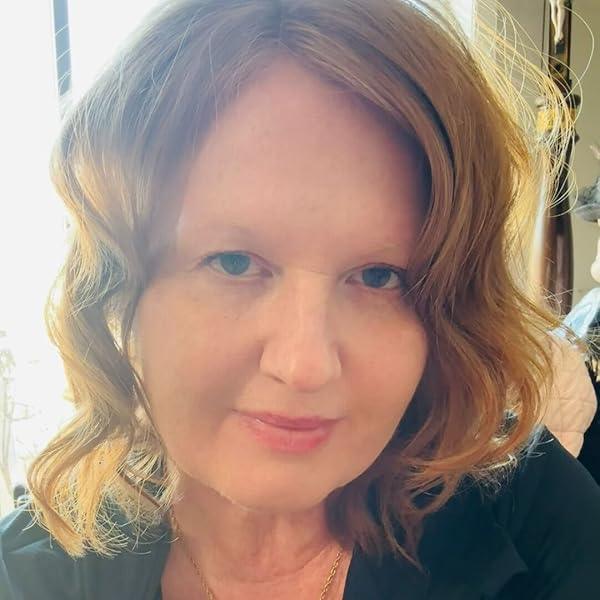
In your memoir, Octagon Pillars and Domes, you take readers on a wild, emotional, and surprisingly personal ride through history, religion, politics, and memory. Why was this an important book for you to write?
In order to understand how we have arrived at this present state of affairs both nationally and globally, especially since the presidency of Barack Obama in 2009, who advanced a globalist agenda beginning with the American Recovery and Reinvestment Act (HR1) and at which time my research began, it was important to take a close look at events that have occurred since WWI, specifically, the rise of class-based Marxism and the establishment of the Federal Reserve Bank by President Woodrow Wilson in 1913 under the advisement of his chief economic advisor and the leader of the Progressive and Zionist movements, Louis Brandeis.
What were some ideas that were important for you to share in this book?
Since the beginning of recorded history in Ancient Mesopotamia and Egypt in 3,500-4,000 B.C., the acceptance of creationism and related causal morality has served as the basis for law. However, due to perceived injustices experienced by Jews under creationist regimes including the Habsburgs and Romanovs during the 18th and 19th centuries, Karl Marx’s classist philosophy challenged these ideas, which gained acceptance by European intellectuals and academic circles at the Frankfurt School during the rise of German Industrialism. Of course, they already were immersed in Hegelian (deconstructionist) philosophy toward achieving absolute knowledge via rationalism. It is my belief in contrast to our founding principles rooted in Natural Law which formerly served as the rule of law, Marxism infected the United States at least by 1913, with the creation of the Federal Reserve, and certainly by the 1919 Paris Peace Conference (Treaty of Versailles), which established The League of Nations, a global peace-keeping force and precursor to the 1948 United Nations’ declaration of Human Rights as the revised rule of law. Since then, Progressive policies have established class protections for individuals and (immoral) behaviors that would have fallen well outside Federal law, according to our founding principles. I also wanted to clear up a common misunderstanding regarding the “separation of church and state,” which according to Thomas Jefferson’s 1802 letter to the Danbury Baptists, was intended to protect the right to worship (God), rather than exclude Biblical morality from legislation, which is an argument that has been misappropriated by The Left.
What was the most challenging part of writing your memoir, and what was the most rewarding?
They are one and the same: researching historical events, with all their details and nuances, which have led us to this moment, in order to gain a clear picture of opposing forces and political occurrences over the last 100 years that have perpetuated Progressive ideology. I will say my research into Egyptology was especially rewarding, inherent to which are the ideas of divine birthright (Horus), salvation, and spiritual rebirth, and which likely served as the template for Christianity.
What do you hope is one thing readers take away from your story?
Marxist class-based protections were established in opposition to political systems perpetuated by Christianity’s old-world order, including the notion of the Divine Right of Kings, Natural Rights, and Democracy, which has far-reaching implications and conclusions. Finally, though it has been implemented under the auspices of humanitarianism, it is apparent globalism, assisted by technology, is an effort by international bankers and global oligarchs to harness formerly distant workers for the purposes of control and taxation. Indeed, the New World Order is upon us.
Author Links: GoodReads | Facebook | Amazon



 LITERARY TITAN