Unleashing The Power Within: A Journey of Self-Discovery Through Poetry


Unleashing the Power Within is a short, heartfelt collection of inspirational poems that moves through self-worth, recovery, faith, gratitude, nature, and personal renewal. Lisa McCarthy writes as someone who has suffered, endured, and come out the other side determined to speak encouragement over both herself and her reader. The book’s emotional arc gathers force as recurring ideas echo across the collection: breaking free from harm, setting boundaries, trusting intuition, reclaiming one’s voice, and finally rooting identity in God. What gives it shape beyond affirmation is the sense that these poems arise from lived experience, especially when the book turns personal in pieces like “My Freedom Day” and “From Silence to Self-Acceptance,” where liberation stops being an abstract slogan and starts to feel earned.
McCarthy isn’t trying to be sly or ironic, and that lack of distance gives the collection a disarming openness. When she writes about blooming “beneath the ashes and dirt,” or compares healing to pushing toward light, the imagery is simple, but it lands because she means it. I felt that again in the poems about the natural world, especially the red cedar trees, the Gulf of Mexico beach, the lavender fields, and those bright little “Golden Finches in the Rain.” Those poems briefly loosen the book’s grip on exhortation and let it breathe. They offer a quieter kind of restoration, and I found myself wishing there were even more of them, because McCarthy’s voice is often at its most vivid when she pauses long enough to really look.
McCarthy returns to the language of empowerment, destiny, courage, and self-belief. I respected the clarity of the ideas. This is a book deeply invested in healthy boundaries, in refusing negativity, in choosing gratitude, and in seeing survival not just as escape but as transformation. Even when the phrasing is familiar, the conviction behind it feels real, and that reality matters.
I read Unleashing the Power Within less as a formally ambitious poetry collection than as a personal testament shaped into verse, and on those terms it has genuine warmth and purpose. It’s a book about speaking kindly to the bruised parts of the self until they begin to believe they deserve light. I would recommend it to readers who want accessible, faith-tinged, emotionally direct poetry about healing, resilience, and beginning again. For someone coming through loss, self-doubt, or a hard season of change, this book could feel like a companionable hand on the shoulder.
Pages: 96 | ASIN : B0DBVC33S5

Pursuit of the Impossible Dream

Pursuit of the Impossible Dream is part memoir, part success manual, and part manifesto about turning private ambition into public impact. Author Dee Brown frames the book around a life built in defiance of scarcity, doubt, racism, institutional betrayal, and plain old exhaustion, then organizes that life into lessons on dreaming big, education, resilience, branding, leadership, and building through partnership. What gives the book its spine is not just accomplishment, though there’s plenty of that, but the insistence that achievement means more when it widens the path for other people. The throughline is clear from the start, in the sections about Brown’s mother, his early hunger to outrun limits, and later the P3 philosophy of joining public purpose with private execution.
Brown writes like someone who has had to argue with despair in real time, and the chapter on his indictment and comeback gives the book a bruised, persuasive gravity that the more conventional motivational passages alone wouldn’t have carried. When he moves from the exhilaration of buying land, structuring deals, and becoming “the first” in room after room to the wreckage of prosecution, reputation loss, and rebuilding brick by brick, the book stops being merely instructive and becomes genuinely affecting. I also liked that his ambition is never presented as dainty or abstract. It lives in a mile race, he declared before he could run it, in a Geo Tracker he talked his way into as a teenager, in municipal projects, Navy contracts, community clinics, and the stubborn refusal to let someone else’s version of reality become his own.
The book is strongest when Brown drops the polished keynote cadence and lets the lived detail do the work. Now and then the prose leans on affirmation, but even that feels consistent with the genre he’s working in and the audience he wants to reach. The ideas themselves are not radically new. Dream bigger. Keep learning. Protect your name. Build partnerships. Give back. But what gives them weight here is the specificity of the life underneath them. I found the P3 philosophy interesting because it moves beyond self-help bromides into a concrete way of thinking about profit, infrastructure, and community benefit at the same time. And I appreciated the tension in the book between self-creation and obligation. Brown wants wealth, reach, and legacy, yes, but he also returns again and again to his mother’s sacrifice, to mentorship, to education as leverage, and to the moral burden of being first. That tension gives the book more texture than a standard victory lap.
I read Pursuit of the Impossible Dream as a hard-earned personal doctrine, delivered with conviction and real feeling. It’s earnest, sometimes blunt, often stirring, and at its best it carries the force of testimony rather than branding. I’d recommend it most to readers who are building something under pressure, especially entrepreneurs, first-generation strivers, professionals trying to recover from a serious setback, or anyone who wants a motivational book with scars still visible on the surface. This is a book for people who need to be reminded that ambition can be both expansive and useful, and that surviving the fall can become part of the architecture of the rise.
Pages: 127 | ASIN : B0GS4B8LCR
Little Pink Houses

Lisa Binsfeld’s Little Pink Houses follows Cole Lavetsky, a forty-seven-year-old former corporate executive who flees Los Angeles for Ambergris Caye, Belize, hoping to reinvent herself, write a novel, and finally live outside the gravitational pull of family damage. What begins as a midlife reset in a condo by the sea deepens into something more layered: Cole finds herself drawn toward the ruined pink resort nearby, where old choices and long-buried beliefs continue to cast a shadow over the present. Told squarely through Cole’s experience, the novel unfolds as a personal reckoning shaped by grief, family fracture, inheritance, forgiveness, and the stubborn stories people tell themselves in order to survive.
What I liked most was the book’s emotional grain. Cole is not polished into a heroine you are meant to admire from a tasteful distance; she is brittle, funny, vain, wounded, perceptive, and often more frightened than she wants anyone to know. I found that messiness convincing. Binsfeld gives her a voice with bite in it, a voice capable of self-mockery one moment and genuine ache the next, and that made the novel feel lived-in rather than engineered. Belize is not used as a decorative backdrop, either. The island atmosphere, the practical dislocations of daily life, the history of the little pink houses, and the Mayan-inflected spiritual undercurrent all give the story a humid, slightly uncanny shimmer. I kept feeling that the novel understood a hard truth: reinvention is never clean; you drag your old ghosts into paradise with you.
The novel moves between women’s fiction, family drama, and romance without becoming baggy. The central questions are not merely who did what, or what happened in the past, but what care actually requires when love, guilt, and projection get tangled together. The book club questions at the end make clear how much the novel is invested in forgiveness, assumptions, attachment, and the future Cole imagines for Eli, and I felt those tensions while reading; the story kept asking me to revise my sympathies rather than park them in one easy place. The novel occasionally carries a lot at once. Romantic momentum, hidden histories, family scars, and social observations. But even that abundance felt more generous than cluttered. It has the slightly overripe, storm-before-dusk quality of a story that knows life is rarely tidy and declines to fake tidiness.
I’d hand this to readers who like women’s fiction, contemporary fiction, romantic suspense, and book club fiction with a strong sense of place. It should especially appeal to people who enjoy novels about midlife upheaval, buried family history, and the dangerous seduction of starting over somewhere beautiful. It reminded me a bit of Liane Moriarty, but warmer in climate, more bruised in temperament, and more interested in exile, inheritance, and second chances than in pure social satire. Little Pink Houses is a novel for readers who like their escapism sunlit on the surface and knotted underneath.
Pages: 340 | ASIN: B0GPRFK1BH
Helping Kids Understand

Why I Must Go offers parents a gentle way to talk about a family member’s military service and the reasons behind their time spent away from home. When did you realize there was a need for a book like this for young children?
My husband deployed twice in two years when my children were very young. My daughter started asking why her daddy had to leave for work when other daddies came home. I didn’t have a good enough answer that explained the magnitude of service and courage of military members. There was one defining moment on the day my husband deployed for the second time. We were at a friend’s house, and their dad got home from work. The kids all started yelling Daddy! and running to meet him at the door. My eldest got caught up in the moment and joined in, only for her face to fall when she realized her daddy wasn’t going to be home for a long time. I saw that there was a need for a way to explain to children that loved ones leave for the military because of love for them. They love their kids and family so much, they deploy to protect them.
How do you ensure the tone stays comforting without minimizing the reality of separation?
The reality of separation is very much present in the book, but I tried to pair different examples of the separation with reasons behind it. I focused on the freedoms and the safety that the children can enjoy because of the service of members in the military.
The story emphasizes routines and small moments of joy. Why was that important to include?
Life doesn’t and shouldn’t stop when family members deploy. It is so easy to fall into the trap of “Wait until Daddy gets home.” I wanted to show that fun and exciting things can still happen even though their loved ones may not be there to experience it with them.
What is one thing you hope families take away from Why I Must Go?
I want families, and especially children, to be proud of their loved ones for their service. To see the positive in their absence.
Author Links: GoodReads | Amazon
Being separated from a loved one for a long period of time is especially hard. But why is it that loved ones who serve in the military have to leave for so long? Why is it they have to miss important life events?
Why I Must Go explains to children that their loved ones leave because they love them very much, and that they serve their country to protect and ensure their freedom. It is hard, but they are not forgotten.
This book helps children understand that they are a service member’s motivation and encouragement for what they do.
Book pictures and storyline are applicable to all services and inclusive of all ranks.
Go Big

Birds of Prey Don’t Sing follows a gifted and deeply broken assassin who takes on the hardest case of his career, murdering a priest and making it look like divine judgment. What was the inspiration for the setup of your story?
I set out to write the most unique assassin thriller that I could, and to do so I focused on M.O. and backstory. Michael Harrier’s clients choose two targets—one to kill, and one to frame for the murder. Once that elusive M.O. was set, I created several dual-target jobs, some inspired by real events, others distilled from my imagination. Because this was the first book in the series, I felt I should go big, with the hit that seems impossible, but ends up being plausible. And that job was informed by a serendipitous bit of then-unrelated research I happened upon in the early stages—that’s when the spark became flame.
Michael is both sympathetic and terrifying. How did you balance those sides, and how important was trauma in shaping his worldview and actions?
I balanced that by trying to make him human first. And yes, trauma was key to his backstory. Pretty much every assassin in the genre is ex-government (CIA, Mossad, MI6, etc) or ex-military, and for good reason, but I wanted to break from that tradition. So to me, a key part of a self-made assassin, without resorting to a stereotypical sociopath (who would be difficult to sympathize with), is their upbringing, which needed to involve trauma and pain. A wounded human forged in trauma as opposed to a natural born killer; more nurture than nature. And I’ve long been fascinated by how trauma can both inform and misinform our intuition, judgment, and decisions, and I liked how this paradox played out for Michael as his story unspooled.
What were some themes that were important for you to explore in this book?
Justice, morality, trauma, intuition, redemption, and human connection.
Do you see Michael’s story continuing in future books?
Yes. I have more ideas than time, but book two is underway.
Author Links: GoodReads | X | Website | Instagram
Michael Harrier has built his reputation on a system no one else uses. Every contract comes with two targets. One dies. Someone else takes the blame.
It’s worked flawlessly for years.
Until now.
What should be a clean hit starts to unravel. A woman with a violent past pulls him off course. A single mistake threatens to expose everything. And for the first time, Harrier is forced to improvise.
Meanwhile, LAPD homicide sergeant Jordan Becker is hunting a killer he can’t pin down.
But he’s built his career on getting results where others stall out.
The case doesn’t follow any rules. The evidence doesn’t hold. The story keeps shifting. And the deeper Becker digs, the clearer it becomes he’s chasing someone smarter, faster, and always just out of reach.
As Harrier’s world tightens and Becker starts to break through, both men are pulled into a game where every move has consequences—and no one is as untouchable as they think.
Because this time, getting away with murder isn’t the hardest part.
It’s controlling what comes next.
Clifford’s War: Redivivus
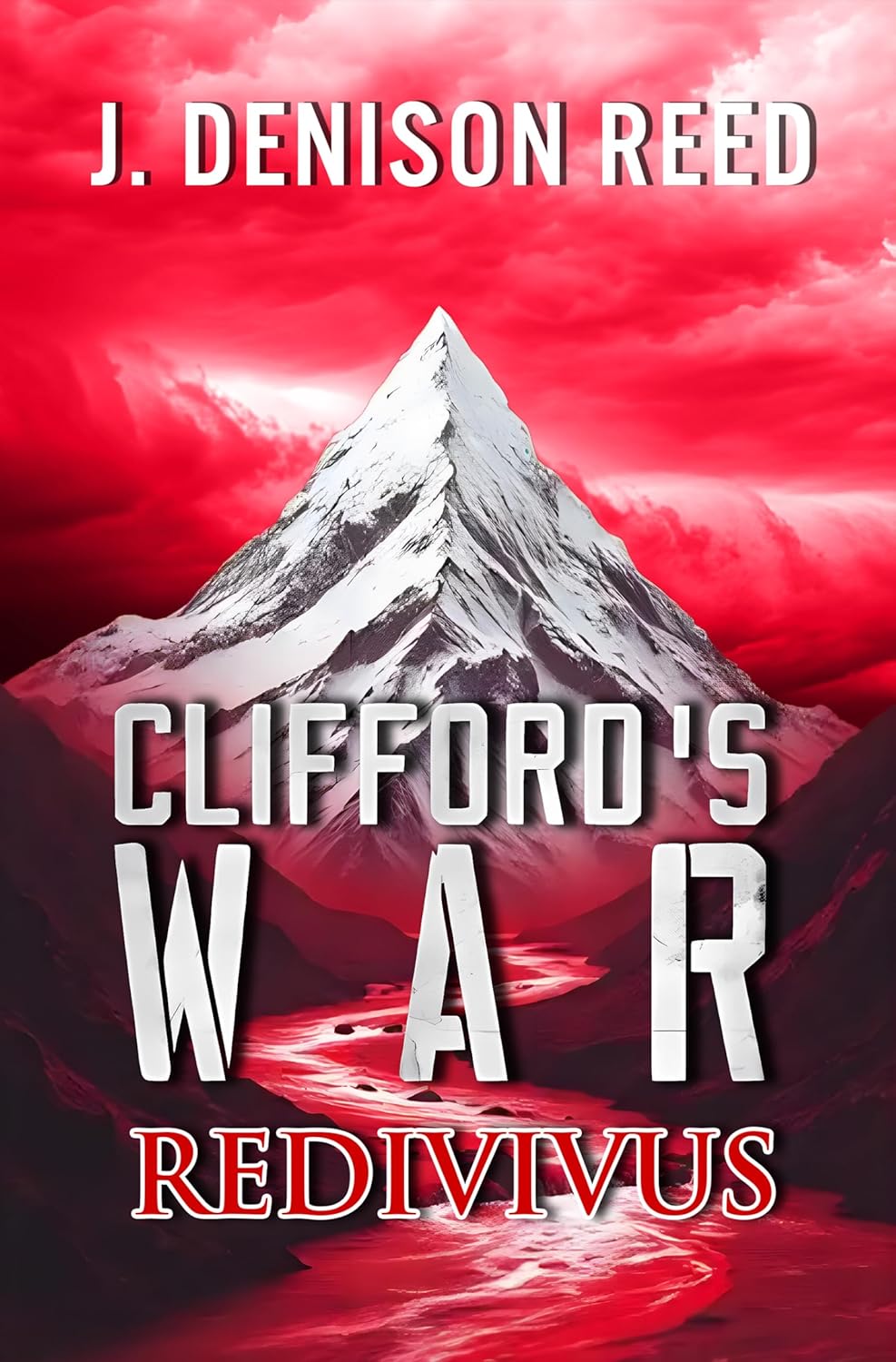
Clifford’s War: Redivivus begins as a missing-person thriller and quickly widens into something knottier: after Grace Dillenger’s ex-husband Raymond takes their daughter Hadley on a long-promised trip and both vanish en route to a mountain lodge, Grace calls in private investigator Clifford Dee, a man tied to her past through an earlier criminal entanglement. What follows is part family crisis, part snowbound investigation, part conspiracy story, with Clifford tracing wreckage, half-truths, burner phones, compromised allies, and a threat that proves larger and stranger than the original disappearance.
Grace isn’t written as a decorative victim; she’s wealthy, sharp, culpable, frightened, and often difficult in ways that feel earned rather than schematic. Clifford, meanwhile, has the reassuring ballast of an old-school thriller lead, but he’s not a granite slab. He notices people, reads rooms, leans on his team, and carries his own fatigue. I especially liked how the novel keeps widening its aperture: what starts as a desperate maternal summons becomes a procedural hunt with digital sleuthing, fieldwork, improvised alliances, and an undercurrent of old violence that never quite stays buried. The ensemble gives the book a welcome elasticity; Bailey in particular adds both warmth and voltage.
The book likes gadgets, backstory, operational detail, hidden networks, Latin tags, near-cinematic reveals, and that plot expansion makes the book feel propulsive. I found myself carried along more often than not. Reed has a sincere feel for place and comfort objects, coffee, snow, warm cars, lodges, weapons, maps, phones, files, and those tactile details give the suspense a lived-in grain. The prose is generally direct, but it occasionally swerves into melodrama or over-explanation; even so, I preferred that earnestness to the bloodless polish of many contemporary thrillers. Redivivus has a pulpy heartbeat that I thoroughly enjoyed.
I’d hand this to readers of mystery, suspense, crime fiction, conspiracy thriller, and investigative adventure who like capable teams, personal stakes, and a story willing to sprawl beyond its initial premise. It feels closer in spirit to Brad Thor or early David Baldacci than to the cooler, more austere end of crime fiction, though some readers may also catch the found-family teamwork and momentum that make Harlan Coben so readable. This is a missing-girl thriller with a conspiratorial afterburn that’s hard to set down.
Pages: 295 | ASIN : B0FXY6RH92
Travis Heights


Travis Heights is a straight-from-the-gut memoir about a boy who walks out of a broken home in 1971 Austin and spends the next two decades trying to build a life, then find his way back to some kind of peace with the father who failed him. Author Ray Tye starts with the call that sends him on a mission to pick up “the Old Man” in Austin in the mid-90s, then drops us back into his teenage years in South Austin. We watch him juggle school, a library job, his love of motorcycles, a racist and controlling future stepmother, and a father who can be loving one minute and violent the next. When the choice becomes “live by their rules or leave,” he walks out at fourteen and learns to survive off grit, odd jobs, and whatever he can scrounge. Over time he joins the Marines, builds a career in IT and security, and eventually has to face that original wound again when he drives his aging father across the country. The book follows that arc of harm, escape, growth, and uneasy reconciliation, with a running thread of “rules” he pulls from each hard lesson.
I found the book disarmingly direct. Tye’s voice feels like someone talking to you across a diner table at midnight. The scenes land hard because the language stays simple and concrete. I could see the smashed records on the bed, hear the belt buckle, smell the cigarettes at the kitchen table. The early Austin sections really stuck with me. The Twin Oaks library, the cheap burgers, the Waffle House nights, the woods behind Travis High, all of that felt lived in and specific, not generic “hard childhood” scenery. I liked the structure too. The cut between the 1995 “mission” and the 1970s boyhood keeps some tension going, and those short “Rule #1, Rule #2…” moments act like little anchor points for the reader.
I felt angry and sick during the beating scene, then weirdly proud watching him pack his Boy Scout gear and walk out with almost nothing. I kept wanting the adults to step in, and they just didn’t. I appreciated that Tye never flattens anyone into a cardboard villain or saint, even Beulah and his father. He calls out the racism, the religious hypocrisy, the violence, and also shows the charm, the war stories, and the complicated love. His take on running away made me uncomfortable in a useful way. He doesn’t glamorize it at all, and he repeats that he would urge kids today to ask for help instead. At the same time, he doesn’t erase the part of himself that is proud he survived. That tension matters. The book also has a strong thread about masculinity, especially the version shaped by the military and law enforcement in that era. You can feel the tug between “suck it up, accomplish the mission” and “this hurt me, and it still hurts.”
The reconciliation Tye offers is not neat and cozy. He doesn’t pretend the past was fine, and he doesn’t pretend forgiveness fixes everything. What he offers instead is a kind of truce with his own history. He shows that you can hold boundaries, tell the truth about what happened, and still choose not to stay stuck in hatred. I think this book will resonate most with readers who grew up in chaotic or abusive families, folks who served in the military, anyone who has wrestled for years with a parent who hurt them, and people who like grounded, place-specific memoirs set in Texas and the 70s. It’s not a light read, and it comes with clear content warnings for violence and abuse, but if you can handle that weight, it’s worth your time.
Pages: 349 | ASIN: B0GX1GJRMG

Afterburn

Afterburn is a near-future science fiction novel, but it reads with the pressure and velocity of a prison break thriller. Author Michael Bodhi Green drops us into a 2070 America shaped by racial extremism, internment, surveillance tech, and the mythology of space travel, then centers the whole thing on Alton, a teacher trying to stay human inside a brutal camp system. That choice matters. The book isn’t just interested in institutions and ideology. The story is interested in what it means to keep thinking, reading, and teaching when the world around you is trying to flatten people into categories.
Alton is not built as a generic action hero, even though the book gives him action scenes with real snap and danger from the opening pages onward. He’s a damaged, reflective, yearning guy whose love of books and longing for the stars feel equally sincere. Early on, the novel tells you exactly who he is with the line, “Even in this hellhole, he still loved to teach.” That works because the book keeps proving it. His classroom scenes are some of the strongest in the novel, not because they slow things down, but because they show how ideas, memory, and story become tools for survival.
The novel is also doing something pretty ambitious with genre. It’s a dystopian political novel, a war story, a story about incarceration, and a story about people who were raised on dreams of cosmic escape. Green keeps all of that moving without losing the thread. I especially liked the way books inside the book become part of the argument. When Alton says novels are “windows into the thinking of another time,” I think Afterburn is quietly describing itself too. It wants to be read as both a story and a cultural mirror, and that gives even the pulpy, high-energy sections a little extra weight.
There’s also a real tenderness under all the steel, dust, and fire. The book keeps returning to the gap between fantasy and maturity, between the dream of transcendence and the harder work of living among other people on the ground. By the end, that tension gives the novel a satisfying shape. The title turns out to be more than a cool image. It becomes a way of thinking about aftermath, desire, and the lingering heat of past choices. The final movement gives Alton a resolution that feels earned because it grows out of who he’s been all along, not because the plot forces a neat lesson on him.
Afterburn is an earnest, high-stakes, idea-driven novel with a big emotional engine. It’s vivid, angry, heartfelt, and surprisingly thoughtful about reading, identity, and the seduction of heroic myths. What stayed with me wasn’t just the worldbuilding or the momentum, though both are strong. It was the way the book keeps asking what kind of future is worth reaching for, and what kind of person you have to become to deserve it. That makes Alton’s journey feel authentic.
Pages: 402 | ASIN : B0FTD4DQDH


