An Emotionally Action-packed Odyssey
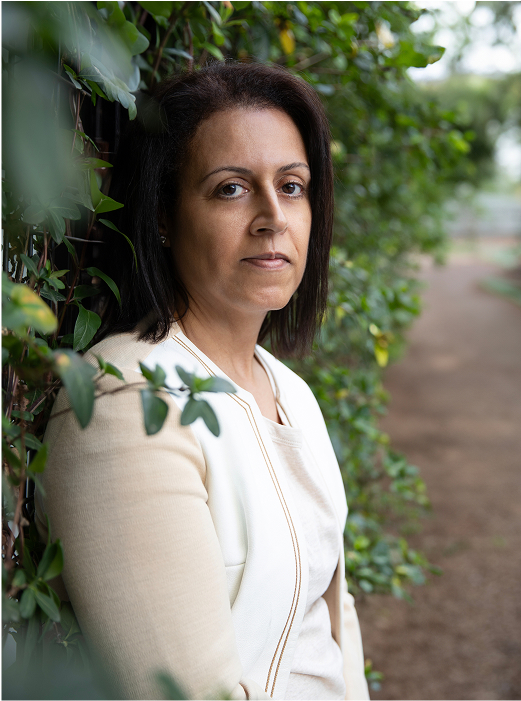
Changing Course Gracefully is a reflective travel journal that uses the PARQS Method to guide readers through emotional waves, cultural challenges, and moments of self-discovery with warmth, practicality, and calm. Why was this an important book for you to write?
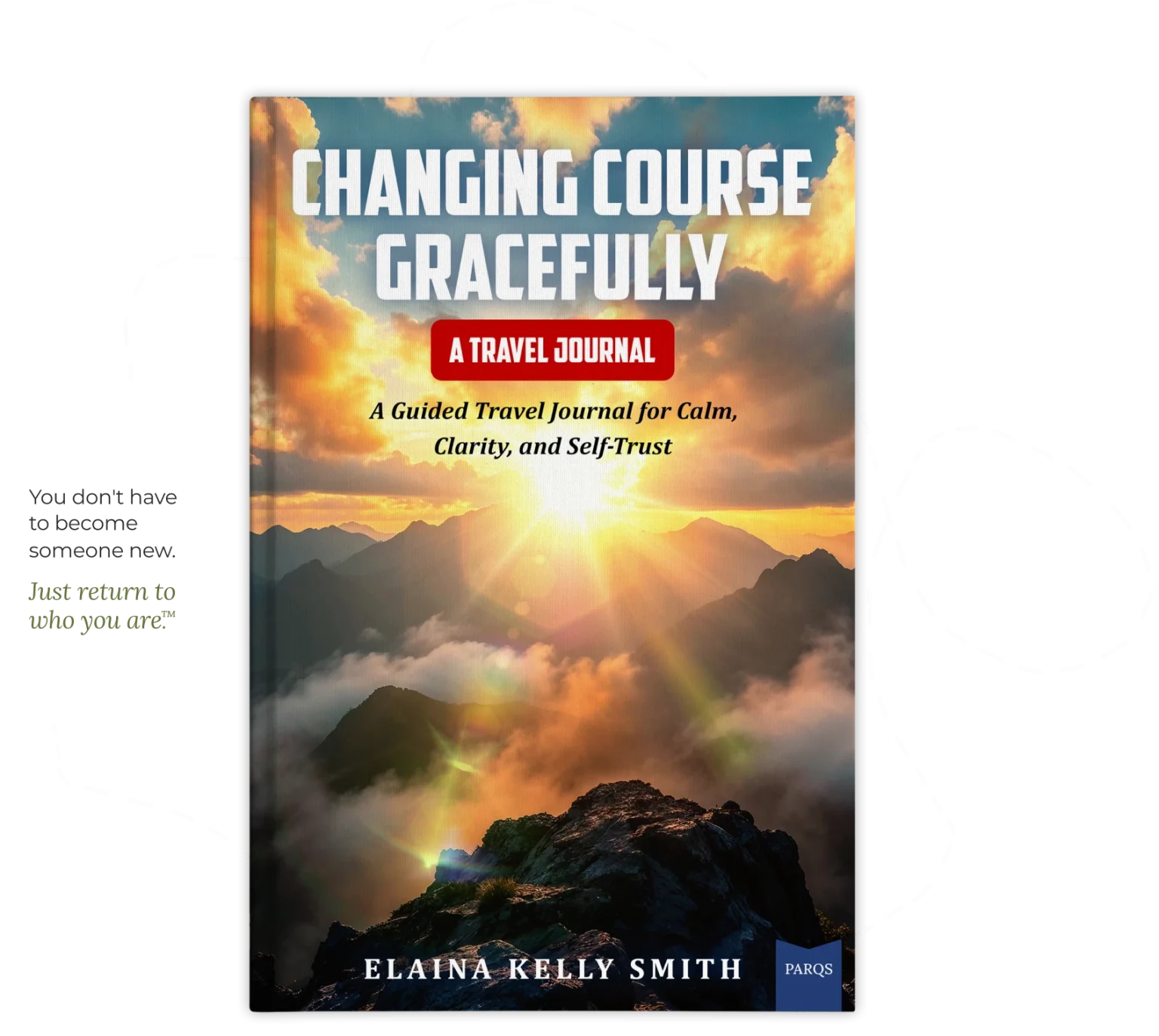
Changing Course Gracefully is a reflective travel journal that uses PARQS™ to guide readers through emotional waves, cultural challenges, and moments of self-discovery with warmth, practicality, and calm.
For a long time, my life didn’t feel like a gentle “journey.” It felt more like an emotionally action-packed odyssey. I grew up in a highly restrictive religious environment, very cut off from the wider world. Travel wasn’t on the radar at all. When a wrong number led me to Joseph, who later became my partner and guide, my world cracked open. Traveling with Joseph and on my own, I went from my small neighborhood to all seven continents over the course of thirty years. On paper, that sounds glamorous—and it was many times—but more often I was moving through those countries with old “remote-control” beliefs still running the show.
Travel became my laboratory for self-trust. I noticed how often I overrode my own preferences to keep the peace, how quickly I went into autopilot in unfamiliar situations, and how long it took—usually after the trip—for the lessons to sink in. Even after building successful businesses and doing years of spiritual work, I still found myself unsure how to support myself in the very moments when I needed self-trust the most.
Changing Course Gracefully is my answer to that question—for myself first, and then for anyone who recognizes themselves in that pattern. I wanted a practical companion I could tuck into my day bag, open in a crowded airport, and actually use. PARQS and the prompts in this journal are distilled from years of lived experience across cultures, airports, hotel rooms, and honest conversations.
It was important for me to write this book because I know what it’s like to appear “put together” while feeling disconnected inside. I wanted to offer readers a way to pause, hear themselves more clearly, and begin building a quieter, steadier self-trust that travels home with them when the suitcase is unpacked.
What personal experience first sparked the creation of the PARQS Method, and when did you realize it could help others as much as it helped you?
PARQS™ didn’t arrive as a neat five-step framework. It grew out of a long stretch of feeling like I was constantly reacting—saying yes when I meant no, overriding my needs to keep the peace, and then feeling resentful or exhausted afterward. After one particularly draining season, I sat in my therapist’s office, and she asked me a simple question: “What do you want?” I opened my mouth and realized I didn’t have an answer. I could list what other people needed, what I “should” want, and what would keep things calm—but not what I actually wanted.
That moment shook me. It made me see how far I’d drifted from my own preferences, and how automatic my responses had become. From there, I started asking myself very basic questions in real time, especially while traveling: What do I prefer here? What am I aware of in my body? What is one right action I can take? What am I honestly asking myself? Can I meet myself with some level of self-acceptance instead of criticism?
Over time, those questions were organized into the five anchors that became PARQS: Preferences, Awareness, Right Action, Questions, and Self-Acceptance. I used them first as my own private checklist when I felt overwhelmed or disconnected. I realized PARQS could help others when people I shared it with started repeating it back to me—telling me they’d tried the “next right action” idea or had written down their preferences before a trip and felt completely different. That’s when I knew this wasn’t just my private scaffolding; it was a way other people could gently interrupt their own autopilot and come back to themselves, too.
How do you hope readers will integrate the PARQS Method into their everyday life, not just their journeys abroad?
I’d love for PARQS to become less of a ‘special occasion’ practice and more of a quiet companion readers can reach for on a Tuesday afternoon, not just on a flight to somewhere beautiful.
On the most practical level, I’d love for readers to use PARQS in small, ordinary moments: before they say yes to another commitment, while they’re sitting in the car outside a difficult appointment, or when they realize they’re scrolling their phone instead of resting. Taking sixty seconds to ask: “What are my preferences? What am I aware of right now? What is one right action I can take?” can change the tone of a day in ways that don’t look dramatic from the outside, but feel very different on the inside.
I think of PARQS as one way to build self-trust, a way to stay in conversation with yourself. Once readers are familiar with the prompts in the journal or digital companion, they don’t have to be sitting with the book to use them. They can jot a few lines in a notes app, check in mentally while making their morning coffee, or use a single letter—maybe “A” for Awareness—as a touchstone in moments of stress.
If readers walk away feeling empowered to pause, notice what’s true for them, and choose their next right actions with a bit more kindness and clarity, then PARQS has done its work far beyond the airport gate or train station
If you could add one new story or prompt based on your recent travels, what would it explore and why?
If I added a new prompt today, it would probably explore what I think of as “micro-course corrections”—those tiny, in-the-moment adjustments that don’t look like big decisions but quietly change the whole experience of a trip.
Recently, I’ve been paying more attention to the moments when I override myself in small ways: pushing through hunger because I don’t want to inconvenience anyone, skipping a quiet morning because I feel like I “should” see one more sight, or staying in a conversation that feels draining out of politeness. None of those choices are catastrophic, but they add up.
The prompt might ask:
Where did I override myself today?
What would a small course correction have looked like?
If I could replay one moment with more self-trust, what would I choose?
I’d want that story and prompt to remind readers that we don’t need a dramatic plot twist to “change course.” Often, it’s as simple as choosing to rest instead of rushing, saying “that’s enough for today,” or honoring a quiet preference that no one else will ever see but us. Those are the moments where self-trust is quietly built.
Author Links: X | Facebook | Website | GoodReads
Rose Dhu
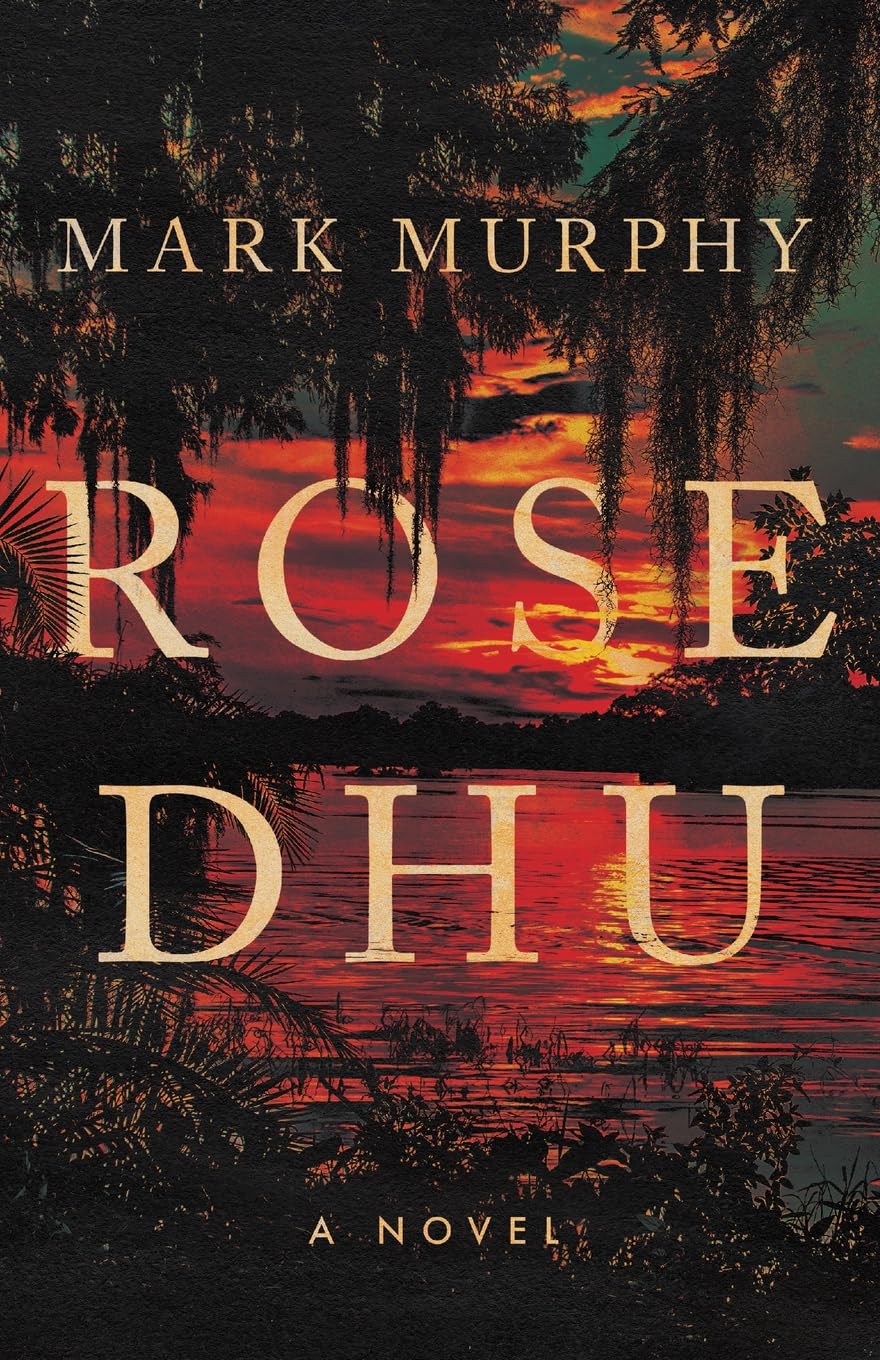

Rose Dhu follows the disappearance of Dr. Janie O’Connor, a brilliant surgeon whose sudden vanishing rattles Savannah. Detective Frank Winger takes the case, and his search uncovers secrets that coil through old money, family loyalty, and violence hidden in plain sight. The story widens from a missing person case into something heavier. It becomes a portrait of power and the people crushed or remade by it. The final revelation, in which Janie reemerges alive under a new identity as Alice Tubman, lands like a quiet shock and changes the emotional color of everything that came before.
Scenes move quickly and often hit with surprising force. I felt pulled in by the atmosphere of Savannah. The place feels damp, shadowed, and tangled with history. Some chapters made me slow down because the emotional weight crept up on me. I found the depictions of trauma raw, but never careless. The book wants you to sit with pain, not look away. That kind of blunt honesty made me connect with Frank more than I expected. His flaws feel lived in. His memories of Afghanistan haunted me in ways I did not anticipate.
There were moments when the story’s intensity nearly overwhelmed its subtler pieces. Still, the ideas underneath the plot stayed with me. What people will sacrifice for those they love. What power looks like when twisted by entitlement. How a life can fracture and rebuild itself into something new. The book is bold about those questions. It pokes at uncomfortable truths, and I appreciate that kind of nerve. By the final pages, I caught myself rooting fiercely for Alice and for Frank.
Rose Dhu reads like a blend of Sharp Objects and Where the Crawdads Sing, only with a darker pulse and a tighter grip on the shadowy power games that shape a Southern town. I would recommend Rose Dhu to readers who enjoy mystery that leans into emotional depth, stories about moral gray zones, or Southern gothic settings with teeth.
Pages: 384 | ISBN : 1967510709

Finally Make Time For Fitness

Racing Against Time follows your journey from a defeated teenage runner to a 56-year-old endurance athlete, revealing how relentless effort, humility, and heart can reshape the aging curve and one’s sense of purpose. Why was this an important book for you to write?
In the first years after I got started in endurance sports, I read everything I could about running and triathlon. I especially enjoyed fitness memoirs. I found these to be a source of inspiration – convincing me that I could take on challenges that had always seemed out of reach. They were also filled with good practical advice, which was important to me during those early years when I was still so inexperienced.
Now, 15 years after I started on this fitness journey with a first 10K at age 48, I look back with amazement at how endurance sports have enhanced my life. They turned the decade of my 50s into one of discovery and adventure. And I credit my exposure to the world of ultramarathons and Ironman for much of my success in the challenging world of start-ups.
Writing Racing Against Time was my way of trying to do the same for others who are just getting started. Especially because I started so late (I ran my first 10K at age 48) and because I am not an especially fast runner, I hope my story can persuade others who are approaching mid-life and are concerned about their fitness to give endurance sports a try. I would love to see others experience the things I have in recent years – to surprise themselves, to gain confidence, and to find the joy in climbing new mountains in all spheres of life.
What finally pushed you to confront the sting of that first failed 10K after letting it simmer for thirty years?
It was a combination of things. My father had passed away the year before and that caused me to think about my own health and well-being. Before that, I had, like a lot of us, always pushed off to the future thoughts about getting serious about fitness – telling myself that I would start once I had more time. At age 48 and with my father’s passing still fresh in my mind, I decided that this was not something that I should put off any longer.
Around that same time, I met Jason Schwartz, who was only a few years younger than me and had recently started running. He had already progressed to the marathon and had really been transformed by the experience. That planted the idea that I should specifically consider making running a centerpiece of my effort to finally make time for fitness.
You write openly about fear, ego, and self-doubt. Was there a particular race or training cycle where those emotions almost stopped you?
I found the prospect of taking on a full Ironman race (2.4 mile swim, 112 mile bike, and 26.2 mile run) to be extraordinarily intimidating. For years I had entirely ruled it out as impossible for someone like me. When I did finally decide to take one on, it was only after years of training (including multiple marathons, my first two ultras, and a number of shorter distance triathlons) – and even then, I set the goal for some two years later so that I would have ample time to build up to it. For the entire period of training I was anxious about my ability to finish the race – yet at the same time excited and energized that I was chasing something that was challenging and that would have the potential to redefine me as an athlete and change me as a person.
If someone in mid-life feels stuck and overwhelmed, what is the smallest, most doable first step you hope they take after reading your book?
I would recommend taking the crucial mental step of deciding that the time to begin is now, and to make the firm commitment to yourself that you will train a specified number of days per week virtually no matter what – and to start today. The ideal number of days per week to train is 6. You can start with fewer if absolutely necessary (for example 3 or 4 days) – you should never let the perfect be the enemy of the good – but you need to start now and to be consistent. Over time you should try different fitness activities to find the one(s) that work best for you. It will take some amount of experimentation and you don’t need to have all the answers at the beginning.
Author Links: Facebook | Website
“Weiss’ work is a raw and honest commentary on the human condition and the need to squeeze everything out of life while pushing past perceived limits to live life as it’s meant to be lived—an adventure.”-US Review of Books
“A motivational sports memoir, Racing Against Time chronicles grueling endurance running accomplishments achieved in midlife.”-Clarion/Foreword Reviews
Winner, Gold Book Award – Literary Titan
Dr. Toad’s Short Book for a Long Memory


Dr. Toad’s Short Book for a Long Memory is a light and friendly guide that walks readers through simple ways to recall names, numbers, lists, and lost items. The book blends humor with practical advice, using vivid examples, quirky illustrations, and down-to-earth explanations to show how memory works and how anyone can strengthen it. It moves through seven short chapters that each offer a new tool or idea and wraps it all up with a warm push toward healthier habits for a sharper mind.
As I read it, I found myself smiling at how disarming the tone is. The author talks about blimps, spilled eggs, dancing seniors, and cartoon images glued to people’s faces. It made learning feel easy. At times, I caught myself trying out the techniques before I even realized it. When he described the Roman Room idea, I could almost see my own messy living room turning into a mental storage unit, and it honestly made me laugh. I liked that the writing never tries to sound smarter than it needs to be. It keeps things simple and conversational, which left me feeling more relaxed than judged.
I also appreciated how encouraging the book feels. The author stresses that forgetfulness is normal and often harmless. That reminder took a weight off my shoulders. Reading the sections on distraction and switch tasking made me nod in recognition because they felt so true to daily life. Some parts felt a little repetitive, and I wished a few techniques had more real-world examples. Still, the charm of the book never fades. I felt the writer rooting for me, which made the advice land with more force.
By the end, I felt motivated. The book’s mix of science, humor, and practical steps stirred a sense of hope that memory can be trained with small habits. I would recommend this book to anyone who wants simple tools without heavy jargon. It is great for busy people, older adults who feel a little nervous about forgetfulness, students who want to sharpen their recall, and anyone who has walked into a room and muttered, “Why did I come in here?”
Pages: 67 | ASIN : B0G3TDSHJD
Gracie and Aero’s Wallet

Gracie and Aero Brown are two spirited youngsters stepping into the early world of finance. Last summer’s yard sale funded their ice-cream dreams and delivered a handful of valuable lessons. Now they’re ready for something bigger. A telescope has captured their imaginations, yet its price tag sits far beyond their current savings. Undeterred, the siblings map out a plan: another yard sale, extra chores, whatever honest work will help them inch toward their goal. Readers join them as they navigate each step of their budding financial journey.
Gracie and Aero’s Wallet, written by Rachel Gregory, is a brightly illustrated children’s book suited to elementary and early middle-school readers. Its concise length and colorful artwork bring the siblings’ world to life, portraying their small discoveries and everyday encounters with warmth and charm.
Although designed for young readers, the book clearly aims higher than simple entertainment. Gregory uses the siblings’ mission to demonstrate real-life financial principles, earning, saving, and the early roots of budgeting. As Gracie and Aero calculate the cost of the telescope and estimate how many chores or sales they need to reach it, they begin internalizing concepts that will serve them long after childhood.
Despite its practical lessons, the book never loses its sense of fun. The illustrations are lively enough to draw a child’s eye, and the protagonists themselves are irresistibly endearing. A helpful budgeting chart appears toward the end, along with age-appropriate ideas for earning a bit of extra money.
Gregory offers a story that blends adventure with genuine, useful guidance. Parents seeking a way to introduce responsibility and foundational financial skills will find this book an excellent companion as their children take early steps toward independence.
Pages: 32 | ISBN : 1637653433
The 12th Cleansing: A Cold Case Reignited by a Serial Killer’s Return

The 12th Cleansing follows Detective Walker Michaels as the nightmare he thought had ended, suddenly returns. A serial killer known as the Moralist resumes his ritualistic murders after a four-year silence, forcing Michaels to confront old failures, grieving families, and the unraveling lives of those caught in the killer’s moral crusade. The story moves between investigators, victims’ families, and the killer’s perspective, building a tense, layered thriller that keeps tightening as new secrets surface.
This was an absolutely gripping read. The writing feels clean and fast, and the shifting viewpoints land with weight. I found myself sinking into the Rawlings family scenes. The way the parents break down, the strain between husband and wife, and the quiet shock of their son Connor all hit hard. Those moments felt honest in a way that surprised me. I caught myself getting frustrated with the detectives when they stumbled and then suddenly rooting for them again when a new clue clicked into place.
I also found myself torn about the ideas behind the story. The book pushes into heavy themes, especially around judgment, morality, and grief. At times, it made me uncomfortable, but in a way that felt intentional. The villain’s twisted logic is disturbing, and the author lets that discomfort sit with you. I liked how the characters wrestle with their own blame and doubts. It made the story feel more human, not just a chase after a monster. And I’ll admit I got pretty worked up during a few scenes. Some had me whispering little reactions under my breath. Others made me pause for a second, thinking about how thin the line is between control and collapse.
In some ways, The 12th Cleansing feels like The Girl with the Dragon Tattoo, since both blend dark mysteries with messy family secrets and investigators who carry their own scars, yet Glass’s story hits closer to home with its raw focus on grief and moral tension. I’d recommend The 12th Cleansing to readers who enjoy crime thrillers that mix emotional tension with a slow-burn mystery. If you like stories that dig into family strain, moral conflict, and the ripple effects of violence, this one is absolutely worth the read.
Pages: 404 | ASIN : B0FY6F4YM1
Love, Hate, and Ego

The Long Farewell follows a young man with an Oedipus complex living in the rise of Nazi Germany who, after a series of tragic events, seeks to get revenge on his father. What was the inspiration for the setup of your story?
When I was in college, I was fascinated by Jorgen, a fellow student whom others in our student house labeled as a weirdo. He exhibited abrupt mood swings and had an aggressive aura, although he was skinny and short. When something irked Jorgen – and many things did – he stood trembling, his fists clenched, his eyes wide-open, in front of you and then burst into tears. After such an emotional eruption, he was withdrawn and silent. In our student house, we placed bets on how long he would last at university. I had been so stupid to tell the others I wanted to become a writer and that Jorgen could become a fascinating character in the novel I wanted to write. The rumor had apparently reached Jorgen: during an evening out at the well-known student pub The Red Scaffold, he confronted me about my statement. It turned out that, for once, he wasn’t aggressive. On the contrary, he seemed flattered. We found a quiet place on the terrace. Jorgen told me he wanted to become a poet and asked a string of questions. We drank a few beers, and he became nostalgic and tearful. He boasted he was diagnosed as borderline schizophrenic. He really seemed proud about it and became strangely souped-up and said with trembling lips and flared nostrils: “My mother turned me into a creep. I was only thirteen when she confessed that she wanted me to make love to her. I remember that a fiery arrow went along my spine, making me shudder.” He peered closely at my shocked face and almost whispered:” Nobody knows if we did it or not.”
What could I say? I was quiet.
Jorgen looked me straight in the eyes. I saw he was fighting back tears. “I hate my father,” he whined softly, exhaling with quivering lips. “It’s all his fault.”
That evening, in my bed, I vowed to write a book one day, circling a character with an Oedipus complex.
And to dodge Jorgen.
I didn’t have to do that long. Two weeks later, Jorgen didn’t check in on Monday at our student house.
And never came back.
The memory of this troubled young man stayed with me for several years.
And popped up stronger than ever when I began writing “The Long Farewell.”
The tragic boy Hermann was born.
What are some things that you find interesting about the human condition that you think make for great fiction?
The contradiction between our ‘good’ and ‘bad’ urges is breathtaking. The building of our personalities after birth is chaotic. Our instincts are relentlessly brutal. If babies had the strength to wield weapons, I believe that most of them would be murderers before their third year. We speak with disdain –and fear- about narcissists and don’t want to face up to the fact that our own ego is narcissistic on different levels. In “The Long Farewell,” we see Hermann’s mental suffering, fueled by his hate for his SS father, getting worse and culminating in a dangerous schizophrenia, leading to a truly apocalyptic ending in the German city of Dresden. Schizophrenia is a fascinating and eerie mental disease. When a baby grows up in a family where its mother and father imprint it with radically opposed worldviews, research has detected that the tension thus generated later on in life is the ideal breeding ground for mental anomalies. In past times, these anomalies were called demons. You may smile, but I assure you that we have to take them seriously.
What were some themes that were important for you to explore in this book?
You know, I often think that everything on this Earth eventually comes down to the endless configurations that love, hate, and ego can produce. Love and ego can join forces to form powerful hate and cruelty. I know that we want to see love as something pristine and holy, but reality shows us otherwise.
Of course, I propose my statement here, pure and well-defined. In everyday life, the borders between love and hate –and ego! – are fuzzy. In my oeuvre, I try to follow the intricate signs in our mind that forecast violent drama. Not an easy task, I can assure you. You may wonder why I am so frantically searching for the roots of our violence. I wonder about that too, because after 39 years of being a full-time author, I’m still searching. I’ve been a travel writer in conflict zones between 1990 and 2003, visiting Somalia, Liberia, Sudan, Lebanon, Burundi, Bosnia, Gaza, Iran, Iraq, Kosovo, Myanmar… to name but a few. Those travels have surely influenced my outlook on the world. In Belgium and the Netherlands, my Flemish/Dutch publisher published 45 books. Although set on several continents, they all focus on the mystery of our aggression, on the executioners and the executed.
What is the next book that you are working on, and when will it be available?
I suspect that I’m writing my last novel: I am seventy-two, and I feel my energy waning. Three years ago, I fell victim to a sepsis infection that nearly killed me. I still struggle with the damage the sepsis has wrecked. Moreover, I am afraid to lose my mental powers and glide into Alzheimer’s maw. The terrible disease destroyed my mother’s brain. I know that Alzheimer’s is hereditary, therefore I spy on myself as if my life depends on it. Which it does, of course.
But enough whining, my manuscript-in-progress carries the ominous working title “Black Water,” but I keep searching for a better one. Over here, in Belgium, readers know me as an author who writes crossovers between suspense and literary, but “Black Water” is more magical realism, with a story taking place on different continents, with a central character, a writer/father hiding many secrets from his teenage daughter until a car accident results in a deep coma. Moran, the daughter, tries to wake him up by reading excerpts of his diary. I could explain more, but an author must be cautious and not divulge too much about a work in progress—the novel centers on love, sorrow, and guilt.
And magical mystery?
Maybe.
When out?
I hope next year.
Author Links: Website | Email | Facebook | X | Instagram | LinkedIn | YouTube | BookBub | Amazon | GoodReads | TikTok | Substack
His father is in the SS, his mother is Belarusian, and his girlfriend is Jewish. After a brutal clash with his father, Hermann and his mother flee to Paris. Swept along by a maelstrom of events, Hermann ends up as a spy for the British in the Polish extermination camp Treblinka.
The trauma of what he sees in this realm of death intensifies his pessimistic outlook on humanity. In Switzerland, the famous psychiatrist Carl Gustav Jung tries to free Hermann of his frightening schizophrenia, but fails to unravel the power of the young man’s emotions, especially his intense hate for his father.
What follows is a tragic chain of events, leading to Hermann’s ultimate revenge on his father: the apocalyptic bombing of Dresden.
THE LONG FAREWELL is an unforgettable exploration of fascism’s lure and the roots of the Holocaust. More than ever, the novel is a mirror for our modern times.
Blending Adventure With Science

Galileo’s Points of Light in the Night Sky follows a pair of curious siblings and Dr. K and her magical time portal, who travel back to Renaissance Italy to meet Galileo and experience firsthand the wonder of his telescope and discoveries. What was the inspiration for the setup of your story?
The inspiration came from my desire to make science and history feel alive for children. Galileo’s discoveries changed how we understand the universe, yet for many young readers, history can feel distant or abstract. By introducing a magical time portal and pairing the story with two inquisitive siblings, I wanted to create a bridge between today’s readers and the past. The setup allows children to see history not as dusty facts in a textbook but as living experiences full of curiosity, wonder, and adventure.
I enjoyed your characters, especially Dr. K. What was your favorite character to write for and why?
Dr. K was certainly the most rewarding character to write. She is both a guide and a fellow traveler, modeling how to ask questions, nurture curiosity, and balance seriousness with a sense of wonder.
Through her, I was able to weave together elements of science, history, and imagination.
She is not only a mentor to the children in the story but also a representation of my own lifelong passion for encouraging young minds to explore the world around them.
What were some educational aspects that were important for you to include in this children’s book?
I wanted to emphasize both Galileo’s scientific process and the cultural context of his discoveries.
Children learn not only that Galileo built a telescope and observed the moons of Jupiter, but also that these observations challenged established beliefs of the time.
The book highlights critical thinking, perseverance, and the courage to question accepted truths.
I also included a “Science Primer” at the back of the book to give readers and educators additional resources, ensuring that the story supports learning in both classrooms and homes.
Can you tell us more about what’s in store for Dr. K and the direction of the second book?
The second book, Marie Curie’s Radiant Quest, transports readers to Paris at the turn of the 20th century.
In this story, Dr. K and the siblings meet Marie Curie and learn about her groundbreaking work with radioactivity.
The narrative continues to blend adventure with science, showing not only Curie’s discoveries but also her perseverance in the face of challenges as a woman in science.
The series as a whole will continue to introduce children to great scientists across time, always with an emphasis on curiosity, resilience, and the wonder of discovery.
Author Links: GoodReads | X | Facebook | Website Books | Website Authors
In the awarding-winning Galileo’s Points of Light in the Night Sky, the first book of the captivating Dr. K’s Portal Through Time series, Jennifer, a vivacious 10-year-old, and her intellectually curious 8-year-old brother, Daniel, embark on an exceptional voyage through the annals of time. Guided by the enigmatic and brilliant scientist, Dr. K, they are transported to the heyday of Renaissance Italy, straight into the workshop of the iconic astronomer, Galileo Galilei.
As they traverse the time portal, Jennifer and Daniel experience firsthand Galileo’s groundbreaking observations of the celestial expanse through his innovative telescope. They are enlightened about the significance of questioning established norms and the audacity needed to defy the status quo. The siblings witness Galileo’s unveiling of the cosmos’s wonders and his revolutionary proposition that our Earth is not the center of the universe.
Throughout their journey, Jennifer and Daniel support Galileo in chronicling his pioneering discoveries. They confront challenges that enhance their problem-solving abilities and deepen their grasp of the scientific method. Their adventure cultivates an appreciation for the quest for knowledge and the potency of curiosity.
This enthralling tale seamlessly blends history, science, and adventure. It offers young readers a captivating, educational narrative, introducing them to the mesmerizing world of astronomy and the enduring contributions of one of history’s most illustrious scientists. The story of Jennifer and Daniel will inspire the readers to question, explore, and cherish the pursuit of knowledge, just like Galileo did. The book, while being a thrilling read, also helps foster a love for STEM disciplines in young, inquisitive minds, making it a perfect addition to any child’s reading list.
At the end of Book 1 is a QR code for the Science Primer, a comprehensive, free downloadable guide over 100 pages long, written specifically for parents and teachers. It also includes a complete Teacher’s Guide with detailed lesson plans, a glossary of terms, and an extensive list of resources such as books, videos, websites, and other online Resources for teaching about Galileo and his discoveries. The primer is designed to make science education engaging and accessible. Each of the books written for the series will feature its own tailored Science Primer. Book 1 itself also includes a glossary of terms and resources designed specifically for children ages 8-12, complementing the exciting adventures of Jennifer and Daniel.


 LITERARY TITAN