Against All Odds
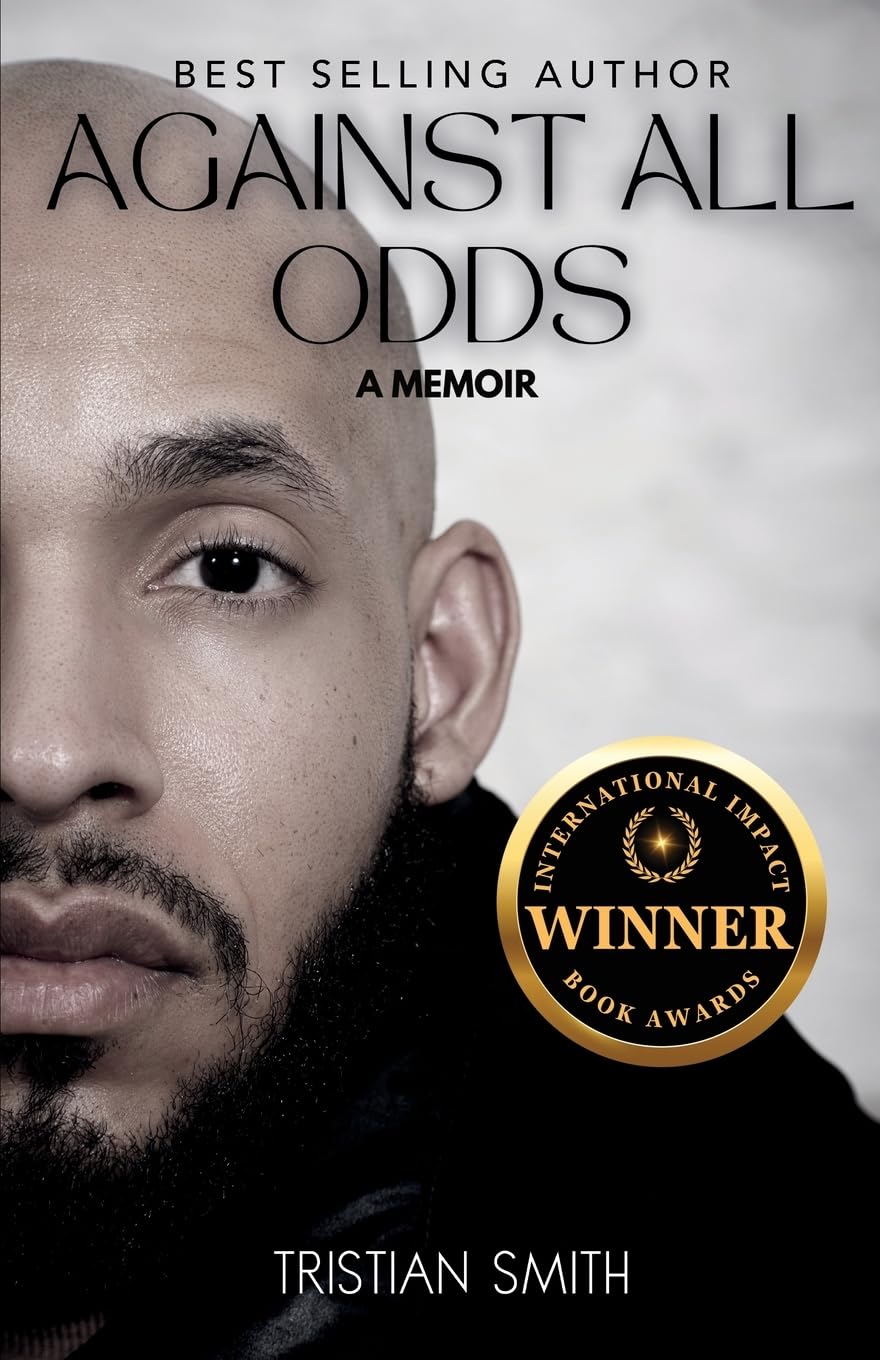

Against All Odds is a blunt and emotional memoir about growing up in poverty, surviving horrific abuse, entering the foster care system, and clawing a way toward stability, purpose, and adulthood. The story moves from early childhood trauma to the revolving door of foster homes, then toward the author’s eventual growth, education, service, and advocacy for youth in care. At its heart, the book traces the long road from hurt to healing and highlights both the failures and the rare moments of compassion within the child welfare system.
While reading, I felt the author’s voice come through with a kind of quiet force. The writing is simple, but it hits hard. Scenes of abuse and fear are described without dressing them up, which makes them linger long after you close the book. I found myself stopping every so often just to breathe and process what I had read. The honesty feels brave. It also feels painful, because the book never hides the worst moments. I appreciated that the author doesn’t try to make the trauma sound noble or inspirational. Instead, he shows how messy, lonely, and confusing it was to survive it. That kind of truthfulness made me trust him as a narrator and connect with the story more deeply.
I found myself moved by the way the author talks about resilience, not as some magical trait, but as something built slowly from tiny sparks of hope and small acts of kindness. The sections about teachers, caseworkers, and foster parents who actually cared warmed me more than I thought they would. I also felt frustrated at how often the system failed him and his brother. It made me angry and sad at the same time, because these aren’t rare stories. The mix of systemic critique and personal reflection felt honest and relatable. The author talks about mental toughness, purpose, and choice, but he also never forgets how much environment and support matter.
By the time I reached the end, I felt a mix of heaviness and admiration. This book would be a strong fit for readers who care about child welfare, social work, or youth advocacy, but it would also resonate with anyone who appreciates raw, emotional memoirs about surviving hardship. It’s tough in places, but it carries a steady, quiet hope that makes the journey worth it.
Pages: 204 | ASIN : B0D8K36XWG

Llife Can Surprise Us In Extraordinary Ways
The Friend from the Future: The Spark of Friendship follows a young girl stuck at home on a rainy day with homework who discovers a robot from the future has landed in her backyard. What was the inspiration for the setup of your story?
The story was inspired by something very simple and familiar — a rainy day that feels slow, quiet, and full of hidden possibilities. I’ve always loved the idea that magical things can appear when we least expect them. One afternoon, I watched my daughter staring out the window during a storm, and in that still moment I imagined a little glow landing in the backyard. That spark became Nova.
I wanted to show that even on the dullest days, life can surprise us in extraordinary ways. Sometimes magic arrives exactly when we feel bored, stuck, or overwhelmed.
What were some educational aspects that were important for you to include in this children’s book?
I focused primarily on emotional learning. Children often experience pressure, frustration, or confusion around schoolwork — just like Luna does. I wanted to show them, in a gentle and playful way, that curiosity, kindness, and creativity can turn stressful moments into exciting opportunities for growth and discovery.
I also sprinkled in playful futuristic elements like robots, glowing technology, and simple science concepts. Not in a heavy way — just enough to spark imagination and encourage kids to explore and see learning as an exciting adventure rather than something they “have to do.”
I found Luna and Nova’s characters to be dynamic and engaging. What was your process for writing the characters’ interactions to develop the bond between them?
I approached Luna and Nova’s friendship the way real friendships grow — with curiosity, honesty, and a bit of humor. Luna meets Nova with wonder, and Nova sees our world with fresh eyes. That contrast made their connection feel natural to write.
I let their conversations happen the way kids actually talk: sometimes excited, sometimes confused, sometimes deep without even trying. They learn from each other in small moments — a question, a laugh, a misunderstanding — and those moments slowly build trust. My goal was for readers to feel their bond forming page by page, just like a true friendship.
When will the next book in Luna and Nova Magical Journeys be available? Can you give us an idea of where that book will take readers?
The next book in Luna and Nova’s Magical Journeys series is already in progress, and I’m incredibly excited about it. It will be released soon — and this time, Luna and Nova step into a new kind of adventure that blends magic with a deeper emotional message.
Without giving too much away, the story will center around something very familiar to every child, something that seems small but affects the way they feel, think, and move through their day. Luna will face a challenge that requires her to look within, and Nova will guide her in a surprising way that brings mindfulness, growth, and a touch of enchantment.
Author Links: GoodReads | Facebook | Instagram | Website
One rainy day, Luna meets Nova, a robot from the future, who appeared in her backyard with a unique proposal. While he helps Luna with her daily tasks and challenges, she teaches him about friendship, empathy and emotions.
Can a curious girl and a high-tech robot prove that genuine friendship transcends time and space?
Why Families, Teachers, and Young Readers Love This Book:Engaging Rhyming Text:Makes reading aloud a joyful, memorable experience for the whole family.
Teaches Emotional Intelligence:Gently introduces themes like empathy, emotional expression, and compassion.
Sparks Curiosity and Imagination: It blends futuristic fun, whimsical moments with timeless lessons about confidence, growth, self-discovery, and embracing challenges.
Enjoyable for All Ages: Whether its storytime with little ones or independent reading, there’s something heartfelt and fun for everyone to enjoy.
Makes a Wonderful Gift: A thoughtful present for birthdays, holidays, or any occasion that calls for something special.
Give your child and your whole family a story that sparks connection and a friendship that travels beyond time and space!!!
Faery Academy of QuillSnap: Night of the Purple Moon

Faery Academy of QuillSnap unfolds as a sparkling adventure that blends the everyday world with a secret realm full of faeries, magic, and danger. The story follows young Tansy WaterSprite, who escapes a harsh guardian and discovers she was destined for a faery academy. Meanwhile, a grandmother and granddaughter in the human world stumble into an enchanted mystery of their own. The book weaves these threads together with colorful scenes, playful creatures, and a sense of wonder that feels constant.
I found myself charmed by the author’s imagination. The imagery pops. The descriptions of enchanted forests, shimmering potions, and glittering wings gave me that warm feeling you get when a story sweeps you away. At times, the writing leans into whimsy, but I never felt lost. I liked the cozy tone and the gentleness in the way magic appears. It feels like the book invites you to go along instead of pushing you. I appreciated that.
I also had strong feelings about the emotional beats. Tansy’s fear around Merkel really resonated with me. The shift from dread to hope felt genuine. The scenes with Mimi and Rose left me with a sweet ache because of the love between them. Some moments wandered a little, yet the heart of the story always pulled me back in. I enjoyed how the narrative threaded humor through the tension. It kept me invested and curious about what would happen next.
I feel the book would be a great fit for readers who love gentle fantasy, vivid worlds, and stories that carry a sense of childlike wonder. It would be perfect for middle-grade readers and also for adults who enjoy whimsical escapes. If you like books that mix warmth with adventure, I would recommend giving this one a try.
Pages: 414 | ASIN : B0DJCTXDK9
The Way I Saw Myself And The World
Unbroken: Life Outside the Lines is your memoir, about surviving a childhood shaped by violence, poverty, mental illness, and constant upheaval, and how you continue to work each day to live and love despite it. What was the inspiration for the setup of your story?
I wanted the setup to feel like inviting the reader to sit beside me at the kitchen table while I finally say the things I was never allowed to say out loud.
The inspiration really came from two places: my younger self and my present-day self. As a child, I lived inside the chaos—violence, poverty, mental illness, constant moving—and I didn’t have language for any of it. As an adult, I finally do. The setup of the story grew out of my desire to honor that little girl’s confusion and fear, while also letting the woman I am now gently guide the reader through it. I didn’t want the book to be just a list of painful events; I wanted it to show how those early rooms, those sounds, those secrets shaped the way I saw myself and the world.
I also structured the opening around a simple but honest truth: the past doesn’t stay in the past. I wanted readers to meet me not only as a child in survival mode but as a grown woman still learning how to live and love with everything I’ve carried. So the setup moves between then and now—between the immediacy of what happened and the quiet work of healing that continues. My hope was that, from the very beginning, readers could feel both the weight of what I survived and the possibility that a different life is still being built, day by day.
I appreciated the candid nature with which you told your story. What was the hardest thing for you to write about?
There were three kinds of pages that nearly broke me:
- Writing about the people I loved who also hurt me.
Putting certain family members on the page was excruciating. I grew up in an environment where we didn’t “tell family business,” and breaking that unspoken rule felt like a betrayal, even as an adult. I had to constantly walk the line between telling the truth and not turning anyone into a monster. Most of the harm in my story came from people who were wounded themselves, and holding both of those realities at once—“this hurt me deeply” and “you were not only your worst moments”—was incredibly hard. - Admitting the ways the trauma shaped my own behavior.
It was one thing to write about what was done to me; it was another to be honest about how I carried those wounds forward. The moments where I shut down, pushed people away, ignored red flags, or repeated unhealthy patterns in my own relationships were very painful to face. Those chapters forced me to look at myself with the same unflinching honesty I used on my past, and that was humbling and raw. - Going back into the child-mind.
Some scenes required me to re-inhabit my childhood body—the sounds, the smells, the confusion, the terror. I didn’t write them as an observer; I wrote them as if I were back there. After those writing sessions, I was often wrung out. I’d have to walk, cry, or sit in silence before I could rejoin “normal life.” It took a lot of emotional and physical grounding to go back, and then come back.
In a way, the hardest thing to write about was not one single event, but the ongoing impact—the way those early experiences still echo in my marriage, my parenting, my self-talk. Putting that on the page meant admitting that healing isn’t a neat before-and-after story. It’s daily work. Letting readers see that unfinished, imperfect process was terrifying… and also, I hope, the most honest gift I could offer.
How did you balance the need to be honest and authentic with the need to protect your privacy and that of others in your memoir?
I thought about this constantly while writing. For me, “tell the truth” and “do no unnecessary harm” had to sit side by side.
A few things guided me:
- I kept the focus on my experience, not other people’s secrets.
I tried to stay in the lane of what I saw, what I felt, what I carried, rather than exposing every detail of someone else’s life. If a piece of information belonged more to another person than to me, I either left it out, softened it, or hinted at it without giving identifying specifics. - I changed or obscured details where it didn’t weaken the truth.
Names, locations, certain timelines, and identifying characteristics were altered to protect privacy. The emotional truth and the impact stayed the same, but the “tracing paper” over the real people got thicker. If a reader can feel what happened without being able to easily recognize who it happened with, that’s a good balance for me. - I gave myself permission to have boundaries.
There are things that happened that are not in this book. Not because I’m hiding, but because some stories are still tender, or they belong to a future version of me who’s more ready—or they simply don’t need to be on public display to validate my pain. I reminded myself often: You owe the reader honesty. You do not owe the reader your entire self. - I wrote the raw version first, then edited with care.
In early drafts, I didn’t censor myself. I needed to know the real story on the page. Later, I went back and asked:- “Is this necessary for the reader to understand my journey?”
- “Does this cross a line into someone else’s private life?”
- “Am I telling this from a place of healing, or from a fresh wound?”
If something felt like a wound still bleeding, I either reframed it or removed it.
- I tried not to punish or vindicate anyone on the page.
Even when I wrote about harm, my goal wasn’t to get even. It was to bear witness. That helped me keep the tone grounded in my humanity and theirs, instead of in revenge. I can say, “This hurt me deeply,” without turning the book into a public trial.
In the end, the balance looked like this: the reader gets the truth of my interior world—the confusion, the terror, the resilience, the ongoing healing—but not a roadmap to track down every person who ever hurt me. The story is mine. The people inside it are real, but they are not mine to expose.
How has writing your memoir impacted or changed your life?
Writing Unbroken: Life Outside the Lines has changed me in ways I felt in my body first—before I could even explain them.
A few of the biggest shifts:
1. I stopped arguing with my own story.
For a long time, I minimized what I went through:
“It wasn’t that bad.”
“Other people had it worse.”
Writing the memoir forced me to sit with the facts. Seeing them on the page—clear, ordered, undeniable—made it much harder to gaslight myself. I don’t have to keep re-litigating whether it “counts” as trauma. It happened. It shaped me. That simple acceptance has been huge.
2. It changed how I talk to myself.
When I wrote scenes from my childhood, I had to look at that little girl closely—how hard she tried, how alone she felt, how much she carried. It softened something in me.
Now, when I’m harsh with myself, I picture her. It’s harder to call myself “too sensitive” or “weak” when I’ve just spent months honoring her survival on the page. Writing the book made self-compassion less like a buzzword and more like a daily practice.
3. It rearranged my relationships.
Telling the truth has a way of shaking the tree.
- Some relationships have gotten closer. People in my life understand me better now. They see why I react the way I do, why certain things are hard for me, why I need boundaries. There’s more context and, sometimes, more grace.
- Other relationships have become more distant or more defined. Putting things on paper meant I had to stop protecting certain illusions. That’s painful, but it’s also cleaner. I’m not working as hard to pretend.
Overall, it gave me permission to let my inner reality and my outer life match more closely.
4. It turned my pain into something useful.
Before the book, a lot of my story felt like random debris—memories hitting me out of nowhere. Writing gave it shape. Now, when I talk to someone who’s navigating their own trauma, I’m not just speaking from the middle of the fog. I’ve walked through it intentionally, sentence by sentence.
It’s changed how I show up:
- I’m more open about my history without feeling like I’m oversharing.
- I feel less ashamed and more… equipped—like, “Yes, this happened, and here’s one way I’ve learned to live with it.”
There’s a strange relief in knowing the worst things you survived can now sit in a book and maybe help someone else feel less alone.
5. It taught me the power of boundaries and pacing.
Writing this memoir forced me to learn:
- when to stop for the day,
- when to ground myself,
- when to say, “I can’t talk about that right now.”
Those skills didn’t stay on the page. They bled into my daily life. I’m more aware of my limits, more protective of my energy, and more willing to say no—even to “good” things—if my nervous system is tapped out.
6. It gave me a different kind of courage.
Surviving my childhood was one kind of courage.
Choosing to lay it out for others to read is another.
Now, other risks feel a little less terrifying:
- Sharing my work.
- Speaking honestly in conversations.
- Naming what I need in relationships.
- Letting myself be seen as I actually am, not as the “together” version I used to present.
Once you’ve told the hardest truths in print, small everyday truths get easier to say out loud.
In short: writing Unbroken didn’t “fix” my life. I still have triggers, hard days, old patterns that flare up. But it reorganized my inner world. It gave me language, loosened shame’s grip, clarified my relationships, and reminded me that my story is not just what happened to me—it’s also what I choose to make of it now.
Author Links: Instagram | Facebook | Website
As her mother’s delusions intensify, Adriene and her younger brother are swept into a cycle of instability: temporary relatives’ homes, decrepit apartments, shelters, and the bureaucratic indifference of Child Protective Services. Her life becomes a study in adaptation. Teachers, social workers, and therapists appear as both saviors and spectators, their well-meaning interventions undercut by a system that cannot see the full truth.
Amid this chaos, Adriene discovers a sanctuary in learning. Books become her escape and her mirror, a means of constructing identity from fragments. Her intelligence and resilience earn her entry into gifted programs and, later, a transformative scholarship through the Duke University Talent Identification Program’s ADVANCE Camp – a rare space of belonging and recognition. Yet even moments of promise are shadowed by trauma’s lingering grasp; her mind remains both brilliant and haunted.
Foster care, meant to save her, instead subjects Adriene to new forms of cruelty. The “Bitch from Hell,” her abusive foster mother, wields authority with sadism cloaked in righteousness. Still, Adriene’s intellect and adaptability allow her to navigate this world – and, in small acts of defiance, reclaim pieces of her agency.
College becomes both a milestone and a reckoning. Having survived the unimaginable, Adriene graduates with honors in International Business, only to find herself unprepared for the invisible toll of trauma in adulthood. Depression, self-sabotage, and a string of hollow relationships bring her to the brink of despair once more. The memoir crescendos with a raw confrontation of suicidality – and the awakening that follows.
In one of the book’s most powerful sections, Adriene revisits her own CPS case files, psychiatric evaluations, and therapy notes. Reading herself through the cold lens of institutional language, she confronts the staggering disconnect between documented “stability” and lived abuse. This duality – the official record versus the inner truth – forms the heart of Unbroken. The narrative closes with a reclamation: survival not as triumph over pain, but as the deliberate act of continuing to live and love despite it.
Creciendo Juntas: Narrativas de Empoderamiento de las Mujeres
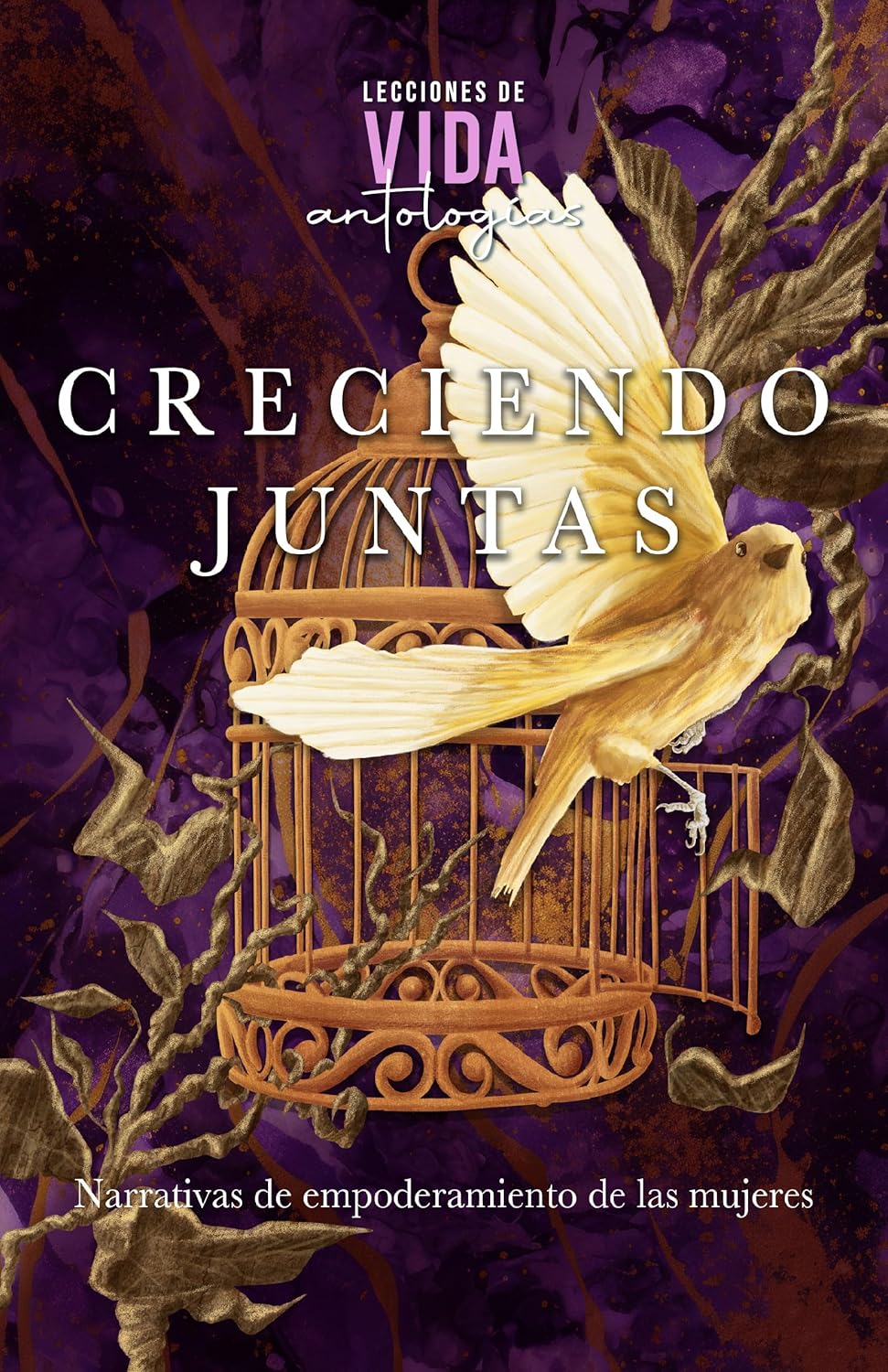
Leí Creciendo Juntas y me encontré con una antología que une las voces de quince mujeres que exploran sus luchas, sus pérdidas, sus revelaciones y la forma en que reconstruyen sus mundos. Desde duelos profundos hasta despertares personales, cada autora narra su vida con una honestidad que no se esconde y con una fuerza que se siente desde el prólogo, donde se plantea que estas historias son pequeñas revoluciones que parten de lo cotidiano y avanzan hasta el alma misma.
Mientras avanzaba, sentí que el libro me hablaba desde muchos lugares a la vez. Hay textos que duelen y otros que despiertan una chispa de esperanza que llega cuando menos lo esperas. Me sorprendió la forma tan sencilla en la que varias autoras expresan emociones complejas. Nada se siente disfrazado. Todo es directo y sin ruido. A veces la vulnerabilidad me golpeó de lleno y tuve que detenerme porque una idea se quedaba dando vueltas en mi mente. Otras veces solté una sonrisa porque reconocí en sus palabras la terquedad de seguir adelante a pesar de todo.
También me gustó cómo cambia el ritmo entre historias. Unas hablan con suavidad. Otras cortan como si todavía ardiera la herida que cuentan. Esa mezcla crea una lectura que no se puede vivir de forma plana. Me llevó de la mano por caminos inesperados y me hizo pensar en las veces que yo también he tenido que romper algo en mí para poder construir algo nuevo. No todo me identificó, claro, pero sí sentí respeto por cada historia que se compartió con tanta apertura. El libro no pretende complacer ni adornar. Más bien se siente como un espacio donde la verdad tiene permiso de ocupar todo el cuarto.
Al terminarlo pensé en quién podría disfrutarlo más. Creo que sería ideal para mujeres que atraviesan cambios grandes y buscan un espejo donde verse sin filtros. También para quienes disfrutan de historias reales que no siguen un molde y que nacen desde el deseo de entender la propia vida. Yo lo recomendaría sin dudarlo. Es un libro que acompaña, que sacude y que, de alguna forma, invita a crecer con calma y con valentía.
Pages: 211 | ASIN : B0DHV7MT4L
A Way to Honor That Story

The Adventures of Belle Bear follows a cheerful polar bear cub living in the Arctic who has to move to a new home in a new country where everything is different, and she has to make new friends. What was the inspiration for your story?
When I was 9 years old, my family fled the Republic of Georgia after the collapse of the USSR. We were political refugees, ethnically Russian and Armenian in a newly nationalistic country, and had to start over in the U.S. with nothing but suitcases and survival skills. I didn’t speak English. I didn’t really fit in. I had to start over and make friends in a new place. There were no polar bears. And no one wore capes. I drew a lot of my strength and inspiration from my grandmother, my Baba. This book is a way to honor that story and my Baba’s memory.
What were some educational aspects that were important for you to include in this children’s book?
I leaned heavily into the social-emotional aspect of belonging in this book. While the story is about moving to a new place and starting a new school. I think it’s also for every kid who’s ever felt different or out of place. And for every adult who remembers what that felt like. For example, my 7yo daughter is the only left-handed student in her 1st grade class. She told me she felt a little like Belle Bear when she first realized it. But then she remembered that it was okay to be a little different. That it made her special.
What scene in the book did you have the most fun writing?
The most fun (and challenging!) scene in the book by far was the mirror-cape scene. I had the idea in my head for months, when Belle Bear internalized Baba Bear’s nightly affirmations, “I am kind, curious, and brave. I can do anything. I am a Belle Bear,” her new cape would somehow appear. But I wasn’t sure how it would work on the page. Originally, it was going to be a spin or a twirl. But the movement was hard to show in still illustrations. Nathalie, the illustrator, and I spent several weeks perfecting it after the rest of the book was done. It was the literally the last scene we finished. She really brought it to life with Belle Bear’s cape appearing in the mirror before she steps out on the next page wearing it. I couldn’t be happier with how it turned out!
Will this book be the start of a series, or are you working on a different story?
I have BIG plans for Belle Bear. Think of Belle Bear as The Berenstain Bears of this generation with a modern voice and an orange cape. Each book will explore a different challenge kids face today, from family transitions to standing up for themselves, and help them build confidence from the inside out. Belle Bear is just getting started!
Author Links: GoodReads | Instagram | LinkedIn | Website
Belle Bear is a spirited polar bear cub who lives in the arctic country of Mount Bearia with her beloved grandma, Baba Bear. Her days are filled with snowy games, cozy bear hugs, and magical moments—all while wearing an orange cape that makes her feel brave.
When Belle Bear and Baba Bear have to leave their home and move to a new country, Belle Bear’s world is turned upside down. There’s no snow, no other polar bears, and certainly no capes. At her new school, Belle Bear struggles to feel like she belongs, and she begins to doubt the very things that once made her feel special. But with a gentle nudge from Baba Bear and a heart full of courage, Belle Bear discovers her self-confidence and begins to make new friends who appreciate her for exactly who she is.
The Adventures of Belle Bear is a heartwarming story about moving to a new place, making new friends, and finding self-confidence in the process.
Belle Bear believes that every child should go to bed with a full belly and a bedtime story.
Through December 31, 2025, 100% of the proceeds from The Adventures of Belle Bear will be donated to Good Shepherd Food Bank, Maine’s largest hunger-relief organization.
Gracie & Aero Wallet Business Venture
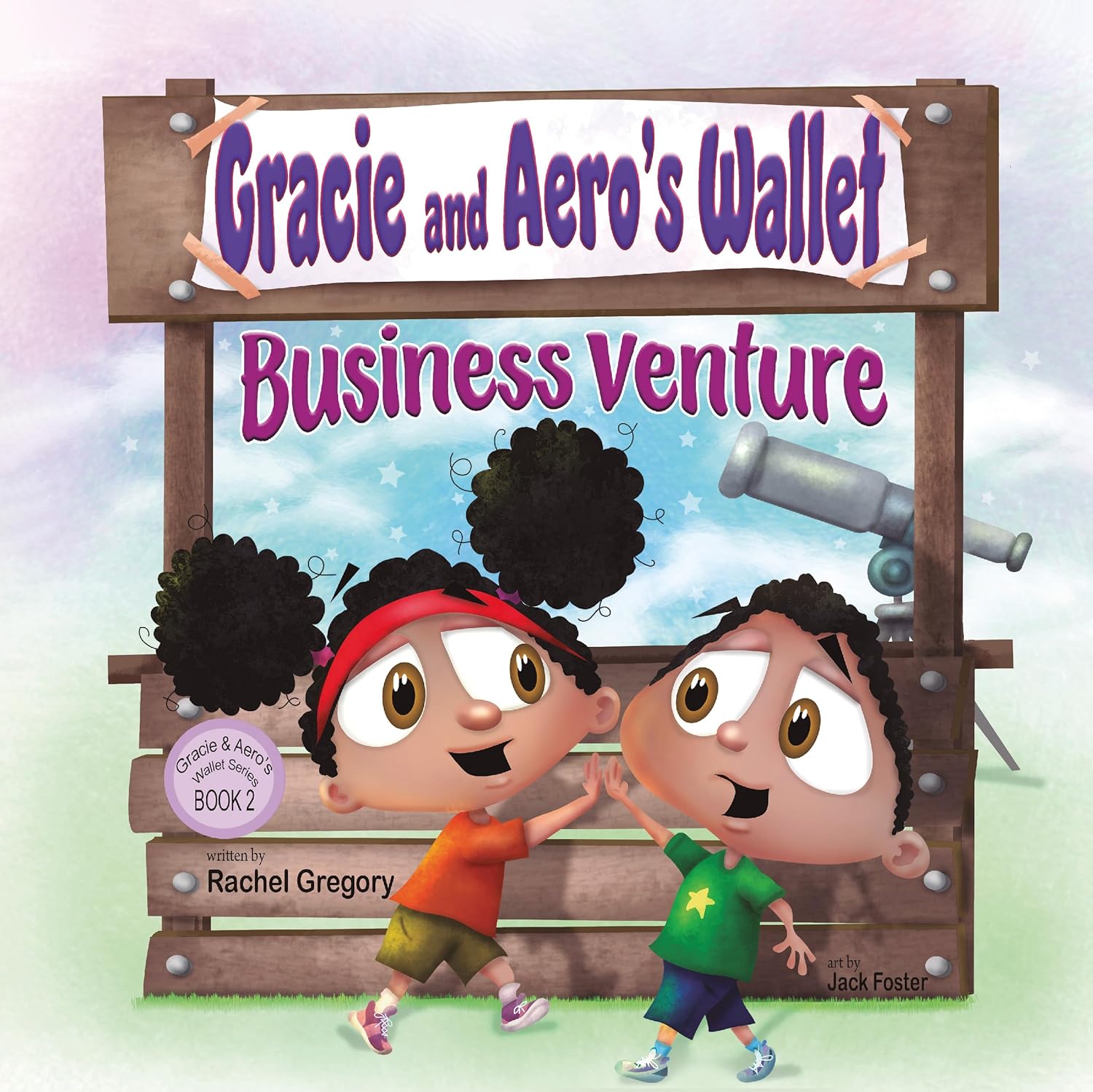
Gracie and Aero dive into summer with big dreams and even bigger plans. What starts as a simple idea tossed around the dinner table turns into a full-blown neighborhood market. The kids hustle through chores, save up their capital, map out a business plan, create crafts and snacks, and even offer telescope views. Their front yard becomes a lively space market filled with kids, laughter, and stargazing. By the end, the whole community has come together to celebrate the siblings’ creativity, teamwork, and growing business skills.
I found myself smiling at how warm and upbeat the writing feels. It has this easy flow that pulled me along like I was tagging behind Gracie and Aero as they dashed from one idea to the next. The simple explanations of words like capital and invest made me feel like the book was giving kids a gentle pat on the back and saying you can learn this too. I loved that the story never talked down to the reader. It just kept everything bright and hopeful, and it felt like a real family cheering on their kids.
I also enjoyed the whole vibe of the story because it made starting a business feel fun instead of scary. I kept thinking about how much joy the kids put into every small task. The flyers, the lemonade, the decorations, the telescope. It all felt so full of heart. The illustrations helped a lot, too. They are colorful and playful, and they made the market scenes burst with energy. I felt a little proud of the kids when the neighborhood showed up, and everything came together. It was sweet and kind of uplifting in a way I didn’t expect.
All in all, I think this children’s book is a great fit for kids who love hands-on projects, kids who get excited about making things, or kids who just enjoy stories about families working as a team. It would also be awesome for classrooms or parents who want to sneak in early lessons about money and entrepreneurship without making it feel like homework. It is cheerful, encouraging, and packed with ideas that spark curiosity. I would definitely recommend Gracie & Aero Wallet Business Venture to young readers who dream big and love adventures that start right in their own backyard.
Pages: 32 | ASIN : B0DJ4SWZJD


 LITERARY TITAN