Blog Archives
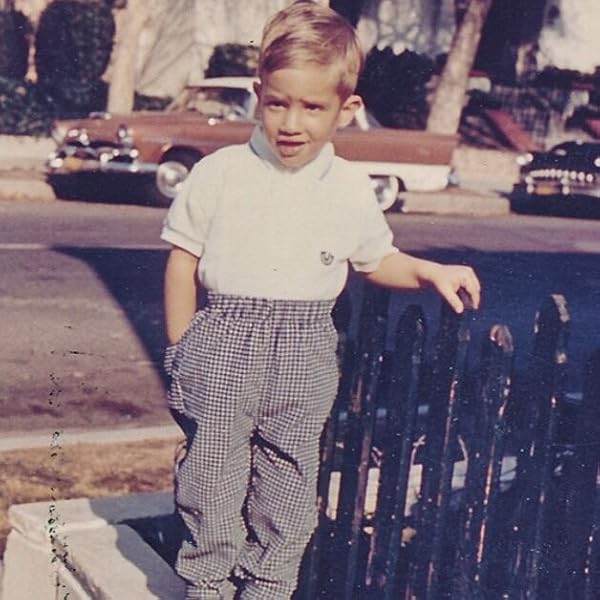
In Little Boy, I Know Your Name, you share your experiences coping with inherited trauma and surviving a childhood riddled with abuse. What inspired you to share your story with readers?
I decided to share my story with readers to connect with others. I wanted to create a bridge between my experiences and those of others to foster a sense of shared humanity. By opening up about my journey, I hoped to create a space where readers could find solace, inspiration, and perhaps even a reflection of their struggles and triumphs.
What was the hardest thing about your life to write about?
The most challenging aspect to write about was the time I spent living with my mom’s abuse and torture. Delving into those memories was emotionally taxing, requiring reopening wounds that had barely healed. However, it was crucial to confront and articulate those experiences to convey the depth of my journey accurately. By sharing the raw and unfiltered truth, I hoped to demonstrate that resilience and recovery are possible, even in the face of overwhelming adversity.
What were some ideas that were important for you to share in this book?
Some of the important ideas I wanted to share in my life story revolve around perseverance, hope, and the power of human inner strength. Through these ideas, I hoped to inspire readers to embrace their journeys, find strength in their struggles, and foster meaningful connections with those around them.
What is the one thing you hope readers take away from your experiences?
What I hope readers take away from my life experiences is the unwavering belief in their inherent potential to overcome the hardest challenges. Life is a series of ups and downs, and when we find ourselves at our worst, we can discover our true strength. I wish for readers to hold onto this belief, knowing that no matter the adversity, they possess the power to shape their destinies.
Author Links: GoodReads | Amazon
In his unflinchingly honest memoir, Mitchell Raff candidly recounts his journey to overcome generational trauma and break free from decades of addiction. With raw vulnerability, he lays bare his destructive coping mechanisms and the far-reaching consequences they wrought on his life and on those around him.
Beaten mercilessly as a child by his Holocaust-survivor mother, Mitchell was later kidnapped from Los Angeles to Israel before finding refuge with loving relatives back in America. In his adult life, the echoes of trauma forced Mitchell into patterns of substance abuse, sexual vices, and toxic relationships. But at a certain point, Mitchell explains, you need to own your decisions, for better or worse. After years of painful self-examination and work, Mitchell settled into a healthy relationship and found the strength to endure blows that once would have destroyed him.
Mitchell’s unfiltered account of his trials, failures, and ultimate breakthrough to become the man he always wanted to be is living proof that cycles of generational trauma can be broken, that even the deepest wounds can soften, and that though the road is difficult, it is within reach to not only survive but thrive.
The Voices Of My Generation Are Dying

Party at the End of the Rainbow is a raw and creatively written memoir that sweeps readers into the tumultuous world of the late 1960s and early 1970s, vividly narrating the rebellious counterculture movement through the eyes of its participants.Why was this an important book for you to write?
The voices of my generation are dying out and we now live in an age that seems to be sliding back into the madness we rebelled against in the 1960s. Most of us didn’t start out as rebels. No, we were led to question the hypocritical morality and the self-serving politics that grated on our nerves at that time. Revisiting those forgotten times with fresh eyes should re-energize today’s youth to continue the fight for truth and justice.
What were some ideas that were important for you to share in this book?
Human beings of every era are capable of standing up to adversity to strive for a better, more just society. We try, but we often have hypocritical blind spots when it comes to meeting our individual needs. Thus the equality touted in the American Revolution could ignore or explain away the continuation of slavery, and we are still dealing with the effects of that today. History is the story of unfinished business explained away. I try to portray people as complex entities rather than one-dimensional characters, and show them as they appear to themselves as well as to those they interact with. None of us are all good or all bad in our own mind. We feel justified in what we do, and are often blind to the way we condemn others for the same behavior that have done.
What was the most challenging part of writing your memoir, and what was the most rewarding?
The most challenging part for me is organizing my memories into a chronological order. Therefore I spend time in reverie; looking back at the remembered snippets and meditating on them, which enables me relive the experience. They expand into a larger sharper and logical focus, almost a movie with forgotten scenes and events coming to mind. If there are letters or articles, or feedback from others still around, they can help me to put things in context.
The most rewarding for me is when I manage to put the mined events onto the page in a coherent way. I strive for accuracy, even if it puts the then me, as the main protagonist, in a less than flattering light, rather than create a revisionist history.
What do you hope is one thing readers take away from your story?
I hope they come to recognize the essential goodness in human nature and to see something of themselves in my characters. I want to help them taste the experiences my characters lived through and imagine how they would react in similar circumstances. I’d like them to question their values and the social and sexual mores of their own time. Are they really their own, or are they simply parroting what they have been taught by authorities. We all need to search our heart and examine our conscience, as Mark Twain’s Huck Finn did when he wrestled with whether to help his black friend Jim escape slavery or follow the morality that he’d been taught and turn him in. That moral quandary is not too remote from our own time.
Author Links: GoodReads | Website
My Source of Comfort and Happiness

Happy Agony is a heartfelt collection of poetry that explores the many facets of life, from love and grief to the societal pressures we face. Where did the idea for this collection come from and how did it develop over time?
Writing poetry has been my source of comfort and happiness since I was a child, allowing me to express myself creatively and release my emotions. The collection was born out of a careful review of poems I had penned from childhood to the present day, handpicking fifty pieces that capture significant moments in my life. This collection of poems is an autobiographical account of my life in poetry.
What were some ideas that were important for you to share in this collection?
I needed to present a range of ideas that others could connect with. Themes that are universal and part of everyone’s life journey. These themes – childhood, community life, aspirations, relationships, and grief – are common to all.
I appreciated the candidness with which you shared key moments that impacted you in life. What was the hardest thing for you to write about?
The poems that proved most difficult to write delved into personal sorrow, such as the early loss of my sister and the subsequent deaths of both my parents within a span of nine months. It was a soul-crushing task to express these emotions through poetry. Also, the difficulty of writing poems about the COVID-19 pandemic, which was amplified by the grief of personal losses.
What is one thing that you hope readers take away from Happy Agony?
My aim is to reveal snippets of my personal life to form connections with others and for readers to recognize their own experiences in my poetry. I aim to highlight the importance of appreciating small joys and finding peace in nature, family, and community. It is my desire for readers to have a deeper insight into me beyond my career in the film industry.
Author Links: GoodReads | X | Facebook | Website
The Pulse of My Heart (Taken Series #3)


The Pulse of My Heart by E.C. Roderick is a captivating sequel in the Taken series, blending historical fantasy, romance, and time travel. The story follows Sylvie, who has returned to modern-day Los Angeles after being trapped in Colonial Era New England. Although she has reunited with her twin children, Leif and Leila, her heart remains tethered to the past, where she left behind the love of her life, Leif, who is also the father of her children. As she tries to move on, destiny pulls her back when a visitor from the past reignites the possibility of a future with Leif.
Roderick sets the stage for an emotional and engaging narrative as Leif unexpectedly follows Sylvie into the present. The novel explores their efforts to rekindle their romance, despite the time that has passed and the challenges of integrating their lives. Now a mother of two, Sylvie must navigate the complexities of introducing her children to a father they have never known, while Leif faces the disorienting task of adapting to life in the modern world. Much of the story revolves around family dynamics and Leif’s bewilderment as he acclimates to a future far removed from his own time. The chemistry between Sylvie and Leif remains electric, with their intimate moments becoming even more intense than in the previous book, Taken. Roderick shines in crafting the evolving dynamics between these characters, allowing readers to dive deeper into their relationship and their role as parents. The relatively low-stakes plot lets the focus rest on the emotional connections, which brings depth to both the romance and the family storyline. A few minor proofreading errors are noticeable, and at times the dialogue feels overly formal, making certain scenes, especially the more intimate ones, feel stilted or overly technical. Additionally, Roderick’s use of Scottish words and phrases, while adding authenticity to the characters, may leave some readers confused, and a pronunciation or meaning guide could be beneficial.
The Pulse of My Heart is an enjoyable and heartfelt sequel. Roderick’s writing shines in the emotional depth she brings to Sylvie and Leif’s relationship, making this book a treat for fans of romance and historical fantasy. Readers will find themselves fully immersed in this story of love, family, and second chances.
Pages: 480 | ASIN : B0CTPSBZKW

The Brain and Time

Nurse Florence®, How Do We Understand Time? follows three friends discussing with the school nurse how the same period of time can feel like it’s going by fast or slow, depending on what you are doing. What gave you the idea of writing about this topic for children?
I love history and physics. Albert Einstein was obsessed with light which is what helped give him the drive to discover the Theory of Relativity. When I learned about the parts of the brain the help process time, I wanted to help people understand that our reality of time is also constructed by how our brain processes things. Some diseases can affect the brain which may also affect the way the brain processes time. I think that is really interesting.
In your book, you discuss the concept of time and how the brain processes it. You also introduce readers to topics like Parkinson’s disease and the methods scientists use to study the brain. How do you strike a balance between providing technical information and keeping your readers engaged without overwhelming them?
I don’t know. I believe I have a gift of synthesizing complex info and bringing it down to the level of a child. We should use our gifts to benefit the world and avoid concealing our gifts.
What’s the most surprising thing you learned while writing your books?
I am surprised that it is not discussed more and not openly known that time processing for people with Parkinson’s Disease can be different from the rest of us. Knowing this can affect our understanding of our world. Our world is complex, and we should embrace the complexity.
What do you hope to teach or inspire in children reading your book?
I hope many children will consider careers in the health sciences.
Author Links: Facebook | Website
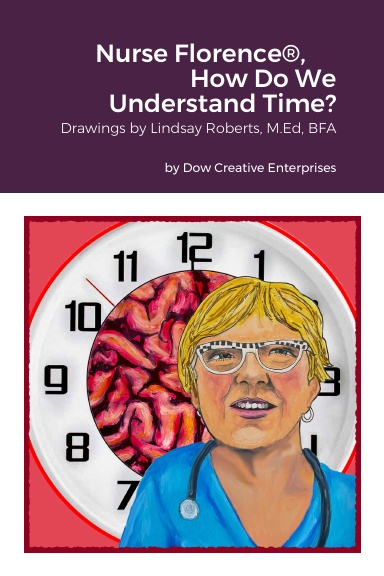
Sometimes it seems only a nurse can bring technical information down to an understanding that an ordinary person can grasp. The Nurse Florence® book series provides high quality medical information that even a child can grasp. By introducing young kids to correct terminology and science concepts at an early age, we can help increase our children’s health literacy level as well as help to prepare them for courses and jobs in Science, Technology, Engineering, and Math. We need more scientists so I hope that many children will enjoy this book series and consider a job involving science. Introducing Some Medical Words to Kids in Every Book A Movement of Global Health Promotion and Literacy
Tribal Logic: Book Four of The Tribal Wars


In Tribal Logic, set in Dolvia, readers are reintroduced to the persevering Brianna Miller, who remains in captivity. Her friends, determined and unwavering, strive tirelessly for her release. Brianna’s courage and resilience have made her a symbol of strength among the other women. This time, the narrative spotlights Jesse Hartley, who emerges as a central figure skillfully navigating the tumultuous political landscape of their world. The stakes are higher than ever, with Jesse appearing as a potential savior in this intricate situation.
The book also delicately explores the evolving relationship between Jesse and Hershel Henry. Despite their shared goal of liberating the captives from the clutches of an oppressive company, their personal paths have significantly diverged, casting doubt on the future of their romance. As a reader who thoroughly enjoyed the third book in the series last year, I approached this with high expectations, which were fortunately met. For those familiar with the series Tribal Wars, this is the first book in a new trilogy that is part of the series. It does not disappoint readers with its exciting adventure and political intrigue. Newcomers to the series are encouraged to start from the beginning to fully appreciate the depth and evolution of the narrative. One of the book’s strengths lies in its character development, particularly in showcasing a female protagonist in a leading role. The story unfolds at a suspenseful pace, keeping readers eager to discover the characters’ fates. The novel’s rich tapestry of characters and its intricate plot add depth to the narrative, making it more engaging. While navigating through the large ensemble of characters may require some initial effort, the payoff is in the form of compelling dialogues and well-crafted individual character arcs that enrich the reading experience.
Tribal Logic: Book Four of The Tribal Wars is a captivating science fiction novel that takes readers on a thrilling adventure filled with complex character dynamics and political intrigue. This book is an excellent choice for anyone who loves well-crafted stories that blend action, suspense, and thought-provoking themes. With its engaging plot, relatable characters, and well-paced narrative, Tribal Logic is a must-read for any science fiction fan looking for an exciting and intelligent read.
Pages: 419 | ASIN : B0CW3VGXPM
Nurse Florence®, How Do We Understand Time?
Michael Dow’s Nurse Florence®, How Do We Understand Time? is an enlightening educational book tailored for elementary school-aged children. It masterfully intertwines scientific knowledge and human anatomy to demystify how our brains perceive time. Through the engaging narrative, Nurse Florence explains the complexities of time perception to her young friends Jean, Condi, and Sonia, delving into why it seems to pass differently under varying circumstances.
Lindsay Roberts’ eye-catching illustrations significantly enhance the book’s educational value. These visuals are aesthetically pleasing and serve an educational purpose by featuring anatomical diagrams. This blend of imagery and text ensures that young readers remain captivated while absorbing intricate concepts. Dow’s writing style is both challenging and accessible, striking a balance between advanced vocabulary and understandable content. This approach fosters a learning environment where curious young minds can engage with real-world scientific terminology in a meaningful way. The comprehensive descriptions and contexts provided make complex ideas approachable for the target audience. In a creative twist, Dow draws inspiration from a historical nursing figure to craft the character of Nurse Florence, blending fact with fiction to create an immersive educational experience. This book stands out as a valuable resource for children interested in science, fueling their curiosity and enhancing their literacy skills.
Nurse Florence®, How Do We Understand Time? is an outstanding and commendable addition to the world of children’s literature. The book offers an in-depth exploration of the concept of time, making it a valuable resource for young readers with a keen interest in science. The writing style is engaging, and the content is presented in a way that is both informative and captivating. Whether you are a young reader or an adult, this book is a must-read for anyone looking to expand their knowledge and understanding of time.
Pages: 66 | ISBN : 9781304865694
Practical Solution for Middle-Class Citizens

A Civil Dissolution: The Best Solution to America’s Irreconcilable Ideological Conflict offers an interesting exploration into the often complex landscape of American politics. Why was this an important book for you to write?
I have been concerned about the growing polarization between natural rights conservatives and leftist Democrats. I finally came to the conclusion that the ideological differences were irreconcilable and that the best solution was civil dissolution and starting over in 1776 with a new state sovereignty constitution for a new Democratic Republic of American States.
This book examines the divisions and dialogues between different political viewpoints, inviting readers to engage in discussions and consider diverse perspectives. What is a common misconception you feel people have about the purpose of the political parties?
The basic issue is that Madison’s constitution of 1787 was based upon two social classes, the natural aristocracy and common citizens. When the Democrat Party shifted to an ideological party in 2008, common middle-class American citizens were left behind without a political party to represent their financial interests. Madison’s constitution centralized power in Washington, and that power became disconnected from the consent of the governed. In the current structure of government, common middle, and working-class citizens do not have a method to restore the political balance between the central government and the states.
What were some goals you set for yourself as a writer in this book?
My intent was to move beyond an analysis of the problems in the nation and try to offer a practical solution for middle-class citizens to restore a natural rights republic form of government.
What is one thing that you hope readers take away from A Civil Dissolution?
The solution for the irreconcilable ideological differences reside in the state legislatures to allow citizens in each state to vote on forming a new nation called the Democratic Republic of American States.
Author Links: Twitter | Website
The transformation of the Democrat Party from an economic faction political party to an ideological social class and race war political party is a permanent change in American politics.
The Democrat Marxists will never go back to being a political party that represented common citizens, as intended by Madison’s constitution.
Even if the Republican Party happened to win an election in the future, the Democrat Marxists will continue their quest to undermine the American political system in order to achieve permanent authoritarian power.
The concentration of power that was reserved to the ruling class, under Madison’s checks and balances, was obtained by the Democrats in the stolen election of 2020.
The moral and ideological differences between Marxist Democrats and natural rights conservatives are irreconcilable.
This book explains why the philosophical differences between the two groups of voters are irreconcilable and presents the argument that a civil dissolution of the nation into socialist slave and liberty free states is the best possible strategy to resolve the ideological conflict.



 LITERARY TITAN