Blog Archives
Everyone’s Grief Journey is Unique

Why Don’t They Cry navigates the tumultuous waters of grief and offers guidance to parents who have lost a child in their journey toward healing. Why was this an important book for you to write?
For over a decade, I have been approached by parents who have lost a child and have other living children. They would ask me why they were not seeing their children grieve. I wrote this book so parents could have a better understanding of what their children are going through. To give insights into some of the possible changes going on in the family. This book was important for me to write because I want to help parents gain an understanding of the sibling survivor experience and hopefully be able to help their children.
What is a common misconception you feel people have about grief?
That grief is somehow a time-limited process. The truth is everyone’s grief journey is unique. Also, I will NEVER get over the loss of my sister, but I am working y way through her loss every day. Some days are better than others. This is true for most people, they are working their way through their loss.
What were some ideas that were important for you to share in this book?
Giving insight into the sibling survivor ™ experience. Talking about the new family dynamics and hopefully helping parents to recognize their new expectations of their living children. Most importantly I wanted to shed some light on why we don’t cry in front of our parents.
What message would you like parents to take away from your book and your journey?
I hope that parents take away a better understanding of what the sibling survivor experience is like and find ways to support and acknowledge the loss of their children’s brother or sister. I also hope that I have provided useful tips that help open up communication within the family.
Author Links: GoodReads | Twitter | Facebook | Website
If A Spirit World Exists

Death’s Pale Flag follows a neurosurgeon haunted by apparitions of the dead who navigates the line between reality and the paranormal while tending to patients and searching for answers to his haunting. What was the inspiration for the setup of your story?
Well, to start with, several decades of practicing neurosurgery at Level 1 trauma centers. All the depictions of neurosurgical cases – from their origins, to the conduct of their surgeries, to their ultimate outcomes – although fictional were accurate and without hyperbole. And I think you can see, it can be pretty hair-raising. I wanted to give the reader a realistic taste of that world. Then, I have spent many years studying what effects constant exposure to death, dying, mayhem, tragedy, and human suffering has on healthcare practitioners, and have co-authored three non-fiction books on the subject. It feels plausible to me for someone in said environment to become untethered from reality, and start seeing ghosts. I certainly know the wreckage it can cause in practitioners’ psyches, home lives, and marriages. Finally, I grew up in a house with a Scottish mother and grandmother. They firmly believed in ghosts and had their own experiences with the undead. So tales of the paranormal are embedded in my soul. If a spirit world exists, I felt it logical for its members to be attracted to someone who so often spends his time in the no-man’s land between the living and the dead. And, I thought the juxtaposition of the supernatural world with the very “natural” world of modern biomedical science would be an interesting contrast.
Ryan Brenan is an intriguing and well-developed character. What were some driving ideals behind your character’s development?
I wanted to portray a decent, conscientious, “normal” guy (who happens to have a knack for his craft) who must exist in the relentless, hyper-critical, hyper-intense world of a high-level modern medical center. We suspect from the losing of his fighter pilot father in his childhood, that he might be prone to trying prove himself and aspiring to a hero’s role. And acquiring such a status in war is not enough for him. Neurosurgery affords him the opportunity, however, to validate his heroism every day with every patient. But it comes at a cost. First, he must repeatedly face his inability to heal some or perhaps many of his patients. In fact, he must face that he – like all neurosurgeons – is an “accidental killer and accidental maimer” in some cases. And, he must routinely tear himself away of the true epicenter of his happiness and fulfilment, his wife and daughters. He is certainly dedicated and caring and committed to his patients, but he is far from perfect. His emotional intelligence is dramatically listing. He has completely lost track on what is most important to him in life. And, he somehow believes he’s immune to emotional (and physical) distress and injury. He’s maddeningly stubborn about attending to his own needs and ailments, and listening to the good counsel of his family and friends. And, he takes his wife and family for granted, expecting them to “patch him up” each night inpreparation for the following day’s onslaught.
What themes were important for you to explore in this book?
I definitely wanted to give the reader a peek behind the curtains of the neurosurgical world. There are great non-fiction books on this subject, but I hoped a nonfiction work by an actual neurosurgeon would be more immersive, more thrilling, and more frightening. I wanted to challenge the reader with the question of Ryan’s sanity. Could the ghosts be the real, or was Ryan simply losing his mind (or both). I wanted the book to be chilling, with some nice scares. And I wanted this to lead the reader to consider what was actually more frightening, the paranormal world, or the very real world of brain surgery. I also was hoping to distort the reader’s sense of reality, calling into question at times whether they were experiencing supposed ghosts or real life situations.
I wanted to explore the concept that many physicians – particularly surgeons – occasionally actually hurt and perhaps even contribute to the deaths of their patients through their medical/surgical administrations. And the effects this must have on the physicians.
Clearly, I was also exploring the effects of workaholism and overcommitment – even towards a noble cause – has on the practitioners AND their families and friends.
And, I wanted to underscore just how arbitrary and random (and sudden) awful events, injuries, and illnesses can be in peoples’ lives (although we all can contribute to them by foolish or unthinking acts). I wanted to reveal and celebrate the preternatural bravery and grace of our fellow beings – the patients in the book (and in the real world) who face god-awful occurrences in their lives. I also wanted to toy with the religious implications were paranormal phenomena to be real, and the interface of science and religion in the world of the mortally ill.
What is the next book that you are working on and when will it be available?
Well, I have a completed YA novel in the computer that I have rewritten a number of times and will be heading into another rewrite as soon as I get Pale Flag off the ground. It’s the story of an obsessive but unheralded young soccer player who overcomes some shocking, and some routine, teenage adversity to start realizing his dreams. Although I believe young women will like it (I’ve tested it on some), I am hoping to rope in some male readers. I think we really have to push our young men to get off the games and do more reading.
Then, I am laying out the framework for a kind-of post-apocalyptic novel with a unique twist – that I won’t reveal quite yet.
And, as always, I have some non-fiction material I want to put together in the realm of burnout. I fear we are burning out our next generation of physicians long before they get to medical school. So, time permitting, I want to joust that windmill.
Author Links: GoodReads | Twitter | Facebook | Website
Subtle at first, but soon there’s no doubt about it, he’s seeing ghosts, spirits, the undead. Of course, he could just be going nuts, cracking under the pressure of his constant exposure to death, mayhem, and tragedy. But, he believes he has proof that the ghosts are very real, and that they are specifically haunting him.
We join Ryan as he tends to the sick and injured in his hospitals’ trauma bays, intensive care units, and operating rooms, all the while seeking to understand why he has become a target of the dead. Will he break down? Will he lose all that is precious to him? Will he be drawn to the other side of the great divide?
The unique storyline, similar to the works of Blake Crouch and Jeff VanderMeer is a chilling thrill ride, straddling the real world and that of the paranormal.
This riveting psychological thriller uniquely blends a detailed peek behind the curtains of modern day neurosurgery with a fantastical journey into the paranormal. Written by a highly experienced neurosurgeon who takes the reader on an immersive journey into the behind the scenes world of the operating room where few people have ever been.
That Sci-fi I Love So Much

Extension follows a geneticist who must navigate a moral dilemma and her growing attraction to the mission leader while racing against time to save her world from extinction on a foreign planet. What was the inspiration for the setup of your story?
Music is a huge inspiration for everything I put to paper.
I was just listening one day and this scene started playing in my head:
Initially, Ayathesti was going to be an astronomer researching for somewhere they could either all relocate to, or that could provide something to save the planet. The starting scene was her surrounded by documents in her house, and the clouds cleared for her to be shrouded in moonlight, and that was her answer: the moon. Once I started writing it out, though, I was struggling to find a way for the moon to accomplish saving its parent planet.
Now that I’ve finished outlining a few different stories and have more experience with structure, it could be an interesting concept to explore in the future.
How did you develop the characters of Ayathesti and Tiamet and their inner conflicts throughout the story?
The key components of Ayathesti grew from the parts of me I wasn’t sure how to manage. I know many say it becomes obvious to the reader, and is a bit of a ‘no, no’, when you emulate a character after yourself.
At the time I started writing Extension, I had already typed up a few scenes (which I ended up changing to match the storyline better.) These scenes were just writing exercises to help me learn to manage my anxiety(which was brand new to me), recommended by my therapist.
With Ayathesti being those pieces of myself, primarily the inner conflict she has with her relationships with herself and those around her, I needed a character to be a counterweight of those traits. For Tiamet, I chose traits that I wished I’d had in my life that I felt would help balance some of those things out.
What were some themes that were important for you to explore in this book?
The main theme was to show the vulnerability of Ayathesti with her relationships and find a way to help her grow throughout the story.
Another important thing to include was the reason traveling to Earth was necessary.
And I think finally, to touch on that sci-fi I love so much.
What is the next book that you are working on and when will it be available?
I’m actually working on four books simultaneously at the moment. The sequel for Extension, which has the working title: Sub-Fracture. It’s currently with beta readers before it goes to editing for an optimistic release later this year(2023).
I am also working on a three-part Paranormal Romantic Drama—which, of course, finds some sci-fi aspects incorporated. I’d love to release this year, but realistically it will probably be pushed to 2024.
Author Links: GoodReads | Twitter | Facebook | Website
With planet Naratu dying, the only thing keeping the Mujai people from extinction is aerosolizing gold into the atmosphere. The Council has identified a planet abundant in the metal and selected a team to gather preliminary information. Ayathesti accompanies the team on the eighty-seven-year flight.
Her task? To isolate and collect DNA from an indigenous species to gene splice with their own. To create a hybrid species.
The purpose? To establish a localized colony to supply gold as needed.
But having a compassionate heart leaves Ayathesti with an inner conflict: show mercy and prevent the enslavement of a new species or ensure her people’s survival?
Things grow even more complicated with Tiamet as mission leader. His intelligence, confidence, and drive are exactly what make him perfect for the position. But they are also why he’s a perfect distraction for Ayathesti. Being in charge has challenges of its own, including making sure everyone is moving toward the same goal. And keeping up with changes as they arise has him juggling priorities. Given his history with Ayathesti, he’s confident he can get her on board to do her part. If Naratu is to survive, they both need to fill the demands of their roles.
While Ayathesti wrestles with her sense of right and wrong, Tiamet faces the pressure of leading a successful mission, and both struggle to fight the pull drawing them together. Will Ayathesti compromise her morals and go through with her duties? Can Tiamet stay focused and return everyone home safely? Will there be enough time on the brief visit of this foreign land—a planet they call Earth?
A Quest To Reconstruct Edison
Thomas Edison and the Lazarus Vessel follows the former mentee of Edison, who is given a device that grants him the ability to speak with the dead. What was the inspiration for the setup of your story?
The two key historical facts that anchored the first book (Thomas Edison and the Purgatory Equation) were Edison’s obsession to create a machine that would communicate with the dead, and his never-explained disappearance for the entire month of February in 1918. The sequel takes place in 1933, two years after Edison’s death, and the historical lynch pins are the ‘business plot’ a coup hatched against Franklin Roosevelt during the first year of his presidency – and Edison’s decade-long exploration of the applications of hybridized rubber. The imagined result is his final invention: the simu-dermis – a synthetic vessel of skin capable of housing a soul and allowing the dead to walk again. When the ‘Resurrector’ device re-activates after several years of slumber, it propels Edison’s protege, John Dawkins, on a quest to reconstruct Edison and save the world.
With so many interesting characters in this novel, who was your favorite character to write for and why? Was there a scene you felt captured the characters’ essence?
Besides Mr. Edison, my favorite character is Groucho Marx. He’s an iconic comedian and I was both thrilled and daunted by the challenge of creating an honest portrayal of him within this fantastical, fictional setting. If Purgatory Equation was more of a traditional adventure, Lazarus Vessel is fueled by elements of a 1930’s screwball comedy, and Groucho is the ringmaster. But he’s also the unexpected soul of the novel and has a scene on the promise of America that’s one of my favorite moments in the entire trilogy. In ‘writing’ Groucho, I was able to realize one of my life’s ambitions: not just to meet him but, in a strange way, to work with him. I only hope it proves as rewarding a collaboration for Groucho as it was for me.
Within this book, you flawlessly blend historical fiction and science fiction/fantasy. It takes exceptional talent to blend the two genres together. How did you go about blending the two genres without disrupting the story?
The secret to this wild ride of a genre mash-up is that it’s anchored in fact. It requires an enormous amount of research to make sure every real-life character or incident blends seamlessly with the science-fiction/fantasy elements. One surprising reason they mesh so well is that the facts often trigger the fiction. Examples? The Chicago World’s Fair really DID feature an exhibit dedicated solely to Thomas Edison. Sally Rand, an exotic fan dancer, really DID help pull the country out of the depression by performing sixteen sold-out shows a day at the fair. Major General Smedley Butler really DID expose a cabal of big business titans who planned to stage a coup against President Roosevelt. And on it goes. As Harry Truman often said, “The only thing new in the world is the history you don’t know.”
Where does the next book in the series take the characters?
Book III takes place during the final days of World War II. John Dawkins has married Sophie Erskine, a former hot-shot newspaper reporter, and they’ve moved to Bucks County, Pennsylvania to raise their eleven-year-old son, Josh. Everything seems perfect – until it’s not – and the spirit of Thomas Edison is summoned one final time. Together, they embark on an expedition to London, Germany and Hell itself – and are joined on their quest by Winston Churchill, Aleister Crowley, the dark-arts magician, and theatrical playboy (and secret agent), Noel Coward. While the finale features derring-do action sequences and comic interludes, the stakes are higher and the tone more somber. For the endgame of the Edison Trilogy doesn’t so much address ‘what country will win the war?’ but rather, ‘which world will rule?’ The adventure continues!
Author Links: Website | GoodReads
A Reflection Of The Human Struggle

Down the Hatch follows the new owner of the Witch’s Retreat B&B who must balance her magical abilities with solving a murder mystery before it’s too late. What was the inspiration for the setup of your story?
Murder mysteries, especially cozies, have been my staple reading fare for quite a while, and the same applies to urban fantasies. However, in UF, the setting is a world quite different from ours. I was increasingly intrigued by magical realism, i.e. the notion that magic exists, and it’s a part of the world we know, or something reasonably close to it. A lot of the witch cozies feature that motif, but most of these literary witches are pretty good at what they do. I like throwing spanners into the works, so my witches are wonky. Having to juggle their abilities while the death count is rising amps up the tension, and it also gives plenty of opportunity to inject some (British) humour into the story.
Myrtle is an intriguing and well-developed character. What were some driving ideals behind your character’s development?
Myrtle is born from the conflict between reason and imagination, something I explored during my studies a (long) while ago. She’s a no-nonsense grammar school teacher, and magic is the last thing she believes in. It doesn’t exist, or so she thinks. Then life throws a monster curveball at her, and she has to come to terms with some pretty scary abilities. While most of us are unlikely to be confronted with that particular problem, her problems are indeed a reflection of the human struggle to cope with the unexpected. Myrtle’s journey is also about responsibilities – we might not like certain things, but for the greater good, we’ll have to accept certain tasks, even if it’s the last thing we want. However, by doing so, we give ourselves a chance to grow, and I find that important.
What themes were important for you to explore in this book?
I think “Down the Hatch” can be read on two levels. First of all, it’s a light and (hopefully) entertaining, humorous murder mystery with a romantic subplot. There’s a British female sleuth, we have a wonderful countryside, a historical mystery, and some quirky and entertaining characters. At the same time, there are some deeper themes woven into the plot, such as humanity/inhumanity, how to deal with life’s challenges, and how to achieve personal growth. Readers looking for “a bit more” than just a fluffy read will hopefully resonate with my protagonist.
What is the next book you are working on and when will it be available?
The third installment in the Magical Misfits series is undergoing editing. However, my plan is to self-publish a second series, the Da Vinci Mysteries, in the second half of this year. Two of the novels are ready, the third one ready for proofing, and I’m writing the fourth. The first Da Vinci Mystery “Spelled in Ink”, features a dark witch, an art thief, and an invisible killer. The new series is even faster paced than the Magical Misfits, and the witches are a bit more competent, but once again my characters will face some challenges most readers might find very familiar.
Author Links: GoodReads | Twitter | Facebook | Website
Myrtle, the new owner of the Witch’s Retreat B&B, juggles way too many plates. As if wrestling with erratic magic while running a business wasn’t enough, she faces pleas to lead the coven. Throw in the budding romance with “witch hunter” Chris and the shenanigans of Petty, the zombie flower, and Myrtle is in trouble.
Then the tourists start dying.
The police are called in, but Myrtle’s bestie, Sergeant Sarah Widdlethorpe, gets no chance to build her case. When the death count rises, the clues pile up—and they point way too close to home. Myrtle has to act fast to save the coven from discovery.
But soon it becomes clear she’s facing something far worse than a serial killer…
Down The Hatch, the second in the Magical Misfits series of witch cozy mysteries, follows on from In My Attic, Lina Hansen’s award-winning debut novel.
Ripped From His Mind

From Brick & Darkness follows a young man whose life turns dark when he unleashes a sinister demon in search of his fantasies. What was the inspiration for the setup of your story?
I always wanted to write a fairy tale retelling. As I researched original fairy tales and folklore, I stumbled upon the original Aladdin’s Lamp story from One Thousand One Nights. I loved it, so decided to tackle a retelling, but as my version unfolded, it evolved further and further from the source material. The themes are the same, but this novel became less of a retelling and more of a dark reimagining of Aladdin’s tale.
Can you discuss the themes of temptation, guilt, and redemption in the book and how they play out through the character of Bax?
Everyone has fleeting thoughts and irrational ideas that peek out every now and then before we clear our heads and move on. We are consciously aware that we cannot take action on every thought or impulse without facing real-world consequences. Society is fortunate that, as humans, we have this ability. We can’t always control our thoughts, but we can control our actions.
In my novel, a djinn pulls Bax’s wishes from the depths of his subconscious, using whatever means necessary to make those desires real. The demon brings to life the momentary impulses floating in Bax’s mind without regard for repercussions or consequences, no matter how greedy, selfish, or cruel they are. Essentially, Bax loses his ability to “clear his head and move on,” as his fleeting thoughts fuel the djinn’s actions and hurt those around him. Bax is then forced to confront the consequences of those ideas that the djinn ripped from his mind.
How did you approach world-building in the book, particularly in creating the mythology surrounding the djinn and the use of the ring as a magical artifact?
Djinn have a long and storied history. The jolly blue guy who tells jokes and sings is a rare interpretation. Most djinn—and there are many kinds—pride themselves as mischievous tricksters or dangerous demons. And because djinn legends have evolved alongside human cultures, their influence can be felt in societies around the world. Many believe a type of djinn called Shaitaan is what early Christians came to know as the devil, while another type called a ghul, is where the word ghoul originated.
With the plethora of djinn myths, legends, and stories, creating my own mythology was easy in some ways, and overwhelmingly daunting in others. However, once I read Aladdin and the Wonderful Lamp from 1001 Nights, I knew I’d grounded my story. In it, Aladdin unleashes a genie from a ring, and I knew immediately that however my story turned out, the ring would be a central focus.
What is the next book that you are working on and when will it be available?
I’m working on a sequel that will pick up at the end of FROM BRICK & DARKNESS. There were a few plot lines I intentionally didn’t wrap up, so the next book will revisit Bax and the djinn-verse a few weeks after this book. It is still in draft form, but I’m hoping for an early 2024 release.
Author Links: GoodReads | Twitter | Facebook | Website
The ring speaks to Bax in a dream, tempting him with a vision of a powerful djinn. Desperate to make his fantasies a reality, Bax unleashes a creature called Ifrit, but soon learns this djinn isn’t what the ring led him to believe. Feeding off the depths of his subconscious, the sinister demon fulfills what he thinks Bax wants by manipulating, threatening, and murdering. With everyone he loves in danger and a trail of crimes pointing back at him, Bax must scramble to solve the puzzle that will banish Ifrit forever.
I Changed People’s Ideas and Prejudices

Coming Alive is a vibrant and inspiring memoir that follows your journey through life and the obstacles you faced. Why was this an important book for you to write?
I began writing this book to tell stories of my life which I often did in the sermons I preached in churches which brought understanding and laughter to others. I wrote for the joy of expression and appreciation for life itself. It was important to share my voice as a gay woman pastor, counselor, and artist to empower others and to show how as part of my generation I changed people’s ideas and prejudices.
I appreciated the candid nature with which you told your story. What was the hardest thing for you to write about?
It was hard to write about family: to freely tell “my” story without the shame and secrecy of the decades I lived through in a close-knit large extended Italian-American family. It was also the story of my older gay brother who was born in 1938 and moved to the West Coast to free himself but who never quite healed and died of AIDS.
What were some ideas that were important for you to share in this memoir?
- Be a seeker. Go outside your comfort zone and explore life fully. Astrology, psychotherapy, religious life, arts, and education were foundational for me.
- Do your part to be the change you wish to see in the world as Gandhi counseled. I was called to change others through my work as a pastoral counselor, artist, and LGBTQ advocate especially influencing congregations in my midst.
- Be a warrior for love in all its forms. Whatever hopes I aspired to as a young girl reading “Little Woman,” to be myself, to be an artist and writer, to love people, family, and others. They still inform me and are as relevant as ever in today’s world.
What is one thing you hope readers take away from your book?
I hope my readers feel joy and humor in reading “Coming Alive.” I hope it brings new insights into embracing the possibilities in living with integrity while needing to embrace paradox.
Author Links: GoodReads | Facebook | Website
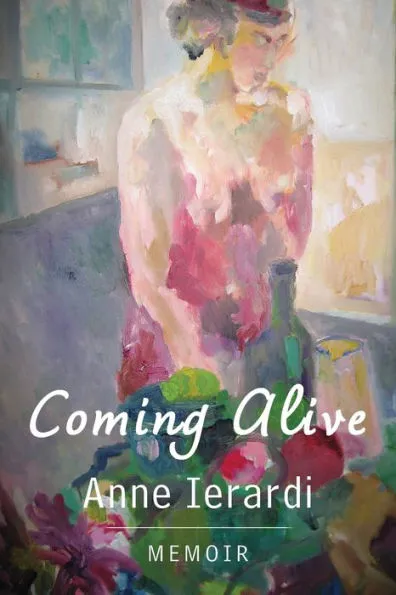
While standing on the seminary altar in Cambridge next to the first ordained Episcopal woman priest, Anne Ierardi was touched by the Spirit with an extraordinary call to ordination. In her inspiring and engaging memoir, Coming Alive, Ierardi writes of her efforts to honor her identity as a Catholic woman while integrating her call to the Protestant ministry. Along the way she invites us into her Italian family, studies art in Italy, and comes out in Boston. She falls in love with a doctor at an astrology party, and together they birth a healing ministry, bringing together people of diverse beliefs and backgrounds. Ierardi recounts her many callings to live as an artist, counselor, and minister while facing challenges in the early days of gay, feminist, and religious change. A story of courage, persistence, and authenticity, Coming Alive will speak to people of all ages and experiences, providing hope and possibilities for living and loving well.

Seeking A Dream Of Unbounding Comfort
Desert Bliss follows an abandoned calico kitten on a journey through the desert to find a better life. What was the inspiration for your story?
Many times, throughout my teaching career, I have worked with children who have had extremely hard lives and very difficult situations to handle. I was inspired to write this story by especially appealing to children who are struggling spiritually/emotionally/physically to persevere, have faith, follow their dreams, and most importantly, to believe in themselves. Also, I wanted to engage peers and adults to be kind and especially attentive of children or creatures needing special love.
What were the morals you were trying to capture while creating your characters?
Bliss, the white coyote in the story, represents a heavenly creature who inspires and gives tremendous love to a lonely little kitten, Calico. Calico is a character who has an extremely hard life, seeking a dream of unbounding comfort, by his brave spirit, on a dangerous journey of the unknown. He perseveres on his mission with the compassionate guidance of his new spiritual friend Bliss. The moral I was trying to capture throughout the story is to always believe in your inner strength, have faith, confidence, and seek positive influences in your life. In the end, by having faith, your goal(s) can be accomplished.
What were some ideas that were important for you to share in this book?
At times, taking a risk to achieve a dream, will be the perfect choice for inward success.
Sometimes, one person may have the incredible ability to make such a difference in someone’s life by simply exhibiting kindness, listening, and showing unconditional love. In otherwards, “Spread love everywhere you go. Let no one come to you without leaving happier.” St. Teresa
What story are you currently in the middle of writing?
I am in the middle of writing a story creating memorable critter characters of the New Mexico region. I really enjoy hiking and getting ideas/themes/characters/plot(s)/etc. by observing nature in the solitude of the outdoors. The beautiful blue sky, desert, and mountain landscapes inspire my soul and mind.
Author Link: Amazon



 LITERARY TITAN