Blog Archives
An Element Of Heart And Emotion

The Wealth of the Great Kingdom is a genre-crossing novel with elements of fantasy, Political Fiction, and romance as well. Did you start writing with this in mind, or did this happen organically as you were writing?
I began writing The Wealth of the Great Kingdom with the idea of creating a novel, not only as a sequel to Manners in the Great Kingdom. A book that would be both fascinating and inspiring. I wanted to write a story that would engage readers on an emotional level and make them think about important themes like power, love and success. I believe I have achieved my goal by creating a novel that crosses genres with elements of fantasy, political fiction and romance. Fantasy stories have always been a favorite of readers because they allow us to escape from reality and immerse ourselves in a world of magic and adventure. Political fiction adds another layer to the story by addressing important themes such as social justice. Romance adds an element of heart and emotion that makes the story even more compelling. I hope that readers will enjoy The Wealth of the Great Kingdom and that it will make them think about important topics in new ways.
What were some of the emotional and moral guidelines you followed when developing your characters?
When developing my characters, I followed several emotional and moral guidelines. First, I wanted my characters to be of different ages and classes. I didn’t want them to be just good or bad, but to have positive qualities.
Second, I wanted my characters to grow and change throughout the story. I didn’t want them to be static figures, but to learn and develop over time. I wanted readers to see how my characters deal with challenges and become successful people.
Third, I wanted my characters to be inspirational. I wanted readers to be able to relate to them and hope to be like them. I wanted my characters to show that it is possible to overcome adversity and achieve something great.
I believe I was able to achieve these goals with my characters.
What were some themes that were important for you to explore in this book?
In this book I explored several topics that are important to me. First, I wanted to explore the theme of Power. How can it be used for good? What should people who have too much power do?
Second, I wanted to explore the theme of love. How can love be found anywhere? What small details can sometimes cause us to lose it? Is it worth waiting for her?
Third, I wanted to explore the theme of success. How to prepare for it? How to find the right people to support us? How can we have patience? How does every work pay off over time? The most important thing when we achieve our dreams is to set new goals so that life has meaning.
I believe these topics are important because they are something we all face in life. They are something that makes us feel alive and connected to each other. I hope this book will help readers think about these topics in new ways and find comfort and inspiration in the characters’ stories.
When will the next book be available? Can you give us an idea of where this book will take readers?
At the beginning of 2024, the Heir to the Dynasty will be published. The new book will take us a thousand years after this story.
Along the banks of the Rhine rises a majestic huge castle. This castle is not on any map and you cannot find a single word about it on the Internet. There lives the Secret World Government – an ancient royal family with a thousand-year history. (see The Wealth of the Great Kingdom and Manners of the Great Kingdom
The king and queen were once young and strong, but now they are getting old and looking for heirs.
Their daughter Nessia, who should inherit the throne, has been traveling the world for 20 years to get to know it, and their son Henry has devoted himself to healing people.
Their grandchildren live the lives of ordinary people and are unaware of their royal ancestry, although they are under constant surveillance.
It’s time for them to begin their training, but first they must prove themselves worthy.
So the king and queen set them up with a series of trials and tasks to test how smart and adaptable they are.
At the end of the story, everyone gathers in the big castle and the hidden secrets are revealed.
And Nessia returns from her travels to become queen and begin to continue the work of her ancestors.
Author Links: LinkedIn | Twitter | Facebook | GoodReads | Website
A Meaningful Internal Journey

Limp Forward shares with readers how you overcame the obstacles in your path, such as having a disability, being a mother, and being a woman in a male-dominated world. Why was it important to share your story with the world?
Sharing my story was essential because our world needs a myriad of diverse voices from underprivileged and underrepresented groups. While I’ve always been a private person, I realized that influencing and adding value to the world meant sharing my experiences, so those who face similar challenges can find hope and inspiration in their pursuit of success. This book aims to connect with readers, making them feel less alone and offering insights into the experiences of being someone with disabilities, an immigrant, a mother, and a woman executive in the tech industry. Although revealing my personal journey meant sacrificing some privacy, I believe the potential impact makes it all worthwhile. After all, the world desperately needs more diverse voices to bring different perspectives and foster understanding.
In your book, you share the good and bad, your low moments, and your greatest achievements. I appreciated the candid nature with which you told your story. What was the hardest thing for you to write about?
When writing the book, I chose to be candid, sharing both the highs and lows, my achievements, and moments of vulnerability. The most challenging part was addressing my battle with depression during a period of my life when I was a pregnant mother juggling a demanding high-tech career. Revealing such personal struggles to the world was intimidating and scary, as I had tried to keep those dark moments to myself. However, I knew that sharing the complete story, both the ups and downs, was crucial. This memoir is not a vanity project; it’s my authentic, honest, and unique voice speaking to the world, with the hope of influencing someone else’s life positively. By baring my soul like an old friend to the reader, I wanted them to live and feel the emotions of my experiences truly. That’s the true power of a memoir—to enable readers to live another person’s life without becoming someone else.
This memoir will outlive me and serve its purpose in reflecting the complexity of human nature through my life. I believe that sharing the struggles and internal battles alongside the achievements is essential, as it unveils the unseen side of every person. Through my story, readers can relate to their own experiences, knowing that beneath external success lies a meaningful internal journey. Acknowledging both sides of the narrative resonates deeply and imparts a powerful message about the significance of understanding our inner selves.
With so much history with your family and the challenges you faced personally to reach your goals, it is awe-inspiring to witness how your determination has paid off. What were some ideas that were important for you to share in this book and highlight to readers?
With a rich family history and personal challenges on the path to my goals, I aimed to emphasize some key ideas in this book. Firstly, knowing oneself clearly is paramount when striving for success—understanding the ‘why’ behind our desires and being willing to make sacrifices to achieve them. Breaking down big goals into smaller steps and persevering until they’re achieved is crucial. The success that emerges from such a journey may not always be externally recognized, but the growth and self-discovery along the way are the most valuable rewards.
What is one thing you hope readers take away from your story?
Ultimately, I hope readers take away a powerful message from my story: to be bold, determined, authentic, and to embrace the fullness of their lives. Living life to the fullest and making the most of the opportunities we have been given is a testament to the strength of the human spirit. By sharing my journey, I aspire to inspire others to overcome their challenges, embrace their uniqueness, and forge ahead with unwavering determination.
Author Links: GoodReads | Twitter | Facebook | Website | libomeyers.com
But just because she’s been successful doesn’t mean it’s been easy. Not by a long shot.
Along the way, Libo has overcome challenges as an immigrant in a new country, a person with a disability, a mother, and a woman in the male-dominated world of technology.
In Limp Forward, Libo boldly shares her story—both the hard and the beautiful—so that you may feel seen, be reminded of your inherent value, and find the strength you need to face your own challenges in life.
Every journey is unique, but Libo’s experiences contain insight that connects us all. Limp Forward is a captivating, unbridled exploration of the truths that guide us and shows what is possible when we pursue our full potential.
The Perfect Setting For Noir

The Loneliest Places follows a private investigator who has everything going against him when he makes a last-ditch effort to change his situation and ends up investigating a brutal cartel. What was the inspiration for the setup of your story?
I was inspired by all the great Los-Angeles-based crime fiction and noir that came before me, and is being written now—everything from Nathaniel West and Raymond Chandler to James Ellroy and Michael Connelly. Initially, my only goal was to insinuate myself into that legacy and hopefully honor it.
Was there a reason why you chose this location as the backdrop for your story?
I love Los Angeles. What shows on the city’s face, often tragically, belies what’s in its heart. That makes it the perfect setting for noir. I knew The Loneliest Places would be set in L.A. even before I knew my detective Ellis Dunaway’s name.
What scene in the book did you have the most fun writing?
The scene where Ellis visits his old friend Kent at the TV studio. Ellis can barely contain his envy and resentment while the mega-successful Kent struts around, humble bragging and grandstanding. Also, the scenes where Ellis talks to Bettina were a lot of fun, because she is so shallow and self-involved, requiring Ellis, again, to try and hide his irritation in the interest of getting hired by her. Writing dialogue that plays against what Ellis is actually feeling is always fun.
Will this novel be the start of a series or are you working on a different story?
The answer to both parts of the question is yes. I just started taking notes for a second Ellis Dunaway novel. And I am currently drafting a couple of stand-alone novels about other characters in the Ellis Dunaway universe.
Author Links: GoodReads | Instagram | Website
His Magnificence And Love Are Neverending

Henri and the Magnificent Snort follows a French bulldog who moves to a new place, and instead of finding friends, he is bullied for his unique snort. What was the inspiration for your story?
The inspiration for Henri and the Magnificent Snort comes from two true stories, one human and one dog.
The first story is my own childhood experiences with bullying when I moved to a new school for middle school. It was such a hard experience for me, and I wanted to create the book to help children and older children (aka adults) who have had life experiences that have caused them to question their own lovability. In the book, I tell my story through the lens of Henri and the other dogs. The things he experiences and the feelings that he feels, all mirror my own life experiences. It is a “dog’s version” of my story. I wanted to illustrate what happened to me using dogs because I felt that it was an approachable and palatable way for kids to understand bullying, and I wanted them to see the innocence and lovability of all of the dogs involved, and thus see their own lovability.
The second true story that inspired this book is the story of Henri. Henri is my former French bulldog. Henri is also a dog celebrity, known as Henri Le Frenchie. (His Instagram account @henrilefrenchie currently has 67K followers and he has been in newspapers, the Huffington Post, magazines, and on TV.) The book captures his uniqueness, his wonderful personality, his loving character, and his magnificent snort. It also follows the real story of his life, which included moving with me from New York City, where I was in graduate school and where he spent his puppyhood, to San Diego, California. You can also see pictures of Henri in the back of the book.
What were some educational aspects that were important for you to include in this children’s book?
I wanted the book to be a fun way for children (and adults) to learn important messages about kindness, belonging, celebrating differences, and self-love. I wanted for people of all ages to close the book feeling touched and uplifted and reminded of their own magnificence and lovability.
I made it a rhyming book to add playfulness and humor, and to make it a joy to read out loud. It has a fun rhythm and it also helps to tickle the brain and get you thinking about what word might come next. The rhymes also helped to shape the story.
There are many themes within Henri and the Magnificent and it provides a groundwork for lots of discussion topics within a classroom or within a family or within friendships. It can be the start of conversations about moving, starting a new school, friendship, bullying, standing up for others, negative and positive self-talk, kindness, inclusivity, celebrating differences, self-image, self-esteem, reaching out to others for help, bravery, expressing yourself, and the importance of being yourself. It gives you a path to explore so many different topics with kids (or adults).
It is also a fun sweet tale of a cute, snorting French bulldog! It can also just be enjoyed as a story, and the messages and good feelings can subtly sink in in the process.
The art in this book is fantastic; readers can really grasp the emotions Henri is feeling. What was the art collaboration process like with illustrator Hannah Farr?
Thank you. I completely agree, illustrator Hannah Farr is extraordinary, and her art is fantastic! All of her art in the book is hand painted acrylic. It is all so special, so high quality, and so different from so much of what I’ve seen as the current trend in so many current children’s books. And she has a way with painting animals that is just magical. She captures their essence. It’s so incredibly beautiful.
Hannah Farr lives in Cornwall, England, and I am in Solana Beach, California, so our collaboration has taken place over the years from 5,353 miles apart! I love that life brought us together even though we live so far away. Our process was very organic. I came up with the story and what I thought I wanted for the illustrations and then we would go back and forth with brainstorming and sketches and tweaking and perfecting. She was beyond wonderful to have on my creative team. I honestly couldn’t have asked for a better illustrator; she was better than perfect. I feel so lucky. It makes me laugh because I’ve been looking through our past messages and seeing the original ideas that I would send her, which are like little labeled bubble figures with ears, and then she would turn them into the beautiful illustrations that exist in the book today.
And beyond her amazing art, she is just such a wonderful person. She is so talented, kind, creative, and so incredibly easy to work with and made it enjoyable. And she was so patient with me as kept adding more and more dogs to the book. (A fun side fact about the book is that almost all of the dogs in it are based on dogs from real life. They are the dogs of family, friends, and Instagram friends. Hannah has four of her own dogs painted in the book as well.) Hannah would even do things like ask me if it was ok for her to take another shot at a painting that I had already told her I liked, just to see if she could do it better. It was mind-blowingly wonderful to work with her. I honestly can’t say enough good things about Hannah.
Will this book be the start of a series, or are you working on a different story?
I have been asked that quite a bit lately! I currently have ideas for future children’s books, as well as ideas for nonfiction writing that I would like to do. We will see what will blossom… But I have no doubts that Henri will be a part of my future writing! He inspired and continues to inspire me in so many ways. His magnificence and love are neverending.
Author Links: GoodReads | Website | Book Instagram | Henri’s Instagram | Facebook
But when his family moves, he is bullied for the first time. Henri is launched on an adventure to learn about himself and the world, and to discover how lovable he truly is.
Equal parts charming and inspiring, readers will delight in and adore Henri and be moved by powerful messages of kindness and respect for all beings.
A heartwarming story for kids and grown-ups alike, with the central message that we are all lovable, SNORTS and all!
Starring Instagram’s famous Frenchie, Henri Le Frenchie (@henrilefrenchie).
Perfect for: kids, adults, dog lovers, Frenchie lovers, and anyone needing reminding that they are magnificent!
http://www.henriandthemagnificentsnort.com
Henri and the Magnificent Snort is inspired by the author’s experiences being bullied in school, mixed with the real life and unique characteristics of Henri, the author’s beloved dog.
This sweetly adorable story… is chock-full of heart, soul, and adventure…Expressed poignantly through simple, rhyming verse, the narrative beautifully conveys the reassuring message that we are all lovable despite our differences. Henri is an endearingly winning protagonist… Children will savor Hannah Farr’s vivid, dynamic illustrations… there is much to keep young readers’ interest. A stunner.
– The Prairies Book Review
[A] children’s book about bullying… Henri and the Magnificent Snort… follows the pup on his journey from shame for his snorting, to self-love and acceptance.
– The San Diego Union Tribune
When Henri is bullied at doggy daycare he discovers something amazing within him: the power to protect himself AND others. Just like in real life, Henri uses the power of love and belonging to keep himself safe and make the world a better place.
– Bubba’s Dad, Author of Bubba Heard an Angel
Cocaine In Her Wedding Dress
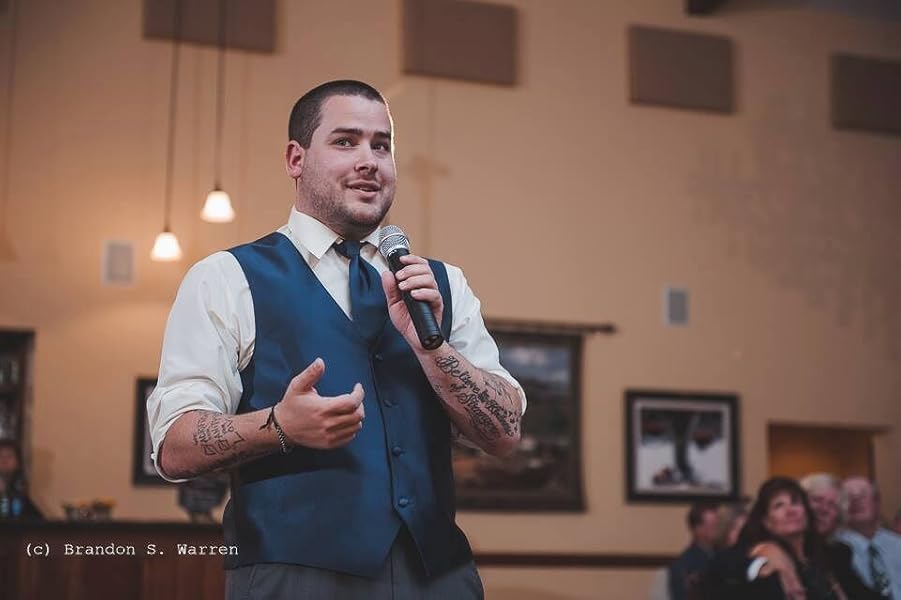
Something Scandalous, Treacherous, and Black follows two people planning to be married who are harboring secrets that could shatter their well-conceived plans. What was the inspiration for the setup of your story?
Honestly, I went to a wedding where the bride did cocaine in her wedding dress, and I was like this would be a great book.
All of the characters are engaging and have memorable qualities. What were some driving ideals behind your character’s development?
I always love the idea of my characters being real people. Alan Heathcock, who wrote the book Volt, said he likes to believe his characters are real people, and he writes down what they do. I just love that people aren’t one hundred percent good or evil.
What were some themes that were important for you to explore in this book?
This book was huge into the concept of second chances. Paige and Leo being the huge aspect of that. I think everyone makes mistakes or timing isn’t right in their lives, so it’s magical when life gives you that second chance at love, a career, or being your true self.
What is the next book that you are working on and when will it be available?
The next book to come out will be The Bitch Cup on 8/3.
Author Links: GoodReads | Twitter | Facebook
The only problem is Paige is still in love with Leo, her college sweetheart, and Joshua has been sleeping with Joey, the best man.
Unknown to the couple, Joey plans to sabotage the wedding because he is in love with Joshua. To further complicate things, Chelsea, their new wedding planner, wants to humiliate Paige to get back at her for their messy past with Leo.
Paige and Joshua are friends; more than that, they are engaged to be married. No, obviously not for love but to find their individual happiness. Joshua needs to marry a woman to keep his inheritance, and in return for entering this loveless marriage, Joshua will pay off the debt that looms over Paige’s parents. It is a win-win! The issue is that betrayal, scandal, and a deadly accident lie below the surface of this simple marriage for convenience.
Where Do Ideas Come From?

id: A Novel follows a psychologist haunted by her father’s past who seeks to discover if humans have a choice over their path in life or if it is predetermined at birth. What was the inspiration for the setup of your story?
I think this is the hardest question. It’s a bit like asking, where do ideas come from? I’ve always been interested in the notion or concept of truth, but more as an abstract concept. What is it, what does it mean and how it can be usurped to have multiple meanings? That it’s almost impossible to understand the truth until we’re able to get inside someone’s head. It may sound a little paranoid, but we’re ambiguous by nature. It’s partly a self-defence mechanism and partly a lack of confidence, but we seldom say what we mean because we never know how it will be taken.
To be really honest with another person is a massive leap of faith and an incredibly brave thing to do. So when you combine that with the idea that opposing forces construct our psyche, I think you have the essence of a really interesting idea.
I’ve always loved the notion that right and wrong are really invented constructs to protect society and dependent on what society believes will determine what constitutes right and wrong behaviour. Imagine if these constructs didn’t exist.
Each of the main characters have a rich backstory and complex personalities fitting for a psychological thriller. What was your writing process to ensure you captured the essence of the characters?
I’m not sure I have a writing process, I just felt that every character deserves more than being painted as a black and white cardboard cut out. Every person we come across in life is neither good nor bad, we’re all shades of grey. Some of us skew towards a different shade, but I think it’s important to understand why we do the things we do before we judge. Take Frank, he’s a total psychopath, but it’s not his fault. He knows he’s different and wants to understand why. It’s important to recognise that he’s not bad, in one sense, as in he’s not acting in a consciously malevolent way that goes against what he believes, more so he’s just doing what comes naturally. Plus I didn’t want single dimensional characters that are there to drive the story, if they don’t have something to add, they don’t get to be in the book.
What were some themes that were important for you to explore in this book, and what questions did you want to leave readers with when they finished the novel?
Truth, understanding, compassion. Plus there’s a lot of biblical references in there. I think the biggest question I’d like to leave readers with is, who am I? If you can self evaluate and understand yourself a little better, I think the world will be a better place. If you know yourself, it means you can change.
What is the next book that you’re working on and when can your fans expect it out?
I’ve got a few ideas. Another is based on similar themes, about truth, what it means etc. But I’m currently working on a comedy. Id was pretty dark and I felt I needed something light to work on. It does still cover some pretty heavy themes, but with humour.
Author Links: Amazon | GoodReads
Dr. Shelly, a brilliant psychologist, forever haunted by her father and his murderous past, is driven by the need to find out why we do the things we do? Is the concept of free will just a concept and nothing more, a construct that blinds us to a less palatable truth, that who we are is predetermined and encoded at birth? Does anyone really choose to do the bad things we do or are we just doing what comes naturally?
Shelly constructs an experiment using a sensory deprivation tank and virtual reality, allowing the darkest part of ourselves, the id, to run free. Unencumbered by morality or remorse, Shelly finds the perfect subject in Adam. A borderline psychotic born into a world of neglect and crime. Delving into the deepest pits of his subconscious, Shelly surfaces with far more than she bargained for.
Detective Hopper, responsible for Adam’s capture, remains a broken man. After suffering a breakdown due to the escalation of his own violent behavior, he is placed under the care of Dr Shelly. Encouraging him to go looking for his own redemption, Hopper becomes a pawn in her web of deception until the lines of reality are redrawn as Hopper and Adam come full circle to an explosive end.
Id: A Novel is a unique, brilliant, psychological thriller which questions and shines light on the depths of the human psyche, the concept of free will, nature or nurture and what drives unacceptable, depraved and even murderous human behaviors. A must-read for fans of psychological thrillers who crave a new, fascinating and intelligent reading experience. Spark’s intricate exploration of the human psyche, combined with his skillful storytelling and innovative ideas, make this novel a true gem that will leave readers questioning the depths of human nature.
Chick Lit Café
Rules Were Jettisoned
The Kiev Confession follows a reporter and survivor of the Chernobyl explosion who work together to expose the truth behind government coverups from the Cold War. What was the inspiration for the setup of your story?
I grew up during the above-ground testing era, when the image of an atom bomb exploding was never far from my mind. At school we held atom bomb drills. I pestered my father—unsuccessfully—to build a bomb shelter. I was transfixed by magazine photographs of fiery mushroom clouds rising to the sky. As fate would have it, when the Soviet Union collapsed, I was working as a reporter in Washington, D.C. One afternoon, I had the chance to talk to a group of Russian citizens from a weapons-production region that had been contaminated by radiation. They had come to America to meet with people living near the Hanford nuclear complex in Washington state, which also was contaminated by radiation. I found it extraordinary that strangers who had spent their lives on opposite sides of the Cold War wanted to meet in person and share the tragedies that had befallen their communities during the nuclear arms race. These experiences inspired the premise for the novel.
One thing that stands out is the historical information you include in this novel, it isn’t just setting the stage, it is a primary focus. How much research did you undertake for this book and how much time did it take to put it all together?
I must confess that I love doing research. I also believe that historical novels should be true to the events and the period they depict. The Kiev side of the story unfolds from 1986 to 1991, before Ukraine became independent. This presented a particular challenge because after 1991 many street names were changed, and Soviet patterns and rules were jettisoned. I interviewed Ukrainians and read Ukrainian-American newspapers from that time period. I read numerous scientific accounts of the Chernobyl disaster, many of them written before 1992. I even found on eBay an official Soviet tour book for Kiev printed in English, which I purchased. For the U.S. side of the story, I tracked hot environmental topics from 1990 to 1991 and delved into declassified Atomic Energy Commission documents. I wrote the first draft of the novel several years ago, then set the project aside. After the war erupted in Ukraine in 2022, I picked up the manuscript again and spent about nine months rewriting and completing the book.
What character did you enjoy writing for? Was there one that was more challenging to write for?
I loved Vasyl. He’s a devoted husband and father trying to do what is right but not always reaping the rewards he deserves. Anatoly was perhaps my favorite character to write. In fact, all the Kiev characters were a joy to write. Given her unique and difficult childhood, Vickie was the most challenging character to write.
What is the next book that you are working on and when will it be available?
I am writing another historical novel. It’s too soon to say when it will be available, but I can promise not to sit on it for years!
Author Links: GoodReads | Twitter | Facebook | Website
Kiev, Ukraine, 1986. Dmitry Marchenko and his sister march with thousands of children in the May Day Parade, unaware that deadly radiation is blanketing the city. Four years later, Dmitry is on a mission to expose the coverup of Chernobyl’s true toll.
Washington, D.C., 1990. Vickie Evans, a reporter and single mom, is struggling to succeed in a competitive newsroom. But when her story on radioactive snow at the South Pole leads to a shocking government secret hidden for three decades, it sets her on a quest for the truth behind her brother’s death.
Dmitry and Vickie risk it all to expose the terrible Cold War secrets that shattered the lives of so many. Their journey reveals the indomitable power of truth to heal and rekindle the human spirit with hope and love.
Other Conservationists Like Me

Volcanic Adventures in Tonga- Species Conservation on Tin Can Island follows your journey to Tonga and your experiences trying to save an endangered bird while experiencing a new culture. Why was it important for you to share your experiences in this book?
I had three important reasons for writing this book. First, I was hoping to familiarize my readers more with Tonga, its people and fascinating culture. This island kingdom is not as well known as other South Pacific destinations and has also received depressive coverage in the news lately following the devastating eruption of the Hunga Ha’apai-Hunga Tonga volcano in 2022. There is much more to these islands and they are worth visiting, either in real or at least from your armchair, while reading my book. They also need help with issues such as drinking water supply, sanitation, and education, and I hope that my book may encourage various government and non-government organisations to invest in providing such assistance.
Second, I aim to bring the reality of conservation work in remote locations closer to readers who may not be aware of either the struggles or the joy such work can bring with it. Many other conservationists like me show remarkable resilience when confronted with different cultures to live in, adverse climates, paucity of fresh food, deteriorating equipment, stinging bugs, illness and the threat of being stuck in a remote place for longer than expected. At the same time, they, too, are often driven by relentless enthusiasm and dedication to their work. Hence, my second aim was not only to rally support for the endangered bird I studied in Tonga but also for the work of all conservationists working under similar conditions worldwide.
My third aim was to stop the nagging of my friends and family. They had told me repeatedly that my stories from Tonga, conveyed in snippets during conversations, must be written down and would make a gripping tale. They also knew that I had my letters from Tonga with detailed accounts that I could base my book on. The final nagging kick came from my PhD supervisor, Prof. Darryl Jones, who declared that my stories had all the adventure, intrigue, romance, discovery and danger you would expect from one of those breathless traveller’s tales from the past, and that a book with all these features, but based on my real escapade to Tonga rather than a tale, would be a compelling read for many. I thank all these people for their prodding and encouragement.
What is your favorite memory of your time in the South Pacific? Also, what is one experience you would have avoided at all costs if you could?
May I pick two favorite memories, please, as I can’t decide? The first one is from a day about three months into our stay on remote Tin Can Island. It relates to the feeling of finally being accepted by the locals, after months of preparations to get to that isolated place and trying to learn the language and local customs. My partner and I had hitched a lift on the trailer of the only working tractor on the island. Every inch of it was filled with firewood, banana leaves, and coconuts as well as baskets full of fish, cooking bananas or root vegetables. The coconuts served as rather uneven seats for the locals, while space was made for us to sit on our backpack barrels. I felt rather jammed in-between so many men and their supplies, but it also felt good. The men were courteous, passed me young coconuts to drink and kept away branches that threatened to hit us in the face. My attempts to hold short dialogues in Tongan language, about the local treat Ofato (a beetle larvae eaten alive) and other delicacies, were received with a big warm smile. One local even commented on how my appearance had changed from ‘small fat’ to more ‘big fat’, which is a nice thing to say in Tonga. I felt like I was just one of them, not just a palangi – a white person – standing outside their culture all the time.
My second favorite memory is that of finally being able to observe the mysterious volcano bird that was the focus of our conservation efforts. This bird is unique in that it uses a volcano as an incubator instead of sitting on its eggs, and it also completely abandons its chicks. I had spent hours sitting in a bird hide, covered in sweat from the high humidity. Finally, a pair of these Tongan megapodes arrived and the female dug a metre or so deep hole into the ground to lay her egg while the male watched from nearby. After they had refilled the burrow and left, the head of a little chick that had hatched from an egg laid 60 days ago, emerged from the burrow. The little guy had dug itself out of its underground volcanic nest and was about to start life all on its own, without any help from its parents. I was so fascinated!
An experience I would have avoided? Becoming sick with a parasite that nobody knew existed in that part of the world. It had become established through a bizarre combination of events, all of which described in my book, and I was so sick towards the end of my stay that the already limited choice of foods was even more limited by what I could digest.
With so many experiences to recount from your 17-month adventure, what were some ideas that were important for you to share in this book?
In our Western society, we talk about mindfulness and living in the moment. Tongans have mastered this skill for a long time and their version is simply “Tongan Time”: don’t worry about the future, enjoy the now, and don’t care too much about punctuality and getting things done in time. But it also means they often don’t pay too much attention to planning ahead. If a cyclone that is known to arrive in Tonga happens to hit on a Sunday, when the shops are closed, that is bad luck. Many locals may not have any supplies left because they did not plan that far ahead. If you, as a white person, are trying to establish when a ferry may leave that you can catch to a remote island, you may, like us, be given three possible answers in apparently random order: In a while, in a little while, or in a long while. Tongan Time!
The second idea encompasses the importance that Tongans place on families, oral traditions, storytelling and respect for elders. In my book, I have tried to bring alive the high value Tongans place on positive social interactions and it may leave my readers pondering about how much this aspect of living is lacking in our lives.
And third, I was hoping to demonstrate that a book can transport you to a world far removed from your own, and that reading such adventure stories will make you feel more grateful again for home comforts of electricity, showers, the internet and books to read.
What is one thing you hope readers take away from your story?
That all of us can achieve far more than we ever imagine!
Author Links: GoodReads | Twitter | Facebook | Website
Are you a traveller with a wanderlust for faraway islands, an enthusiast for Tongan culture, an explorer wanting to learn about a mysterious part of the world, or a lover of exotic birds? This thrilling adventure takes you to far-away places – volcanoes overdue to erupt and coral cays rarely visited by most people.
Have you ever wondered what it’s like to live a simple existence on a remote Pacific Island? To leave the world behind and live in ‘Tongan Time’? Are you intrigued to learn about the mysterious ‘volcano bird’ that buries its eggs and abandons its chicks completely?
Join Ann and her boyfriend on a 17-month escapade on the isolated Tongan islands, where they try to save an endangered bird from extinction while living in a very different culture to their own. Guided by a youthful passion for conservation and authentic cultures, Ann tests her physical and mental stamina when confronted with cyclones, stifling humidity, stinging bugs, little fresh food, illness, and the imminent danger of volcanic eruptions.
This book is likely to leave you grateful for home comforts of electricity, showers, the internet and books to read, or perhaps it will entice you to consider a life changing adventure of your own. You can achieve far more than you ever imagine!



 LITERARY TITAN