Blog Archives
The Hope Not Plot: A Novel of Churchill’s Final Farewell
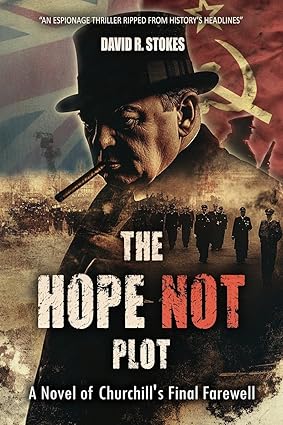

From the very first chapter, The Hope Not Plot swept me into a moment in history that I thought I already understood. But author David R. Stokes brings it to life in a way that feels fresh and immediate. The book opens on the eve of Winston Churchill’s death and quickly builds a riveting narrative that blends fact and fiction with surprising grace. As the British government prepares for the looming farewell of one of its greatest statesmen, the novel introduces a shadowy plot that threatens not only Churchill’s legacy but international stability. It’s part historical drama, part espionage thriller, and part quiet tribute to the man at the center of it all.
The writing is cinematic. Every room, every face, every foggy London street corner is drawn so clearly I could almost hear the hush of the crowd gathered outside Churchill’s home. Stokes has a gift for pacing. The dialogue is believable and loaded with character, whether it’s the gruff authority of Prime Minister Wilson or the nervy conscience of David Ormsby-Gore. There’s also something haunting about how he weaves in the paranoia and geopolitics of the Cold War without turning it into a lecture. It felt smart without being smug. The emotional weight hit me hardest in the quiet moments like Churchill’s final appearance at the window, the whispered memories of wartime sacrifice, the reluctant plotting in smoke-filled rooms.
But what really stayed with me was the central idea behind it all. The way a death, especially a death this big, can send ripples far beyond grief. Stokes plays with that idea masterfully. Churchill becomes not just a man, but a symbol of greatness, of tradition, of defiance, and everyone around him must figure out what to do when that symbol fades. The sense of loss is personal and political, and it made me think a lot about how we handle the passing of giants in our own time.
I’d recommend The Hope Not Plot to anyone who loves historical fiction with teeth. If you’re into John le Carré or Alan Furst, you’ll feel right at home. It’s also a solid pick for readers who want more than just facts, they want the heartbeat behind the headlines. It’s a book that respects history but isn’t afraid to imagine the “what ifs.” Smart, moving, and genuinely thrilling.
Pages: 410 | ASIN : B0FJZYXJL1

JOHAN
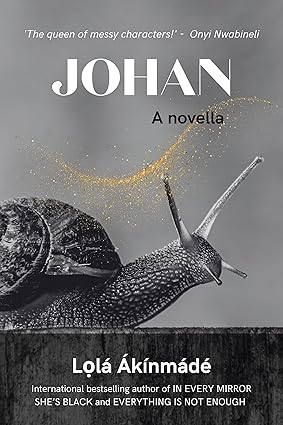
The novel follows Johan von Lundin, heir to a powerful Swedish dynasty, as he grows from a lonely, misunderstood boy into a complicated man whose desires often blur the lines between love, obsession, and control. Spanning decades, the story shows his struggles with privilege, identity, and intimacy, all while he chases Maya Daniels, the Jamaican-British girl who becomes both his anchor and undoing. It’s a portrait of a character both magnetic and unsettling, someone who wants nothing more than to be understood but rarely knows how to bridge the gap between his yearning and the world’s perception of him.
I found myself torn while reading this book. On one hand, the writing is sharp and immersive. The scenes have a way of pulling you in, whether Johan is crushing snails as a boy or running through the streets of London in pursuit of Maya. There’s a precision to the language that makes his world vivid. Yet at the same time, Johan’s mind is not an easy place to sit with. His intensity, his awkward silences, his fixation on control, it made me uncomfortable, but in that way where you can’t look away. It felt like being invited into someone’s private darkness, and part of me didn’t want to stay, but I did anyway.
What struck me most was the way the book makes you feel complicit. I kept questioning myself as I read. Why was I rooting for him in some moments when I knew his choices were troubling? Why did I feel a pang of sympathy for someone who could be manipulative and obsessive? That tension is the book’s strength. It doesn’t give you clean lines between love and possession, between care and harm. The book left me unsettled, even jittery, because it refused to give me the relief of easy answers.
I think this is a book for readers who crave complexity and aren’t afraid of messy characters who make you squirm. If you liked In Every Mirror She’s Black, you’ll appreciate how this novel expands that universe, offering Johan’s point of view in all its raw, often disturbing honesty.
Pages: 158 | ASIN : B0FJMZJ11Q
Dying to Live
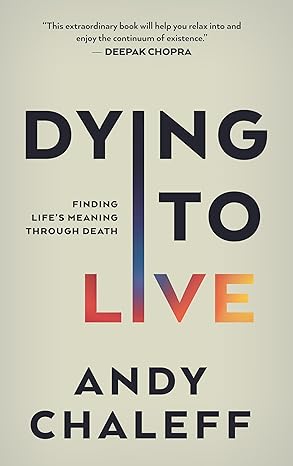
Andy Chaleff’s Dying to Live is part memoir, part meditation, and all heart. With the tone of an honest friend and the vulnerability of someone who’s walked through fire, Chaleff invites readers into an intimate, sometimes raw conversation about death and, maybe more importantly, about how thinking about death helps us actually live. This isn’t a book that preaches answers. Instead, it’s a meandering, deeply personal journey through loss, fear, letting go, and making peace. From the death of a childhood dog to the gut-wrenching loss of his mother, and on through reflections on identity, legacy, and even sex and silence, Chaleff wrestles openly with life’s biggest unknown.
What struck me first was how disarmingly simple and powerful the writing is. Chaleff doesn’t try to impress with fancy language. He speaks like someone who just wants to be understood. He writes about the death of his dog, Apricot, when he was six, and how that loss introduced him to what he calls the “gray zone,” a numbing fog that returns every time grief visits. His ability to recall that moment without filtering it through adult logic gives the story a punch of realness. And when he says, “Buying this toy is just a way to bring a little joy back into your life, not a reward for your grief,” I teared up. It reminded me of how often we try to patch grief with distractions and don’t realize we can feel two things at once, sad and grateful, broken and hopeful.
One of the most impactful chapters, for me, was Chaleff’s account of learning about his mother’s death in a car accident, a moment that irrevocably altered the course of his life. He connects this devastating event to the parable of “The Farmer and the Horse,” suggesting that it is often impossible to immediately discern whether a moment is truly good or bad. That kind of spiritual patience is rare and difficult to cultivate, yet Chaleff communicates it with quiet clarity. It’s this calm, unembellished insight that elevates the book beyond memoir; it becomes something closer to healing.
Another particularly striking section is when Chaleff reflects on the profound shift that occurs after the loss of both parents, the realization that he now stands closest to death. While the subject is inherently somber, his description of sorting through old boxes and choosing to let go of long-kept mementos carries a quiet elegance. “It wasn’t about erasing the past,” he writes, “but making space for the present and future.” That sentiment lingered with me. It prompted me to consider the things I’ve held onto, not out of necessity, but because they anchor a sense of identity. Chaleff’s exploration of detachment is neither rigid nor emotionally distant; it is sincere, deeply personal, and quietly resonant.
Dying to Live is not so much a book about death as it is a meditation on how to live with greater presence and depth. It speaks to those who have experienced profound loss, who find themselves quietly wrestling with mortality in the still hours of the night, and who carry unresolved grief just beneath the surface of daily life. It is especially meaningful for readers who yearn to live more intentionally but may not know where to begin. I would recommend it to anyone prepared to pause, reflect deeply, and perhaps be moved in unexpected and lasting ways.
Pages: 198 | ASIN : B0FKN9P16L
Just the Way I Am: A Sam the School Bus Story
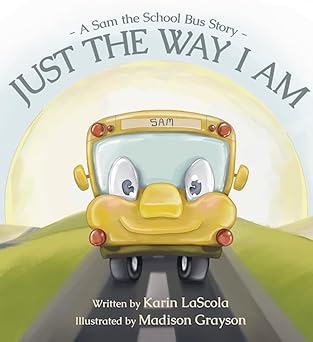
In Just the Way I Am, readers meet Sabrina, a brand-new school bus brimming with anticipation for her very first day on the job. Determined to win the children’s approval, she devises an ambitious plan, each day she will dress in a different theme. One morning, she’s a rockstar, the next a carpenter. By the end of the week, though, Sabrina discovers the truth: trying to reinvent herself daily is exhausting, and ultimately unnecessary. The children don’t admire her costumes, they cherish her for who she truly is.
Sabrina’s nerves mirror the feelings of countless children at the start of a school year. Will she fit in? Will she be liked? Even with her schedule memorized, uncertainty gnaws at her confidence. This gentle parallel captures the universal anxieties of children stepping into new environments.
The core of Sabrina’s journey lies in her belief that she must mold herself into what others expect. She polishes, prepares, and imagines every possible way to impress, only to realize that such efforts deepen her self-doubt. The book delivers a meaningful metaphor: striving too hard to conform often distances us from our authentic selves.
With the warm support of her friends Sam and Gupta, Sabrina learns that friendship does not demand perfection or performance. It blossoms when we are genuine. The message is timeless, reassuring children who may feel pressured to change just to be accepted.
Beyond its moral, the book layers in delightful educational touches. The days of the week appear in vibrant illustrations, while playful rhymes and colorful word art immerse young readers further. Orange for “carpenter,” shimmering blue for “jewel,” these choices create a multisensory experience that reinforces early learning. Parents and caregivers will find Sabrina’s story a natural springboard for conversations about friendship, nerves, and individuality.
Warm, uplifting, and filled with heart, Just the Way I Am resonates with both children and adults. It reminds us all that the truest friendships and deepest confidence emerge not from who we pretend to be, but from embracing who we already are. Whether shared at bedtime or read before the first day of school, Sabrina’s story offers comfort, courage, and joy.
Pages: 48 | ASIN : B0FKSKTRH1
SEVEN BLACKBIRDS
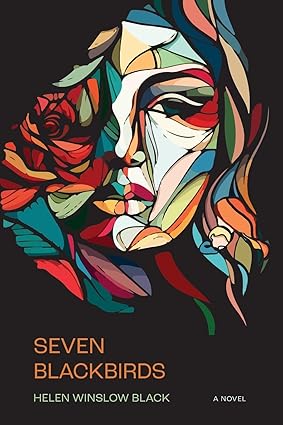

Seven Blackbirds tells the story of Kim, a woman trapped in an abusive marriage, struggling to protect herself and her infant son while trying to reconcile her past hopes with the starkness of her reality. The book moves through moments of violence, fear, and shame, but also into fragile glimpses of self-discovery and resilience. It shifts between memory and present action, weaving together family histories, friendships, and the slow, painful recognition of what love is not. At its heart, it is a book about survival and the small but vital sparks of strength that carry someone through darkness.
The writing is plainspoken, and that’s what makes it sting. There are no flourishes to soften the blows. The scenes of abuse hit hard because they’re described without sensationalism, just matter-of-fact, as if the narrator is bracing herself in silence. At times, I wanted to look away, but I couldn’t. I found myself angry, then sad, then oddly relieved when Kim found small moments of clarity. What struck me most was how the book captured the inner confusion, the push and pull of wanting to believe things will get better, even when the evidence piles up that they won’t. It’s uncomfortable, but it feels real.
Sometimes the pacing slowed in places. I’d get pulled deep into a scene, then taken through passages that felt more like personal notes. But life under control and abuse isn’t tidy. It’s messy, repetitive, and often without resolution. What I admired most was how the book carried its emotional weight without preaching. It didn’t tell me how to feel; it just put me in the room and let me sit there until I had to come up with my own reaction.
By the time I finished, I felt both heavy and grateful. This isn’t an easy book, but it’s an important one. I’d recommend it to readers who want a story that isn’t afraid of discomfort, people who are drawn to voices that speak plainly about pain yet carry a thread of stubborn hope. It would resonate with those interested in women’s stories, in survival, and in the quiet bravery of telling the truth when silence might feel safer.
Pages: 268 | ASIN : B0037UY4U2
The Ruinous Curse: The King’s Ascent

The King’s Ascent is the third book in The Ruinous Curse series and brings Barrett’s long and bruising journey to its peak. With his friends by his side, he faces the final push against Apadora’s curse, the treachery of those he once loved, and the crushing weight of decisions that could end or save entire worlds. The story picks up where the last book left off and wastes no time plunging the companions into the Outerworld, where trust splinters, love is tested, and the line between sacrifice and survival grows thin.
What struck me most while reading was how much darker and heavier this installment felt. The writing carried more bite, more despair, and yet more raw urgency than before. Sometimes that worked brilliantly, especially when Barrett’s doubts mirrored my own unease. I loved how the story kept its momentum, never letting up for long, and the constant clashes and arguments gave the book an energy that pulled me through without pause. I was hooked by the constant turmoil between the characters, particularly the fraught tension with Zanora. Those confrontations sparked with real venom, and I found myself torn between pity and fury every time she opened her mouth.
At the same time, there were moments of beauty that kept me grounded. Gaia’s voice of calm and her warmth gave the book its balance, and the loyalty between the companions, frayed as it was, always pulled me back into caring. I can’t deny the sheer emotion McClain poured into this tale. I caught myself smiling in places and even shaking my head in frustration when Barrett stumbled into old mistakes. That mix of reactions is what made the book feel alive.
The King’s Ascent is a grim, emotional, and fitting conclusion to the saga. It’s a book for readers who crave fantasy that doesn’t shy away from sorrow, who enjoy characters wrestling with their worst selves as much as their enemies, and who want the messy, tangled finish to a story about love, loyalty, and the high cost of leadership. If you’ve made it this far in the series, you’ll be more than pleased with this third entry in the coming-of-age fantasy series.
Pages: 351 | ASIN : B0FC6YKL3C
Tim Rees’ Original Earth: Book One
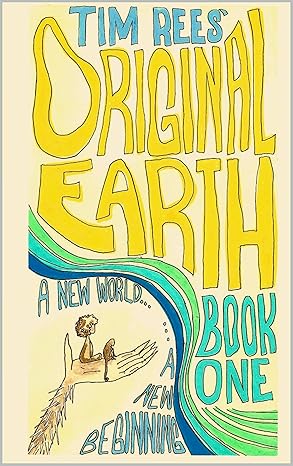
When I opened Tim Rees’ Original Earth: Book One, I expected a familiar survival tale. Instead, I found an emotional journey that runs from the claustrophobic passages of a crippled starship to the harsh beauty of an alien planet. Humanity’s last thousand survivors drift in space for generations before sabotage forces an emergency landing on a world they call Earth 2. Tim Rees explores not just survival, but whether people can truly change when given a second chance. At the heart of it all is Anu, an eight-year-old girl whose honesty and quiet courage cut deeper than the words of most adults.
The opening chapters carried a warmth that drew me in. Anu’s algae-block “strawberry” breakfast was both sweet and heartbreaking, and it showed me how well Rees balances innocence with underlying loss. That sense of comfort didn’t last. The sabotage of the algae vats shattered it in an instant. The frantic scramble to abandon ship, paired with Juno’s ruthless grab for power, made me feel just how fragile their world had always been.
The landing on Earth 2 was one of the most striking sections for me. Rees describes grass beneath bare feet, birds overhead, and the shock of real air with such vividness that I felt the settlers’ exhilaration. Yet he cuts that wonder short with the sudden appearance of a dinosaur-like creature, a jarring reminder that this new world is as dangerous as it is beautiful. Survival becomes grueling, and the endless cycle of hunting, gathering, and securing water presses heavily on every page. Rees captures that grind with a stark honesty that left me uneasy but deeply invested.
For me, Juno’s tightening grip was one of the most unsettling parts of the book. His obsession with water control felt alarmingly real, and it made me think about how fragile any society can be when power rests on basic needs. At the same time, I found myself drawn to Emrys and Onua’s struggle to hold their family together, even as Onua’s injuries dragged them down. What struck me most was Anu’s quiet strength in these chapters. Watching her comfort her brother with a maturity far beyond her years was both moving and painful.
The latter portion of the narrative resonated with me. The pages carried betrayals, losses, and a sliver of hope that felt almost too fragile to hold. Anu’s reflection near the end on what survival truly costs stunned me. It wasn’t neat, and it wasn’t reassuring. Rees doesn’t hand out easy answers. Instead, he leaves us with the harsh truth that humanity has to keep trying, even when the odds feel impossible.
Tender and tense, Tim Rees’ Original Earth: Book One blends discovery, danger, and humanity’s flaws with remarkable honesty. For readers who love survival stories with heart and grit, this book delivers.
Pages: 338 | ASIN : B0DLPGDKQF
What If?
Waiting for Them to Come Back follows a boy growing up in a home filled with abuse and searching for love and comfort, only to be left yearning. Where did the idea for this story come from, and how did it develop over time?
I had thought about ‘what if.’ The question was ‘What if my siblings and I stopped talking to my mother?’ This is where the idea came to be, where I thought about that terrible thought over and over again. And imagined my mother looking out the window, waiting for her children to come home.
I knew I didn’t want a happy ending. I want to show that this is a reality for many people, for whatever reason. Life isn’t full of promises and happiness.
What are some things that you find interesting about the human condition that you think make for great fiction?
I think our selfishness and our ability to hurt one another are both fascinating and terrifying. What makes us human is what makes us inhuman too, for example: stubbornness, where we often learn the lesson the hard way. Pain is often a good place to start a great fiction, too.
What themes were particularly important for you to explore in this book?
Pain is a good theme for this book. Physical pain and emotional pain are what Walter experienced throughout the book. And then It was his mother’s turn.
What is the next book that you are working on, and when will it be available?
I’m working on this sci-fi (which is a departure from my first book, drama) called ‘Revenge In The Hospital.’ Hopefully, it will be available in August 2026.
Author Links: Facebook | Website



 LITERARY TITAN