Blog Archives
The Dryad’s Crown


The story follows Piper, a girl who comes into the world under strange and magical circumstances, a child not born but found. She grows up pulled between care and cruelty, eventually falling under the rule of Dahlia Tulan, a guildmaster feared by all of Penderyn. Piper, renamed Silbrey, learns to fight, to kill, and to survive, carrying with her a mysterious staff that ties her to the forest and the gods. The book traces her journey from abandoned child to trained warrior to wife and mother, weaving in themes of love, power, abuse, and the weight of choices. It’s a tale about what it means to belong, and what it costs to escape.
Reading this book stirred up a mix of emotions. At times, the writing hit me hard with its blunt edges. Scenes of brutality were uncomfortable, but that discomfort made the story feel real. I caught myself holding my breath when Dahlia appeared, because the tension the author created around her was suffocating. The pacing sometimes slowed down with long descriptions, yet I didn’t mind, because it grounded me in the world. The tenderness between Silbrey and Callis was a much-needed counterweight to the violence. Their love felt believable, raw, and fragile. It gave me hope that even people shaped by cruelty can carve out something good.
What I found most striking were the ideas buried under the story. The book isn’t just about fantasy battles or guild politics. It’s about how trauma roots itself in people and how hard it is to pull free. Silbrey’s connection to her staff, to the trees, and the earth, reminded me of the ways we cling to something solid when everything else is crumbling. Hopkins doesn’t hand out easy answers. The gods don’t swoop in to save anyone. Instead, the book suggests that survival itself is sacred, and sometimes love, though messy and imperfect, is the closest thing to grace. That felt honest to me.
The Dryad’s Crown reminded me of Robin Hobb’s Farseer Trilogy with its mix of intimate character struggle, harsh mentorship, and the ache of trying to build a life in a world that feels both cruel and magical. I’d recommend The Dryad’s Crown to readers who like their fantasy with grit and heart, who don’t mind being unsettled along the way. If you’re drawn to characters who bleed, who fight, who love fiercely even while carrying deep scars, then this book will stay with you long after you set it down.
Pages: 569 | ASIN : B0C19R4FM5

An Age-Old Dilemma

Emergence: The Orbit Stone Saga follows a young man recruited into an ancient order of protectors who must learn how to navigate a world of ancient magic, political intrigue, and try to prevent a genocide. What was the inspiration for the setup of your story?
Ottix’ arc was mostly inspired by my own journey into law enforcement. Much as I did, Ottix has a desire to help others, protect the innocent, and make Orbis a better place. His story is not a rags-to-riches tale though. Other characters like Glacea and Armin follow this classic trope. Ottix however, was born into a good family that cared about him and gave him opportunities. I wanted to emphasize that bad situations or upbringings do not always create good characters. Ottix came from an upper-middle class situation and through hard work, ascended further beyond that station. The elements surrounding Ottix such as magic, politics, and genocide were inspired by classic fantasy stories and real history.
I find the world you created in this novel brimming with possibilities. Where did the inspiration for the setting come from, and how did it change as you were writing?
My settings were inspired by a variety of things and places, as Orbis is a large world. I’ll start with Palagr, since it was the first region I developed. Palagr is based on my home, the southeast U.S. I wanted to share the beauty of this area with my readers. The towering pine forests and bountiful marshes are a sight few get to see and one I thought was worth sharing. Next came Mwantamba. At the time I began writing Emergence, my sister was traveling to Africa to study elephants for a college project. I researched the country’s wildlife, cultures, and history. Mwantamba is home to many fantasy creatures based on real ones. The Watu were inspired by Zulu, Maasai, and Swahili. Next came the icy homeland of the Visoibri, Vorigheim. This nation was developed with Iceland in mind. Many ancient Visoibri words are based on old Norse, such as Vorigheim which means “origin home.” I imagine the structures of Towerton to be norse inspired, though the culture relies more on magic than sea raiding as the vikings did. Every story needs a villain, and Emergence’s live in Metusol. The central land of the Azeri has a varied climate. On the west it is arid but has access to the ocean and plenty of trade routes. On the east side it is more temperate with most of the country’s agriculture. I wanted to reflect the Azeri’s split ideologies with this difference. Many of the people in Metusol just want to live a fair and happy life. But the rulers use the citizens for their own gains. My next creation was the Jah’kuls of The Paw. As I created the map, I ended up drawing an island in the southeast that kind of looked like a paw. Later on, I added an entire race, the Jah’kul, to the island. This race was inspired by the Khajit from the Elder Scrolls series. I figured if there are cat-people, why not make dog-people! Next came my favorite group of characters, the Marinites. These creatures were inspired by many things including the Zora from Zelda, Kitt Fisto from Star Wars, and Abe Sapien from Hellboy. I wanted Orbis to be connected by a large ocean, and the Marinites helped complete that goal. The other thing that connects the world is of course, the Orbit Stone ring. The magic ring of stones is the source of all magic on Orbis.
What were some themes that were important for you to explore in this book?
Throughout history there have been many examples of religion or politics creating opposing groups that are pitted against one another. I wanted to incorporate this age-old dilemma into Emergence. I also wanted to explore the themes of duty and loyalty. Characters are often torn between their loyalties to their family or nation and the greater good. I also wanted to explore how magic could be used other than in the traditional sense. The prevalence of magic and Azeri technology makes for a unique setting in which ancient magic and modern technology collide. Finally, I wanted to write about war and peace. Emergence delves into the fragility of peace and the brutal consequences of war, contrasting the ideals of unity and cooperation with the destructive nature of hatred and ambition.
Where does the story go in the next book, and where do you see it going in the future?
The second book, Convergence, will continue the story, focusing more on Razi as the new leader of the paladins. An ancient secret is revealed which changes everything. The truth about what happened to the ancient Visoibri comes to light. And the war against the Azeri rages on and eventually concludes. The second book dives deeper into the relationships between characters and even some romances. The third book, Transcendence, will take place 15 orbits after Convergence, and will focus on the paladin’s new mission after the war.
Author Links: GoodReads | Facebook | Website
The Paladins, an ancient order of protectors, rise up to counter the Azeri threat. Among them is Ottix, a young man recruited into their ranks, determined to fight for his world’s survival. As war erupts across Orbis, the Paladins lose their greatest weapon, and the future of the Republic hangs in the balance.
In the face of impending chaos, the heroes of Orbis must navigate a world of shifting allegiances, ancient magic, and political intrigue. With the stakes higher than ever, it’s unclear who will emerge victorious—and who will be lost forever.
The Orbit Stone Saga 1: Emergence is a high-stakes adult fantasy filled with complex characters, dangerous magic, and a world on the brink of war. Will Ottix rise to the challenge, or will Orbis fall into ruin?
Have Fun With Your Fandom


How to Celebrate Your Fandom is an interactive guidebook structured around 52 activities designed to help fans of any age dive deeper into their chosen fandoms, showing readers that you are never too old to find your passion. What was the inspiration for the original and fascinating idea at the center of the book?
NICHOLAS SEIDLER: We had an experience at a convention, in which we went to a panel on fanzines, and the presenters at the front of the room were talking about how difficult it is to make one. I was honestly totally disappointed in the panel, because doing a fanzine is as simple as writing down your thoughts on a piece of paper, making copies of it, and sharing it with others who are interested in the same topic. The point of entry should be so simple and available to everyone, but the fanzine editor presenters — in an attempt to make themselves a bit self-important – were giving bad advice to the audience. It actually demotivated the new and younger fans in attendance. After that panel, we had a conversation about how we needed to give fans better advice and encourage anyone to be a part of whatever fandom they are interested in!
STEVEN WARREN HILL: Together, we all became friends through our shared interest in several fandoms. We sought to express our enthusiasm for promoting “best practices” among fans by fostering positivity, encouragement, representation, and camaraderie, while rejecting the negative aspects of certain portions of fandom.
LIBBY SHEA: When I was brought into the project, the original idea for the title was “How to Be a SuperFan.” To me, that felt like we were setting a “higher level” of fan, which could very easily be used to separate and discourage those that may already feel excluded. All I could think of is 8-year-old me being told “Oh, you aren’t a superfan because you haven’t done everything in the book” and that set a negative tone for something that we all wanted to be very positive. So, we transitioned away from putting a label on fans to focusing on how to be more involved in what you enjoy. All of us (the authors) have become friends by being in the same fandom and celebrating what made our friendship as strong as it is, is the core of what inspired this book.
ROBERT WARNOCK: We’ve seen too much negativity in fandom over the years. We wanted to write something that was inclusive and non-judgmental, especially if someone was just starting out in their fandom.
What were some ideas that were important for you and the other writers to share in this book, and how did you come up with the activities you suggest?
ROBERT WARNOCK: It was important to keep the activities at the beginning fairly simple, so we didn’t intimidate new fans. We started thinking of activities in a brainstorming session at a convention.
LIBBY SHEA: Because this is a book aimed primarily at kids, teenagers, and those just entering into the fandom space, we really wanted it to be a guide of how to be an overall positive influence in fandom. So often you hear of fans taking it too far and forgetting that everyone they interact with are still people. The activities are there to give you a starting place. We originally came up with over 100 ideas, but wanted to focus on 52, so that you could do one a week for a year and allow yourself to deep dive into your fandom. They are in order from easiest to (our perceived) most difficult to complete. When coming up with our final list of ideas, we tried to keep in mind what it would actually look like for a younger child to complete them. We kept the ideas generic enough so that if you had limited money or resources, you could still have fun and feel like you’re a part of something.
STEVEN WARREN HILL: Coming up with the ideas was a lot of fun. Some of the ideas stemmed from odd things we did ourselves when younger. Once we had a long list of ideas, we grouped them in several different ways (such as by difficulty, and how much we liked each one) and also eliminated the ones that were too similar to others. As Libby said, we decided the final list should number 52, so they could be weekly goals, adding another functional facet to the book.
NICHOLAS SEIDLER: We also realized that fandom was a very broad topic – and we wanted to give advice that applies to them all. Whether someone is a bibliophile, a sci-fi fan, interested in gaming, likes to cheer for a sports team, enjoys horseback riding, music, or whatever, the advice in the book applies to their interests. We chose to select activities that everyone can do, regardless of ability, and they become more complex further into the book, as a person’s fandom and experience grows.
What are some tips you have for older generations that are just now learning to embrace the world of fandom and feel behind the curve from the younger generations, or even like a fraud for not being involved sooner?
LIBBY SHEA: It’s okay that you found your fandom when you did. It’s not about younger or older, and it’s not about how long you’ve been in the fandom. Everyone walks different paths to get to where they are. What matters is how you show up to engage today. Feel safe and confident in the knowledge that you are a fan now and that’s all that matters.
STEVEN WARREN HILL: I used to bristle somewhat at younger people joining the same fandom that I’ve been in for decades, for the usual flawed reasons, until I realized that without young people joining my fandom, the fandom would just keep aging until it died. We need to remember, first and foremost, that if someone says they are a fan of something, then they ARE, even if they enjoy it in a different way. Conversely, for older people who have privately been fans of something and are only just stepping into fandom, my number one tip is to treat all your fellow fans as equals, regardless of anything, especially their age or the extent of their knowledge.
ROBERT WARNOCK: It’s never too late to get started. Your involvement can be as immersive as you want it to be. Be observant early on in your involvement to get a lay of the land, so to speak.
NICHOLAS SEIDLER: Be your authentic self. If you love something, own it – most people will love you for it. It’s our interests and fandoms that make us interesting.
What is one thing that you hope readers take away from How to Celebrate Your Fandom?
LIBBY SHEA: Everyone has to start somewhere. When you finally get to the point of feeling fully immersed in your fandom, embrace others who are just starting out, pass this along to them, and join in their journeys.
ROBERT WARNOCK: That anyone can be involved in whatever fandom they choose, at whatever level they choose.
STEVEN WARREN HILL: That it’s okay to focus on positivity! Not just the positivity of your specific interest, but positivity among your fellow fans and across other fandoms.
NICHOLAS SEIDLER: And have fun. We interviewed over 30 fans from ages 5 to 101 years old (their interviews appear in the book) and that was the advice they each shared with us — have fun! I think that’s what our book is all about.
Author Links: GoodReads | X | Facebook | Website
Fandoms build friendships and communities through many engaging activities. With the help of this book, you can learn new ways to enjoy being a fan. Inside are numerous pathways that one can connect with others with similar pursuits! Whether it is through starting a collection, dressing in cosplay, writing a blog, or attending a convention, each of these brings happiness to those who participate.
This book also contains interviews with fans of all ages (5 to 101), who tell their stories and share how they participate in their hobbies. Celebrate your fandom and the things that you enjoy the most! Fun Things to Do! New Things to Learn! Cool Things to Try!
My Life Story

The book follows Tess, a young woman moving through a world that feels half dream, half reality. From her childhood prayers beneath the stars to her adult wanderings through galleries, cafés, and shadowy streets, she is haunted by questions of love, loss, and meaning. Along the way, she encounters figures like Jules, Samuel, and Sara, each carrying secrets and desires that pull her deeper into a web of longing and reflection. The novel drifts between memory and the present, mixing photography, magic, and fleeting encounters with moments of aching stillness. The story is a meditation on how people search for beauty and truth in a fractured world.
I felt a tug in two directions reading this book. On one hand, the writing is lush and cinematic, clearly born from its origins as a screenplay. Scenes play out like film reels: light shimmering on water, footsteps echoing in an empty church, faces caught in camera flashes. That worked beautifully for me, giving the book a dreamlike quality that made me want to live in its world. On the other hand, the density of description left me craving more dialogue and more movement. Still, the mood was so strong that I let myself get carried by it.
What I really liked was how the novel handles its ideas. It’s not just a story of Tess and Jules or Samuel and Sara, it’s about the ways we carry grief and desire through our lives. The characters often feel like symbols more than flesh-and-blood people, yet that abstraction made the book feel universal. I found myself frustrated at times because Tess keeps drifting, Jules hides behind charm, and Samuel slips away into the shadows. But that frustration mirrored the characters’ own struggles. It left me unsettled, and I liked that.
My Life Story feels like a novel for readers who enjoy atmosphere more than plot, who don’t mind stepping into a story that blurs the lines between memory, fantasy, and reality. I’d recommend it to anyone who loves lyrical writing, who wants a book that feels like cinema on the page, and who doesn’t mind sitting with unanswered questions. It isn’t a fast read, but it’s a rewarding one if you let yourself drift in its tide.
Pages: 128 | ASIN : B0FCCBB2BG
Where’s My Wabby Dabby
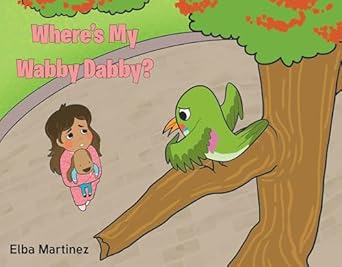

Where’s My Wabby Dabby? is a sweet little tale about a young girl named Ava who adores her father, whom she affectionately calls her “wabby dabby.” One day, her Papa has to leave for a trip to ask “the man on the moon a question,” and Ava, confused and missing him, goes on a playful search around her yard. She asks the bird, the squirrel, the ant, her cat Daisy, and finally her dog Poppy Seed where her wabby dabby went. Each animal has a quirky way of responding, but it’s Poppy Seed who helps her remember what Papa told her, that he’d be back soon. By bedtime, she’s comforted by the thought of her father’s return and his loving words.
I loved how the book captures the world from a child’s point of view. Ava’s questions to the animals felt authentic, innocent, direct, and tinged with longing. I smiled at the scene with Mr. Ant, where Ava lays down on the ground just to talk to him. It’s such a small detail, but it really shows how children see no limits when they’re trying to make sense of their world. The repetition of “he’s my wabby dabby” made the story feel like a chant, almost like something a child would say over and over to reassure themselves.
At the same time, I found the character of Daisy, the cat, especially funny and surprising. Her silly answer about maybe eating Papa actually made me laugh out loud. It added a little spark of humor in the middle of Ava’s sadness, which gave the story a nice balance. Kids would probably love that absurd twist, and I can imagine them giggling as Ava rolls her eyes and walks away. It’s a reminder of how pets often act as comic relief in real family life.
What really stood out most to me, though, was the emotional thread running underneath the playfulness. Ava misses her father deeply, and even though the animals’ answers are silly or confusing, her sadness feels very real. I felt my heart tighten when she clutched her stuffed animal and whispered that her wabby dabby never leaves her. That moment gave the story some weight and made the joyful ending, when Poppy Seed reminds her of Papa’s words, all the more satisfying. It’s simple but it hits an emotional chord.
Where’s My Wabby Dabby? is a tender and whimsical story that would be perfect for young children who enjoy animal characters and a bit of silliness wrapped around a heartfelt message. It’s a story about love, memory, and reassurance, and I think it would be especially comforting for kids who deal with parents being away for work or travel. It made me smile, laugh, and feel a little tug in my chest, and that’s a lovely mix in a children’s book.
Pages: 22 | ASIN : B0F523T67G
Coco Goes Skating
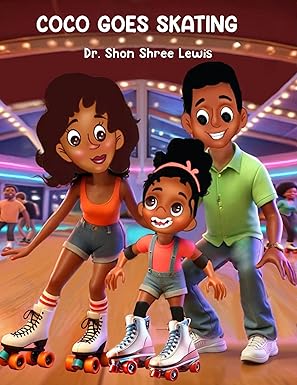
Coco and her mother love spending time together at their neighborhood park. During one of these visits, Coco notices another girl gliding across the pavement on shoes with wheels, roller skates. Curious, she asks her mom about them, and the answer sparks immediate excitement. Watching the girl zip around with ease, Coco longs to try it herself. Before long, her parents are guiding her through her very first skating lesson. Yet, as Coco quickly learns, roller skating isn’t as effortless as it looks. Will she master her balance and discover the joy of rolling forward, or will she decide it’s not for her?
This charming story introduces young readers to the world of roller skating, a sport both playful and challenging. Children unfamiliar with skates get to see what they look like and experience, through Coco’s eyes, what it takes to learn. For adult readers, the book carries a sense of nostalgia, bringing back memories of childhood afternoons spent wobbling on skates before finally gliding with confidence. Dr. Lewis skillfully eases readers into the concept, making the process approachable and fun.
What stood out most, however, was the emphasis on family connection. Coco’s journey is not a solitary one; her parents are right there beside her, patient and encouraging. The story highlights the value of parents and children learning something new together, transforming a simple skill into a memory of love and laughter. The promise of future family outings to the skating rink underscores the author’s message that shared experiences away from screens matter deeply.
The illustrations elevate the story further. Bright, full-page artwork fills every spread, drawing young readers into Coco’s world. Each picture brims with energy and color, perfectly mirroring the excitement and determination of learning something new. These visuals not only engage children but also enrich the narrative for older readers who appreciate the artistry.
Coco Goes Skating is a delightful read-aloud for families and a joyful introduction to roller skating for children. It promotes wellness, celebrates family bonds, and reminds us that learning together creates lasting connections. Engaging, colorful, and heartwarming, it’s a book that will resonate with readers across generations.
Pages: 39 | ASIN : B0FJNQ22LY
The Solomon Archives

The Solomon Archives is a brooding and atmospheric novel that drifts between mystery, theology, and the darker corners of human obsession. At its center is Professor Theo Blake, a man caught between scholarship and the supernatural, as strange rituals and deaths ripple across the Hampshire coast. The story unfolds through storms, ancient myths, secret societies, and whispered histories, all converging on the enigma of the “Archives” and those who would kill or be killed to unlock its secrets. It is a tale of old faiths clashing with modern ambition, where memory, power, and belief are tested against the backdrop of a relentless sea.
The writing often felt cinematic, lush in description, the kind of prose that lingers on weather, shadows, and the quiet weight of ritual. At times, I loved this. The way the author could make a coastline feel haunted, or a sigil scratched into stone, vibrate with meaning. But there were stretches where the detail felt heavy, and I found myself wishing the story would move faster. Still, the patience of the prose paid off in moments when the atmosphere became so thick I felt like I was standing right beside Blake, staring out into a storm. The narrative has a rhythm that mirrors the sea it describes, calm and meditative one moment, violent and unrelenting the next.
What struck me most wasn’t the occult scaffolding of the plot, but the human themes beneath it. Legacy, belief, the seduction of power, these are the real currents of the story. The characters wrestle with faith and doubt, with what it means to guard knowledge or to unleash it. Blake’s quiet, almost reluctant determination gave the story its moral center, while figures like Lucien and Wraxall embodied the dangers of brilliance without humility. I found myself torn between fascination and discomfort, often unsettled by how close the story edged toward relatable tendencies: the hunger for control, the worship of symbols over meaning, the way ritual can both bind and blind.
I felt the novel had less interest in giving me neat answers than in unsettling me, and that was its strength. It left me staring into the dark, thinking about what we inherit and what we choose to unmake. I would recommend The Solomon Archives to readers who enjoy slow-burning mysteries that mix theology with gothic atmosphere, and to anyone who likes their fiction shadowed by questions that can’t be buried again.
Pages: 124 | ASIN: B0FHG1BXH2

Charli’s Pawsome Park: An Architectural Adventure

Charli’s Pawsome Park is about a curious girl who meets a landscape architect and instantly starts wondering what it would be like to design parks herself. The spark grows into a full-blown daydream where she imagines creating a dog park in her town. With her friends, some trial-and-error problem solving, and plenty of imagination, she sketches, models, and pitches her idea to the town council. In the end, her vision comes to life, and she learns that with creativity and teamwork, anything is possible.
I really enjoyed how this children’s book made a big idea like architecture feel fun and doable for kids. The writing has an easy rhythm, and the dialogue feels natural, like real kids talking to each other. I liked that Charli wasn’t perfect. She hit bumps, like realizing bushes blocked views or that a tunnel led dogs straight into a mess. Those little “oops” moments made the story feel alive. It didn’t read like a lecture on STEM. It felt like a playful adventure with just enough detail to spark interest without bogging kids down.
The theme of dreaming big hit me the most. I liked how Charli’s curiosity spun into action, and the story showed the whole process, from idea to fixing mistakes to presenting in front of grown-ups. It felt empowering, like a nudge saying kids’ ideas can matter too. The dog park concept itself was adorable, and the splash pad ending made me smile. The pictures also carried a lot of charm, like a Disney Channel cartoon. They pulled me into Charli’s world and made me want to cheer for her.
I think this picture book is a great pick for kids who love animals, enjoy drawing, or are just curious about how the world is built. It would be a fun read-aloud in classrooms, especially if teachers want to spark interest in STEM without making it feel heavy. Parents who want their kids to see that girls can design big, bold things will find it extra special.
Pages: 91 | ISBN: 978-1-964845-04-3



 LITERARY TITAN