Blog Archives
Merry Christmas Missy Moo


Readers are introduced to Missy Moo, a spirited and lovable cow who carries herself like the star of the farm. Everywhere she goes, she brings a whirl of movement and joy, dancing through her day with the kind of carefree energy that instantly draws young readers in. Her love of dancing isn’t just a hobby, it’s who she is. But one snowy afternoon, as she twirls along a snowy path, her enthusiasm gets the better of her. She slips, tumbles, and becomes buried in the cold, fluffy snow. Startled and disappointed, Missy Moo realizes that she simply can’t dance her way through winter without something to keep her safe and warm. Mittens, she decides, might be exactly what she needs.
Worried that she won’t make it to town in time to buy presents for her friends, she begins to lose hope. That’s when Mr. Cat arrives, offering both comfort and assistance. His kindness sets off a chain reaction across the farm. One by one, the animals rally together, determined to help Missy Moo regain her snowy-day confidence. Their teamwork results in a pair of handmade mittens created with care, and, in the sheep’s case, a generous donation of wool that leaves them humorously bare.
When Missy Moo slips on her new mittens, her spirits soar. She can finally dance again, freely, joyfully, and without fear of falling. The simple gift restores not only her confidence but also her holiday cheer.
Merry Christmas, Missy Moo is a warm, charming Christmas tale that celebrates friendship, generosity, and the magic of helping one another. Missy Moo’s playful personality makes her a wonderfully relatable character for young readers, while the lively illustrations add humor and heart to every page. It’s a delightful story that encourages kindness and highlights the joy found in giving.
Pages: 48 | ASIN : B0FYC4VQF5

For Cause
In Kansas City, truth used to be simple… facts, evidence, justice. But attorney Josephina Jillian Jones… 3J… is about to learn that in a world of deepfakes, even reality can be weaponized. When Paxton Energy files for Chapter 11, 3J expects a brutal legal brawl with a powerful bank group. What she doesn’t expect… is betrayal captured on video. A damning confession from CEO Remmy Paxton… clear, crisp, and devastating. There’s only one problem. He swears… it isn’t real. As the banks tighten their grip and a crooked Wichita banker pulls strings from the shadows, the judge gives 3J twenty days to prove the impossible: that the truth is a lie. Her only hope lies with a digital forensics prodigy, who now works for Robbie McFadden, the Irish mobster who rules Kansas City’s underworld with charm, menace, and a new business model: manipulating reality itself. From urban courtrooms to the windswept oil fields of northwest Oklahoma, 3J, her mentor Bill Pascale, and investigator Ronnie Steele race to unravel a conspiracy where corruption runs deep… and the wrong move could cost far more than a case. This time, justice has competition. Coming in early 2026.
Nurse Florence®, What is Sickle Cell Disease or Sickle Cell Anemia?

Nurse Florence: What Is Sickle Cell Disease or Sickle Cell Anemia? offers a clear and structured introduction to a complex medical condition, presented through a narrative designed for young readers. The book follows a student named Condi, who seeks information from her school nurse after learning that her baby cousin has been diagnosed with sickle cell disease. Through their conversation, the book walks through the genetics, symptoms, complications, diagnostic methods, and treatments associated with the illness. The format blends accessible storytelling with straightforward explanations, resulting in an educational resource that feels both purposeful and sincere.
As I read, I appreciated the author’s commitment to clarity. The explanations are direct, and the writing avoids ambiguity. When Nurse Florence notes that sickled red blood cells survive “10 to 20 days instead of 120 days,” the significance of that difference becomes immediately apparent, even for a younger audience. Condi’s questions, such as when she asks if she can be tested for the gene, lend the dialogue an authenticity that makes the information easier to absorb. The tone remains calm and reassuring, which supports the book’s mission to educate without overwhelming its readers.
I was also struck by the book’s willingness to address serious complications with precision. Topics such as acute chest syndrome, stroke symptoms, gallstones, and avascular necrosis are presented plainly, without sensationalism. When Nurse Florence explains that stroke symptoms can include paralysis on one side of the face or body, I found the frankness notable for a children’s text. Rather than feeling out of place, these details reflect a respect for young readers and an understanding that many families affected by sickle cell disease must confront these realities directly.
Recommendations regarding hydration, nutrition, avoidance of extreme temperatures, physical activity, and preventive care offer a sense of agency. I found the emphasis on emotional and community support, such as speaking with a therapist or joining support groups, especially meaningful. These sections remind the reader that living with sickle cell disease extends beyond medical management; it also involves fostering resilience and connection.
When Condi eagerly shares what she has learned with her mother, the book leaves the reader with a sense of empowerment and understanding. It reinforces the idea that knowledge can help reduce fear and encourage informed conversations within families.
I would recommend Nurse Florence®, What is Sickle Cell Disease or Sickle Cell Anemia? to elementary and middle school students, parents seeking to build health literacy, educators looking for accurate medical explanations, and even adults who want a concise overview of sickle cell disease. Its blend of approachable narrative and well-organized information makes it a valuable resource for a wide audience interested in understanding this condition.
Obesseus Feasts Of Legends (The Slam-Fu Edition 1)
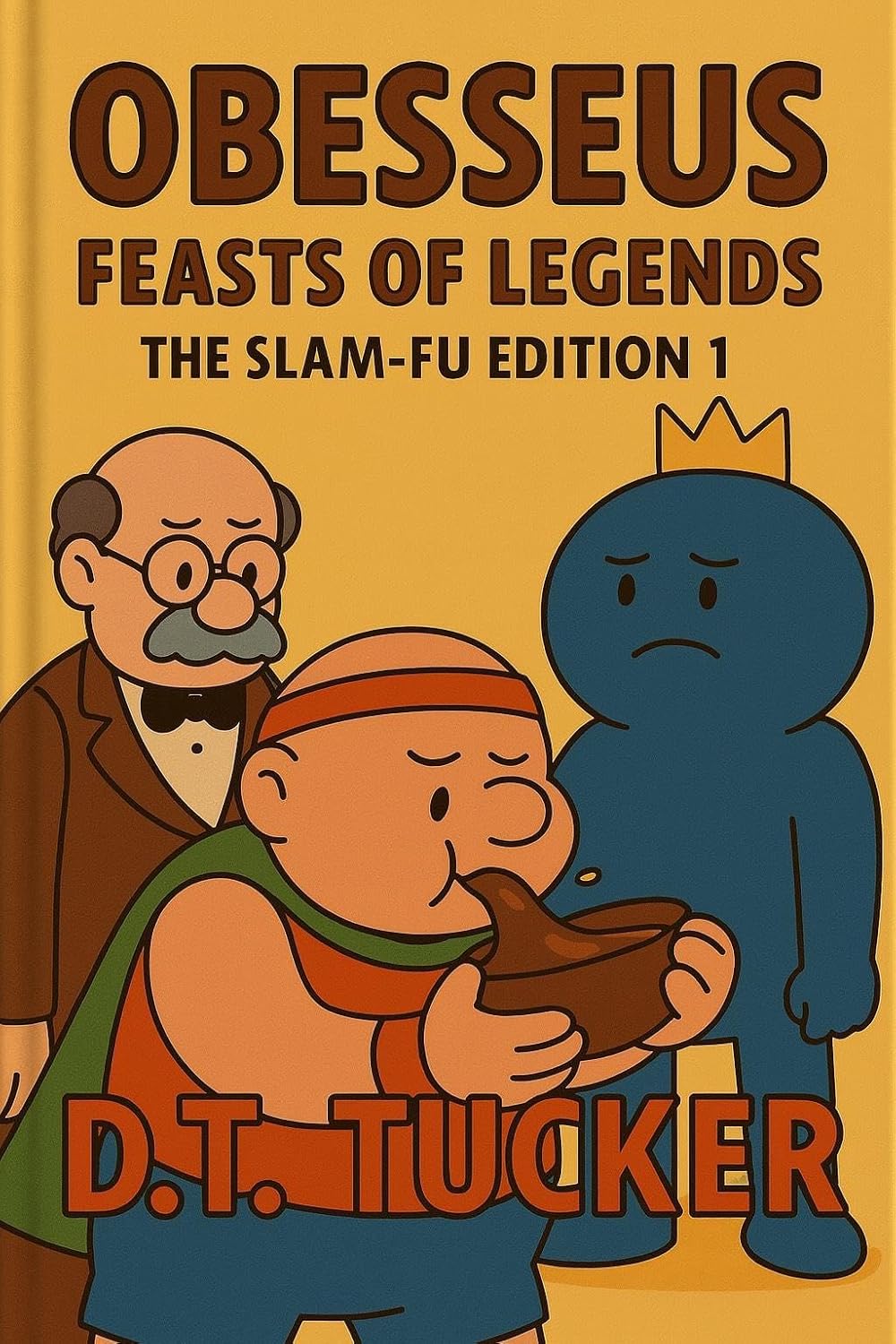

I just finished Obesseus Feast of Legends, and what a wild ride. This book tells the story of Obesseus. He is a hero. His belly is big. His heart is bigger. He just wants to eat dumplings. A former friend, Monica Mango, starts a war. She leads the “Juice Regime.” She hates solid food. Obesseus must fight. He learns a power called Slam-Fu. The book follows his journey. He defends the world of Buffetland. It is a huge, sprawling, absolutely massive food fight.
The writing is a total trip. Sentences are short. Sometimes just one word. Then a long, rambling thought. Things are yelled in capital letters. It felt less like reading a novel and more like reading a script. A script for the most frantic cartoon ever. The sheer number of ideas is surprising. The author just throws everything at the wall. And honestly? I loved watching it stick. It was a blast.
I really connected with the ideas here. The book is not just about food puns. It’s about big feelings. Obesseus himself is pure joy. He represents indulgence. He fights against control. The villains are great. They are juice-cleanse tyrants and asparagus-god dictators. I felt a lot for the side characters. Conflicted Tomato was my favorite. He just wants to know where he belongs. What a mood. I will say the plot gets messy. Part 1 was simple. Part 3 was just bananas. New characters kept appearing. Muffin Ninjas. Sinister Shrimp. A gaslighting grapefruit named Grant. It was a lot.
I am genuinely happy I read this. It is a messy, chaotic, and wonderful book. Do not read this if you want a quiet, serious story. This is not that. This book is loud. This book is strange. This book is wacky. I would recommend this to anyone with a wild imagination. It’s for people who grew up on hyperactive cartoons. It’s for anyone who just wants to see a hero win. A hero who wins with a full belly and a good burp.
Pages: 262 | ASIN : B0FZD69XD4
Into The Arms

From the very first page, Into the Arms throws you straight into the storm. This isn’t a story told, it’s lived. We follow Rei, a girl clawing through her youth with an aching heart and sharp eyes, struggling to understand love, shame, and survival in a world that often turns its back on innocence. Author Angelica Lamb’s novel is part memoir, part emotional reckoning, a raw and lyrical unraveling of trauma, told through flashbacks, poetic fragments, and brutal honesty. We’re led from Rei’s early days at a cold Catholic boarding school through a series of shattering, formative experiences into womanhood. What holds it all together is a quiet inner light, dimmed but never out. The writing itself is jagged, unfiltered, emotionally dense, and it works.
Angelica Lamb doesn’t give you time to warm up or settle in. You’re tossed into Rei’s mind. Her pain, her longing, her awkward, tender, and often horrifying moments, every one of them slices through you. Some scenes, especially with Rei’s father or the grotesque acts at boarding school, made me physically squirm. And yet I couldn’t stop. The writing is wild. Sentences swerve, thoughts bleed into each other, and punctuation comes second to rhythm. It reads more like memory than fiction, fragmented, dreamlike, vivid. Lamb’s greatest gift might be how she makes trauma feel both intensely personal and alarmingly universal. I saw my younger self in Rei more times than I care to admit.
There’s barely a plot in the traditional sense, but the emotional thread? Oh, it’s there. It pulls you under and doesn’t let go. I loved the way Lamb lets Rei be a contradiction. Sweet and angry. Lost and wise. Scarred and still somehow soft. Her journey is filled with abuse, abandonment, awakening, and through it all, this persistent, haunting whisper: “You are love.”
If you’ve ever felt silenced, if you’ve questioned your worth, or carried shame that didn’t belong to you, then Into the Arms might just feel like someone seeing you. I’d recommend it to women healing from emotional or sexual trauma, to lovers of poetic memoir, and to those who find power in pain. It’s a hard read. A beautiful one. And one I won’t forget.
Pages: 416 | ISBN : 1036966186
Courage Is Contagious

Dusty Roads is the biography of Barbara “Dusty” Roads, a flight attendant who challenged the airline industry’s sexist standards in the 1950s and ’60s and became one of the first female lobbyists fighting for women and against gender discrimination. Why was this an important book for you to write?
While a few books on the women’s movement mentioned one or two of Dusty’s major achievements, they rarely captured the depth or accuracy her story deserved. One book dedicated an entire chapter to Dusty and her colleague and mentor, Nancy Collins. Still, even that left out the most important part: Dusty made it her lifelong mission to fight for her fellow flight attendants. I couldn’t believe no one had suggested writing her biography to preserve her legacy. When I asked if I could write it, she said, “I’ve just been waiting for someone to ask!”
Dusty was fearless. She confronted union leaders, challenged pay disparities between men and women, and fought the airline industry’s discriminatory rules about age, marriage, weight, and appearance. Her persistence helped overturn many regulations that had held women back in the 50s and 60s and beyond. Whether negotiating contracts or lobbying Congress members, she never stopped advocating for her colleagues.
I began writing this book to honor Dusty’s accomplishments for both female and male flight attendants and to make sure her legacy isn’t forgotten. I knew I had a compelling story the moment I saw Dusty thank Gloria Steinem, and she replied, “Oh no, Dusty, I should be thanking you. You’re the one who started it all.” Dusty cried afterward, finally understanding the true significance of her impact. At that moment, I knew I had to write this book. I was the only one who knew her well enough to collect all her stories, and I didn’t want this part of airline and American history to disappear.
What were some ideas that were important for you to share in this book?
One key idea I wanted to communicate is that persistence really matters. Dusty’s story shows how one determined woman can challenge deep-seated misogyny and transform an entire industry. I also wanted to help readers see that real progress often starts with ordinary people refusing to accept injustice—and that lasting change requires both women and men standing together. I hope Dusty’s legacy inspires others to keep moving forward because the fight for equality continues.
Did you find anything in your research of this story that surprised you?
Yes! One of the most profound discoveries was learning about Sonia Pressman Fuentes, the first female legal counsel at the Equal Employment Opportunity Commission after Title VII passed. Through JSTOR, I uncovered her articles describing the misogyny she witnessed at the EEOC, including the delays in addressing discrimination complaints from flight attendants. The most startling fact was that nearly one-third of all complaints in the EEOC’s first year came from flight attendants—yet most were ignored by the male commissioners, except for Aileen Hernandez, the only woman and the first Black commissioner. That neglect is what prompted Betty Friedan to propose creating the National Organization for Women, an organization I joined in 1970.
When I found Sonia’s phone number, she generously shared her story with me. She knew that two flight attendants had filed the first EEOC complaint but didn’t realize it was Dusty and Jean. Sonia and Dusty had never met, yet both had spent their careers fighting similar injustices from different angles—one through law and the other through labor. One Christmas, I brought them together on a Zoom call, breaking their “six degrees of separation.” Watching them finally meet was a deeply moving reminder of how many women worked, often unknowingly, in parallel to change history.
What is one thing that you hope readers take away from Dusty Roads?
I hope readers finish this book feeling confident in their own strength and understanding that knowing their rights is the first step in fighting injustice. Dusty showed me that progress isn’t automatic. It moves in cycles, and each generation must learn what those before them endured and achieved so we never forget how far we’ve come or how much further we still need to go.
She understood that the true goal has always been fairness, especially in a world that too often relegates women to second-class status. Her legacy is a reminder that courage is contagious and that every act of standing up for equality lights the way for others.
Author Links: X | Facebook | Instagram | LinkedIn | Website
If you are concerned about the impact of politics on women …
Dusty Roads will be a wake-up call for you.
Meet Dusty Roads, one of the few brave voices way out in the wilderness, where women worked in the world of the 1950s and 60s, when it was mandatory for stewardesses to:
Wear girdles and submit to flick checks to ensure they did.
Maintain weight standards that would be shocking and unrealistic today.
Be willing to be paid less than men in the same job.
Phrases like sex discriminationand women’s rights hadn’t yet entered the nation’s vocabulary.
The captivating story of Barbara “Dusty” Roads sets the stage for an eye-opening read as Dusty begins her fight in 1953 against American Airlines’ employment policies, including firing stewardesses if they married or reached the age of 32. Airline leadership believed stewardesses had to be perpetually young, single, and attractive to entice traveling businessmen to buy tickets. Other airlines followed American’s lead.
Incensed, Dusty vowed to change the policies they were forced to work under. As the most influential voice in her union and one of the first female lobbyists in Washington, DC, Dusty quickly learned she was fighting for all women and against national gender discrimination. Then, in 1965, she filed the first-ever U.S. Equal Employment Opportunity Commission discrimination complaint on behalf of a colleague who was about to be fired for turning 32, a year after Title VII and the Civil Rights Act were passed. Her actions helped to pave the way for workplace equality for both men and women in the airline industry and nationwide.
“I should be thanking you for everything you’ve done. You’re the one who started it all!” -Gloria Steinem.
Author Elaine Rock drew on extensive interviews with Dusty Roads to bring her inspiring persistence alive for readers. Elaine is a former history teacher, technology executive, and women’s rights advocate. She writes about little-known but heroic women and men whose perseverance and resilience helped shape history, making them trailblazers. To view the color print versions of photographs and other bonus materials from her book on her website, please go to the link on the “Contact” page at ElaineRock.com.
An Important Lesson

The Case Against Jasper is an allegorical mystery where a farm’s rush to judgment after a tragic accident exposes how communities distort truth when fear takes hold. What inspired you to explore human justice and mob mentality through the lens of animal characters?
The book was born out of a rush to judgement on my daughter’s part, who is age seven and arguing with her five-year-old brother and gossiping about him with her friends in the neighborhood. In order to teach both of them an important lesson, I created this theme about Jasper the squirrel and his endeavors. The story is a way to connect with them and give them an example that rushing to judgement and gossiping can have detrimental effects. Then enter Ink and Fiona, who represent intellect. Before rushing to judgment, look at the situation, study it and come to a conclusion. Ink and Fiona represented the internal intellect to look at things from all sides, test theories, and make decisions on the results. I liked the story so much that I decided to write the book.
Did you model any of the farm’s characters, like Ink or Fiona, after real people or archetypes?
Regarding real people, not really. The name Fiona is my mother’s name, so I used it in that way. Archetypes, absolutely. Jasper represents the scapegoat and those that are misunderstood. Jenny is the catalyst for the story. Others, like the group of squirrels, rabbits, etc., represent the mob. The hens, they are the hypocrites.
How did you balance the fable-like simplicity of the narrative with the weight of its moral themes?
By writing Jasper with a leaning towards gentle naivety, I allow the reader to experience injustice through the innocent eyes of Jasper. Although Jasper never fully comprehends the malice directed at him, he definitely feels it. It is this emotional honesty that preserves the purity of the fable while allowing readers to impose their own interpretations of guilt, grief, and alienation.
I think the ending leans toward restoration rather than punishment. What message did you hope readers would take from that choice?
Take any classic fable, and they typically end with punishment: the liar is caught, the greedy are undone, and the cruel are devoured by their own cruelty. Yet, The Case Against Jasper is written to break that cycle because the true tragedy of the story is born from misunderstanding, not malice. Jasper, as it turns out, never commits a crime. The crime is the community’s judgment itself. To punish would affirm the same broken logic that condemned him and would fall in line with classic fables. The stories’ true resolution must come from recognition and reparation, not vengeance.
Author Links: GoodReads
As rumors tangle like briars, a chorus of barnyard witnesses steps forward—some earnest, some opportunistic, all convinced they know what happened. Unreliable testimonies pile high: a jealous hen with a glint for shiny narratives, a rabbit fond of order and outrage, and a skittish mouse who “saw something.” With the farm on edge and a tribunal brewing, Jasper must prove his innocence before the story hardens into a sentence.
Enter Ink, the investigative ferret with a nose for hidden threads, and Fiona, the whisper cat whose quiet intuition hears what pride and fear try to bury. Together, they sift through half-truths and harvest-time politics to uncover what grief looks like when it’s weaponized—and what justice requires when the crowd wants a culprit.
Balancing Psychological Realism with Supernatural Metaphor
Purgatory follows a woman on the edge of sanity as she flees her past and finds herself trapped in a place where empathy is a curse, and redemption comes at the cost of self. What inspired you to frame Purgatory within the context of the UK’s Mental Health Act?
My own life inspired me to frame Purgatory within the context of the Mental Health Act. In 2017 I was sectioned and experienced what life was like in psychiatric hospitals first hand. When I got well I worked in mental health facilities for CAMHS patients aged between 12-17 it was important for me to work with this age group as I had my own struggles at this age and I wanted to be the person that I needed for the patients that I had the pleasure of supporting during their healing and rehabilitation. Two years ago I qualified as an intuitive life coach mainly focusing on helping people overcome trauma as a result of abuse, again something I knew too well, but I have always refused to let my pain from my past hold me back. Instead I chose to turn my pain into power and help as many people as I can. Mental health has played a big part in not just my own life but the lives of my family as well. So I know how difficult it is to access the right care and I know what happens when you don’t receive the right care or worse no care at all. It was always important to me to write about something that I have a good understanding of but something that genuinely means something to me and so many other people. It is so important for people to resonate so they know they are not alone and that is why I didn’t glamorise any parts of mental health in Purgatory, the truth is mental health is painful, disturbing and uncomfortable but if we keep being honest it will become less uncomfortable eventually make it easier to recover from.
The world of Blackthorn Palace feels both real and dreamlike. How did you balance psychological realism with supernatural metaphor?
Balancing psychological realism with supernatural metaphor was something that came easy to me. I have always had a love for magic, myth and supernatural. I would often remove myself from anything that was causing me pain and try and get lost in a good book or scary film to take my mind off what was going on in real life. I found comfort in other worlds that writers created and was fascinated about what a life after this one could be like. I felt alone throughout most of my life so when I discovered characters that had interest in things I liked or was able to learn more about the history associated with the supernatural it made me feel safe in a way that nothing else could. I was always going to combine my love and fascination with the human mind and spiritual world and hopefully one day Purgatory can be someones comfort.
What were some themes that were important for you to explore in this book?
The themes that were most important for me to explore in my book were the abuse themes and the affect it has on not just the person who is trying to navigate life after being abused and living with the trauma of it, but the people in their lives that are affected by it also, abuse has ripple effect on so many peoples lives even strangers who hear about someone being abused are affected by it. It was important that I made sure the parts of Purgatory that discussed abuse was done with raw honesty and no shame attached, Purgatory is the story of Rose Blackthorn and her journey into Purgatory, but it is also my own story and the story of many others so it would be an injustice not to write about abuse with the truth that every person who has survived abuse or still going through it deserves. I want it to give people strength and courage to speak out or recognise that what they might believe is normal is not.
What is the next book that you are working on, and when will it be available?
Purgatory-The Palace was the first book in the Purgatory Trilogy. The second book Purgatory-The Tasks and the third book Purgatory-The Final Battle are both available on Amazon. I would love to revisit all the characters I created in Purgatory again one day, but at the moment I have stepped away from fantasy worlds, I am currently working on a new bittersweet novel of a mother, a daughter, a widow, and a desperate sister.



 LITERARY TITAN