Blog Archives
The Business Artist: A Human Approach to Sales, Storytelling, and Creativity in a Data-Driven World
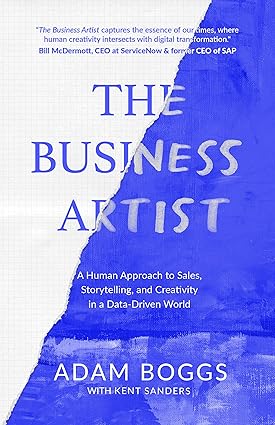

The Business Artist challenges readers to critically examine the modern business landscape, particularly the growing role of technology and data. Adam Boggs offers a timely analysis of how business has shifted from a human-centered approach to one dominated by algorithms and efficiency metrics. By weaving together historical context, personal experiences, and contemporary trends, he paints a compelling picture of how we’ve arrived at this era of impersonal business models. This book dares readers to question long-held beliefs and consider a broader historical perspective.
Boggs blends personal anecdotes with broad business analysis, reflecting on the corporate world’s transformation into a data-driven, impersonal space. His writing is both accessible and insightful, presented with a conversational tone that makes even complex concepts relatable. Through personal stories, like his experience with the Chally test, Boggs brings authenticity and a human touch to his narrative. These anecdotes help readers empathize with his broader critiques, particularly on the increasing detachment of modern business decision-making from personal connection. The depth of research and effort Boggs invested in this book is evident. He frames ideas in a unique way, such as describing technology as the “story of business,” which enriches the reader’s understanding of modern commerce. His in-depth discussions of various aspects of business and technology are engaging and thought-provoking, prompting important questions about creativity, human interaction, and the future of work. Particularly striking is his argument that while technology and data are crucial tools, they should never replace the human element in business. This book makes a powerful case for why companies must retain a sense of artistry—creativity, adaptability, and personal engagement—if they are to succeed in today’s corporate world.
The Business Artist is a bold and slightly controversial take on contemporary business, especially in a society so focused on “technologizing” everything. Boggs skillfully blends personal experience, historical insight, and modern analysis, creating a compelling read for anyone interested in understanding the current state of business and reflecting on its future.
Pages: 242 | ASIN : B0CW1BPJ9M

Embrace Uncertainty

The Business Artist challenges the conventional data-driven business model, advocating for creativity, intuition, and human connection as the true drivers of innovation and success. What inspired you to write this book?
It was Spring of 2019. I had just completed a series of workshops and sales enablement sessions as part of my client’s annual sales kickoff events. I was discussing with my colleague, Kyle Dean at BTS how fortunate we were to be invited back year after year by some of these clients. This led to what I started calling the “arrows in the quiver” problem.
“Kyle, imagine all these skills we’ve trained you on represent arrows in your quiver. I load you up with all the acumen you need – customer acumen, industry acumen, product acumen, financial and business acumen. You’ve got all these arrows, but when you go out to the customer battlefield, do you know which one to fire and when, how, and why to adjust each time?”
This realization brought guilt. Had we just loaded sellers with new arrows each year, or had we truly prepared them for battle? More importantly, is all skills training about following a repeatable, data-driven process from some consulting or training framework, when what we really needed was to learn adaptability, creativity, and improvisation with those skills.
I needed to learn for myself – is there a way to teach the “artistry” of sales, and if so, how? Speaking with several sales leaders, I started to understand that you need both: process and creativity. Knowledge of the process, and the “permission” and ability to be creative. Thus, the term “The Business Artist” was born.
Once I started using that term and unpacking its meaning, I became obsessed with understanding if it was just salespeople or a broader group of us that had over-rotated away from the creative processes that make us human. Observing sellers and business leaders across my career in some amazing Fortune 500 companies, I realized that those who consciously and intentionally saw the world through an artistic lens followed a pattern. Their creative approach wasn’t about ensuring the repeatability of the process but ensuring the repeatability of success.
I have to give credit to Neil G. McGowan, who was VP, Global Sales at NetApp at the time and is now the CRO at Hitachi Vantara. An unorthodox, creative mind and leader, his team loved him. When discussing my book, he and I went off on a tangent about music, and he was the first to say to me, “Adam, selling is like jazz.”
“You have to learn all the scales, but when you stand up in front of an audience, they don’t want you to play from the sheets. You need to read the room, listen to the vibe, and feel where to take the melody next” Of course, there are still rules and processes, just like in business, but there is improvisation, experimentation, and creativity, just like in art.
How did your background in business and the arts shape your concept of the “business artist,” and what was the turning point that led you to develop this philosophy?
Growing up – I always enjoyed musical theater, comedy shows, and jazz music. There was something organic and live about their performances. That one would never be quite like the other. In studying music theory, I realized there is a very scientific method or in a sense constraints for creativity – but then you can at times break those rules and achieve something new and different. In business, as a consultant, I felt I was part of the problem of trying to optimize human performance through a scientific method, but in reality the most successful business people I encountered were constantly improvising and flexing their style to the situation. As I looked around my personal network outside of business, all my friends I realized are creative and artistic in some way – seeing the fullfilment they all enjoyed from their creative and artistic styles, it occurred to me the same sense of creative fullfillment can be realized in business where we often see business and art as separate passions.
Are there any current companies or industries you believe embody this “business artist” approach today?
Outside of traditional business are several examples of Business Artists including attorneys, athletes, medical doctors, and software engineers. On the company side, my former employer BTS has some tremendous business artists. This company required you to be a “triple threat” someone who could sell, develop, and deliver. Most of the successful consultants were able to master live delivery, co-create with clients, and develop innovative content. Some of the tech companies I’ve worked with, like Google and Salesforce, are known for fostering creative environments where employees are encouraged to innovate and challenge the status quo. Rather than companies themselves, I see the Business Artist approach varies at company growth stages, you can call this the “passion to process” path. For example:
- Startup Stage (Early Growth)
At the startup phase, companies are typically driven by innovation, passion, and creativity. This is the most natural environment for the business artist approach, as founders and small teams are often improvising, solving problems on the fly, and developing creative solutions to stand out in the market. - Scale-Up Stage (Growth and Expansion)
As companies begin to scale, they face growing complexity—expanding teams, operations, and markets. While there is a need for more structure, the business artist approach remains essential to maintain the innovation and agility that brought early success. - Mature Stage (Established Companies)
In the mature stage, companies tend to focus on optimizing operations, maintaining market share, and extracting value from established products and services. This is where the business artist approach is most critical yet often neglected, as large organizations may become rigid and overly reliant on data-driven processes.
In Summary
Startup: Focus on improvisation, creativity, and rapid problem-solving.
Scale-up: Balance structure with innovation; avoid becoming a process-driven company that stifles creativity.
Mature: Continue fostering artistic thinking to prevent stagnation and reinvent products or processes.
Renewal: Embrace bold, disruptive creativity to reimagine the company’s future and find new growth paths.
At Mature companies, there is a great need for Business Artists and I see them in various roles all the time. Particularly within those who lead large global account teams. For example, this role at SAP is called a GAD (Global Account Director). Rather than following a rigid sales script, GADs improvise and adapt their strategies based on real-time interactions with their clients. This role is about fostering collaboration, thinking outside the box, and aligning SAP’s solutions with the customer’s evolving needs, which perfectly exemplifies the concept of a business artist.
What advice would you give to leaders or entrepreneurs struggling to break free from conventional, rigid business models in favor of more intuitive, creative approaches?
My advice would be to embrace uncertainty and give yourself permission to experiment. The key to being a business artist is to stop imitating what others are doing and start creating something original. Don’t be afraid to improvise, take risks, and try new approaches. Most importantly, focus on building deeper human connections in your business dealings, whether with clients, colleagues, or customers. Relationships, storytelling, and empathy are what drive meaningful interactions and innovation. Leaders should cultivate an environment where creativity is valued and processes are flexible enough to allow for spontaneous, intuitive problem-solving. It’s about balancing structure with fluidity, much like the improvisation in jazz.
Author Links: GoodReads | TikTok | X (Twitter) | Instagram | Facebook | Website | Amazon
Have we lost our way as business leaders?
Algorithms. Artificial intelligence. Big data. No matter what your industry, you can’t escape the influence of technology in every facet of your business. But in spite of their incredible potential, these and similar technologies are forcing us to face a vital question: are we in danger of gaining the world but losing our souls?
Using stories and case studies from business, entertainment, psychology, and history, seasoned sales leader Adam Boggs uses the metaphor of jazz to remind us that storytelling, innovation, and human connection are crucial for good business. If you’re in business, you’re also an artist with the potential to craft meaningful work.
In The Business Artist, you’ll come face-to-face with a simple truth: as we head into a data-driven future, the only way forward is by becoming more human.
No More Feedback: Cultivate Consciousness at Work

They say – “change or perish.” This phrase underscores the ultimate purpose of feedback: to facilitate change. However, Carol Sanford offers a fresh and provocative critique of this widely accepted practice in her enlightening book, No More Feedback. Sanford’s unapologetically contrarian stance challenges the conventional feedback mechanisms that many consider essential for personal and professional growth. Through a blend of personal narrative, historical context, and practical alternatives, Sanford presents a compelling case against traditional feedback practices.
Sanford’s authority on the subject is evident, drawing from her vast experience and well-supported claims. She bravely shares her personal story of being subjected to a “cybernetic feedback method” early in her academic career. This method, a precursor to modern 360-degree feedback, left her feeling disempowered and alienated from her teaching philosophy. This poignant narrative provides readers with a clear understanding of her perspective and a compelling reason to consider her philosophy.
The writing in No More Feedback is both simple and seamlessly blends theoretical insights with practical advice. Sanford provides a robust framework for organizations to adopt her alternative methods, supported by real-life examples of companies that have successfully implemented her strategies. These case studies serve as powerful testimonies to the transformative potential of moving away from traditional feedback mechanisms. Her meticulous detailing of the origins and evolution of feedback practices highlights her bravery and passion in criticizing feedback models that prioritize conformity and control over individual growth.
Sanford’s empathy and compassion are infectious, inspiring readers to rethink their approach to feedback not only in the workplace but also in personal relationships. No More Feedback advocates for introspection and capacity building without relying on external validation. This book is an essential read for managers, educators, and anyone invested in fostering genuine human development. Carol Sanford effortlessly radicalizes the reader, driving them to rethink their certainties about feedback and embrace a more holistic, self-directed approach to personal and professional growth.
Pages: 192 | ASIN : B07M59S165
The Passionate Workforce: How to Create and Maintain Maximum Employee Engagement
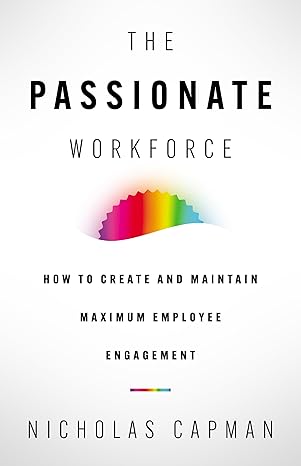
A company’s success is intricately linked to the people who drive its operations, and Capman’s The Passionate Workforce delves into the critical dynamics of employee engagement and the transformative potential of authentic leadership. Central to Capman’s thesis is the idea that passion in the workplace is not just achievable for any job but essential for creating a thriving and successful organization. Capman sets the stage by sharing personal experiences from his career in various companies, using these narratives to illustrate how passion can be nurtured in any role with the right leadership support. His stories offer a relatable context, bringing his insights on cultivating workplace passion to life. At the heart of fostering a passionate workforce is effective leadership. Capman recounts his own journey from a self-centered CEO to a leader who genuinely prioritizes his employees’ well-being, underscoring that caring leadership is both ethical and strategic for achieving business success.
The Passionate Workforce is a rich repository of ideas and wisdom. One of the book’s standout lessons is the inherent link between leadership and humanity. Capman argues that understanding and valuing employees is fundamental for any leader. He introduces the concept of “self-profit maximization,” which reframes selfishness as a positive force when it involves achieving personal goals to help others succeed. This innovative perspective offers corporate leaders a new lens through which to enhance their employees’ lives. Additionally, Capman advocates for continuous improvement and provides comprehensive, actionable advice throughout the book. The author’s openness and transparency provide a window into his failures and how they fueled his growth as a leader. This honesty makes his advice particularly relatable and inspiring. The book is easy to navigate, with clear language and straightforward sentence structures. Readers will not only find Capman’s journey inspiring but will also be encouraged to reflect on their own paths.
The Passionate Workforce is an insightful and essential read for leaders and managers at all levels. Capman seamlessly blends personal narrative, practical advice, and philosophical ideas into a comprehensive guide for building a motivated and passionate team. The principles discussed are applicable beyond the workplace, suggesting that finding passion in life can lead to profound positive changes.
Pages: 118 | ASIN : B0D413TKNK
Win the Talent Game: A Guide to Lateral Hiring for Law Firms and Lawyers

Win the Talent Game, by Richard Brock, offers an intriguing exploration of talent acquisition, drawing astute parallels between the dynamics of college football and the legal services industry. Brock’s deep understanding of both sectors provides a foundation for a comprehensive and engaging comparison, illustrating how critical effective hiring is to a firm’s success.
The book opens with an insightful discussion on the nature of talent, challenging the notion that it is purely innate or confined to certain individuals. Brock articulately argues that talent includes a range of attributes such as dedication, perseverance, and communication skills, all of which can be developed through deliberate practice. This perspective is somewhat controversial, but I believe it enriches the book with a fresh and compelling viewpoint on professional growth and adaptability in the legal field.
Brock further delves into the strategic importance of talent in shaping the success of organizations. He likens elite college football players’ impact on their teams to how skilled lawyers influence the trajectory of their firms within a competitive landscape. The narrative is enriched with vivid descriptions and keen observations, positioning talent acquisition as a pivotal element of excellence in both fields. Demonstrating extensive research, Brock retraces the historical shifts in law firm dynamics, notably in compensation models, and their significant effects on firm hierarchy. His analysis of the transition from lockstep to merit-based compensation systems reveals how these changes elevate top performers and redefine roles within firms, underscoring his expertise and passion for the topic.
Win the Talent Game is structured as a practical guide, methodically addressing the complexities of lateral hiring—from identifying and integrating top talent to understanding its broader implications for firm strategy and growth. Brock’s meticulous explanation ensures that readers grasp the nuances of this strategic tool, which is crucial for maintaining competitiveness in the market.
Win The Talent Game is an essential read for law firm leaders, aspiring lawyers, and anyone keen on the sophisticated dynamics of talent acquisition in the legal industry. Brock’s insightful analysis, combined with his engaging narrative style, makes this work an invaluable resource for navigating the changing landscape of law firm human resources and recruitment.
Pages: 168 | ASIN : B0CM3V2GBL
From Source to Sold

From Source to Sold is an enlightening dive into the intricate world of supply chain management, presented with clarity and depth that both newcomers and veterans in the field will find invaluable. This book does more than just skim the surface of supply chain management; it delves into the heart of the matter, exploring the complexities, challenges, and innovations that define this dynamic field.
The book begins by setting the stage for the uninitiated, painting a vivid picture of the complexities inherent in modern supply chain management. What stands out immediately is the author’s ability to articulate these complexities in an engaging and easy way to grasp.
As the book progresses, each chapter delves into specific aspects of supply chain management with a focus and depth that is rare. The chapters on global supply chain challenges and innovations in supply chain management are particularly noteworthy. The former provides an eye-opening look at the myriad of challenges – political, economic, and environmental – that supply chains face on a global scale. The latter, meanwhile, is a treasure trove of information on the latest technological advancements and strategies that are pushing the boundaries of what’s possible in supply chain efficiency.
The real strength of this book lies in its interviews and contributions from various industry leaders. The insights from figures like Claudio Strobl and Lynn Torrel are practical, real-world examples and advice that lend the book a level of credibility and relevance that is hard to replicate. These sections underscore the importance of collaboration, adaptability, and innovation, themes that resonate throughout the book.
Another commendable aspect is the chapter focusing on customer-centric supply chains. This chapter is a timely reminder of the shift towards customer-centric models in supply chain management. It helps readers understand the end-to-end process from a logistical standpoint and from the perspective of ultimate value delivery to the customer.
The book’s approach to sustainability and supply chain ethics is thoughtful and forward-thinking. In a world increasingly concerned with ethical consumption and sustainable practices, the book does an excellent job of addressing these concerns in the context of supply chain decisions. It’s a chapter that informs and inspires readers to think about the broader impact of their supply chain practices.
From Source to Sold doesn’t just stop at providing information; it goes a step further by offering a framework for successful supply chain leadership through the “CHAIN model.” This model encapsulates the book’s essence – Collaborative, Holistic, Adaptable, Influential, and Narrative-driven leadership – and serves as a valuable guide for anyone looking to excel in this field.
From Source to Sold is a comprehensive, engaging, and insightful exploration of supply chain management. Whether you’re a student, a business leader, or just someone curious about the inner workings of global trade, this book will broaden your understanding and appreciation of supply chains’ crucial role in our world.
Pages: 303 | ASIN : B0BC2L6P5Y
CFO of the Future
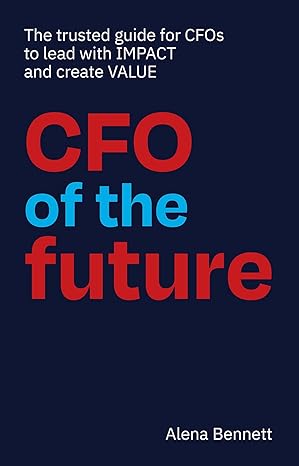
In CFO of the Future, Alena Bennett delves into the transformative journey of Chief Financial Officers (CFOs) in the ever-evolving world of business. Over recent decades, the conventional CFO persona has seen monumental shifts. Bennett shares the myriad challenges and relentless pressures CFOs face in juggling diverse responsibilities, which, if not navigated with finesse, could impact their performance.
At the heart of this thought-provoking read is an earnest call to arms for CFOs. In a world characterized by economic fluctuations, groundbreaking tech innovations, and heightened socio-environmental consciousness, CFOs stand at the crossroads, wielding the power to steer organizations and unlock unparalleled value for stakeholders. Bennett’s work serves as a compass for CFOs aiming to amplify their influence and leave an indelible mark on their institutions. Particularly compelling is the book’s challenge to the traditional paradigm of “Business Partnering,” urging CFOs to redefine and elevate their roles.
Crafted with impeccable rigor and substance, the book offers a renewed lens through which to view the dynamic role of today’s CFOs. Bennett’s writing is both assertive and persuasive, exuding a rare blend of academic prowess and rich field experience. Her authentic narrative style, peppered with evocative anecdotes, ensures accessibility and relevance even to those outside the finance realm.
Targeting a spectrum of readers, from seasoned CFOs to budding financial enthusiasts poised to make their mark, this book is an unspoken induction manual to the intricate corridors of financial leadership. It is the quintessential guide that many in the domain might not openly discuss but is indispensable nonetheless.
CFO of the Future serves as a beacon for finance aficionados striving to navigate the tumultuous waters of contemporary business. Through Bennett’s expertise, palpable passion, and captivating eloquence, the book emerges as an enlightening testament to the possibilities that lie ahead for the modern CFO. It’s not just an informative treatise—it’s an inspiring call to action.
Pages: 183 | ASIN : B09GJZC681
There’s Just Life



What were some ideas that you felt were important to highlight in You, Me, We: Why We All Need a Friend at Work (and How to Show Up As One!)?
The most important idea that we wanted to highlight is that workplace relationships are the single biggest influencer of happiness, engagement, and productivity at work.
Morag Barrett’s first book, Cultivate – The Power of Winning Relationships, introduced the four relationship dynamics (Ally, Supporter, Rival, and Adversary) that make up the Relationship Ecosystem™. We’ve been leading workshops on the Relationship Ecosystem™ ever since, and kept getting the question, “How do I get more allies?” The short answer isn’t always what people want to hear, but it’s true: To have an ally you need to be an ally.
In You, Me, We we wanted to provide a guide that helped readers understand, practically, how they could do that. After more than a decade of research, interviewing thousands of leaders about what it means to show up as an ally to our colleagues, and creating a self-assessment tool that outlines what comes more naturally to people, we created a practical guide that would help readers to make intentional choices in how they show up in workplace relationships.
Central to the book is what we call the Ally Mindset, and it is made up of five practices; Abundance and Generosity, Connection and Compassion, Courage and Vulnerability, Candor and Debate, and Action and Accountability. We created the Ally Mindset Profile (available at skyeteam.cloud/youmewe) to provide readers with a solid foundation when deciding how to make intentional investments in critical stakeholder relationships.
What is a common misconception you feel people have about work friendships?
There are many misconceptions about workplace relationships. It’s been said that workplace friendships are not professional, that they can lead to favoritism, or that they aren’t even genuine (they’re misperceived as politicking and empire building). Some also argue that they will distract from productivity, or lead to complications when one friend inevitably leaves the organization.
While human beings are messy, and no two workplace friendships are alike, most of these ideas just don’t hold up in the real world. These misconceptions come from a place of scarcity. What we argue in the book is that beginning from a position of abundance, and showing up as our true authentic selves, workplaces flourish when friendships abound. People hold each other to a higher account, they tend to be more engaged, and measurably more productive when engaged in friendships at work. Our research and experience has shown that the health of our professional relationships is the most important factor when it comes to success in business and in life.
What is one piece of advice someone gave you that changed your life?
We spend a majority of our adult lives working, and the stresses of daily life are always in the picture. Eric used to struggle with worrying about personal things while he was at work, and then fretting about work things when he wasn’t. A mentor of his helped him to understand that there’s no such thing as work/life “balance.” There’s just life. A big old garbled mess of all things work, personal, and everything in-between. When you allow yourself to show up in every frame as your true self, everyone is better off. This isn’t to say that you should wear your emotions on your sleeve and share everything with anyone who will listen. It means that you acknowledge what’s going on on the inside for you, honor that, and let it be, versus trying to fit the entirety of human experience into discrete containers or labels like “work” and “home.” The most powerful lever in this mindset is leveraging the most important relationships you have around you, to support you, and to remind you that self-care is paramount. True allies have your back, no matter the circumstances, and that is a complete game changer!
What is one thing you hope readers take away from your book?
We want readers to find at least one piece of practical advice that they can use to make intentional investments in their most critical workplace relationships. The book serves more as a field guide than a linear narrative. We hope that people pick it up and flip to the chapter that most fits their current circumstances. If they’re having trouble being vulnerable, jump to the chapter on Courage and Vulnerability. If they find themselves employing a scarcity mindset, open up the section on Abundance and Generosity. Each chapter ends with a set of real-world tips, called Look Up, Show Up, Step Up, that readers can use in their workplace relationships today! While the stories in the book are compelling, they don’t need to be consumed like a novel. We hope this is a book that readers come back to time and time again. We want it to be that ratty, dog-eared, marked up book on desks that people use throughout their lives to help make their lives, and the lives of those around them a little bit lighter, a little bit better.
Author Links: Website
One of the most important indicators of individual, team, and organizational success is the presence of an ally mindset. When we have best friends at work—people who are with us, in good times and bad, and who help ensure we make it through together—we thrive. When we don’t, we flail, and eventually crash and burn, leaving only a smoking hulk of debris behind as evidence that they were ever even there.
Through their extensive work with clients that include Google, National Geographic, Microsoft, and many more, the authors have discovered the framework for an ally mindset includes five key parts:
– Abundance and generosity
– Connection and compassion
– Courage and vulnerability
– Candor and debate
– Action and accountability
In You, Me, We, they share valuable lessons on each of these aspects, to show you how to be a better friend at work, and how doing so leads to greater happiness, collaboration, and business outcomes.



 LITERARY TITAN