Blog Archives
The End: Omicron
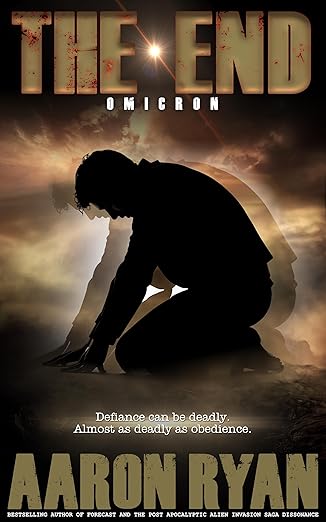

Aaron Ryan’s The End: Omicron is a breathless and gut-wrenching continuation of a harrowing dystopian saga. Picking up in a devastated future where a tyrannical leader named Nero hunts down Christians marked by a branded scar, the story follows young Sage Maddox and a ragtag group of survivors struggling against a monstrous regime of mechanoids and propaganda. Meanwhile, former High Vassal Maximillian—reborn as Darius Antone Forrester—defects and seeks redemption, setting the stage for spiritual warfare, betrayal, personal transformation, and rebellion. The world is brutal, the stakes are high, and the faith of every character is tested in fire.
Reading this book was like being pulled behind a speeding train. The pacing is relentless, the emotion runs raw, and the characters are utterly drenched in pain, doubt, and hope. Ryan’s writing is often visceral and unfiltered—sometimes jarringly so—but it’s always from the gut. You feel Sage’s grief claw at your chest. You feel Maximillian’s shame and longing for a second chance. It’s not polished in a traditional literary sense, but that’s exactly what makes it powerful. It’s not trying to be subtle or slick—it’s just honest. And in that honesty, it punches hard. Some of the dialogue feels intentionally unrefined, like real people speaking in the worst moments of their lives. I respected that.
On the flip side, the writing leans heavily into its message. Ryan is unapologetically Christian in theme and tone—this is not a book that hides its worldview. That might throw off some readers looking for a more ambiguous or secular apocalypse. But if you go in knowing that, it delivers with sincerity. I found myself torn between frustration and admiration at times—the moral dilemmas, the extreme stakes, the black-and-white battle between faith and evil. It’s not subtle storytelling, but it is bold. And sometimes bold is exactly what a story needs to break through the noise.
If you’re a fan of Christian dystopian fiction, if you like stories about persecution, faith, rebellion, and endurance under fire, this one’s for you. I’d recommend it for readers who want more soul in their sci-fi, and more fire in their faith. If I had to put The End: Omicron on a shelf with other books, it would sit somewhere between the Left Behind series and The Hunger Games, with a dash of 1984 and This Present Darkness. It’s got that same blend of high-stakes rebellion, faith under fire, and a world cracking under tyranny.
Pages: 263 | ASIN : B0F6VWDM2H

Keepers & Destinies: The Reckoning

Keepers and Destinies: The Reckoning, by Carl F. Brothers, picks up in a post-apocalyptic world where natural disasters and supernatural forces have ripped humanity apart. Following the aftermath of a cataclysm triggered by Lucifer’s forces, Andrea, an empathic warrior with divine power, fights to protect the scattered remnants of humanity while dealing with crushing grief over the loss of James, her closest ally and love. Facing enemies from both Hell and, shockingly, Heaven itself, Andrea and her allies battle physical, emotional, and existential threats in a story that is as much about survival and loyalty as it is about revenge and destiny.
From the start of the book, I was sucked right into the raw heartbreak and tension that colored the opening scenes. Andrea hiding in the woods, Nicholas waiting hopelessly for a brother who would never return, absolutely broke my heart. Brothers’ writing doesn’t shy away from tough emotions; he lets you sit with the grief. The little details, like Andrea wearing James’s dog tags and Nicholas clasping her blood-smeared hands, felt so vivid, like I could smell the rain and hear the distant crackling of that broken radio. It’s rare to find apocalyptic fiction that balances action with such emotional weight without feeling corny, but Brothers nails it here.
As the book powers ahead, the action ramps up in a huge way, and honestly, it’s thrilling. Chapter 2 gave me major chills with Samyaza and Q’sabel hunting humans like predators on the prowl. The horror of it, the way the humans are sorted into “worthy” and “not” categories, was seriously disturbing. And yet, I couldn’t look away. Brothers has this way of describing violence that’s brutal without being gratuitous. He leaves just enough space for your imagination to fill in the worst parts. The monsters, the twisted demons like Samyaza, and the reality of werebeasts felt so real I sometimes had to glance over my shoulder while reading. It’s not just cheap scares either; there’s a heavy feeling of moral collapse that hits deeper than just blood and guts.
What really stayed with me, though, were the quiet moments that showed how much Andrea had changed. When she almost loses control while facing the DeMinistry, I felt this weird mix of awe and sadness. She’s powerful, yeah, but she’s also deeply broken. When Lucifer’s disembodied voice talks about using her pain for his purposes, it hit me like a punch. Brothers doesn’t just give us a badass heroine; he shows us the wreckage inside her. The scene where Andrea uses Michael’s sword to mercy-kill the demon Belphegor was haunting and powerful. Mercy through destruction. It’s not just “good vs evil” in this world; it’s messy, it’s complicated, and it makes you think about how trauma reshapes a person.
Keepers and Destinies: The Reckoning is a wild, emotional ride that’s both exhilarating and gut-wrenching. Carl F. Brothers gives readers an action-packed story filled with deep characters, twisted villains, and moments that punch you right in the soul. I’d absolutely recommend this book to readers who love supernatural thrillers, gritty apocalyptic tales, or character-driven fantasy where the battles outside mirror the battles inside.
Pages: 306 | ASIN : B0BBYVD1JD

Jorsa
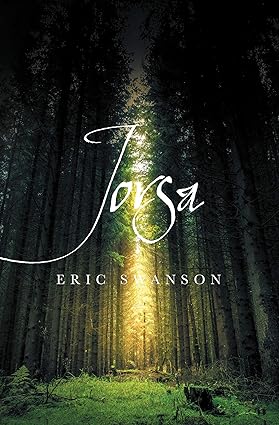
Eric Swanson’s Jorsa invites readers into a thrilling fantasy adventure brimming with heart, danger, and discovery. At its center is Jorsa, a blue-skinned elf on a desperate quest to rescue his captured friends from the clutches of the sinister Tilif. Along the way, Jorsa ventures through shadowy forests and perilous caves, confronting goblins and other fearsome creatures. Betrayals test his resolve, while unexpected moments reveal the transformative power of love.
Swanson’s narrative seamlessly blends themes of loyalty, courage, and redemption, anchoring the story in universal truths while maintaining its fantastical allure. The world of Higherland is a stunning creation, a realm both familiar and strange, populated by enchanting beings and complex societies. The interactions among elves, humans, and dwarves introduce a rich socio-political layer, exploring unity and division alongside thought-provoking reflections on power, sacrifice, and love.
The novel excels in character development, with Jorsa evolving from an inexperienced adventurer into a figure of resilience and wisdom. Each chapter deepens the reader’s understanding of his journey, balancing moments of action-packed intensity with quieter, introspective passages that probe the psyche of its characters. This dynamic pacing ensures a narrative that remains both exciting and emotionally resonant. Swanson’s writing style captivates with its fluidity and energy. His skillful use of suspense, coupled with vivid dialogue, breathes life into the story’s cast of characters. Meanwhile, the meticulous world-building offers an immersive experience, painting Higherland as a place brimming with hidden secrets and layered histories. These elements not only enhance the current narrative but promise a strong foundation for the series to come.
Jorsa, by Eric Swanson, stands out as a noteworthy addition to the fantasy genre. Its intricate plot, well-rounded characters, and lush setting converge to create a memorable reading experience. With its exploration of moral dilemmas and vibrant storytelling, Swanson’s novel comes highly recommended for fantasy enthusiasts eager to embark on a fresh, compelling series.
Pages: 200 | ASIN : B0DL2QW5MW
Doing a Great Deed
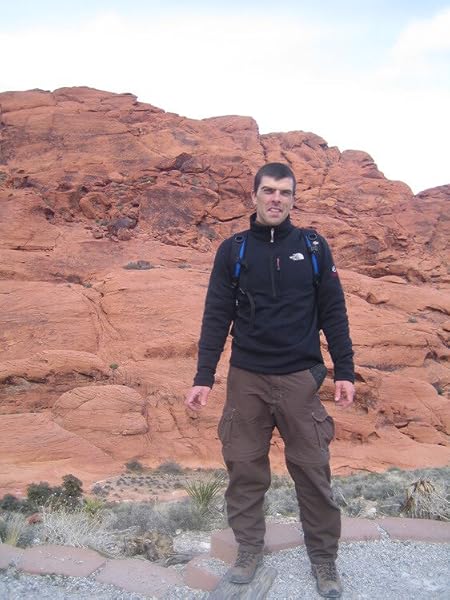
Jorsa follows a man who was banished after a failed attempt to dethrone the King and a blue elf warrior who is fighting to restore the balance of power in the kingdom. What was the inspiration for the setup of your story?
I got inspiration from the Bible. Some people may criticize my Christian allegory, but I wanted to write something that gives a picture of sin and how the Holy Spirit guides us when we face evil. I wanted the main character to describe our human condition. There are evil forces outside of us, and there will be struggles in our lives. There will be times when it seems like we are blind, and we need others to help us. But through all the difficult times, we have the help of the Holy Spirit.
I found your characters to be incredibly engaging. Which character in the novel do you feel you relate to more and why?
I can relate to the main character, Jorsa. I don’t feel like I have the same courage, but he goes through struggles with temptations in the book and feels like a failure. I can relate to the struggle with failure and the need to find affirmation in doing a great deed. He’s the target of Tilif, not because he has done a heroic deed, but for wanting to follow Karlek. He struggles to have a personal experience with the King, and it comes in the book. As Christian believers, we all should want a personal touch of God. Once we get a personal experience, it changes cowards into soldiers.
How long did it take you to imagine, draft, and write the world your characters live in?
I rewrote a previous novel I had written about 10 years ago. A friend challenged me to write more like C.S. Lewis and J.R.R. Tolkien. They both wrote about spiritual things in their novels without having to say, “Now this is Jesus.” I hope the imagery comes through in the book. The total time of the rewrite took a few years.
What is the next book that you are working on, and when will it be available?
I plan on rewriting another novel, making it into a sequel to Jorsa. The working title is Outcast. I’m very excited about the sequel, where I have more imagery of spiritual warfare and incorporate many of the same characters.
Author Links: GoodReads | X (Twitter) | Website | Amazon
Torish discovered the danger of envy when he attempted to overthrow the righteous king, Karlek. Vihaa was his final destination, a barren wasteland where he would live out the rest of his days. But in his dungeon, a plan formed when Susan mysteriously came into his life, giving him a son named Tilif.
Tilif escaped Vihaa, hoping to recapture his father’s glory. But his departure was anticlimactic when two elves shot arrows into his eyes. Now, with the help of Susan, goblins and poliths, Tilif is looking for a way to regain his eyesight and rescue his father. But those who are true to Karlek stands in his way.
Jorsa, a blue elf, joins in an epic battle of good versus evil, where he gets thrust into a leadership role after Tilif kidnaps those whom he loves. It appears he’s all alone against forces beyond his strength. But when it looks like overwhelming odds, Lef, an Island dweller, comes to his aid.
With Lef, Jorsa must rescue his friends, keep Tilif blind, and prevent his evil scheme of rescuing his father, Torish, from Vihaa.
Will Jorsa rescue his friends? Will Tilif regain his eyesight? These questions, and more, are answered in this epic tale.
\
Jorsa
In Jorsa, Eric Swanson crafts a tale brimming with intrigue, betrayal, and ambition, where characters navigate a labyrinth of personal motives and sacrifices to achieve their goals. After a failed attempt to dethrone King Karlek, Torish is banished to the desolate wasteland of Vihaa. From this bleak exile rises Tilif, Torish’s son, determined to reclaim his father’s legacy and restore his honor. Meanwhile, Jorsa, a blue elf warrior, finds himself in a moral struggle as he confronts Tilif, fighting to restore balance and prevent greater ruin.
Swanson excels in evocative world-building and vivid detail. The barren expanse of Vihaa mirrors Torish’s anguish, while Tilif’s simmering rage is palpably conveyed, especially as his journey leaves him blinded by fury and literal darkness. The narrative artfully balances emotionally charged moments with the tension of sprawling battles, creating a rhythm that, while occasionally faltering in pacing, is redeemed by its relentless intensity and sharp turns.
Jorsa’s reluctance to step into a leadership role struck me as particularly profound. His internal conflict embodies the weight of leadership and the personal costs it exacts, adding depth to his character. Tilif, on the other hand, serves as a powerful cautionary figure, embodying the dangers of unchecked ambition and the devastating fallout it brings.
The novel’s emotional resonance is undeniable. Key scenes, such as Tilif’s blindness and his visceral frustration at starting over, are deeply impactful. Conversely, moments like Jorsa’s torment after Tilif’s betrayal of those closest to him offer a poignant counterbalance. One character who piqued my interest is Susan; her presence adds intrigue, though further exploration of her backstory would enrich the narrative.
Fans of morally complex fantasy, akin to The Witcher, will find Jorsa, by Eric Swanson, a compelling read. The story brims with characters navigating shades of gray, forcing readers to grapple with their shifting loyalties and sympathies. For me, the book’s greatest strength lies in its ability to keep the reader guessing at every turn, weaving a story as unpredictable as it is engaging. This is a highly recommended read for fans of the dark fantasy genre.
Pages: 200 | ASIN : B0DL2QW5MW
Spiritual Warfare

Kalani: Shadows of Destiny follows two people living in a world of immortals with advanced technology on separate journeys of self-discovery that unravel and challenge their concepts of reality and faith. What was the inspiration for the setup of your story?
The setup for Kalani: Shadows of Destiny was inspired by my own journey of navigating faith and personal resilience, and I wanted to explore these themes in a sci-fi fantasy setting. Imagine a Christian Star Wars where the battle to remain faithful to God’s will has become an action adventure that defies age boundaries. Through the eyes of Desiree and Zach, we experience how eternal struggles intertwine with the mortal experience, and I wanted readers to feel the gravity of spiritual warfare on an epic, cosmic scale. With this inspiration, the story aims to connect on an emotional level, evoking the timeless challenge of belief amid adversity.
I find the world you created in this novel brimming with possibilities. Where did the inspiration for the setting come from, and how did it change as you were writing?
The world of Kalani started with an image of a radiant, spiritual afterlife juxtaposed with dystopian elements, where immortals live with advanced technology yet face profound emotional and moral challenges. As I wrote, the setting evolved to represent an “eternal spring” on the surface, masking a world where characters constantly confront moral and spiritual darkness. Kalani grew into a realm where landscapes and tech reflect the inner spiritual states of the characters—a place both awe-inspiring and challenging, where destiny feels tangible.
What were some themes that were important for you to explore in this book?
The themes in Kalani reflect the emotional battles many of us face: resilience, faith, the tension between hope and despair, and finding purpose through sacrifice. Desiree’s journey, for instance, explores the sense of worthiness and self-discovery, reflecting my own experiences in foster care and growing up with complex feelings of unworthiness. There’s also the theme of spiritual warfare, where each character’s struggle represents the Biblical idea that our battles are not just physical but also spiritual. The Army of Magnar and the Army of Awry symbolize forces of good and evil in a tangible, cosmic conflict, and I wanted this to mirror how people today face unseen but profound battles for their souls.
What will your next novel be about, and what will the whole series encompass?
The Fostering Worlds series will span three books, each diving deeper into the cosmic struggle between Magnar and Awry’s armies. The next novel will see Desiree and Zach further develop their spiritual gifts and confront darker forces that test their faith to the limit. Over the series, I’m excited to explore how these battles shape their character and how each choice brings them closer to—or farther from—their divine purpose. Ultimately, the series is about hope, redemption, and learning to see one’s worth through a divine lens.
Author Links: GoodReads | X | Facebook | Website
As they set off on separate journeys, their stories become ones of self-discovery that unravels and challenges their concepts of realty and faith. Each torn between letting their past go, in order to accept an unknown destiny.
Kalani: Shadows of Destiny is the premiere novel in the science-fiction Fostering Worlds series. It is a gripping tale of love, sacrifice, and the eternal battle between good and evil. Get ready to be transported to a world of breathtaking landscapes, heart-pounding adventures, and emotionally driven characters that will leave an indelible mark on your soul. Join Desiree and Zach as they embark on the ultimate test of faith.
Kalani: Shadows of Destiny
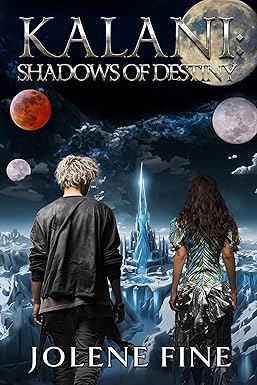
Jolene Fine’s Kalani: Shadows of Destiny launches her Fostering Worlds series with remarkable flair. This ambitious fantasy debut delivers a rich tapestry of complex characters, high-stakes struggles, and deeply immersive world-building. Kalani, a planet ruled by god-like figures, brims with intrigue and conflict, with every corner of its beautifully mapped terrain promising readers a thrilling adventure. Fine’s storytelling will make you laugh, cry, and stay invested in each twist as you journey through this fascinating new world.
The novel centers on two main characters, Zach and Desiree, who navigate Kalani’s world of immortals. Kalani’s inhabitants are divided into two classes: the Lambients and the Watchers. Fine masterfully introduces readers to this world’s structure, where advanced technology meets a unique social order from the very first page.
The author’s emotional writing style makes it easy to connect with the characters as they grapple with belonging and identity in a complex and vividly imagined society. Zach, yearning for his girlfriend Gretchen back on his home planet Therma, petitions Kalani’s spiritual leaders, hoping for any chance to communicate with her. Meanwhile, Desiree, an outsider, finds herself pulled toward Kalani’s deeper mysteries, her drive for knowledge propelling her into powerful but dangerous territory.
Fine builds suspense masterfully, creating a world where every choice holds weight. Zach and Desiree encounter mystical barriers and god-like rulers, with each encounter steeped in high drama and tension. Their inner conflicts bring as much depth to the story as the fantastical elements, weaving a narrative that explores love, existential longing, and personal destiny. The world of Kalani feels simultaneously vast and intimate, with each page building anticipation and excitement.
I’d highly recommend Kalani: Shadows of Destiny to fans of character-driven fantasy and those who enjoy exploring dystopian worlds. For anyone new to fantasy, this novel is an excellent entry point, offering a story that balances rich world-building with genuine emotional resonance.
Pages: 314 | ASIN : B0CCZHY41R
A Fantasy World that is Realistic

The Secrets of Shadowcrest follows a faithful night serving England at a time when it is nearing a civil war who is sent on a secret mission to find and bring back a powerful artifact. What inspired the setup of your story?
Believe it or not, most of my story’s inspiration had nothing to do with England. My primary goal was to introduce the world of Cabalia, which I had created while designing board games as a hobby when I was a teenager.
Back in the beginning, sometime around 2015, Cabalia was a fantasy world set vaguely in Medieval times on an abandoned island somewhere in the Atlantic. There wasn’t much in the way of lore. It was just a backdrop for my board games to take place in. There eventually came a point when I felt the need to develop the lore of Cabalia further, and that’s when I started tethering the history of Cabalia to the history of the real world.
It’s a pet peeve of mine when I can’t grasp the calendar system and chronology of a fantasy world, where terms like “the third age” and “second era” get tossed around with little to help the reader understand how they all fit together into the timeline. So, I decided pretty early on to anchor my fantasy world’s history to our world. It could mean anything under the sun if I were to set the story in “the third age,” but if I set it at a specific year, like 1153 AD, the reader has a definite image in their head of where they are in history.
I don’t remember what exactly led me to pick that year as the time to set my story in — I think I just saw a synopsis on the internet of world events around that time and thought it looked interesting. When I did more research about the political situation in England then, I decided it would be the perfect starting point to introduce Cabalia.
In fantasy novels, it’s easy to get carried away by the magical powers of characters. How did you balance the use of supernatural powers?
It might sound like a paradox, but I really wanted to create a fantasy world that was realistic. Even with all the magic of the Cabalia, I wanted it to feel like a plausible version of our world. The thing about our world is that it’s full of limitations, so the magic system of Cabalia needed to be as well. This was a guiding philosophy for me, and I think it helped keep things in check. For every added benefit of magic, there needed to be a limitation or a counter.
A good example of a limitation is the mental effort required for the use of magic and the exhaustion it brings afterward. Sure, magic can be powerful, but it requires a lot more concentration than a snap of the fingers, and there is a cost to using it. It’s not possible to use it as a universal solution to any problem you face.
Aside from limitations, there also exist counters within the magic and alchemy systems themselves. Even the most powerful mage in Cabalia would find themselves in a pinch should an opponent poison them with the right alchemical extract.
Another thing that balanced the use of the supernatural is the real-world principle of practice vs. talent. In pretty much anything, there needs to be a combination of both practice and talent in order to succeed. It doesn’t matter how many hours someone slaves away practicing something if they don’t have a minimum amount of talent to make the thing possible in the first place.
The magic system works in much the same way on Cabalia. Not everyone has the talent to practice magic. For every mage that has what it takes to use it, there are others who don’t. Cabalia is filled with plenty of folks who have to rely on the natural world to meet their needs, just like anywhere else. Some have gotten quite good at it, like the Essari, and others are just average people living their lives the best they know how. It’s meant to be like our world, because it’s set in our world — just with some added bits that have their own rules to follow.
What were some themes that were important for you to explore in this book?
Hands down, I think the most important theme was the exploration of Cabalia itself. My primary goal was for the world of my board games to come alive for people, so it was essential to portray Cabalia in a captivating way. Whether I used vivid descriptions or character development, the underlying purpose was to present a world that people would find fascinating — hopefully, fascinating enough to want to read more of.
Another theme that was important for me to explore was that of faith, though that was not my original goal. Early drafts of the story didn’t mention my Christian faith explicitly. I had wanted to create a story that resembled Tolkien’s work, where there may have been religious influence on it, but it was not overt. Whatever my intentions, though, I suppose I just couldn’t help myself. It’s the most important aspect of my life, and it found a way of coming out through the character of Gaimis Zikennig.
When I realized I couldn’t bring myself to avoid the topic, I tried my best to present it in a way that didn’t feel forced. I’ve read too much Christian literature that sacrifices the natural flow of good storytelling to drive home a message, and I didn’t want my book to fall into the same trap.
It took the most time and effort to edit, but I wanted to present the truths of the gospel in a simple way through a conversation that could plausibly happen in real life. The tension between Zala and her brother Gaimis is something that has played out many times in real life, and will likely continue to do so for a good while longer.
Will there be a follow-up novel to this story? If so, what aspects of the story will the next book cover?
Yes, I do plan to write a follow up. It’s a little up in the air right now for how long that will take, given I have more responsibilities to manage than when I wrote the first book. It could take a while, but I definitely want to continue the story I started.
My intention for the next book is to provide a compilation of short stories and novellas that examines the history of Brinwin and Zala, as well as the Zikennig family in general. Readers will be able to experience many of the details of their lives that were only referenced to in the Secrets of Shadowcrest, such as Brinwin’s early days as a Keeper of Alchemy, as well as Zala’s time in the Mages College and the Hearthfell Guard.
It might seem counterintuitive to go backward in time instead of forward, but there is a method to my madness. The groundwork will be laid in the Zikennig siblings’ past that will come to a head in a third book, set after the events of Shadowcrest. That’s when readers will finally learn what happened to Zala and whether she’ll be reunited with William.
Author Links: GoodReads | Facebook | Website | Book Review
As England teeters on the brink of civil war, a faithful knight is sent by his king on a secret mission to the Island of Cabalia: a secluded land of unknown origin and fantastic magic. But when his errand goes awry, Lord William Steele must embark on an unexpected journey across the island, brushing shoulders with cutthroat mercenaries, conspiring kings, and legendary monsters. Forgotten histories and timeless truths must be grappled with in his attempt to discover the Secrets of Shadowcrest and survive to tell the tale.
Award-winning author Lance McColgan offers a rich introduction to the spectacular world of Cabalia, while simultaneously exploring concepts such as faith, love, and duty in a way that is sure to leave you thinking long after you turn the final page. The combination of vivid storytelling, unexpected twists, and lighthearted humor makes this story a delightful addition to the fantasy genre.


