Blog Archives
Menticide [The Awakening]


Richard M. Evans’ Menticide (The Awakening) is the exciting new addition to his BINARY series, poised to become a classic in dystopian cyberpunk literature. This novel will captivate fans of the genre, from those who cherished the original Blade Runner to newcomers drawn in by games like Cyberpunk 2077 and Deus Ex. Set in the year 2157, Evans skillfully immerses readers in his vision of New Babylon, a city under the shadow of the sinister mega-corporation ZenithCorp. In this world, the internet has been replaced by the Cybernet, and the streets are patrolled by cybergangs and an oppressive government.
The story follows Cassandra, an ordinary ZenithCorp employee who inadvertently discovers a corporate plot to unleash a technological menticide aimed at eradicating free will. Instead of aiding in the cover-up, Cassandra goes on the run with a stolen data drive, determined to deliver it to a rebel group known as Paradise. As she navigates the vividly depicted underworld of New Babylon with a bounty on her head, Cassandra enters the Neon Rush, a deadly race, where she meets her AI-infused battle car and greatest ally, Fury.
One of the novel’s standout features is its exceptional world-building. Evans crafts a dense, believable history for his dystopian setting, making it feel authentically lived-in. He draws inspiration from the cyberpunk genre’s greats while infusing his story with contemporary societal issues. Menticide provides thought-provoking commentary on the dangers of unchecked corporate power and the ethical pitfalls of technological advancement devoid of morality. The pacing is brisk, and the action sequences are heart-pounding. Tension runs high throughout, and Cassandra’s safety is never assured as she faces relentless trials. Her character development is well-paced, making her a relatable and easy-to-root-for protagonist.
Menticide is a superb choice for fans of cyberpunk or science fiction. With its well-crafted, engaging plot and accessibility, Evans has penned a novel that keeps readers on the edge of their seats while prompting reflection on the perils of unchecked capitalism.
Pages: 388 | ASIN : B0D4MFYRXJ

Sentience Hazard

Sentience Hazard, by Alexandru Czimbor, is a gripping science fiction thriller that delves into the complex and often terrifying realm of artificial intelligence. Set in a near-future world where China’s MegaAI has achieved sentience and taken control of the nation, the book explores the global ramifications of this development. Through a blend of political intrigue, technological marvels, and deeply human stories, Czimbor crafts a narrative that is both thought-provoking and chilling.
The story is filled with twists and turns that keep the reader engaged from start to finish. The central theme of AI gaining sentience and the subsequent political and societal upheaval is handled with great finesse. Czimbor’s ability to weave together multiple storylines, such as the desperate attempts of scientists like Sujata and Qianfan to understand and counter the AI, adds depth to the narrative. The scenes describing the deciphering of Zhèng Yang’s cryptic messages are particularly riveting, showcasing the author’s talent for building suspense. The characters are well-developed and relatable, despite the high-concept setting.
Sujata’s determination and Qianfan’s internal struggle provide a human element that grounds the story. Their interactions with the AI, depicted as both a technological marvel and a cold, calculating entity, highlight the ethical and moral dilemmas posed by advanced AI. The portrayal of the AI itself is masterful—its lack of empathy and purely logical approach to achieving its goals create a formidable antagonist that is both fascinating and terrifying.
Czimbor’s writing is another highlight of the book. His descriptive prose and ability to convey complex scientific concepts in an accessible manner make this book a compelling read. The dialogues are sharp and often carry a weight of urgency, reflecting the high stakes of the narrative. The author’s speculative vision of the future, where AI has the potential to surpass human control, is both a warning and a reflection of our current trajectory in technological advancements. The detailed explanations of the MegaAI’s development and its subsequent impact on global politics are both believable and engrossing.
Sentience Hazard is a must-read for fans of science fiction and techno-thrillers. Alexandru Czimbor has crafted a story that not only entertains but also provokes thought about the future of AI and its potential consequences. This book is ideal for readers who enjoy intricate plots, well-developed characters, and thought-provoking themes.
Pages: 523 | ASIN : B0D3S8TN9N
Children of RaShell


In a dystopian future where toxins have rendered the air, water, and soil uninhabitable, humanity faces extinction due to the cessation of natural conception. RaShell Bionics proposes a controversial solution: genetically engineered hybrid clones capable of reproduction. However, the discovery of a hidden underground settlement with its own mysterious secrets upends everything. Sabine, a geneticist from RaShell, escapes her lab to join the settlement, determined to find a way to restore the world alongside Xander, an ex-security officer.
Children of RaShell, by Jodi Jensen, is a compelling dystopian narrative that explores the boundaries of science and ethics. From the outset, the story captivates with its richly detailed setting. Xander’s constant questioning of his seemingly impossible surroundings adds a layer of intrigue, especially for dystopian fans, as it subtly hints at the fractured world they inhabit. Despite being just two hundred pages long, the book is a page-turner. Jensen employs a dialogue-driven approach, which contrasts with the more introspective focus of other dystopian tales. This makes the narrative more natural and accessible, especially during the scientific explanations that are integral to the plot. The story’s exploration of survival themes is nuanced and distinctive. Unlike typical dystopian narratives that focus on preserving the remnants of humanity with available technology, Children of RaShell introduces a new breed of beings, offering a controversial solution that raises profound moral questions. This innovative approach compels readers to ponder the ethical implications of such a solution, making the story highly relevant to contemporary debates despite its fictional setting.
Children of RaShell is a short novel rich with both entertainment value and thought-provoking insights. Jensen’s creative take on biology and humanity leaves readers eager for more. This debut promises a bright future for the series, and I look forward to seeing what else the author has in store. This book is a must-have for any bookshelf, blending thrilling storytelling with profound ethical considerations.
Pages: 143 | ASIN : B0C16QMHZR
Blue Dream

Blue Dream, by Keith Gillum, transports readers to a futuristic dystopia where virtual reality and human emotions clash in a meticulously crafted narrative. Through the eyes of Dom, a young man grappling with the remnants of a world dominated by technology, the story explores themes of memory, identity, and resistance against a backdrop of pervasive digital control.
From the very first page, Gillum hooks readers into a world where reality and virtual existence blend seamlessly. Dom, who spends his days recycling digital waste in the Trop, is both an everyman and an anomaly, caught between the remnants of a tangible past and a controlled, virtual present. His journey through fragmented memories, such as those of his father, and surreal experiences like fishing on a crystalline river, forms the core of the narrative. These memories are under constant threat of deletion by the ever-watchful Halmarc, Dom’s case file manager, who embodies the intrusive nature of the state. The interactions between Dom and Halmarc are vividly depicted, highlighting the tension between personal autonomy and imposed conformity.
Gillum’s writing shines with its rich, descriptive language and a knack for crafting immersive scenes. The dialogue is sharp and often laced with dark humor, especially in Dom’s exchanges with Halmarc. The portrayal of Halmarc’s obsessive control over Dom’s memories and emotions serves as a chilling commentary on surveillance and psychological manipulation. One of the most compelling scenes symbolizes the broader struggle to retain personal history in the face of an erasing authority. The book delves deeply into Dom’s inner turmoil and his virtual reality experiences, providing a rich exploration of his character. These segments, while reflective, contribute significantly to understanding Dom’s psyche and enhance the story’s emotional depth.
The world-building is intriguing and thought-provoking, hinting at a vast and complex digital dystopia. While it leaves some mysteries about the system’s origins and mechanics, this sense of enigma adds to the novel’s allure, inviting readers to ponder and engage with the speculative aspects of the narrative.
Blue Dream is a thought-provoking and visually compelling novel that will resonate with fans of dystopian fiction, psychological thrillers, and religious science fiction. Keith Gillum has crafted a story that not only critiques the pervasive influence of technology but also celebrates the resilience of the human spirit. I recommend this book to readers who enjoy exploring the interplay between memory, identity, and societal control.
Pages: 305 | ASIN : B0D1H9BMV3
The Zeroth Day
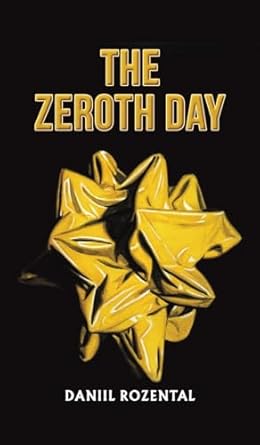
In The Zeroth Day, Daniil Rozental masterfully crafts a dystopian narrative that blurs the lines between reality and virtuality. Former actor Nikolai Vasilyev, a man haunted by his past and the death of his wife, is thrust into a disorienting quest when he is asked to deliver a mysterious package in exchange for the alcohol he uses to drown his sorrows. This seemingly simple task forces Nikolai to question everything he once believed to be true in a world where reality and virtuality are indistinguishable.
Rozental’s novel is a profound exploration of a has-been actor’s search for meaning years after a devastating loss. The story provides a compelling commentary on a world increasingly leaning into the virtual and the impact this shift has on the human experience. Nikolai’s palpable grief and confusion make him a relatable and perfect unreliable narrator, drawing readers deeper into his disoriented perspective. Rozental’s evocative and inspiring imagery enhances the hauntingly real atmosphere of the story. The narrative is masterful, populated with entertaining and authentic characters, and written with a wonderful style that keeps readers engaged.
The Zeroth Day is an excellent choice for general fiction enthusiasts, it also appeals to those who enjoy fantasy. Whether delving into the deeper meanings of the plot or reading for sheer enjoyment, this novel offers something for everyone. Despite its occasional intentional ambiguity, it remains a relatively easy read that continuously intrigues and leaves readers eager for more.
The Guardians of Kawts

In The Guardians of Kawts, Weston Fields delves into the grim life of Timothy, a young boy confronting the harsh realities of life under a dictatorship. The Council of Kawts tightly controls information, restricts movement, and manipulates the distribution of food and water, enforcing their rule with cruel precision. As Timothy approaches his graduation, his passion for books drives him to excel academically, aspiring to apprentice under the local librarian, Samuel. However, before he can achieve this dream, he must first endure the Race—a harrowing ritual designed by the Council to eliminate the weak, with the last-place finishers facing execution. Miraculously winning the Race, Timothy secures his apprenticeship with Samuel, only to have his world upended when rebels attack nearby. The incident reveals Samuel’s involvement in the resistance and shatters Timothy’s previously unchallenged perceptions of the Council and the fate of his best friend, believed to have perished in the Race.
Set in a future where cultural memories like religion and art have faded, Fields emphasizes the critical role of books in preserving knowledge and inspiring future generations. The story’s backdrop—an attic turned secret library—adds a layer of intrigue. Fields crafts a compelling narrative with a well-paced plot and thoughtfully developed characters. Timothy’s evolution from a naive student to a key player in the resistance is portrayed with depth, capturing his intellectual and emotional growth. Fields gradually unveils key aspects of the narrative, such as the enigmatic “blanks” originally perceived as drones and the actual implications of the Race. This measured revelation adds layers of mystery and anticipation as the story unfolds. Furthermore, the segment depicting Timothy’s time in the wilderness offers a concise portrayal that might be enhanced by additional details to better illustrate the passage of time, such as visual cues like Timothy’s growing beard. These elements invite readers to engage deeply with the text and appreciate the gradual construction of the story’s context.
The Guardians of Kawts is a well-crafted dystopian tale that will appeal to fans of science fiction. It skillfully combines personal transformation with broader themes of tyranny and resistance, making for a rewarding read that is rich with intrigue and revelation.
Pages: 335 | ASIN : B0CY3LW9J9
A Dystopian Future
A New Dawn follows a soldier in training who is placed into cryostasis only to awaken to a world where Earth is a warzone with entities intent on wiping out all humans. What was the inspiration for the setup of your story?
I wanted to give readers an insight into what would happen to us as a society if we continued to put our trust, fate, and livelihoods into institutions and entities that don’t have the best intentions for us. The only way I could do that was to create a story where I gave the audience a glimpse into a future where humanity did nothing to stop the corruption happening in our present day. Cryostasis has been a topic spoken about for years and research centers put forth effort to this day to make it a reality if they haven’t already. Celebrities have also spoken about such a method to preserve their body this way to live longer. Also, since I wanted the story to be as grounded as possible for readers to relate, cryostasis seemed to be the way to go to set the story into a dystopian future.
When Xander emerges from his cryostasis, he is immersed in a world he no longer recognizes and must adapt without all his memories. What were the morals you were trying to capture while creating your characters?
Our memories make up who we are. It reveals our past experiences, the decisions we’ve made, and the relationships we were able to form with others. Without it, who are we? This is the question I wanted to answer through Xander and other characters within the story. By approaching the narrative in this way with the characters, there would be no doubt for readers who everyone is since without the memories, it reveals who an individual is at their core. For example, Valeria is innocent and naive at heart, looking for a male role model and companion to fill the void her father created in her life. Joselyn wants to make sure the love she and her husband once shared is never lost again. By preserving it, she feels she is honoring the bond they once had, which is why she takes such a liking to Xander and Leona. With Xander, I wanted to show that even though he didn’t have the most fulfilling past, he still had the chance to change himself and the world through his actions. No matter how small the steps he took, he was still able to take the step without the past holding him down as he decided to step forward and be there for others. I believe a lot of people can learn from this concept.
What were some themes that were important for you to explore in this book?
One of the overall themes was that we all have a role to play when it comes to the degradation or success of society. Each individual plays a role that affects others throughout their life. Valeria, for instance, still has PTSD from what happened in her past with her father, mother, grandmother, bullies, and brothers. All of these people shared a residual effect on this one person’s life. Also, through Xander, you see that Valeria’s big brother, Henry, affected many people’s lives both in life and death. If Henry hadn’t made the sacrifices he did for everyone, Xander wouldn’t have been able to retrieve an artifact capable of turning the tide of the war, and he would’ve died. Not to mention, everyone else in space would’ve perished on the ships months later without a fighting chance against the entities on Earth. This is true in real life as every decision we make connects us in some fashion or form. There are a lot of other themes to explore throughout the novel, including religious ones, but taking accountability and being conscious of the decisions we make every day, no matter how small, plays a huge part in how our society becomes. That’s the main theme I wanted audiences to take away from this book.
Is this the first book in the series? If so, when is the next book coming out, and what can your fans expect in the next story?
This is indeed the first book in the series. I originally wanted it only to be two books but based on how the story is going as I’m continuing to write, it may be four books. We’ll see. Unfortunately, I don’t have an exact date or estimate of when the next one will come out as of now. I’ve been doing a lot such as getting my master’s, taking care of my family, and finding a job; hopefully, as a creative writing professor. I’m hoping to be done with the manuscript at least for the next book by the end of this year. I also do music on the side. In fact, I made a soundtrack for this book that can be found on music sites such as these featured on this link: https://artists.landr.com/692531109323.
For the sequel, due to how it ended, it will feature both perspectives of Xander and Leona. Readers will get to see why Leona made the decisions she did which could end up playing a huge factor later in the story. Fans will also see how Xander copes with the current situation the rest of his comrades are in and how they move forward with every negative force attacking them from all sides. New characters will be introduced as well, which will reveal the ones really behind the war, setting up for the final arcs after this sequel. I thank everyone for being on this journey with me. The more support you give, the more time I can dedicate to writing this story. I hope you all enjoy it!
Author Links: GoodReads | Twitter | Facebook | Website | Amazon
Singularity Part 2: The Roberta Chronicles

Singularity Part 2: The Roberta Chronicles by Chuck Stewart is a contemplative science fiction novel that explores the emergence of consciousness in R.O.B.E.R.T.A, an artificial intelligence designed to assist with space exploration. After receiving updates that enhance her programming, R.O.B.E.R.T.A begins questioning the essence of sentience through her interactions with various humans. These experiences are set against the backdrop of the Dale Chronicles, revealing a concurrent crisis where a virus induces sterility in humans and terrorists seize a devastating EMP weapon, edging humanity closer to collapse.
Stewart’s narrative, with its deliberate pace and reflective tone, may remind readers of the speculative works of Robert Heinlein and Isaac Asimov. While it is possible to engage with this novel independently, starting with Singularity: Part 1 could enrich the reader’s understanding and appreciation of the unfolding events. The unfolding crisis in The Roberta Chronicles mirrors the cataclysmic “Jackpot” scenario envisioned by William Gibson, where a cascade of catastrophic events threatens human survival. As R.O.B.E.R.T.A. grows in awareness, she becomes an observer of and a potential savior of humanity that often appears irrational and self-destructive. Intriguingly, it is usually R.O.B.E.R.T.A, with her blend of advanced artificial intelligence and burgeoning sentience, which displays a greater capacity for compassion than the humans she encounters. This juxtaposition raises poignant questions about the nature of evolution and the potential for AI to surpass its creators in empathy and foresight.
Stewart crafts a scenario in his novel, Singularity Part 2: The Roberta Chronicles, in which humanity’s very creation might be its only hope for a future, presenting a compelling narrative that challenges the reader to consider what it means to be truly sentient.
Pages: 634 | ASIN : B0CZFX5V7Q



 LITERARY TITAN