Blog Archives
It’s NOT Just About Money

The Leader Connection – The Foundation dives deep into the human side of leadership, covering topics like empathy, communication, adaptability, and the nuances of eight distinct leadership styles, as well as providing actionable strategies for leaders. Why was this an important book for you to write?
Observing the current discussions and insights about labor, staffing shortages, and turnover, I felt compelled to share my journey and passion with a broader audience.
What is a common misconception you feel people have about leadership and employee connection?
It’s only about the money!
What were some ideas that were important for you to share in this book?
1. Understand Your Leadership Style
2. The Importance of Your Role in Building Connections and Enhancing Culture
What is one thing that you hope readers take away from The Leader Connection – The Foundation?
The book serves as a crucial resource for both novice and seasoned leaders, offering valuable insights to help achieve success.
Author Links: Facebook | Website
THE LEADER CONNECTION
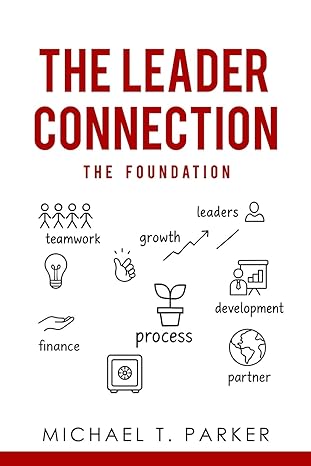

The book dives deep into the human side of leadership. It is part reflection and part manual, weaving together Parker’s personal journey with practical advice. He covers empathy, communication, adaptability, and the nuances of eight distinct leadership styles. The core message is clear. Leadership is not about authority. It is about building trust, connection, and growth within a team. Through stories, frameworks, and exercises, Parker paints a picture of leadership as a living relationship between people rather than a system of control.
Reading this, I felt drawn to Parker’s honesty. He doesn’t pretend to have been a perfect leader, and that humility makes the lessons hit harder. The mix of memoir and guide felt refreshing. Some moments, especially when he shared about his father, his son, or his own missteps, carried a warmth that made me pause. The book sometimes lists traits and challenges like lecture notes. The sincerity behind it kept me engaged, and I found myself reflecting on my own experiences with bosses who inspired connection versus those who drained it.
What stood out most for me was how personal and vulnerable his approach is. I appreciated the balance between theory and story. The chapters on servant leadership and authentic leadership especially struck a chord. They reminded me that good leadership often looks less like grand gestures and more like quiet acts of service. It reads like someone thinking aloud after a long career, eager to pass on everything they’ve learned.
I would recommend The Leader Connection to managers who are tired of dry business texts and want something more human. It’s also a good pick for anyone stepping into leadership for the first time and looking for guidance that feels grounded rather than academic. Parker doesn’t promise easy answers. What he offers instead is a lived-in, heartfelt reminder that leadership is about people, and that connection is what makes the work worthwhile.
Pages: 186 | ASIN : B0FN1VV122

Understanding Economics
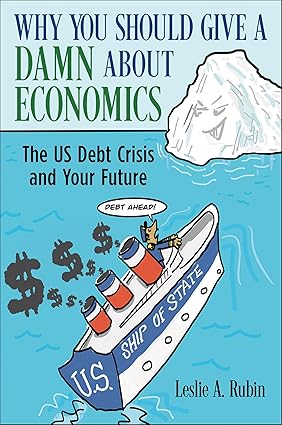
Why You Should Give a Damn About Economics a passionate and plainspoken call to action aimed squarely at the average American voter to help them understand how government spending and economic principles shape their daily lives. Why was this an important book for you to write?
Most citizens have not had basic economics, and it is important for them to understand that in order to understand the economic policies we are following and the dangers we face. So, part II delved into the key issues and severe problems that most people do not think about. We must get there attention and hope they will recognize the serious nature of our economic problems, AND let their elected representatives know they want it fixed.
What were some ideas that were important for you to share in this book?
Basic economics first, both micro and macro in an easy-to-understand condensed version but covering all the major topics. Then introduce the problems in a way that they can relate to and understand. I try to get across how serious the problems are and what we can do about them.
What is one thing about economics in politics and its impact on the average American that you think is misrepresented in the media?
The bias is widespread, and it leans left in almost all cases. I want them to understand good economic policies beget good results, and our out-of-control spending to buy votes, is killing this country. Limited Government + fiscal restraint + reasonable regulations will get us back to growth and prosperity, as we used to have it.
What is one thing that you hope readers take away from Why You Should Give a Damn About Economics?
Our spending is out of control and the deficits will eventually destroy this country for our kids and grandkids. Our debts today are around $37 trillion and moving in 10 years to nearly $70 trillion if we stay on our current course. That will destroy us. But the politicians are focused on the next election, not the next generation, so they do anything to get elected, and if we are uninformed about the consequences, we will keep supporting them as they buy our votes with endless give-a-ways.
America is facing a fiscal crisis. The accumulating national debt now reaches into the tens of trillions—and shows no end in sight. Meanwhile, our leaders in Washington have done little to mitigate this threat. In Why You Should Give a Damn About Economics, business executive and former CPA Leslie A. Rubin explains why this pressing issue matters to every American.
In simple, straightforward language, Rubin explains how national economics affects our daily lives. He aptly outlines the basics of US economic policy, the crisis we face today—and both the pitfalls and benefits of proposed solutions. A concise but comprehensive handbook, Why You Should Give a Damn About Economics provides the tools we need to disarm the debt bomb before it’s too late.
Why You Should Give a Damn About Economics: The US Debt Crisis and Your Future

After reading Why You Should Give a Damn About Economics by Leslie A. Rubin, I found it to be a passionate and plainspoken call to action aimed squarely at the average American voter. The book is split into two parts. The first explains foundational economics concepts like supply and demand, fiscal and monetary policy, and different types of economic systems, all in accessible terms. The second half focuses on the United States’ growing national debt, the dangers of inflation, entitlement programs, and governmental inefficiencies. Rubin argues that an uninformed electorate is a key reason behind poor economic policy, and he believes that basic economic literacy is the only way to correct our course.
Rubin is not an academic economist, and that turns out to be one of the book’s strengths. He writes like a concerned citizen, not like someone trying to prove his intellect. The tone is direct and sometimes emotional. There are moments when the fear of economic collapse feels almost like a doomsday warning, but Rubin keeps it grounded with historical context and real-world examples. He even manages to inject humor through little sidebars and “KISSEs” (Keep It Simple, Stupid Examples), which made me smile more than once.
Rubin clearly emphasizes concerns about government overreach, and he makes an effort to stay nonpartisan. His perspective brings a clear and focused argument, though readers from different viewpoints might see things differently. His tone throughout carries a strong sense of urgency, especially when discussing the national debt and entitlement spending. At times, it feels intense, but it comes from a place of concern and care for the country’s future. His passion is clear, and his message is meant to prompt action.
I’d recommend this book to anyone who feels left out of economic conversations or overwhelmed by jargon-filled debates on fiscal policy. It’s especially helpful for young adults, new voters, or anyone who wants to understand how government spending and economic principles shape their daily lives. If you’re someone who’s been tuning out because economics sounds boring or too complicated, this book might change your mind.
Pages: 202 | ASIN : B0CY2W2J6H

The Whisper Way: The Secret Formula for Female Entrepreneurs to Scale and Sell for Life-Changing Money

Carrie Kerpen’s The Whisper Way is part memoir, part business guide, and part fictional fable—all tied together with a mission to help women entrepreneurs scale their businesses with intention and, if they choose, sell for real money. The book is built around a cozy, engaging story of seven women who attend a retreat hosted by the ethereal and wise Ramona Kalman, a fictionalized version of Kerpen’s aspirational self. At the heart of it all is the Whisper Way, a clear and emotionally intelligent framework designed specifically for women to grow their businesses in a way that feels aligned, empowered, and strategic.
One moment that completely got me was in the intro, when Carrie talks about sitting across from a room full of men during the sale of her company, defending every line of her financials. “It felt like I was fighting to sell my left arm,” she says. The idea that something I pour my soul into could one day be picked apart by strangers was a terrifying idea. But it was also motivating. That fear is real, and this book doesn’t sugarcoat it. Carrie gets it. She gets the late-night Googling. She gets the burnout. She gets the part where you kind of want to give up but don’t.
What I really loved is that she didn’t just stay in the weeds of personal narrative or toss out vague advice. She gave structure. The chapter “Secure Your Secret Sauce” helped me realize that I don’t need to copy anyone else’s business model. What makes my idea special is me—and that’s the thing I should protect and lean into. The fictional retreat setting honestly felt a little woo-woo at first, but then I got it. It created a space for storytelling that felt like group therapy for entrepreneurs. I saw pieces of myself in Hannah, Ivy, and even Wendy with her “I don’t know what I want” energy.
If you’re a woman with a business, whether you’re just getting started or you’re three years deep and still figuring out if this whole thing is going to fly, this book is for you. It’s not preachy. It’s not some “10X your growth with this funnel” nonsense. It’s human. It’s warm. It’s got solid business advice wrapped in a big sister hug. Read it if you’ve ever felt like the only woman in the room, if you’ve ever doubted your worth, or if you just want someone to finally say out loud what you’ve been whispering to yourself for years.
Pages: 224 | ASIN : B0DL7W83JN
Empirical Observation

Jade Reflections is a thorough exploration of the Western Zhou era through the lens of jade artifacts, examining the political, social, and philosophical shifts during this influential period in early Chinese history. Why was this an important book for you to write?
The world is witnessing rising tensions as China’s power and influence grow, backed by decades of economic success. Some see this as an economic rivalry; others frame it as an ideological conflict between capitalism and communism. Through my empirical observations of ancient jade, I propose that this fundamental conflict goes deeper—to a core difference in thought. Ancient jade holds insights into what people once believed and valued, allowing us to trace how Chinese thought has evolved over thousands of years. I hope to reveal that jade is not just cultural heritage but a record of historical ideas that shaped Chinese civilization.
What were some ideas that were important for you to share in this book?
Beyond offering technical guidance on identifying ancient jade, particularly from the Western Zhou Dynasty, I emphasize the importance of empirical observation and critical thinking. Ancient jade holds untold history, which we can only uncover through scientific methods and philosophical inquiry, inspired by the Greek tradition of empirical analysis. The field of ancient jade is still uncharted in many respects, and examining these artifacts through a rigorous, empirical lens brings us closer to understanding not only the artifacts but also the people behind them.
How much research did you undertake for this book, and how long did it take to put it all together?
This book is the product of decades of study, and my research is ongoing—I’m learning something new every day.
What is one thing you hope readers take away from Jade Reflections?
I hope readers look within themselves and discover the wealth within, just as I did with jade. We all have an inner heritage, though many of us never realize it. Discovering the history of ancient jade led me on a journey not just to understand artifacts but to uncover a profound inner treasure. I found mine, and I hope that through my books, readers might begin their own journey to find theirs.
Author Links: GoodReads | Facebook | Website | Amazon
Organized chronologically into early, middle, and late periods of the Western Zhou dynasty, the book examines jade artifacts within the context of their functions: serving gods, decoration, and burial. Through detailed analyses of over forty jade pieces, it elucidates how these artifacts reflect the political and social transformations of the era.
The first part of the book traces the political and social changes of the Western Zhou period, while the second part focuses on jade artifacts themselves. Through empirical observation, readers gain deeper insights into both jade and Chinese culture. The author also sheds light on jade vessels, challenging contemporary scholarly perspectives and advocating for a critical reexamination of both jade artifacts and the culture they represent.
The Leadership Quotient

In The Leadership Quotient: Practice Meets Theory, the author provides an in depth examination of the qualities of a leader, explains how to be the best leader, helps readers deal with different characters, and shows readers how to apply their intelligence in their quest to guide others. Author Tony Marolt is well versed in matters of leadership and he is detailed when expounding on topics that are not familiar to many. Every topic in this enlightening book is well-researched and well-written. The author does not write based on assumptions; he uses facts and experiences.
The author starts by explaining the various quotients that a leader needs to have. Tony Marolt writes about Intelligent Quotient (IQ), Emotional Quotient (EQ), Action Quotient (AQ), and Decision Quotient (DQ). The author explains how crucial each of these quotients are for a leader, and how they should balance. I really enjoyed the discussions on AC and DQ as I found it most relevant to me personally. I especially appreciate how clear the author was when discussing those terms, given that they are not as known or observed as IQ and EQ. The author’s description of Action Quotient was apt and learning about Decision Quotient was fulfilling. The author advises readers on how to behave as a leader, and what to display to those that are looking up to you. Are you required to say yes, no, or maybe? The reader is enlightened on making decisions and how to respond when faced with a dilemma.
As a reader, you get immersed in the world of leadership, get exposed to the challenges those in positions of power face, and even gauge your leadership skills. The author is practical and knows how to engage his audience. As you read every chapter, you get to connect with the author on different levels. The author shares lessons that will help you become a leader and grow in whatever capacity of leadership you have.
My favorite part of the book was the tips shared and the exercises. Tony Marolt also shares his experiences while in the Navy and in corporate life. The author’s stories are enlightening, entertaining and carry with them substantial life lessons. My biggest takeaway from the author was how to take charge of your environment. I learned that you can control a situation even as an individual who is not in a leadership position.
This book is the ideal guide for individuals that are aiming to be leaders in both small and big positions. Are you looking for a management position? Do you want to head your department? Do you want to earn more respect as the head of your family? Tony Marolt has all the answers for you. With practical guidance and actionable tips The Leadership Quotient is the decisive guide that prospective leaders need.
Pages: 132 | ASIN: B093L5MJSB
Vultured

Reading Vultured was an enlightening experience not just because of the lessons shared by author Adam Starks but also because of his encouragement to readers about entrepreneurship. The book is part memoir and part business development book. It tells the story of Adam Starks, a business owner in the service industry who has seen it all.
The author journals his experiences, engaging the reader in every topic that touches on the significant challenge or wins he encountered. This book is an excellent read if you are passionate about starting a small business and you are looking for pointers from someone with extensive experience. The author uses a unique phrasing as he chronicles his business journey, family, dealing with finances, and friendships.
The book is divided into three sections, with each section covering various related topics. Adam Stark has written a captivating book that includes his personal story about running his business, personal life, lessons learned, the ups and downs of the service industry, and how to navigate the waters of entrepreneurship. The author is open and applies his frankness throughout the book.
The author is straightforward and rarely uses complex jargon in his narration. As a result, the text in the book flows naturally, and the reader can grasp the subject matter with ease. Some of the topics that I found invaluable touched on the real vultures in business and their greed, contractors, food distributors, COVID19, trademarking, and music licensing. When discussing a concept, like the expenses incurred when running a business, the author lists the key points and dissects the subject matter in detail.
The author also goes into specifics when discussing issues, not generalizing topics. Topics related to entrepreneurship include marketing, labor, sourcing for more capital, legal, dedication, and consistency when running small and medium-sized enterprises. One of the critical lessons I learned in the book is that the government is involved in small businesses indirectly. Good policies created by lawmakers will make your business flourish. This book is about entrepreneurship, but the author also educates the reader on politics’ role in running a business.
Vultured is an eye-opening self-help book for entrepreneurs that is filled with actionable advice and tips from someone that has been there. The author shares his lessons learned from running a small business with readers in hopes they can avoid the mistakes he made.
Pages: 148 | ASIN : B09QQMQW7T



 LITERARY TITAN