Blog Archives
A Sustainable Life

Humanity in Trouble and Our Failure to Act is an unfiltered collection of essays that offer insights into the human condition, where humans have gone wrong, and potential solutions to alleviate human suffering on both individual and global scales. Why was this an important book for you to write?
Because as a species we have not improved our lot or reversed our negative impact on the environment and life on the planet. We have not lived up to our potential given our big brains and despite our “invention” of science and technology and subsequent understanding of how the Universe works.
What were some ideas that were important for you to share in this book?
Humanity’s lack of connection or respect for Nature resulting in our devastating effect on the environment.
Our lack of impulse control, egocentric nature, and failure to live up to the potential of our big brains.
Gradual but impending environmental devastation and high probability of species-level extinctions, including our own.
Perpetual emergence of dictatorial, warlike leaders throughout history, now armed with nuclear weapons.
What advice do you have for individuals who feel powerless in the face of the world’s current challenges and want to make a positive impact?
Start with working to improve all aspects of one’s own existence: live a sustainable life, support humanitarian and environmental action, vote for enlightened political candidates, practice charity, study the self, meditate, improve the education of children, and promote global peace.
What is one thing that you hope readers take away from Humanity in Trouble and Our Failure to Act?
You are not a “separate being” but rather a sentient member of the Universe interconnected with the web of all life, matter, and energy, and act accordingly by practicing gratitude, love, and compassion.
Author Links: GoodReads | X (Twitter) | Facebook | Amazon
This book is the result of overwhelming outrage and disappointment with our species, our failure to adequately address worldwide problems that threaten our very existence. We (if there is a ‘we’) should be embarrassed and ashamed. Nature has endowed us with near perfect bodies and amazing brains and for the most part we squander our evolutionary inheritance. And the greatest gift of all, consciousness, is under-developed in most of us. In this collection of essays, the author offers insights into the human condition, the reasons we have run afoul of the natural order, along solutions to alleviate human suffering on an individual and global scale plus some playful jabs at our human folly.
One Door at a Time: How Putting Students at the Center of Education Works
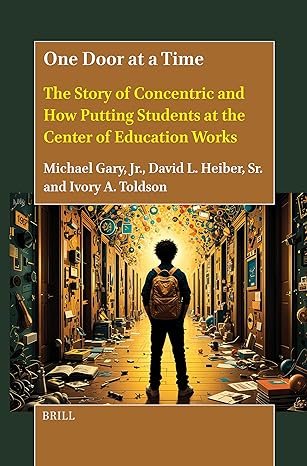

One Door at a Time is a powerful memoir-manifesto hybrid, co-written by Michael Gary Jr., David L. Heiber Sr., and Ivory A. Toldson, that tells the story of Concentric Educational Solutions, a student-first initiative grounded in Afrocentric values and real-world experience. Through a mix of lived narratives, reflective critique, and practical frameworks, the book charts the failures of the traditional education system, especially in underserved Black communities, and the grassroots, door-knocking, relationship-centered model that Concentric has pioneered. With stories from Baltimore to D.C. to Detroit, the authors show how putting students and their families at the core of the education process can transform not just academic performance, but lives.
The writing is earnest and clear, but it never hides from the hard stuff. I appreciated how the authors peeled back layers of bureaucracy and systemic dysfunction without sugarcoating anything. They didn’t shy away from naming how some systems are built not to serve but to survive themselves. What hit hardest were the sections about chronic absenteeism and the real lives behind those data points. They didn’t just throw around big ideas, they brought in stories of missed kids, misunderstood families, and teachers caught in the crossfire of outdated models. It felt deeply personal. You can tell these folks have walked the walk.
What stood out most to me was their relentless commitment to human connection. It sounds simple, just go to a student’s house and ask why they’re not in school, but the bravery and humility in that act is huge. This isn’t some theoretical overhaul. It’s a day-to-day grind rooted in trust and compassion. The Afrocentric lens added a depth I didn’t realize was missing in a lot of education reform writing. They’re not just advocating for more “diverse” classrooms. They’re rethinking what school means altogether, from the ground up, through culture, family, and identity. At times, it read like a love letter to forgotten students and a challenge to every adult who ever said, “We did our best.”
I would recommend One Door at a Time to anyone who works in education, or who has ever wondered why school isn’t working for so many kids. It’s especially important for policymakers, school leaders, and those in teacher prep programs. But I think it would move anyone who believes education should be about more than test scores. This book isn’t a silver bullet, but it’s a flashlight and a set of tools, and a reminder that sometimes, real change starts with just knocking on one door.
Pages: 260 | ISBN : 978-9004735989

Luella’s Library

Luella’s Library follows a young book-lover named Luella and her tech-obsessed best friend, Lino. While Lino would rather play games on his phone, Luella invites him to her magical home library. What begins as a reluctant visit quickly turns into an unexpected journey when a book literally opens a portal to a string of enchanted worlds. From leprechauns and giant flowers to pirate chases and Pegasus flights, Luella and Lino bounce through whimsical scenes to help a lost leprechaun find his pot of gold. With each chapter-like page jump, Lino inches closer to understanding the power of stories and, maybe more importantly, the joy of reading.
I really enjoyed this children’s book. The writing feels fresh and light, and it’s got this genuine warmth that pulls you in without trying too hard. Tara Lala keeps the pace quick and bouncy, which works beautifully for younger readers, but it’s the undercurrent of real friendship and curiosity that made me smile the most. Lino’s change from grumbly phone kid to wide-eyed explorer never feels forced. It happens in little moments, like when he chooses to paddle away from pirates or plans to rescue the leprechaun from cave bats, that feel earned and sweet.
The artwork is a real treat for the eyes. Every page bursts with color, from glowing portals to shimmering forests, and the level of detail in each scene adds so much depth to the story. You can spot tiny fairies dancing near fireflies, or catch the sparkle of a unicorn’s mane as it gallops. The illustrations feel alive. Each setting feels carefully crafted and full of charm. It’s clear a lot of thought went into bringing this magical world to life, and it absolutely pays off.
I think the book is strongest when it leans into that childlike sense of discovery. There’s something charmingly nostalgic in the way the story treats books like treasure maps. The dialogue stays simple, but never boring. It’s not trying to teach a lesson in a heavy-handed way. It’s just showing that reading can be magical, funny, and exciting.
I’d definitely recommend Luella’s Library to parents of kids who are hesitant readers or glued to their screens. It’s especially great for kids aged 5 to 8, and perfect for a read-aloud bedtime adventure. Honestly, it gave me that little rush you get when you remember why you fell in love with stories in the first place. It’s bright, fun, and just plain lovely.
Pages: 38 | ASIN : B0F7NPYTC6
Educating the Public

Healing Canadian Healthcare is a heartfelt, firsthand call to action from veteran nurse Kathleen Boucher, offering practical solutions and powerful stories to address Canada’s deepening nursing crisis. Of all your proposed solutions, which one do you believe would have the biggest immediate impact if implemented today?
I think that if all the provinces made short infomercials about the many choices nurses have in their careers, it would help educate the public. To be cost-effective and maintain consistency, the provinces could use the same infomercials across the country.
What would you say to a young person considering nursing today, in light of the system’s current challenges?
Nursing is an excellent profession with numerous choices, allowing you to find a specialty that you enjoy helping people in. The more young people who join and remain in nursing, the faster the healthcare system will improve.
What moment or experience finally pushed you to write this book after decades in the field?
An RN with whom I work, who has over ten years of experience, kept saying to me that she did not think she would last until retirement. The fact that she felt she would not last until retirement bothered me, as we need a mixture of new graduate nurses, nurses who have been in the profession for a few years, and veteran nurses to work each shift. I listened to a webinar about writing a short, punchy book. A punchy book, by definition, is a short read that requires a topic that needs to be discussed but may be controversial. Educating the public about nursing and asking Canadians to help improve nursing enrolment & retention may seem like a lofty goal. The nursing crisis is a subject that warrants discussion.
Author Links: Goodreads | Facebook | Website | Amazon
Essential Safeguards

The Teaching Guarantee: Three Things is a heartfelt manifesto on education, distilling a lifetime of leadership into three essential reflections: what excites, what concerns, and what truly matters in schools today. How did you decide on the “three things” structure?
Effective communication across all levels in a school community is the foundation of a well-functioning, supportive, and successful educational environment. It enhances collaboration, trust, and accountability, leading to better school outcomes and a more harmonious school culture.
As a school leader, effective communication is a priority for me. As with everything I do, I ask myself, how can I improve this? How can I ensure that my message reaches everyone? It is by no means an easy thing to accomplish.
Towards the end of 2022- 2023, I experimented with the 3 Things approach at weekly school assemblies. It ensured my message was simple, pertinent, and received. Ramble on too much, and any message can get lost and quickly forgotten. This approach enabled effective communication!
Ever since then, any time I talk, I relate it to the three things framework. My first mention of the model was in The Teaching Guarantee: Every Day is Different (Chapter 63: School Assemblies)
You express optimism about AI in education. What safeguards do you believe are essential to ensure it enhances rather than harms learning?
Drawing on decades of educational leadership experience, here are the essential safeguards I believe schools need for AI implementation:
Academic Integrity Foundation
The most critical safeguard is teaching students when and how to use AI appropriately, not simply banning it. Just as we taught proper research methods when the internet emerged, we must establish clear guidelines for AI as both a learning tool and a shortcut.
Teacher Professional Development
First Having led through multiple technology transitions, I’ve learned that successful implementation always begins with comprehensive teacher training. Educators need hands-on experience with AI tools before they can effectively guide students. Without this, we risk either complete avoidance or misuse.
Graduated Implementation by Grade Level
Primary school students need different AI exposure than secondary school students. I recommend starting with AI as a brainstorming partner in upper elementary, progressing to research assistance in middle school, and finally introducing advanced applications in high school.
Transparent Usage Policies
Students, parents, and teachers must understand exactly when AI use is permitted, required, or prohibited. These policies should be as transparent as our existing guidelines for calculators, spell-check, or internet research.
Critical Thinking Enhancement, Not Replacement
The key safeguard is ensuring AI amplifies human reasoning rather than replacing it. Students should learn to question AI outputs, verify information, and understand AI limitations.
Regular Assessment of Learning Outcomes
We must continuously monitor whether AI is improving learning or creating dependency. This requires new assessment methods that distinguish between AI-assisted and independent student work.
The technology has changed, but the fundamental principle remains: any educational tool should increase student agency and understanding, not diminish it.
What advice would you give to new teachers feeling overwhelmed by bureaucracy and burnout?
Drawing from five decades of watching new teachers navigate these same challenges, here’s the advice that has proven most effective:
Start with Your “Why”
When bureaucracy feels suffocating, reconnect with what brought you to teaching. Keep one photo or note from a student’s breakthrough on your desk. I’ve seen countless teachers weather difficult seasons by anchoring themselves to their core purpose rather than the administrative noise.
Master the Essential Ignore the Optional
Every school has required tasks and “strongly suggested” initiatives. Learn quickly to distinguish between them. Focus your energy on what directly impacts student learning and meets actual mandates. The rest can wait.
Find Your Teacher Tribe
Identify 2-3 very experienced teachers who still love their work despite the challenges. These aren’t the complainers in the faculty room, but rather the ones who have learned to work within the system while maintaining their passion. Their wisdom is invaluable.
Create Non-Negotiable Boundaries
Decide your work hours and protect them fiercely. I’ve watched too many promising teachers burn out in their second year because they tried to do everything perfectly. Excellence in a few areas beats mediocrity across all areas.
Document Everything Simply
Keep basic records of parent communications, student interventions, and administrative requests. This isn’t about distrust—it’s about protecting your time from repetitive questions in the future.
Using What Works to Improve What Doesn’t
Reflect deeply on your approaches that work well with your classes. Identify the key actions or processes that ensure success. Then apply these to those approaches that do not work to your expectations and enjoy the difference.
Remember: This Too Shall Pass
Educational initiatives come and go. I’ve witnessed six major reform movements. The bureaucracy that feels overwhelming today will likely be replaced by something else in three years. Focus on timeless teaching principles.
The students in your classroom need you to survive and thrive, not to burn out trying to satisfy every administrative demand.
In your experience, what’s the single most underappreciated quality in effective school leadership?
Institutional memory.
After 52 years, I’ve come to believe this is the most underappreciated quality in effective school leadership—and the one that separates truly transformational leaders from those who simply manage crises.
Most leaders focus on immediate challenges: this year’s test scores, next month’s budget deadline, and today’s parent complaint. However, the most effective school leaders I’ve known—and have learned to become myself—understand that every decision exists within a larger institutional narrative.
When I see a principal who knows why the third-grade team resists new math curriculum (because they lived through three failed adoptions in five years), or who remembers that the current discipline problems mirror patterns from a decade ago that were solved through specific community partnerships—that’s institutional memory at work.
This quality manifests in several critical ways:
· Recognising which “new” initiatives are recycled ideas that failed before.
· Understanding the deeper cultural currents that drive staff resistance or enthusiasm.
· Knowing which community relationships took years to build and must be carefully maintained.
· Seeing how current challenges connect to historical patterns.
Technology has changed dramatically since I began, but the human dynamics in schools follow remarkably consistent patterns. Leaders with strong institutional memory can navigate these patterns more effectively than those who constantly reinvent solutions.
Without this quality, even brilliant leaders find themselves fighting the same battles repeatedly, wondering why their excellent ideas meet unexpected resistance, or why their predecessor’s “failed” programs might have been ahead of their time.
Schools are living institutions with long memories. The most effective leaders honour and learn from that institutional wisdom.
Author Links: GoodReads | Website | Amazon
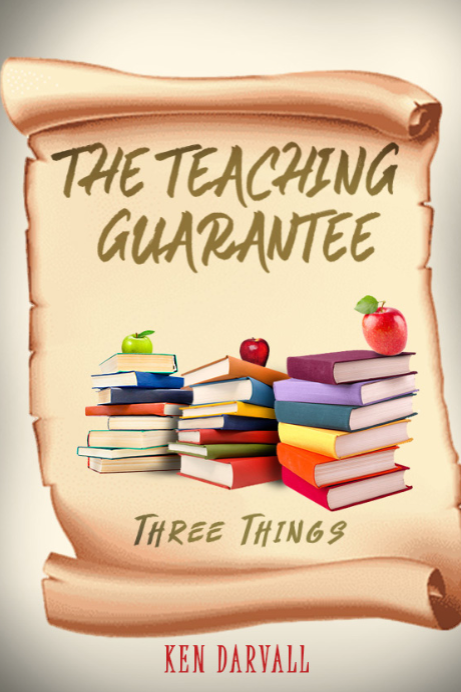
The Teaching Guarantee: Three Things

Ken Darvall’s The Teaching Guarantee: Three Things is a reflective, candid, and highly structured look into the world of education through the eyes of a seasoned school leader. In this third book of his series, Darvall boils down the vast landscape of modern schooling into three simple but powerful categories: what excites him, what concerns him, and what he believes is important. The book’s structure—sixty short chapters grouped into those three sections—invites educators, parents, and even students to engage with education not as an abstract policy debate, but as a deeply personal mission. Whether he’s praising the role of AI in the classroom, critiquing bureaucratic inertia, or urging accountability and authentic leadership, Darvall’s message is consistent: education must be grounded in values, driven by purpose, and oriented toward practical action.
What I liked most about this book was its clarity. Darvall doesn’t lecture. He shares. And his voice, though authoritative, carries the warmth and weariness of someone who has seen it all and still chooses hope. I found myself nodding along with much of what he wrote, particularly his points about personalised learning, student wellbeing, and the critical role of integrity in both leadership and the classroom. His excitement about the future of education—AI, hybrid learning, global collaboration—felt genuine, even contagious. At the same time, he doesn’t sugarcoat the hard stuff. He lays out his concerns with unflinching honesty: inequity, disengagement, mental health crises, political meddling, and the crushing weight of endless meetings. And yet, he never slips into cynicism. He always circles back to what matters.
The bullet-point style and repetitive emphasis on familiar themes (growth mindset, lifelong learning, team culture) occasionally felt like being in a lengthy staff development meeting. But then again, maybe that’s the point—his book mirrors the very structure of a school year: full of lessons, reinforcements, goals, and gentle nudges. It isn’t flashy or revolutionary, but it is solid. Dependable. Much like a good teacher.
I walked away from Three Things feeling inspired, even reassured. It’s the kind of book that reminds you why education matters. It doesn’t promise to solve every problem, but it gives readers a clear compass to work with. I’d recommend this book to school leaders, aspiring teachers, policy influencers, and anyone who’s ever sat in a staffroom wondering if what they do really matters. According to Ken Darvall, it does—and he backs that up with more than fifty years of experience, reflection, and love for the craft.
Strategic Opportunities for Bridging the University-Employer Divide

In Strategic Opportunities for Bridging the University-Employer Divide, William E. Donald delves into the complexities and crucial roles of university career advisors and graduate recruiters in sculpting the career pathways of graduates. This thought-provoking book assesses how academic institutions and corporate entities can collaboratively enhance graduate employability and career readiness, a theme increasingly pertinent in our rapidly evolving job market.
Donald’s analysis is grounded in a comprehensive exploration of the systemic challenges and strategic opportunities that define the current landscape of higher education and employment. His insights into the underutilized potential of career services in universities are particularly enlightening. For example, in his discussion on the employability capital, Donald emphasizes the need for a multifaceted approach to student career preparation, which includes enhancing students’ social and psychological capitals as well as their market-value capital.
The book also offers a critical view of the recruitment practices by graduate recruiters. Donald suggests that while there is a significant reliance on technology and data analytics in recruiting, there’s an essential human element that is often overlooked. The narrative vividly illustrates how personalized career advice and strategic employer engagements can substantially benefit students, a viewpoint that resonated with me, given my own observations in the education sector.
Further enriching the discourse, Donald incorporates ‘Lived Experience Insights’ throughout the chapters. These vignettes offer real-world examples of challenges and solutions related to university-career service collaborations and are a testament to the book’s practical applicability. For instance, the story of how a recruitment drive was tailored to include more diverse candidates and significantly enhanced the organizational culture and productivity.
Strategic Opportunities for Bridging the University-Employer Divide is a critical read for educators, recruiters, policymakers, and even students. The book encourages a reevaluation of current practices and promotes a more integrated approach to preparing students for the world of work. Its thorough analysis and actionable insights make it particularly useful for professionals in educational administration and corporate recruitment. Donald eloquently argues that true collaboration between educational institutions and industry can lead to sustainable career success for graduates, a goal more critical today than ever before.
Pages: 356 | ISBN: 1668498316
Foundational Research

Developing Employability Capital in University Students offers readers invaluable advice for navigating the unpredictability of the modern job market. Why was this an important book for you to write?
Having previously worked as a graduate recruiter in industry and spent the last decade in academia researching graduate employability and sustainable careers, it was clear to me that traditional skills and attributes models are no longer fit for purpose. Career development professionals and academics need an innovative tool to prepare university students for a volatile, uncertain, complex, and ambiguous labour market.
The Employability Capital Growth Model (ECGM) addresses this need by offering a versatile tool designed to help support university students across all disciplines and years of study. It considers how the interplay of nine forms of employability capital and contextual factors play out over time, leading to various personal outcomes.
This book makes the ECGM accessible to career professionals, educators, and students alike. Whether used in one-to-one coaching, group workshops, or embedded into university curricula, it equips readers with practical strategies to navigate career uncertainty and build fulfilling, sustainable careers in an increasingly complex world.
Can you share with us a little about the research required to put your book together?
Bringing this book to life required deep research and real-world application. It started with a systematic literature review which I conducted alongside Professor Yehuda Baruch and Associate Professor Melanie J. Ashleigh at the University of Southampton, UK. We identified nearly 100 academic studies published between 2016 and 2022, which informed the development of the ECGM. This foundational research is detailed in Chapter 3, while Chapters 4 to 6 introduce and explain the ECGM itself.
But theory alone isn’t enough. I wanted to see how the model worked in practice. So, I collaborated with career professionals and academics across 16 countries, gathering 19 mini case studies of how they used the ECGM with their students. Their insights, shared in Chapters 7 and 8, played a crucial role in refining the model and led to the development of a 10-step guide (Chapter 9) to help others implement it effectively.
Finally, I wanted to place the ECGM within a bigger picture. It is underpinned by Sustainable Career Ecosystem Theory (SCET), which I developed by combining Sustainable Career Theory (co-developed by Professor Beatrice I. J. M. Van der Heijden & Professor Ans De Vos in 2015) and Career Ecosystem Theory (developed by Professor Yehuda Baruch, also in 2015). Drawing on collaborative insights from the founders of the two foundational theories, SCET is introduced in Chapter 2 and revisited in Chapter 10 to show how the ECGM can contribute to a sustainable career ecosystem.
What is one piece of advice you wish someone had given you when you were younger?
Don’t be afraid to ask for help. It’s easy to think that successful people figured everything out on their own, but in reality, everyone started somewhere. Most people are happy to share their experiences, offer guidance, and answer questions. You just have to reach out!
Beyond networking, asking for help gives you access to the kind of knowledge that isn’t written in textbooks or job descriptions. It’s those unwritten, unspoken insights that can make all the difference. Whether it’s choosing the right educational path, navigating career transitions, or even making big life decisions, learning from others’ experiences can help you avoid pitfalls, seize opportunities, and build a career that aligns with your goals.
What is one thing you hope readers take away from your book?
We are all part of a larger career ecosystem. Your career is shaped by the people, organizations, and industries around you. It does not develop in isolation. At the same time, your choices and actions also influence the opportunities available to others.
Whether you are a student, educator, or career professional, I hope this book inspires you to take an active role in shaping a future where career success is not just about individual achievement. By recognizing this interconnectedness, we can shift our focus beyond simply chasing job titles and instead work toward building sustainable and fulfilling careers.
Author Links: GoodReads | Routledge Taylor & Francis Group | Website | Amazon
By adopting a holistic view of graduate employability complemented by Sustainable Career Ecosystem Theory, this book offers interdisciplinary insights from applied psychology, career development, higher education, human resource management, and sociology. The book is divided into four parts:
Part I begins with the theoretical foundations of a sustainable career ecosystem and the development of the ECGM.
Part II offers an in-depth exploration of the ECGM, incorporating nine forms of capital, contextual and temporal factors, and personal outcomes.
Part III presents a 10-step guide to using the ECGM with university students, informed by 19 cases from 26 career development practitioners and academics from across 16 countries and 6 continents.
Part IV encourages readers to consider the implications for other actors within a sustainable career ecosystem and concludes with a summary of the key takeaways for each chapter.
Whether used in one-to-one sessions, group workshops, or as part of university curricula, this book makes the ECGM accessible and easily applicable for anyone seeking innovative strategies to support university students in achieving sustainable and fulfilling careers.



 LITERARY TITAN