Blog Archives
Grasp the “Soul” of a Language

Vademecum of English is a meticulously crafted handbook designed as a reference tool for English teachers and advanced learners that condenses linguistic knowledge into charts covering phonetics, grammar, vocabulary, and etymology. Why was this an important book for you to write?
Actually, I didn’t intend to write a book at all, I started gathering the information I needed for my classes —I have taught English for more than 40 years—, looking for logical explanations for the tricky aspects of the English language, such as irregular verbs, the “chaotic” spelling, and so on. I checked on several grammar books, dictionaries and the like and usually found 10-12 pages devoted to a single issue, sometimes with contradictory information. So I summarized the main features and rules in convenient diagrams to keep it handy. As I was solving different issues, I started organizing them in single-themed charts. At some point, I realized that all this information could be helpful for many other teachers facing the same problems. So I decided that it was time to share.
How much research did you undertake for this book, and how much time did it take to put it all together?
Gathering the information has been a lifetime endeavor and I have been shaping it for many years, trying to be exhaustive and considering every aspect of the language. Once I decided to publish it as a book, it was a matter of organizing all the material, and that took me about a year.
What were some ideas that were important for you to share in this book?
Few people pay attention to phonetics and phonology when learning (or teaching) a new language. Learning the correct sounds is crucial and should be the first step in the learning process. For example, a few charts show the different pronunciation options of the English letters, pointing out the patterns that native speakers follow.
Regarding vocabulary, we selected the basic and most frequently used words and organized them in thematic families. The grammar part deals with the combinatory structures that shape the language and highlights many hidden rules that even native speakers are unaware of, such as the patterns of irregular verbs.
From my own experience, in order to master a language, you must try to grasp its “soul” and make it yours. You can only achieve that if you really understand where words come from, what are the small pieces (roots and affixes) that shape them, and how they are built. For this, you need to explore the etymology of the words which is also very helpful when learning other related languages like Spanish, French, Italian, German, etc. That is the largest part of the book, 54 out of 120 charts are devoted to this aspect.
What is one thing you hope readers take away from Vademecum of English?
It is not meant to be read cover to cover but used as a companion and reference guide for anyone interested in understanding the features, mechanisms and idiosyncrasies of the English language. Languages are systems and systems follow a logic that is not always clear. I have tried to untangle the historical threads of the language to show such logic. I hope readers enjoy discovering the secrets of English through the pages of this book.
Author Links: GoodReads | X | Facebook | Website | LinkedIn – author | LinkedIn Lexiway
Literary Titan Gold Book Award: Nonfiction

The Literary Titan Book Award recognizes outstanding nonfiction books that demonstrate exceptional quality in writing, research, and presentation. This award is dedicated to authors who excel in creating informative, enlightening, and engaging works that offer valuable insights. Recipients of this award are commended for their ability to transform complex topics into accessible and compelling narratives that captivate readers and enhance our understanding.
Award Recipients






























Visit the Literary Titan Book Awards page to see award information.
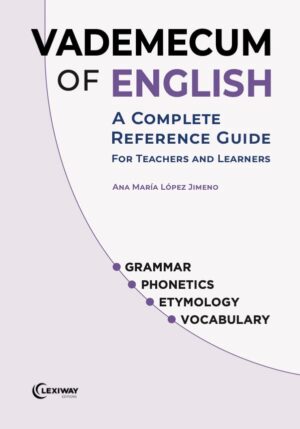
Vademecum of English: A Complete Reference Guide for Teachers and Learners
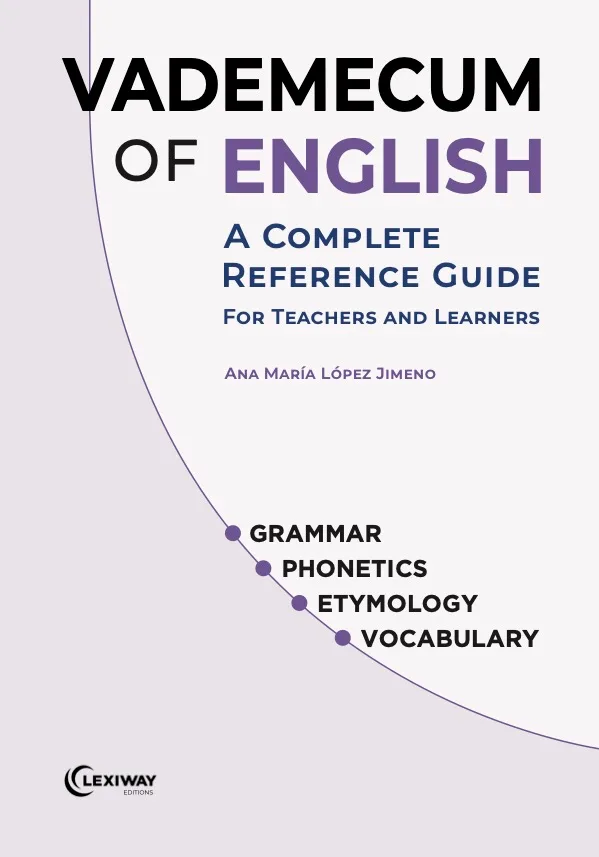

Vademecum of English, by Ana Maria López Jimeno, is a meticulously crafted handbook designed as a reference tool for English teachers and advanced learners. The book condenses a wealth of linguistic knowledge into charts covering phonetics, grammar, vocabulary, and etymology. With its focus on accessibility and clarity, it aims to demystify complex aspects of the English language, such as irregular verbs and the peculiarities of spelling, while offering insights into word origins and thematic vocabulary.
One of the strongest aspects of the book is its structure. López Jimeno organizes this guide in a way that makes learning intuitive. The phonetics section explains the production of English sounds while comparing them to Spanish, which is brilliant for bilingual learners or teachers working in Spanish-speaking environments. The attention to tricky sounds, such as differentiating /θ/ from /ð/, demonstrates that the author knows exactly where learners struggle. Reading this book is like having a teacher by your side.
That being said, the sheer density of the material can feel overwhelming at times. In the grammar section, the breakdowns of sentence structures and transformations are useful but can read more like a textbook. I feel that a more conversational tone might have made it less intimidating for casual readers.
What I found fascinating was the etymology section. It’s about where words come from and understanding the “soul” of the language. Learning that roots and affixes can open the door to hundreds of related words is a game-changer for anyone who is serious about expanding their vocabulary. This section feels like a treasure hunt, with every prefix and suffix uncovering a new linguistic gem.
Vademecum of English, by Ana Maria López Jimeno, is a powerful tool for those willing to take a deep dive into the intricacies of the language. It’s best suited for English teachers, linguists, and advanced students who thrive on detail and structure. If you’re someone who enjoys learning through charts and logical categorization, this is your book. It’s an impressive piece of work that reflects the author’s extensive experience and passion for teaching.
Pages: 152 | ISBN : 978-84-129623-0-7
Seeing Both Sides of the Problem

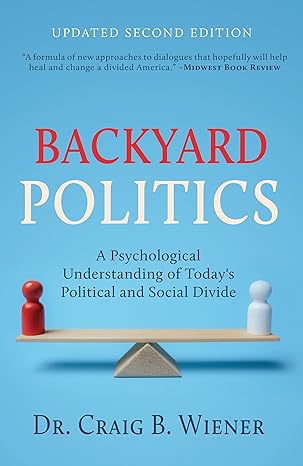
Backyard Politics dives deep into the philosophical and societal divide between two opposing ideological camps, Protectors and Promoters, exploring these contrasting views and addressing topics such as freedom of speech, poverty, racism, and family dynamics. Where did the idea for this book come from, and how did it develop over time?
I have been a practicing Psychologist for 45 years. Over this period of time, I noticed a pattern. Namely, that some people seem to focus on blaming others or some other external factor for their problems. In contrast, other people seem more willing to recognize that their actions contribute to their struggles. Likewise, I noticed that when people are having political debates, the same two patterns occur. One side faults external factors in society that devastate individuals and groups, while the other side emphasizes that some people and groups may behave in ways that relate to their misfortunes.
How much research did you undertake for this book, and how much time did it take to put it all together?
For many authors, and in my case as well, a book project generally takes about two years to complete. Due to my decades of clinical practice, I already had a sense of the ways in which individuals and families behave. So when I started to write, content related to politics occupied my most of my time. In my endeavors, I identified seminal political, economic, and sociological books and articles, and I listened to podcasts that represented differing views and explanations for society’s ills.
Once again, I noticed that one side focused on changing external factors to remove hardship, while the other side focused on remediating the ways in which people adapt and cope with their individual and social problems. One side argued to protect people by providing relief, while the other side wanted people to learn new behaviors so that they could promote their own well-being. However, lessons learned in clinical practice taught me that both ways of helping can be beneficial depending on the problem and circumstance.
What were some ideas that were important for you to share in this book?
We all start out helpless and completely dependent on others to rescue us, but over time, we must learn to establish self-sufficiency. As they say, birds must eventually fly out of the nest. The problem is to find a viable way to protect each other without sacrificing opportunities to facilitate competence so that we enhance our survival and are skillful enough to help each other when necessary. Family life, school, and the workplace are primary ways that must address this intricate problem, and when the two helping strategies are out of kilter, we all struggle more. As an alternative to a popular proverb; we must identify times when people need a fish, as well as identify those times when they could benefit from learning how to fish.
What is one thing that people point out after reading your book that surprises you?
I was surprised how often people are unaware of the inside ↔ outside dynamic that seems so prevalent when we are trying to resolve our intimate and less familiar relationships, and/or struggles to achieve. However, once people recognize this way of conceptualizing political and social difficulties, they realize that the problem is to find an acceptable way to both protect those who suffer as well as promote essential new learning, as ignoring either one is likely to result in a diminishment of positive results. People then see that the rigidity of our political and social divide is an obstacle to success, and that exposing children to only one side of the dynamic will only perpetuate society’s breakdown.
Author Links: GoodReads | Website | Publishers Website
Dr. Craig Wiener, a clinical psychologist for over forty years, approaches the current political divide from a desire to understand the differences between opposing political ideologies, and to create space for multiple points of view in highly charged political discussions.
Utilizing an innovative way to conceptualize the two main viewpoints driving American politics, Dr. Wiener discusses how the people holding these perspectives may view, respond to, and interact with highly contentious political issues such as poverty, racism, the patriarchy, and family life. In assessing these issues, he proposes solutions for managing the interpersonal conflicts that occur within our tense political atmosphere.
Backyard Politics is a must-read analysis of today’ s political landscape and a proposed way to overcome our intense differences.
Tom Learns About Money
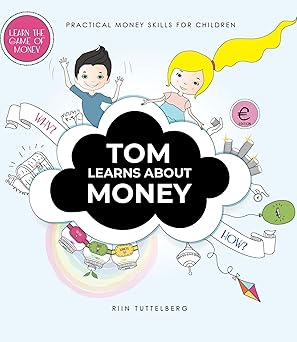

In Tom Learns About Money, Riin Tuttelberg introduces young readers to Tom and his older sister, Ellie, as they navigate essential money management lessons. Ellie, being the wiser and more experienced sibling, takes it upon herself to teach Tom practical skills about saving and spending. Tom, however, has other plans—every coin he gets seems destined for toys and candy. Ellie knows better. She understands that managing money wisely is key, especially when saving for bigger goals, and she’s determined to help Tom see the bigger picture. Ellie breaks down the concept of dividing money into three categories: “Donate,” “Save,” and “Spend.” While Tom initially resists, arguing that he should be free to spend his money as he wishes, Ellie patiently helps him grasp the importance of making thoughtful financial decisions. The story unfolds with charm and relatability, leading readers to wonder: Will Tom embrace Ellie’s approach and adopt better money habits?
This book is a valuable tool for introducing children to foundational financial concepts in a way that is both approachable and engaging. Few resources on this subject cater specifically to young audiences, and Tuttelberg deserves recognition for addressing this gap with creativity and purpose. The lessons are woven seamlessly into the narrative, avoiding any hint of being overly didactic. Instead, Ellie’s teaching moments feel natural and relatable, making it easy for children to connect with the story.
One standout feature of the book is its practicality. Ellie not only explains the basics of saving but also suggests ways for Tom and, by extension, young readers to earn money. Ideas like doing extra chores, saving Tooth Fairy money, or recycling bottles to both earn cash and help the environment are tangible actions that children can apply in their own lives. These examples ground the book’s lessons in real-world scenarios, encouraging children to see the value of effort and planning. Each chapter concludes with interactive elements designed to reinforce the lessons. The “Discuss and Ask” section prompts parents and children to explore the chapter’s concepts together, fostering understanding and dialogue. The “Remember” section highlights key takeaways, while “Solve the Puzzle” introduces fun activities that align with the chapter’s theme. These elements enhance the book’s educational value, making it an excellent resource for both parents and educators.
The illustrations by Triin Sarapuu are another highlight, complementing the text perfectly. Nearly every page features vibrant, engaging visuals of Ellie and Tom demonstrating the concepts discussed. These illustrations not only capture the reader’s attention but also help younger children better understand the ideas being presented.
Tom Learns About Money is a must-have resource for parents, guardians, and teachers aiming to equip children with the tools they need for financial literacy. The lessons are adaptable, growing with the child’s understanding and age. Riin Tuttelberg has created an exceptional guide that is both entertaining and practical, setting a strong foundation for lifelong money management skills.
Pages: 80 | ASIN : B0D6BVDHZL

Backyard Politics: A Psychological Understanding of Today’s Political and Social Divide
Craig B. Wiener’s Backyard Politics dives deep into the philosophical and societal divide between two opposing ideological camps: Protectors and Promoters. Through a comparative lens, Wiener explores how these groups frame societal problems—whether by focusing on external systemic flaws or emphasizing individual accountability. The book is a detailed exploration of these contrasting worldviews, addressing topics such as freedom of speech, poverty, racism, and family dynamics. Wiener’s central thesis presents a nuanced debate, inviting readers to question their assumptions about the sources of human suffering and societal discord.
What stood out to me was Wiener’s even-handed approach to the two perspectives. The section on “Freedom of Speech” was particularly compelling. He juxtaposes the Promoters’ prioritization of unfettered expression with the Protectors’ emphasis on safeguarding emotional well-being and dignity. His argument that the erosion of free speech could lead to a slippery slope of mob rule was provocative and timely.
One of the book’s strengths lies in its grounding of abstract ideas with concrete examples. In the chapter on poverty, Wiener discusses how Protectors view systemic barriers like income inequality and lack of access to education as insurmountable roadblocks, whereas Promoters focus on fostering self-reliance through individual effort. His analysis of educational reform—specifically the tension between leveling the playing field and promoting personal responsibility—was sharp and thought-provoking.
Wiener’s writing shines brightest when dissecting the family as a microcosm of political ideologies. He draws parallels between parental dynamics and societal governance, arguing that overprotective parents (like Protectors) might unintentionally stifle growth. The discussion on fostering mutual accommodation within families resonated with me, especially his point about balancing support and independence. This felt like a powerful metaphor for the broader societal debate he addresses throughout the book.
Backyard Politics is not a light read, but it’s a rewarding one. Wiener’s analytical style demands engagement, making it ideal for readers who enjoy political philosophy or are eager to understand the ideological divides shaping today’s world. While occasionally dense, his arguments are timely and relevant, offering a roadmap for navigating our polarized era. I’d recommend this book to thoughtful readers curious about the intersection of psychology, politics, and human behavior—especially those who appreciate a balanced, if slightly pointed, exploration of contentious topics.
Pages: 342 | ASIN : B0DP3JQ8WB
A Wake-Up Call

LIAM: The Boy Who Saw the World Upside Down is the true story of a young boy with dyslexia told through his teacher’s eyes. Why was this an important story for you to share?
Liam was brought to my 8th-grade classroom because he had been bullied and pushed aside in Special Education classes from Kindergarten through 7th grade. He had been diagnosed as “mentally retarded,” an old term that is no longer used. His parents wanted him in a safe place. Dyslexia was only part of the problem. As I discovered Liam’s high intelligence, I learned from him how very important it is for a teacher to connect with each individual student and help them find their potential. After Liam graduated from high school, I lost contact with him. Continuing in my teaching, I saw students who were misdiagnosed in special education as well as ignored in regular classrooms, students who had tremendous potential, and students who were bullied more for eccentricities than for intellect. Liam’s story rolled around in my head for many years; I knew I needed to help give a wake-up call to students, parents, and teachers–to give them HOPE that the education system has to realize that each individual must have a chance to succeed. When I finally connected with Liam and told him that I wanted to write his story for those marginalized, Liam (aka Bill Judge) responded, “If it will give hope to other kids like me, yes, please write my story.”
What is one misconception you have found that many people have about living with dyslexia?
Most dyslexics do not know that they can get beyond that malady. I searched for many years to find a program that will train the brain to read correctly. At a conference I attended, I serendipitously found READ RIGHT, a program developed by Dee Tadlock, PhD, that teaches the brain to read correctly and excellently. READ RIGHT can teach anyone how to read as well as they can speak. Learning to coach in READ RIGHT was a true paradigm shift for me. As a coach, I saw daily miracles with students of various reading maladies, including students who were non-readers, students who had “brain stutters,” students who were mentally and/or physically dysfunctional, and those who were dyslexic. Coaching in READ RIGHT is one of the most important teaching strategies I ever used. READ RIGHT does not need to diagnose any of those maladies. As a trained coach, I used the protocol READ RIGHT uses to teach anyone how to read as well as they can speak. It’s what I call READ RIGHT–the silver bullet in education.
This story clearly has emotional significance for you. What was the most difficult part of writing it?
Watching Liam struggle physically, emotionally, and socially touched my heart to the core. I wanted the story to be told as true to reality as possible. I was not supported by administration the first year I had Liam in my class. As an adult, Bill Judge, who chose the family name Liam for the book, connected with me via ZOOM to help me understand his view as my student, what he learned from me, the help he received with his reading and social situations, what I learned from him as a true genius, and where his career led him. The difficulty in putting it all together was writing in all honesty and changing names throughout the story so as not to disparage anyone in particular. Truly helping readers understand how a student like Bill, with support from his parents and teacher(s), can succeed in life. I want readers to know how very important it is to leave judgment aside and give each person an opportunity for potential. I want readers to understand that I personally and professionally believe each student has within them their own certain kind of genius. My reason for writing the book is, as Bill said, to give hope to those marginalized in our society. Writing this book is the most important connection I have shared.
What do you hope readers, teachers, and parents take from Liam’s story?
Each individual needs the opportunity to succeed. Each person, no matter the challenge, can learn to read as well as they can speak. READ RIGHT, well-defined and well-researched, is the only program that works quickly and excellently. Now retired, the only connection I have with Read Right is my passion to let others know about it. I’ve also written a book to mentor teachers who do not have the support they need; teachers who are not trained to know how to connect with each student; teachers who need to understand their purpose is to help students find their potential. CONNECT FOR CLASSROOM SUCCESS shows through true scenarios how to find joy in teaching and learning. Excellence in education is my number-one lifelong passion.
Author Links: GoodReads | X (Twitter) | Facebook | Amazon
This is a true story. When Liam came to my classroom, I knew something was off. What was I supposed to do with this student who was extremely withdrawn? I didn’t know, but I knew I had to find out ̶ a challenge that I could not ignore. This book isn’t only about bullying, though there was plenty of that. It’s about a boy who needed help to allow his potential to surface. If you are a teacher, a parent, or anyone who has witnessed, or have themselves experienced this, you need this book. LIAM will give you hope.
LIAM: The Boy Who Saw the World Upside Down

LIAM: The Boy Who Saw the World Upside Down tells the touching and inspiring true story of Liam, a young boy with dyslexia and other challenges, as he navigates a world that often misunderstands him. The story unfolds through the eyes of Ms. J, his empathetic and determined teacher, who strives to uncover Liam’s potential despite systemic obstacles, unkind peers, and his own self-doubt. It’s as much about perseverance as it is about the importance of advocacy, patience, and finding one’s place in a complicated world.
What I loved most about this book was the heartfelt writing. Walraven captures the struggles of a teacher trying to bridge the gap between a child’s potential and the resources available. One chapter that stood out was Liam’s breakthrough moment in class, where he courageously shared his knowledge about salt’s historical significance, stunning both his peers and his teacher. The joy of seeing Liam’s intelligence shine despite his struggles felt like a triumph, and it made me reflect on how small moments of courage can ripple into larger successes.
Another strength of the book lies in its vivid portrayal of the social dynamics in school. The author doesn’t shy away from uncomfortable truths, such as bullying and administrative apathy. I was particularly moved by the scenes where Ms. J confronts the principal’s dismissive attitude toward Liam’s challenges. The raw honesty of these moments made me angry at the system but grateful for teachers like Ms. J, who fight to make a difference.
The book occasionally leans into sentimentality. For the most part, this added to the emotional depth of the story, though a few scenes felt slightly dramatic when highlighting Liam’s struggles against the indifference of others. Even so, the book’s genuine heart and sincerity more than compensate, leaving a lasting and uplifting impression.
In the end, this book isn’t just about Liam; I think it’s about anyone who’s ever felt marginalized or overlooked. It’s a tribute to educators, parents, and friends who see beyond labels and stereotypes to the potential within. I’d recommend this book to teachers, parents, and anyone interested in stories of resilience and the transformative power of compassion.
Pages: 137 | ASIN : B0BTRTDFX7




 LITERARY TITAN