Blog Archives
Healing and Honesty

In A Journey into Manhood from the Path of an Idiot, you share with readers your reflections on childhood, family dynamics, and your personal growth. Why was this an important book for you to write?
This book was deeply important to me because I believe it’s vital for young boys and men to understand that making mistakes is part of life—and that it’s okay. Growth comes from acknowledging those mistakes, learning from them, and moving forward with purpose. My own life has faced challenges in every area imaginable, but through accountability and embracing my past, I was able to turn my struggles into stepping stones for success. Sharing this journey offers hope and encouragement to others who might feel trapped by their circumstances, showing them that change is possible and that their past does not define their future.
What was the hardest thing for you to write about?
The most challenging part was opening up about the death of my nephew. My editor suggested I start the book with something compelling that would grab readers’ attention, but I hesitated because I had always hidden that pain. Confronting that loss forced me to face what I had been running from for years. Writing about it was emotionally challenging, but ultimately, it was a necessary step toward healing and honesty—both with myself and my readers.
What is one piece of advice you wish someone had given you when you were younger?
I wish someone had told me not to fear success. Growing up, I found failure easy to accept because no one expected much from me. When success did come, I struggled to believe I deserved it or that I could overcome my mistakes. If I had known that success was attainable and that I was worthy of it, I might have approached life with more confidence and a greater belief in my potential.
What is one thing you hope readers take away from your experiences?
I want readers to see that no matter how many mistakes they’ve made, they can still achieve greatness. The key is to look past those errors and recognize the inner strength and goodness within oneself. Everyone has talents and a purpose—they just need to embrace who they are and keep pushing forward, helping themselves and others along the way.
Author Links: GoodReads | Facebook | Website | Amazon
The title of this book could have been written backwards, and it would still have conveyed the same meaning. From The Path of an Idiot to A Journey Discovering Manhood is the story I never thought I’d have the strength or the literacy skills to tell. This book is my truth—born from anger, shaped by confusion and survival, and ending in transformation. I wrote this for the boy I used to be: lost, unloved, and misunderstood. I wrote it for the man I was becoming—reckless, hardened, and trying to find meaning in a world that never gave me a blueprint for manhood. And I wrote it for every person who has ever wondered if redemption is still possible.
Through raw reflection and hard-earned lessons, I open the door to my past from illiteracy, juvenile detention, and gang involvement to the struggles of fatherhood, faith, and forgiveness. This isn’t a polished tale of overnight success. It’s a testimony of stumbling, standing again, and finding purpose on the road I once thought would destroy me.
If you’ve ever felt broken, overlooked, or counted out, I hope this book reminds you: the journey may start in darkness, but it doesn’t have to end there.
This is my journey. These are my lessons. This is Manhood, revealed.
–Carandus T. Brown Sr.
The Domino Effect

Finding Sutton’s Choice follows a young writer who confronts old memories when she returns home to face her father’s declining health and deal with the family’s struggling newspaper. What was the inspiration for the setup of your story?
I’ve witnessed so many loved ones impacted by Alzheimer’s disease—beloved mentors, friends, friends’ parents or spouses, and even one of my own family members who has shown early signs of dementia. As I researched the topic, it became more and more important to weave a plot that unobtrusively but positively raises awareness of the disease and provides caregivers with a relatable story. As a past journalist of a family-owned Pittsburgh publication, I was drawn to the idea of incorporating a community newspaper. Setting the story in Lakeside Chautauqua, the very real place where I live, also allowed me to offer a snapshot of a closeknit, small Ohio town, not unlike the farming community where I grew up in Coshocton County, Ohio.
Which character in the novel do you feel you relate to more and why?
I have all the feels for Charlotte, as complicated (and sometimes annoying) as she may be. She’s a very, very distant version of myself… an insecure, immature, dutiful but damaged, sometimes angry, and inherently messy version. But aren’t we all a little messy when we’re 10? 20? Older? It takes time to work out the kinks. Charlotte holds onto old hurts far too long, but for good reason. As is seen through her memories, her childhood was complex. I can relate to that. I killed some personal demons in the writing of this book, and, like Charlotte, I’ve grown into a more self-aware human during the process.
Now, if you were to ask me what character I aspire to be, that would be The Surly Sturgeon’s barkeeper, Bea, who is a Boss Lady and completely unconcerned with what others may think. My new motto? Be like Bea.
What were some themes that were important for you to explore in this book?
Finding Sutton’s Choice explores complicated parent-child relationships, failing mental health, forgiveness, and the domino effect family choices have on who we become.
I am fascinated by how our perceptions of the past can shade and shape our future. Note that I say “perceptions.” Our personal histories are only as factual and reliable as our memories of those moments in time. And, though we are a product of our past, our future is what we make it. We can choose a new path to produce different outcomes. As my character Chuck Sutton would say, “It’s the final inning that really matters.”
Can we look forward to more work from you soon? What are you currently working on?
In the past six years, I’ve completed multiple first drafts during National Novel Writing Month in November. Though I’ve got a healthy stack of potential projects, I’m currently editing a sequel to Finding Sutton’s Choice. The follow-up, tentatively titled Sutton’s Second Chance, is set 15 years in the future. You can expect a few of the same quirky characters and many new ones, all living their best (but equally messy) lives in the little Lake Erie town of Lakeside, Ohio. Additionally, I’ve been working on personal essays about my lake life. I hope to bundle them for future publication.
Author Links: GoodReads | X | Facebook | BlueSky | Instagram | Website | LinkedIn
Chuck Sutton-newspaper editor, retired baseball player, and the town’s most beloved celebrity-is thought to have Alzheimer’s disease. The community newspaper is also on the verge of closure, and a childhood friend holds a decade-long grudge. Despite all this, there is Lakeside. The quaint waterfront community, flush with ivy-covered cottages and vintage charm, hasn’t changed even as everything else in Charlotte’s life has shifted. She intends to stay only long enough to get her father’s affairs in order.
But, to reconcile her past and unearth family secrets, Charlotte must reconnect with Chuck through his Alzheimer’s diagnosis and reevaluate her own misconceptions about growing up in the small Ohio town that still holds her heart.
You Don’t Have to Be Famous to Write a Memoir


Stephen Mark Silvers’ You Don’t Have to Be Famous to Write a Memoir is a warm and winding recollection of a life well-lived, stitched together from stories of family, travels, and career adventures. Silvers walks the reader through decades, from childhood in post-war America, through California’s cultural tides of the ’60s, to nearly four decades in Brazil, and finally back to the US in later years. The book blends humor, tenderness, and thoughtful digressions, all while painting portraits of the people who shaped him most.
Reading this memoir felt like sitting with a friend who is telling stories over coffee. Silvers’ writing is friendly and light, with just enough wit to keep you smiling without drowning the moments that deserve quiet. I enjoyed how he weaves in little asides like historical facts, pop culture nods, and odd statistics that give the sense of wandering through his mind. The structure is loose in a way that mirrors real memory. It’s not a linear march but a series of moments that ripple outward.
Some of my favorite parts were the glimpses into Brazil, like how he learned Portuguese, met his wife Neusa, and built a teaching career there. There’s a lot of love in those pages. The humor is understated, which I liked, though now and then a joke would sneak in that made me laugh. It’s the kind of humor that comes from knowing your own quirks and not taking yourself too seriously.
This book is for people who like gentle, meandering stories, who appreciate the small turns in life and the way memory makes meaning out of them. If you’ve ever thought your life was too ‘ordinary’ to write down, this memoir will nudge you to think otherwise. I’d hand it to anyone who enjoys memoirs that feel like conversations, or who simply likes a good, unhurried story told by someone with a big heart.
Pages: 288 | ASIN : B0FG9T83QB

Finding Sutton’s Choice
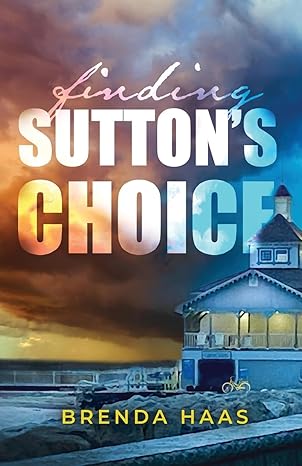
In Finding Sutton’s Choice, Brenda Haas delivers a heartfelt and layered story about Charlotte Sutton, a young writer who returns to her quaint hometown of Lakeside, Ohio, after ten years away. A mysterious voicemail and concerns about her estranged father’s health, possibly Alzheimer’s, bring her back to a place she swore she’d left behind. As Charlotte steps into the chaos of her father’s declining memory, a struggling family newspaper, and a surprise half-sibling, she’s forced to confront old wounds, unspoken truths, and what it really means to go home again.
This book hit me square in the chest. Haas writes with an intimacy that doesn’t just paint a picture, it lets you walk the streets of Lakeside with Charlotte. Her prose is straightforward, not showy, but rich with emotion and charm. The dialogue felt natural and real, and the pacing kept me invested. I especially loved the way memory and identity were woven through the story without beating me over the head. And Charlotte, who is blunt, flawed, and sharp, was someone I could root for even when she was a mess.
Some of the characters leaned on small-town tropes. Still, Haas balanced it with enough surprises and emotional weight to make those moments work. What really stuck with me was the raw honesty about family. The father-daughter dynamic wasn’t whitewashed, and the complicated layers of resentment, love, and misunderstanding rang painfully true. Watching Charlotte navigate a relationship with a father who might not remember her, and then discovering a brother who took her place, was heartbreaking in the best way.
Finding Sutton’s Choice is a beautiful story about forgiveness, second chances, and finding home in unexpected places. If you’ve ever wrestled with family messes or avoided going back to the town that raised you, you’ll enjoy this one. I’d recommend it to readers who enjoy emotionally driven fiction with depth, especially fans of Ann Patchett or Elizabeth Berg.
Pages: 310 | ISBN : 978-1645382386
Changing Eyes
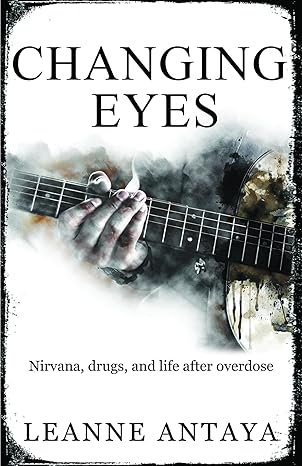
Changing Eyes is a raw and wrenching memoir written by Leanne Antaya about her family’s harrowing battle with addiction, particularly her son Trey’s descent into drug use and the long, painful road to his recovery. Spanning decades, the book moves from Leanne’s early romance and marriage to Marco, through raising four children, to navigating the chaos of addiction, near-death experiences, strained relationships, and personal trauma. Told through Leanne’s eyes as a mother, it’s an honest account of love, loss, resilience, and the aching hope that somehow, amid all the wreckage, healing is possible.
This book tore me up and stitched me back together, sometimes in the same chapter. Antaya’s writing isn’t polished in a literary sense, but that’s what makes it work. It’s messy, emotional, and real. She doesn’t whitewash the shame, the guilt, or the unbearable powerlessness that addiction brings into a family. Her style jumps between memories and moments with a kind of breathless honesty, as if she’s spilling it all out before she loses her nerve. There were parts where I had to pause and sit with it, where her pain leapt off the page and made me feel like I was in that hospital room or standing at that phone, dreading the worst.
The book is more like a collection of moments and memories than a tightly woven narrative. But maybe that’s the point. Addiction isn’t tidy. Grief doesn’t follow a three-act structure. What stands out most to me is Leanne’s sheer determination to hold her family together. Her voice carries this sharp mix of exhaustion and fire that made me root for her, even when things kept falling apart. And Trey’s story is both heartbreaking and infuriating, but Antaya never lets you forget that he’s human, even when he’s at his lowest.
I’d recommend Changing Eyes to anyone who wants to understand what addiction does to families, not in theory, but in the day-to-day heartbreak. This is for the parents who are living in quiet fear, for the friends who don’t know what to say, and for anyone who thinks addiction is just a personal failing. It’s not a light read, and it doesn’t offer easy answers. But it’s full of gut-level truth, and in the end, it clings to hope.
Pages: 356 | ASIN : B0B6QDP6C4
Freedom Highway

Priscilla Speaks follows a young girl living in poverty who is cast out of her home at sixteen, leaving her to set out on the Appalachian Trail, where she meets diverse people who help her learn about life and relationships along the way. What was the inspiration for the setup of your story?
The answer is broader than you might have anticipated. I have thru-hiked the Appalachian Trail four times, and have found each journey to be life-changing or life-affirming. As a consequence, it is an element in much (although not all) of my fiction. I find the trail to be regenerative. Most who successfully thru-hike it or even hike long sections of it feel the same. It is the total immersion that does it, having one’s ego worn down by sweat and hunger and bugs until the real you is exposed. A long weekend on the trail won’t quite get one there.
Relating to the Speaks Saga as a whole, and Priscilla in particular for the moment, during Hike 3 in 2018 I hiked into a town for resupply, a town brought closer by a trail relocation and a town I’d never been to before, in an area where rednecks were known to harass hikers, and where I’ve personally witnessed hillbillies doing some pretty bizarre things. I was struck by the despair of the place before I’d even entered the town, considering the drug paraphernalia I spotted littering the curb. Once in the town, I encountered people almost unintelligible in their speech who volunteered the most offensive racist comments to a total stranger, and many of whom sported the missing teeth and cleft lips of heavy meth addiction. I couldn’t hike out of that town quickly enough.
I pondered as I continued my hike, wondering how one could wrest oneself out of that environment, then realized that the Appalachian Trail, an actual freedom highway, lay right at their doorstep. I conceived the first novel, Timewall Speaks, within the next hundred miles, and have used the Appalachian Trail as a means of escape for every character since.
Priscilla is born into a world of poverty, addiction, and abuse, but refuses to let that define who she is or who she will become. What was your process to bring her character to life?
I knew from the beginning that Priscilla might be the most complicated character in the Saga, and I had to reimagine her a few times before I felt I’d gotten her right. The epiphany came as I was writing Chapter Two, the fight scene, her brother injured, and I knew right then who I wanted Priscilla to be. I raced back, did a lot of re-writing, made Pris autistic and fearless, had her cut off her braid (probably spoilers in this), and evolved her into an outsider in her own family. Unknown to Pris, she is more like her mother at that age than she would ever want to accept, strong, unyielding, fierce, and in her own emotionally-numbed way, proud.
What were some themes that were important for you to explore in this book?
As always, that transformation from dysfunctional to emotional health, and that people are not defined by their circumstances, but defined by themselves. I wanted to demonstrate that it is possible to escape, despite the burdens that Pris carried. I have known people in similar circumstances who have rescued themselves, so Priscilla’s journey is not a stretch.
Will this series continue in another book, or are you working on a different story?
There will be one more novel in the Saga, The Family Speaks, in which a story arc covering fifty years will be brought full circle. I intended to end it there, although I have been encouraged by many to expand the Saga to incorporate some of the secondary characters. That might happen in the future, novels in a Speaks Universe if you will, but immediately after The Family Speaks (and a fifth Appalachian Trail thru-hike), I will begin work on some unrelated novels that have been nagging me for a few years now.
Author Links: Goodreads | Website | Amazon
In Book Four of The Speaks Saga, Blaize’s second daughter, Priscilla, born during the worst of her mother’s addiction, begins at an early age to count the years until she can escape the drudgery and boredom of her dismal, impoverished life, all the while watching as her older siblings leave one by one.
Cast out on her own at the age of sixteen, Priscilla ventures forth in search of an uncertain future while grappling with her sexuality and the phenomenal capacity of her mind. Using the Appalachian Trail as a means of escape, distracted from her obsessive nature by the day-to-day trials of the wilderness, her journey thrusts her into the company of diverse people who steer her toward a fuller understanding of the complexities of life and relationships. Through confounding emotions, heartache, and moments of grace, she is forced to confront mortality, love, and loss, all pointing her toward a staggering awareness of space and time.
With deliberate cunning, Priscilla does battle on her own terms, calling forth the hardened legacy of her family as she fights against the abuses she encounters in society.
A Journey Into Manhood From the Path of an Idiot
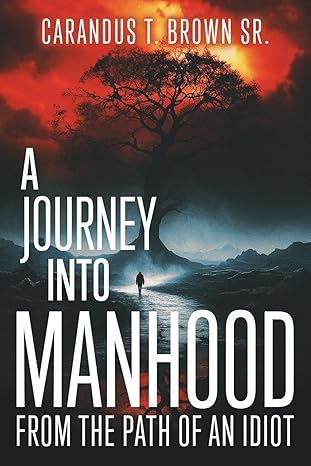

Carandus Brown’s A Journey into Manhood from the Path of an Idiot is a raw and deeply personal memoir that chronicles one man’s long, often painful climb from childhood confusion to adult accountability. With each chapter framed as a “lesson,” Brown reflects on his life from traumatic events and broken family dynamics to brushes with the law, misguided relationships, and spiritual reckonings. What starts as a candid account of pain and dysfunction slowly morphs into a powerful meditation on growth, faith, and the courage to confront your past. This is a book about how a boy with no clear path to manhood stumbles, fights, learns, and ultimately walks that road anyway.
Reading this book felt like being handed someone’s journal, written with no filter and no concern for appearances. I admired that. Brown’s writing is emotional and gritty, full of hurt and hope in equal measure. He doesn’t try to dress up his experiences. He owns his mistakes, often with heartbreaking honesty, and that kind of vulnerability resonated with me. Some parts were painful to get through, especially the loss of his nephew and the scenes with his father, but those chapters gripped me. It’s not just the storytelling, though. It’s how Brown unpacks each memory, not just to remember it, but to understand what it meant, what it cost, and how it changed him.
There were moments when the writing got a little long-winded. I sometimes wished he’d pulled back just enough to let the reader breathe. But even in those moments, I could feel the sincerity behind every word. And there’s poetry in how he writes, even when he’s angry or confused; there’s rhythm and raw beauty to the way he strings his thoughts together. His lesson on education, how he faked reading as a kid just to survive the shame, hit me in the gut. And the spiritual themes, especially his talks with God, felt real. Not polished. Not preachy. Just real.
This isn’t a polished self-help book or a clinical story of recovery. It’s a firestorm of memory and meaning, one that will resonate with anyone who’s ever felt lost, unloved, or misunderstood. I’d recommend A Journey into Manhood from the Path of an Idiot to young men navigating tough upbringings, to anyone grappling with forgiveness, and to readers who crave stories that bleed truth. Brown may have taken the long way to manhood, but this book proves he got there, and he brought a whole lot of wisdom with him.
Pages: 160 | ISBN : 978-1681116082
I Wrote to Remember

I Finally Have the Smoking Hot Body I Have Always Wanted is a wildly honest, heartbreakingly funny, and beautiful tribute to your late mother, sharing with readers your mother’s bold personality and her passion for life. Why was this an important book for you to write?
Because watching someone you love disappear in slow motion – while sitting across the table from you, eating toast – is surreal, maddening, and in many strange moments, hilarious. Writing this book was how I made sense of it.
It gave structure to the chaos of Alzheimer’s and honoured the woman my mom was before, during, and even after her death.
She was vibrant, feisty, and deeply funny ( sometimes unintentionally), and I wanted readers to get to know Mom and realize just what an incredible woman was taken from us and from the world.
I wanted readers to know that Alzheimer’s erased pieces of her slowly over time, but not entirely…some of those pieces were just rearranged.
I wrote to remember, to grieve, to laugh, to educate, and to honour every single person affected by Alzheimer’s – and hopefully, in the process, help someone else feel a little less alone in their own upside-down world.
I appreciated the candid nature with which you told your family’s story. What was the hardest thing for you to write about?
It wasn’t the big dramatic moments that were hard to write- it was the quiet ordinary ones that were the most difficult to write about …they knocked the wind out of me.
The moments when I saw her doubt herself. When she looked at us with her eyes searching, trying to remember or to find the right words… hoping we’d fill in the blanks.
Writing about her confusion, her fear, reading her hospital records, and the way her confidence evaporated-that gutted me.
And maybe the hardest part? Owning up to my guilt about not having spent as much time with her as I might have, and that I wasn’t her primary caregiver. My dad and my sister were. They were in the trenches daily. I have endless respect for all the full-time caregivers who show up day after day, holding it all together.
During the brief reprieve I gave here and there, I felt heartbreak, more guilt, and helplessness.
Admitting it and writing that on paper made it real, and once published, I couldn’t take it back.
What were some ideas that were important for you to share in this book?
Heartbreak and humour can—and often do —co-exist. That grief can be sneaky and slow and yet, darkly funny. That caregiving in all its forms…matters.
A reminder to always use the “people first” approach. There’s real dignity in that. Being remembered for the WHOLE person they were and not just the Alzheimer’s patient they became.
I also wanted to challenge the notion that writing about illness has to be sterile or solemn. Life is not tidy. Relationships are messy, and family dynamics aren’t perfect.
So, I wrote something messy, funny, painful, and true…because that’s what the journey was…
What do you hope is one thing readers take away from your mom’s story?
I hope readers walk away thinking about their people-the ones who shaped them, annoyed them, challenged them (maybe drove them a little crazy), and loved them anyway.
I want them to feel compelled to tell their stories…even if there’s guilt, cracks, or unresolved issues. Especially if there is. There is healing in the process.
AND I hope readers realize that humour doesn’t minimize the pain – it makes space for survival.
Above all, I hope they fall a little in love with my Mom …because she really was pretty cool.
Author Links: GoodReads | Facebook | Website | Instagram | Amazon
A moving, yet darkly funny, memoir.
Writer, Barb Drummond, grew up in a home filled with crazy antics, love, laughter, and an exceptionally unique and zany mother. Who else had a mom who specifically baked cream pies to throw at people she loved?
Her mom, however, drew the short straw by getting Alzheimer’s in her 60s. She lived with the monster for twenty years, and the disease stole her vibrant personality and voice. When Sybil died, an ordinary obituary just wouldn’t do. She was a glamorous Renaissance woman filled with creativity; a former ER nurse who saved lives; she was what movies are made of.
Barb wrote the quirky obituary with her mom’s voice. No one could’ve predicted her mother’s wild obituary would go viral within 24-hours-worldwide! The New York Post, The Irish Times, The London Times, The Huffington Post, CBC TV & Radio, Global, CTV, Hamilton Spectator, and many more media from Australia, UK, USA, and Singapore, spread the word to millions.
Hundreds of thousands of people internationally soon read about Sybil Marie Hicks and her smoking hot body and they wanted more!
Barb’s memoir takes you into her mother’s life and into the media whirlwind when her mom became an instant world-wide celebrity AFTER she died.
In this hilarious, quirky, and poignant memoir, I Finally Have the Smoking Hot Body I Have Always Wanted, Having Been Cremated, you’ll fall in love with Sybil and wish you’d known her in real life.
(Even if she’d smoosh a cream pie in your face!)


