Blog Archives
A Confounding World

Not Yet Your Time follows a self-deprecating office worker whose mundane New York life derails after a near-death encounter with a mysterious woman, leading him to question everything he knows about time, fate, and faith. What was the inspiration for the setup of your story?
I have always felt that the best drama or comedy follows from individuals being placed in situations for which they are utterly unprepared. (Being trapped on Everest while climbing is not the same as crash landing on Everest in your swim trunks) I have also always had the sneaking suspicion that our history, our myths, and the foundations of our culture are on very wobbly grounds. Finally, as someone who spent a full career in marketing, I know that reality is just a press release away from changing.
I found Titus to be an interesting character who gets pulled into a strange situation and manages to adapt despite everything that happens to him. Were you able to achieve everything you wanted with the characters in the novel?
When I embark on creating, in effect, an entire world, I need a central character to react to, digest, and pass through it. I needed Titus to be that person. I gave him the vulnerabilities and hidden strengths to attempt to deal with a confounding world that has sucked him in against his will, only because he was attracted to a mysterious woman. I was also pleased with Kanenas, my, in effect, flawed and reluctant messiah. A good man with ideas, totally unprepared for the greatness that is hung on his shoulders. (Inside secret) I patterned him after the attitude and speech mannerisms of the late actor Peter O’Toole, also a great and deeply flawed person.
I found this novel to be a cutting piece of satire. What is one thing that you hope readers take away from your novel?
Absorb all you can in life from as many sources as you can tolerate because no one person or philosophy has all the answers.
What is the next book that you are working on, and when can your fans expect it to be out?
The world’s greatest historian has a dark secret. He travels back in time and gets deathbed confessions from great figures in history. A Gesture to the Wind is narrated by the historian’s unsuspecting assistant, who is drawn into a world of illegal historic relic dealers, Russian spies, EPA investigators, and the Battle of San Juan Hill, all while developing a deep and abiding friendship with a time-displaced Ben Franklin. (As you can see, I’m having fun.)
Author Links: GoodReads | X (Twitter) | Facebook | LinkedIn | Website | Amazon
This odd trio embark on a perilous odyssey that includes imprisonment in a labyrinthine security complex under the ruins of the World Trade Center; flight through a murky unfinished tunnel beneath the Hudson River, a safe house masquerading as a defunct museum; and a perilous train ride to link up with a terror cell. Ultimately, the reluctant Titus will face a rendezvous with life, love, death, and destiny in the green wilds of New York’s Hudson Valley.
They Tried Their Best
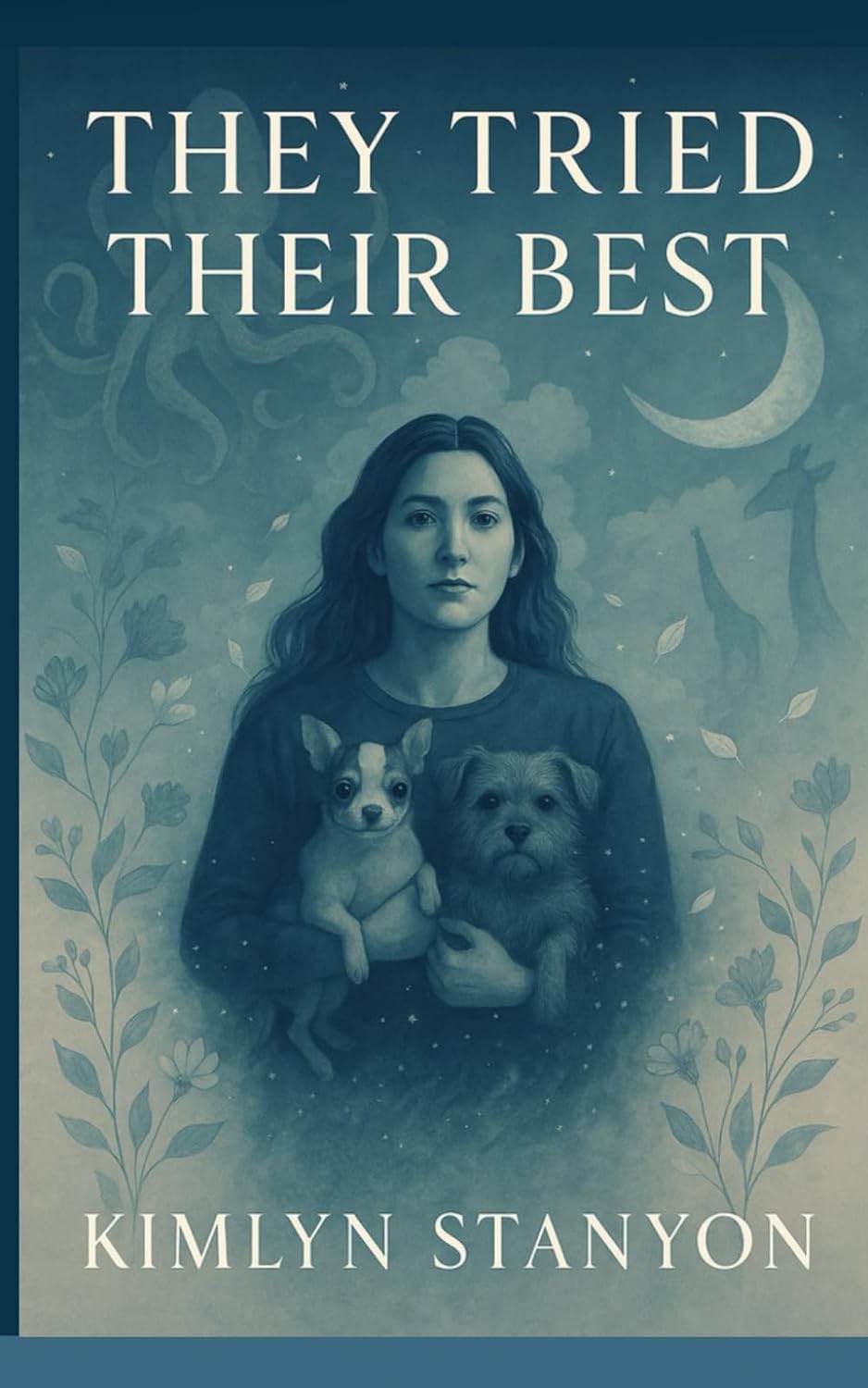

The book follows the inner life of a woman navigating modern loneliness, love, and survival. It begins with quiet domestic scenes that show the strange mix of comfort and despair in everyday routines, then tumbles into awkward dates, toxic men, obsessive scrolling, and a world tilting into chaos. Her dog, Honey, is her anchor, and later, a new puppy joins the mix. As personal heartbreak runs alongside collapsing politics and rising paranoia, she turns toward building a bunker—half symbol of safety, half desperate project. The story blends personal confessions with dark humor, showing both the numbness of screen-soaked nights and the ache of wanting to be loved.
I found the writing raw and often uncomfortable, but that felt intentional. It reads like opening a diary, one full of shame and yearning and sharp observations. The author captures the rhythms of loneliness so well, like the endless scrolling, the forced laughs, the hollow comfort of TV and apps that pretend to connect. At times, I felt impatient with the narrator, but then I realized that was the point. She is flawed, and the honesty of those flaws is what makes her compelling. The style is jagged, almost chaotic, but that messiness mirrors the world she lives in.
Emotionally, the book hit me in waves. Sometimes I laughed at the biting asides, other times I felt a knot in my chest from the self-doubt, the grasping at crumbs of affection. There’s a scene after a disastrous date that made me want to throw the book down in anger at men like that, but then the vulnerability after, the quiet moment of self-love, pulled me back in. The bunker storyline in particular moved me. It’s absurd and practical at the same time, a metaphor for needing safety when the world feels hostile. The writing is simple, sometimes stark, yet it holds these emotional punches that sneak up on you.
I think this book would be powerful for anyone who has felt let down by people and yet still holds onto hope. It’s not for readers who want neat plots or tidy resolutions. It’s messy, alive, and sometimes exhausting, but in a way that feels real. I’d recommend it to those who like character-driven stories, people who aren’t afraid to sit with discomfort, and anyone who has ever curled up with their pet while the world outside seemed to spin out of control.
Pages: 184 | ASIN : B0FC83DT39

Winning is Not Always Winning
MATE takes a unique look at marriage through the lens of a chess match in which each phase of the relationship is examined with play-by-play commentary. Why was this an important book for you to write?
This was my first and, probably will be, my only, relationship book. The challenges were many. I had to restrain myself from judging the couple’s actions. Since “the game” happens on a subconscious level, I didn’t want their behaviors to be extreme. The book revels in making the everyday, seemingly insignificant things said and done to be monumental and epochal. Only they don’t know it. Hence, the use of the commentator, who may get a tad overwrought in the interpretation and importance of their actions. Also, I had to purge myself of caring who was the winner in “the game”. The commentator addresses this early on. Winning may be not be really winning. Winning a game may actually be detrimental, but the players will never see why.
How did your idea to use the chess metaphor evolve as you planned and wrote this book?
I started with the Chess scheme. It had been on my mind for many years. The chess/marriage idea seemed natural. “War” might be extreme. You could call it battles. The conflict and friction that I dwell on was probably influenced my reading the work of R. D. Laing in the 1970s. His book Sanity, Madness, and The Family had an impact on me.
What do you find is the most difficult aspect of writing about relationships?
The most difficult part was trying not to forget to include the many aspects and perspectives on their relationship. Each other, the kids, the friends, parents, the in-laws, not mention the other innumerable sources of conflict. Ultimately, it took a long time to write the book because of the nature of the narrative. There were few opportunities to elaborate on the details of their conflicts except for the times the commentator rhapsodized about certain episodes and the games that were summarized and did not advance move by move.
What is one thing you hope readers take away from MATE?
Because MATE took a long time to write, causing me to think too much about different ways to engage the reader. Two examples: One, leave some blank pages after a chapter and have the reader rewrite how he or she would have the chapter on the children or the living arrangements would go. Second, at the end of the novel, leave eight to ten pages and have the readers write the “game” of their own marriage – it would be interesting to compare the woman’s to the man’s version.
Author Links: GoodReads | Website | Facebook | Amazon
MATE: a novel in twenty games
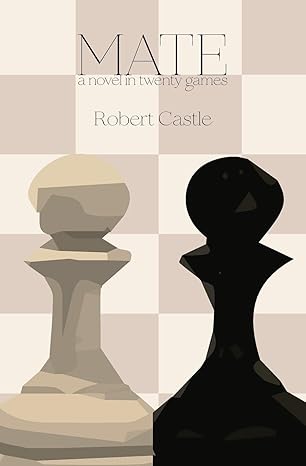
MATE: a novel in twenty games, by Robert Castle, is unlike any book I’ve read. It dissects a marriage by mapping each moment of intimacy, conflict, and compromise onto the framework of a chess match. The story of Pillsbury and Larkin unfolds over twenty “games,” each representing phases of their relationship like courtship, childbirth, relocation, and eventual separation. Every chapter reads like a brutal play-by-play commentary of a high-stakes match where each line of dialogue is a calculated move. The result is raw, honest, and often uncomfortably accurate in its portrayal of the delicate, ongoing war that can exist beneath the surface of domestic life.
Castle’s writing is sharp, biting, and at times hilariously cruel. His chess metaphor isn’t just a clever gimmick; it’s an ingenious device that illuminates the absurdity and tragedy of two people trying (and failing) to love each other properly. The characters aren’t likable in a traditional sense. In fact, they’re often selfish, petty, or clueless. But that’s the point. Marriage, as Castle paints it, is not about romance or even companionship; it’s about control, defense, sacrifice, and sometimes resignation. It was refreshing, even when it hurt to read.
I do feel the relentless move-countermove commentary, while brilliant, could feel overwhelming to some readers. The structure, while unique, can become a bit too clever, making some of the emotional beats feel like intellectual puzzles rather than lived moments. Still, I can’t deny that Castle has created something utterly original. He lets the characters tear each other apart, and we’re left to pick through the wreckage.
MATE is not a book for romantics. But if you’ve ever been in a long relationship, especially one that has frayed over time, Castle’s work will speak to you. It’s for readers who want their fiction uncomfortable, honest, and unflinching. It would resonate with couples therapists, chess fans, failed lovers, and those quietly questioning their own relationships. It’s both cynical and relatable, and it left me thinking about it long after I put it down.
Pages: 176 | ISBN : 978-1963908497

The World of Extremism
So You Want to Be an Extremist is a satirical guide that traces the origins and evolution of conspiracy theories from ancient Rome to modern-day social media. Why was this an important book for you to write?
I think people know bits and pieces, but there wasn’t a full picture of extremism in one place. I wanted to create a single piece of content that anyone could pick up and easily learn about the world of extremism, from its humble origins to a major part of society today. And also laugh a bit at the horrors they learn along the way because it is a dark, scary place. Whether we like it or not, these people, these products, these movements are affecting all of us in some fashion.
Did you learn anything during your research that surprised you?
How truly ubiquitous this level of extremism and conspiracy thinking has become, particularly among the younger generation. Twenty years ago it was your crazy uncle sending emails. A decade ago it was older people falling for Facebook memes, believing anything that was written online. Now, it is a younger, seemingly displaced generation, who are very tech-savvy, failing at even baseline critical thinking on many topics.
Why was it important for you to take the satirical approach with this book?
For me, satire has always been a way to convey certain ideas and vices as laughable, but also reprehensible. I have a penchant for poking fun at the horrible people that take advantage of others: dictators, oligarchs, and now, extremists. I like to strike a balance between comedy and learning, and I do think they can complement each other. So, I wanted to give the audience that same balance. Plus, they don’t have to read a 400-page academic paper to learn about this stuff. I suffer for them.
What is one thing you hope readers take away from So You Want to Be an Extremist?
Extremism isn’t fringe anymore! It has been normalized to the point that it is a part of everyday media, politics, religion, business, and society. This isn’t going away anytime soon. These ideas and movements are only becoming more prevalent and worse, more accepted.
Author Links: GoodReads | Facebook | Website | Amazon
With Extremism, explanations can be simple – and exciting. You’re not a “loser.” Nope, It’s just an international cabal of lizard people holding you back from greatness.
In this satirical leadership guide for oven-ready radicals and greedy grifters, uncover a mind-blowing myriad of crazy conspiracies, insane ideologies, and meet the fabulous fanatics who promote them.
Join former government lackey turned humorist, C.T. Jackson as he takes you from the quiet corners of sanity to the far fringes of social implosion, as you learn to reach your full radical potential.
So You Want To Be An Extremist? Well, This Book Is For You! (And The Voices In Your Head.)
So You Want to Be an Extremist: A Motley Manifesto for the Motivated Maniac
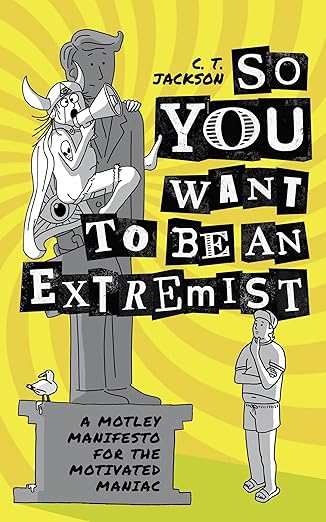

After reading So You Want To Be an Extremist: A Motley Manifesto for the Motivated Maniac by C.T. Jackson, I can say it’s a hilariously scathing, over-the-top satirical guide that lampoons modern conspiracy culture, online extremism, and the absurdities of “truth-seeking” subcultures. Structured like a how-to guide for the aspiring extremist, the book blends biting wit with dark humor as it traces the evolution of conspiracy theories and their players, from ancient Rome to the far-right fringes of social media. It walks readers through stages of “extremist enlightenment,” skewering everything from sovereign citizens and crystal-chugging wellness influencers to red-pilled incels and flat-earthers.
Reading this was like sitting through a savage stand-up special filtered through a graduate seminar in sociology. Jackson doesn’t just go for laughs—though there are plenty—he goes for the throat. The humor is raw, unrelenting, and often walks a tightrope between outrageous and uncomfortable. Personally, I found the style refreshing. It’s not sanitized or delicate. It’s brash and fearless. The jabs at figures like Joe Rogan and Marjorie Taylor Greene, or at cultural absurdities like chemtrails, 5G vampires, and moon-landing denialism, had me laughing and cringing at the same time. Jackson has a knack for mimicking the language and tone of the people he’s satirizing, which makes the parody hit even harder.
At the same time, there’s a deep undercurrent of anger here. Anger at how misinformation, grift, and willful ignorance have festered into real-world harm. That comes through in the relentless mocking of right-wing populism, internet cults, and self-declared gurus. It’s not subtle, and it’s definitely not neutral. That’s part of what I liked about it: it’s not trying to both-sides its way into approval. The parody is clever, but sometimes a little exhausting, like a meme thread that’s gone on too long. Still, when it lands, it’s fantastic.
If you have a dark sense of humor, a healthy skepticism of internet personalities, and a strong stomach for satire that cuts deep and doesn’t pull punches, this book is a fun ride. I’d recommend it to readers who enjoyed books like Thank You for Smoking or The Onion’s political commentary. It’s perfect for anyone who has ever doomscrolled Reddit or Twitter and thought, “How did we get here?”
Pages: 239 | ASIN : B0DF62LYTR
Satire of the Human Condition

Pairs: This Dating Site Will Be the Death of You follows a detective in Tampa Fl who is investigating the bizarre death of a woman who invited seven peculiar men from a friendship-dating app called Pairs to the local aquarium, only to end up murdered. What was the inspiration for the setup of your story?
Interestingly, my inspiration came from the nights my friend, who had put herself – and me – on Match so we could both find partners, texted me countless weird profile pictures of people on the site. She was infuriated, but I found it really funny. I was at a riverside Tiki bar one day trying to write an outline for my second novel when I decided to write something funny about all the pictures she sent me. That turned into Pairs (none based on actual people, but not so far off the mark either).
Each character in this story is unique and leaves readers with more questions than answers. What was your inspiration for the characters’ interactions and backstories?
Pairs is set up so that I can inspire reader involvement. The characters are purposefully vague in order to stimulate reader imagination. At the end of the book, people are encouraged to write their own ending (I have done 3), and send it to me. I may put theirs on my website (pending approval signature etc from the contributor). Pairs is also set up formulaically. Its theme is online dating. All future books have a different theme. Detective Ned is the recurring character, and he develops a backstory throughout the series, and has his own diary on CracktheCaseBooks.com.
How do you balance story development with shocking plot twists? Or can they be the same thing?
I hate to say this, but I just write and edit. The ideas are almost too easy since it’s farce, folly, satire of the human condition… But I would also say they are about the same thing.
What is the next book that you are working on, and when will it be available?
- Mishaps is out already on Amazon. It is book #2.
- Books 3 (Wrecks) and 4 (Critters) should be out by the end of 2025, and 2 more are in the works for 2026.
- A longer, more serious mystery novel should also be out by the end of 2025. All info will be announced on social media and CracktheCaseBooks.com.
Author Links: GoodReads | X (Twitter) | Facebook | Website | Amazon
A woman searching for love. A string of online suitors. A deadly end. When a young woman’s body is discovered, Detective Ned is drawn into the murky world of online dating. The suspects? Every man in her dating history on the app Pairs. Each profile photo hides a secret: the suave charmer with a shady past, the awkward loner with an unhealthy obsession, or the too-perfect match with everything to lose..
In this sharp and satirical mystery, you hold the power to uncover the truth. Will the killer be caught in the web of lies? Choose from three gripping endings and then perhaps create your own. Submit your take to tremorinthehills@gmail.com for a chance to be featured on crackthecasebooks.com. Love might be a game, but in Pairs, the stakes are deadly.
Making Vespuccia Great Again
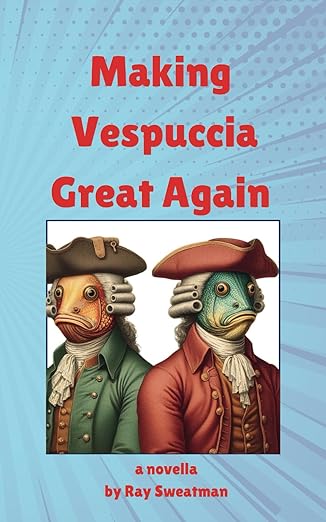
Ray Sweatman’s Making Vespuccia Great Again is a sharp, fearless, and at times laugh-out-loud political satire that imagines a dystopian America rebranded as “Vespuccia.” Set in a twisted mirror of our current socio-political climate, the novella follows the rise (again) of President O.J.C. McDonald, a grotesque caricature of a certain orange-hued reality TV personality. Through absurd characters, biting dialogue, and a surreal plot that includes everything from sentient fish Founding Fathers to LGBTQ revolutionaries called “The Pronouns,” Sweatman delivers a fiery send-up of authoritarianism, fake news, and cultural division in America.
From the very first chapter, Sweatman goes full throttle, skewering the January 6th insurrection with the same kind of commentary you’d expect from The Onion if it took acid and watched Idiocracy on repeat. The fake news anchors Donna Dumay and Don Drapery narrating the Capitol attack like a sports event? Genius. “Oh my, this is better than Getflix!” Donna chirps as democracy crumbles. I was equal parts horrified and laughing out loud. Sweatman walks that tightrope masterfully, never letting the humor soften the blow of the real critique.
One of my favorite arcs was Reverend Swindlemore and his daughter-turned-nonbinary-hacktivist Bucky (aka They/Them). The Reverend is a grotesque blend of fire-and-brimstone televangelists with just the right dose of unhinged righteousness. His hell-obsessed sermons feel ripped from real-life absurdities, and when Bucky forms a rebel group of queer hackers, I was all in. It’s outrageous, it’s camp, but there’s heart. You get the sense that Sweatman deeply respects those fighting for justice, even while cranking the satire up to eleven.
And then there’s the Founding Fathers. Literal fish-people who rise from the sea, transform into Jefferson and Hamilton, and get swept into a costume shop where they breakdance to Rick James’ “Super Freak.” It sounds insane because it is, but somehow it works. These absurd moments don’t just entertain, they hammer home Sweatman’s larger point: when truth dies, history becomes theater, and we’re all stuck on stage, flailing. Watching Jefferson defend his slave-owning past while Hamilton snarks and George Washington threatens to shoot him with a shotgun? That’s satire doing its job, shining light through the madness.
Making Vespuccia Great Again isn’t for everyone. It’s blunt, crude at times, politically fiery, and proudly liberal. But if you’re the kind of reader who enjoys Dr. Strangelove, South Park, or Vonnegut on a rampage, you’ll eat this up. Making Vespuccia Great Again is for the disillusioned, the politically exhausted, the angry, and the hopeful. It’s for anyone who still believes words have power, humor can cut deep, and that fighting back might look a little ridiculous but is still necessary. I laughed, I cringed, I shook my head. And I’d read it again in a heartbeat.
Pages: 252 | ASIN : B0DY4T96PV



 LITERARY TITAN