Blog Archives
Sweet Hunger


Sweet Hunger is a psychological thriller told through the chilling lens of Sebastian Wolfe, a successful architect consumed by obsession. Set in a sleek urban backdrop, the story traces Sebastian’s descent into a twisted fascination with Iris Klarelle, a colleague he watches from afar. What begins as admiration escalates into manipulation, surveillance, and deeply unsettling behavior, all masked by the polished facade of ambition and control. Bailey crafts a narrative of longing, delusion, and power that toes the line between attraction and madness, spiraling into something much darker than it first appears.
Reading this book felt like being dragged down a velvet-covered rabbit hole. Bailey’s writing is seductive and lyrical in places, almost romantic, until you realize how grotesque the underlying motivations are. That tension is what kept me enthralled. I caught myself sympathizing with Sebastian’s internal ache before being jolted by the horror of his actions. There’s a kind of poetic madness in how the book is written. It’s lush, sharp, and unsettling, and I have to admit, I found myself both disturbed and fascinated by how cleanly the writing mirrored the protagonist’s crumbling mind. It’s rare for a book to make me feel both voyeur and victim.
The obsessive monologues were intriguing and well-written. Although I craved another perspective. Iris remains just out of reach, which might be the point, but it made me crave her voice to break the suffocating singularity of Sebastian’s. The moments of levity, mostly from side characters like Jenna, felt like lifeboats, though they were rare. Still, Bailey manages to keep you locked in, not because you’re rooting for anyone, but because you can’t look away. It’s haunting.
Sweet Hunger isn’t for the faint-hearted. It’s for readers who appreciate the raw, unfiltered mess of human desire, especially when it teeters into obsession. If you liked You by Caroline Kepnes or the slow-burn creep of American Psycho, this book will captivate you. It’s beautiful, dark, and uncomfortable, and I mean that as a compliment.
Pages: 374 | ASIN : B0FGTNT4ZM
The Intersection of Myth and Science

The Ark of the First Gods follows a brilliant young man with alien origins and superhuman abilities, who uncovers a cosmic conspiracy that could change humanity’s fate. Adam’s journey has echoes of classic sci-fi protagonists. Did you draw influence from other stories?
Adam’s arc was consciously shaped with echoes of classic science fiction heroes like Paul Atreides (Dune), David Bowman (2001: A Space Odyssey), and even Neo from The Matrix. Like them, Adam is a reluctant protagonist drawn into a larger, often metaphysical conflict that challenges the nature of identity, destiny, and power. I wanted to explore the transformation of a scientist—someone grounded in reason and logic—into a being forced to confront truths that transcend science and logic entirely.
What were some themes that were important for you to explore in this book?
Thematically, The Ark of the First Gods is a story about identity, control, and awakening. It deals with the tension between free will and predestination, the manipulation of truth by powerful entities (alien or otherwise), and humanity’s place in a cosmic ecosystem it barely understands. I was particularly interested in what it means to be “engineered” for a purpose—how much of who we are is self-determined versus designed, either biologically or by ideology.
At its core, the book is about a hybrid protagonist standing at the intersection of ancient myth and future science, forced to choose between becoming a weapon of control or a vessel of liberation—not just for himself, but for all of Earth.
When and where will the book be available?
The Ark of the First Gods has not been published yet. It is currently with my literary agent so it is difficult to say when it will become available.
Author Website

The Conscious Virus

The Conscious Virus, by Miki Mitayn, defies easy categorization. Part sci-fi, part medical drama, it blends elements from different genres into a compelling narrative that challenges, yet deeply engages, the reader. At its core lies the unique relationship between Nerida and Mari, two women traveling through the desolate Australian outback, tasked with confronting a conscious virus—a threat unlike anything humanity has ever seen.
Nerida, a doctor and scientist, is driven by her desire to help the scattered communities she encounters. Yet her approach to saving lives is far from conventional. Mari, her partner, claims to communicate with disembodied spirits, something Nerida can’t rationalize but is forced to accept after undeniable proof. Their love is undeniable, yet their dynamic is fraught with tension—Nerida’s logical mind often clashes with Mari’s shamanistic beliefs. Together, they form an uneasy partnership, one that might hold the key to stopping a virus that’s not only intelligent but also seemingly conscious.
Mitayn crafts a narrative that explores not just the physical threat posed by this virus but also deeper, more complex themes—queer relationships, spirituality, and humanity’s capacity for self-destruction. The novel demands focus, especially when it delves into its pseudo-metaphysical moments, but the emotional anchor of Nerida and Mari’s relationship keeps readers grounded. Nerida, who sees herself as a savior of the communities she visits, struggles with Mari’s unconventional methods, yet their bond grows as the reality of their situation becomes undeniable.
The virus they face is terrifying, not just because it threatens humanity, but because it forces the women to confront the deeper question of whether humanity is even worth saving. Mitayn excels at creating a world that feels both familiar and unsettling. The stakes are high—not just for the survival of the human race but for Nerida and Mari’s relationship. The conscious virus looms as an insidious presence, but in many ways, it serves as a metaphor for any existential threat that could tear apart an unconventional love. Amid a hostile world, sometimes the only thing that sustains us is our connection to the people we care about most.
The Conscious Virus is an intricate, thought-provoking read. Its blend of genres creates a tapestry of ideas that can be challenging, but the depth of emotion and humanity at its heart make it an eminently rewarding experience. For readers who enjoy stories that push boundaries while exploring the raw, often painful nature of love and survival, this novel is not to be missed.
Pages: 478 | ASIN : B098X1SXZ4

I Let Aria Cry

Lost to Alice is a raw and haunting coming-of-age novel set in the Rocky Mountains, where a grieving teen is pulled into a world of secrets, trauma, and tangled love after the death of her parents. What was the inspiration for the setup of your story?
Well, the actual premise of this book came from a dream I had while living in a town in Colorado, very similar to Serenity Springs. There was a man with a gun just walking through town, and we couldn’t get out, we were trapped. It was all just fueled by this desperate need to survive and that “someone’s right behind you” feeling. But once I started writing, so many things took on a life of their own: Alice, Jonah, etc, so I decided to explore the idea that maybe the enemy can be someone close or not a person at all. I wanted to explore just raw fear, heartbreak and pain, and watch them persevere anyway.
Aria Delgado is an intriguing and well-developed character. What were some driving ideals behind your character’s development?
Aria. for me, was a way to see myself in a character. We suffered a loss of a young family member, and it shattered us as a family. I was angry and volatile. But as I wrote the story, Aria opened up and showed me this deep well of sadness that drove her behavior. In writing her, I realized how much sadness I hid behind a wall of anger. So I let Aria cry when I wouldn’t have let my younger self shed a tear. I wanted her to feel the sadness and not just give in to the anger. She left a lifeline into the world with Chase, and I think that’s why their relationship is so important, they’re each other’s life rafts. But Aria’s pain and sadness are very much inspired by my past and I am so proud of how far I’ve come… I’m proud of how far Aria has come, too.
What were some themes that were important for you to explore in this book?
It was important for me to convey the themes of suspense and fear, of course, but there were other themes that kind of evolved from the characters and their interactions. The importance of family became a central theme of the book, even if that family looks a little different, it can still be filled with love and comfort. And unfortunately, trauma is a central theme to Lost to Alice; how it affects us, and how we deal with it.
What is the next book that you are working on, and when will it be available?
My next book is taking us back to the fantasy genre in a story about a land-locked siren. I have the outline done and am working on fleshing out the characters – I call this my “marinating” phase. I hope to have my first draft done within the year and a release within 18 months after that. Alice took me about 3 years to finish, and my other novel, Tied to You, took 2 years, so it needs a little time. But I am really excited about it and can’t wait for everyone to meet Sienna.
In another part of the state a drug named Alice comes to life. First formulated to be a cure to depression and anxiety but soon turned to a fun party drug… in small doses. After ripping through a Denver nightclub leaving nothing but blood in her wake Alice collides with Aria’s tiny family, taking no prisoners and hungry for death. As the mountains rage around them, Alice takes over the minds of the only police officers left on the force, ushering in a night of terror as Aria, the twins and Chase are hunted. But is the real enemy within?
Can they make it until sunrise or will everything be lost to Alice?
Alycytraline Extended Release 5 mg
Take one tablet by mouth every 12 hours.
Take with food or a full glass of water
Side effects may include:
Dry mouth
Fatigue
Giddiness
Dizziness
Contact your doctor immediately if you experience any of the following:
Homicidal tendencies
Loss of all inhibitions
Oily sweat
Physical changes like excessive sweating or the ability to run at high speeds
Loss of memory
Taste for human flesh
Alycytraline… Feel more you
A Hero’s Journey
Dragon Riders of the 12th Battalion follows a thoughtful but rigid officer, as he commands a squadron of dragon riders who has to confront not just enemy threats, but also the deeper rhythms of trust, instinct, and the unknown that define dragonkind and, eventually, himself. What was the inspiration for the setup of your story?
The honest answer would probably be: myself and my own experience. Of course, my life didn’t look exactly like this – no dragons, for one – but when you get the chance to look back and reflect on the path you’ve taken, you begin to see how much things can change over time. I wanted Jack to finally be honest with himself – and that kind of clarity only comes through experience. Through the events and people that shape you, challenge you, and ultimately force you to make choices that aren’t always safe or obvious. Following the guidebook is easy. It’s the default, the safe and simple route. But as you move forward in life – and if you really listen – you begin to understand what matters, what’s right for you, and what’s right for those you care about. Jack was lucky to have a creature like Tempest by his side, and a team that genuinely cared. And he was smart enough – eventually – to listen. To them, and to the rhythm.
I find the world you created in this novel brimming with possibilities. Where did the inspiration for the setting come from and how did it change as you were writing?
I’ve loved dragons – and I’ve been fascinated by World War II (and history in general) – for as long as I can remember. Being 45 years old, that adds up to thousands of books and articles read, countless documentaries and movies watched, games played and even a few made. The initial idea was simple: put dragons and Tiger tanks on the same battlefield and let them fight it out. But once I sat down and gave it real thought, the story shifted. It became clear that this wasn’t just about spectacle – it was a chance to tell a story about the hero’s journey, and about the kind of bond that forms when you walk that path with someone – or something – beside you. That “crash and burn” setup just wouldn’t be enough for a creature like Tempest. He deserved more. And I realized the only way the setting would truly resonate was if it gave room for that bond – for something deeper than fire and steel.
What were some themes that were important for you to explore in this book?
Very early on – really before I even created the outline – the story pivoted from Reign of Fireto Band of Brothers. For many years, I struggled with doing what I thought others expected of me, rather than what truly mattered – not just to me, but in life. So, one of the core themes I wanted to explore was the search for inner calm, acceptance, and the courage to make the right choices, even when they go against what’s easiest or most expected. Tempest, in that sense, became something more than a dragon. He’s a kind of temple – a quiet embodiment of wisdom and presence. The fact that he never says a single word makes his message even more powerful. He has a lot to say in this book – you just have to learn how to listen. Like in our own lives.
Will there be a follow-up novel to this story? If so, what aspects of the story will the next book cover?
The war is not over yet. Jack and Tempest are a powerful duo, and the rest of the team supports them in ways that go beyond tactics – they’re a unit shaped by trust and shared scars. But Jack is still a soldier. He has to follow orders and carry the weight that comes with that – even when it means making hard choices or going where he’d rather not. I’ll definitely return to them. Their story isn’t finished. But for now, I’m focused on a few other projects – they’ll have to wait just a little before they take flight again.
A WWII alternate history fantasy with dragons, magic, and myth reborn.
Pendragon Keep is crumbling. The guns of the Channel roar. And Captain Jack Hanlon walks the parapet with nine tons of storm-breathing wyrm above him, listening to the only rhythm that hasn’t betrayed him.
In 1944, the skies are no longer owned by aircraft alone. In a world where dragons are more than weapons, Jack leads the 12th Battalion: an elite unit of dragon-riders tasked with surviving a war twisted by rune-charged infantry, phantom decoy flights, and arcane sabotage.
Allied generals issue commands. Jack listens to something older—stone, silence, and the pulse of Tempest, his dragon, whose instincts see what radar never will.
From mist-wrapped abbeys to fire-scorched marshes, the 12th flies into doubt, fire, and myth reborn. But leading dragons is the easy part. Leadership demands listening between the orders—knowing when to follow the map, and when to burn it.
Haunted by his mother’s field notes and the unspoken wisdom of the wyrm at his side, Jack must decide whether loyalty lies in obedience… or resonance.
Welcome to the skies of a war rewritten.
What awaits inside:
• Epic alternate warfare – A gritty WWII reimagined with dragon fire and rune magic
• Sentient wyrms, not beasts – Ancient allies with instincts, memory, and agency
• Squad dynamics that matter – From fearless Costello to haunted Alvarez, the 12th isn’t just a team—it’s a crucible
• Resonant themes – Leadership. Silence. Sacrifice. Trust forged in fire
• Cinematic storytelling – Soaring dogfights, mist-laced ruins, and the moral weight of command
Perfect for readers who crave squad-driven war stories laced with myth, fire, and hard choices—where brotherhood is forged in battle, dragons carry more than riders, and silence can speak louder than command.
The dragons are ready. The orders have been given. But the rhythm of war is changing—and only those who listen will survive.
The Ghost Who Wouldn’t Leave

The Ghost Who Wouldn’t Leave is a witty, immersive novel about a burnt-out writer, Lesley Tierney, who buys a crumbling country cottage hoping for solitude and a creative reset, only to find herself face-to-face with Nathaniel Ashcroft, the smug, brooding ghost of a long-dead Victorian actor. What follows is not a typical haunting. It’s a simmering standoff between two stubborn souls, one alive, one not. It’s filled with sarcastic banter, strange happenings, and slow, unexpected companionship. As Lesley unravels the mysteries of Nathaniel’s past, she also wrestles with her own creative doubts and emotional baggage, all within the creaky walls of a house that seems to watch her just as much as she watches it.
I didn’t expect this book to be so funny. The narration is sharp and self-aware, filled with dry British humor and a kind of biting internal monologue that had me laughing more than once. The pacing is tight, with eerie moments slipping into emotional ones, and then, just when things threaten to get too heavy, it throws in a perfectly timed quip or a floating teacup. Lesley is relatable in the most chaotic and relatable way. She doubts herself constantly but still finds the grit to stand her ground, even when the house (or the ghost) quite literally fights back. And Nathaniel? He’s annoying in the best possible way: smug, theatrical, and gradually, devastatingly real.
What I loved most, though, was how this ghost story wasn’t about fear. It was about being stuck. Stuck in houses, in stories, in past lives and unfinished business. The supernatural elements were clever and creepy, sure, but they always served something deeper. The slow emotional thaw between Lesley and Nathaniel is tender, strange, and oddly moving. There were moments that gave me chills, and others that hit far closer to the heart than I expected from a story that begins with a sarcastic property viewing and a possibly haunted Aga. The writing is rich but never stuffy, full of texture and mood.
I’d recommend The Ghost Who Wouldn’t Leave to anyone who likes their ghost stories with more heart than horror. It’s perfect for readers who appreciate layered characters, slow-burn relationships, and stories that blend the emotional with the uncanny. It’s especially for those who’ve ever felt a little lost or needed a reminder that sometimes, even haunted houses can be homes. I closed the book feeling like I’d been part of something strange and lovely.
Pages: 331 | ASIN : B0FH7LGB4Z
Memoirs of a Household Demon
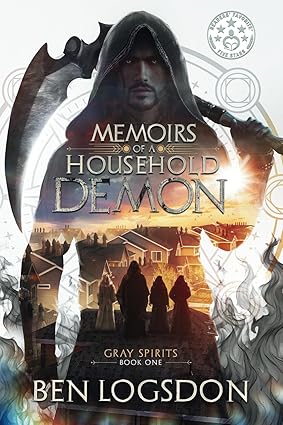
Memoirs of a Household Demon is the story of Yuriel, a mid-tier demon tasked with corrupting a modern-day slacker named Paul Meechum. What begins as a humorous tale of vices, laziness, and divine rivalry soon turns into something deeper. Through poker games in attic hideouts and spiritual face-offs with a pompous guardian angel named “Goldie,” Yuriel gradually becomes entangled in a neighborhood full of more meaning than he bargained for, especially when he starts spying on a neighboring family whose love and strength challenge everything he thought he knew about his place in the world.
The writing in this book is a blast. It’s quick, snappy, and sharp as a whip. The banter between Yuriel and Goldie had me laughing more than once, and the absurdity of demons playing poker with eternal punishment on the line was pure genius. But what surprised me most was how fast the tone could shift from jokes about weed brownies to scenes so tender and raw they made my chest ache. The author manages this emotional rollercoaster with a light touch, never getting preachy, never losing the humor, but letting the heart sneak up on you. It’s rare to see a story so funny yet so genuinely moving.
The real power here lies in the ideas. The book plays with spiritual themes like heaven, hell, purpose, and redemption, but it doesn’t hand you easy answers. Yuriel, who starts as a sarcastic, jaded trickster, slowly changes just by watching a family love each other well. He doesn’t suddenly become a saint, but he’s clearly haunted by the good he sees. I felt that. I’ve been there. Sometimes, witnessing real love or real faith shakes you more than any lecture ever could. And the contrast between his rowdy chaos and the quiet strength of the Torres family hit me hard.
Memoirs of a Household Demon is perfect for anyone who likes their humor laced with soul. It’s a great fit for fans of Neil Gaiman or Good Omens, or for readers who want a story that blends the ridiculous with the divine. If you’ve ever wondered whether a demon could find redemption or if you just need a good laugh with a punch of meaning, you should read this book.
Pages: 337 | ASIN : B0DNR6CN42



 LITERARY TITAN