Blog Archives
What Role Would You Play

The Fire Within follows a teen outcast learning to use his unique sensory gift as he navigates life in a post-apocalyptic desert compound. What was the inspiration for the setup of your story?
I’ve always been fascinated by characters who have to overcome a disability or a weakness. Finn’s inability to call on the nova-field makes him a danger to himself and everyone around him in a very dangerous post-apocalyptic world. His disability makes him an outcast. It also forces him to become more in tune with the world than those who practice novamancy. How we turn perceived weakness into strength makes life interesting.
I grew up without a TV, so I read pretty much every sci-fi and fantasy book printed in the 80s and 90s. Stories like Mad Max, the Hunger Games, LOTR, the Divergent series, even 1984, are so fun because they let us imagine a world not too far from our own where everything goes to hell. What role would you play in that new society when the niceties of modern life vanish? This is a question my friend group has been asking for years and was a big part of the inspiration for The Fire Within.
What is it that draws you to the science fiction genre?
Anything is possible. I like to blend sci-fi and fantasy because magic and science of a distant future are essentially interchangeable. I got a degree in physics eons ago and I fell in love with how strange the fundamental rules of existence are, especially when delving into the very small (quantum physics) or the very fast (relativity). The fact that hardened scientists have their assumptions regularly challenged by the mysteries of the real world is incredibly hopeful. We still know so little about how the universe works, which means anything is possible.
What were some of the emotional and moral guidelines you followed when developing your characters?
One of the things I love about young adult stories is the simplicity of the fight between good and evil. In the literature I grew up with, evil was typically one-dimensional. Bad guy=pure evil. YA stories have evolved quite a bit since then as our readers have realized there is nothing more boring than a one-dimensional character. The only guideline I set was to make the characters feel real, relatable. No one is good at everything, we all make mistakes, and bad things happen to everyone. How we respond to those challenges shapes us as people. I have these conversations with my daughters on a near daily basis. For some, these challenges make us hardened and bitter. Others rise above and never lose sight of that childish wonder and hope. I try to show a bit of both in my characters.
Character building reminds me of the old Cherokee story of two wolves: A Grandfather is teaching his young grandson. “It is as if there are two wolves inside me; one wolf is good and does no harm. He lives in harmony with all around him and does not take offence when no offence was intended. He will only fight when it is right to do so, and in the right way. But the other wolf, is full of anger. The littlest thing will set him into a fit of temper.” “He fights everyone, all the time, for no reason. He cannot think because his anger and hate are so great. It is helpless anger, because his anger will change nothing. Sometimes it is hard to live with these two wolves inside me, because both of the wolves try to dominate my spirit.” The boy looked into his Grandfather’s eyes and asked, “Which wolf will win, Grandfather?” The Grandfather smiled and said, “The one I feed.”
As a writer, I get to feed both wolves hearty meals, which is what makes writing so much fun.
Can you give us a glimpse inside the second book in The Ashen Legacy series? Where will it take readers?
Absolutely! Ashara is a divided world—aboveground, a searing desert battered by nova storms and scorched by the terrifying Ignavari; underground, sprawling caverns house the magical Dusker kingdoms, ruled by a feudal society that thrives beneath the frozen glaciers. We spent the majority of the first book aboveground. The second book dives deep into the Dusker kingdoms where Finn will face a new set of challenges, where the threats aren’t as obvious as a giant fire monster trying to melt his face. It doesn’t make the threats any less dangerous however. Finn will need to fall back on his perception and his friends if he is going to survive the political backbiting, the magical monsters, the mystery of the waxers, and make some progress on how to fight the Ignavari.
Author Links: GoodReads | Amazon
Ashara is a divided world—aboveground, a searing desert battered by nova storms and scorched by the terrifying Ignavari; underground, sprawling caverns house the magical Dusker kingdoms, ruled by a feudal society that thrives beneath the frozen glaciers. Finn is unable to manipulate the Grounder energy known as novamancy, but his peculiar ability to sense power sets him apart.
Forced to survive in the underground tunnels between worlds, Finn joins a drillship crew who battle fearsome goblins to rescue a member of a Dusker royal family, and uncover horrifying truths behind the fire-wielding Igni. As Finn hones his skills, he discovers a terrifying secret—a shadow from his past has become a waxer, a being of molten flesh twisted by dark power, and he’s leading an army against everything Finn once called home.
With war looming and his past haunting him, Finn must embrace the fire within or risk being consumed by it. Survival isn’t enough—he must forge his path and fight for those who still believe in him.
Perfect for fans of Red Rising and The Hunger Games, The Fire Within is a pulse-pounding tale of survival, destiny, and the power to shape one’s own fate.
Struth Mate!: Is This Hell? (Struth! Book 2)
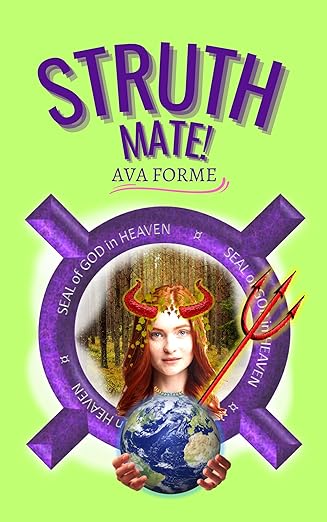

Ava Forme’s Struth Mate! Is This Hell? is a mad, cosmic ride through a metaphysical reality where life, death, religion, science and philosophy collide. This isn’t your typical sci-fi or religious satire, it’s a sprawling, layered universe that takes big swings at answering life’s biggest questions: Why are we here? What happens after we die? Are we just meat machines or does something greater move us? Picking up from the model of the universe developed in the first book in this series, this volume throws us into the “scosmos,” a parallel spiritual plane, where spirits use life (and specifically the heightened abilities of human life) to try to solve some of the universe’s ultimate puzzles.
I found the writing style both wild and strangely charming. Forme’s world is complex and stuffed to the brim with ideas. It’s like reading someone’s fever dream if that dream had been outlined by a philosopher-turned-sci-fi author with a very dry sense of humor. The way new words are formed by slapping an “s” in front of them (like “slife” for spiritual life or “swalk” for spiritual walk) is weird at first, but it grew on me. It added to the surreal, alien-but-familiar tone of the book. I especially loved how Don, our narrator, walks us through Heaven like a sarcastic Airbnb host explaining self-image manipulation, spiritual politics, and bisexuality in the afterlife like it’s all totally normal. His personal discomfort, curiosity, and heartbreak over his lover Lesley’s secret identity as the reincarnated spirit of Adolf Hitler is told with emotional vulnerability and dry wit that somehow makes it all land.
That said, Struth Mate! isn’t a light beach read. It’s dense. There’s a whole metaphysical system introduced in the preamble and “Chapter 0” that includes spiritual echelons, reincarnation mechanics, and a universal information network called the sinternet that provides access to all knowledge stored in dark matter. It’s a lot. But that’s also what makes it fun, if you like a bit of brain-stretching fiction. One of the more memorable concepts was the “Kali Objective,” a mission given to gods (yes, there are many, and they retire like presidents) to stop the universe from continually cycling from Big Bang to Big Crunch by understanding and mastering cosmic forces. It’s ambitious, almost laughably so, but it hooked me. I caught myself wondering, “What if?” more than once.
Emotionally, the book lands harder than I expected. The way Forme explores spiritual longing, identity, and purpose hit close to home. Don’s inner conflict, especially when he finds out Lesley is not only God now but also carrying the spiritual echo of Hitler, is both bizarre and strangely touching. It makes you reflect on how we process trauma, identity, and destiny. The book might be dressed in cosmic technobabble and telepathic networking, but at its core, it’s about people (or spirits) trying to find meaning and connection in a chaotic universe.
If you need linear plots, clear-cut good guys and bad guys, or simple language, you’ll probably get frustrated. But if you’re the kind of reader who digs The Hitchhiker’s Guide to the Galaxy mixed with The Good Place, stirred up with philosophical rambling and a healthy dose of irreverence, you’ll be in for a hell of a time. I’d recommend it to fans of speculative fiction, agnostics wrestling with cosmic meaning, or just anyone who likes their sci-fi on the strange side.
Pages: 511 | ASIN : B0F32RBYYG

The Brushy Ridge Militia

Roger Chiocchi’s The Brushy Ridge Militia takes a hard look at America’s deep divisions over gun control, political power, and the consequences of unchecked violence. The story weaves together political intrigue, grassroots activism, and personal tragedy, following Speaker of the House Fred Grantham as he maneuvers through a firestorm of public outrage following a school shooting. But the heart of the novel lies with Austin McGuirk, a bullied, isolated teenager whose desperation culminates in devastating action. This book is raw, unsettling, and impossible to put down.
Chiocchi’s writing is unflinching. From the opening pages, he throws the reader straight into the chaos of a protest, the rage of the public clashing against the stubborn resolve of politicians. The way he writes Grantham is fascinating; the man is cold, calculating, and seemingly incapable of genuine empathy. His exchanges—like when he coldly ignores a grieving mother thrusting a photo of her dead daughter in his face—are chilling. The writing style is direct, with short, punchy sentences that keep the tension high. Sometimes, it almost feels like a screenplay, moving rapidly between perspectives, keeping the reader gripping the edge of their seat.
The most haunting part of the book is Austin McGuirk’s story. Chiocchi takes us deep inside the mind of a bullied, ostracized kid, showing us his slow descent from hopelessness to horrifying resolve. The locker room humiliation scene is brutal, making it impossible not to feel the depth of his pain. And when he finally snaps, it’s a moment that is both horrifying and deeply tragic. One of the novel’s greatest strengths is how it forces the reader to sit in that uncomfortable gray area where you can understand why something happens, even if you can’t justify it.
Then there’s the “militia” of grieving parents who take justice into their own hands. Their motivations are understandable, their pain palpable, but their actions blur the line between righteous fury and dangerous extremism. The novel forces the reader to reckon with the consequences of political inaction, the cost of turning a blind eye, and the rage that festers when justice is never served.
The Brushy Ridge Militia is not an easy read, but it’s an important one. It’s for readers who appreciate stories that don’t shy away from tough conversations—those who like their fiction with a dose of unsettling realism. If you’re a fan of politically charged thrillers, or books that explore the human cost of policy decisions, this is a must-read.
Pages: 400 | ASIN : B0DTNX5J2P
Sweet Ridge Hearts
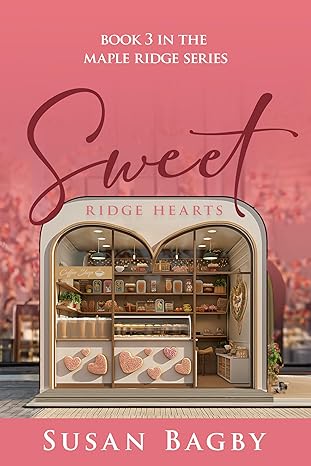
In Sweet Ridge Hearts, Susan Bagby crafts a warm and heartfelt tale about second chances, personal growth, and rediscovering what truly matters. The story follows Katy Flanagan, a New York marketing executive whose ambition is stymied when her idea is stolen and her promotion handed to her boyfriend, who then breaks up with her for professional reasons. Disillusioned and raw, Katy escapes to the cozy town of Maple Ridge to stay with her cousin Christine. What follows is a touching journey of healing, love, and self-discovery as Katy gets involved with Christine’s thriving bakery business, meets new friends (and a certain handsome veteran named Derek), and begins to see that life’s sweetest rewards often come from unexpected places.
I didn’t expect to get so emotionally tangled up in Katy’s story, but Bagby’s writing pulled me in from the start. The dialogue felt real, like listening to people I know. Katy’s frustrations at work, her heartbreak, even her stubbornness, all rang true. I found myself nodding when she stood up for herself, and I felt every sting of betrayal she faced in those early chapters. Bagby has a knack for painting a scene so vividly. Her style is clean, never stuffy, with plenty of down-to-earth charm that makes you forget you’re reading fiction. The plot may follow familiar beats, but the emotion behind each moment is fresh.
What really stayed with me, though, was the book’s heart. This isn’t just a romance, it’s about finding your footing when everything you thought you wanted falls apart. Katy doesn’t just swap the city for the country and magically find love. She works through her own mess. She grows. And Derek is not your typical brooding hero. He’s quiet, strong, layered with past pain, and gently healing alongside Katy. The themes of redemption, trust, and building something lasting—whether it’s a career or a relationship—really resonated with me. There’s a sense of community and purpose woven throughout that gave the story its soul.
I recommend Sweet Ridge Hearts to anyone craving a feel-good, heartfelt read with depth. If you’re tired of flashy romances and want something real, with characters who mess up, grow, and try again, this book’s for you. It’s perfect for curling up on a cold weekend, letting it tug at your heartstrings, and walking away feeling a little more hopeful.
Pages: 297 | ASIN : B0DJ9WLBD4
The Secretary


Deborah Lawrenson’s The Secretary is a richly layered spy novel set against the bleak yet fascinating backdrop of Cold War Moscow in the late 1950s. The story centers around Lois Vale, a British woman sent under deep cover to the British embassy in Moscow. By all outward appearances, she is a secretary, but beneath the surface lies a complex and dangerous mission to uncover a possible traitor within the embassy. Through diary entries, vivid scenes, and psychological depth, Lawrenson paints a tense world where truth is elusive, betrayal is always near, and even the most personal thoughts can become weapons.
From the very first page, I was pulled in. The writing has a graceful rhythm. It’s elegant without being flowery, sharp without being cruel. Lawrenson manages to say so much with so little. I found myself re-reading lines not because they were hard to follow, but because they hit a nerve. Her descriptions of Moscow are like watching a black-and-white film—gritty, cold, and oddly beautiful. What really stuck with me, though, was the emotional weight. Lois isn’t a James Bond figure. She’s real. She’s scared. She second-guesses herself. And I believed her every step of the way.
The book builds slowly, piece by piece. The tension comes from little things like a locked drawer, a look held too long, a diary that might be read. At times, I wanted more plot, more fireworks, but I came to appreciate the quiet dread more than the expected explosions. The sense of being watched, of being alone in a room full of people—it’s handled so well it gave me chills. There’s also a feminist undertone I didn’t expect. Lois is underestimated, even dismissed, but she holds more power than most of the men around her. That felt deeply satisfying.
I’d recommend The Secretary to anyone who loves Cold War fiction, but especially to readers who enjoy slower, more introspective spy stories. This isn’t an action-packed thriller. It’s a character study wrapped in espionage. If you liked Tinker, Tailor, Soldier, Spy but wished it had more emotional depth, or if you ever wondered what it would be like to spy without backup, this is your book. I closed it feeling both chilled and strangely moved.
Pages: 305 | ASIN : B0DSWG8J3C
Pairs: This Dating Site Will Be the Death of You
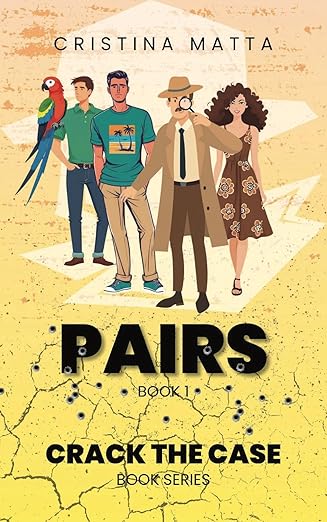
Cristina Matta’s Pairs: This Dating Site Will Be the Death of You is a fast-paced, offbeat murder mystery wrapped in biting satire and stuffed with eccentricity. Set in the humid chaos of Tampa, Florida, the book follows Detective Ned Jenkins as he investigates the bizarre death of Susan LaFont—a woman who apparently invited seven peculiar men from a friendship-dating app called Pairs to the local aquarium, only to end up murdered. What unfolds is a series of sharply written vignettes of these suspects, each more absurd and hilarious than the last. There’s a man wearing Batman stickers on his face, another eating endless pizza, one with a monkey, and even a guy whose profile picture is Barbie and Ken mid-coitus. Matta doesn’t just describe characters, she roasts them alive and lets them squirm in their own weirdness.
Matta’s writing is clever and self-aware. She leans hard into absurdity without tipping over into chaos, and that’s no easy feat. Her voice is confident, wickedly observant, and full of snark. The structure is tight—each chapter feels like a miniature sketch comedy piece, but it all ties back to the central mystery. Detective Ned is gruff and jaded but utterly relatable, especially as he navigates an increasingly ridiculous sea of suspects and reconsiders his own past missteps. I found myself both enjoying the mystery and savoring the wry commentary on modern dating, loneliness, and how deeply strange people can be when left to their own devices.
The story’s comedy can sometimes swallow its stakes. There were moments when I wanted more depth, more emotion, something raw. The victim, Susan, remains a bit of a mystery herself, not just in the whodunit sense but emotionally. And while I adored the wild suspects, a few felt more like clever caricatures than real people. Still, maybe that’s the point. The book is unapologetically satirical. It’s not here to hold your hand through a touching drama, it’s here to slap your face with a fish and then dare you not to laugh.
Pairs: This Dating Site Will Be the Death of You is sharp, funny, and refreshingly weird. It’s a great read for fans of Carl Hiaasen, readers who enjoy a twist on classic detective stories, or anyone who’s ever been baffled by online dating profiles. If you like your mysteries with more laughs than laments, and your characters with quirks dialed up to eleven, this book’s for you.
Pages: 67 | ASIN : B0F4SRWMB3
Evacuation Route

Chris Dungey’s Evacuation Route is a gritty, wry, and deeply human novel that follows two aging brothers—Walt and Warren Bocewicz—as they navigate the final days of their failing family pharmacy in Jacksonville, Florida. It’s a story about endings—of businesses, dreams, and illusions—and what happens when the past won’t let go, and the future doesn’t offer much to hold on to. Through dry humor, raw reflection, and vivid detail, Dungey explores themes of addiction, redemption, brotherhood, and the small moments of absurdity that stitch together a life on the edge of collapse.
What struck me first was the voice. It’s sardonic, bruised, but weirdly comforting. Dungey lets Walt speak in a way that’s both poetic and foul-mouthed, like someone who’s done a lot of time—both literal and emotional. One line that stuck with me was when Walt refers to his stash of leftover pills as a “golden parachute of brake fluid.” The metaphor is funny and heartbreaking. He’s not planning to get high. He’s planning to coast. The way Walt scavenges leftover meds and rations them like wartime chocolate speaks volumes about the quiet desperation of a man trying to stay clean but not above cutting corners. Dungey doesn’t excuse Walt’s thievery; he frames it in a larger commentary about survival in a system that’s left men like him behind.
Another highlight is the dynamic between the brothers. Warren, the straight-laced pharmacist with a taste for community theater, and Walt, the wayward ex-con with a flair for ten-dollar words and sketchy ethics, are an unlikely but believable duo. Their exchanges are loaded with decades of resentment and love. When Barren finally tells Walt about the $1.4 million offer for the building, it feels like a plot twist in a family saga more than a financial windfall. There’s no cheering. Walt doesn’t jump for joy. He thinks about how much of the haul is his, about the unpaid debts, about the cat. This is a book that constantly dodges the easy emotion. It doesn’t go for the melodrama. It sits you down and lets the disappointment breathe.
But the book isn’t just grim. There’s an undercurrent of dark comedy that really works. I laughed when Walt muses about the $5 thesaurus in the jail library or worries about cultural appropriation while driving his “urban classic” Cadillac through the wrong neighborhood. That moment—equal parts cringe and candor—captures the uneasy blend of shame and swagger that defines Walt’s character. Dungey has a gift for these moments.
Evacuation Route is a slow burn, a bit messy, and it rarely gives the reader a clean moral center to hold onto. But if you’ve ever known someone who’s screwed up everything, who’s just trying to make it through the next day without screwing up more—this novel might hit you in the chest. Dungey’s writing doesn’t flinch. It’s tired, it’s bitter, and it’s weirdly beautiful. I’d recommend it to readers who love character-driven stories, gritty Southern settings, or fiction that explores addiction and redemption without preaching.
Pages: 585 | ASIN : B0DY5P6824
Good For The Soul

Philip Rennett’s Good For The Soul is an ambitious, genre-blending novel that tosses political satire, spiritual conflict, and small-town Irish charm into a single, messy but compelling stew. At its core, the book follows Andrew Blackwell, a former UK prime minister, now a reluctant recluse, as he’s dragged back into the world of global influence through a secretive “Global Conclave.” Meanwhile, in the quiet Irish town of Clonbrinny, a troubled priest is caught in the moral chokehold of a criminal syndicate. It’s a story about power, guilt, reinvention, and the weird, awkward humanity that binds it all together.
What grabbed me first was how effortlessly Rennett shifts tone. One moment, you’re in a confessional booth listening to Margaret Doyle deliver an outrageously inappropriate dream confession about cassocks and spanking. Next, you’re in the thick of Blackwell’s emotional unraveling or sitting in a church watching Declan Kelly, a violent gangster, toy with religion like it’s a game of poker. These tonal shifts shouldn’t work. But they do, mainly because Rennett has a wicked sense of humor and a sharp ear for dialogue. Margaret’s appearances, especially in the “Confession” chapter, had me laughing out loud, while Father Aidan’s slow disintegration genuinely broke my heart.
What surprised me most was how Good For The Soul uses the setting almost like a character. Clonbrinny feels lived in, grimy, rain-soaked, and steeped in secrets. Peace Castle, where the elite gather to decide the world’s fate, is jaw-dropping in its opulence, but it feels hollow, too. There’s a beautiful contrast between those two worlds, and Rennett plays them against each other masterfully. When Blackwell stands before the Conclave in “The Opening Statement,” what he says feels honest, even raw, not just because of what he reveals, but because we’ve seen him wrestle with it. I didn’t expect to feel sympathy for a politician on the brink of a second act, but here I am.
The writing itself is tight and conversational, but it’s never dumbed down. I loved how Rennett injects intelligence without arrogance. He keeps the language accessible, even when the stakes are philosophical. There’s also a lot of heart under all the satire. One of my favorite moments was in “Help Me,” when Father Aidan, drunk and broken, finally whispers, “Help me.” That wrecked me.
Good For The Soul feels like a modern-day parable, soaked in Guinness, lit by lightning over crumbling churches, and filtered through the lens of people just trying to figure out what the hell matters anymore. I’d recommend it to anyone who likes their fiction smart, funny, and a little unhinged. Especially if you’re into layered plots, Irish settings, and characters that make you feel something, even when they’re being completely ridiculous.
Pages: 369 | ASIN : B0F44DQKCK




 LITERARY TITAN