Blog Archives
Forgotten Summer


Ryan Griffith is a young boy grappling with the complexities of fitting in. Spending his summer days as the only kid at a sprawling country house, he finds himself isolated and restless, while day camp brings its own set of worries and social hurdles. Haunted by the fear of making mistakes, Ryan retreats into the comforting realm of comic books. But everything changes when four new kids enter his life, catapulting him into an adventure more thrilling than anything he could have imagined. As he dives deeper, he must confront the mysteries of his own missing memories.
Robert Gilbert’s Forgotten Summer captures the essence of a young boy’s struggles in the 1960s, bringing to life an era defined by innocence and introspection. Ryan is an introverted, socially anxious child who finds camp challenging and battles to communicate his feelings with his family. His loneliness is palpable, yet so is his tenacity as he searches for a sense of belonging in a world that feels too big and daunting.
Gilbert expertly weaves in rich cultural references from the 1960s, grounding Ryan’s journey in the pop culture of the time. From beloved television shows to classic comic book escapades—though Ryan would pick Archie over the Avengers any day—the story feels vividly nostalgic, inviting readers into a bygone era. The author’s depiction of real-life locations adds a layer of authenticity, enhancing the book’s charm.
While the story has a somewhat rigid and expository start, it gradually gains momentum, drawing readers into Ryan’s world more fully. The early chapters focus on relaying information, which I think may limit immersion for some readers, and the structure has room for further refinement. While the twist involving the new kids adds intrigue, I would have loved it to have been explored more fully to sustain engagement.
The book remains an endearing and quick read that is brimming with warmth and a sense of hope. The tale of overcoming anxiety and carving out a place in the world resonates deeply, while the light action scenes keep it engaging. With content suitable for readers aged seven and up, Forgotten Summer is a delightful option for those who appreciate the culture of the 1960s. Ryan’s nostalgic adventure evokes the comforting charm of classic Sunday afternoon TV, making it an enjoyable escape for readers of all ages.
Pages: 136 | ASIN : B0DJH92CJT

Partners in Time Meet A Boy Called Romulus


Nicholas Hodgson’s Partners in Time Meet A Boy Called Romulus is a captivating historical fiction tale that blends time travel, friendship, and the bittersweet allure of second chances. As the second installment in the Partners in Time series, it picks up with Harry and Jett, whose chaotic and accidental ventures through time have landed them in yet another adventure. This time, they encounter Romulus Augustus, the exiled and forgotten last Emperor of Rome, who has inexplicably found himself lost in 1942 England. What follows is a thrilling collision of timelines and a heartfelt exploration of power, identity, and loyalty.
Hodgson’s story is a fusion of nostalgia and mystery, weaving the grandeur of history with the wonder of time’s intricate possibilities. Hodgson uses time travel not as a mere plot device but as a means to explore themes of belonging, loss, and redemption. The story’s heart lies in its characters. Romulus, the boy Emperor, is a deeply haunting figure marked by loneliness, defiance, and the crushing weight of his fallen empire. His quiet strength and vulnerability leave a lasting impression, making it impossible not to feel his pain. Harry and Jett, in contrast, bring a sense of grit, determination, and relatable humor, serving as the perfect counterbalance to Romulus’s solemnity. Together, the trio navigates the complexities of their unlikely alliance, creating moments of humor, tension, and deep connection.
The prose is dynamic, tumbling forward with a lively rhythm that captures the urgency of the plot while pausing just long enough to savor its emotional depth. Hodgson’s ability to balance historical authenticity with modern sensibilities is impressive. The dialogue, though occasionally a bit contemporary for a historical setting, brims with wit and relatability, making the characters feel alive and engaging.
The fast-paced plot keeps readers on edge, plunging them into a series of high-stakes adventures while never losing sight of the personal journeys at its core. The action-packed moments are tempered by thoughtful introspection, ensuring that the story resonates on an emotional level. Though the pacing sometimes leaves little room for the narrative to breathe, this brisk tempo enhances the sense of urgency. The stakes feel personal, centering on three individuals trying to find their place across disparate worlds rather than on the grand machinations of history or empire.
Partners in Time Meet A Boy Called Romulus is a beautifully written and emotionally rich story. Hodgson handles historical detail with care, creating a world that feels both immersive and playful. This book is perfect for readers who long to dive into the margins of history while enjoying a fast-paced, imaginative adventure.
Pages: 304 | ASIN : B0DJWGSWJB
The Maker’s Name

The Maker’s Name by Seamus McKenna unravels a gripping tale of ambition, betrayal, and family dysfunction set against the dramatic backdrop of Ireland’s Celtic Tiger years. At its heart is Hawthorne Meats, a thriving family business, but beneath the surface, trouble is brewing. When patriarch Malachi Considine dies under suspicious circumstances, his sons, Rudi and Gus, face off over the inheritance. The fallout is swift and brutal, with Rudi attempting to edge Gus out of the company. Yet, the drama extends far beyond the brothers. Ambitious banker Toomarood, the sly solicitor Cosgrave, and a host of other players circle like vultures. The mystery of Malachi’s death looms large. Was it truly an accident or something far darker?
McKenna draws readers into a narrative that echoes the complex family dynamics of The Godfather and the sharp, corporate scheming of HBO’s Succession. The setting, Ireland during its era of unprecedented economic growth, grounds the story in a world where greed and power reign supreme. This tale of familial conflict feels larger than life, yet McKenna roots it in sharp details and vivid personalities.
The tense relationship between Rudi and Gus commands attention. Both are richly developed characters, capable of driving the story forward with their flawed yet compelling personalities. Surrounding them is a cast of supporting characters who elevate the narrative, from Gus’s loyal friend Raymond and his steadfast partner Kaarina to Rudi’s ambitious wife Penny. Even the minor characters leave a lasting impression. McKenna’s deft characterization and razor-sharp dialogue make these figures leap off the page.
The story unfolds with the controlled chaos of a Guy Ritchie film; dark humor, sudden bursts of violence, and a palpable tension that escalates as events spiral out of control. Few of the characters inspire affection, yet watching them maneuver and clash is an unmitigated delight. Every twist tightens the grip, and every revelation adds a layer of intrigue.
This is a wickedly entertaining ride, packed with sharp turns and unforgettable moments. While the characters may not win your sympathy, they will certainly hold your attention. For fans of dark family dramas or stories steeped in ambition and deception, The Maker’s Name delivers a riveting experience.
pages: 328 | ASIN: B0D4KXVV7C
Treasure-Laden Expedition

The Lost Expedition follows a former Indian paratrooper who, while trying to enjoy a vacation in Dubrovnik, gets sucked into a web of danger involving war photographers, mystical relics, and Croatian warlords. What was the inspiration for the setup of your story?
Being an Indian thriller novelist, I felt obliged to have an Indian protagonist in one of my thriller series. I wanted history and global locations. The series had to be educative, too, and preferably, have a link to India. And of course, the protagonist had to handle dangerous situations. Thus was born “Izak Kaurben.” Izak is a play on Isaac, and Kaurben is arguably an Indian-sounding name. Izak Kaurben is an elite paratrooper who, after a bitter experience in a mission (described in the series’ first book, RELIC) wanders the world. Croatia caught my eye as a good kick-off point for the series. So, Kaurben arrives in Croatia, hoping for a peaceful Eastern Europe backpacking experience, and instead, gets embroiled in trouble. THE LOST EXPEDITION follows closely after the events of RELIC. It is nearly a Part II because it closes plot lines opened in RELIC. However, readers have sufficient background to get into the story without reading RELIC. That being said, it’s a more enjoyable read in order.
The Malian Empire and Mansa Musa (the richest man ever) have been on my mind for years. The idea of a fabulous treasure-laden expedition across the Atlantic and the hunt for that treasure is a hook that never gets old. Linking it to Croatia and other key elements — like the ship graveyard in Nouadhibou and slave trade — was the hard part. But, if your review is any sign, I believe I’ve created a plausible and exciting scenario. 🙂
What character did you enjoy writing for? Was there one that was more challenging to write for?
If you notice, each “part” of the story begins with a Cast of Characters. I felt it a good way to ease them into the picture without overwhelming the reader. I enjoyed writing Chief Inspector Goran. In RELIC, he is a no-nonsense ‘top cop.’ Here, I had fun ripping away his ‘work ethic’ yet keeping him honorable. Writing the Senegalese characters was challenging, because of the non-linear plot structure — it switches between present-day and flashbacks often — and determining the optimal way to plug them into the events of RELIC.
I felt that the action scenes were expertly crafted. I find that this is an area that can be overdone in novels. How did you approach this subject to make sure it flowed evenly?
I avoid unnecessary action. If my characters can flee instead of engaging, they will do that. Even in an action sequence, I do not labour with distance measurements, specifications of guns and bullets, and physics and chemistry. It has to be quick, like you — the reader — is watching it. This, keeps it light and fluffy, like a good pancake. 🙂
What will the next book in that series be about and when will it be published?
I’m on a book-a-year process. The next book comes out in 2025. Without revealing too much, Izak Kaurben will come face to face with a ghost from his past. And there’s a dollop of history, too.
Author Links: GoodReads | Website | The Lost Expedition-Behind the Scenes | Amazon
“I need your help,” Goran says, as he unpacks a stash of weapons… “To commit a crime.”
Before Kaurben can stop him, Goran puts his plan into action: ambush a prisoner transport van and free a Senegalese gangster.
The Senegalese can help locate an old Russian fishing vessel. Aboard this ship is evidence that Goran seeks — at any cost — to solve a case that is deeply personal to him.
From Croatia to the world’s largest ship graveyard in Mauritania, to the Archivo General de Indias — the greatest repository of the Spanish Empire’s history in the New World, to the Caribbean Islands, Izak Kaurben is in a race against time and unknown adversaries…
Because the ship has another secret — one that will rewrite history and point the way to a fabled treasure horde.
The Beauty of Horror

Ghost Train follows a samurai’s daughter living during the time that Japan is experiencing a battle between modernization and tradition, who accepts help from a kitsune in exchange for confronting the demons rampaging Kyoto. What was the inspiration for the setup of your story?
True events were the inspiration! I’m a former journalist who loves sharing real stories of real people with audiences who can learn or grow from reading about them. Historical events and recurring societal reactions to them can reveal so much about humankind; my hope is we can recognize the harmful patterns in time to break them, so as not to repeat history, but rather, grow and evolve positively from it.
1877 was a pivotal year in Japan; the Samurai Rebellion (a la The Last Samurai) was taking place, roughly 270 years after the events of Shogun. Feudal Japan had just fallen, only to be replaced by Imperial Japan, which saw the re-opening of Japan’s borders to the world for trade and diplomacy after almost three centuries of self-isolation. The world was eager to work with Japan, so the Japanese saw an influx of technology imports and Westernization in a very, very, short time, and I always wondered how that would have affected the human psyche to experience such rapid change.
Today, in 2024, we are living in globalization and information (and disinformation) eras. We know something of rapid changes and waking up to find laws turned upside down, new technologies rolling out, and conflict and agreement between nations. But we also have a greater concept of the world around us, and firmer grasp on greater contexts to these inventions and events, thanks to the internet, social media, and access to journalism. In 1877 Japan, they didn’t have all of the answers at their fingertips, which meant that they often had to fill in the gaps of knowledge on their own — which usually resulted in making up their own answers and pulling from folklore.
Ghost Trains are a real phenomenon that happened in the 1870s and 1880s. Conductors were driving trains for hours and hours (they were much slower then!) and often operated alone, leaving them fatigued to the point of exhaustion. They sometimes hallucinated things they feared: including crashing their train into another one. It’s similar to long-range truck drivers who share their experiences of seeing cars or animals that don’t exist, due to fatigue. But when I heard about “ghost trains” I got to thinking: what if, instead of a rational, science-based explanation, the folklore the Japanese believed in at the time was real? And who would be best to tell this story? I chose a young woman, on the brink of adulthood, who was experiencing a social status change and trying to find her own identity in this new world while witnessing the changes from Old Japan to New Japan. From there, I devoured history books, and firsthand accounts, and researched through thousands of sources, working to tell the story of the summer of 1877 Kyoto.
There is a lot of time and care spent with descriptions of the scenery, the setting, and the story’s tone. Was this out of necessity to develop the depth of the story or was it something that happened naturally as you were writing?
I would say yes — a little of both. Kyoto and its summer atmosphere served as a second main character in some ways; the city was alive, and felt the pain of the changes — both cosmetic and undertones — and breathed and sighed with Maru. The trees bent with the winds both in the air and from the gasp at the Emperor’s decisions. I took a lot of my experience from living in Japan and experiencing summers in Kyoto and weaving them into the story, almost as if I were transposing parts of my diary, or describing photos I had taken.
I really wanted the audience to step into the world and be caught up in the mystery and tension of it all, and help them forget their world around them. When I started writing, a lot of the descriptions came first so I could get a feel for the setting and where the characters would see ghosts and demons, where conversations would take place, where main activities would be held, and so forth. Then in the editing process, I curbed some details, but then emphasized some specific points to really help it come alive and evoke the time period, to give a heightened sense of danger and awareness that the reader needed to have. I really wanted them to come away from the story feeling as if they not only visited but learned something, too.
What were some themes that were important for you to explore in this book?
First and foremost, Ghost Train is a coming-of-age story of a young woman going through the tumultuous experience of growing up, and the chaotic early reign of Emperor Meiji. Her personal world was mirrored by the changes of her external world; and I hoped that readers who suffer from anxiety and fear over change may find comfort in her confusion, mistrust, and disdain for all that is happening. Maru also suffers from grief and depression, which is a theme in a lot of my writing. Those emotions are some of the deepest humans can feel, and I think a lot of readers, like myself, are always looking for more ways to cope through difficult times and learn others’ perspectives.
And, of course, Ghost Train is also a ghost story. The beauty of horror is it’s more than just scares: it’s a social commentary wrapped up in a package that is meant to disorient and challenge the reader. Ghost Train wants people to look at history through another lens and see that progress, while usually not a linear path, can be both good, but come with a price and sacrifice. In 1877 Kyoto, that price came in the form of a loss of women’s rights, though Japan gained a number of allies, a new government, new social structure that healed their old divides, and strengthened economy that pulled them out of starvation and plagues. These fears and the pain of these losses are described through Maru’s sightings of ghosts: listless, and in need of help.
Maru’s journey too is about overcoming her own doubts and reliance on her family to become her own person and find her own strengths from within. She always relied on others, like her friends or family, for validation and decisions. But this is a new world, in which she can make her own path and has a say in her future. So as she grows up, she also learns to harness her voice and find herself. It’s what we’d all like to do for ourselves, right?
I find a problem in well-written stories in that I always want another book to keep the story going. Is there a second book planned?
Thank you! I am so excited you and other readers are asking for more. And, you’ll be happy to learn: there is both a second and a third! I wrote all three books at once; which also explains the pacing and the heavier descriptions in Ghost Train. The second book would pick up from the very next day that Ghost Train ends, and each character would go a lot farther. If I can share anything at all, it’s this: the third is my favorite.
There are a lot more mysteries yet to be revealed and pivotal moments in that time period to explore and experience through the eyes of Maru. In fact, a lot of Ghost Train really lays out the pieces that set up the ultimate climax of the trilogy, so I think readers will feel a lot more confident after learning all of the terminology and getting to know these characters. They will also truly get all of the answers that they may still be looking for after finishing Ghost Train. If sales go well, you may just see those two in bookstores in the near future!
Author Links: GoodReads | Instagram | Threads | Website | Amazon
Inspired by true historical events and based on myths of yokai, this story began taking shape first in 2010. With guidance by historians both in Japan and the US, subject matter experts in geisha, kimono, and samurai life, and countless beta readers and supporters, Natalie Jacobsen has carefully crafted this historical fantasy to reflect 19th century life during the tumultuous, society-altering leadership of Emperor Meiji… just with a few more ghosts.
Trusting the Movement of the Spirit

In Home for the Bewildered, a female psychologist opens old wounds when she recognizes her pain in that of her patients. What was the inspiration for the setup of your story?
My work as a therapist was the inspiration for Home for the Bewildered. Over the years, I have been amazed how my clients and I can be dealing with the same issues. I could have a bout of anxiety then hear about anxiety all day. I would have a dream that led to reflection of an issue and then someone would show up and talk about the same thing. I’d go for a swim and a person’s name would float to the service and sure enough I’d hear from them, so I believe in paying attention and trusting the movement of the spirit (or intuition) in my life. The inspiration for the setup of the story was to convey that all people are interesting even those in the most hidden or unknown places. We have such an unhealthy fascination with celebrity in our culture—only some are considered important or of value. I wanted to give voice to the unheard, uncounted, “unimportant,” people. We all have a story to tell. I like to say that every story is unique, every theme is universal.
Was there anything from your own life that you put into the characters in your novel?
Home for the Bewildered would not have happened but for the suffering in my own iife. I picked 1974 before I researched it’s significance politically and socially because that was the year my brother died in a plane crash the night before Thanksgiving e.g, Thomas gets beat up multiple times on the night before Thanksgiving. Every character has a little piece of me in them. When I work with people I always try to find common ground and I did the same with Dorothy and her characters. And by the way, my mother’s name is Dorothy. She was a smart woman who was denied education but never lost her love of learning.
What is one pivotal moment in the story that you think best defines Dr. Dorothy Morrissey?
One pivotal moment that best defines Dorothy is when she says to George, “if your life can be ruined suddenly, why can’t it also be saved suddenly?” Dorothy was a purveyor of hope even when she felt hopeless.
What were some themes you felt important to address in Home for the Bewildered?
I believe, Home for the Bewildered is an antidote to the times we are living in right now. We need a lot more empathy in our culture. Every person has value. Every person has a unique story to tell that is worth hearing. Everyone wants to be heard. I was raised as a social justice Catholic. I’m dismayed social justice has been lost in the cultural narrative. This week in 1974 was the first time women could get a credit card or sign a mortgage without a man. And here we are again fighting the same fight. Home for the Bewildered is needed now more than ever. If every person especially those in power would reflect on their own suffering, take responsibility to get help when needed, and transform their pain into helping others, we’d be living in a much kinder world.
Author Links: Website | Instagram | TikTok | Threads | Facebook | Book Review
Dorothy’s patients mirror her emotional issues as they draw her into their often-chaotic lives. Thomas Perfect’s impulsiveness and attention-seeking behavior-both symptoms of his bipolar disorder-often prove dangerous as a gay man in 1970s Lansing, Michigan. His flair for drama makes Dorothy laugh as much as his trauma makes her want to cry. Dorothy wrestles with an inexplicable aversion to George who had been remanded to St. Lawrence after pleading Not Guilty by Reason of Insanity. Ruth’s post-partum psychiatric break threatens to draw Dorothy in with her, and Marcella, labeled as borderline frustrates Dorothy’s efforts to keep her from self-harm.
As good as Dorothy is at holding and interpreting her patients’ past traumas, she resists looking at her own, causing a strain on her relationship with Kenneth. It seems Dorothy has no problem saving her patients… but can she save herself?
THE SECRET DAUGHTER

The Secret Daughter is a riveting journey into the heart of historical secrets and personal discovery. Set against the atmospheric backdrop of Budapest’s enigmatic locales, Davis crafts a story that combines the mystique of an old library, mysterious letters possibly penned by Beethoven, and the protagonist, Marie’s, unfolding journey.
Davis writes with a style that breathes life into every scene. Her prose is vivid and laden with sensory details that pull you into the locales of Budapest. As a piano technician drawn into a centuries-old mystery, Marie is a compelling character whose passion for history and music drives the story forward. The narrative brilliantly captures her internal conflicts and the excitement of uncovering potentially earth-shattering historical evidence.
What stands out to me the most in Davis’s novel is the element of suspense woven through the fabric of historical exploration. The scenes in the Palace Library of Budapest, where Marie discovers the letters, are particularly gripping. Davis’s portrayal of the eerie, almost spectral atmosphere of the library gives the novel a thrilling edge that keeps you turning pages.
The subplot involving the theft and the subsequent danger Marie faces adds a layer of urgency to the narrative, too. Davis handles these scenes with a deft touch, maintaining tension without overshadowing the story’s historical and emotional core. The historical insights into Beethoven’s life and the descriptions of musical heritage enrich the story as well. This makes it a treat for classical music enthusiasts.
The Secret Daughter is a novel that will appeal to lovers of historical mysteries and strong, relatable protagonists. It’s perfect for readers who revel in the blend of history, mystery, and personal growth. Davis’s novel is a compelling invitation to explore the depths of history and the complexities of our past connections.
Pages: 208 | ASIN : B0DJFVCS3K
London Skies
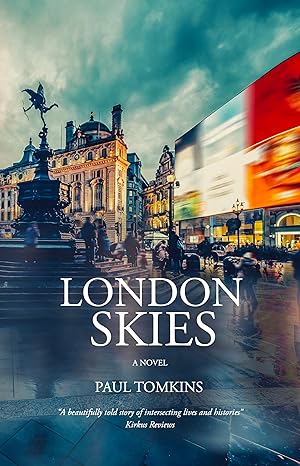
Paul Tomkins’ London Skies is a beautifully crafted tribute to the unsung heroes of the sky—both the aviation industry and the soldiers who served during World War II. This novel is more than just a story; it’s an immersive experience. Tomkins’ vivid descriptions and evocative prose transport readers to another time, allowing them to step into the post-war world of 1956, where humanity’s resilience and interconnectedness take center stage.
Set primarily at the newly built London Airport, the novel weaves together the lives of its characters through seemingly unrelated stories, all bound by aviation as the common thread. At its heart is a deeply introspective protagonist who visits the airport daily, haunted by memories of her wartime experiences as a nurse and the loss of her lover. Charlotte’s reflections on the bustling lives around her and her poignant musings on grief and resilience offer profound insight into the psychological toll of war. Her observations of strangers’ fleeting interactions reveal universal truths about connection, healing, and the small ways we find meaning in life. The narrative takes a dramatic turn during a snowstorm in 1956 when a tragic incident forces a group of strangers to confront their vulnerabilities and share their stories. Families, couples, and individuals recount their journeys, their lives often subtly intersecting in ways only the reader can fully appreciate. From moments of heartbreak to flashes of humor and romance, their tales reflect the rollercoaster of human emotions and how our paths often cross in unexpected and profound ways. The story builds to a heartwarming conclusion, reminding us of the invisible threads that bind us all.
London Skies captures the essence of post-war humanity with grace and depth. It’s a novel for those who love historical fiction and relish stories that explore the intricacies of human relationships. Tomkins deftly balances personal, relatable moments with larger reflections on loss, love, and resilience, creating a narrative that resonates long after the final page. This is a moving testament to the endurance of the human spirit and the moments of connection that keep us moving forward.
Pages: 438 | ASIN : B0CX22HWSX



 LITERARY TITAN