Blog Archives
Daughters of the King

Courting the Sun follows a sixteen-year-old village girl who is invited to attend the royal court of King Louis XIV and become the attendant of his mistress, empowering her into the inner circle of the court. What was the inspiration for the setup of your story?
The inspiration for Courting the Sun came from genealogy research I was doing into my own family ancestry and a group of young women referred to as Les Filles du Roi, or Daughters of the King. They were not true daughters, but were recruited by King Louis XIV to travel to New France (Canada) and marry his soldiers, fur traders, and farmers, and grow a colony for him. He promised to pay their passage, provide a dowry and a trousseau, and reward them financially for having babies. From 1663-1673, roughly 750 women took him up on his offer. I am descended from 23 of these women. I wondered what would cause a young woman to leave everyone and everything she knows and sail to a rough, unknown land. I let my imagination run wild, and thus Sylvienne was born, wholly fictional and very unlike the real Filles du Roi in terms of her personal journey.
Sylvienne is a young girl with big dreams who discovers the reality of those dreams is not what she envisioned. What were some driving ideals behind your character’s development?
One of the themes of this story, I think, is to be careful what you wish for. That doesn’t mean a girl shouldn’t have dreams, but if those dreams are shallow, the outcome will likely be shallow or at the very least restrictive. Sylvienne is intelligent, curious about the world, and a bit of free-thinker and free-actor. When she gets to King Louis’ court, she learns that freedom is not a quality that is respected there and that if she is to be “free” to love whom she wishes, she will have to be subversive about it. She also learns to care about the people who care about her and to not take them for granted.
What intrigues you about the 17th century period enough to write such a captivating and emotionally resonating period piece?
I am always intrigued by and wondering about the lives of my grandmothers and many-times-great-grandmothers going back through the centuries. Once I started researching what life would have been like for Sylvienne, and thus my 7th and 8th great-grandmothers in the 17th century, I was amazed at everything I learned. It was the final century of the Renaissance period, and art, theatre, literature, and the emerging natural sciences and astronomy were at their peak, and France was at the center of it. And yet there was such a dichotomy in terms of what was believed medically, how crowded and filthy the cities of Europe were, how people were treated depending on their religious beliefs or disbeliefs, and the great divide (as always) between those of wealth & nobility vs those of the common or lower classes—though some members of the rising bourgeoisie in France were wealthier than some of the nobility and that created its own complexity.
What is the next book that you are working on, and when can your fans expect it to be out?
I am working on the sequel to Courting the Sun, tentatively titled A Tangled Dawn. It takes Sylvienne to New France (Canada) where she experiences a life entirely different from what she knew in France. She encounters those “horrendous” fur traders and “scary” indigenous people and engages in an entirely new learning curve in terms of self-survival and learning to live among and respect people who are different from herself. And of course, her love life is as complicated as ever. I am hopeful it will be released in 2025.
Author Links: GoodReads | Facebook | Website | Amazon
In Paris, Sylvienne is quickly swept up in the romance, opulence, and excitement of royal life. Assigned to serve King Louis’s favorite mistress, she is absorbed into the monarch’s most intimate circle. But the naïve country girl soon finds herself ill-prepared for the world of intrigue, illicit affairs, and power-mongering that takes place behind the shiny façade of Versailles.
This debut historical novel from Peggy Joque Williams captures the vibrancy and quandaries of 17th century life for a village girl seeking love and excitement during the dangerous reign of the Sun King.
My Brother’s Keeper


My Brother’s Keeper, by M.D. Nuth, thrusts readers into a vividly portrayed plane crash, experienced through the eyes of the protagonist, Anders, known as Andy. This intense opening to the novel sets the stage for a tale that is both a survival story and a deep dive into complex familial relationships against the backdrop of the Japanese invasion during World War II.
The narrative introduces us to a cast of characters whose personalities and backstories are intricately woven into the fabric of the story. Andy’s strained relationship with his analytical and seemingly cold-hearted brother, Simon, forms a central thread. The tension between the brothers is further complicated by the presence of Shelly, or Ess, who is unaware of Andy’s romantic feelings toward her. These personal dynamics unfold alongside the larger survival drama as the characters must navigate not only their interpersonal issues but also the immediate threats to their safety.
The author skillfully uses detailed descriptions and dialogue-driven storytelling to enhance the emotional depth of the novel. Readers are given a front-row seat to the survivors’ challenges in finding water and dealing with the harsh realities of their environment. The character of Toothless Joe, with his practical survival skills and emerging leadership, brings a crucial element of hope and direction to the group’s dire situation. Nuth’s writing excels in its exploration of human psychology under duress. It delves into the theme of brotherhood not just as a familial bond but as a complex, sometimes contentious dynamic that impacts each character’s decisions and survival strategies. The historical context of the story not only adds depth but also raises the stakes, making the narrative even more compelling.
My Brother’s Keeper is the perfect read for fans of historical dramas and survival narratives. M.D. Nuth offers a dramatic and engaging experience and promises an intense exploration of its characters’ psyches, driven by a plot that expertly balances personal conflict with historical events. The novel is a testament to the human capacity for resilience and adaptability, even in the most extreme conditions.
Pages: 293 | ASIN : B0CXJF1V35

The Spy from Palestine


Steve Haberman’s The Spy from Palestine introduces readers to Miss Charly Lawrence, a distinguished journalist, and her partner and bodyguard, Mr. Shaw. Set against the backdrop of British-controlled Palestine, the duo’s mission is to interview Leah, a survivor of the Warsaw Ghetto Uprising, now residing in Tel Aviv. Amidst scorching heat, kidnappings, and intimidation, their inquiry uncovers a significant conspiracy implicating British interests, Jewish factions, and Nazi war criminals. As they delve deeper, Charly and Shaw find themselves entwined in a perilous tug-of-war over this explosive information, raising questions about their ability to preserve their integrity and safety.
The narrative explores the theme of resilience, highlighting humanity’s remarkable capacity to adapt, evolve, and overcome adversity. Characters like Hans Peters, who relentlessly pursues freedom; Rivka, who faces daunting challenges with perseverance; and Charly, who is committed to shedding light on the Jews’ plight, exemplify resilience. Through these characters, the novel vividly portrays the myriad ways individuals confront and surmount obstacles, emerging stronger.
While I feel The Spy from Palestine may not boast extraordinary highs or lows, it presents a well-crafted story that captivates and educates. The plot progresses fluidly, with well-developed characters and a consistent pace that ensures a more-than-gratifying read. The novel bridges historical events with contemporary relevance, offering fresh insights into past incidents and their ongoing impact today. I recommend Steve Haberman’s The Spy from Palestine for fans of historical fiction and those seeking a compelling narrative that educates as it entertains.
Pages: 249 | ASIN : B0D1GJ41KJ
My War at Windsor School
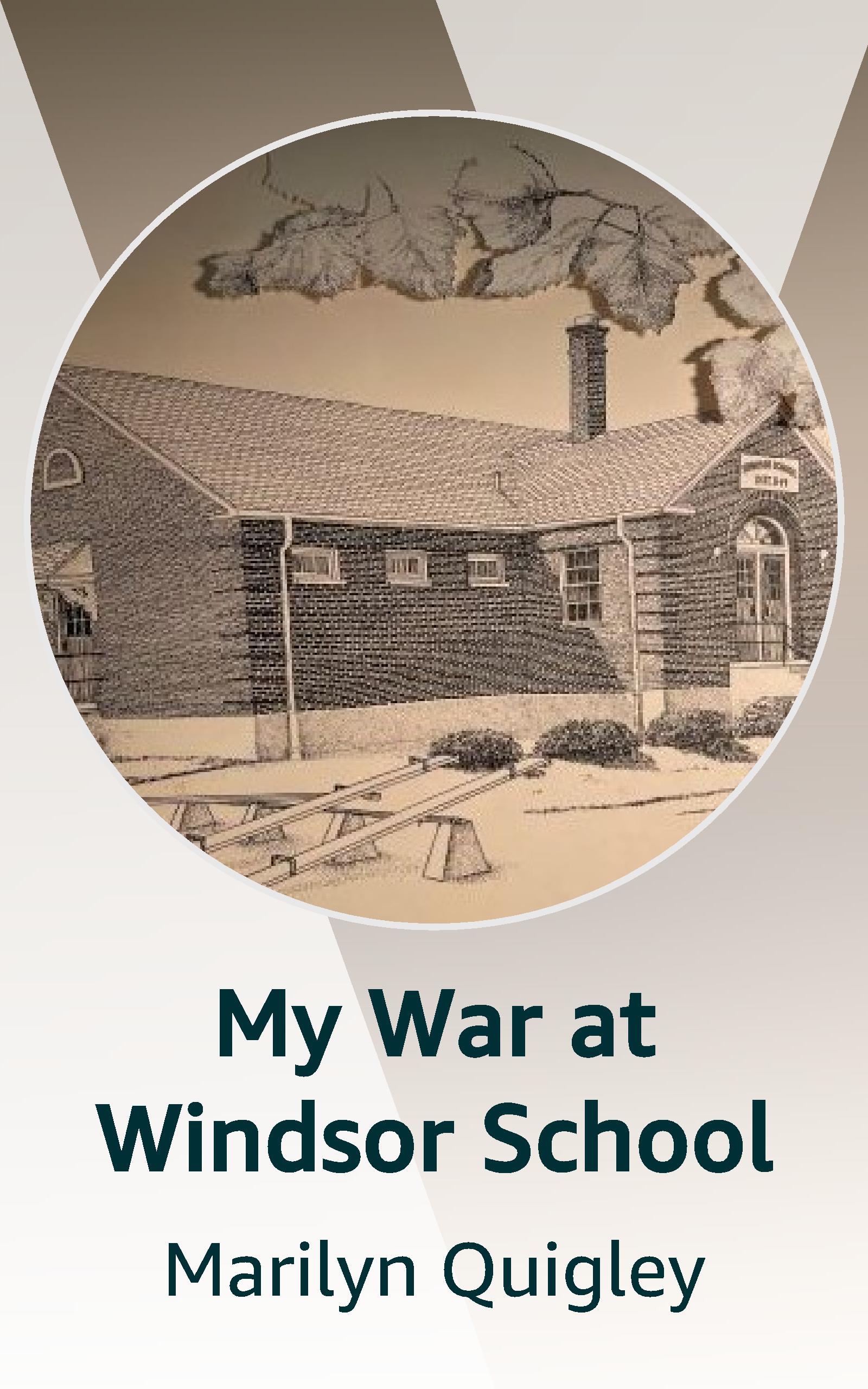
Marilyn Estes Quigley’s My War at Windsor School blends historical accuracy with the engaging elements of a coming-of-age narrative set against the backdrop of World War II. The novel draws on Quigley’s own experiences as a schoolgirl in the 1940s, presenting a tapestry of both real events and imaginative fiction. Central to the story is Sally, a young girl navigating the trials of adolescence and the harsh realities of war after an accident forces her to repeat a year at Windsor School, a situation that leaves her feeling isolated and out of place.
As Sally grapples with making new friends and the heartache of her uncle going off to war, she encounters moral dilemmas that test her values, particularly around honesty—a virtue deeply esteemed by her family. These personal battles coincide with her academic challenges and the blossoming of an unlikely friendship that introduces an element of mystery to her life. Despite the war’s shadow over her everyday existence, Sally’s internal and external struggles reflect a poignant journey of resilience and growth. Approaching this historical fiction, I appreciated the nuanced portrayal of life in the 1940s, which Quigley articulates through both the ordinary and the extraordinary aspects of the era. Initially, the narrative’s casual tone seemed at odds with its historical context, yet this choice ultimately complements Sally’s youthful perspective, enhancing the accessibility of the events and emotions she experiences. The simplicity of the storytelling, coupled with well-paced chapters, facilitates a smooth and engaging reading experience. The characters are distinctly crafted, each bringing a unique presence that enriches the narrative. Particularly compelling is Sally’s relationship with her family and her uncle, whose character, though not as deeply explored as one might hope, adds a significant layer to the emotional landscape of the story. Sally herself is a character of commendable depth, her passion for horses and her dedication to her principles painting a portrait of a young girl whose strength and kindness shine even in the face of adversity.
My War at Windsor School not only offers a window into the impact of war on the lives of ordinary people but also serves as a testament to the strength required to navigate such turbulent times. Quigley successfully captures the essence of the era and the indomitable spirit of its people, making this novel a thoughtful and informative read for enthusiasts of historical fiction.
Pages: 315 | ISBN: 979-8-218-40551-9
Sketches from a Sunlit Heaven

Sarah Law’s Sketches from a Sunlit Heaven offers a multifaceted glimpse into the life of Saint Thérèse of Lisieux, a French Carmelite nun who died in 1897 at the age of 24. This historical fiction is uniquely structured, narrated through the distinct voices of six characters—four sisters, one cousin, and a correspondent—who were close to Thérèse in her final years. These perspectives span several decades, from their youthful days to old age, marking the passage of time against the backdrop of two world wars and significant societal changes.
The novel employs a first-person narrative for each protagonist, presenting their stories in the present tense, which imbues the historical narrative with an immediate and compelling quality. This stylistic choice, while unusual, adds a vivid sense of unfolding drama to the narrative. Each character is richly drawn, with distinct voices that reflect their unique responses to life’s joys and hardships. As an artist, I found a particular resonance with Céline, whose passion for painting mirrors my own. The poetic language throughout the book enhances its atmospheric quality, leaving a lasting impression with beautifully crafted phrases such as “I see her as a timeless portrait, her pale face swathed in her white veil.”
The novel’s dynamic structure, which alternates between characters’ viewpoints, offers brief yet insightful glimpses into each protagonist’s life before transitioning to the next. This approach invites readers to engage deeply, piecing together the rich tapestry of experiences and perspectives that form the heart of the narrative. While it demands attentiveness, this method enriches the storytelling by providing a varied and comprehensive portrayal of the characters’ interconnected lives. Law weaves a tapestry of themes—illness, sin, Catholicism, prayer, love, war, loss, friendship, and family—against a convincingly depicted historical backdrop. The portrayal of letter writing and the impact of war is particularly effective in grounding the story in its period.
For those who appreciate historical fiction with a religious dimension and for readers drawn to emotionally charged, lyrical writing, Sketches from a Sunlit Heaven offers a memorable exploration of human resilience and the enduring power of memory. The novel’s unique structure and evocative prose are sure to leave a resounding impact.
Pages: 327 | ASIN : B0BHBVC4RN
What if He’s a Space Alien

Insecticide: A Republican Romance follows the Bush family in an alternative timeline where history and the supernatural coexist, and conspiracy theories become real. What was the inspiration for the setup of your story?
It’s hard to pinpoint a single inspiration! Frustration with both Bush presidencies, back in the day, was obviously the original inspiration. And, more broadly in the decades since, fear of pro- and proto-fascist tendencies in America (and the world) at large. It’s simply amazing to me that so many people want jackboots—in the name of freedom!
The inspiration for the weird supernatural sci-fi/fantasy stuff came from my reading on W. Averell Harriman: who was this guy, and where did he come from, and how did he amass so much wealth and political power so fast? All I had to do was think “what if he’s a space alien,” and then “what if he’s a 10,000-year-old space bug from ancient Atlantis,” and all the rest of it started propagating: Lincoln as an ancient Lemurian beetle living at the bottom of a lake in Texas with his devil-water-cow Bessie, the fascists supported by beetles and the progressives supported by fish, the John Wilkes Booths, the woolly mammoths, etc.
What were some themes that were important for you to explore in this book?
The divergent political conceptions of freedom: freedom for everybody, or freedom for just us. The clash between power&wealth and values. The ways in which the “little guy” gets chewed up in the quest for power and wealth—even when the “little guy” is a prominent player like George Bush (father or son).
In fact the biggest surprise for me, writing the book with the Georges Bush father and son narrating it, was my growing sympathy for them. I wrote the book to satirize them, and didn’t expect to identify with them—with their general cluelessness and haplessness, their sense that they are being manipulated and chewed up by insidious forces beyond their ken.
The world you created in this novel is brimming with possibilities. Where did the inspiration for the setting come from, and how did it change as you wrote?
Texas has complex symbolic resonances for me. My mother’s father came from Texas, and my mother spent the most wonderful summers of her childhood there. And yet Texas is also one of the most draconian havens for fascist politics: radical abortion and travel bans, scary gun-carry laws—oh, and of course Ted Cruz. And since there was once a Republic of Texas, and right-wing Texans love to talk about seceding, it made sense to have them secede and create a new Republic of Texas as an unabashed police state. And of course, as you mention, it was loads of fun to turn existing conspiracy theories into historical “fact,” and invent lots of new ones. How did it change? Well, obviously there had to be progressive pushback against the police state; but introducing the supernatural elements and linking Lincoln and the fish with the progressive resistance made the whole thing a lot more fun.
What is the next book that you’re working on, and when can your fans expect it?
I’m writing a flash-fiction novel titled Lord Trump the Undead. In it Donald Trump loses the 2024 election, stages another coup, and is accidentally killed by friendly fire. A pair of sci-fi Resuscitation Drones (thanks to The Expanse by James S.A. Corey for this!) collects the pieces and brings him back to “life”—but he is now undead. He becomes the undead deity of the Church of Trump, with tens of millions of true believers who have a hologram image of him talking and dancing in their living rooms. The events of the novel take place in 2074, with clashes between the Church of Trump and the nefarious Trump Haters, and lots of sci-fi/fantasy weirdness.
Author Links: Twitter | Instagram | Facebook
After all, the novel suggests that W. Averell “Dogsbody” Harriman convinced Prescott Bush to set up a new Republic of Texas in 1931. That obviously didn’t happen. None of it did.
So, a boilerplate work-of-fiction disclaimer for us would include at least the following: Prescott Bush wasn’t a closet Nazi, George Bush the Elder wasn’t a CIA tool, George Bush the Younger wasn’t an early cloning experiment gone bad, and Dogsbody Harriman wasn’t a giant 10,000-year-old bug from under the sea. Abraham Lincoln isn’t still alive, chilling at the bottom of a lake in Texas with his devil-water-cow Bessie. Lincoln was never a giant beetle from ancient Lemuria. And, of course, a spray can of insecticide decidedly did not wipe out all reality at the stroke of midnight, 1999. Y2K bug our asses!
In short, don’t believe a word you read in this book.
—
Douglas Robinson is neither a former Professor of Ichthyorhetoric at Liberal State University in Kansas (a land-locked state!) nor sadly deceased. Nor is he the author of The Seventeen Most Explosive Ichthyotopoi or the best-selling comic book Fish Rhetoric for Dummies. He is certainly not the celebrated host of the podcast Why Fish Argue (And Why You Should Care). His previous original novel with Atmosphere Press was a pseudotranslation of J. I. Vatanen’s The Last Days of Maiju Lassila.
And It Sinks In

Bobby, Lord of Acton Waters is the story of an entitled young ruler who learns a valuable lesson in human decency when he travels the country alongside a minstrel. Where did the idea for this story come from?
When I started this story I wasn’t thinking of teaching any lessons. I thought it would be funny to imagine the naughtiest kid in the world. I myself had been so conventional that I envied kids who couldn’t spell. But after the first chapter Bobby’s outrageousness got less and less amusing. I found myself wondering, “Could a kid find out for himself, without prompting, why it makes sense to be grateful to your parents and considerate to everyone else?” Bobby does have teachers, of course — the people he meets on the road. But all of their teaching is done by example. And it sinks in.
What were some driving ideals behind young Bobby’ character’s development?
As the story progressed it taught me what I care about most. Spelled out this would be horribly corny, the kind of thing that is carved over the doorways of public buildings. But within the dynamic of the story, delivered with a smile, it sounds pretty convincing.
Do you have a favorite scene from this story? One that was especially enjoyable to write?
My favorite scenes involve the villain of the story, the highway robber Rembert the Ruthless. Although his actions are cruel he is in many ways an innocent baby. His faithful girlfriend Florizel appreciates this, and my protagonists use it to defeat him.
Can young readers look forward to more from you soon? What are you currently working on?
I have written a sequel, not yet in print. Bobby, now 12, serves as a secret conduit between King Stephen and the common people of London, helping to push England toward democracy. It has far more action than Bobby, Lord of Acton Waters, more danger and suspense. If that sequel attracts readers I am thinking about the next one: At 13 Bobby has been rewarded by the King with more power and responsibility. He has to bring the special insights of a teenager to this new role.
One thing eludes Bobby. He can’t order people to like him. One day a wandering minstrel comes to town – Fahd, from faraway North Africa. He sings for small change and cures minor ailments. He has no possessions, but he quickly acquires a hundred fans and friends. What’s his secret?
Bobby vows to find out. He hits the road, destination unknown, as Fahd’s assistant. Travelers, as they walk along, tell about their lives, and Bobby starts to feel a new sympathy for his fellow humans. He and Fahd then quit the music business and launch a grand risky scheme to make the world a better place.
Government’s Role in Religion

Thrown to the Wind follows a young boy and his family fleeing religious persecution from France who wind up on a journey to America. What was the inspiration for the setup of your story?
I have been researching my family genealogy for over 20 years and came across a note in the family histories that claimed that Etienne Gayneau, Sr. and his family fled La Rochelle in the middle of the night to avoid arrest. That intrigued me, so I started digging and found records showing where he lived, even down to the description of the white and blue tilework, and others indicating that 400 Huguenots did, in fact, flee the city in October of 1664. This was during King Louis XIV’s rise to power in his own right as he came of age. I was able to find ship logs, and passenger lists with the travel amounts owed, and then fill in the historical context with information from the King’s decrees (in translation) and other historical background. And the story started to take shape.
Did you find anything in your research of this story that surprised you?
The most surprising thing I discovered was an accounting in the old New Harlem records about how Etienne had been attacked and arrested for “stealing” cherries from Mr. Palmer, who was renting Captain Carteret’s house. The situation was played out and resolved as I described in the book, though the actual event took place a few years later than in my book. The event was simply too good of a story to leave out and resolved a plot point I had, so I included it.
What were some themes that were important for you to explore in this book?
As a history teacher, the curriculum required that we compare and contrast the various reasons for colonization and the colonies in New England, the middle colonies, and Southern colonies. As I was researching this book, I saw a lot of the same themes, but relating to a colony we often ignore in mainstream classrooms. So, it seemed natural to explore them in this story.
The main theme is that of the reasons for immigration to a new and foreign land. As teachers, we often over-simplify them to say that the Pilgrims and Puritans came seeking the freedom to practice their own religion, while the Jamestown colonists came to pursue economic ventures. But as we can see from Etienne’s story, it is more complex. Others also came for religious freedom, but also to pursue trade and to provide a better life for their families.
There is also the theme relating to the government’s role in religion. Two of the freedoms granted in our First Amendment are freedom to practice our own religions, and freedom from a state-instituted religion. These freedoms have direct linkages back to the reasons many settlers came to our shores in the 17th century.
Is this the first book in the series? If so, when is the next book coming out, and what can your fans expect in the next story?
Thrown to the Wind is the first book in the series. The second book, A Home in the Wilderness, and the third book, At the Mercy of the Sea, are both out now.
In the second book, Etienne must navigate the challenges of living in the wilderness. He makes friends with two Lenape teens. When word of an Esopus attack on the Dutch fort at Wiltwyck reaches New Harlem, the settlement begins to build fortifications and to train the militia for war. Etienne is torn between protecting his family’s community and his new Lenape friends, as he becomes embroiled in the Second Esopus War. This book demonstrates the complexity of knowing friend from foe and the diverse relationships between various colonial groups and diverse Native American tribes.
The third book continues Etienne’s journey as he returns to the sea as a sailor, and adds the stories of Alsoomse, Etienne’s Lenape friend, and Abraham, a new friend he meets in the second book. It deals with several coming-of-age themes as all three young people are rebelling against what is expected of them as they try to find places within their respective communities. This book deals with issues relating to gender roles, mixed ethnicity, and standing up for what is right when no one around you supports your stance.
I am working on the fourth book, which should finish this series. I am hoping to get it out next year.
Author Links: GoodReads | Twitter | Facebook | Website | Amazon
Based on a true story.
In October 1660, Etienne Gayneau rushes through the cobblestone streets of La Rochelle, France, to meet his cousin at the harbor. A ship carrying King Louis XIV’s elite musketeers is docking. He dreams of becoming one himself, but has no idea that their arrival will force his Huguenot family to flee in the dead of night. His cousin has offered him a safe haven. Now he must choose – stay and pursue his dream or leave and face an uncertain destiny. Both choices are fraught with dangers. Either way his life will never be the same.
This story traces one boy’s journey from France to America in 1660 as he finds the courage to save himself and those he loves. Etienne Gayneau’s family is fleeing La Rochelle in the dead of night to avoid his father’s certain arrest in the morning, but his cousin has offered him a safe haven. Now he must choose. If he leaves with his family, he will never become a musketeer, but if he stays, he will never see his parents and sisters again. Bothe choices are fraught with dangers and uncertainty. One this is sure – his life will never be the same again.
did in fact flee the city in October of 1664. This was during King Louis XIV’s rise to power in his own right as he came of age. I was able to find ship logs, passenger lists with the travel amounts owed, and then fill in the historical context with information from the King’s decrees (in translation) and other historical background. And the story started to take shape.
Did you find anything in your research of this story that surprised you?
The most surprising thing I discovered was an accounting in the old New Harlem records about how Etienne had been attacked and arrested for “stealing” cherries from Mr. Palmer, who was renting Captain Carteret’s house. The situation was played out and resolved as I described in the book, though the actual event took place a few years later than in my book. The event was simply too good of a story to leave out and resolved a plot point I had, so I included it.
What were some themes that were important for you to explore in this book?
As a history teacher, the curriculum required that we compare and contrast the various reasons for colonization and the colonies in New England, the middle colonies, and Southern colonies. As I was researching this book, I saw a lot of the same themes, but relating to a colony we often ignore in mainstream classrooms. So, it seemed natural to explore them in this story.
The main theme is that of the reasons for immigration to a new and foreign land. As teachers we often over-simplify them to say that the Pilgrims and Puritans came seeking the freedom to practice their own religion, while the Jamestown colonists came to pursue economic ventures. But as we can see from Etienne’s story, it is more complex. Others also came for religious freedom, but also to pursue trade and to provide a better life for their families.
There is also the theme relating to the government’s role in religion. Two of the freedoms granted in our First Amendment are freedom to practice our own religions, and freedom from a state instituted religion. These freedoms have direct linkages back to the reasons many settlers came to our shores in the 17th century.
Is this the first book in the series? If so, when is the next book coming out, and what can your fans expect in the next story?
Thrown to the Wind is the first book in the series. The second book, A Home in the Wilderness, and the third book, At the Mercy of the Sea, are both out now.
In the second book, Etienne must navigate the challenges of living in the wilderness. He makes friends with two Lenape teens. When word of an Esopus attack on the Dutch fort at Wiltwyck reaches New Harlem, the settlement begins to build fortifications and to train the militia for war. Etienne is torn between protecting his family’s community and his new Lenape friends, as he becomes embroiled in the Second Esopus War. This book demonstrates the complexity of knowing friend from foe and the diverse relationships between various colonial groups and diverse Native American tribes.
The third book continues Etienne’s journey as he returns to the sea as a sailor, and adds the stories of Alsoomse, Etienne’s Lenape friend, and Abraham, a new friend he meets in the second book. It deals with several coming-of-age themes as all three young people are rebelling against what is expected of them as they try to find places within their respective communities. This book deals with issues relating to gender roles, mixed ethnicity, and standing up for what is right when no one around you supports your stance.
I am working on the fourth book, which should finish this series. I am hoping to get it out next year.
Author Links: GoodReads | Twitter | Facebook | Website | Amazon
Based on a true story.
In October 1660, Etienne Gayneau rushes through the cobblestone streets of La Rochelle, France, to meet his cousin at the harbor. A ship carrying King Louis XIV’s elite musketeers is docking. He dreams of becoming one himself, but has no idea that their arrival will force his Huguenot family to flee in the dead of night. His cousin has offered him a safe haven. Now he must choose – stay and pursue his dream or leave and face an uncertain destiny. Both choices are fraught with dangers. Either way his life will never be the same.
This story traces one boy’s journey from France to America in 1660 as he finds the courage to save himself and those he loves. Etienne Gayneau’s family is fleeing La Rochelle in the dead of night to avoid his father’s certain arrest in the morning, but his cousin has offered him a safe haven. Now he must choose. If he leaves with his family, he will never become a musketeer, but if he stays, he will never see his parents and sisters again. Bothe choices are fraught with dangers and uncertainty. One this is sure – his life will never be the same again.



 LITERARY TITAN