Blog Archives
There Isn’t Any Such Thing as a Routine Case

Cold Record follows a skilled lawyer who unravels a high-profile murder case, uncovering layers of deceit and moral ambiguity in a world where justice and integrity are at odds. What was the inspiration for the setup of your story?
There was no direct real-world inspiration – I didn’t want the story to have anything to with a real case or a real defendant – and it took a long time to fully take shape. But the general idea of a realistic legal story in an out-of-the-way setting was partly inspired by my early years as a prosecutor, when I worked at the rural fringe of my large county, and the basic elements of the murder came to me early on. Going further, I’ve come to appreciate in my own career how there really isn’t any such thing as a routine case – there are always factual layers to peel away and human stories in the background, sometimes deep and mysterious ones. So I wanted the truth of the crime to be complicated, and it ultimately seemed to me the best way to achieve that would be through the character of the defendant.
I was also motivated, I think, to do something a little different within the legal genre. Not that I’m in a position to be a critic, but I’ve found most legal novels – including many bestsellers – superficial and manipulative, over-full of dark conspiracies, wild plot twists and villains on all sides. That’s a far cry from the legal world I’ve experienced myself, and in truth, less interesting. So I set out aspiring to tell a compelling story through characters who almost all behave with integrity and good intentions, and respect the quest for justice even as they see its imperfections. I hoped that if the characters shone through well enough, the innate conflict and complexity of the legal system, the trial of a terrible crime and the human scars would be story enough.
What inspired you to create the character of John Patrick Howland, and how did you develop his unique traits and complexities?
No surprise, I’m sure – the book is first-person, so more than anything he’s a window into my own personality. I’m an observer, like he is at heart, I also tend to see the gray shades in everything, and I also never thought of myself as a particularly natural and talented trial lawyer – when the opportunity came, I happily left everyday courtroom work for a more arcane branch of prosecution, and it’s always suited me well. But there are major differences, and the story is his, not mine – unlike him, I got married quite early to a very patient wife, and meandered for years before getting the inspiration for law school, whereas he was much more methodical, got his career going in his 20s, and never seems to have minded all the alone time.
Then it was interesting to imagine him rising to the occasion in a time of crisis. Ready or not, he’s thrust into the middle of this momentous case, and then its long aftermath, years after the fact, when his memories have started to fade but the transcript brings him back. Ultimately, though, the choices he makes are filtered through my own general sense of moral reasoning – I was never tempted to make him think or act in a way that’s alien to my own nature.
What challenges did you face in maintaining the suspense and pacing of the story, especially with the intricate plot twists and character developments?
Many! It’s a relatively quiet, real-world story, less purely conflict-driven than many legal books, and I knew all along I’d have to ask a little patience of readers. But I got some very helpful early criticism about pacing from a close friend, and it caused me to swallow hard and spent the next half-decade doing everything I could to pare down and organize the narrative.
And the biggest part of that was making the story more linear – while there’s some jumping-around in the last hundred pages, the story through trial is more or less in chronological order, and by this time pretty carefully focused. There are still a number of asides in the book, but I worked hard to limit them, whittle down length and ensure they have a purpose to the story. Along the way, I also learned to take regular breaks in the action. And for the events of the final section, sequencing and editing were the critical tasks. More than anything, it just took me time.
What is the next book you are working on and when is it available?
A great unknown! Thanks to more kind feedback than I ever expected, I feel much encouraged to go back to the well, and it could be another story with the characters from Contenta County. But it’s still completely theoretical at this point. If and when a followup does take form, I’ll be thrilled to share the word. And until then, thanks very much to Literary Titan for what you’ve done to help the book.
In this gripping debut novel, ideally suited for fans of courtroom drama and subtle legal mysteries, author Eric Ferguson draws on his 19 years of experience as a criminal prosecutor to create a powerful, authentic story of justice sought and served. Reflective and moving, Cold Record vividly explores the impact of a brutal crime on all those it touches – the victim and those who mourn her, those who seek justice in her wake, and even the defendant himself, whose own elusive narrative ultimately decides his fate.
Cold Record


In Cold Record, author Eric Ferguson weaves a tale of intrigue and suspense through the eyes of John Patrick Howland, a compelling lawyer. The narrative embarks on a complex journey with Howland and his colleague, Sonja Brandstetter, as they delve into the enigmatic murder case of Haylee Branch. Ferguson deftly raises provocative questions: Was Haylee truly the upstanding student she appeared to be? What role does her affluent and extravagant friend, Jacinta Cantrell, play in this mystery? And, most crucially, did the police investigation overlook critical details?
As the plot unfolds, the story transcends beyond a mere legal thriller, evolving into a riveting exploration of themes such as love, substance abuse, and the moral quandaries of the legal world. Ferguson’s characters are crafted with depth and authenticity. John Howland, the protagonist, is particularly intriguing, with his professional prowess juxtaposed against personal uncertainties, especially as he develops a romantic interest with unsettling parallels to Haylee. Sonja Brandstetter stands out as a robust and finely depicted character, evoking empathy and admiration.
The narrative’s pacing, while somewhat leisurely, allows for a thorough exploration of Howland’s life, both within and outside the courtroom. This pacing might give an impression of a lackluster personal life for Howland, but it also adds layers to his character, making him more relatable and human.
Ferguson’s writing shines in the realms of character development and plot twists, creating an immersive world that keeps the reader engaged. The unexpected turns and the intricate interplay of characters add to the novel’s allure, making it a memorable read.
Cold Record stands out as a compelling blend of legal drama and heartfelt storytelling, making it a recommended read for those who appreciate intricate narratives and well-crafted characters.
Pages: 387 | ASIN: B0CJ8NC7HN

Running Toward Danger
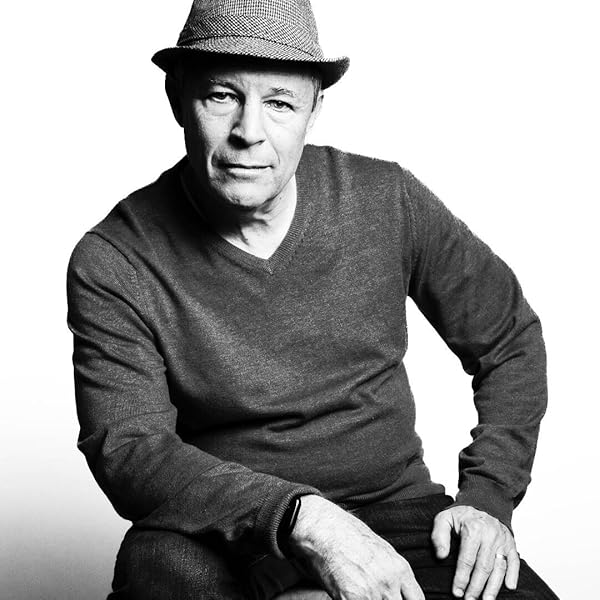
Cram Down follows a Kansas City attorney who takes on a case involving a couple who had their business funding cut off, only to get mixed up with the mob and a missing bank president. What was the inspiration for the setup of your story?
Many times, the story just seems to be inside of me waiting to come out. For Cram Down, there were several components in play: (a) the inspiration for a community bank came first, (b) followed by the notion that 3J would have to force a plan of reorganization on the bank over its objection, and (c) I’ve always been fascinated with Kansas City history, and I’d been reading books about the Kansas City mob in particular. In each book in the series, there’s always Jazz, and BBQ, and history as well.
3J is an amazing character that readers can be invested in. Was the character’s backstory something you always had, or did it develop as you were writing?
When I started working on the series, I wanted to create a strong, admirable protagonist who would give me a chance to comment on social issues in each book. 3J is a Black, female bankruptcy lawyer in a large Kansas City law firm, which, until recently, was dominated by white men. I am neither black nor female. So, while her character gives me the chance to address social issues (haters, mental illness, when does the ends justify the means, redlining), and have my characters reflect the diversity in our country, I also need to respect that I can never actually know what it’s like to be Black, and a woman, and their struggles to make it up the law firm ladder.
How did you balance the action scenes with the story elements and still keep a fast pace in the story?
In Cram Down, I wanted to kick the action scenes up a notch. In the prior book – Unfair Discrimination – 3J must battle a White nationalist who becomes unhappy that he won’t get paid back all that the debtors owe him, and he takes his rage out on 3J and a Jewish attorney. My readers liked the action in UD, so I wanted to create an action-packed story in Cram Down as well.
3J also has a habit of running toward danger, at great personal risk, which continues in Cram Down, and through flashback chapters, we begin to learn more of her bad habit, and where it may come from as she grew up in the Lower Ninth Ward and Tréme neighborhoods in New Orleans.
Will there be a follow-up novel to this story? If so, what aspects of the story will the next book cover?
Yes. I have begun to research my next 3J thriller – tentatively named For Cause. It will involve a Deep Fake video that 3J must contend with and save her client from its impact, while trying to prove in court that the video is not her client’s message to the world. She will also continue her habit of running toward danger.
Author Links: GoodReads | Twitter | Facebook | Website | Linkedin | Amazon | YouTube
Cram Down
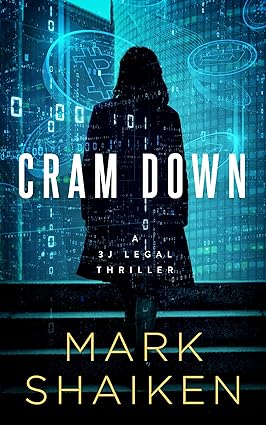
Cram Down, follows the compelling narrative of the astute lawyer Josephina Jillian Jones – affectionately termed 3J by her friends – and the intricately woven lives of brothers Amadi and Jordan Browne.
Embarking on a journey from a shadowed past, 3J plunges herself into the legal maelstrom encompassing a non-profit organization, Abode. The atmosphere tenses as her involvement quickly spirals into a vortex of unpredictability and peril. The reader is left poised on a razor’s edge, contemplating: will 3J’s legal prowess and emotional resilience be enough to navigate this treacherous case?
Contrastingly, Amadi Browne, rooted in his banking pedigree and a connoisseur of charitable endeavors, grapples with the bittersweet legacy of a bank inherited from his parents. His appreciation for the institution’s history teeters on the brink of melancholy as he yearns for his brother to peer into the depth of its legacy with equivalent reverence. The complexities of family ties and inherited responsibility are palpable, keeping the reader bound to Amadi’s internal and external struggles.
Jordan Browne, embroiled in his ambitious visions, stealthily assumes control of the bank through the strategic acquisition of his brother’s shares. His clandestine maneuvers and stark contrast in visions for the bank’s trajectory pose a poignant question: Will the brothers’ divergent paths weave a future of success or sow seeds of familial discord?
Cram Down boasts an impeccably crafted ensemble of characters. From 3J – whose intelligence and occasional recklessness converge to form a profoundly relatable protagonist – to the dichotomy of the cultured Amadi and the precarious Jordan, Shaiken masterfully molds characters that resonate with vibrancy and depth. The secondary characters, such as the enigmatic Robert McFadden, the eccentric investigator Moses Aaronson, and sagacious William Pascale, are not merely supporting cast but vital cogs in this intricate narrative wheel, each contributing their distinct flavor to the unfolding drama.
The narrative navigates through light and shadow with a suspenseful undertow, encapsulating the reader in a setting richly steeped in engaging history and meticulously tailored to envelop the story. The pacing is unyieldingly brisk, propelling the reader through its pages with a magnetizing allure. Amidst the dynamic world-building and a potently character-driven narrative, Shaiken crafts a tale imbued with non-stop action, gripping suspense, and an emotional complexity that beckons readers into its depths.
Cram Down emanates flawless narrative charisma, effortlessly earning its commendation to aficionados of the legal thriller genre. This book gracefully interweaves tension, drama, and emotional depth, ensuring that readers will want more.
Pages: 336 | ASIN : B0CJ1QJDQV

The Final Steps


In The Final Steps, Mark M. Bello crafts a riveting legal thriller that stands out in the vast expanse of the mystery genre. The plot pivots around Judge Rosaline Maxwell, who finds herself embroiled in a tantalizing murder mystery when her friend and college president, Tyler Guthrie, becomes a prime suspect in Professor Kevin Johnstone’s murder.
The story unfurls when Rosaline receives an urgent call from Tyler, imploring her to use her legal insight to establish his innocence. Her previous role as a defense attorney and her growing fascination with the American justice system position her as an ideal character to dissect the intricate narrative that ensues. The plot thickens as she grapples with enigmatic clues, constant death threats, and the ever-evolving identities of potential culprits.
Mark M. Bello’s The Final Steps is far more than a standard ‘whodunnit’ mystery. It’s an engaging exploration of friendship, justice, and the legal system. The deep-rooted bond between Rosaline and Tyler lends an emotional depth to the narrative that transcends the traditional confines of the mystery genre.
Bello’s commendable portrayal of Rosaline as a seasoned legal professional provides an invaluable inside look into the complexities of the legal world. His narrative is a tapestry of compelling storylines intertwined with an adept use of literary devices that serves to hold the reader’s attention throughout.
In this book, Bello adopts a precise and strategic writing style, which manifests in the focused development of characters and surroundings. This deliberate constraint of elements lends a streamlined, fast-paced nature to the narrative, rendering it comprehensive and captivating.
The constant shuffling of potential suspects propels the plot’s momentum, creating an intense aura of suspense. Complementing this is the exhaustive exploration of the legal system, which makes this work intriguing, highly informative, and unique in its approach.
However, despite the book’s brevity, one can’t help but feel that the plot harbors untapped potential. A more expansive narrative could have added an additional layer of depth, and Bello could have further embellished the intriguing facets of the story. Despite this minor criticism, this mystery remains a memorable addition to any mystery enthusiast’s collection.
The Final Steps blends legal thriller and cozy mystery genres together to give readers an action-filled story full of twists and turns. Readers will be drawn into the mystery and feel they know the characters as they sort out the clues. This is a captivating mystery novel to pick up for an afternoon read.
Pages: 247 | ASIN : B0BXM9XGSR
What If

Crimson Scimitar explores the ‘what if’ questions surrounding Osama bin Laden and how things could have turned out differently. I find the setup of the novel entertaining. How did this idea start and develop as you wrote?
I have always been a fan of authors John Grisham and Scott Turow and their legal thrillers and wondered back in 2010, ‘what if’ Osama bin Laden was captured instead of killed? What would his trial under American jurisprudence look like? In my early draft, the twist, I had him acquitted! Then, I heard on TV bin Laden had been killed. My manuscript was shelved for 10 years, until I rewrote the concept adding new plot lines like: (1) terrorists who are coming into our Southern border and not being caught and (2) bin Laden in court would be a ‘show trial’ and I took that to the extreme. I am now challenging lawyers I visit with: how would you have defended your client, bin Laden? Interesting responses.
Did you find anything in your research of this story that surprised you?
The American public really knows very little about the intertwined politics of the Middle East or even the culture of Moslem family life. And the War on Terrorism since 2000 is not one act but hundreds of incidents that impact on us which we as normal citizens are unaware. Instead of portraying all terrorists as ‘animals’ I sought to take one character to analyze their motivation and reveal how different events might mould and change their jihadist perspective.
What were some themes that were important for you to explore in this book?
One theme that may be hard to see within the writing are my nuances on how American social media/television culture gives us a numbing view of reality, of the real world versus those who are dedicated to killing us. I use the reality television industry to provide a backdrop in the hunt for bin Laden. But do I paint a positive perspective of our culture or a stilted view? Another theme that I have written into several of my books (like Crimson Scimitar and Lafayette) are the machinations of ‘ambition’ and how it drives and/or perverts a character.
What is one thing that people point out after reading your book that surprises you?
Their reaction on how they must approach the time to devour a lengthy epic novel (600 pages; which is longer than ‘Moby Dick’, but shorter than ‘Game of Thrones’). But like a thriller with multiple stories to tell, I build with chase & capture scenes, then escape & new chase action, and finally, I must tie all story lines into a crescendo of satisfying ends or teasing with new ‘what ifs?. My beta readers and my editor enjoyed the reading. But I leave the satisfaction, or not, to the public, for it is they who must be entertained. (P.S. I believe they will be.) —spg
Author Links: GoodReads | Facebook | Website
The ‘What if?’ epic novelWhat if, in 2011, Osama bin Laden, the al Qaeda jihadist terrorist, was captured instead of killed? How would a trial in the U.S. judicial system look like?
And what if the ones who captured him were stars of a reality TV show trying to boost their ratings.
And what if when bin Laden was captured al Qaeda was planning an attack on the United States, worse than 9/11? Who do you think will come to the rescue?
Finally, would you cheer for a young al Qaeda jihadist who might bring peace to the Mideast?


