Blog Archives
Line ‘Em Up!
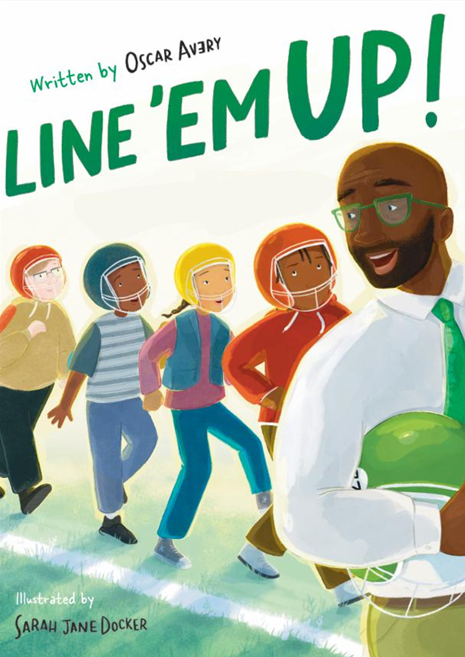

Line ’Em Up!, by Oscar Avery, follows a class of kids who feel written off by everyone until a new teacher, Mr. Murant, walks in and completely changes their world. He teaches them pride and discipline and shows them how greatness starts inside. The class learns about science, math, football, and life, all while building confidence through something as simple as forming a straight line. Then the story shifts as the group discovers their beloved Mr. Murant has been struggling with CTE.
Reading this children’s book honestly resonated with me more than I expected. I went in thinking it would be a light little school story, and instead found myself caught up in the way Mr. Murant pushes his students to believe in themselves. The writing feels warm and punchy and a little chaotic in a fun way. It mirrors a real classroom where jokes fly, and kids interrupt, and learning happens sideways. I kept smiling at the little back-and-forth moments, especially when Savannah had something sharp to say. The pacing jumps fast from day to day, and that gives the whole thing a breathless energy that makes you want to keep reading.
The author doesn’t shy away from the hard stuff, and I really appreciated that. I felt the kids’ confusion and frustration, and that slow sinking feeling when they wonder whether they were truly cared for. The story handles disability and illness in a way that feels simple but sincere. It made me think about how much one adult can change a child’s whole view of themselves. The illustrations have such a warm, authentic classroom vibe that really draws you in. I love the soft, painterly texture. It gives each scene a gentle feel. Mr. Murant’s expressions are clear, and small details add a fun touch to the scenes.
I’d recommend Line ‘Em Up! to kids who enjoy stories about school life and friendship and to adults who love picture books with heart and a message that sticks. It’s great for classrooms, families, and anyone who wants a story that lifts you up while lovingly addressing coping with loss.
Seasons of Life and Love

Seasons of Life and Love is a wide-ranging collection of poems that moves through weather, memory, loss, longing, regret, and joy as if each emotion were its own season. The book ties nature to human feeling in simple, steady language. Storms mimic sorrow. Sunlight lifts the spirit. Quiet evenings bring reflection. The poet uses these images to guide the reader through moments of love, heartbreak, aging, family, and the slow unraveling and rebuilding that we all face. It is a gentle collection, and it lingers on the enduring hope that tomorrow may feel lighter than today.
I found myself pulled in by how honest the poems felt. The writing is plain and open. I kept thinking how the poet reaches for everyday scenes and somehow makes them feel personal. A shift in weather becomes a shift in the heart. A walk at dusk feels like a confession. Sometimes the rhymes tighten the lines in a way that made me smile. Other times they made the sadness feel sharper. I liked that the book never hid from pain. It met it head-on, almost with a kind of calm acceptance. I felt the weight of past loves, old mistakes, and long memories, and I found myself slowing down to take it in.
I also enjoyed the way the poet moves from the small to the big and back again. One poem sits quietly with a single moment. Another sweeps across years in only a few lines. The tone stays warm even when the subject turns dark. There were points where the sentiment leaned a bit heavy, but I could tell it came from a real place. The emotional sincerity is the glue of the book. I liked how the speaker often steps back to reflect on the choices they made. Those moments felt tender, sometimes even vulnerable. I could feel the author trying to make sense of life as it rushes by.
I feel that Seasons of Life and Love is written for readers who want poetry that speaks plainly yet feels deeply. It will appeal to anyone who loves nature imagery, reflections on love and time, or poems that read like diary entries set to rhythm. If you want something gentle, emotional, and rooted in real human experience, this poetry collection will be a good fit for you.
Pages: 126 | ASIN : B0DXR4YLLT

The Art of Quilting

My Sister’s Quilt is a collection of interwoven stories where generations of women, connected through quilts and memory, discover how love, loss, and legacy are sewn into every stitch of their lives. What first inspired you to connect quilting with storytelling and memory?
Quilts have been in my life since I was a child, from my grandmother to my sister, who is a quilter. I spent time in the Amish community, where women still gather together to finish quilts by hand.
Each story feels both distinct and interconnected. How did you approach structuring the collection to maintain that balance?
The book had to be connected story to story and quilt to quilt to make the book work. I have to admit it was not an easy thing to accomplish, and I spent a lot of time with rewrites to make the book and stories flow for the reader.
What were some themes that were important for you to explore in this book?
I want to show the readers how far back the art of quilting could be found, how quilts were used in the Underground Railroad. Quilting tells a story; it is art, and its beauty is unbelievable. If you own a quilt, you hold history.
The book spans different time periods. Was there one era that was particularly meaningful or challenging to write?
Each time period was meaningful, and it was so much fun to tell a story, including a piece of history often ignored or forgotten.
Author Links: GoodReads | X (Twitter) | Instagram | Website | Amazon
My Sister’s Quilt: A Collection of Short Stories presents quilts as silent witnesses to history, identity, and resilience. Each story is stitched with meaning-threading together lives across generations and continents.
From a quilt that crosses oceans to return to a woman who had forgotten it existed, to coded patterns aiding the Underground Railroad, these stories span eras of struggle and strength. Some pieces honor those who never returned from war. Others raise awareness through the artistry of AIDS memorial quilts or share quiet lessons passed down by grandmothers. A young entrepreneur reimagines quilting with a gothic twist, while a devoted sister supports her famous author sibling from the background.
My Sister’s Quilt is a moving tribute to love, loss, and the unbreakable threads that bind us-where the past and present live in every stitch, and history still speaks. In every square, a story unfolds. In every quilt, a legacy lives on.
You Are Always in My Heart

You Are Always in My Heart, by Rebecca Choy, is a tender and honest children’s book about love, loss, and the power of memory. It’s told from both a grown-up’s and a child’s perspective, showing how they each face the idea of death and saying goodbye. Through gentle words and warm illustrations, it explains that while death means someone can’t come back, love never goes away. The story also gives children comforting ways to remember someone, by writing, drawing, hugging a favorite toy, or looking at photos. It’s bilingual, too, written in both English and Cantonese, which adds a special cultural touch.
This is a heartfelt children’s book. The language is simple, but the feelings are big. I found myself tearing up more than once, especially when the child wonders if the parent will die and how they’ll cope. The way the author handles that fear is so real and compassionate. There’s no sugarcoating, just honesty mixed with comfort. I also loved how it quietly teaches emotional resilience, reminding both kids and adults that it’s okay to cry, to be angry, to be scared. The writing feels like a soft hug during a hard talk.
What really stood out to me was the cultural layer about Cantonese traditions and how death is often not talked about. That part felt so important. It makes the story not just about love and grief, but about breaking the silence and giving children permission to ask tough questions. It’s thoughtful and brave, but still full of warmth. And the illustrations, crafted by Choy and her daughter Bella, are full of heart. They draw young readers into the story with a beautiful simplicity.
I’d recommend You Are Always in My Heart to parents, teachers, or anyone who wants to help a child understand loss in a gentle way. It’s not just for kids who have experienced grief, but for any family that wants to build openness and empathy. This is the kind of picture book you keep close, maybe even read together when life feels a little too big. It’s tender, healing, and full of love.
Pages: 48 | ISBN : 978-1-7389652-1-2
Reach Out with Acts of Kindness: A Guide to Helping Others in Crisis

Letitia E. Hart’s Reach Out with Acts of Kindness is a heartfelt and practical guide born from personal loss and the deep desire to help others in pain. The book begins with Hart’s devastating story of her husband John’s brain cancer diagnosis and the emotional, physical, and spiritual toll that followed. From there, she expands outward, offering compassionate and straightforward advice on how to support people facing illness, grief, or crisis. Divided into clear, accessible sections, the book mixes personal storytelling with tangible suggestions, from cooking a meal and writing cards to simply showing up when someone is hurting. It reads like a friend pulling up a chair to tell you what to do when you don’t know how to help.
Reading this book felt like sitting across from someone who has lived through the storm and wants to help you keep your footing when it’s your turn. Hart’s writing isn’t fancy or polished for effect, but that’s what makes it so honest and moving. She doesn’t hide behind flowery words or abstract theories. She writes straight from the gut, with empathy, humor, and a kind of raw clarity that only comes from living through the unimaginable. I found myself touched by her humility and her insistence that kindness doesn’t need to be grand. She shows how simple gestures like a note, a meal, or a quiet presence can hold people together when everything else is falling apart. Some sections broke my heart, others made me pause and think about how often I’ve stayed silent out of fear of saying the wrong thing.
What stood out most was the emotional honesty. Hart admits when she struggled, when she was angry, when she didn’t know what to do. She gives readers permission to be human while encouraging them to act anyway. The advice is practical without ever feeling clinical. The way she weaves her story into the guidance makes it feel real and attainable. You can sense her grief, but also her purpose. The tone stays steady and compassionate, not preachy or sentimental. There’s an undercurrent of resilience that made me feel both sad and hopeful. I could feel her love for John in every line, and that love radiates outward, asking readers to keep it going through their own acts of kindness.
I’d recommend Reach Out with Acts of Kindness to anyone who’s ever felt helpless watching someone they care about suffer. It’s also for those learning to rebuild after loss. This isn’t just a book about grief, it’s about community, empathy, and what it means to be there for one another. It’s comforting without sugarcoating reality. For me, it was a reminder that kindness doesn’t always need words, only intention and heart.
Pages: 239 | ASIN : B0CZWGJLHR

Resiliency and Strength

All She Knew follows a twelve-year-old girl who loses her mother suddenly, leaving her with chaos, confusion, and grief as she tries to navigate a new world in a new place she has no connection to. What was the inspiration for the setup of your story?
The inspiration for the story is my own. I lost my mother at a young age, and All She Knew is loosely based on my story. I didn’t have the opportunity to connect with other kids who had experienced a loss at that time. I wanted to provide a story that other children and those young at heart can relate to; to connect with the challenges the character goes through; to know they are not alone and can be ok through their journey.
What were some ideas that were important for you to personify in your characters?
I wanted to show the range of emotions Charity goes through and the different experiences she has. I wanted to show that it’s ok to laugh, cry, feel uncomfortable, angry and unsure as you go through grief. Grief isn’t linear, it has ups, downs, and sideways turns. I wanted to normalize this for children experiencing loss and different ways of navigating through it.
What were some themes that were important for you to explore in this book?
It was important for me to highlight the loneliness, sadness and confusion Charity goes through. When anyone loses a loved one, they can feel isolated and alone. For a child, those feelings are more confusing, hard to understand and work through. I wanted to connect and explore the different dynamics and struggles Charity goes through. The various ranges of her grief journey and trying to understand her new reality, who she is and will need to become after her loss. It was important for me to show all the different angles to her. I wanted the reader to connect with the character; to see themselves in what Charity is experiencing.
What is one thing that you hope readers take away from All She Knew?
I hope readers take away that they aren’t alone in their grief and they can get through it. I want readers to know, as is written in the synopsis of the book, “while tragedy can feel like a pit of turbulent emotions, resiliency and strength are always within us.”
Author Links: GoodReads
Charity’s life becomes a roller coaster. She’s lonely. She has to go through a grieving process she doesn’t understand. And in all of this she has to leave her home and move to a place she doesn’t feel connected to. It’s overwhelming. How is a young girl supposed to get through this?
In this powerful story, All She Knew looks at the human spirit to remind us of this important truth; while tragedy can feel like a pit of turbulent emotions, resiliency and strength are always within us.
A Finalist in American Book Fest 2025 American Fiction Awards which honors literary excellence.
All She Knew
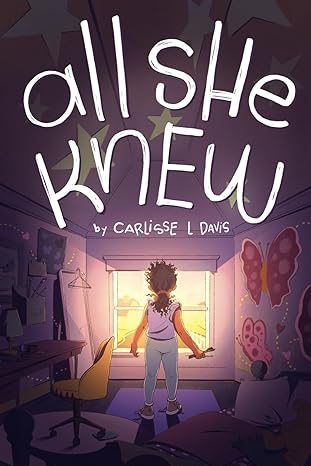
All She Knew tells the story of Charity, a twelve-year-old girl whose world turns upside down after the sudden death of her mother. In a voice that feels both tender and raw, the book walks us through her grief, the disorienting changes of moving in with relatives, and the awkward navigation of friendships and school life in the shadow of loss. The narrative is intimate, almost like leafing through Charity’s private diary, showing her memories of her mother, her inner thoughts, and her small moments of joy and sadness as she tries to make sense of a life she didn’t choose.
The writing is simple but honest, which makes the emotional weight even heavier. There’s no filter on Charity’s feelings, her anger, her loneliness, her confusion, and it hit me how rarely we allow young people that kind of space in real life. I found myself protective of her, frustrated with the adults who clearly cared but sometimes didn’t know how to show it, and touched by the fleeting, sweet moments that gave her hope. The book doesn’t rush her healing, and I liked that. Grief is messy, and the author lets it stay messy.
Some scenes linger in places that are uncomfortable, but those moments are often the most truthful. I appreciated how the book showed the push and pull between wanting to hold on to the past and needing to step into something new. It’s not a dramatic, twist-heavy story. It’s a quiet one, built on small shifts in emotion, and that’s where its strength lies.
All She Knew is for anyone who has had to start over after losing someone they love, especially teens and young adults trying to figure out who they are without that person. It’s heartfelt, gentle, and painfully real. This isn’t a book you race through. It’s one you sit with, maybe with a box of tissues close by, and let it remind you that even when the shape of your life changes completely, the love you carry stays with you.
Pages: 157 | ASIN : B0CZJT6HDT
Forever Fly Free: One Woman’s Story of Resilience and the Power of Hope and Love

Forever Fly Free is the gripping, raw, and deeply human story of Jenny Brandemuehl’s life turned upside down after her husband Mark is severely burned in a horrific plane crash. Told in five parts that span panic, heartbreak, healing, and rediscovery, the book chronicles the emotional and physical toll of trauma, not just on the person injured but on the entire family. Jenny lays bare the sleepless nights, medical jargon, ICU beeps, and gut-wrenching decisions, all the while weaving in threads of love, humor, and a whole lot of grit.
Jenny’s voice is steady and clear, and even when she writes about the most painful moments like her husband’s bandaged, unrecognizable body, or the moment her son learns about the accident. There’s a grace in the way she keeps moving forward. Her writing flows naturally, like a close friend confiding in you. It’s not fancy, and thank God for that. It’s real. There’s also unexpected beauty tucked in the folds like a stranger’s prayer, a nurse’s quiet courage, or a joke Mark cracked in the ER that made me laugh through tears.
What I loved most was how this book is as much about healing as it is about survival. It’s not just medical updates and hospital visits. It’s about rediscovering hope when everything falls apart. Jenny lets us witness the mess of it all, like family tension, career stress, and the fear of the unknown, but she also shows how small acts of kindness and love carry her through. I was especially touched by the moments of spiritual reflection and how Jenny manages to hold space for both science and mystery. Her faith isn’t preachy; it’s personal and quietly powerful.
Forever Fly Free left me with tears, yes, but also with warmth. It reminded me how resilient people can be when they are fueled by love. I’d recommend this book to anyone facing loss, anyone caregiving for a loved one, or anyone simply looking for a true story that stirs the soul. It’s not just about burn recovery or trauma, it’s about the big stuff like love, family, and what it means to keep going when you’d rather not. I finished the last page and sat still for a while, grateful that Jenny let me into her story.
Pages: 352 | ASIN : B0F281H16L



 LITERARY TITAN