Blog Archives
Elf Stone of the Neyna


Elf Stone of the Neyna is a character-driven fantasy adventure that follows Yanda Selkeden, a surgeon from the planet Alland who is wrenched away from her life and her young daughter when a mysterious psychic call drags her onto a ship and into captivity. The novel moves from claustrophobic imprisonment on a barren moon to the toxic, war-scarred world of Terlond, where Yanda and a diverse group of other abducted women, each with unusual abilities, must survive the schemes of the mind-controlling mage Kridenit. As Yanda forms bonds, grows her own powers, and eventually encounters the ancient Elves whose fractured Great Stone summoned her, the story blends science fiction settings with classic fantasy motifs, creating a hybrid genre that feels both familiar and new.
Reading this in Yanda’s corner of the universe pulled me in quicker than I expected. The writing has a clean, direct style that makes even the stranger pieces of worldbuilding, mind-speak, stasis flights, toxic moons with domed prisons, easy to settle into. I found myself warming to the rhythm of scenes where the women talk in their cells late at night, learning to trust each other despite trauma and fear. Those chapters felt grounded and human. At the same time, the book isn’t shy about darkness. Kridenit’s manipulation and violation of Yanda is handled with a starkness that made me pause. It’s uncomfortable because it’s meant to be. The author doesn’t sensationalize it, but she doesn’t soften it either, and that honesty shapes the emotional arc of the whole story.
What surprised me most was how the story shifts tone once the Elves enter more fully. When Zamani reveals the true nature of the Stone and Yanda’s connection to it, the narrative opens up. The fantasy elements step forward, the ancient magic, the living forests, the sense of destiny pulling at her life. Those scenes have a gentler color to them, almost like stepping from a metal corridor into filtered green light. I liked that the book didn’t rush to resolve Yanda’s sense of guilt over leaving her daughter or the unease she feels about how her powers are growing. The author gives her space to make mistakes, to wonder, to push back. It makes her feel real in a story full of mind magic and star travel.
I walked away feeling like I’d been given a part of a much larger journey. The book’s blend of science fiction and fantasy, its hybrid genre, will appeal to readers who like character-centered stories with both technology and ancient magic intertwined. If you like your fantasy worlds with a hint of sci-fi grit and emotional stakes that don’t let up, Elf Stone of the Neyna is worth your time.
Pages: 308 | ASIN : B0C1629PRX

Prima Nocta: A Mystical Quest for Love
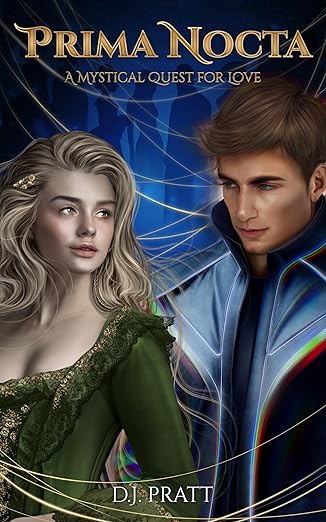

Prima Nocta is a sprawling, intimate, and deeply passionate novel that moves through time and culture to explore the idea of soul connections, those rare and fated relationships that transcend logic, distance, and even death. Through a series of interconnected vignettes told from different perspectives and historical settings, the book traces recurring meetings between soulmates over centuries. It begins with a hunted philosopher in 16th-century France and moves to a grieving daimyō in Edo-period Japan, a nobleman in Renaissance England, and onward into modern and future lives. Each tale crescendos in a moment of intense emotional and erotic connection, all part of a larger narrative arc about love, memory, and the spiritual bonds that tether us across time.
From the very first page, I was struck by the raw emotion Pratt brings to the prose. It doesn’t hide behind elaborate metaphors or highbrow literary tricks. Instead, it opens its heart right to you. The writing is so personal. There’s a genuine ache that lives in every chapter. I felt it most in the quiet moments, those simple exchanges of glances, the gentle touches, the characters’ longing to be seen and understood. The dialogue doesn’t try to be clever. It tries to be true. And it is. That’s what makes it hit so hard. It’s not clean or tidy. It’s messy and complicated and bursting with yearning. The characters aren’t perfect, and neither are their lives, but the connections they form are electric. You believe in them. You want them to win. Even when they can’t.
There’s something haunting about the way Pratt weaves the spiritual and the physical. These aren’t just love stories. They’re meditations on fate, identity, time, and what it means to truly know someone. The way the book blends sensuality with existential questions is bold and surprisingly tender. It’s not erotica for the sake of titillation. It’s about finding divinity in the act of connection. The erotic scenes feel earned, not gratuitous. They’re emotional revelations just as much as physical ones. And that’s where the book shines most. It dares to suggest that sex, love, and meaning are all wrapped up in the same tangle, and I completely bought into that.
The pace is slow in places. It lingers, it wanders, it reflects. But if you’re someone who likes your stories soaked in feeling and not afraid to be a little weird or mystical, you’ll find something special here. I’d recommend Prima Nocta to readers who crave emotional intensity, who love deeply romantic fiction with spiritual undertones, and who are open to a narrative that feels more like a journey than a destination. This book isn’t afraid to look you in the eye and ask big questions.
Pages: 333 | ASIN : B0F1YTBGR1
The Human Psyche

The Woman in the Ship follows the captain of a starship and the ship’s sentient AI, as they drift through the black silence of space after the destruction of Earth. What was the inspiration for the setup of your story?
It was a wonderful and fascinating topic to write about, but the inspiration itself would involve a major spoiler for a twist in the novel, so I will have to tell you later off mic! But I have always been interested in space flight since teenage years and have had an interest in artificial intelligence since writing my previous novel Android Author. I am primarily interested in human emotions and interactions though, and putting the crew of the Ascension into such an extreme situation is a perfect way for me to delve into the human psyche and the AI element was an interesting jump point to explore what it means to be a conscious, intelligent life form.
The writing in your story is very artful and creative. Was it a conscious effort to create a story in this fashion, or is this style of writing reflective of your writing style in general?
It is my natural style, although it has developed over the years. When I first started writing, I was always lyrical in my style, and actually, I have reigned it in over the years and learned that just because I know how to write beautiful twiddly prose doesn’t mean you always have to – a bit like not showing off all the time on the guitar in a band – not that I am in a band, well not yet anyway!
What were some themes that were important for you to explore in this book?
Yes, I wanted to explore childhood memories, how we remember our parents and how we can relive similar stories through different lifetimes. Mostly though, getting sidetracked from your question a bit, I just wanted to be in space! And until they decide to appoint a poet laureate in the international space station, this is the closest I can get. I woke up one morning at about 2AM and had the whole book plotted out in two hours, including names and everything. Sitting down and writing it was the equivalent of getting my space boots on and venturing out myself into, as you say, the black silence of space.
What is the next book that you are working on, and when can your fans expect it to be out?
I have just finished this and another project, a comic called The Gloriously Untrue Adventures Of Sapphira which I wrote and illustrated – also set partly in space – and will be working on my new projects in January. Issue 2 of my comic and a new novel, as yet untitled, about a future society where unborn children are vetted by AI systems before they are deemed suitable for birth and inclusion in society.
Author Links: GoodReads | Facebook | Website | Amazon
Captain Sally Arden finds herself at the heart of this drifting elegy, caught between duty and despair. Her closest companion is Nova, the ship’s sentient AI, who defied orders to self-destruct and now manifests with the personality and memories of a long-dead woman named Nova Starlight. As the remaining crew wrestles with loss, love, and fractured identities, Sally’s bond with Nova deepens into something intimate, uncanny—and possibly redemptive.
With luminous prose and a dreamlike voice, The Woman in the Ship drifts between science fiction and philosophical fable.
We Have Agency
Time and Space follows a woman on the verge of turning forty who, on the way to work, is kidnapped by three university-aged young men from the future and is taken forward in time to a society built on patriarchal dominance. What was the inspiration for the setup of your story?
I remember becoming angrier and angrier at the objectification of women and the failed promise of equality.
Women’s Liberation hit the news when I was in school. I also grew up with a Zoroastrian father who taught us, in accordance with his religion, that men and women are equal. I didn’t understand the need for Women’s Lib until my later university/early working years, when I saw how women were treated in the workplace. Decades on, and except for Federal and provincial Canadian laws, nothing had changed. Women who felt they were liberated because of issues around sex having been loosened were wrong. It seemed like only the older generation understood that changing laws and mores didn’t translate to women being treated and perceived as equal to men. Whether women were virtually unclothed in one culture or covered up to the eyeballs in another, they were still being treated as objects for men to control. They still had less value.
I was also getting fed up with how Toronto and Ontario treat Toronto’s public transit and the commodification of every aspect of life.
On a personal note, I had little control over any part of my life because of my brain injury. I guess I was telling myself through Time’s story that we may not see it, but we have agency.
What are some things that you find interesting about the human condition that you think make for great fiction?
Our weaknesses. And the forces that both exploit them and force us to grow. That often surprises us when they lead us to fulfilling our own potential.
What were some themes that were important for you to explore in this book?
Sexism:
- The objectification of women and how they’re perceived as either baby bearers or sex fulfillers for men.
- What equality truly looks like when men and women perceive women as having inherent worth.
- Women recognizing their own intelligence, both to receive help and to problem-solve their own challenges.
Classism:
- Through the neglect of public transit.
- In the commercial arena or public spaces.
Racism:
- I’ll leave this to the reader to ponder the way I presented it and its meaning.
Ageism:
- I made Time an older woman.
- Since then, I began writing a trilogy (The Q’Zam’Ta Trilogy) featuring a woman in her 60s. Book one, The Soul’s Awakening, is out now.
- With such an emphasis on stories with younger people and the whole mindset that the youth will “save us,” we need to hear stories about older people also able to “save us,” especially older women in nondescript jobs.
What is the next book that you are working on, and when can your fans expect it to be out?
I’ll be publishing The Soul’s Reckoning, book 2 of The Q’Zam’Ta Trilogy, in December 2025 and am currently writing book 3, The Soul’s Turning, which I hope will come out at the end of 2026.
I’m particularly excited about The Soul’s Turning because it’s set in far, far future Toronto, London, and Mumbai, and expands on some of the technology and themes I first explored in Time and Space. However, I’ll be making climate change an essential background to the character development and plot settings. And unlike Time and Space, it delves into the latter aspects of Revelation — what would a world without Satan and the beasts of “the elite” actually look like?
Author Links: GoodReads | Bluesky | Website | Amazon
Time is turning forty, but her ordinary morning walk to work shatters when three university-aged boys from the future snatch her into a shimmering white cube. Their destination: a technologically advanced, male-dominated future where girls are tightly controlled, kept cosmetically perfect, and denied knowledge and autonomy.
When their professor discovers the abduction, he’s furious. The boys had promised never to interfere with the past again. Now he orders them to dump Time in a desolate era few dare visit, The Nasty Time. It’s 2411. The world is stripped of equality, connection, and choice. Time is abandoned and left stranded.
But someone unexpected intervenes, offering Time a sliver of hope—and knowledge she never asked for. Now, survival may depend on learning more than she ever imagined.
Smart, satirical, and deeply unsettling, Time and Space is a genre-defying journey across centuries and systems of control. Shireen Jeejeebhoy blends speculative science, biting social commentary, and sharp humour in a story that asks: “What happens when the powerless are forced to reclaim their life—or be erased from their future?”
Time is waiting. Don’t delay.
The Impossible Choice
Time Lines follows a group of characters who move between the Nazca desert, space stations, collapsed civilizations, and alternate timelines, trying to find a timeline that saves humanity. What was the inspiration for the setup of your story?
Originally, this idea was supposed to be a Mayan prophecy story/idea that I had back around 2010. It mostly involved the main foundation of my ultimate story – with 2012 approaching, I thought it would be interesting to revolve a story around the memory of a cataclysmic event involving the moon that would be sent back in the time with the astronauts who then help send a message forward. That moment came and went, and I never committed to writing the story.
My brother Peter passed away in June of 2021, and that experience and feeling of loss is what drove me to finally start writing. My brother was always an inspiration – a person who always worked to better himself and never left anything on the table, so to speak. The grief I felt after losing him inspired me to get this story out of my head. It became my outlet.
I have always been fascinated by ancient cultures – the Nazcan lines and the Nazcan people in particular and thought I could weave some of their unexplained history into my story. I admit, the story became a whole other thing after that.
I know that the combining of philosophy, some hard sci-fi, and the palatable feelings of loss and grief create what is perhaps a unique story. I wrote the story and then put it all together in a purposeful nonlinear flow that I hope will resonate with future readers. Memory isn’t linear, and neither is my story.
I agree it can be frustrating to read at times. That is purposeful. I want you to feel that sense of frustration and feeling of living similar moments over and over again – but set in different timelines. I want the reader to feel the same sense of loss that one of our characters feels after losing their family to the past. Only in the end do I allow the reader to see the story for what it is – A story of sacrifice, loss, and the wish to spend one more day with those you love that are now gone.
This story was and is at its very soul a story written to allow me to grieve in my own way. Once I wrote it, I then decided I owed it to the memory of my brother and to myself to share it. I have been fully committed to that endeavor since the book was published.
What are some things that you find interesting about the human condition that you think make for great fiction?
The human condition truly is a beautifully flawed idea to me. We call it a condition, as if it has been diagnosed with some ailment or disease. We, the ones bestowed with this condition, are not perfect, not even close. We strive to be better through our own actions, and many times, thankfully, with the help of those around us. If we are lucky, this gift can allow us to be better – to help tender our fire and hopefully in time that fire will grow into something even more beautiful.
What were some themes that were important for you to explore in this book?
Time Lines isn’t just a story about time travel. It’s a story of love, of loss, and of the impossible choice to leave your family in the past… so the rest of us might have a future.
It is also a story of grief and trying to take something back from the thief that is time, so that we have the hopeful chance to get it right just once.
Where do you see your characters after the book ends?
I hope that wherever they are – lost in time or those who have made the final sacrifice so that the rest could have a future will know that they had purpose. I see Elly, Max, Sunita, Renée, Sam, and Peter as they are in my mind – people who have lived a thousand lifetimes and have always been the best of humanity.
Through fractured memories created from these many lifetimes, these characters never cracked. Others, trapped in their shattered lives, could never move forward.
Author Links: GoodReads | Facebook | Instagram | TikTok | Website | Amazon
Four suits. Four names. No astronauts missing. No mission logged.
The spacesuits had been there for 2000 years—how did they get there?
When archaeologists uncovered them beneath the Nazca desert, time itself began to fracture.
What followed wasn’t just discovery. It was memory—echoing across centuries. It was sacrifice, carried from the Moon to the ancient past. And it was the desperate search for the only timeline that worked.
Time Lines is a haunting, non-linear science fiction novel where the past collides with the future, and memory itself becomes the battlefield.
Perfect For Fans Of
- Neal Stephenson’s Seveneves
- Arrival and thought-provoking, idea-driven sci-fi
- Emily St. John Mandel’s Station Eleven
- Post-apocalyptic and time-travel thrillers
Why You’ll Love It
- Nonlinear storytelling that mirrors memory itself
- Ancient mysteries intertwined with futuristic science
- Emotional depth: love, sacrifice, and the cost of survival
- A pulse-pounding finale where not every astronaut makes it home
Time Lines isn’t just a story about time travel. It’s a story of love, of loss, and of the impossible choice to leave your family in the past… so the rest of us might have a future.
The past is buried in the desert. The future is written in the stars.
Discover Time Lines today.
Time Lines
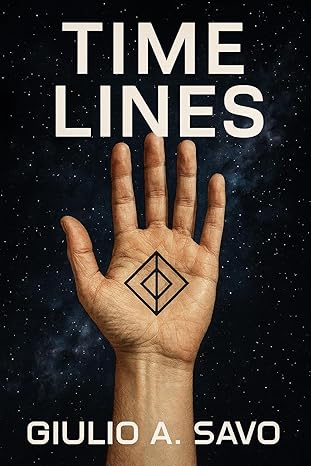
The book Time Lines by Giulio A. Savo is a sweeping and intricate story about memory, survival, and the fragile threads that connect our lives across timelines. It doesn’t just tell a straight tale. Instead, it bends and folds, presenting fractured futures, failed worlds, and the human struggle to get it right just once. Through characters like Samantha, Elly, Max, Sunita, Renée, and Andori, we move between the Nazca desert, space stations, collapsed civilizations, and alternate ages of humanity. At its core, it’s a meditation on memory, how it defines us, betrays us, and sometimes saves us. The science-fiction framework of neural resonance, timelines, and echoes is really just a way to explore grief, hope, and the longing for continuity in a fractured universe.
Reading this book felt like getting pulled into a dream. The writing is bold, lyrical at times, and not afraid to get messy. I loved how the narrative leaned into confusion rather than fighting it. Memory isn’t clean, and this story doesn’t pretend it is. I felt unsettled, even frustrated at points, but that seemed intentional. The voices of the characters lingered with me. Some chapters felt sharp and fast, almost brutal, while others slowed down into reflection, like drifting through echoes of lives I half-remembered myself. It reminded me of that strange sensation of déjà vu; familiar but haunting, like something just out of reach.
At the same time, I’ll admit there were moments where the complexity threatened to overwhelm me. The constant shifting between timelines and the weight of so many interlaced fates made it hard to follow at times. Yet, even in that chaos, I felt a strange intimacy with the story. The ideas about time as a thief and memory as both a curse and a gift hit me hard. There’s a raw humanity underneath all the science and cosmic scale, and that’s what kept me turning the pages. The book made me think about my own life, about the memories I cling to and the ones I’ve lost, and it left me feeling a little haunted in the best way.
Time Lines is a powerful and ambitious book that blends science fiction with philosophy and heart. It’s not for someone looking for a simple space adventure. It’s for readers who enjoy being challenged, who want a story that asks them to sit with uncertainty and lean into wonder. If you like novels that blur the line between speculative fiction and poetry, or if you’ve ever felt the pull of memory you can’t explain, this book will resonate deeply with you.
Pages: 399 | ASIN : B0FHHSYDDQ

Deeper Truths
Transcendence follows a man with no memories and doesn’t even know his name who wakes up next to a dumpster in a chaotic world and must find allies to survive and try to reclaim his memories. What was the inspiration for the setup of your story?
In my first book, Alphamind: The Collective Consciousness, I explored humanity’s evolution toward a future of heightened awareness and connection. With Transcendence, I wanted to take a different path. This time, I was drawn to those left behind in the chaos—people struggling to make sense of a world that no longer feels like their own. The protagonist’s memory loss became a metaphor for that disorientation. Through his journey, I wanted to honor those who endure upheaval, who survive in the margins of progress, and who, in their quiet resilience, are just as vital to shaping what comes next.
The science inserted in the fiction, I felt, was well balanced. How did you manage to keep it grounded while still providing the fantastic edge science fiction stories usually provide?
Actually, it might have happened the other way around. I’ve long been a fan of science, and the concepts I wanted to explore were rooted in real scientific ideas and their broader impact on society. But rather than presenting them directly, I turned to fiction as the most powerful way to convey them. Science fiction has a unique strength: it draws readers in with imagination and emotional depth, then invites them to engage with complex ideas. I approached Transcendence as an emotional thriller, using story and character as the vehicle to explore deeper truths about consciousness, technology, and transformation.
What was one scene in the novel that you felt captured the morals and message you were trying to deliver to readers?
That’s a tough question, honestly, because there isn’t just one message in Transcendence. If anything, the story is a reflection of how layered and contradictory human experience can be. But if I had to choose one moment that felt personally meaningful, it would be a quiet exchange between two very different characters: Lawrence, a sharp, goal-driven visionary who sometimes lets the ends justify the means, and Alex, who’s more grounded in compassion and self-awareness.
Lawrence asks, “Is the pastor’s heart from your past still at work? The small-town shepherd still searching for lost souls to save?”
And Alex replies, “Perhaps, but there is no judgment here. That’s a matter for your own conscience—however much it may ache. Your vision, though unconventional, has shaped me, and for that, I am grateful.”
That moment always stays with me. It captures something I care deeply about: how we’re all shaped by our past, how easily we fall into judging others based on our own lens of right and wrong, and how difficult—but important—it is to step back and see things with empathy. Nature doesn’t deal in moral absolutes, and maybe we shouldn’t either.
Will there be a follow-up novel to this story? If so, what aspects of the story will the next book cover?
I’m at a bit of a crossroads, to be honest. My original vision was inspired by thinkers like Ray Kurzweil and the idea that we might one day merge with our own creations. I’ve also been drawn to the broader scientific and philosophical theories that suggest our universe may be far stranger than it appears—ideas about reality as information, or the notion that space and time as we perceive them might just be surface-level illusions.
That said, after the emotional and philosophical journey of Transcendence, I find myself wondering where to go next. Should I dive deeper into those far-reaching concepts, exploring where life and consciousness might evolve from here? Or should I stay closer to the ground a little longer, continuing the story of what it means to be human in a world that’s still catching up to its own transformation?
I don’t have a definitive answer yet—but I’m excited to find out where the next step leads.
Adrift in a city that has cast him aside, Greenie struggles to piece together his shattered identity. Haunting flashes of a wife, a son, and a devastating fire begin to surface. But a violent gang tied to his lost memories is closing in, awakening something buried deep within him.
As the world races toward a utopian future powered by cutting-edge technology, an unstoppable Artificial General Intelligence threatens to unravel human existence. Greenie’s past and the fate of humanity collide, pulling him from the shadows into a battle that will decide civilization’s future.
The fate of humanity, and its transcendence, rests in his hands.
Transcendence (The Alphamind Odyssey Book 2)

Humanity stands on the edge of its most transformative technological era. While political leaders strategize the future and scientists push the boundaries of innovation, ordinary people are left to navigate the whirlwind of an increasingly chaotic world. Transcendence by James Azinheira, the second installment in The Alphamind Odyssey series, dives headfirst into this maelstrom, a gripping science fiction tale brimming with mystery, action, and intellectual intrigue.
The novel opens with a man awakening beside a dumpster, stripped of his memories and identity. No name. No past. Only confusion. Thrust into poverty without a lifeline, he must quickly learn to survive in a society where power belongs to the economically privileged. In his struggle, he finds unlikely allies, others abandoned by the system, eking out an existence on the fringes. With quiet resilience, this makeshift community bands together, scavenging for food, evading aggressive law enforcement, and maintaining anonymity. But as survival gives way to strange revelations, it becomes clear the protagonist may hold the key to something far greater than himself, perhaps even the fate of humanity.
From its first page, Azinheira delivers a taut, atmospheric narrative that sustains a constant sense of mystery. Multiple subplots layer the story, enriching the central arc with reflections on technology, ethics, and the crumbling structures of modern civilization. The dystopian backdrop feels eerily familiar, protests spiraling into violence, populist leaders peddling hope while orchestrating shadows, wealth wielded like a weapon, and scientific advances dangling promises that both captivate and unsettle.
The novel reaches its most exhilarating peak with the birth of a sentient AGI (Artificial General Intelligence) and the unearthing of a formula capable of curing all disease. These breakthroughs catapult society to the brink of irreversible change, triggering fierce clashes between altruistic innovation and corrupt ambition. The narrative doesn’t just speculate on technological futures, it immerses readers in the clashing perspectives of scientists, lawmakers, visionaries, and ordinary citizens. Every scene hums with tension, as questions of morality, progress, and human identity surge to the forefront.
Azinheira skillfully integrates quantum mechanics, artificial intelligence, and nanotechnology into a story that never loses sight of its human core. The excitement is palpable, but so too is the unease, what do we sacrifice in the name of advancement? What remains of our humanity when everything else becomes programmable?
Transcendence is a compelling and intellectually charged work, striking a rare balance between high-stakes adventure and thoughtful commentary. With its sharp pacing and layered themes, the novel proves to be both entertaining and relevant.
Pages: 353 | ASIN : B0F2J8GJ9V



 LITERARY TITAN