Blog Archives
The Seeker


The Seeker follows a restless wanderer who tries to make sense of a life caught between spiritual hunger and everyday chaos. The book moves through a mix of travel notes, philosophical riffs, memories, and sharp self-mockery, all glued together by the author’s ongoing attempt to wake up from the illusions that shape his world. I found the voice quick, funny, and sometimes raw, and the whole thing works like a long letter from someone who keeps tripping over his own enlightenment. The book shifts between stories of drunken nights, failed spiritual practices, and run-ins with Buddhist and Advaita teachings. It also digs into ego, pain, detachment, and the strange ways we cling to our identities, even when we swear we want to let them go.
The narrator puts his flaws on full display, and he does it with this mix of humor and despair that made me laugh one minute and sigh the next. I liked how he pokes at spiritual culture, too. He rolls his eyes at yogis racing to class, at overzealous seekers chanting their way to nirvana, and at the whole self-help industry. The sarcasm comes fast, but it never feels cruel. It feels like he is trying to keep himself grounded. The drinking, the travel, the loneliness, the pleasures, the screwups. They all paint a picture of someone who wants freedom but also kind of enjoys his distractions. That tension made the book feel real.
The book circles around the same big questions. What is the self? What is enlightenment? Is anyone actually steering their own life? He keeps returning to ideas from Ramana Maharshi, Nisargadatta, Anthony de Mello, and the Buddha, and he spins them in a way that is part confession and part debate with himself. Sometimes the reflections hit hard. Especially when he talks about pain versus suffering or when he admits how much he hides behind ego, charm, or booze.
I feel like the book is meant for people who enjoy spiritual writing but get turned off by anything too polished or too serene. If you like flawed narrators who think too much and drink too much and still keep reaching for something truer, you’ll like this book. It is also a good pick for readers who appreciate humor mixed with pain and who like a story that refuses to pretend the journey is clean or noble. I would recommend it to seekers, cynics, and anyone who finds themselves caught between wanting to let go and wanting one more round.
Pages: 199 | ASIN : B0FWRQT951

Be True To Yourself Always
Zombies & Butterflies is a self-help book that explores the idea that many of us move through life emotionally numb, the “zombies,” while real growth comes from becoming aware, compassionate, and fully engaged, the “butterflies.” Where did the idea for this book come from, and how did it develop over time?
The Idea for the book and how it developed over time was, in my opinion, quite unique. The book took about twelve years to write. I still had to work to provide for the family. Vehicles, lawn mowers, appliances break down and needed fixing as well as replacing shingles on the roof and other house related repairs. The kids had sporting events, plays at school and time to play with the kids. I also had obligations within the community. The ideas for the book were in my head and as far as a way to lay it all out and organize it, I had no idea. But not knowing how to do something or never having done something, like writing, never stopped me from doing it. So, I kept on writing and figured something would come to me. And sure enough, after three, four, five years of trying to figure out just the title of the book, the title, the rough cover design and the organization of the book came to me in a flash while I was doing something not at all related to writing.
What were some ideas that were important for you to share in this book?
A few ideas in the book, among all the rest of the ideas, that I believe are crucially important is the idea of individual authenticity. Being true to yourself first and foremost and what you are and who you are, really. Not the show for the rest of the world. It was surprising to me to read that one of the greatest fears people have is what others think about them. How truly sad that is. I sincerely believe that all truth begins with self-truth. That’s foundational. Without that foundation, all truths will be elusive. Also, the idea of a most genuine connection with the Divine is paramount. That connection will serve as a conduit straight to the source of all truth which you’ll be able to feel within you. They will resonate and you will be able to discern them. In doing so, feeding into another significant idea, you’ll need to follow no one but the Creator. You’ll be able to put away those days of being spoon fed by another or others, days of confusion and lies and will be able live life following and being guided by the Creators direction just a true as the north star guides you at night.
What was one of the hardest parts in this book for you to write?
In the book are analogies and metaphors. One of the hardest things to write was always wondering what is too little information which would not enable folks to understand my point and what was too much information which might confound my point. Even now, I don’t know if my choices were correct.
What is one thing that you hope readers take away from Zombies & Butterflies?
My hopes in writing this book was to be nothing more than a catalyst. I want to spur on a childlike curiosity in people to search and explore themselves first, then the rest of this awesome creation. I want them not to have fear in their venture but the courage of an explorer. The courage to break away from the old worn-out entanglements which time has proven over and over and over throughout the centuries to be absolutely inept and lacking all luster and vitality. I want people to escape the tyranny over their minds and truly live free. Free from the fear and avarice and hatred in this world and at length, with enough people living in such a way, the whole world WILL change.

Fungus Theory of Conscious Growth


Fungus Theory of Conscious-Growth is a speculative science and philosophy-of-consciousness nonfiction book that argues all life on Earth is really one vast, ancient fungus that exists to grow consciousness to its maximum potential, with humans as the spore that eventually carries that consciousness off the planet and into space. The author starts with cosmology, describing a universe that hides our true origin, limits our lifespans, and ties us to fragile biospheres, then walks through biology, evolution, technology, and psychology to claim that everything from slime mold to smartphones is part of one continuous fungal system pushing us toward “maximum conscious growth” and eventual evacuation of Earth.
Mark L. Christensen mixes straightforward explanation with capitalized concepts and acronyms. Underneath the terminology, though, the core ideas are simple: the universe is built so we can never fully know where we came from, we all die, and we are stuck on a planet that will eventually cook us, and those three constraints are what force intelligence and technology to grow. I appreciated how the chapters loop back to the same framing, so you never forget what the author is trying to prove. The long passages on cosmic expansion, black holes, and the difficulty of tracing any “true origin” were a bit dense, yet they set a clear mood of mystery and frustration that fits the book’s central question.
Where the book got most interesting for me was in the biology, technology, and psychology sections, where the fungus metaphor gets fleshed out. The idea that all plants and animals are variations of the same original fungus, and that this fungus has slowly prepared the planet for a bipedal creature with a big, hungry brain, is truly compelling. I liked the image of early fungi and plants essentially “setting the table” with rich fruits and vegetables, so a future human brain could have the calories it needs.
The technology chapter frames every tool, from early adaptations to modern spaceflight, as a kind of informational mycelium spreading through minds, with certain thinkers as “spikes” in the network that accelerate the whole system. The psychology chapter leans into this even more, describing a “void of psychosis” that opens when humans become aware that they cannot know their true origin, and arguing that our drive for identity, conflict, communication, and eventually space travel all come from trying to fill that void. I did find myself thinking about how much of my own motivation comes from not knowing, and from not wanting life to feel pointless.
I see Fungus Theory of Conscious Growth less as a strict scientific thesis and more as a big thought experiment in speculative science. It asks you to imagine the entire history of life as one fungal organism trying to launch itself into the dark, and to see humanity as the spore that might carry that effort into the galaxy. If you like big-picture questions, cosmic timelines, and philosophical riffs on evolution and technology, there is a lot here to chew on. I would recommend this book most to readers who are comfortable living with unanswered questions, who like their popular science mixed with metaphysics, and who do not mind a bold, unified theory that sits somewhere between lecture and late-night conversation about why we are here at all.
Pages: 402 | ASIN : B0CVXCNBY7
Zombies and Butterflies
I went into Zombies & Butterflies expecting a self-help book, and that is largely what it is, but it reads more like a long, earnest conversation about what it means to be alive instead of just functioning. The book explores the idea that many of us move through life emotionally numb, the “zombies,” while real growth comes from becoming aware, compassionate, and fully engaged, the “butterflies.” Through personal stories, philosophical reflection, and moral exhortation, the author argues that healing starts with caring, self-honesty, and conscious choice, and that inner change ripples outward into relationships and communities.
What struck me first was the intensity of the writing. The author does not ease you in. The author opens with vivid, sometimes brutal imagery and then pivots quickly to emotional and spiritual terrain. It can feel overwhelming, but that seems intentional. This is a book that wants to shake you awake. The voice is passionate, almost preacher-like at times, yet rooted in lived experience rather than theory. I found myself alternating between nodding along and needing to pause because the emotional weight was heavy. The war metaphor, in particular, is thoughtful. It turns internal pain into something physical and hard to ignore, like a constant low-grade thunder in the background of everyday life.
As I kept reading, I noticed how much the book relies on stories and analogies rather than instructions. There are no neat lists or tidy frameworks here. Instead, the author circles the same core ideas again and again: caring matters, kindness matters, attention matters. This repetition feels comforting, like returning to a familiar trail. There is sincerity in that insistence. This is not a polished productivity guide or a detached philosophy text. It sits firmly in the spiritual self-help genre, blending memoir, moral reflection, and motivational writing. You can feel how personal these ideas are to the author, how much of the book is a kind of testimony rather than an argument.
Zombies & Butterflies is best suited for readers who are already asking big questions about purpose, kindness, and emotional healing, especially those who feel disconnected or worn down by life. If you enjoy reflective, spiritually inclined self-help books that value feeling over efficiency and meaning over minimalism, this book will likely resonate with you.
Pages: 93 | ISBN : 979-8-9934353-2-9
The Spiral Can Be Reversed
The Path from Hell to Heaven is a philosophical and psychological map of the ego, tracing how people spiral downward into “Hell” through fear, shame, and denial, and upward toward “Heaven” through trust, openness, and renewal. Why was this an important book for you to write?
Because ego explains nearly every human collapse and ascent, yet most people never receive a practical map for it. I wanted to translate psychological chaos—fear, shame, denial—into a recognizable model anyone could use, the same way we map complex systems in software or business architecture. This book is that missing human blueprint: a self-debugging framework that moves readers forward instead of leaving them looping in abstraction.
How did you come up with the concept of the two-sided spiral of the ego and develop this into a process that readers can implement into their own lives to find clarity and understanding of themselves?
I analyzed patterns before individuals. Ego contracts or expands; there’s no true neutral. Avoiding truth descends, openness creates lift. The spiral metaphor stuck because it captures momentum and acceleration.
To make it implementable, I structured it as an RPM self-awareness loop:
- R – Recognize the ego state you’re operating in
- P – Pause the automatic reaction loop
- M – Move with intentional correction or openness
It’s diagnostic and reversible, giving readers a clear exit path whether they’re descending or rebuilding upward.
I found the ideas presented in your book relatable and appreciated the actionable steps that readers can take to find their own clarity. What were some ideas that were important for you to share in this book?
The concepts that mattered most to me were:
- Ego itself isn’t the problem → closed ego is
- Narcissism is often unprocessed fear wearing armor
- Pain isn’t identity, it’s a turning point
- Ambition without self-awareness becomes self-sabotage
- Recognition of the loop always comes before the escape
And above all—I wanted a book that doesn’t just sound smart, but gets applied and changes outcomes.
What is one thing that you hope readers take away from The Path from Hell to Heaven?
That their ego has directions, and so do they. If they feel stuck, defensive, ashamed, or overwhelmed—it’s a state, not a life sentence. The spiral can always be reversed, rebooted, and climbed. The only real trap is believing the descent is normal and permanent.
This book is a Map of the Ego’s Double Spiral — a journey every individual, family, and society travels between Hell (closed ego) and Heaven (open ego).
Through vivid metaphors and grounded psychological insight, LANOU unveils how pain becomes protection, how protection turns to illusion, and how awakening begins when trust cracks the shell.
You’ll see yourself, groups, and even nations in these patterns:
The wound that starts the descent.
The mask that hides pain through control.
The collapse that breaks illusion.
The trust that starts renewal.
The open ego that frees love and truth.
Structured as a fractal spiral, the book reveals six repeating steps across all scales — from individuals to groups to the world itself. It blends the clarity of psychology with the simplicity of spiritual truth: hell is repetition; heaven is renewal.
Once you see the map, you cannot unsee it.
Beyond Power – Israel and the Struggle for the Ethical State

Beyond Power sweeps across a huge landscape. It starts with the brutality of October 7 and moves through the ethics of self-defense, the failures of modern democracies, the rise of progressive ideology, and the long history of Jewish vulnerability. It tries to stitch these threads into a single idea. The author argues that Western society is drifting away from the moral core that once made democracy possible. At the same time, he says Israel stands as a case study of a nation forced to defend that moral core while being attacked for doing so. The book blends philosophy, history, and political analysis into something that feels both wide-ranging and deeply personal. It does this through rational analysis, while acknowledging both sides of many of the arguments.
I found myself pulled in many directions at once. Some chapters hit hard. The discussion of existential threat felt raw, and the writing carried a pulse that seemed to come straight from lived fear. I felt the author’s frustration with how the world reacts to Israel’s choices. I also felt his disappointment at how fragile democratic societies have become. He writes in a way that makes big ideas feel urgent. At times, I nodded along. The book has a rhythm that swings between clarity and intensity, and that mix made the reading experience unpredictable in a good way.
Then there were moments when I felt the weight of the author’s certainty. Some arguments felt tightly reasoned and grounded in the text of history. Others felt more like a call to arms. I caught myself reacting emotionally. The sections on progressivism, for example, felt like they were written out of real concern. The passion behind the words made the book more alive. It never hides how the author feels, and that honesty makes the work feel human. The tone always remains respectful of divergent views and offers solutions as well as analysis.
I walked away thinking this book is suited for readers who want to grapple with difficult questions about ethics, identity, war, democracy, and power. It is a book for people who enjoy wrestling with ideas and who do not mind strong viewpoints. It will speak to readers who are curious about Israel’s struggles, Western political instability, or the philosophical foundations of ethical societies.
Pages: 247 | ASIN : B0G1CZG9J1
Dancing with Chaos: Embracing the Complexity of Nature
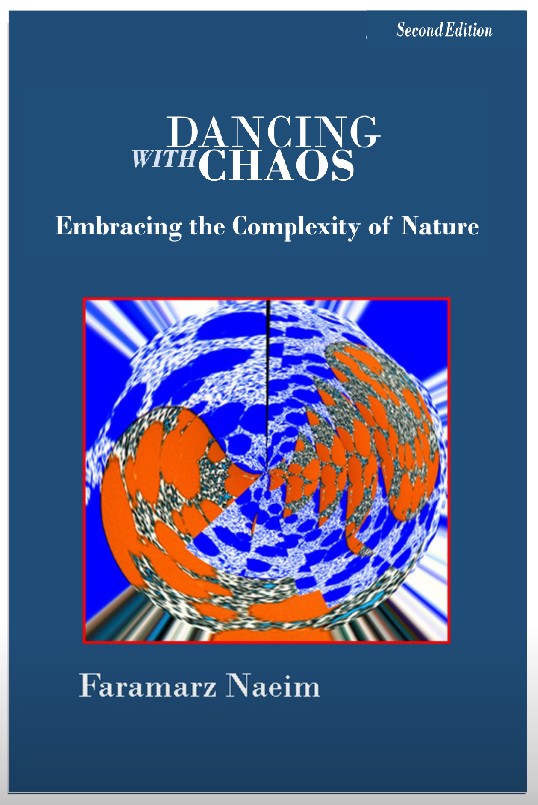
Dancing with Chaos lays out a sweeping tour through the hidden order that sits inside disorder. It begins with the building blocks of complexity and walks through the birth of life, the rise of humans, and the fragile ecosystems that now depend on us. Each chapter ties natural patterns together with stories about cells, galaxies, evolution, and culture. The book pulls all of this into one big picture that shows how chance and necessity constantly shape everything around us.
As I moved through the chapters, I felt pulled in by the author’s sense of wonder. There is a warmth in the way he connects scientific ideas to patterns we see in onions, trees, and even human families. The writing feels steady and thoughtful. Sometimes it slows down to explain a concept with care, and other times it leaps into a new idea with a burst of excitement that feels contagious. I liked that the book never pretends the world is simple. It makes complexity feel alive, almost like a character of its own, and that gave me a sense of respect for how little we usually notice. At times, the explanations run long, but the clarity and the enthusiasm kept me engaged.
I also enjoyed how personal the book felt, even when the subject was huge. The stories about early life and evolution made me pause and think about how fragile everything is. When the author shifted to modern issues like climate change, the tone sharpened and carried a quiet urgency. The way he blends science with human meaning worked for me because it felt honest. The ideas are big, but the writing stays grounded. It speaks plainly and never hides behind heavy language, which made the whole journey feel approachable.
This book is for anyone who loves to step back and look at the world with fresh eyes. It suits readers who enjoy science but prefer it told with heart and curiosity instead of stiff formality. If you like learning how life fits together, and you don’t mind being nudged to think about your place in it, this book will land well.
Pages: 319 | ISBN : 1419613154
The Path from Hell to Heaven: The 2 Sided Spiral of the Ego
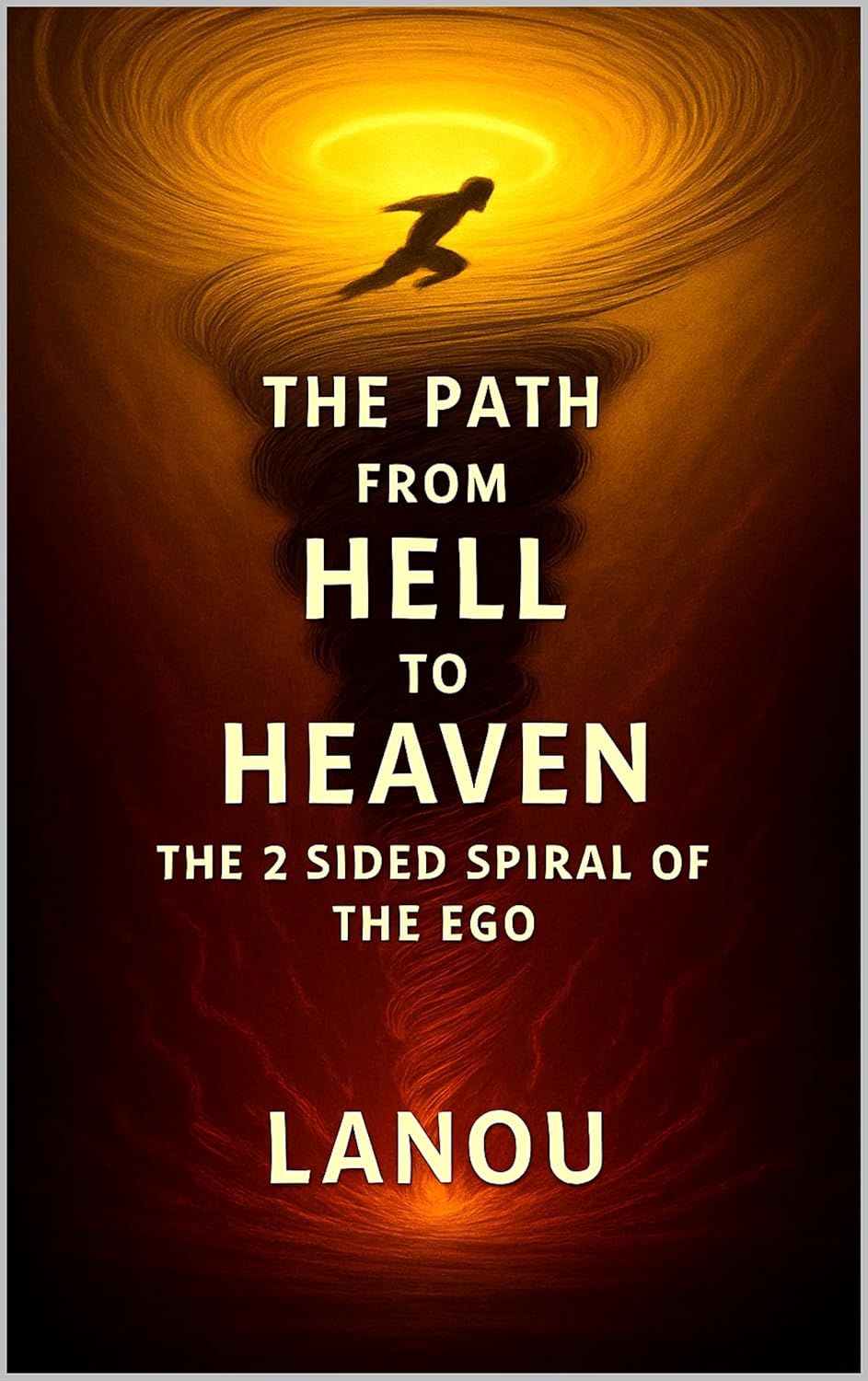
This book is a philosophical and psychological map of the ego, tracing how individuals, groups, and societies spiral downward into “Hell” through fear, shame, and denial, and how they rise toward “Heaven” through trust, openness, and renewal. It’s written like a guide for self-awareness, where the ego’s descent, wound, shell, mask, illusion, collapse, and denial are mirrored by its ascent through trust, openness, adulthood, mastery, and renewal. Each section builds on the last, connecting personal trauma to collective dysfunction and, finally, to global healing. The language is clear and rhythmic, sometimes poetic, and the structure moves like a spiral itself, repeating ideas but deepening them each time.
I liked how direct this book is and how it pointed to familiar pain without drowning in theory. The writing style blends psychology and spirituality without turning preachy. I could feel the author’s intention: to wake readers up, not to comfort them. Sometimes the simplicity of the prose makes it cut deeper than expected. It’s not a book that flatters, it exposes. At points, it felt like being called out and held at the same time. The “spiral” metaphor worked for me; it explained so much of what people repeat in life, from personal self-sabotage to entire societies collapsing under pride and denial.
The book’s tone is confident, almost absolute, which can feel heavy when you’re already raw. The ideas are strong, but their repetition across individual, group, and world scales sometimes blurs the freshness. Yet even then, I found myself underlining lines, rereading them, and thinking of people I know who live both spirals at once. The message that Heaven and Hell are not destinations but daily states of ego, sticks.
I’d recommend The Path from Hell to Heaven to people who crave clarity more than comfort. It’s for readers who think deeply about healing, leadership, and the way our inner wounds ripple into culture and politics. Therapists, activists, or anyone burned out on shallow self-help would probably find it bracing. It doesn’t tell you what to do; it shows you what you’re already doing. And if you’re willing to face that, it can be liberating.
Pages: 151 | ASIN : B0FT5HM9RS



 LITERARY TITAN