Blog Archives
Foundation Under My Feet
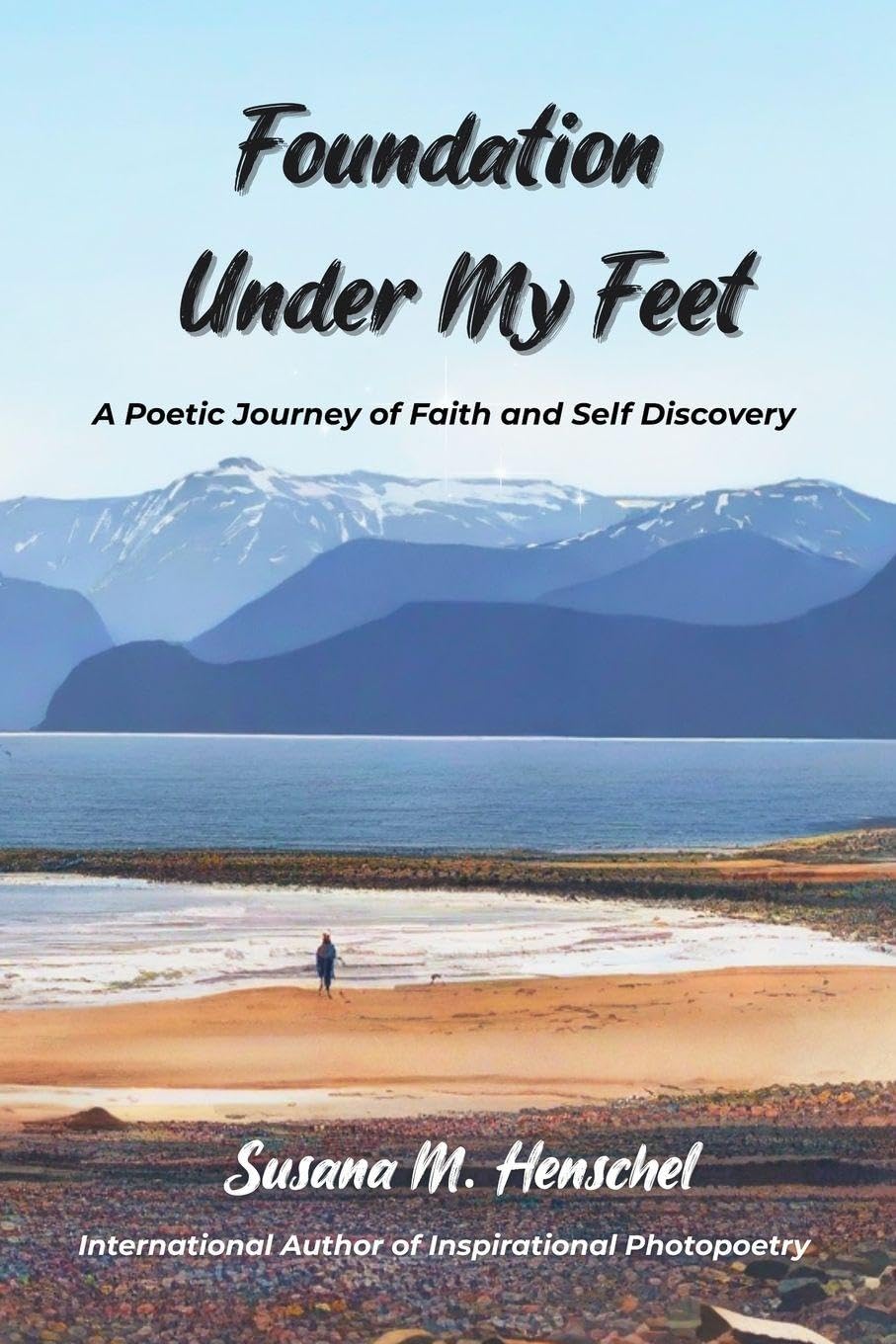

Foundation Under My Feet is a heartfelt collection of poetry that explores the interwoven themes of faith, self-reflection, and nature’s quiet wisdom. Henschel invites readers on a deeply personal journey divided into two sections: “An Echo in the Soul” and “A Formed Foundation.” Through her words, she reflects on life’s challenges and joys while anchoring her thoughts in Christian belief. The poems ebb between internal struggle and external awe, often using vivid outdoor imagery to ground spiritual revelations in the tangible world. Each page reads like a whispered prayer, a quiet conversation with God, or a journal scribbled on a forest trail.
Reading this book felt like opening someone’s diary and finding parts of myself inside. Henschel’s poems aren’t polished in a showy way; they’re honest, even raw. She doesn’t hide from doubt or frustration, she walks straight through them with trembling hope. I appreciated the grounded simplicity of her language. She writes about everyday things: pulling weeds, sleepless nights, cloudy mirrors. Yet in those details, she uncovers depth. There were lines that caught me off guard and stayed with me long after. At times, a few pieces feel more like diary entries than fully-formed poems, but that unfiltered honesty is also part of the charm.
There’s comfort in knowing someone else has wrestled with questions of purpose, with waiting for a “yes,” with staying hopeful when things feel still. Her reverence for the natural world mirrors my own, and I found peace in the way she linked God’s presence to forest trails, rushing streams, and moonlit skies. Some readers might wish for more variety in structure or metaphor, but for me, the steady, soulful cadence felt just right, like hiking a path that rises slowly, with soft turns and sudden clearings.
I’d recommend Foundation Under My Feet to anyone looking for quiet encouragement, especially those navigating personal or spiritual growth. If you love nature, reflective writing, and poetry with a purpose, this book will speak to you. It’s best read slowly, maybe with a cup of tea, maybe while sitting on a porch or near a creek. It gently reminds you to breathe, to believe, and to keep walking.
Pages: 82 | ASIN: B0FD588XPH

My Bee Soliloquy


My Bee Soliloquy is a sprawling meditation on bees, both literal and metaphorical. The book dances between themes of nature, spirituality, philosophy, and even history, all framed within the fascinating world of bees. It’s a poetic and symbolic exploration of life itself, borrowing from science, mythology, and personal reflection. The structure is unconventional, feeling almost like a collection of musings rather than a traditional narrative. With chapter titles ranging from “Geometry” to “Bee Math” and even “Bloods and Crips,” it’s clear from the outset that this book refuses to fit into a neat little box.
What struck me first was the sheer ambition of the writing. It moves fluidly between subjects, often blending the mystical with the scientific. There were moments when I felt completely absorbed in the poetic flow, like in the chapter “The Bee in the Apokatastasis,” which seemed to weave together theological concepts with the natural order of hive life. At other times, there are sections that jumped abruptly between ideas. While this nonlinear style adds to the book’s unique voice, it also made some parts feel like an abstract puzzle. Still, there’s something hypnotic about the way the author treats bees, not just as creatures, but as symbols of deeper truths.
Some chapters, like “Bee Believes” and “Beeology-Theology,” delved into religious and philosophical reflections that were intriguing. On the other hand, sections like “Japanese Honey Bee” and “When There Are No More Bees” were more grounded and informative, bringing a refreshing clarity amidst the more abstract passages. There’s a lot of wisdom buried in the text, but the reader has to be willing to embrace the book’s unpredictable structure to fully appreciate it.
If you love books that blur the line between poetry, philosophy, and science—books that challenge you to think in new ways—this one is worth diving into.
Pages: 80 | ASIN : B0DX8KHQLD
Navigate the Emotional Terrain

Downriver shares your story, starting with your childhood in Florida and continuing through the invasion of Iraq, the collapse of your marriage, and the aftermath of a Wall Street crash—all woven together with heartfelt prose and stirring poetry. Why was this an important book for you to write?
Downriver began as something deeply personal—a collection of journal entries and poems I wrote over the years to process grief, trauma, and the disorientation that came with life after war. At first, I wrote it for myself. It was never about creating a book; it was about survival. Writing became my way to navigate the emotional terrain that followed combat, heartbreak, and the collapse of what I thought life was supposed to look like.
For a long time, the manuscript sat untouched. But as I watched more veterans take their own lives, I felt a responsibility to finish it—not just as a form of personal closure, but as a way to contribute something honest to the conversation around healing, identity, and hope. I waited until my youngest child reached adulthood before publishing. I needed the time and distance to share something this vulnerable with the world. In the end, I wrote Downriver because I had to. I’m sharing it now because I believe it might help someone.
What was the most challenging part of writing your memoir, and what was the most rewarding?
The most challenging part was learning to shift from writing for my own catharsis to crafting a story that others could truly connect with. In the beginning, I was still working through many of the emotions tied to my experiences, and that made it difficult to shape a clear narrative. It took time—and distance—to move from simply processing events on the page to telling a story with structure, rhythm, and emotional accessibility for the reader.
The most rewarding part has been the connection it created—first with friends and mentors who read early drafts and offered honest feedback and encouragement, and now with a broader audience. Knowing that my words might resonate with someone else, especially another veteran or anyone navigating loss or identity, gives the project purpose beyond my own healing. If Downriver helps even one person feel seen or less alone, that will be the greatest reward.
How has writing your memoir impacted or changed your life?
The writing process has unfolded over decades—it’s been a companion through the many seasons of my life. In revisiting old journal entries and poetry, I could see not only how my writing evolved, but how I evolved as a person. Writing Downriver gave me the space to reflect on where I’ve been, what I’ve endured, and how my perspective has shifted with time.
It taught me to embrace life’s unpredictability—to see it less as a straight path and more as a river, full of twists and turns that shape us along the way. More than anything, it helped me reconnect with what truly matters: family, purpose, and peace of mind. Writing this memoir didn’t just help me make sense of the past—it helped me let go of it.
What do you hope is one thing readers take away from your story?
In writing Downriver, I tried to “show, not tell”—to invite readers into the story rather than prescribe what they should take from it. In that way, the book often feels like a kind of Rorschach test: what you see in it may reflect where you are in your own journey, or where you’ve been. Everyone brings their own lens, and I welcome that.
That said, my hope is that Downriver prompts readers to reflect on their own lives—to find moments of connection, resilience, or healing within the story. And if it helps even a few readers deepen their sense of empathy—for veterans, for family members, or even for themselves—then I’ll consider the book a success.
Author Links: GoodReads | X (Twitter) | Facebook | Website | Amazon
Fleeting Moments, Eternal Memories


Manmohan Sadana’s book Fleeting Moments, Eternal Memories is a beautiful collection of short stories, poems, and reflections that move between memory and imagination, history and myth, the everyday and the extraordinary. Sadana weaves together tales of love, loss, tradition, rebellion, and hope, set across a backdrop of Indian culture, history, and modern realities. The book dances between genres—historical fiction, mythology retellings, social commentary, and deeply personal narratives—yet it all comes together under a central theme: that life’s fleeting moments leave behind powerful, eternal memories.
The opening story An Eternity of Love hit me right in the heart. It’s the kind of love story that just melts you. Arjun, who struggles with dyslexia, and Aisha, who is blind, connect over literature, tea, and subtle gestures that speak louder than words. Their story unfolds with a soft kind of intensity. It’s so tender, so warm. That one line—“I may not see them, Arjun, but I can feel their magic”—when Aisha talks about the stars, gave me chills. This story made me believe in the kind of love that transcends sight, time, and distance.
But the book doesn’t just swim in sweetness. It dives deep into heavy, uncomfortable waters too. Take Babloo, for instance. It starts off lighthearted—Babloo is this vibrant, quirky garbage collector who radiates joy and love for his family. But then it takes a shocking, tragic turn at the end, and suddenly you’re slapped with the reality of exploitation, disability, and systemic silence. It’s not an easy read, and it’s not supposed to be. The way Sadana leaves that last scene hanging, without resolution, is haunting. That’s what made it powerful.
The chapter Love Rekindled is a quiet, emotionally rich tale about second chances and rediscovering love later in life. It follows Nisha and Arvind, once college sweethearts, now in their 60s, who reconnect after decades of separation. What makes this story special is its simplicity—there’s no dramatic twist, just two people finding warmth in shared memories, rekindling a bond that time never fully erased. Sadana writes their reunion with tenderness, capturing the awkwardness, nostalgia, and quiet excitement that comes with revisiting a past left unfinished. It’s heartwarming to see how love, even when buried under years of silence and different lives, can still bloom again with a single conversation.
This book isn’t just a light stroll through nostalgia. It’s layered and thoughtful. Some stories are sugar-sweet and soothing, others are raw and painful. The writing isn’t always polished—there are a few places where dialogue feels a little staged or too descriptive—but the heart behind it is undeniable. Sadana writes like someone who’s lived through many lives and still carries pieces of them in his pocket.
If you’re someone who enjoys emotionally rich storytelling, who loves a mix of folklore and reality, or who’s looking for a book that can make you smile and cry in the same chapter, this is it. Fleeting Moments, Eternal Memories is perfect for reflective readers, for romantics, for lovers of Indian culture, and for anyone who’s ever wanted to pause life just to remember a moment a little longer.
Pages: 202 | ISBN : 9789370093713
Being a Voice

The Life & Times of a Poet is a raw, emotional, and deeply personal collection of poetry that traces your journey from your Caribbean roots in Barbados to the cultural tapestry of Canada. What inspired you to write this particular collection of poems?
I was inspired to write this collection of poems because after writing my first three books, people did not know who I was as an author since I was not telling my own story. So I decided to get more personal with this one.
How did you decide on the themes that run throughout your poetry book?
I chose the themes that are depicted in the book based on the experiences that I had. Therefore, if I was going through a bad situation on a given day, I would write about it and put it aside for the book.
Did you write these poems with a specific audience in mind, or was it a more personal endeavor?
I think that it was a bit of both but I wanted the black people in British Columbia to feel it more since these are some of the things that they still go through daily.
How has this poetry book changed you as a writer, or what did you learn about yourself through writing it?
This book allowed me to be more vulnerable with my writing and to be more comfortable with expressing that vulnerability. I learned that I was not the only person feeling these things and by being a voice, that would help people with their healing processes.
Author Links: GoodReads | Amazon
The Life and Times of a Poet
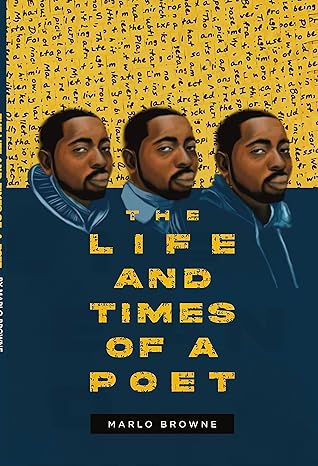
The Life & Times of a Poet is a raw, emotional, and deeply personal collection of poetry that traces the author’s journey from his Caribbean roots in Barbados to the cultural tapestry of Canada. Through powerful verses and spoken-word-style rhythms, Marlo Browne dives headfirst into topics like identity, racism, mental health, love, heartbreak, masculinity, and cultural belonging. The poems are honest, vulnerable, and often punch you right in the gut with their truth. It’s not just poetry, it’s lived experience poured into every stanza.
I found myself genuinely moved by the sheer heart in these pages. Browne doesn’t hold back. In the opening piece, “The Life and Times of a Poet,” he sets the tone with lines like “I’m living the life and times of a poet, / Probed, pushed and persecuted / With people with pitchforks.” That feeling of being out of place and under a microscope carries through much of the collection. And when he writes in “I Saw a Black Man” about seeing someone who looks like him getting arrested, it’s heartbreaking. The emotional weight is real. I also have to mention “Be More,” a favorite of mine, for its open letter vibes to other misfit poets and its honest exploration of masculinity and mental health.
But let’s talk about “Boudoir.” That poem turns up the heat, and not in a subtle way. Browne’s erotic poetry doesn’t shy away from graphic intimacy, and while it might not be for everyone, I appreciated the fearless expression of desire and vulnerability. The contrast between something like “Boudoir” and “You,” which is a tender tribute to his mother, shows just how wide Browne’s emotional range is. That’s what really stood out to me, his ability to be both fierce and soft, political and romantic, introspective and outspoken.
The Life & Times of a Poet feels like sitting down with someone who’s been through it and is finally ready to talk, no filter, no fluff. It’s especially meaningful for anyone who’s had to leave home, find their voice, or stand firm in their truth. I’d recommend it to readers who love modern spoken word, raw memoir-style poetry, or who just want to hear from a Black poet navigating life between worlds.
Pages : 135 | ASIN : B0CGW1M1S1
Poetry Requires Precision

Thunderstroke: A Poetry Memoir Inspired by a True Story is a deeply moving and inspiring collection of poetry and memoir, offering readers a wellspring of meaning and reflection. How do you strike a balance between clarity and ambiguity in your poetry?
Poetry is a unique space where emotions and meaning can exist between the lines. For me, finding the balance between clarity and ambiguity comes naturally through my experience with aphasia. I aim to make my poetry accessible, allowing readers to feel the raw emotions behind my words, but I also leave room for interpretation—so that each person can find their own meaning in my experiences. Sometimes, what is left unsaid carries just as much weight as the words on the page.
What was the most challenging part of writing your poetry collection and memoir, and what was the most rewarding?
The most challenging part was finding the right words to express my emotions while navigating the effects of aphasia. Writing poetry requires precision, yet my struggle with language often made it frustrating. However, this challenge also became my greatest strength—it forced me to dig deeper, to express feelings in ways beyond just words, through rhythm, imagery, and raw emotion.
The most rewarding part was seeing how the poems came together as a reflection of my journey. It was not just about my personal healing but about creating something that could resonate with others. Knowing that my words might inspire someone going through their own struggles makes all the effort worth it.
What do you hope is one thing readers take away from your story?
I hope readers take away the message that even in life’s most difficult moments, there is always strength within us to keep going. Thunderstroke is not just about my journey—it’s about resilience, hope, and the power of finding meaning in adversity. I want readers to know that no matter how tough their battle is, they are not alone, and their story is still being written. There is always light beyond the storm.
Author Links: GoodReads | X (Twitter) | Facebook | Website | Amazon
Written for those navigating the labyrinth of loss, grief, and profound change, Thunderstroke offers solace and guidance. It reflects on the fragile tapestry of existence, unraveling how we endure the thunderous ruptures that divide life into “before” and “after.”
This memoir is not just about survival but transformation—how we heal, rebuild, and emerge stronger in the face of overwhelming challenges. It is a testament to the resilience of the human spirit, embracing vulnerability as a source of strength and finding hope amidst despair.
Thunderstroke is more than a collection of poetry; it is a map for navigating the uncharted waters of upheaval. It invites readers to journey through the storm and discover the quiet miracle of renewal—a reminder that while life may fracture, it also holds the power to mend.
Less-Than-Perfect Lives

Under Brambles is a collection of short stories and poems centered around the raw beauty that exists in the forgotten, the broken, and the misunderstood. Why was this an important collection for you to write?
Many of these stories are quite personal, including the one about my mother, whilst others are a shadow of people I have known. I think that many people have less-than-perfect lives–imperfect love stories and life events that don’t get a neat resolution. I hope that readers can gain some reassurance in a world where everyone carefully curates their lives on social media.
Can you share a bit about your writing process? Do you have any rituals or routines when writing?
If I have an inspiration, be it a word, an idea, or a paragraph, I write it in Samsung Notes on my phone. Most of my books start off as short stories. My children’s book The Dragon Way Home was borne out of the short story “There Be Dragons” in Under Brambles.
Do you have a favorite selection in the book, and if so, why does it hold special meaning for you?
I feel that “Waiting for the Gate” resonates strongly because it captures all the joy, beauty, madness, and struggle that makes up modern China. I loved my decade living there and this is one of my favorite memories.
What is the next book that you are working on, and when will it be available?
I am working on two novels at present–one for children, one for adults. My children’s novel is called Yowie Dreaming and it will be available in March. It has been inspired by the town of Kilcoy which has a Yowie statue. My adult novel is set in a south-east Queensland town and it will be available later in the year.
Author Links: GoodReads | Website | Amazon


