Blog Archives
Understanding and Solidarity

Well, Mama, This is It (it’s Now Or Never) is part confession, part storytelling, and part letter-writing, all stitched together with raw honesty and a strong emotional pulse with reflections on love, faith, and the messy business of being human. Why was this an important book for you to write?
This book was important for me to write because it allowed me to explore different characters and express what I had imagined. It was a way for me to connect with readers who may be going through similar struggles and offer them a sense of understanding and solidarity. This book is a testament to the power of vulnerability and the beauty of embracing our imperfections.
What were some ideas that were important for you to share in this book?
There were key ideas that I found important to share. Some of these ideas include the importance of self-love, unapologetically being yourself, and the value of perseverance in the face of challenges.
How has writing this book changed you as a writer, or what did you learn about yourself through writing it?
Writing this book has changed me as a writer, and it’s all thanks to amazing readers like yourself and everyone who has been a part of this journey. I have learned that I am capable of overcoming challenges and self-doubt to produce a work that I am truly proud of. This experience has not only improved my writing skills but also boosted my confidence in my abilities as a storyteller. Writing this book has shown me that with dedication and passion, I can achieve my writing goals and continue to grow as an author. Once again, thanks to everyone!
What do you hope is one thing readers take away from Well, Mama, This is It (it’s Now Or Never)?
I hope that readers take away a sense of empowerment and inspiration.
Author Links: GoodReads | Snapchat
We don’t have to fight
We do not have to cry for the rest of our lives
Cause Boys
Girls
And Everyone we know
Seems to drift away just a little bit
That’s life”
Step into a world where love knows no bounds and equality reigns supreme. In this gripping tale, a group of men and women defy the odds and fight for their right to be themselves. As they navigate the twists and turns of their lives, they discover that the greatest strength comes from within.
Meanwhile, teenagers grapple with their own struggles, trying to find their place in a world that often seems to be against them. But as the characters’ stories intertwine, they learn the power of love, the importance of equality, and the beauty of being true to oneself. This is a story that will inspire young women and men in our community to embrace their uniqueness and strive for greatness. So come along on this unforgettable journey of self-discovery and empowerment, and discover the power of love and equality in a world that often seems to be lacking in both.
The Right Inspiration

Whisk of Dust is a collection of poems that weave together themes of love, faith, struggle, and beauty. What inspired you to write this particular collection of poems?
I’m often inspired by simple things that others might take for granted. I found inspiration from different aspects of my life in writing this collection.
Were there any poems that were particularly difficult to write? If so, why?
None were difficult to write. With the right inspiration and motivation, the words were not difficult.
Did you write these poems with a specific audience in mind, or was it a more personal endeavor?
I like to think of this collection as universal. They are for anyone who can relate and or just enjoys poetry.
How has this poetry book changed you as a writer, or what did you learn about yourself through writing it?
There has been no change, my desire has always been and still is to inspire and uplift with my writing.
Author Links: GoodReads | X (Twitter) | YouTube | Amazon
Cancer Chronicles: Veilwalker Volume 2
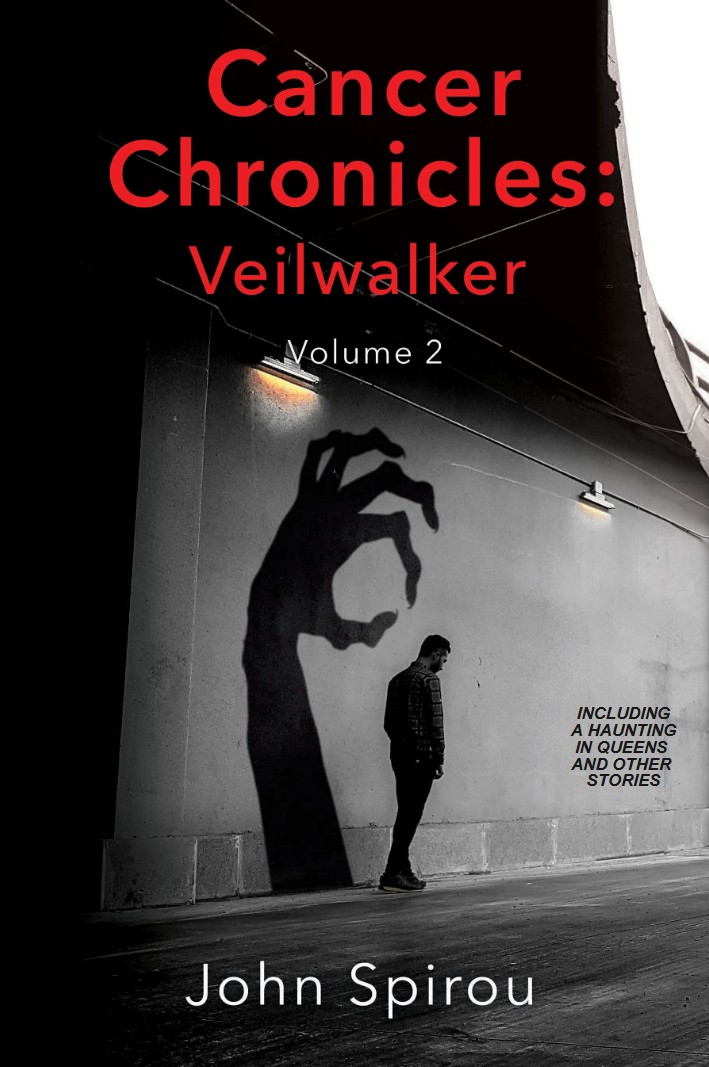

Cancer Chronicles: Veilwalker is a haunting and deeply personal tapestry of suffering, endurance, and faith. The book weaves together memoir and allegory, faith and despair, hope and the supernatural. It begins as the story of a man’s grueling double life, working endless shifts and ignoring the quiet signals of collapse, before spiraling into a battle with cancer, loss, and spiritual rebirth. What makes it remarkable is not just the detailed recounting of treatment or trauma but the unflinching honesty with which it faces death, fear, and redemption. The writing slips easily between the physical and the spiritual, between gritty realism and ethereal reflection, until the two blur completely.
Reading this book hit me in ways I didn’t expect. The rawness of it, the exhaustion, the hospital lights, the cracked fingertips, the taste of blood, made me feel like I was sitting in that sterile room beside the author. There’s a rhythm to his storytelling, almost like breathing through pain, where sentences stumble, pause, then push forward again. The voice is weary but stubborn, defiant even. I admired that. Sometimes, the narrative drifts, repeating memories like waves that refuse to settle, but that feels honest too. Recovery, after all, is rarely tidy. What stayed with me most was not the sickness itself but the deep tenderness in his relationships. The way his wife and children orbit his struggle feels achingly human. The love there isn’t dressed up, it’s messy, awkward, and real.
I also found myself torn between awe and heaviness. The spiritual elements like the visions, the moments of surrender, and the sense of divine purpose, are written with sincerity and conviction. Whether or not one shares the author’s faith, there’s something deeply moving about the way he turns agony into revelation. At times, it leans into religious metaphor. Yet that very fervor gives the story its pulse. It’s not polished in the traditional sense, but it’s alive, pulsing with heart and hurt.
By the time I reached the end, I felt like I’d walked through fire with him. This isn’t a book for someone looking for neat resolutions or easy inspiration. It’s for readers who want to feel everything, the fear, the faith, the fatigue, and still believe there’s light somewhere in it all. I’d recommend Cancer Chronicles: Veilwalker to anyone standing at the edge of something hard, anyone who’s lost faith and wants to find it again in a voice that refuses to quit.
Pages: 380 | ISBN-13: 979-8-86852-165-2
Literary Titan Book Award: Poetry

The Literary Titan Book Award recognizes poets who demonstrate exceptional artistry and proficiency and push the boundaries of language and expression. The recipients are poets who excel in their technical skills and evoke deep emotional responses, challenge thoughts, and illuminate new perspectives through their work. The award honors those who contribute to the literary landscape with their unique voices and powerful words.
Award Recipients




Visit the Literary Titan Book Awards page to see award information.
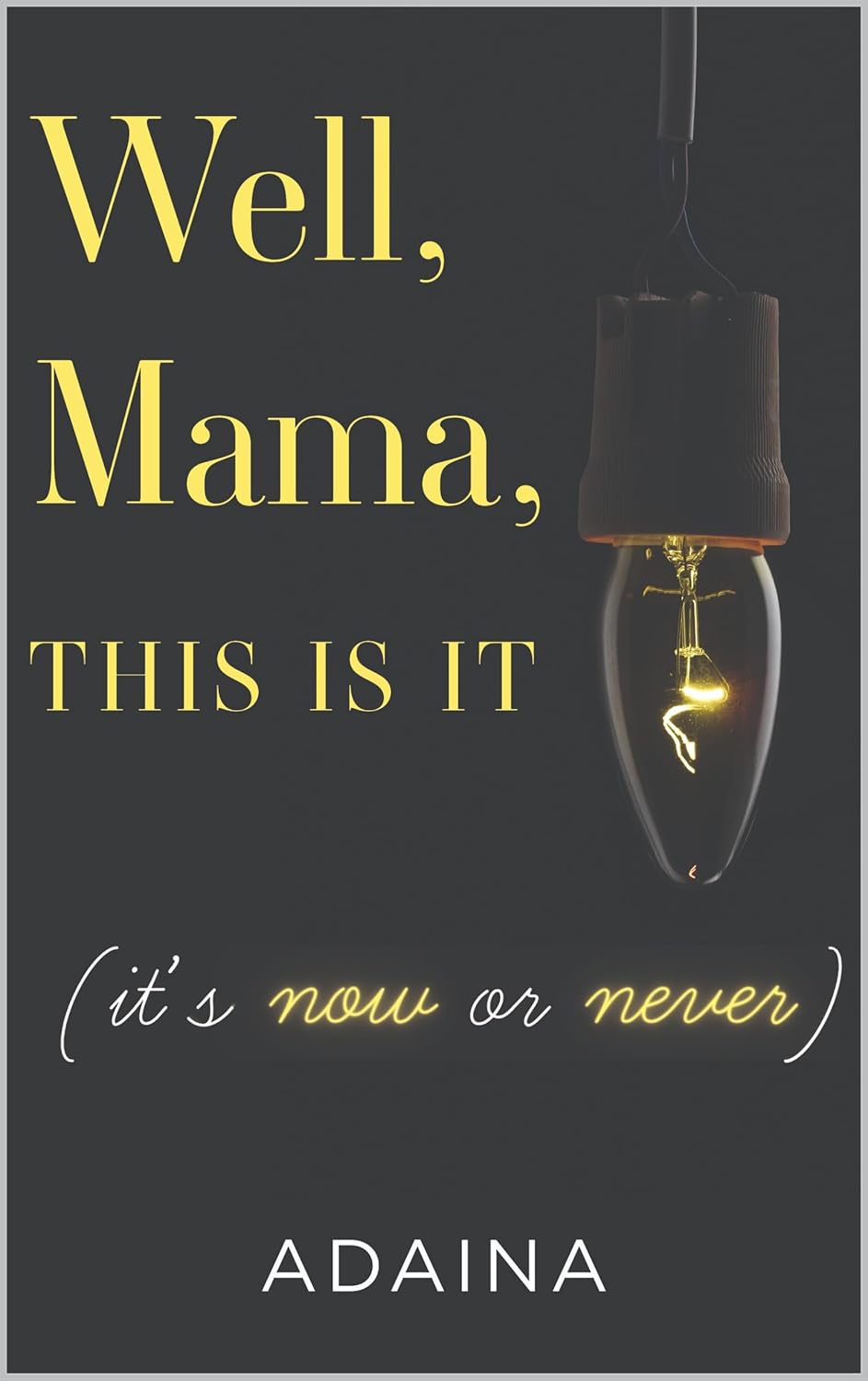
Well, Mama, This is It (it’s Now Or Never)
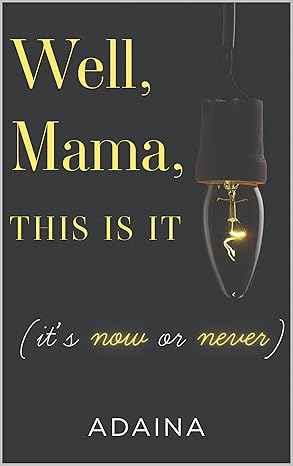

Well, Mama, This is It (it’s Now Or Never) is unlike anything I’ve read before. It’s part confession, part storytelling, and part letter-writing, all stitched together with raw honesty and a strong emotional pulse. The book moves between voices, sometimes it’s a teenage boy writing to his grandmother, other times it’s a young woman chasing a dream life, or even a haunting personal tale of loss and survival. At its heart, though, the book is a letter to her mother, a brave and vulnerable coming-out story wrapped in poetry, reflections on love, faith, and the messy business of being human.
In “A Story of a Friend of a Friend,” when Adaina shares her journey from being a teacher to a stripper, the descriptions are almost cinematic. She writes about smoky eye makeup, French pedicures, and stepping into the strip club as if it were a Hollywood set. It’s dazzling, but then the tone flips as she describes the loneliness and danger behind the glamour, and suddenly I was pulled from the surface glitter into the heavy silence of regret. That swing between fantasy and reality is something the book does again and again, and it made me feel the same kind of emotional whiplash she must have lived through.
I also loved the way she mingles imagination with truth. Take “Secret Agent (Voodoo Princess),” where Rebecca Tanon, a demon-child-turned-undercover-agent, blurs the line between folklore and personal reflection. At first, I thought it was a sharp left turn into fiction, but it clicked for me as a metaphor for how heavy family expectations and inherited trauma can feel like being born with a mission you never asked for. The story gave me chills, not just because of the supernatural edge, but because of what it revealed about how powerless a child can feel in the hands of adults.
In “To My Newest Pen Pal, Jant Leaps,” Adaina writes a heartfelt letter that evolves into a romantic confession, blending vulnerability with defiance against judgment. In “Sexual Orientation,” she reflects on faith, family, and identity, ultimately affirming that love is sacred regardless of gender. She weaves in verses about love, love with a woman who makes her feel free, love that pulls her away from Hennessy and Ecstasy, love that feels holy even when the world insists it’s wrong. There’s vulnerability in her admission, “I never thought I could fall in love with Eve’s gender,” but also defiance when she insists, “Yes, I am a Christian, but my religion is kindness.” That blend of fear, yearning, and courageous self-acceptance struck me deeply. It’s not polished in the way mainstream memoirs often are, but that’s what makes it powerful. It feels like a real letter, one that trembles with truth.
In the end, I walked away from this book feeling like I had just sat across from someone who didn’t hold anything back. It’s raw. It’s uneven at times. But it’s alive with feeling, and that’s rare. I’d recommend this book to anyone who craves honesty in writing, teens struggling with self-expression, readers curious about queer coming-of-age stories, or anyone who wants to feel less alone in their own mess of faith, love, and identity. It’s not a book for someone looking for clean lines or tidy endings, but if you’re okay with sitting in the chaos of someone else’s truth, then Well, Mama, This is It (it’s Now Or Never) will move you the way it moved me.
Pages: 51 | ASIN : B0DT7FZS7Q

Fairy Lights: Bed Time Poems & Gallery of Fairytale Art from Yesteryear

Fairy Lights is a wonderful collection of bedtime poems interwoven with fairy lore, myth, and timeless art. Moving through the seasons of the year, the book gathers stories of spirits, shape-shifters, ocean dwellers, elven royalty, and everyday enchantments. It draws from Irish, Nordic, Greek, and New World traditions, blending them into verses that feel both ancient and freshly spoken. Each section carries its own mood, from the playful revels of spring to the melancholy mysteries of autumn and the haunting stillness of winter. Alongside the words, the author curates a gallery of fairytale art from past centuries, which adds a lovely echo of history to the poetry.
What struck me most was the way the poems refused to be pinned down. They could be lyrical and delicate in one breath, then strange, even eerie, in the next. A piece like A Piece of Amber felt tender and tragic, like a whispered legend by firelight, while something like The Baallad of Blaackie Coal made me grin with its folkloric humor and Scots cadence. I loved how the writing carried me away from reason into a place where fairies still dance, seashells sing, and even the smallest bird is mourned with reverence. The language is musical and sometimes unpredictable. At times, I found myself rereading lines not because I needed to but because I wanted to savor the rhythm.
The author clearly delights in layering metaphor upon metaphor, which creates a rich tapestry. This very quality also gives the book its dreamlike atmosphere. It reminded me of wandering through a forest at dusk, you don’t always know what you’re seeing, but the mystery is the point. I also appreciated how personal some of the poems felt. Knowing that pieces like To Wee Russet Tuft came from real experiences gave the collection an intimacy that balanced out the more mythic material.
Fairy Lights feels like a gift for anyone who still listens for magic in the quiet hours. I would recommend it to readers who love fairytales, folklore, or poetry that doesn’t mind breaking free from neat structure. It’s especially suited for those who want to share stories aloud, whether with children at bedtime or with the inner child who still believes in hidden worlds.
Pages: 181 | ISBN : 0473742454
Romantic Renderings

The Empathy of Rain is a lyrical collection of poems that uses rain, in all its moods and forms, as a mirror for human feeling. What inspired you to write this particular collection of poems?
When I finished my first book, Turbulent Waves, which explores the human condition under conditions of emotional turbulence (think of the global pandemic and the change in American politics), I wanted to move away from turbulent conditions to one more in step with nature, so I picked the various forms of rain as a conduit for the empathy that surrounds us.
How did you decide on the themes that run throughout your poetry book?
This was actually the easy part; as I used all of the various types of rain as the overall themes, and once I had my content, I matched each poem to the specific form of rain, including “coronal rain,” which is rain that falls onto the photosphere of the sun.
Do you have a favorite poem in the book, and if so, why does it hold special meaning for you?
“Melancholy’s Ghost”
January’s angel touched me with an afternoon kiss
As she spied Melancholy’s ghosts dining on my mind
Like lost desert rain that never finds the ground here
She weeps as they huddle together waiting in the sky.
We met one day as a lover’s glance bid me farewell
You will learn to sleep with me as my dreams are yours
And as the days fall in love with years, I will never leave
Let me fill the rooms of your mind with my children.
Her eyes implored, why do you love everyone, darling?
Desert sand covered a blue sky as lips prayed to answer
Yet only the sun could taste my desolate reply to her
Like the rain, my words stolen away by her sweet breath.
Most of my poetry is essentially enigmatic, melancholic, and romantic renderings. If there’s a common denominator that courses through our minds, it’s our emotional dialogue regarding love: lost and found. This poem considers such musings as a ghost of our electricity, which never quite fades away.
How has this poetry book changed you as a writer, or what did you learn about yourself through writing it?
I began writing poetry six years ago when the global pandemic began. It would take me over an hour to write a poem that would work in a Twitter “tweet” back then. Prior to that, I had written software technical documentation for thirty-five years, so I was completely comfortable using language as a tool to express difficult conditions or situations. Since then, I have written 2500 poems, self-published my first book, published #2 & #3 via two publishing houses, and I am well into finishing #4. As I look back over the evolution of my poetry, I can easily see how my thoughts have matured and deepened regarding how to express the enigmatic melancholy that comes to mind when my muse, Calliope, shares a thought. I write listening to music via vinyl records, and it’s the vibe rather than the lyrics that creates the river for my poetic meanderings, and now the entire process takes half the time to complete compared to my initial poems.
Author Links: GoodReads | X (Twitter) | Facebook | Website | Amazon
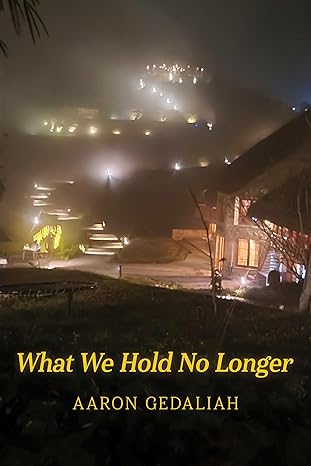
What We Hold No Longer
Aaron Gedaliah’s What We Hold No Longer is a collection of poems that circle around memory, aging, identity, and the haunting void that lies beneath it all. The book moves through phases of transformation, wrestles with the Lacanian “Thing,” looks at the unraveling of society, and then slips into reflections on love, loss, desire, and imperfection. It blends the deeply personal with the philosophical, balancing childhood recollections with meditations on mortality, politics, and the quiet strangeness of being human.
Some of the poems struck like sudden jolts. They’re raw, unfiltered emotions that left me uneasy in the best way. Others drifted, slow and lyrical, catching on the edges of memory. Gedaliah doesn’t shy away from pain, whether it’s private grief or public horrors, and I respected that. I thought the psychoanalytic undertones and references added a fascinating depth to the collection. They gave the poems a layered richness that invited me to think as much as feel. What made the book especially strong, though, was the way those ideas blended with moments of plain vulnerability. The balance between theory and raw emotion kept the work dynamic, and the times when the language leaned into honesty and looseness stood out all the more because of that contrast.
The book feels like someone holding a mirror up to both his own past and the chaos of the present world. He talks about adolescence with brutal honesty, aging with rueful wit, and political violence with fury. I connected with the tenderness in “Birds on a String,” the ache in “Paradise Lost,” and the weary warning of “When the Shelves Are Empty.” There’s something relatable in the way he lets contradictions live side by side, rage and love, despair and beauty, the personal and the universal. It made me stop more than once and just sit with my own ghosts.
I’d say What We Hold No Longer is best for readers who like poetry that wrestles hard with ideas yet still finds room for confession and story. It would suit anyone interested in memory, loss, or the philosophical edges of spirituality.
Pages: 85 | ASIN : B0FPG8MLQ9



 LITERARY TITAN