Blog Archives
The Cost of Competence

Stealing Stealth follows a CIA officer tasked with protecting a new stealth technology who must enlist the help of a brilliant thief to stop it from falling into the wrong hands. What was the inspiration for the setup of your story?
I wrote the initial draft of this story when I was deployed in Afghanistan. I was constantly in this battle with what is said and what is left unsaid, in an intriguing chess match with men who were both my ally and not at the same time. To capture this specific paranoia, I thought of the mid-1970s. We often look at the Cold War through the lens of the 80s. That was the end. But just before that, everything was messy. The Church Committee was exposing CIA secrets, Vietnam had just ended, and trust in institutions was crumbling. I wanted to drop a “Boy Scout” character like John Olson into that moral grey zone and force him to work with someone like Gabrielle Hyde, who represents pure, chaotic individualism. The stealth technology itself was the perfect catalyst because it represented a revolution in warfare that terrified everyone. The idea that a plane could be invisible to radar felt like magic in 1977.
There was a lot of time spent crafting the character traits in this novel. What was the most important factor for you to get right in your characters?
Competence. Nothing kills a thriller faster than characters who make stupid decisions just for the sake of the plot. I wanted Olson and Hyde to be masters of their respective crafts. When they fail, it’s because they were outmaneuvered by a smarter opponent, not because they were making bad choices. I also wanted to explore the cost of competence. For Olson, his dedication to the CIA cost him his personal life. For Hyde, her tragic youth led to brilliance as a thief, but it also left her isolated. The most important factor was ensuring that even when they were enemies, they respected each other’s skills. That mutual respect is the engine of the book.
How did you balance the action scenes with the story elements and still keep a fast pace in the story?
My background in special operations taught me that real action is rarely a continuous two-hour firefight. It’s hours of tension followed by seconds of chaos. I tried to replicate that rhythm, but with a better balance. Also, it is important that the reader cares. 1970s politics and game-changing aircraft technology are complicated enough, but I needed the reader to feel that pressure. Then, as the tension built through briefing room politics, the surveillance, and the planning, the reader finally felt the stakes. The pacing comes from the pressure cooker effect; the clock is ticking, and the walls are closing in. Then I added the guns.
What is the next book that you are working on, and when can your fans expect it to be out?
The next book is Arctic Fire, releasing in April 2026. It is a tonal shift from the spy world of Stealing Stealth. It’s a Neo-Western Noir set in the Alaskan wilderness, following a female Marine veteran who uncovers a conspiracy in a small, frozen town. Think Wind River meets Sicario. After that comes Eye of the Caldera. It’s a high-octane disaster thriller inspired by incredible true events and a declassified CIA operation. It drops in the Fall of 2026.
Author Links: GoodReads | X (Twitter) | Facebook | Website | Amazon
At the height of the Cold War, America’s revolutionary stealth technology could tip the balance of power. Now the race to control it threatens to derail a critical nuclear treaty between the world’s two superpowers.
Soviet operatives are close to acquiring this game-changing military secret. CIA Officer Olson has just seven days to protect America’s biggest technological advantage from falling into the wrong hands. His only hope lies with the brilliant thief he couldn’t catch: Gabrielle Hyde.
Inside the secretive Skunk Works facility, nothing is what it seems. Hyde and Olson discover Moscow isn’t the only enemy. A traitor from within is thwarting their every move. With both the FBI and KGB closing in and bodies piling up, Olson faces an impossible choice: follow orders from an agency that no longer trusts him or follow Hyde into an elaborate con against his own government.
From a decorated Air Force Colonel with 26 years in special operations and field command comes an authentic Cold War thriller where the greatest threats wear familiar faces.
Trust no one. Question everything. And never underestimate Gabrielle Hyde.
For fans of David McCloskey’s Damascus Station, John le Carré, and Daniel Silva, Stealing Stealth is a high-stakes heist where the only way to protect freedom is to steal its deepest secret.
Wrath and Reckoning


When I picked up Wrath and Reckoning, I expected a tight political thriller, and that’s exactly what I got. The story follows Max Kenworth and his team as they chase after the elusive mercenary Bart Madison and a missing nuclear weapon. Layered into that chase are power-hungry politicians, corrupt deals, shadowy agencies, and a relentless undertone of betrayal. From Arlington Cemetery to Central America to secret meetings in hotel rooms, the book moves quickly. Every chapter pushes the stakes higher. It’s less about quiet deduction and more about the terrifying weight of what-ifs: a nuclear device in the wrong hands, politicians who gamble lives for power, and operatives caught between duty and survival.
I really enjoyed the book’s pace. Parker doesn’t give you room to breathe. Scenes cut fast, and dialogue snaps like a whip. Sometimes it felt like a military briefing, other times like eavesdropping on a whispered conspiracy. That intensity pulled me in. The writing style is direct, sharp, and often blunt. I liked that honesty. You don’t get purple prose here. You get grit, strategy, and straight talk. The moments between Max and Danya, or Gail’s uneasy alliances, offered glimpses of vulnerability that I craved more of. Those human flashes made the gunfire and secret deals hit harder.
Madison is a ruthless figure, and Parker paints him as cunning, resourceful, and frighteningly pragmatic. He’s the kind of character who makes your skin crawl because he feels believable. Meanwhile, the politicians strutted like clowns, reeking of smugness and deceit. Part of me enjoyed that exaggeration. It made the story’s critique of corruption unmistakable. The line between good and bad sometimes felt too sharp. Still, the moral weight of the book, how power twists people, how ambition corrodes, landed with me.
Wrath and Reckoning is the kind of book I’d recommend to readers who like high-stakes thrillers with a military and political edge. If you want a story that keeps the throttle down and doesn’t let go, this will scratch that itch. It’s not for someone looking for subtle literary flourishes or deep psychological portraits. But if you want a fast, tense, and conspiratorial ride, Parker delivers. I closed the book feeling unsettled, a little wired, and already wondering what Max Kenworth will be up against next.
Pages: 249 | ASIN : B0FKRYGQD9

Dead Stars Shine Brightest: A Reckoning in Uvalde, Texas
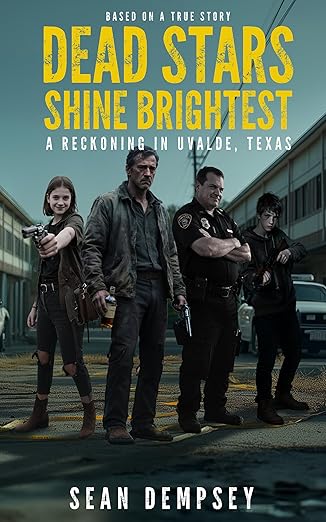
Sean Dempsey’s Dead Stars Shine Brightest: A Reckoning in Uvalde, Texas is a raw and emotionally intense novel that follows the fractured life of Derek Jackson, a broken veteran and struggling father, as he navigates grief, guilt, and growing dread in a small Texas town. Set against the real-life backdrop of the Uvalde school shooting, the story blends fiction with visceral social commentary. Told in two parts, the narrative first centers on Derek and his estranged daughter, Jade, then transitions into Jade’s perspective as the legal system and local authorities fail them in harrowing, all-too-real ways. Their shared journey, punctuated by violence, redemption, and a desperate need for justice, feels urgent and personal.
The writing is gritty and unapologetic, with Derek’s voice sounding like someone you might overhear at a bar right before he breaks into tears or a fight. Dempsey doesn’t excuse a single thing. This story aches with sadness and rages against everything from school bureaucracy to systemic cowardice. I was especially struck by how well the narrative captured the complicated love between Derek and Jade. Their bond is messy, but it’s real, and their slow road back to each other was one of the few hopeful threads in a book steeped in loss and despair. That said, the prose does lean on dramatic metaphors at times, but the emotional weight behind them always hits home.
The ideas in this book–justice, fatherhood, institutional failure, and community apathy–are yanked into the light and made to bleed. Some of the courtroom and legal scenes veer into a kind of moral theater compared to the messy truth of earlier chapters. But the real world doesn’t deliver justice cleanly. Dempsey clearly has a bone to pick with the way things are, and his anger pulses through every page.
I’d recommend Dead Stars Shine Brightest to anyone who isn’t afraid to sit in the uncomfortable. This book is not for the faint of heart or the politically squeamish. But if you want something that’ll grab you and then quietly pat your shoulder afterward, this is it. It’s for veterans, for fathers, for survivors, for anyone who’s ever been told to sit down and stay quiet while the system rolls on.
Pages: 178 | ASIN : B0F861W91V
Magnanotron: The Evolution


Magnanotron: The Evolution is a high-octane military thriller that fuses emotional personal drama with futuristic warfare and global political tension. The story picks up with Commander Jason Patrick mourning the loss of his father, then launches into a series of global threats, from Houthi pirates and Venezuelan gang takeovers in the U.S., to clandestine nuclear plots in Iran. Saniscalchi weaves the development of a cutting-edge shielding tech, Magnanotron, into the narrative, as a team of elite soldiers employs it to battle terrorism, defend American ideals, and even toy with the fringes of science fiction as it hints at invisibility and teleportation. It’s part tech-thriller, part military adventure, with a strong sense of duty and brotherhood throughout.
The story opens on a somber note, Jason grappling with grief after his father’s passing, and that thread never really lets go. I appreciated this blend of heart and action. It made the stakes feel personal. Jason’s loyalty to family mirrors his commitment to his team and country. At times, the writing leaned on exposition and direct dialogue, which occasionally dulled the impact of high-tension moments. But it was clear that Saniscalchi cares deeply about his characters and the men and women in uniform they represent. There’s a sincerity in his storytelling that makes even the more predictable beats feel grounded.
From a writing standpoint, the style is straightforward, brisk, and often cinematic. That works well for the genre, especially in the battle scenes. The action sequences, particularly the rescue mission in Gallo and the Magnanotron-enhanced assaults, are sharp and vivid. But what really gave me pause was the science fiction angle: the accidental disappearance and reappearance of a test subject hinted at teleportation or cloaking technology. That twist caught me off guard, in the best way. I wish it had been explored more fully. It’s like the story flirted with going full sci-fi but held back to stay in familiar military-thriller territory. Still, it added a spark of the unexpected.
Magnanotron: The Evolution is a fast-paced and action-heavy read that doesn’t forget the human element. It’s for fans of military fiction, especially those who enjoy stories rooted in current geopolitical tensions with a dash of speculative tech. If you like your heroes tough but principled, your missions bold, and your plot with enough grit to keep the pages turning, this book is for you.
Pages: 133 | ASIN : B0DZV7Q65J
Born of Bombs and Bullets: An Aaron Thornton Thriller

David A. Dummer’s Born of Bombs and Bullets is a sharply written, emotionally charged political thriller that pulls no punches. It follows Dr. Aaron Thornton, a prison psychologist whose life is upended after a brutal murder at the penitentiary where he works. Seeking a reset, he relocates with his wife Claire to Belfast—only to be thrust into a volatile world of old grudges, hidden identities, and a brewing storm of violence tied to the legacy of the IRA. Through layered narratives, the book digs into the personal and political costs of trauma, loyalty, and vengeance, all against the backdrop of Northern Ireland’s troubled history.
What grabbed me first was the way Dummer weaves high-stakes action with genuinely human moments. The opening scene inside USP Hazelton is pure tension. One second, you’re in a therapy session; the next, you’re watching the chaos unfold, ending in a devastating double murder. I felt the chill in the room, the tension in Thornton’s indecision, the horrifying weight of inaction. That moment—when Thornton can’t bring himself to strike with the baton—lingers through the rest of the book. It’s a quiet, haunting flaw that makes him real. Dummer doesn’t just serve up trauma; he lets it stew, then uses it to shape the characters.
The Belfast chapters dig deeper into identity and trauma, especially through Liam O’Malley and Tommy Magee. Liam’s backstory—particularly the vivid, heart-shattering scene where his sister Deidre is killed by a British armored vehicle—is one of the most powerful in the book. It felt cinematic and visceral. That single event justifies Liam’s rage and radicalization. At the same time, Dummer avoids painting him as a monster. Liam’s weariness, his doubts about renewed violence, his reflections on a life lived in shadows—they’re painfully honest.
On the flip side, we’ve got Tommy. He’s the emotional powder keg—an orphan, a trauma case, caught in a cycle of poverty and rage. His journey from suicidal despair on Ballycastle Beach to reluctant accomplice in a murder is wild. His flashbacks, especially the aftermath of the Sheehan’s furniture store bombing, are raw and haunting. What impressed me was how Dummer shows Tommy slipping into violence. He’s not evil. He’s broken. And in that brokenness, he becomes someone else’s weapon.
The pacing is tight, the writing is sharp, and the dialogue has just the right edge of grit and realism. It does get pretty heavy, especially with all the political history and acronyms. But Dummer does a solid job of keeping it digestible. He throws you into a world of factions and vendettas, sure—but never without anchoring it in people who bleed, mourn, and remember. The balance between plot and pathos is what makes this more than just a thriller. It’s a character study in the ruins of ideology.
I really liked this book. It’s not a breezy read—it’s emotionally heavy, politically messy, and morally gray. But it’s also compelling as hell. If you’re into thrillers with a conscience, stories that tackle trauma, redemption, and the gritty realism of sectarian violence, you’ll want to check this out. Fans of The Troubles-era fiction, political thrillers like The Ghost or The Constant Gardener will find plenty to chew on here.
Pages: 458 | ASIN : B0DY6MS7F8
Characters Breathe Life

In Provenance of Ashes, a group of students in East Berlin finds themselves deep within an international espionage plot that spans decades. Where did the idea for this novel come from?
The idea sprung from two different threads. I was fascinated when reading about the case of Cornelius Gurlitt (the son of a famous Nazi art dealer), who had a hoard of paintings stashed in his apartment and was caught in modern times on a Swiss train after selling one of the paintings. I was intrigued that paintings with such a sordid past could be hidden for decades and surreptitiously sold in the new millennium. I’ve also done lots of global travel, in the course of which I met people who worked for (or used to, I think!) Israeli intelligence and the Stasi.
Which comes more naturally to you? The plot or your characters?
The plot/broader concept, and then my characters breathe life into the story.
What part of this book was the most fun to write?
Too tough to answer! Perhaps the reminiscing of Werner, the evil former Stasi agent and bastard son of the Nazi who stole and hid art at the end of WWII.
Can we look forward to a follow-up to this novel? What are you currently working on?
Absolutely–I am working on a new novel featuring Marco and Beryl, which will fit into the theme of a Married into the Mossad Thriller but not willing to reveal more just yet!
Author Links: GoodReads | Facebook | Website | Amazon
Realizing jet-set passions are no match for Beryl’s nobler pursuits in hunting Werner, Marco slowly yields to his wife’s batting eyes and steely determination. Love, loyalty, and a quest for restitution drag him into the Mossad’s embrace. When the couple near the truth about Werner’s real identity, they must confront a dark secret of their own buried deep in East Berlin. Will either side risk exposing past crimes to win today’s cat-and-mouse battle? Beryl and Marco plot traps spanning the Mid-East, Silicon Valley, and Holland as modern-day spies counter legendary espionage guile.
Jeff Ulin’s thriller Provenance of Ashes thrusts the weight of haunting history into a marriage grappling with higher priorities. Read it now and travel into a world of shadows where the mantra never forget motivates patriots of good and evil.
Provenance of Ashes
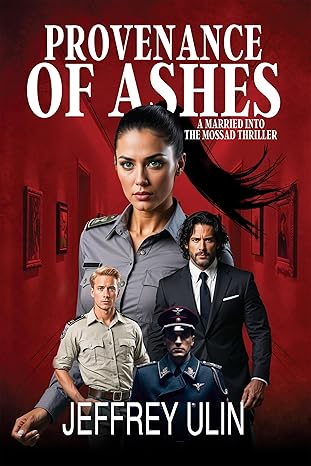
Jeffrey Ulin’s Provenance of Ashes is a riveting espionage thriller that grips you from the first page and doesn’t let go. Set against a backdrop of historical intrigue, the novel weaves a complex tale of Nazi-looted art, the Mossad, and a tangled web of past and present secrets. The story moves between different time periods and locations, from 1944 Munich, where stolen masterpieces are hidden, to 1988 East Berlin, where a group of students gets caught up in international espionage, and beyond. At its core, the book explores the weight of history, the moral compromises people make, and how the past refuses to stay buried.
Ulin’s writing is immersive, pulling you into his world with vivid descriptions and sharp, believable dialogue. The opening scene in wartime Munich sets the tone beautifully, artwork being smuggled under the cover of chaos, a Nazi officer sealing away treasures not for admiration but as leverage for the Reich’s uncertain future. The historical depth of the novel is one of its strongest points. It’s clear Ulin did his research, crafting a narrative that feels both authentic and compelling. The Nazi antagonist, Dieter Mullenhauer, is terrifyingly pragmatic, making his actions all the more chilling. His cold efficiency in hiding stolen art and eliminating witnesses without hesitation is disturbingly real.
The modern storyline, particularly the sections set in 1988 East Berlin, was my favorite part of the book. The tension is thick from the moment the protagonist, Marco Bellagio, and his friends cross into East Germany under the pretense of attending a Bruce Springsteen concert. Their naive excitement quickly turns to paranoia when they realize they’re being watched. The dialogue in these scenes crackles with nervous energy, especially when they unknowingly befriend two East German men who might not be as harmless as they seem. The casual way these characters discuss escaping to the West, offering information in exchange, is haunting. You can feel the walls closing in around Marco, even if he doesn’t fully realize it yet.
The book sometimes juggles so many storylines that it risks losing momentum. The alternating perspectives between past and present add depth but occasionally slow things down. That said, the chapters written from the perspective of Werner Boesseneker, a second-generation Nazi loyalist embedded in the Stasi, were eerily fascinating. His unwavering belief in his father’s ideology makes him a compelling but disturbing character. The best thrillers make you uneasy, and Ulin certainly accomplishes that.
I’d recommend Provenance of Ashes to fans of historical thrillers, espionage fiction, and anyone who enjoys a well-researched, intricate plot. If you liked The Night Manager by John le Carré or The Art Forger by B.A. Shapiro, this book is right up your alley. Ulin balances action with historical weight, creating a novel that lingers long after the last page. It’s a high-stakes journey through history, deception, and the power of secrets, and it’s definitely worth taking.
Pages: 396 | ASIN : B0DSCKL6DK
The Moldavian Gambit
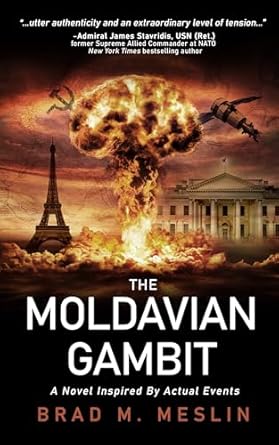
Brad M. Meslin’s The Moldavian Gambit is a gripping geopolitical thriller that weaves together espionage, military intrigue, and historical echoes of the Soviet Union’s collapse. Set in the early 1990s, the novel follows an audacious plan to steal a Soviet nuclear weapon amid the chaos of Transnistrian separatism. Intelligence officers, Mossad agents, and political leaders from the U.S., Russia, and Europe scramble to outmaneuver each other in a game of deception, strategy, and survival. The stakes are global, and Meslin’s expertise in national security shines through in the novel’s intricate realism and technical precision.
The writing is razor-sharp, loaded with tension, and refuses to spoon-feed the reader. Meslin plunges straight into the thick of things, throwing us into boardrooms buzzing with Cold War-era paranoia and battlefields where bullets fly and ideologies clash. The pacing is relentless, and while the dialogue sometimes feels a bit too polished for real-world exchanges, it adds to the novel’s cinematic feel. One particularly striking moment comes when Lt. Col. Sergei Rostov reflects on the bloody chaos of Moldova’s fight for independence; Meslin doesn’t just describe the action; he makes you feel the weight of history pressing down on the characters.
The characters themselves are a fascinating bunch, each driven by personal and political motivations that make them feel tangible. Dov Ma’alat, a retired Mossad operative, is a standout world-weary but sharp, reluctant yet indispensable. His past haunts him, yet he’s pulled back into the fray, proving that in the world of intelligence, retirement is just a technicality. On the Russian side, Rostov is equally compelling, caught between loyalty to his homeland and the cold pragmatism of survival. The power plays between military brass, intelligence officers, and politicians create a dense but rewarding narrative web.
Meslin masterfully weaves historical and technological details into the narrative, showcasing his deep knowledge of defense systems and geopolitical maneuvers. This rich authenticity adds depth to the story, immersing readers in its intricate world. While some passages delve extensively into missile capabilities, they serve to enhance the realism. Once the stolen nuclear device comes into play, the novel shifts into high gear, transforming into an edge-of-your-seat thriller. With high-stakes betrayals and last-minute gambits, the tension never lets up, making for a gripping and exhilarating read.
The Moldavian Gambit is a must-read for fans of Tom Clancy and Frederick Forsyth readers who love espionage with a heavy dose of military realism. For those who appreciate a meticulously crafted geopolitical thriller that mirrors the complexity of real-world conflicts, Meslin’s debut is a rewarding and thought-provoking ride. With its gripping storyline, intelligent writing, and high-stakes action, The Moldavian Gambit is an impressive debut that leaves a lasting impact. It’s a thrilling and immersive experience that will keep readers hooked until the very last page.
View the Book Trailer HERE
Pages: 373 | ASIN : B0DNNDVCWV



 LITERARY TITAN