Blog Archives
The Mourning Locket


The Mourning Locket is a supernatural thriller about an agency called the Inheritance Bureau, a place where heirlooms hold the emotional residue of the dead and where objects literally remember their owners. At the center is Dr. Cassian Vale, an empath whose contact with a Civil War locket sets off a chain reaction of visions, secrets, and dangerous revelations. The book follows him and his team as they uncover the Bureau’s buried experiments, confront its founder, and wrestle with the cost of inheriting pain that isn’t theirs. From the opening scene of Clara Alden’s locket humming at her deathbed to the Bureau’s escalating malfunctions and betrayals, the story blends memory, grief, and identity into a spiraling mystery that ties past and present together.
I was hooked by the atmosphere. The writing carries this heavy, electric hush that makes even quiet moments feel alive. The way the book treats objects as emotional sponges really grabbed me. It’s eerie but tender at the same time, and I kept pausing just to absorb the mood. Scenes like the introduction, where the narrator talks about antiques holding fingerprints and sorrow rather than beauty, hit hard because they feel so human and so haunted at once . I loved that the supernatural elements never felt like gimmicks. They feel like feelings we’ve all avoided or held onto too long. And the characters, especially Cassian and Arden, are written with these little cracks that make them feel both fragile and stubborn. Their connection feels like the kind of closeness born from shared damage rather than romance or convenience.
I also found myself getting swept up in the Bureau’s darker layers. The Blood Ledger, the Silent Lens, the old experiments Callen buried, those ideas are so unsettling because they twist empathy into a tool instead of a virtue. The Apparatus section especially pulled me in. It’s wild and emotional and messy, and it made me feel that buzzing thrill you get when a story finally shows its teeth. Some chapters hit so fast and sharp that I had to slow down to follow every detail. The book lets consequences linger. It lets the characters stay complicated. And honestly, I appreciated the streaks of humor tucked into tense moments. They feel like how real people actually cope, with snark, with tired jokes, with “I stopped for denial” energy.
By the end, I walked away feeling like I’d read something strange and warm and unnerving, all in the best ways. I’d recommend The Mourning Locket to readers who like emotion-driven supernatural stories, to people who enjoy found-family dynamics with rough edges, and to anyone who loves mysteries that grow teeth as they unravel. If you like fiction that feels a little haunted and a little hopeful, and if you enjoy worlds where empathy is both power and liability, this book will be right up your alley.
Pages: 138 | ASIN : B0FW5NDTPV

How Identity Survives

My Twelve-Year-Old Wife follows a desperate man searching for his missing wife, who has a twelve-year-old girl with his wife’s memories show up at his door, claiming to be her. What was the inspiration for the setup of your story?
The initial spark came from a simple, unsettling question: What if the person you love most disappears… and then returns as a child, still believing they are your wife? That idea gripped me because it collides love, memory, morality, and time in a way that instantly creates emotional and ethical tension. I wasn’t interested in explaining it with heavy science fiction rules. I wanted to explore how far love stretches, where it breaks, and how identity survives when reality bends. The premise let me push a psychological and emotional boundary in a very human way.
Were you able to achieve everything you wanted with the characters in the novel?
For the most part, yes. Dan and Celia evolved as I wrote them. They stopped being just “characters” and started behaving like people with real trauma, confusion, loyalty, and fear. What surprised me most was how much restraint I actually had to show—what they don’t say or do often carries more power than what they do. There are still layers I’m continuing to explore more deeply in Book Two, but I feel I created honest, flawed, believable people in an impossible situation.
When you first sat down to write this story, did you know where you were going, or did the twists come as you were writing?
I had a few major anchor points in mind, but the story very much revealed itself as I wrote it. Certain scenes appeared suddenly in my head, sometimes late at night, and demanded to be written. The twists weren’t plotted on a board — they came from asking myself, “What is the most emotionally honest (and disturbing) thing that could happen next?” In many ways, the story surprised me while I was writing it.
What is the next book that you are working on, and when will it be available?
I’m in the middle of an intense release window and will be launching three books within the next several months. The first is My Twelve-Year-Old Wife 2: Erased Memories, which expands the timeline fracture and deepens the emotional and psychological consequences introduced in the first novel. The second is Memoirs of a Serial Killer: Book Two, continuing the disturbing and introspective descent of the series. The final release is a reimagined and expanded edition of Chloroform Wars, retitled Rhea’s Game — which was a runner-up at the Paris Book Festival — now featuring several additional chapters and a sharper focus on Rhea’s perspective within the dystopian world.
Together, the three books continue to explore identity, power, memory, and moral collapse in different but interconnected ways.
Author Links: GoodReads | Facebook | Website | Amazon
By morning, a twelve-year-old girl stood on his porch — carrying his wife’s memories.
Finalist — 2025 American Writing Awards (Fiction, Psychological)
From Dan Uselton, author of Chloroform War — Runner-Up (Wild Card), Paris Book Festival
Updated Edition – November 2025: Revised timelines, refined pacing, and new author edits for the most immersive reading experience yet.
Dan Fox can’t explain it. The girl knows intimate details from his marriage—things no one else could possibly know. She remembers everything.
As Dan hunts for answers, he’s dragged into a twisting psychological nightmare where memory and identity fracture and:
A masked predator stalks them through shifting realities
Every revelation spirals into deeper deception
One impossible choice could erase the woman he loves forever
My Twelve-Year-Old Wife is a dark psychological thriller about grief, devotion, and the terrifying grip of the past. Fans of The Silent Patient, Verity, Gone Girl, and Behind Her Eyes will be hooked until the final page.
Sick
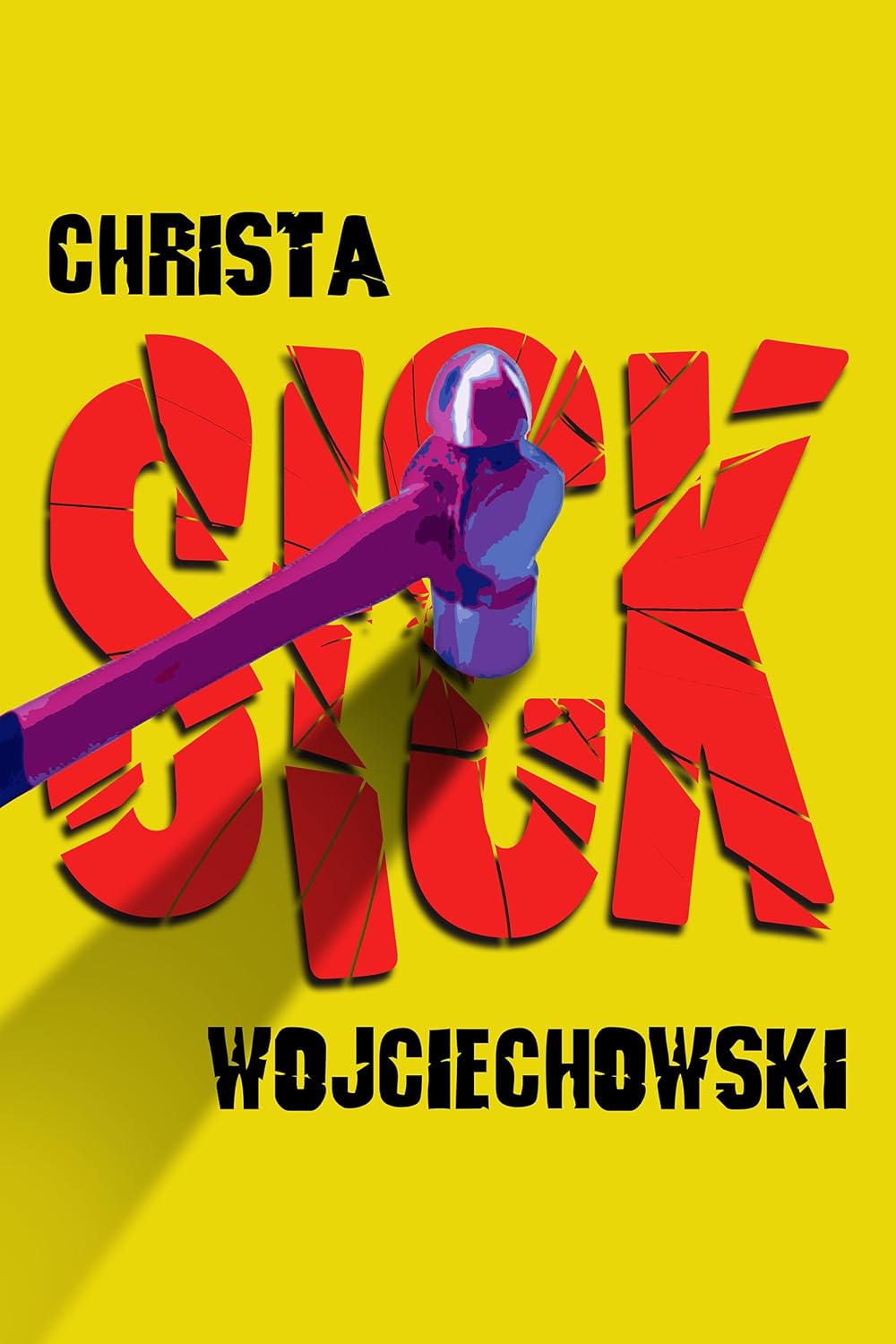

Sick is a deeply unsettling psychological horror novel that follows the toxic, codependent relationship between Susan and her chronically ill husband, John. What begins as a tale of dutiful care gradually descends into something far more sinister. The book explores themes of love, martyrdom, manipulation, and the blurry line between devotion and delusion. At the center is a marriage teetering on the edge of madness, where illness, real or imagined, becomes both the glue and the weapon that binds them.
It wasn’t just the disturbing imagery or the suffocating atmosphere, it was how intimate it all felt. I was drawn in by the clean, evocative prose and the slow, relentless build-up of dread. Author Christa Wojciechowski doesn’t rely on cheap scares. Instead, she weaponizes empathy, using Susan’s exhaustion and desperation like a knife twisting in your gut. Anyone who’s ever been trapped in a one-sided relationship or felt obligated to care for someone while losing themselves will feel that sting.
John is infuriating. He is charming, pathetic, childlike, and monstrous all at once. I found myself swaying between pity and revulsion. And Susan is no angel either. Her love feels noble one minute and complicit the next. Wojciechowski manages to make the reader complicit, too. I kept asking myself why I felt sorry for someone who was clearly manipulating the woman who loved him. But then I’d see his suffering again, and it would all blur. That’s the genius of this book. It messes with your moral compass.
There’s a smell to this book. Not literally, of course, but in the way Wojciechowski describes bodies, fluids, wounds, and rooms filled with neglect. And beneath it all, I could feel this aching, awful love. The writing doesn’t scream. It whispers. And that’s so much worse. It made me uncomfortable, not with violence or gore, but with how honest it was about how far people will go to feel needed.
There were times when I wanted to yell at Susan to run. Other times, I wanted to wrap her in a blanket and tell her it was okay to stop giving so much of herself. I think that’s why the story is so effective, it holds a mirror up to all the ways we lose ourselves in caring for others. The manipulation in this book is terrifying, not because it’s extreme, but because it’s familiar.
If you want a slow-burn, character-driven descent into psychological horror that feels both intimate and raw, Sick is a must-read. It’s perfect for readers who enjoy books like Gone Girl or The Shining, but crave something smaller in scale and more emotionally claustrophobic. It’s not just horror. It’s heartbreak in disguise. I’d recommend it to anyone interested in the darker sides of love, mental illness, and the twisted things we do in the name of care.
Pages: 282 | ASIN: B0FL5RTYQ9
The Knight at the Top of the Stairs

The Knight at the Top of the Stairs is an unsettling and emotionally resonant piece of psychological horror masquerading as a classic coming-of-age story. Set against the turbulent backdrop of 1968, the novel centers on nine-year-old David, a boy whose world, already fractured by historical tragedy, becomes increasingly governed by mythic struggle. His childhood home in Pine Hill, Massachusetts, becomes a metaphysical battleground, haunted by the rigid, silent vigilance of the ‘Knight at the Top of the Stairs’ and actively threatened by the ‘Buzzing Man,’ a creature of sickening, honey-sweet temptation that seeks to corrupt loyalty and exploit fear, particularly through David’s older brother, Steven. The narrative intricately weaves real-world chaos with deep-rooted occult evil, forcing David to discard the safe, simple rules of childhood for the complex, brutal code of knighthood, compelling him toward a final confrontation where he must determine the price of protecting the helpless.
My strongest emotional response stems from the author’s ability to juxtapose the cosmic horror with such tangible, domestic fear. The novel’s central theme, that historical trauma and moral failure do not fade but become inherited burdens, is articulated through the question, “Will you stand, or will you kneel?” It is a choice that hangs over every character, particularly David, whose journey from naive fear to resolute courage is genuinely moving. The inclusion of real-life upheavals, such as the distant, televised horrors of the Vietnam War and national assassinations, anchors the internal, supernatural dread, suggesting that the true source of evil is not the entity in the cellar, but the willingness of men to be whispered into betrayal. I felt a palpable sense of dread build throughout the middle chapters, not just because of the encroaching monster, but because of the agonizing realization that David’s own family history is intrinsically bound to this ancient conflict, leaving me utterly immersed in the moral weight of his inheritance.
The craftsmanship of the writing itself is exceptional. The prose possesses a rare lyrical intensity that elevates the narrative beyond typical genre fare. Author Brett Bacon employs an effective rhythm, utilizing both sharply concise sentences and sweeping, descriptive passages to maintain an almost unbearable tension. The voices of the children are rendered with startling clarity. David’s attempts to form new “rules” to govern the terrifying unknown, Kevin’s wide-eyed innocence and subsequent psychic sensitivity, and Steven’s rapid, chilling descent into malevolence, all felt tragically real. I found myself sympathetic to David’s father, whose own buried wartime experiences mirror the ancient knight’s legacy, adding layers of sorrow to the final, necessary fight. It is a text that demands, and rewards, careful reading.
The Knight at the Top of the Stairs is a dark and philosophical powerhouse that successfully merges the psychological depth of a domestic drama with the existential threat of epic fantasy. I highly recommend it to readers who appreciate character-driven horror that focuses less on jump scares and more on the slow, corrosive influence of evil, particularly fans of Stephen King’s early, atmospheric works (like It) or those who enjoy stories about inherited guilt and the cost of moral vigilance.
Pages: 225 | ASIN : B0FVP5KP5L
My Twelve-Year-Old Wife
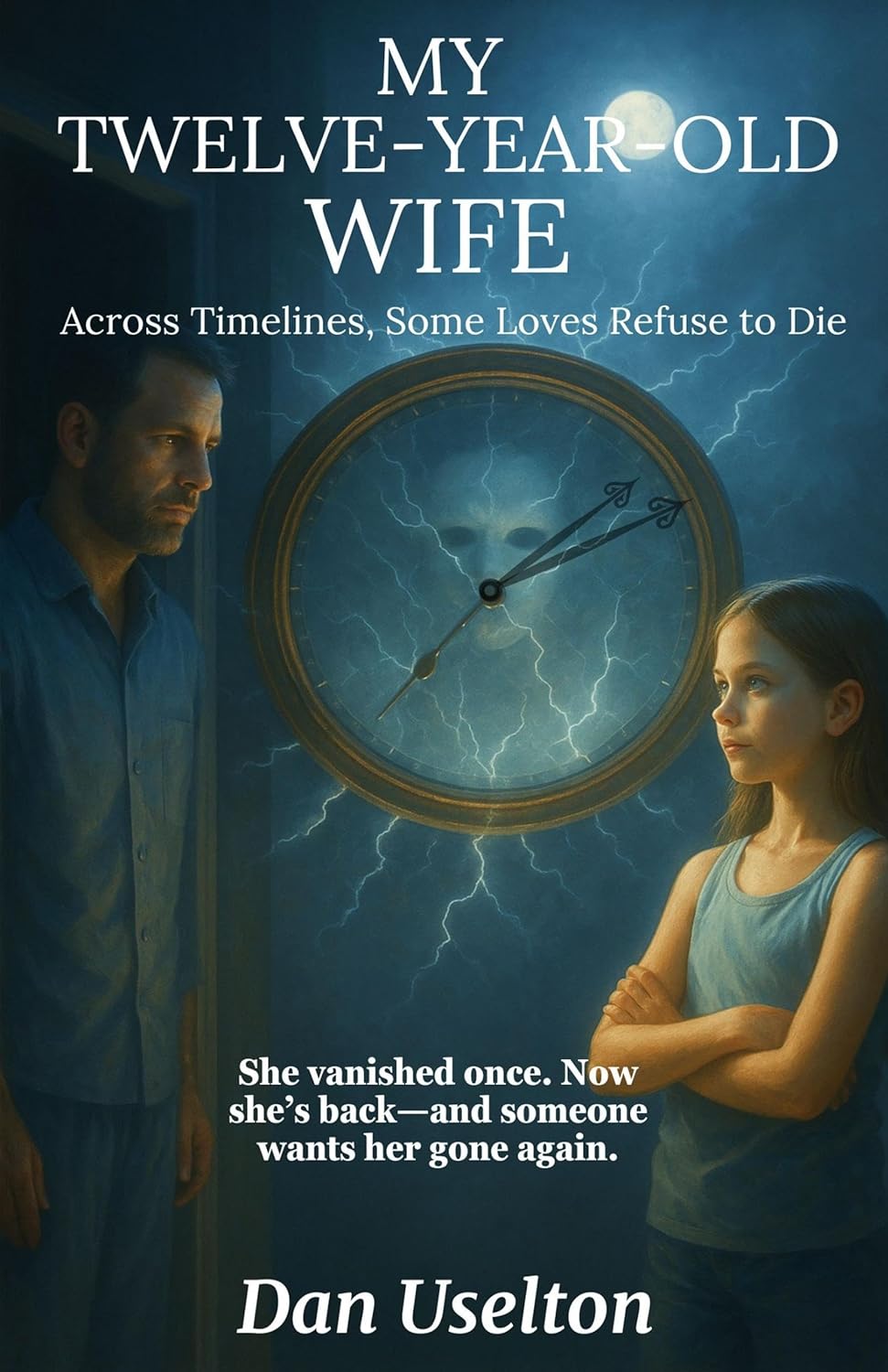
My Twelve-Year Old Wife is a dark, time-bending thriller about love, grief, and the unrelenting pull of fate. It follows Dan Fox, a husband desperate to find his missing wife, Celia, only to have a twelve-year-old girl appear at his door claiming to be her. What begins as a mystery about disappearance spirals into something stranger, a story that slips between timelines and emotions, showing how trauma, memory, and devotion can warp across the years. The book plays with horror and science fiction but stays grounded in its aching humanity. Each chapter peels back another layer of the impossible, until the reader is as disoriented and haunted as Dan himself.
The writing is cinematic and unnerving, full of tight, fast sentences and moments that hit like a punch. I could feel Dan’s confusion and fear, his disbelief when he’s confronted with a version of his wife that shouldn’t exist. The story toys with logic but never loses its emotional truth. The prose has this eerie stillness, a rhythm that feels like breathing in the dark, and the pacing moves between slow dread and heart-hammering tension. I caught myself whispering “what?” out loud more than once, which almost never happens when I read. The author’s control over mood and momentum is impressive. Even when scenes leaned into the surreal, the characters kept me anchored.
But what hit me hardest wasn’t the time travel or the mystery, it was the loneliness. Beneath the weirdness, this is a love story about guilt and obsession. Dan’s desperation feels raw and a little ugly, and Celia’s time-fractured existence is both tragic and strange. Their connection stretches and twists, but it never breaks. I could sense how much the author wanted to explore what happens when love is stronger than reality itself. At times, the dialogue can feel blunt, but it works here, it fits people who are terrified and grasping for sense in the middle of madness.
My Twelve-Year Old Wife is for readers who like their stories unsettling, who don’t mind questioning what’s real and what’s imagined. If you liked Dark, Arrival, or The Time Traveler’s Wife but wished they were more psychological and eerie, this book is for you. It’s weird, bold, and relatable.
Pages: 194 | ASIN : B0FD87Y85R
If We’re Brave Enough

Filaments follows a professor returning to her small hometown to investigate her mother’s strange behavior that is linked to two men’s disappearances and a supernatural force connected to her family. What was the inspiration for the setup of your story?
I always begin with setting. For this story, I immersed myself in scientific literature about bogs, and the narrative naturally grew from there. During my research, I discovered Sax-Zim Bog in Minnesota—a place that felt like the perfect backdrop for the tale to unfold. From that foundation, I shaped the characters to feel both relatable and grounded, anchoring them in the eerie beauty of the landscape.
What are some things that you find interesting about the human condition that you think make for great fiction?
Our lives run in parallel, each seemingly separate, yet deeply intertwined. We often believe ourselves to be isolated individuals, but in truth, we are threads in a vast, living ecosystem. The suffering we endure is not ours alone—it echoes and reverberates in ways we may never fully comprehend.
Filaments, I felt, was about generational trauma, addiction, and identity. What is one thing that you hope readers take away from the story?
The narratives we craft about ourselves are often the hardest to unravel. Yet becoming our true self is possible—if we’re brave enough to dismantle the facade we’ve built. It takes courage to confront the stories we’ve clung to, but in doing so, we make space for authenticity to emerge.
What is the next book that you are working on, and when can your fans expect it to be out?
I’m beyond excited about my next book! It leans a bit more into sci-fi, but the threads that define my writing style remain firmly in place. This story will spotlight female-driven narratives, unfolding within a world that breathes life into their journeys—infused with a touch of quiet horror. I’m aiming to publish next year, and I can’t wait to share it with you.
Author Links: Amazon | GoodReads
Drawn back to her Minnesota small town, Thea begins to unravel the mystery behind her mother’s erratic behavior and two men’s disappearances. She unknowingly awakens a force that has patiently waited in the shadows for her return. With each new revelation, Thea’s accosted by her small town’s prejudice and simmering bitterness of former friends. What started out as a trip to save her mother becomes a fight for her own survival and sanity.
They Could Be Saviors
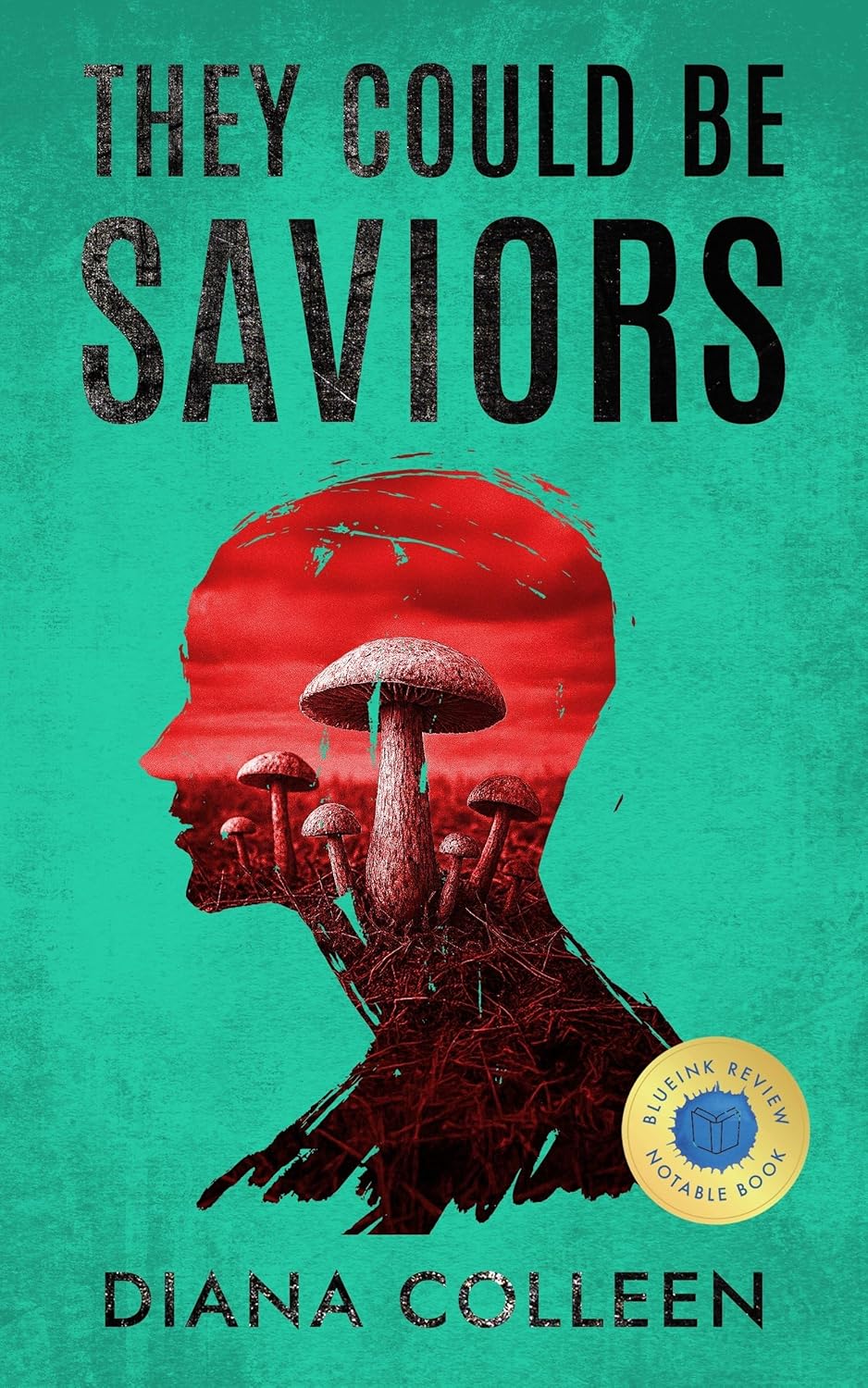
They Could Be Saviors is a wild and thought-provoking novel that blends psychological suspense with biting social critique. The story follows a group of billionaires kidnapped by a secret network of women, psychedelic therapists who believe the only way to save the world is to dismantle the egos of the men destroying it. As the captives awaken inside a high-tech facility designed for “healing,” the line between therapy and punishment blurs. It’s a heady mix of moral reckoning, hallucinatory experience, and social rebellion wrapped inside an eerie psychological thriller.
The premise sounds almost absurd at first, but author Diana Colleen sells it with conviction. Her prose crackles with sharp edges, alternating between satire and sincerity. The early chapters, especially those inside Josh Latham’s ruthless corporate mind, feel uncomfortably real. There’s a cold humor in watching a man who’s weaponized “sustainability” for profit wake up in a place that forces him to face himself. The writing feels cinematic yet claustrophobic, like being locked inside someone’s fever dream. At times, I felt disturbed, at others, unexpectedly moved. The story doesn’t let you sit comfortably, it pokes, prods, and dares you to care about people you’d rather despise.
What really grabbed me were the emotional undercurrents beneath all the sci-fi and social commentary. Mel, the therapist leading the operation, is a fascinating mess of empathy and control. Her struggle with addiction, grief, and idealism feels painfully human. I found myself torn between admiring her conviction and fearing her delusion. The women’s mission, noble on paper, curdles into something obsessive. Still, I couldn’t look away. The book doesn’t spoon-feed morals. It leaves you wrestling with big, ugly questions about power, redemption, and what “saving” the world might actually cost. The language swings from lyrical to brutal, sometimes in the same paragraph, which made it both exhausting and exhilarating to read.
If you like your fiction clean and uplifting, this one might rattle you. But if you’re ready for a raw, provocative trip into the psyche of our times, this book is worth every page. I’d recommend They Could Be Saviors to readers who crave stories that take risks and don’t shy away from moral gray zones. Fans of Black Mirror, Margaret Atwood, or Chuck Palahniuk will probably devour it.
Pages: 349 | ASIN : B0FP5X958N

The Grotesque

The Grotesque is a dark novel that dives headfirst into trauma, obsession, and the blurred edges between reality and delusion. The story shifts perspectives between characters who are each broken in their own ways. Katrina, a dancer clawing through rejection and danger. Jared, a haunted figure battling inner demons and visions that blur into nightmares. And Michael, a man desperate to control his own narrative. Their paths intersect in a cityscape soaked with menace, hallucination, and fleeting moments of hope. What begins as a tense character study unravels into something stranger, almost dreamlike, where memory and horror bleed together and nothing feels entirely safe.
The writing has a raw, abrasive energy, like it’s trying to peel back a layer of skin. I couldn’t look away. Foy writes with an eye for the grotesque, both in the literal violence that shadows the characters and in the quiet cruelties they turn inward on themselves. Some scenes made me tense up, almost angry, but that anger was directed at the world he was showing me, not at the prose. The language is sharp, cynical, often bitterly funny, and it fits the mood. It’s not elegant in a polished sense, but it’s alive, and I felt its pulse.
There were moments I loved too. Small sparks of connection, odd flashes of warmth, even in the middle of so much darkness. Those moments felt like stolen breaths, like someone opening a window in a suffocating room. They didn’t last long, but they mattered.
Reading The Grotesque felt to me like stepping into the fractured, hallucinatory world of American Psycho, only with more aching humanity flickering beneath the horror. I’d recommend The Grotesque to readers who aren’t afraid of stories that claw under the skin. If you want tidy resolutions or comforting escapes, this isn’t your book. But if you’re drawn to characters who stumble through shadow and survive in fragments, and if you’re willing to sit with unease, you’ll find something here that lingers.
Pages: 348 | ASIN : B0FPLW71S1


