Blog Archives
Crimson Light: The Song of Immaru


Crimson Light: The Song of Immaru, by PJ Dudek, is a sprawling science fantasy novel that moves between Earth and Arvalast, blending dystopian surveillance, portal fantasy, spiritual warfare, and old-fashioned adventure. The story follows a large cast, including Allen, Liz, Miriam, Tarin, Abigail, Maddie, Gil, Ebe, Dralo, and others, as the light of Immaru becomes both a gift and a target. What makes the book interesting is how naturally it treats cosmic stakes and ordinary grief as part of the same world. A wedding, a game of cards, a police order, a forest battle, and a shadowy realm all matter here.
The book’s central image is light, not just as magic, but as guidance, comfort, warning, and burden. Gil’s advice to Allen captures the novel’s moral center: “Respect the light, and be wary. Let it guide you; avoid trying to guide it.” That idea runs through nearly every storyline. Characters are constantly tempted to force answers, protect people through control, or mistake power for calling. Dudek gives the light a sacred weight, but he also keeps it practical. It glows in jars, phials, lockets, and lanterns, sitting right beside coffee shops, drones, bots, and muddy forest roads.
The strongest parts of the novel come from its emotional grounding. Maddie’s grief over Gras, Allen’s tenderness toward Liz, Miriam’s loneliness, and Tarin’s uneasy role as a warrior all give the bigger mythology something human to hold onto. Miriam’s arc is especially affecting because her fear, anger, and longing for Abigail make her more than just another chosen figure. The book spends real time with people after loss, and that patience gives the battles more meaning when they arrive.
Dudek also has a real appetite for scale. Arvalast’s forests, Macalum’s politics, the drilockk threat, the Vulgheid, the mysterious Prince, and Earth’s militarized systems all feel connected by the end. The reveal of Simon as something far more dangerous than a government official gives the Earth plot a sharp jolt, especially when he declares, “I am the Prince of this world. And I am here to protect my throne.” That moment pulls the book’s spiritual and sci-fi threads together in a way that feels bold and strange in the best sense.
Crimson Light is an ambitious, heartfelt continuation of a much larger saga. It’s a book about people carrying light through systems, forests, memories, and nightmares that want to swallow them whole. Its cast is wide and its mythology is dense, but its heart is easy to locate: friendship, sacrifice, faith, and the painful work of choosing courage when the next step is unclear. By the time the epilogue points Iris toward another dangerous journey, the story feels less like it’s ending than opening another door.
Pages: 446 | ASIN : B0H92F4FRQ

The Phoenix CODEX: 138 Palindromic Mirror Edition Complete Phoenix Chronicles: Complete Phoenix Chronicles: A Trilogy of Trilogies
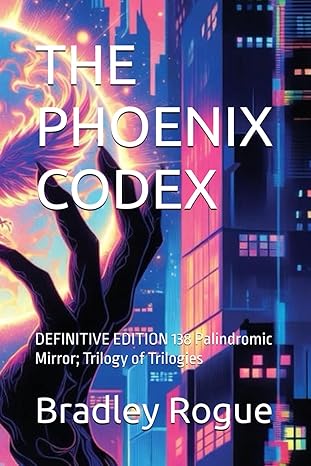
The Phoenix Codex is a theatrical metaphysical thriller that treats structure as part of the story, not just a container for it. Bradley Rogue builds the book as a “palindromic mirror” with ascending and descending arcs wrapped around a central point, and that design gives the whole thing a ritualized, incantatory feel rather than a straightforward adventure-novel rhythm. The opening makes its intentions clear right away: “It’s also a novel. Also a seed. Also a key.” That line captures the book’s whole personality. It wants to be read as fiction, transmission, puzzle box, and initiation text all at once.
At the center of it all is Dr. Natori Saira Evren, who isn’t just a protagonist so much as the book’s tuning fork. Her synesthesia, her academic outsider status, and her role as a traveler through patterns of recurrence make her the ideal guide for a world built on hidden frequencies, ancient architectures, and repeating catastrophes. The book follows her through interrogations, prequels, secret histories, temporal jumps, and revelations about the Phoenix cycle, and it does so with total conviction. Rogue writes like someone fully committed to the reality of his invented cosmology, and that commitment gives the novel its distinctive heat.
The book wants myth, conspiracy, sacred geometry, speculative archaeology, simulation theory, apocalypse, and spiritual transformation all in the same breath. Sometimes that makes the prose feel deliberately overwhelming, but that excess is also part of the reading experience. This is a book that likes pressure, repetition, symbols, and declarations. It keeps returning to numbers, mirrors, cycles, names, and encoded meanings until the language starts to feel ceremonial. Even the narrative instructions invite readers to treat the novel as an object with multiple valid pathways, which is a pretty revealing choice. The Phoenix Codex isn’t shy about asking the reader to participate in its pattern-making.
The most interesting thing about the novel is how openly it explains its own method. In the author’s note, Rogue says, “The Phoenix Chronicles make no claims to historical accuracy. They are mythology—but mythology that is aware of its own mythological status.” That self-description is useful because it points to what the book is really doing. It isn’t just telling a story about a hidden truth. It’s dramatizing the human urge to arrange history, fear, destiny, and transcendence into one giant meaningful design. That gives the novel a strange double quality. It’s earnest and self-conscious at the same time, immersive but also always nudging readers to notice the architecture holding it together.
The Phoenix Codex is less a conventional novel than a designed experience, and that’s what makes it memorable. It reads like a fusion of esoteric manifesto, sci-fi myth cycle, and visionary character saga, all organized around symmetry and recurrence. Readers who click with its wavelength will probably admire the sheer audacity of the construction and the intensity of its voice. Even when it gets wild, it knows exactly what it’s trying to summon: a story where reading becomes a form of initiation, and where narrative structure itself becomes part of the spell.
Pages: 550 | ASIN : B0GF7YTNQ8
The Soul-Sung
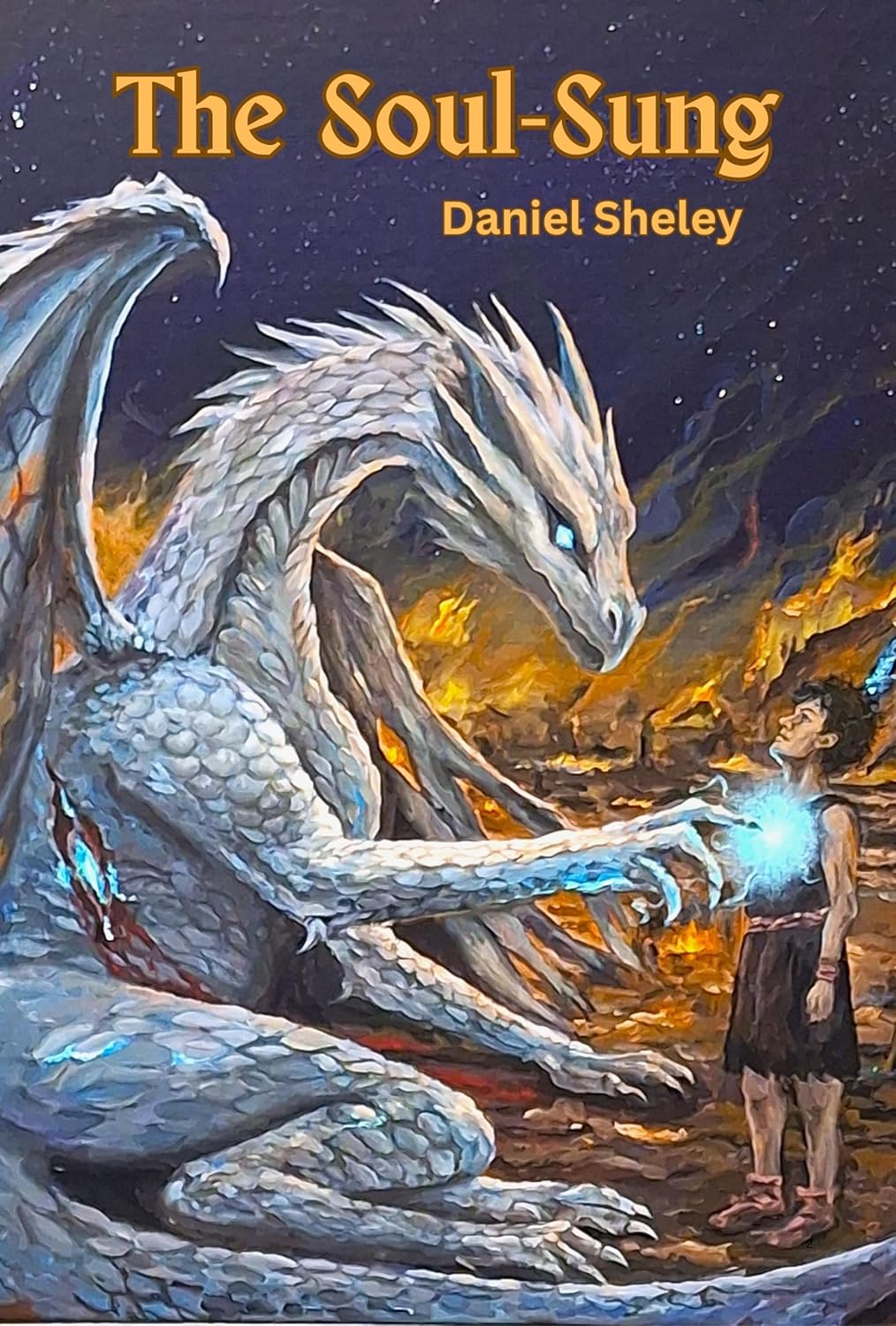

The Soul-Sung is an epic fantasy that opens with catastrophe and then continues to ask what comes after survival. Author Daniel Sheley builds the novel around Denny, a village boy who becomes the unwilling bearer of a world-shaping force called the Song, but the book never narrows into a one-lane chosen-one story. It spreads outward through multiple points of view, giving the world a layered feel from the start: grief-struck survivors, political rivals, watchful draken, and people trying to name what’s happening before it swallows them. What held me most was the sense that the book’s real subject is not power by itself, but change, memory, and the cost of carrying either one.
Sheley writes in a heightened, almost ceremonial register, but he keeps it close to bodies, weather, ash, breath, and stone, so the language rarely floats away from the scene. The book likes to return to images until they gather force, especially fire, wings, and song, and that gives the whole thing a mythic pulse. Even the central idea of the Soul-sung is framed less as a shiny destiny than as an old burden: “A Soul-sung is a memory the world refuses to forget.” That line represents the book’s tone better than any plot summary could. It’s an intimate fantasy told with a long echo behind it.
I also appreciated how the novel trusts its ensemble. Denny is the emotional hinge, but Kaelari brings iron to the book, Liori brings tenderness and stubborn loyalty, Terra brings force, and Albion and Veridan keep the antagonistic side from feeling flat. The point-of-view shifts aren’t just there to widen the map. They let the story argue with itself. One character sees duty as an inheritance, another sees it as pressure, another as law, another as love.
The book’s structure gives it the feel of a first volume that wants to earn its scale. It starts in ruin, moves through survival and pursuit, and then gathers its threads into a larger political and spiritual conflict without losing the human cost underneath. The novel’s real momentum comes less from twisty plotting than from emotional accumulation and atmosphere. It wants you to sit inside dread, ritual, and recovery. For me, that worked because the worldbuilding is tied to feeling rather than lecture. The Veym, the divisions among the draken, and the tensions among tribes all emerge as parts of lived belief, not just background notes.
The Soul-Sung is a serious, emotionally bruised, lyrically written fantasy debut that cares about aftermath as much as spectacle. It’s a book of ash, memory, and stubborn endurance, and it knows how to make those things feel large without losing sight of individual people. By the end, it doesn’t try to fake a neat finish. It closes with scars, fragile alliances, and a future that feels earned rather than merely teased. I came away thinking this is the kind of fantasy that wants to sing, but it also wants to grieve, remember, and keep walking.
Pages: 376 | ASIN : B0GFH5X17T
Black Sheep

Black Sheep follows Gem Alhart from a bewildering childhood in a northern village, where her mother Hattie seems to flip overnight from proud, cake-baking parent to a figure of calculated cruelty. What starts as a slightly off-kilter family set-up hardens into full-blown domestic terror: punches in the kitchen, starvation rations, nights locked in a cellar, and a school and social-care system that clocks the bruises but never manages to pull her out. An ugly confrontation with the lecherous church warden Mr Rake, ending in his fatal fall on Gem’s kitchen floor, becomes the tipping point that finally propels her to run. From there the book stretches out into a survival story: Gem turns up in London on her sister Fran’s doorstep, grafts in cafés, inches her way into a design job at Pineapple Indigo, and wrestles with therapy, romance and the long shadow of Hattie, symbolised, at one point, by a sinister black sapphire passed to her by a white-suited stranger who feels half man, half omen.
I found Black Sheep relentless in a way that’s both hard to stomach and hard to look away from. The childhood sections, especially, are claustrophobic: every treat has a price, every kindness might be a feint, and the house itself starts to feel like a malign character. The violence is not coyly implied; it lands with sickening clarity, but the book doesn’t wallow in gore so much as in the emotional aftermath, Gem’s hypervigilance, her self-blame, the way she pre-emptively shrinks to take up as little space as possible. The swearing, the gallows humour, the blunt similes (“batshit-crazy”, “like a visitor among feasting monkeys”) give the prose a sinewy, working-class bite that feels very specific rather than generically “gritty.”
I also liked how the novel refuses a neat, inspirational arc even as it moves Gem into adulthood. When she escapes, the tone loosens, there are café regulars, colleagues, real friendships, and proper laughter, but the old damage keeps barging in: in her choice of men, in her mistrust, in the way she second-guesses any good fortune. Later plot turns involving the black sapphire and the white-suited man tilt the book toward something almost folkloric or supernatural, a kind of dark wish-fulfilment about how to deal with a monstrous parent. What did work for me was the insistence that trauma isn’t tidied away just because the abuser exits the stage; Gem’s biggest battles are with the parts of Hattie that survived in her head.
I’d hand Black Sheep to readers who gravitate toward contemporary psychological fiction, domestic noir, and trauma-driven coming-of-age stories that don’t flinch from ugliness but still allow for scraps of hope. If you’ve ever wished Eleanor Oliphant Is Completely Fine came with a rougher social edge and a dash of dark, almost occult retribution, this sits in that neighbourhood. Black Sheep is a bruising portrait of a woman who learns that survival is more than just staying alive.
Pages: 159 | ASIN : B0FXXX96VH

A Tuft Of Thistledown
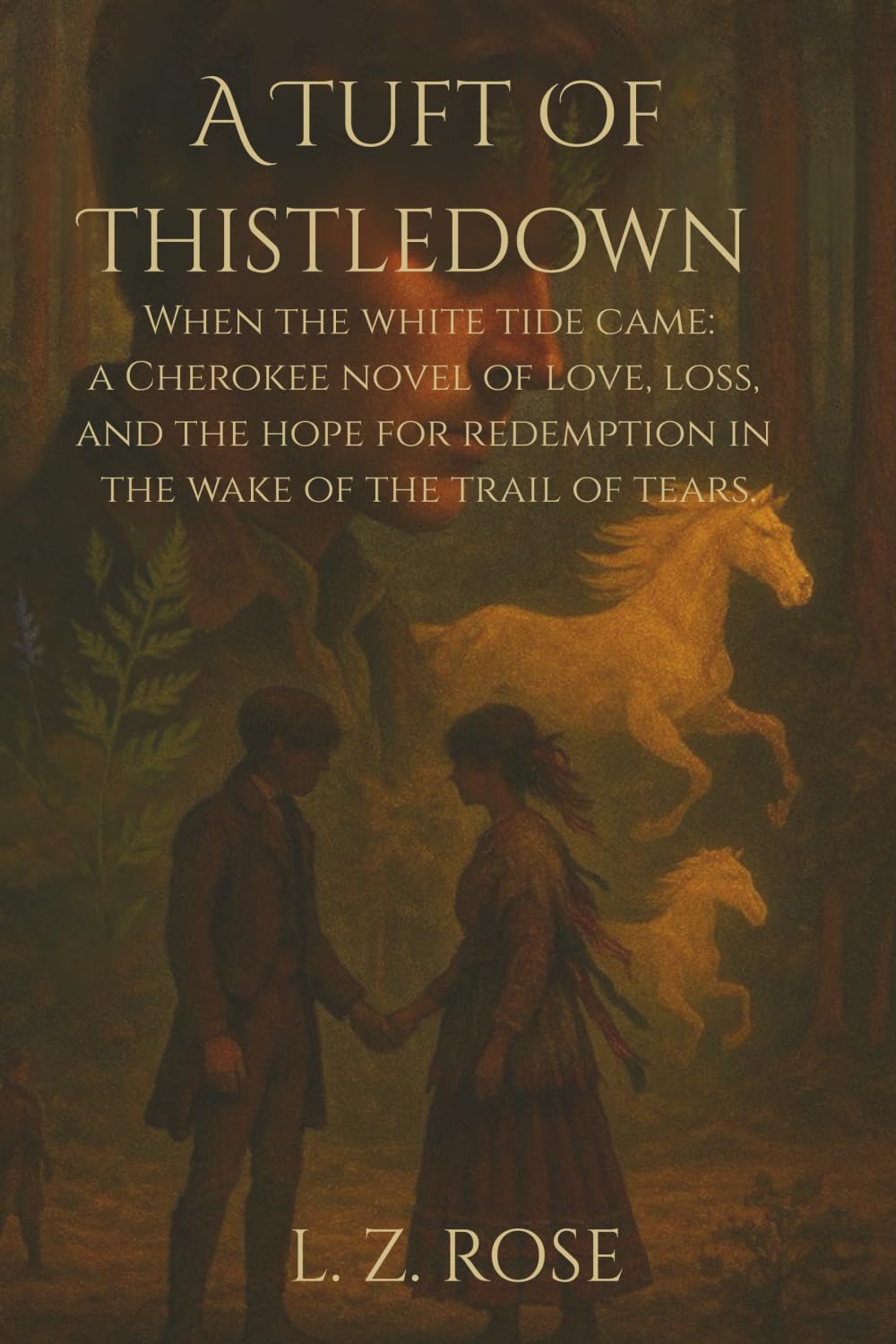
A Tuft of Thistledown is a gripping historical novel that plunges deep into the brutal realities of the Trail of Tears. Set in 1839, the story follows a harrowing clash of cultures, where violence, survival, and the unyielding will to endure take center stage. Through raw and vivid storytelling, the book presents the perspectives of both the Cherokee people fighting to preserve their way of life and the white men determined to erase them. The novel weaves together historical accuracy and emotional intensity, capturing the pain of forced removal and the complex motivations behind acts of cruelty and resistance.
What struck me most about this book was its unflinching portrayal of human suffering. The opening scene alone is enough to make your stomach turn; a one-eyed Cherokee man, bound and tortured, refusing to break. The descriptions are visceral, the emotions sharp as knives. It’s not just the violence that gets under your skin, though. It’s the way the characters grapple with their choices. The blacksmith, for example, torn between obedience and conscience, sneaks a bottle of whiskey to the dying man, only to later realize the man couldn’t even drink it. That moment, small but devastating, is where the book shines. It makes you feel the weight of inaction, of complicity.
Beyond the gut-wrenching pain, the novel’s pacing keeps you on edge. The sections with the Cherokee people offer a striking contrast to the brutal interrogations and raids. Scenes with Horse Song and Runabout, especially when she sees the white man at the eagles’ clearing, are filled with tension, but they also carry a quiet beauty. The descriptions of their hidden village, the careful collection of mulberries, and the intimate moments between families remind us of what’s at stake. And just when you start feeling safe, the book rips that away. The moment the children run screaming into the council house, yelling about white men, your heart stops right along with Horse Song’s.
One of the most intriguing elements of the book is John Lucas Jr., a character you want to hate but can’t entirely dismiss. He is methodical, cruel, but also strangely haunted. The way he follows the golden foal, chasing echoes of a past he doesn’t fully understand, adds a layer of depth to his character. He is not a villain in the mustache-twirling sense but he is something worse. He is a man who sees himself as rational, as doing what needs to be done, and that makes him terrifying. His realization that the foal carries a crescent moon marking, just like a horse from his past, hints at a connection to the people he is hunting. That moment lingers, making you wonder how much of him is still human and how much has been lost to cruelty.
I would recommend this book to anyone who appreciates historical fiction that doesn’t hold back. If you are looking for a comfortable read, this isn’t it. The writing is sharp, the themes are heavy, and the emotions hit hard. A Tuft of Thistledown is an experience that will stay with you long after you’ve turned the last page.
Pages: 374 | ASIN : B0DQLPGZVX
The Call Home
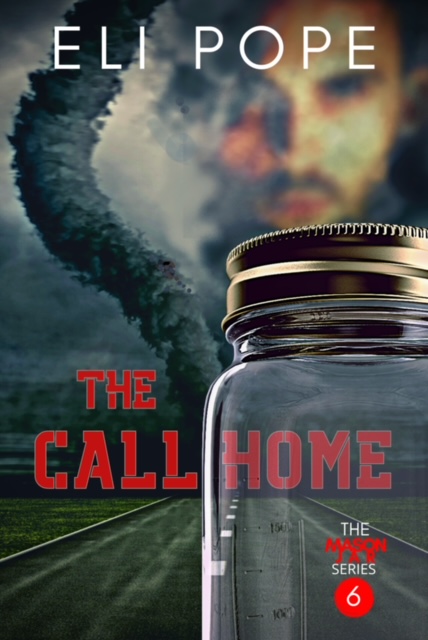

Eli Pope’s The Call Home, the sixth installment in The Mason Jar Series, presents a complex narrative set in the picturesque Apalachicola. This book intertwines the lives of its characters – Addison, Ethan, Amy Jo, Joyce, and Billy Jay – as it explores the nuanced themes of redemption, forgiveness, and the enduring impact of past deeds. The story seamlessly shifts between the tension of a legal drama, the emotional depth of personal struggles, and the gripping suspense characteristics of a crime thriller, leading to a series of significant revelations.
A notable strength of The Call Home is its detailed character development. Pope adeptly portrays figures such as Ethan, who is battling despair and addiction, and Amy Jo, who confronts her emotional challenges, with a realism that brings depth to their narratives. This detailed characterization ensures that the readers find the characters’ experiences both relatable and meaningful.
The book’s multiple plotlines add a rich complexity to the story, inviting readers to engage deeply as they unravel its intricacies. The setting in Apalachicola further enriches the narrative, infusing it with a unique charm and atmosphere. Pope addresses complex themes like the search for redemption, personal struggles, and the pursuit of justice with a thoughtful balance of delicacy and intensity. The narrative, brimming with unexpected twists and turns, not only keeps readers thoroughly engaged but also invites a keen level of attentiveness to fully appreciate the intricacies of its developments. Pope’s narrative style is fluid and engaging, blending introspective moments with dynamic interactions, thereby maintaining a steady narrative pace.
The Call Home, by Eli Pope, will particularly resonate with readers who appreciate stories featuring richly layered characters and elaborate plots. The strong character development and thematic exploration make this book a compelling read.
Beyond the Father: Book 1 (Gods on Trial: The Series)

Beyond the Father: Book 1 (Gods on Trial: The Series), by Opëshum Patroz, is a gripping sci-fi narrative. Set on the planet Xżyber, this novel introduces us to a society where the lines between organic life and mechanical existence blur, creating a stark division between the metal-reborn citizens of the Sub-Median Region and the organic beings they oppress. The story unfolds against a backdrop of escalating tension and imminent conflict. Resources are scarce, sparking the flames of war, while internal revolution simmers within each region.
The novel employs a compelling storytelling technique where each chapter unfolds from the distinct perspective of a character, enhancing the reader’s engagement and curiosity about their intricate lives and secrets. Petroz introduces us to a dynamic cast, including Queen Evaline, King Thio, and their son Anglid, whose lives are a tapestry of hidden regrets and untold stories. As the narrative progresses, the reader’s journey shifts alongside perspectives, notably to Flexix, a deity-like being, and the complex dynamics between Luscious and his sister, among others. Each character is meticulously crafted, with their depth and mysteries unfurling gradually, hinting at a grander scale awaiting in subsequent installments. Petroz’s use of vivid, immersive descriptions allows the reader to visualize each scene with remarkable clarity. The slow, deliberate development of each storyline doesn’t just build anticipation but suggests an overarching narrative yet to unfold fully. The layered exploration of characters bound by destiny and secrets, promises an enthralling series to follow.
Beyond the Father: Book 1 is a masterful blend of character-driven narratives and rich, vivid world-building that marks a promising start to the Gods on Trial series. Opëshum Patroz has crafted a novel that not only entertains but also immerses the reader in a complex tapestry of intrigue and mythology. The meticulous attention to character depth and the seamless narrative transitions make this book a compelling read for those who appreciate detailed storytelling and multifaceted plots. As the first installment concludes, it leaves a lingering sense of anticipation and curiosity about the future adventures and revelations that await in the series.
Pages: 315 | ASIN : B0BL3YPKWN
In a Large, Loud City (Where Something Almost Always Happens)
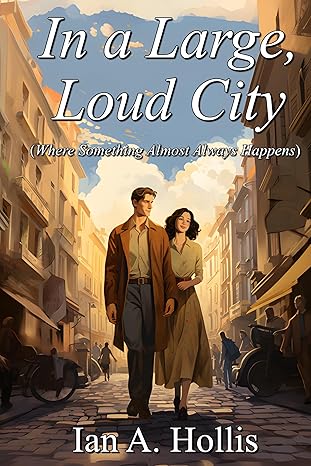
In his latest novel, In A Large Loud City: Where Something Almost Always Happens, Ian A. Hollis masterfully captures the essence of urban life through a tapestry of intricate characters and their intertwined stories. The bustling metropolis becomes a backdrop for exploring the dualities of human nature, as the city’s vibrancy brings out both the best and worst in its inhabitants, revealing the secrets and aspirations that drive them.
Central to this narrative are Adam and Belle, alongside a diverse cast including Amanda, Angela, Benji, Sabrina, Julie, and Max. Each character is meticulously crafted, offering a unique perspective on the complexities of relationships, identity, and the quest for meaning. Belle, a young mother, and Adam, a multifaceted individual, represent the heart of this story, examining the ties that bind and the secrets that divide.
Hollis’s narrative prowess is particularly evident in his structuring of the novel. The table of contents serves as a guide and an innovative framework that enhances the reading experience, especially in digital formats like Kindle. This thoughtful organization complements the book’s intricate narrative, allowing readers to navigate its depths easily. The novel’s cover art deserves special mention, perfectly encapsulating the theme and setting the tone for the reader’s journey. Its aesthetic appeal is matched by the novel’s accessibility to a wide range of audiences, proving that complex themes can be presented engagingly and imaginatively.
Hollis’s writing style is another highlight. His vivid descriptions and fluid narrative effortlessly transport readers into the heart of the city, capturing the minutiae of everyday life alongside profound existential dilemmas. The interactions between Adam and Belle are particularly noteworthy, imbued with realism and unexpected twists that captivate the reader. The novel’s rich use of dialogue adds a contemporary and authentic feel to the narrative, although at times, this abundance can present a challenge in keeping track of the plot and character interactions, providing an engaging complexity to the reading experience.
In A Large Loud City: Where Something Almost Always Happens is a compelling and thought-provoking read. Hollis’s modern and accessible writing style, combined with his profound understanding of the human psyche, makes this novel a standout, resonating with readers of all ages.
Pages: 273 | ASIN : B0CKPYXVH7


