Blog Archives
Humans Amaze Me
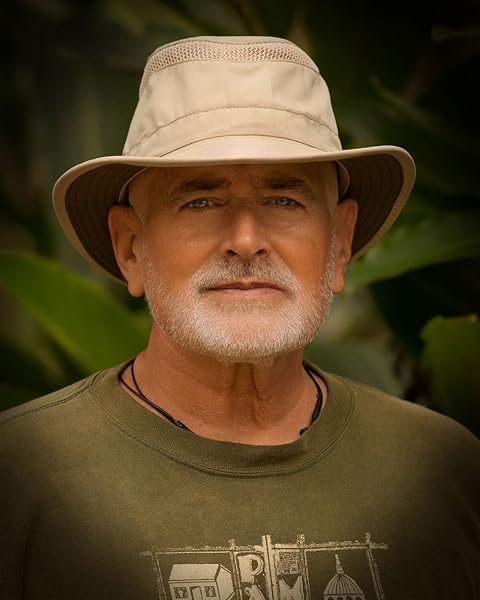
I, Robot Alien follows Scoots, a robot created by transcendent alien beings and sent to a devastated Earth to guide humanity back from devolution, while avoiding involvement in any significant event.
What are some things that you find interesting about the human condition that you think make for great fiction?
I am constantly amazed at the vast gulf between the highest qualities, skills, and positive attributes of human beings and their propensity for depravity, ignorance, and violence. Due to the apparently infinite reservoir of possibilities, there is no dearth of material for great fiction.
I find that, while writing, you sometimes ask questions and have the characters answer them. Do you find that to be true? What questions did you ask yourself while writing this story?
Yes, that’s true, because every character has an individual answer to every question, thus revealing much about themselves through their answers. My personal questions have much more to do with maintaining credibility, continuity, consistency, and clarity—a whole lot of ‘Cs’ to keep in mind.
I hope the series continues in other books. If so, where will the story take readers?
There will be 2 more books in the series. I am currently writing I, Robot Tessa, about a female robot, which will be published on August 10, 2026. The fourth book, I, Robot Human, promises to be darker and less optimistic than the first three.
Author Links: GoodReads | Facebook | X (Twitter) | Website | Amazon
I was created by beings who couldn’t touch this world … only watch it crumble.
Every twenty years, a new tribe … a new hope … a new failure.
I was told, “Do not interfere.”
But watching them die … again … again …
I wasn’t meant to change history … only guide it.
Silently.
Humanity had a second chance … I was left to make sure they didn’t waste it.
But I broke Directive Three.
Can they survive a second collapse … can I?
The Shape of Angels – The Inventors Book: 1


The Shape of Angels weaves history, myth, trauma, and raw human longing into a story that shifts across centuries and dimensions. The book follows Giovanni Romano, an immortal man haunted by a curse, by love, by illness, and by the people who drift in and out of his impossible lifespan. The narrative swings between past and present, giving readers everything from Napoleon’s youth to supernatural wars in hidden planes of existence. It feels like an epic puzzle, with each chapter offering a new piece that makes the picture stranger and a lot more compelling.
The writing moved between sharp intensity and quiet sorrow. Some scenes felt chaotic in the best way, like being pulled into the mind of a man who never gets a break from the weight of eternity. Other moments slowed down so much that I could feel Giovanni’s loneliness press in on me. The author made bold choices with structure, and while the rapid switches in point of view sometimes left me unsteady, the emotional punch behind them made the journey worth it. The mix of historical detail and supernatural invention blended into something I rarely see pulled off without turning messy. Here, it worked. It felt weird and wild and strangely intimate.
I also found myself wrestling with the characters in a very personal way. Giovanni frustrated me and broke my heart at the same time. Naomi, with all her flaws and stubborn angles, felt alive even when I disliked her choices. The supernatural elements had an eerie physicality that made them feel less like fantasy and more like another kind of truth. The ideas behind the Inventors, their rituals, their burdens, and their power, left me chewing on the meaning of responsibility and the cost of being exceptional. At times, the world-building overwhelmed me, but the emotional core never slipped out of reach. The book surprised me with how much it made me feel for people who are trying so hard to survive a world that keeps demanding too much from them.
The Shape of Angels is not afraid to get dark. I would recommend it to readers who enjoy emotionally heavy stories, intricate worlds, and characters who refuse to be easy. If you like historical fantasy with a modern twist, or tales that explore the messy corners of love, grief, and identity, this book will probably pull you in the same way it pulled me.
Pages: 274 | ASIN : B0FNS1JN8S

Moral Imperatives
I, Robot Soldier follows a war-damaged robot soldier who wakes in the ruins of a world shattered by conflict and encounters a traumatized young girl, becoming her protector and companion. I find the world you created in this novel brimming with possibilities. Where did the inspiration for the setting come from, and how did it change as you were writing?
This novel was based on a short story I wrote many decades ago. The premise of a robot soldier awakening to the aftermath of war never left me. When I rewrote the story as a submission to my writing platform—Medium—it received such positive reader responses and encouragement to turn it into a novel, I decided to do just that. Other than that introductory premise, which became the novel’s prologue, the book was not pre-plotted but evolved as it unfolded.
What were some of the emotional and moral guidelines you followed when developing your characters?
The only “guidelines,” emotional or moral, for the characters were that they be credible and consistent. Specifically for the robot narrator, One Shot, the open question was whether he experienced feelings and had moral imperatives beyond those programmed into him. It was never my intention to answer that question definitively.
Where does the story go in the next book, and where do you see it going in the future?
The story is a standalone novel. The Robot Series is not a set of sequels, but rather a series of separate novels told from the viewpoints of unique robots. The second book (also reviewed by Literary Titan) is about a robot alien who comes to prevent humanity from a second devolution. The third book is about a female robot of the future.
Author Links: GoodReads | Facebook | X (Twitter) | Website | Amazon
In a world shattered by war, a lone robot soldier awakens with one mission: to protect the last surviving human – a little girl named Amy.
Together, they form an unbreakable bond in a world where hope is scarce.
But danger lurks in the form of robotic mutations known as wolfhounds.
One Shot’s prime directive is clear: protect Amy at all costs.
On a perilous journey through a devastated world, the bond between a girl and a robot might be the key to humanity’s future. If they can survive.
The “Hard Question”

The INCARNEX Rebellion follows a scientist and the girl he is raising in hiding as they try to survive the aftermath of a Britain reshaped by mind-transferring technology. Where did the idea for this novel come from?
The idea began with the “hard question” in consciousness theory, which asks where consciousness truly resides. Is it biological, something created by the mind and body working together, or something that exists beyond our physical form? That led me to wonder what happens in the moments after death and when exactly consciousness disappears.
Of course, if we ever discovered exactly where consciousness exists, someone would inevitably try to control it. That idea formed the core of The INCARNEX Compound, where resurrection is possible but comes with consequences.
For The INCARNEX Rebellion, I wanted to take things a step further. A company that could restore consciousness into a new host body would no doubt eventually try shifting it between bodies. Body-swapping is a classic sci-fi trope, but I wanted to explore it from a different angle, asking what happens when consciousness itself becomes something that can be transferred, stolen, or turned into a weapon.
The science inserted in the fiction, I felt, was well-balanced. How did you manage to keep it grounded while still providing the fantastic edge science fiction stories usually provide?
Thank you. That balance was something I worked hard on. My approach was to let the science serve the characters instead of overshadowing them. At its core, the story is about David and Celia and the people they join along the way. Their emotional journey keeps the technology grounded. If the characters feel real, the science feels more believable as part of their world.
I also made sure that INCARNEX had limits and real-world implications. These flaws helped keep it realistic and also added pressure and urgency to the story. The science needed to feel like a step forward from what we understand today, not something so advanced that it loses connection to reality.
What is the most challenging aspect of writing a trilogy?
The biggest challenge for me was developing character arcs that felt authentic across all three books. The events of the first novel have long-term consequences, and I needed to reflect how those experiences shaped everyone’s goals, fears, and choices in the second book. I did a lot of reading on trauma and psychology to help keep those reactions believable.
Another challenge was keeping everything cohesive while still escalating the stakes. I had to blend action, science, and character development into one larger narrative that still allowed the second book to stand on its own. It was a difficult balance but has also been one of the most rewarding parts of writing the trilogy.
Can you give us a glimpse inside the final installment of the INCARNEX trilogy? Where will it take readers?
Certainly. The final book is titled The INCARNEX War. Britain has split apart, and the events of the second book have pushed the country into full-scale civil war. David and the rebels lead the south, while the north is controlled by a regime built on fear, control, and ruthless ambition. It becomes a classic struggle of fascism and corporate power on one side and the hope for freedom and liberty on the other.
But war is not the only threat. A terrifying discovery forces the characters to confront choices far more difficult than they expected. They are no longer fighting only for freedom but for the survival of everyone touched by INCARNEX. A few familiar faces return, old rivalries resurface, and the stakes rise to their highest point.
Readers can expect a dramatic and intense conclusion, with twists, sacrifices, and the largest war dystopian Britain has ever seen!
David Harris has spent years in isolation, desperate to protect his adopted daughter Celia. But when his technology is weaponised in horrific new ways, hiding is no longer an option.
As Celia flees to New London, determined to take vengeance on the man who murdered her mother, David faces an impossible choice: join the rebels’ brutal scorched earth campaign and risk becoming the very thing he’s fighting, or lose Celia and any hope of a normal life.
Hunted, deceived, and pushed to their limits, both are forced towards lines they swore they’d never cross. To defeat a monster, they may have to become something worse.
The Eternal Bridge


The Eternal Bridge is a fantasy parable about a world healed on the surface yet still aching inside. The story begins three years after Geshriel becomes a living bridge that joins two once-hostile shores. People trade, marry, feast, and rebuild, and life looks whole again. Then small tremors shake the land, crops wither, and feasts feel thinner, and the community senses a deeper break between earth and heaven that no wooden span can fix. The book follows families like Fidel and Verita, Liberta and Dathan, and many others as they wrestle with grief, restlessness, and hope while they wait for Geshriel to return and complete the work he began. In the final movement, the bridge turns into a vertical path of light, the dead are raised, a radiant city descends, and the people find their true home in the presence of the Lamb and the Maker, in a union that feels final and yet ever deepening.
I felt pulled in first by the tenderness of the relationships. The marriages and families feel warm and lived in, and I cared about them very quickly. The scenes of simple daily life on the bridge, the artisan work, the trade, the shared meals, all carry a quiet glow. When the cracks appear in that paradise, the emotional punch hits hard, because the book has already convinced me that this community matters. The later reunions with lost children, spouses, and elders hit an even deeper nerve. The big theological ideas turn very personal there, because the hope of resurrection shows up not as an abstract promise but as a mother getting her baby back, or a couple finally freed from decades of guilt.
The prose leans lyrical and earnest, and sometimes it worked for me. The symbols are very clear, and the story rarely hides what it wants to say. The bridge, the orchard, the feast, the tremors, every image points to a spiritual theme. That clarity will comfort some readers. The early chapters linger on peaceful life on the bridge, and a few of those sections felt long, while the cosmic finale races by in a rush of visions, reunions, and worship. I enjoyed that ending.
I would recommend The Eternal Bridge to readers who love clear, heartfelt Christian allegory and who enjoy stories in the vein of C. S. Lewis’s The Great Divorce or classic devotional fiction. If you are hungry for a story that talks openly about loss, longing, reunion, and eternal hope, and if you like the idea of seeing big doctrinal themes lived out in ordinary families, this novel will likely move you.
Pages: 223 | ASIN : B0G4NYKT9J
Aries I – The King of Mars

Aries I – The King of Mars tells the story of a father and son who leave behind a life marked by loss to help build humanity’s first permanent colony on Mars. The book follows young Aries Karalis from the trauma of his mother’s death through his relentless training, his complicated bond with his father, and the discovery of his own purpose as the colony faces danger and, ultimately, its fight for independence. The novel grows from a quiet, personal beginning into a full epic about identity, loyalty, survival, and the creation of a new world.
I felt pulled in by the emotional weight of the story more than the science itself. The writing is straightforward and clear, and it avoids getting bogged down in technical talk. Scenes that deal with loss felt raw. The father–son conflict felt honest in a way that caught me off guard. Even when the plot moved into bigger action, the heart of the book stayed centered on relationships and the messy way people try to do the right thing while carrying their grief. I liked that the story never pretended that bravery comes clean or easy. Instead, it showed how fear and love can sit side by side and still push someone forward.
I also enjoyed how the book handled Mars as a place. It didn’t feel cold or distant for long. As the colony grew, the planet became something alive, something worth fighting for, and I found myself rooting for these characters as if I knew them. Some moments felt almost cinematic, like the chants echoing through the colony halls or the quiet scenes of Aries watching the Martian sunset with Skye and their newborn son. Those were the chapters that I really enjoyed. They were simple scenes but full of meaning. If anything, I sometimes wished the prose loosened up a bit more because the emotional parts were strongest then.
The story ties together themes of family, leadership, sacrifice, and the strange hope that comes from starting over. I’d recommend this book to readers who enjoy character-driven sci-fi, especially anyone who likes stories about growth and resilience more than hard mechanics. It’s a great pick for teens, educators, or adults who want a hopeful and heartfelt look at what it might take to build a new world.
Pages: 224 | ASIN : B0FVHQYS3R
Once-Mighty Civilization

Daughters of the Empire follows two women as they navigate through political intrigue, family secrets, and timeless battles as they search for truth and a way to save their world. What was the inspiration for the setup of your story?
There were several sources of inspiration, but two stand out: The Rise and Fall of the Great Powers, by Paul Kennedy, and The Legend of the Galactic Heroes, by Yoshiki Tanaka. I wanted to craft a story that blends Kennedy’s concept of the cyclical rise and decline of empires with a more human-centered narrative. While Tanaka’s work is brilliant in exploring the merits of autocracy versus democracy, it often lacks the intimate human dimension. I also felt that modern storytelling rarely gives us strong, complex female leads like Major Kira Nerys or Susan Ivanova. Too often, Hollywood substitutes depth for superficial “girl boss” tropes. My goal was to create flawed yet deeply relatable characters—Deanna, Valerica, Lucilla, and Miyu—whose choices you may not always agree with, but whose motivations you can understand.
I find the world you created in this novel brimming with possibilities. Where did the inspiration for the setting come from, and how did it change as you were writing?
The myth of Atlantis and Homer’s Iliad were my primary inspirations. I was fascinated by the idea of a once-mighty civilization—the Palladian Star Empire—suddenly collapsing, leaving the protagonists to pick up the pieces. The second half of the book draws heavily from the Iliad, exploring how war reshapes not only the world but the heroes themselves. One chapter of history closes, and a new one begins. Gaia emerges scarred yet transformed, and the four main characters realize that survival alone is not enough—the empire must evolve if it is to flourish.
What were some themes that were important for you to explore in this book?
Personal freedom is one of the core themes. I wanted to subvert the “chosen one” trope, but in a way different from Dune. Deanna, Valerica, Lucilla, and Miyu understand that their choices have consequences. They don’t blindly follow prophecies or orders—they seize leadership and make the best decisions they can in the moment, even when those choices haunt them later. Unlike Paul Atreides, Lucilla reforms the empire without invoking any divine mandate, and Deanna joins her not as a rebel but as a realist. Frank Herbert once said that all rebels are closeted aristocrats—a fair point—but Deanna is something else entirely: pragmatic and grounded.
The second major theme is transhumanism: what truly makes us human? Is it our memories, our personality, our capacity to love? Through genetic memory, cybernetic augmentation, and the tension between evolution and identity, the book asks whether humanity is defined by biology or by the choices we make.
I find a problem in well-written stories, in that I always want there to be another book to keep the story going. Is there a second book planned?
As you said, the story is intentionally left open-ended, which creates many possibilities for what comes next. So yes—a sequel is definitely a possibility. I already have ideas about where the characters and the empire could go from here, but I want to make sure any continuation feels as meaningful and ambitious as the first book.
Author Links: GoodReads | X (Twitter) | Facebook | Instagram | Amazon
Admiral Valerica Crassus, a veteran of countless battles, faces her greatest challenge yet—not from an enemy fleet, but from the haunting questions of right and wrong as she commands her forces in the final stage of the Draco Sector conquest.
On the verdant planet of Dorset II, Deanna Lancaster’s tranquil existence as a wine merchant is shattered by a sudden raid, thrusting her into a web of cosmic schemes. As she delves into her family’s enigmatic past, Deanna discovers truths that could alter the course of her life, and the galaxy, forever.
Daughters of the Empire is a tale of courage, camaraderie, and the unyielding quest for truth. Join Valerica and Deanna as they navigate through political intrigue, family secrets, and timeless battles over a galactic chessboard between light and darkness. This richly illustrated space opera—including 22 original artworks and two detailed maps—will take you on an epic journey where the legacy of the past will define the destiny of the future.
Unsolved Mystery
Hypocrisy drops readers right into a wild mix of government secrets, alien power plays, and strange visions that blur the line between what is real and what is imagined. What was the inspiration for the setup of your story?
I have been intrigued by the UAP disclosure activity in Congress and the ongoing mystery and debunking of the entire UFO phenomenon. I felt that would be a terrific background to create conflict and have different points of view to set the story against, since it still remains an unsolved mystery.
When you first sat down to write this story, did you know where you were going, or did the twists come as you were writing?
The characters came first, and I wanted them to be distinct and different, and from that came the outline of the story.
How did you balance the action scenes with the story elements and still keep a fast pace in the story?
I think it was Dean Koontz who said, “Put a character in a terrible situation and keep making it worse,” and that helped serve as a guideline for how things go wrong to maintain the tension and active plot.
Will this novel be the start of a series, or are you working on a different story?
This will be the start of a series. I intentionally set it up so that the characters could have an ongoing life full of adventure, chaos, and immense conflict. With a little bit of humor and self-reflection thrown in on the side.
Author Links: GoodReads | Ghost Town | Instagram | Facebook | IMDB | X (Twitter) | Amazon
In the world’s most remote outpost—Antarctica—a covert excavation unearths something ancient, intelligent, and alive. CIA asset Charisma, her teenage protégée Leticia, and enigmatic xenoanthropologist Alen Innocent are drawn into a web of deception that spans governments, galaxies, and the very fabric of human consciousness. As shadow factions fight for control of the mysterious Veil of Hypocrisy, the boundaries between truth and illusion collapse.
From Milan’s glittering runways to military tunnels buried under polar ice, Hypocrisy blends science fiction, espionage, and moral satire in a gripping tale of identity, power, and survival. As alien technology exposes the lies that bind humanity, Charisma and Alen must decide whether saving the world means revealing its greatest hypocrisy—or becoming part of it.
Science-fiction fans will be drawn to this mind-bending, character-driven thriller where the ultimate battle is not between species, but between truth and self-deception.



 LITERARY TITAN