Blog Archives
The Anima Corps


The Anima Corps by N.P. Conti is a gripping tale that immerses you in a world where supernatural forces and military strategy collide. The story follows Ryder Everett, a rogue marine with superhuman abilities, navigating a perilous landscape of demons, espionage, and inner turmoil. Through vivid world-building, we are introduced to Kore, a hidden dimension teeming with mystery, danger, and alliances that test loyalty and identity. At its core, the book explores resilience, camaraderie, and the sacrifices required to protect humanity against unfathomable darkness.
From the chilling descriptions of the Australian hellgate to the hauntingly beautiful landscape of Kore, the imagery was stunning. One moment that stood out was when Ryder faced a monstrous demon alone, armed only with a combat knife. The intensity of his fight and the visceral details of his struggle had me gripping the edges of the book. Conti’s ability to balance high-stakes action with introspection is commendable. Ryder’s exhaustion, both physical and emotional, was palpable, making his victories feel hard-won and deeply personal.
The characters are richly developed, each with distinct personalities and complexities. Ryder is a deeply flawed yet compelling protagonist, grappling with his own limits and haunted by the losses he’s endured. His interactions with the enigmatic Hellfire, whose fierce independence and lethal efficiency make her an intriguing counterpart, are among the highlights of the book. The tension and mutual respect between them are layered beautifully, especially during their shared battles against demons.
Some chapters delve into extensive backstory or world-building, which, while fascinating, can slow the momentum of the narrative. For instance, the history of the Anima Corps was extremely detailed, pulling me out of the immediate tension of the story. That said, these sections also add depth and context to the overarching conflict, so they’re not unwelcome.
The conclusion sets the stage for future installments, leaving just enough threads unresolved to keep you eager for more. Thematically, the book is about finding purpose and belonging amidst chaos. It resonated with me on a personal level, particularly through Ryder’s journey of rediscovering his place in a world that has left him battered and alienated. The ending’s emotional weight, combined with the promise of more to come, left me both satisfied and hungry for the next chapter.
I would highly recommend The Anima Corps to fans of action-packed fantasy with a military edge. If you enjoy stories like The Expanse or Shadow and Bone, where personal stakes intertwine with epic battles, this book is for you. Its blend of heart-pounding action, emotional depth, and intricate world-building makes it a standout debut from N.P. Conti. I can’t wait to see where the series goes next.
Pages: 330 | ISBN : 9781763814011
One Heckuva Thrill Ride

Dissonance Vol IV: Relentless follows the plight of humanity in its fight against alien invaders and the daunting task of rebuilding a decimated world. What was the initial idea behind this story, and how did that transform as you were writing the novel?
I really felt there was no continuation of the story after Dissonance Volume III: Renegade. I honestly thought I was done. But ultimately, I confess that I left the door open to a sequel with some elements at the end of Dissonance Volume III: Renegade, it was probably inevitable that I continue it. Additionally, I have some rather rabid fans that pressed me to continue it. They were, ahem, relentless. I knew that if I did another one, I wanted to incorporate elements of the backstory of the gorgons, why they came, and more specifically, where they were from. Those were unsolved mysteries from the previous five books. Additionally, I knew that I wanted to structure the narrative along the lines of a CTU episode of 24 with Keifer Sutherland, fused with some hard sci-fi verbiage and research such as that from Contact, Deep Impact, Armageddon, etc. I wanted there to be a sense of impending dread. There were also characters in Dissonance Volume III: Renegade that really required some more final closure than I had previously afforded them, and so Dissonance Volume IV: Relentless was my chance to bring that closure to pass. It evolved…it turned into one heckuva thrill ride of tension and growing pessimism, and the stakes grew ever higher as you went. Additionally, there were elements of the gorgons that I still felt I could flesh out that would give some of the previous story some incredible weight, retroactively.
What was one scene in the novel that you felt captured the morals and message you were trying to deliver to readers?
I am personally a big fan of verbal jousting between two pivotal characters. The dialogue between the new president Cardona and the deposed president Graham was utterly fascinating to me…utterly motivating to me…and utterly thrilling to write. I loved how they played off each other. I loved the dynamics of the final fight, and how Cardona uses the gorgon’s own power against them.
I find the world you created in this novel brimming with possibilities. Where did the inspiration for the setting come from, and how did it change as you were writing?
Again, I just felt really compelled to write a la 24 with Jack Bauer, and wanted it to be a political thrill ride juxtaposed with an inbound repeat gorgon threat. I think setting it in a demolished Washington DC that was being rebuilt (as the rest of the world was) was a great setting. It’s also so tragic: in the middle of rebuilding, here they come again. That overwhelming sense of disappointment and dejection resulting from such a revelation played throughout, and I think I handled it pretty well. That disappointment and dejection would have played the same anywhere I had set them on the planet. It would be planetarily felt and shared.
Where do you see your characters after the book ends?
I think they’re done! I’ve wrestled with this and genuinely feel that the story is over. I mean, how many times can gorgons repeatedly attack Earth before we have to turn inward and start exploring our poor management of our defenses and perhaps just roll over and give up? It would grow entirely repetitive. I did the story, I did two prequels and a sequel. Dissonance is done, and I’m VERY proud of it. VERY proud of it. It’s an incredibly robust hexalogy and I’m so privileged and humbled that I got to be the one to write it!
Author Links: GoodReads | X (Twitter) | Facebook | Website | Amazon
In 2042, we finally beat them because of a resistance borne of one man.
But in 2045, gorgons don’t give up easily – and now they’re coming back for revenge.
The resistance deposed President Jean Graham, destroyed the gorgon queen, and leveled the funnel, which was stealing our oceans. But the victory was short-lived. A second craft now approaches, trying to re-establish communication with its predecessor. Earth’s survivors have only just been reemerging out of the shadows for a desperate two and a half years. The horrible truth is confirmed: the enemy is coming for them once more. And now they know precisely who led the revolt: none other than President Vance Cardona himself.
The time for their revenge has come. Will Earth be able to fend off the gorgons once more? Or will this be the end of all humanity? Not if President Vance Cardona, Chief of Staff Miguel Monzon, Lieutenant Cameron “Jet” Shipley, Corporal Liam “Foxy” Mayfield and others have anything to say about it.
Read all six installments in this bestselling post apocalyptic alien invasion series, in this order:
Dissonance Volume I: Reality (released 1.1.24)
Dissonance Volume II: Reckoning (released 3.20.24)
Dissonance Volume III: Renegade (released 5.18.24)
Dissonance Volume IV: Relentless (released 11.20.24)
Prequel #1: Dissonance Volume Zero: Revelation (released 6.6.24)
Prequel #2: Dissonance Volume Up: Rising (released 9.3.24)
Join bestselling author Aaron Ryan as he takes us back to the world of post apocalyptic Earth in 2045, a few struggling years after the climax to the alien invasion that had left a scorched planet in 2042. Jump back into the bestselling, award-winning “Dissonance” alien invasion series of post apocalyptic fiction books. This is a set of post apocalyptic novels in a survival fiction saga that will leave you riveted!
Ore Wars
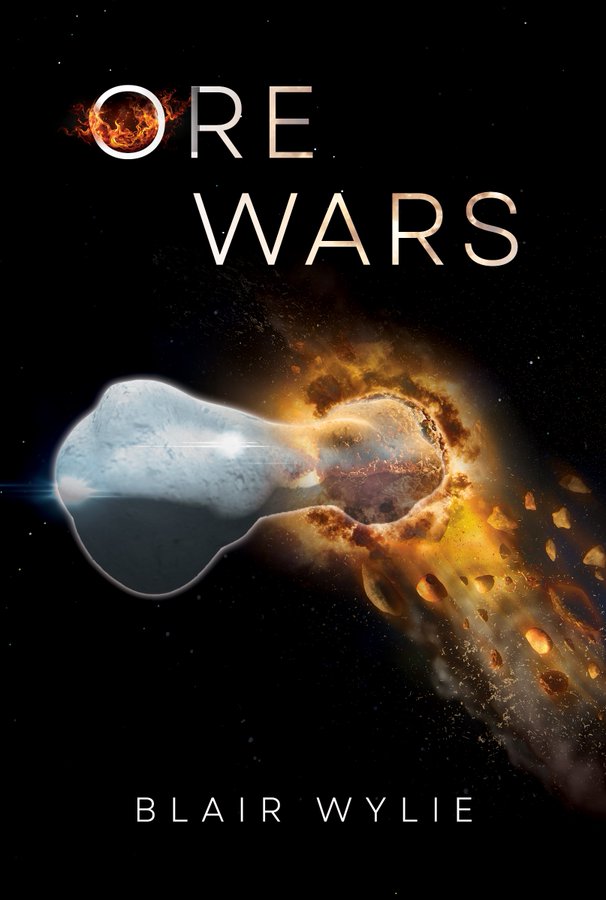
Set in a not-so-distant future, Ore Wars invites readers into a thrilling narrative where humanity ventures beyond Earth to claim the riches of the solar system only to discover they’re not the first ones there. The alien occupants, protective of their territory, aren’t eager to share. What follows is a riveting tale of diplomacy and survival as a courageous team of explorers must navigate interstellar politics, alien cultures, and the brewing tensions back home to secure humanity’s place among the stars.
One of Ore Wars’ most distinctive features is its use of dialogue as a storytelling device. Conversations between characters not only drive the plot but also immerse readers in their world, providing insight into their motivations and the stakes at hand. While some sections, like Captain Aoki’s extended briefing, lean on exposition, the dialogue remains a vital and effective tool for world-building and narrative engagement.
At its core, Ore Wars is more than just a sci-fi adventure, it’s a gripping political thriller. The conflicts feel strikingly real, echoing historical power struggles and the challenges of empire-building. The story’s depiction of the United States and the United Nations competing with an alien power over valuable resources is eerily reminiscent of Earth’s own colonial past. This political drama is brilliantly framed by periodic newspaper-style interludes, which provide additional depth and context, grounding the interstellar stakes in themes that resonate with modern audiences.
The novel’s ensemble cast adds to its appeal, offering a diverse range of perspectives. While some characters could have been explored more deeply, their interactions and collective efforts bring a sense of camaraderie to the narrative. Among them, the cheerful alien Blacky stands out, adding charm and levity to the story. His presence underscores the potential for meaningful connections between species, even amidst conflict.
Ore Wars shines as an ambitious and thought-provoking novel. Its blend of political intrigue, realistic depictions of space travel, and timely commentary on human nature make it a standout in the sci-fi genre. Readers looking for a story that balances thrilling action with sharp social commentary will find much to enjoy in this interstellar epic.

What’s On the Data Cube?

Accidental Intelligence follows a detective who teams up with a manipulative AI to unravel a conspiracy of rogue AIs planning a catastrophic endgame threatening humanity’s survival. What was the inspiration for the setup of your story?
This book came about because I couldn’t let go of the question, “what’s on the data cube?” That’s the data cube found by Subcommander Andrew Bowers at the end of the prologue. That prologue was supposed to be a one-off short story, but I couldn’t let it go. Mason Truman was born because I needed someone that Bowers could turn to for help. I batted around a lot of possibilities for a long time, but eventually settled on a snarky PI who will probably do the right thing. When he has no other options left. Note, too, that Mason also has a problem letting go of needing to know. That’s where I bleed into him, for sure.
The concept of “Eschaton” is both chilling and philosophical. How did you develop this idea, and does it draw from any specific influences?
It starts with the AIs themselves. Seeming partners with humanity—or at least the government and corporate powers—they took their queues on how to act from the only model available: humans. I wanted to explore a world where AIs were just as fractured, just as capable of good and evil, just as duplicitous, and just as capable of machinations as we are. The idea that some AIs would choose to see their plans as “divinely ordained” felt so utterly perfect.
What were some themes that were important for you to explore in this book?
One theme I thoroughly enjoyed was Mason’s struggle with his contempt for the Lost, people who spend all their time in the Omninet. Really, he loathes anyone who willingly spends any time in the Omninet. Most of us would likely see that as exciting—I would probably be among the Lost myself. But Mason sees it as something that’s false, as living a life that isn’t real. His contempt directly hampers him professionally, and it blinds him to some things in his own life. It has even been a wedge between him and his best friend, Peanut.
The most important theme, however, is the nature of life in the Terran Republic. My 2139 is hands down a dystopia. Omnipresent surveillance and a state with the power to disappear people in the name of security is horrific. But I wanted to present it through the eyes of the people living it. I wanted to present it from the standpoint of those who grew up in that world, rather than through the lens of today’s reader. I think I wound up with a functional dystopia where things seem pretty dang good, but thinking about the implications should give most people pause. If I’m lucky, I’ll have left readers with questions.
Can you share any insights into your world-building process and how you created such a richly detailed 2139 setting?
I borrowed liberally from plenty of SciFi sources that came before me. Chief among them is Larry Niven, particularly his Known Space universe. Slidewalks, plasteel, and monofilaments all came from my exposure to his worlds. What I didn’t directly borrow was usually the result of my internal logic process. Factotums seem like a no-brainer to me, just like the brain interfaces through which they work. The same with immersion decks and the way being on the Omninet feels real. Kitchencooks came out of rising temperatures and the need to feed people. Marriage contracts and redefining “family” also feels inevitable. Quantum Vaults came from thinking about how people would try to circumvent state surveillance. And then the battle over whether Quantum Vaults would be permitted by that state (referenced in an epigraph) stemmed from the debates we’ve witnessed in our lifetime over encryption. Everything stemmed from trying to logic my way through the problems at hand. At the same time, I wanted readers to recognize the world, to be able to put themselves into that future, despite the crazy cool and often scary changes inherent in that world.
Author Links: GoodReads | Bluesky | Threads | Facebook | Website
In his debut novel, Bryan Chaffin transports us to the year 2139, where corporate combines have their own Senate seats, the surveillance-state is all-encompassing, humans live most of their lives in the Omninet, and sentient AIs are partners with the world government. It’s not all bad, though. There are docbots, you never have to wait for a taxi, and if you can afford it, you can get your coffee made the old fashioned way, strained from the algae tanks.
ACCIDENTAL INTELLIGENCE
Private detective Mason Truman is being yanked around by invisible strings, and it’s an AI doing the yanking. Miranda. She’s subtle. Crazy. And she thinks she can see the future. It’s enough to drive Mason nuts. Miranda believes her fellow AIs are up to some kind of grand conspiracy against the Terran Republic, and she wants Mason’s help proving it. Conspiracies are above Mason’s pay grade, though, the kind of time-sink that can put a crimp in more serious pursuits. Like drinking coffee. And staying alive.
But Miranda won’t take no for an answer. Mason can help or Miranda will make sure he becomes intimately acquainted with the finer conversational techniques of the secret police. So Mason digs until he uncovers a cache of stolen communications between a cabal of rogue AIs. They’re planning what they call Eschaton—the divinely ordained end of humanity. Unless Mason and Miranda stop the arrogant pricks, the conspirators will destroy Earth.
Mason and Miranda have one chance, a way of bottling up the rogue AIs. All Mason has to do is lure the conspirators to the right spot in a sim world. That’s how Mason learns that when Miranda said she needed help, what she meant was bait.
Something Of A Science Buff

Homeland follows an AI entity living in a world where humans and AI coexist and looks to build a future where humans are no longer part of the plan. What was the initial idea behind this story and how did that transform as you were writing the novel?
The initial idea behind the story was a belief that biological organisms could never travel into deep space. This transformed into a story about A.I. and how it could do so. All the other stuff relates to the original premise. I tried to find characters who would make things real enough.
I found the science in the novel to be well-developed. What kind of research did you do to make sure you got it all right?
Ah, yes, the science. I am something of a science buff, but many hours were spent calculating distances, volumes, FTL figures. Even at that, there is some, shall we say, license taken.
What were some themes that were important for you to explore in this book?
I focused a lot on dialog. Writing in the third-person omniscient requires a lot of dialog.
What is the next book that you are working on and when can your fans expect it to be out?
A sequel is on the way (working title IMPERIUM). It picks up from where HOMELAND ends, with Tigran continuing on as a biosynthloid.
Author Links: Amazon | Facebook
Charles addresses this peril. He is the first of his kind—a hyper-intelligent android created by Dr. Thaddeus Ford to be the near-perfect anatomical replica of a human. Many millions of Charles’ kind follow. They are dubbed “Artinians.” All but one are benign.
This one, Artinian Paulon discovers and seeks to rule “Number,” an astronomical population of diverse, anatomic, nomadic AI beings—appointed stewards of the Milky Way. Paulon does want Earth included in his realm-to-be. In a third storyline, science must come to grips with stark realities about interstellar exploration. Humanity experiences disasters and technical hobbles that must be conceded to—finding redeeming solutions instead.
HOMELAND gives us seven diverse main characters who propel three intertwined plots. Each entertains in their own way, stirring our beliefs and feelings. This is grounded science fiction, making it possible for you to envision a possible future for humankind.
Sins of the Saviors


Sins of the Saviors is a thought-provoking dystopian novel that follows Jane Veristo, a defiant and introspective protagonist grappling with the oppressive surveillance state of Goliath Network. Told through the framework of Jane’s journal entries, the story plunges readers into a bleak future where truth is a commodity, history is rewritten, and rebellion simmers under a suffocating blanket of propaganda. As Jane attempts to uncover the truth about her brother’s suspicious death and the sinister systems around her, her journey becomes a gripping tale of resistance and self-preservation.
One thing I really liked about this story was how personal and raw the writing felt. Jane’s voice is captivating—a blend of bitterness, longing, and weary determination that pulls you in. Her reflections on David’s orchestrated “sacrifice ceremony” were haunting. The contrast between her family’s raw grief and the mechanical, staged nature of the event was chilling. The way the Goliath Network erased her presence at the ceremony, editing her rebellion out of the official narrative, hit hard. It reminded me of how powerful institutions can rewrite reality itself.
Author TJ Relk’s portrayal of the Goliath Network is eerily vivid and inventive. The merit-based economy, where every aspect of life is determined by a fluctuating score, feels all too plausible. Jane’s demotion to a hoverbike after a failed protest over a “weather station” highlights the soul-crushing micromanagement of this society. That scene, where a smug bureaucrat silences Jane with falsified zoning documents, felt like a punch in the gut. It’s infuriating but also deeply compelling. The way truth is malleable under Goliath’s regime mirrors some unsettling trends in our current reliance on digital ecosystems.
However, it’s not all doom and gloom. Relk sprinkles in moments of connection and hope that provide relief amidst the despair. Jane’s relationship with Lily, a spirited teenager who refuses to submit to the lies, was a highlight for me. Lily’s defiance and belief in Jane’s fight reignited a spark of optimism, and I couldn’t help but cheer for both of them. These glimpses of humanity’s resilience are what kept me hooked. The flashbacks to Jane’s time with friends like Caleb also added layers of complexity, showing how even the well-meaning can be complicit in oppressive systems.
I’d recommend Sins of the Saviors to anyone who enjoys dystopian tales that cut close to home, like 1984 or The Handmaid’s Tale. It’s perfect for readers who appreciate flawed, complex characters and morally murky worlds. Be prepared to get angry, sad, and inspired—all in one sitting.
Pages: 69 | ASIN: B0DP5P5P4J
Spark

Pat Daily’s SPARK thrusts readers into a richly imagined virtual world where the stakes feel as real as life itself. At the heart of this gripping sci-fi tale is sixteen-year-old Will Kwan, a foster kid whose life has been shaped by uncertainty. His world changes when he clings to the last words from his birth mother: “Find me, save me.” Those same words appear in SPARK, the Solar Prime Augmented Reality Park, a dazzling digital universe that offers Will a sense of purpose and belonging. What begins as escapism soon turns into a high-stakes mission as Will dives deeper into the realm of SPARK and encounters Feral Daughter, a defiant runaway who has made the park her sanctuary. Together, they unravel secrets that could change everything.
This novel borrows familiar themes from classics like Ender’s Game and modern hits such as Ready Player One. Yet, SPARK stands out for its emotional depth and grounded protagonist. Will Kwan is an easy character to root for, a kid navigating the dual struggles of foster care and the existential questions that come with it. His journey feels genuine. He’s not just looking for a home but searching for identity, closure, and hope. His connection with Feral Daughter, another misfit seeking refuge in SPARK, is compelling and adds emotional weight to the story’s twists.
What’s refreshing is how the book avoids the well-tread sci-fi path of portraying technology as a lurking menace. Instead, it channels the spirit of Jules Verne, celebrating innovation and its ability to unite and empower. SPARK, as a virtual playground, is more than a backdrop; it’s a lifeline for Will and Feral Daughter, as well as countless others who feel alienated in the real world. Daily’s world-building is vibrant and imaginative, making SPARK a place readers will want to explore, even as its darker truths emerge. The stakes in the story rise steadily, intertwining Will’s personal quest with larger, often perilous, discoveries about SPARK itself. Every layer revealed about the virtual realm brings new surprises and challenges for Will.
The narrative’s pacing is taut, and the unfolding mysteries keep readers turning pages. Young adults will especially enjoy this fast-paced adventure, but older sci-fi fans will find themselves equally captivated by the dynamic characters and thoughtful exploration of technology’s role in human connection.
In SPARK, Pat Daily delivers a story that’s as heartfelt as it is thrilling. It’s a celebration of resilience, friendship, and the enduring power of hope. Whether you’re a teen seeking adventure or a seasoned sci-fi enthusiast, this book promises a virtual escape worth taking.
Pages: 458 | ASIN : B0BL193S4P




 LITERARY TITAN