The Ten Permissions invites readers to tear up the old rulebook for what it means to “be an adult” and instead write their own permission slips by offering up ten guiding principles to help navigate a world that feels more uncertain and chaotic than the one prior generations knew. Why was this an important book for you to write?
I’ve spent my whole life helping people navigate profound change – and we’re all navigating pretty profound change right now! I wanted to take all of my learning and experience to help people better navigate this world – when the old rules no longer apply, but we’re not sure we’re allowed to write new ones. My message? We are allowed! In fact, we have to – we have to update how we operate in order to thrive in these fluid times.
What were some ideas that were important for you to share in this book?
I’d say my message around self-permission comprises three ideas: firstly, agency – we need to claim our own agency, to make intentional choices that serve us and suit this moment. Second, adaptability, we need to design much more adaptive life paths in a world where change is now a constant. And thirdly, personal authority or self-authoring – we’ve got to back ourselves, to give ourselves permission to make choices that fit life today rather than defaulting to what’s always been done.
What advice do you have for those who want to redefine their future but are afraid of taking that first step to make meaningful changes?
Start small! Start on a Saturday. Start with things that are low risk or low consequence. You don’t have to blow up your life in order to start making meaningful changes. Think in terms of how you manage your days before you think about how you manage your years.
What is one thing that you hope readers take away from The Ten Permissions?
It’s OK if your life doesn’t look or feel the way you expect/ed it to – whether you’re 24, 44, or 64! – You’re navigating adult life during seriously disruptive times. So give yourself permission to do your life differently – it might not look like your parents’ life, and that’s more than OK.
A playbook for navigating adulthood in the chaos of the 21st century
We need a new approach to being an adult in the 21st century. The old formulas for success no longer add up. Yesterday’s rules no longer apply. The world has transformed, but our internalized operating systems haven’t kept pace. It’s easy to feel overwhelmed and anxious, unsure of what life path you’re allowed to take and what choices you’re supposed to make.
It’s time to give yourself permission to step confidently into this fluid world—to design a life that takes advantage of today’s opportunities rather than defaulting to yesterday’s expectations. The Ten Permissions offers ten specific ways to let go of outdated ways of operating and
• adopt a diverse, adaptive approach to your career; • redefine the metrics of success and security in a volatile world; • build the capabilities to remain relevant and responsive amidst nonstop change.
As a global change facilitator and international aid veteran, Jillian Reilly offers bold, counterintuitive advice to help you thrive in a world that shows no sign of slowing down—and to imagine the kind of future you want to be a part of creating.
The Art of Thinking Critically with Clarity for Optimal Health focuses on sharpening our thinking when it comes to our health. Author Jerome Puryear takes a practical approach, breaking down complex concepts into simple lessons on weighing choices, sorting through misinformation, and making decisions with both heart and reason. He explores ways biases cloud our judgment, how logic strengthens choices, and the tools like emotional intelligence and metacognition that can shape healthier outcomes. What makes it stick is the way he ties everything back to real life, choosing a doctor, weighing treatment options, or simply trying not to drown in endless health information.
Reading it, I felt both challenged and reassured. I appreciated Puryear’s clarity, never hiding behind jargon. Some parts felt a bit heavy with lists and frameworks, almost like a textbook, but that structure also made it easy to digest.
What really stood out for me was his honesty about how messy decision-making can be. He didn’t promise that critical thinking is a magic fix. Instead, he demonstrates that this is a skill we stumble through and build over time. That gave me a sense of relief. I felt less pressure to “get it right” every time. The sections on misinformation and bias also hit close to home for me. I caught myself thinking of moments where I’d trusted a headline or gone with my gut, only to regret it later.
I’d recommend The Art of Thinking Critically with Clarity for Optimal Health to anyone who feels overwhelmed by health choices or just wants to think more clearly day to day. It’s especially useful for people who prefer having a toolkit they can actually use, not just theory. If you want a guide that balances practical advice with a thoughtful framework, this is an essential read.
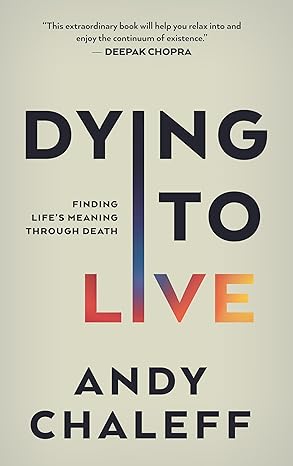
Dying to Live takes readers on an intimate and eye-opening journey, revealing how making peace with mortality can unlock a richer, more meaningful life. Why was this an important book for you to write?
For most of my life, death has been a silent companion, something that shaped my choices more than I realized. From losing my mother when I was young to the many moments since where mortality came close, I’ve learned that it isn’t something to fear as much as it is something to learn from. Writing this book was a way of bringing those lessons forward, not only for myself but for anyone who has ever felt the weight of impermanence and wondered how to live more fully because of it.
What were some ideas that were important for you to share in this book?
I wanted to show that death is not just an end but also a mirror. It reflects back the stories we’ve been telling ourselves, the identities we cling to, and the fears we avoid. One idea that mattered to me was the practice of “dying to live,” which is about shedding old roles, patterns, and emotional baggage so that we can step into a freer, more authentic life. I also wanted to share that this work isn’t abstract philosophy. It is lived, messy, human. My stories are meant to open space for readers to look at their own lives with gentleness and courage.
How has writing Dying to Live impacted or changed your life?
The writing process forced me to sit with truths I might have preferred to leave buried. It slowed me down, made me listen more deeply to myself, and invited me to face the places I still resisted. In doing that, I found more ease, more gratitude in the everyday. By leaning into death I became more alive, more playful even. It reminded me that life is fragile, fleeting, and far too precious to postpone.
What do you hope is one thing readers take away from your story?
That it is possible to turn toward death without being consumed by it. My hope is that readers will feel less alone in their fears and more connected to the beauty of simply being here. If even one person puts the book down and feels a little lighter, a little freer to live with love and presence, then it has done its job.
What if embracing death is the key to truly living? We spend our lives avoiding the thought of death-yet its presence shapes everything we do. In Dying to Live, Andy Chaleff takes readers on an intimate and eye-opening journey, revealing how making peace with mortality can unlock a richer, more meaningful life. Blending memoir, philosophy, and deeply personal reflections, Chaleff invites us to step beyond society’s distractions and face death with curiosity rather than fear. Through poignant stories and thought-provoking questions, he helps us see that dying isn’t the end of life’s meaning-it’s where we finally begin to understand it.
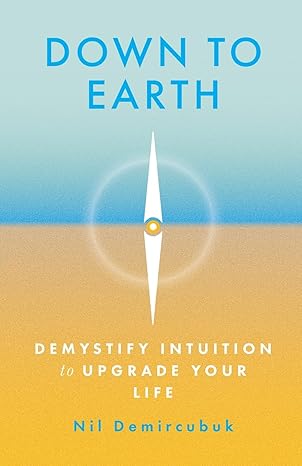
Down to Earth: Demystify Intuition to Upgrade Your Life is a thoughtful blend of personal stories, practical exercises, and scientific studies. Author Nil Demircubuk lays out intuition not as a mystical talent but as an everyday skill, one that we all carry yet often forget to use. The book moves step by step, first explaining what intuition is and how it shows up in daily life, then offering exercises to tune into it more deliberately. She mixes neuroscience and psychology research with approachable examples and even playful assignments, which makes the book read less like a lecture and more like a conversation with a wise friend.
Reading this book, I felt both reassured and challenged. I liked the way Demircubuk stripped intuition of its usual mysticism and treated it as something practical. Her writing has warmth, and the personal stories sprinkled throughout made the concepts come alive. I found myself nodding when she talked about ignoring gut feelings and regretting it later, because who hasn’t done that? At times, the research examples slowed me down, yet I appreciated that she backed up her claims with evidence rather than relying only on personal testimony. The mix of science and storytelling struck a nice balance, though occasionally I wished she had leaned harder into her own experiences, which were some of the most compelling parts.
What really surprised me was how usable the exercises were. I tried a couple of her journaling prompts, and to my surprise, they worked. I caught small flashes of intuition that I usually dismiss. The tone of the book is encouraging without being pushy, and it never once felt like she was talking down to me. The book reiterates the idea that intuition is accessible to everyone. The honesty of her voice and her clear care for the reader softened the delivery. It felt less like she was preaching and more like she was reminding me of something I already knew but had buried.
I’d recommend Down to Earth to anyone who feels stuck in overthinking or who second-guesses every decision. It’s especially suited for people who like a mix of science and spirituality but don’t want anything too airy. If you’re curious about intuition yet skeptical of mysticism, this book bridges the gap with warmth, practicality, and an open mind. It’s not a book to skim. It’s one to sit with, dog-ear, and revisit when you need a nudge back to yourself.
Andy Chaleff’s Dying to Live is part memoir, part meditation, and all heart. With the tone of an honest friend and the vulnerability of someone who’s walked through fire, Chaleff invites readers into an intimate, sometimes raw conversation about death and, maybe more importantly, about how thinking about death helps us actually live. This isn’t a book that preaches answers. Instead, it’s a meandering, deeply personal journey through loss, fear, letting go, and making peace. From the death of a childhood dog to the gut-wrenching loss of his mother, and on through reflections on identity, legacy, and even sex and silence, Chaleff wrestles openly with life’s biggest unknown.
What struck me first was how disarmingly simple and powerful the writing is. Chaleff doesn’t try to impress with fancy language. He speaks like someone who just wants to be understood. He writes about the death of his dog, Apricot, when he was six, and how that loss introduced him to what he calls the “gray zone,” a numbing fog that returns every time grief visits. His ability to recall that moment without filtering it through adult logic gives the story a punch of realness. And when he says, “Buying this toy is just a way to bring a little joy back into your life, not a reward for your grief,” I teared up. It reminded me of how often we try to patch grief with distractions and don’t realize we can feel two things at once, sad and grateful, broken and hopeful.
One of the most impactful chapters, for me, was Chaleff’s account of learning about his mother’s death in a car accident, a moment that irrevocably altered the course of his life. He connects this devastating event to the parable of “The Farmer and the Horse,” suggesting that it is often impossible to immediately discern whether a moment is truly good or bad. That kind of spiritual patience is rare and difficult to cultivate, yet Chaleff communicates it with quiet clarity. It’s this calm, unembellished insight that elevates the book beyond memoir; it becomes something closer to healing.
Another particularly striking section is when Chaleff reflects on the profound shift that occurs after the loss of both parents, the realization that he now stands closest to death. While the subject is inherently somber, his description of sorting through old boxes and choosing to let go of long-kept mementos carries a quiet elegance. “It wasn’t about erasing the past,” he writes, “but making space for the present and future.” That sentiment lingered with me. It prompted me to consider the things I’ve held onto, not out of necessity, but because they anchor a sense of identity. Chaleff’s exploration of detachment is neither rigid nor emotionally distant; it is sincere, deeply personal, and quietly resonant.
Dying to Live is not so much a book about death as it is a meditation on how to live with greater presence and depth. It speaks to those who have experienced profound loss, who find themselves quietly wrestling with mortality in the still hours of the night, and who carry unresolved grief just beneath the surface of daily life. It is especially meaningful for readers who yearn to live more intentionally but may not know where to begin. I would recommend it to anyone prepared to pause, reflect deeply, and perhaps be moved in unexpected and lasting ways.
No Filter tells the story of a man who grew up in a home marked by abuse, found escape in skateboarding, entered the Army at 19, and lived through combat, trauma, and broken relationships before turning his pain into purpose. Author William Stephens lays out his journey with raw honesty. He doesn’t hold back on the violence he witnessed as a child, the battles he fought overseas, or the mistakes he made as a father and husband. Woven through it all is the growth of his platform, 1821 Productions, a community built on giving voice to those who feel unheard.
The writing itself isn’t polished or pretty, and that’s what makes it powerful. The short bursts of thought, the blunt admissions, the cursing when softer words won’t do. It all feels alive and immediate. I could hear his voice in every sentence, like he was sitting across from me, telling it straight. Sometimes the stories are hard to read because of the pain inside them, but that rawness makes them believable. It’s the opposite of a filtered memoir. At times, I felt frustrated with the choices he made, especially in how he treated his family, yet I also felt the weight of the demons he carried. That mix of honesty and imperfection made me respect the story even more.
What also stood out was the message underneath the chaos. Stephens isn’t asking for pity; he’s asking people to listen, to learn, and to keep going. His thoughts on credibility, leadership, and authorship resonated with a kind of tough love I didn’t expect. He’s not telling readers how to be successful. He’s warning them about the traps, the scammers, and the fake promises that he himself fell for. I could feel his hope that others might avoid the same scars. That blend of hard lessons and encouragement gave the book a surprising warmth, even when the stories got dark.
I’d recommend No Filter to anyone who values real, unvarnished storytelling. It’s not for readers looking for smooth prose or neatly tied-up endings. This is for people who want the truth, spoken in a voice that shakes but doesn’t quit. Veterans, struggling parents, survivors of abuse, and even aspiring writers will find something here to hold onto. It’s a tough book, but it’s also a hopeful one, and I’m glad I read it.
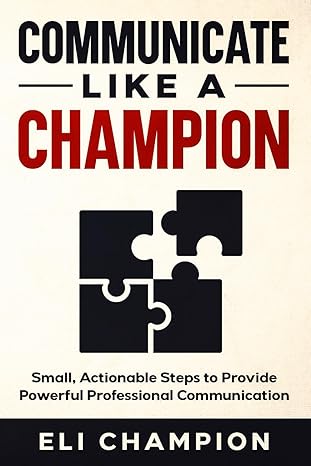
Eli Champion’s Communicate Like a Champion is a straightforward, practical guide to improving professional communication. The book breaks down why communication matters, how intentions shape interactions, what factors influence the way messages are received, and how to put strategies into practice with clarity and empathy. It’s full of simple, actionable steps, like clarifying your purpose before a meeting, checking tone in emails, and following up after conversations, that aim to make anyone a more confident and respected communicator.
What stood out to me initially was the book’s emphasis on practical application rather than abstract theory. Champion illustrates this with the example of a manager calling for “a quick meeting” without providing context. As he explains, such ambiguity often leaves employees uncertain and anxious, unsure whether they have erred or whether the meeting is merely routine. I found this example particularly resonant, having experienced the situation from both perspectives as the uneasy employee and as the manager who failed to provide sufficient clarity. The recommended adjustments, such as stating the purpose of the meeting at the outset or clarifying next steps before closing, are deceptively simple yet highly effective. I could immediately envision how these practices would have alleviated unnecessary tension and improved understanding. This emphasis on directness and transparency exemplifies the book’s core message: communicate with precision to minimize confusion and foster confidence.
I found the chapter on the “7 Components of Communication” particularly instructive. While the framework, clarity, confidence, respect, listening, tone, empathy, and follow-up may appear familiar, Champion’s illustrations prompted meaningful reflection on my own communication practices. One example contrasted the response “I don’t think that will work” with the more considerate phrasing, “I see your point, but can I offer another perspective?” The distinction is subtle yet powerful, highlighting how word choice and tone can determine whether a message is received as dismissive or constructive. Confronted with this comparison, I recognized moments when I have defaulted to the blunt response, often unintentionally undermining collaboration. The example served as a useful reminder of the value of consistently striving for a more respectful approach.
Another notable feature of the book is the 28-day communication challenge. Organized around weekly themes, such as clarity, listening, empathy, and follow-up, it provides daily prompts that encourage practical application, including exercises like restating a colleague’s point to confirm understanding or sending a follow-up email after a meeting. I appreciated that this section moves beyond theory to establish a structured practice routine. When I applied one of the suggested exercises, clarifying my intention at the beginning of a meeting, I was struck by how much more effectively the conversation unfolded. The challenge, paired with the book’s approachable tone, created the sense of being guided by a mentor offering encouragement, rather than being instructed by a prescriptive voice.
I found Communicate Like a Champion to be highly practical and accessible. Rather than relying on jargon or overly complex frameworks, it presents straightforward tools and encourages consistent application. I would recommend this book to early-career professionals seeking to develop confidence, to managers aiming to strengthen their leadership presence, and to anyone who has left a conversation feeling uncertain about its outcome. With reflection and deliberate practice, the strategies outlined here have the potential to significantly improve the way one engages in meetings, correspondence, and professional interactions more broadly.
Culture Re-wired is part wake-up call, part playbook, and part pep talk. Author Ida Byrd-Hill dives straight into the heart of how artificial intelligence is reshaping business and insists that culture, not tech alone, determines who wins in this race. She draws on case studies, industry data, and real-life examples to demonstrate that both frontline workers and CEOs need to view AI as a partner, not a replacement. The book argues that human creativity, emotional intelligence, and culture are what turn AI into a genuine growth engine.
The writing style took me by surprise. It’s bold, loud, and packed with metaphors that sometimes felt like a pep rally. But the energy worked for me because the subject is urgent. The author doesn’t whitewash the fears people have about losing their jobs to AI, and she doesn’t dismiss those fears either. Instead, she shows how fear can kill innovation if it’s ignored. I found myself nodding along when she described middle managers as bottlenecks. I’ve seen that happen, and her advice on rewiring leadership training to focus on people skills resonated with me.
At the same time, I caught myself smiling at her bluntness. She doesn’t dance around her points, and that made the book fly by. The mix of statistics and case studies kept things grounded, but what I really liked were the stories of companies like Ford and Bank of America that had to push past cultural resistance to make AI stick. It’s one thing to say “culture matters,” but it’s another to show how culture literally makes or breaks billion-dollar rollouts. Reading those sections made me feel hopeful that AI doesn’t have to be a cold or scary thing. It can make work better if leaders get it right.
I’d recommend this book to managers, executives, and anyone who feels anxious about AI creeping into their job. It isn’t a technical manual. It’s about mindset. If you want to understand how culture drives technology instead of the other way around, I highly recommend this book. It’s equal parts practical advice and rallying cry, and it left me energized.








 LITERARY TITAN