Blog Archives
Broken: The Founder’s Seed Book 2


When I opened Broken, I was immediately pulled into a world brimming with tension, betrayal, and the complicated weight of carrying other people’s lives inside your own head. Drema Deòraich’s story follows Alira, Galen, and Thrace as they navigate shifting identities, political intrigue, and the brutal cost of survival among human and unammi factions. The author builds a layered tale of power struggles, loyalty, and moral compromise, where every choice feels like a thread tugging at the larger web. The book is about what it means to stay whole when you are forced to fracture yourself for the sake of others.
The writing has a pace that rarely lets up, and the dialogue carries a sharpness that feels lived-in. The shifting perspectives, the sudden bursts of violence, and the moments of quiet reflection all come together to create a rhythm that feels alive. At times, the narrative voices inside Alira’s head became almost overwhelming to read, but I realized that was the point. It mirrored her chaos, her crowded sense of self. I found myself admiring how boldly Deòraich leaned into that confusion, refusing to make it easy for the reader, because life inside a fractured mind is never easy.
Beyond the writing, I was moved by the book’s ideas. Questions about identity, about whether survival justifies the blood on your hands, and about how much of yourself you can give away before there’s nothing left. I was thinking about these ideas for a long time afterwards. I felt both sorrow and admiration for Alira. Her choices often frustrated me, yet I couldn’t help but ache for her struggle. The themes of slavery and exploitation, woven into the politics of the factions, hit me hard. They were ugly and uncomfortable, and that’s exactly why they mattered. Deòraich didn’t flinch from showing cruelty, and in that honesty, the book had teeth.
Reading Broken reminded me of Frank Herbert’s Dune in the way it blends political intrigue with questions of identity and survival, but it feels more intimate and raw, pulling me closer to the characters’ inner battles. I’d recommend Broken to readers who love science fiction that challenges them. If you like tales that balance heart with grit, that mix character-driven drama with political maneuvering, this book is more than worth your time.
Pages: 420 | ASIN : B0DLTLQMQP

Self-Discovery Path

The 7th Dimension follows a plastic surgeon with mysterious tattoos he believes are connected to larger events unfolding around him, who embarks on a journey that leads him down a path toward the divine. I found Derek Hollinger to be an intriguing and well-developed character. What was your inspiration for this character?
I didn’t realize it until a few years later. Me. I had been diagnosed with stage three breast cancer and didn’t know if I would survive. This pulls the rug out from under your world. How you handle it is with the tools you have in your tool box. Some people don’t even have a tool box. That was Dr. Derek Hollinger.
What themes were particularly important for you to explore in this book?
Self-discovery path. Why we end up where we are and what to do about it.
When will the next book be available? Can you give us an idea of where that book will take readers?
The 6th Heaven September 17th, 2025. The Amazon jungle is captivating. Venturing into its depths is like exploring the hidden corners of the mind. The jungle hosts an array of remarkable creatures, including the mighty jaguar, the massive green anaconda, shocking electric eels, and flesh-eating piranhas. Just as travelers must remain vigilant and highly aware of their surroundings, we ourselves must be alert when exploring the concealed areas of our minds, where our deep personal thoughts and emotions reside. Like the jungle, it will reveal its secrets.
Author Links: GoodReads | X (Twitter) | Facebook | Website | Amazon
Derek Hollinger isn’t sure, but he knows they’re all connected to the mysterious tattoos that suddenly appeared across his body.
Determined to untangle the web spun by the vicious thug known as “Spider,” Derek embarks on a journey of redemption that leads from his lavish Los Angeles penthouse to the seedy world of underground fighting and human trafficking. But as he ventures deeper down the rabbit hole, the self-exiled plastic surgeon realizes that the answer lies within his heart and mind … and soul.
Faith is the key to reclaiming his life, but choosing God may be difficult for Derek, who has spent his entire career valuing material success over spiritual growth.
In this thrilling sequel to 21Tattoos, Derek must face the hard truth about where his tattoos came from and an even harder truth about what it will take to be free of them once and for all.
Depth and Detail

Pandemic Hacker 2 follows a stubborn and resilient woman who transforms her body to be unrecognizable to her enemies; she and her AI partner work to take down an extortion and trafficking group. What was the inspiration for the setup of your story?
The original story idea was to have a hacker who figured out something significant that was part of the plot. It was my first novel, and learning about the process, I changed the plot. The original technical idea is part of the story and subplot, but not the main plot. I also wanted to create a character who wasn’t like the hackers on TV (click, click, click, I’m in.) There is depth and detail to the technology that a group of readers doesn’t get anywhere else. Then, to make it enjoyable, what if she found something, a group that was hidden, that operated outside of the law because they had corrupted the groups that could stop them (FBI). How could she navigate that kind of world? The pandemic setting helps and hurts in different ways, allowing me to present the reader with various viewpoints about our world.
Martha is a woman with strength and determination who refuses to give up. What do you think makes her a valuable and worthy heroine?
She is confident in her ability to do the special operations stuff. She is confident in her hacking, especially with Zoe’s help. She has a compulsion to clean. She grew up poor and won’t spend money on herself, even though she has millions. Partially because of the pandemic, she only has one read friend. She can’t just make friends with new people and expose them to the killer organization. She is learning and growing in Pandemic Hacker 2. By the end of the book, there are several people now part of the group fighting the bad guys. She is looking forward to living again, not just surviving. The ending aims to convey the completion of the journey that began with her asking if all the pain and being alone are worth it.
I find that authors sometimes ask themselves questions and let their characters answer them. Do you think this is true for your characters?
Yes. But my questions are sometimes odd to others. How could someone travel across the country in a few days without being tracked? How would you send a specific, untraceable message to the FBI that you are sure they will see and notice? What evil actions and behaviors would motivate people to help a stranger if they knew helping would be dangerous for themselves?
Where does the next book in the series take the characters?
The first two books dealt with the evil group and revolved around corrupt authorities. The idea for the next book is to explore cleaning up an organization that could be of help. That could start to turn the tide. Who can you trust, who can’t be corrupted? Can you help the good guys so they can help you?
Author Links: GoodReads | Facebook | Website | Amazon
The group leaders operate with impunity. Their security and IT teams are formidable. But Martha is determined to dismantle their empire, stealing their ill-gotten money and learning their secrets. With each strike, the group’s IT experts get closer to knowing her and Zoe’s identities.
The engagements are not just on the internet. Every physical disruption puts everyone in danger. Rejoining with Claire, the chase has become a high-stakes game of cat and mouse. Both sides believe they’re the top predator.
Innocent lives can be destroyed. Is the best option to expose the leaders to the authorities or work to remove the hydra heads of the organization? Martha must navigate the physical world, while Zoe works to dominate the virtual one.
Self-Discovery

The Dryad’s Crown follows an orphaned wood nymph raised in a corrupt city and trained to be an assassin who finds a way to escape her violent past, only to be pulled back by a tragic death and seek revenge. What was the inspiration for the setup of your story?
As a kid, I loved epic fantasy, and I loved superhero stories. I was a huge Marvel Comics nerd. Still am! Originally, The Dryad’s Crown came to me from the perspective of the husband and him discovering that his wife had this whole past and an alter ego. She had these amazing powers. But as I was thinking about it, I decided to tell the story from the perspective of the wife and daughter. Yes, there’s still the alter ego aspect, but it became a larger story about self-discovery and healing. As a novelist, I can make my canvas as large as I want it to be. So, I became interested in telling a massive multi-generational saga about the fey and the gods living among us.
I find the world you created in this novel brimming with possibilities. Where did the inspiration for the setting come from, and how did it change as you were writing?
I spent about a year working on just the setting before I started writing the story. I wanted to create a fantasy world that felt immediately recognizable and required little explanation. Like Middle Earth, Westeros, the Continent, or the Six Duchies, the continent of Amon in Efre Ousel is all vaguely medieval and vaguely European. I’m not inventing anything new. Efre Ousel is a medieval world. Few of the comforts we associate with a more modern age exist. Nobles from coastal cities would have access to books, finer clothes, spices, and herbal medicine, but it’s an extravagance not available to everyone. No printing presses—only patient scribes with a quill and an inkpot. To me, it. came down to one guiding statement: “There are more secrets, wonders, and mysteries contained within these four continents and the seas between them than could be explored in several lifetimes.” I wanted a setting where I would never run out of stories to tell.
The goal was then to share rich details and nuance from the setting over the course of the first novel, to explore the history, mythology, and cosmology of this place. I wanted to delight readers with all the unique customs, common phrases, and distinctive art. My favorite part about a fantasy setting is when it has a “lived-in” quality. Not something that was invented, but explored. I can turn any corner, and I know there will be something there.
The setting didn’t change as I was writing. It was already fairly locked in. It just expanded as our characters traveled out from their home.
What were some themes that were important for you to explore in this book?
In The Dryad’s Crown, I wrote about family, self-discovery, healing, mercy, love, and much more. But as I understand theme, I think it’s the reader’s responsibility to decide what the themes are, i.e., what is being said about those subjects. You don’t want the author making declarations about such things, but they’re usually wrong. Maybe The Dryad’s Crown isn’t saying anything? I hope it is, but I’ll leave it to the reader. I will say this: Maricel’s story arc is one of my favorites, moving from being fairly helpless to quite capable and self-reliant. I think there’s something there. I also love Timon’s story. He’s a priest who hid away in his temple, and by the end, he understands his true calling. If you’re looking for themes, I think the “minor characters” also have a lot to say.
Where does the story go in the next book, and where do you see it going in the future?
The next book, War of the Hounds, is a novella interlude that tells the story of Bren Caius during the war. It’s based on Shakespeare’s Henry V. War of the Hounds is already published and available. People can download the ebook for free from my website. (Link below.) However, I’m currently writing the second novel in the main series. The Summer Sword should be available next year.
I gave some hints toward the end of The Dryad’s Crown about where the story was going. We find out about a promise made between a god and the Fey Court. That will have some repercussions. We also learn more about Mendal Caius and his ambitions. In The Summer Sword, we lose some important people. New characters are introduced, but don’t expect everyone to make it to the end. The Dryad’s Crown is fairly self-contained as a story. But once you get into The Summer Sword, we’re cutting the brake lines and going full speed. Jump out at your own risk!
Author Links: GoodReads | Facebook | Website | Amazon
Only one fae can keep them from waking.
Silbrey is an orphaned wood nymph, taken from her forest home and raised in the corrupt city of Penderyn. The fae child grows up unaware of who she is, what she can do, and the calling of her kind.
Under the control of a cruel guildmaster, Silbrey is trained as an assassin. As an adult, she escapes her violent past to start a new life and a family. But a tragic death brings her back to the familiar cobbled streets to seek revenge.
This dark path leads Silbrey to uncover an even darker secret: An ancient evil will wake the titans and break the world. Silbrey must travel with her daughter across a war-torn land to defeat that evil.
What begins as a fairy tale transforms into a multi-generational epic fantasy about love and loss—and a woman with a strange connection to nature.
The Dryad’s Crown is an emotional, coming-of-age fantasy debut. The first volume in a gritty saga, set in the immersive world of Efre Ousel.
Booklife describes the story as “a fantasy unlike any other.”
Secret Supernatural Past

The Last Dungeon Crawler follows a morally gray explorer into a deadly underwater quest for a mythical artifact, where collapsing tunnels, political machinations, and ancient magic threaten to destroy them both. What was the inspiration for the setup of your story?
Fahlgrim/Frank started out as a Dungeons and Dragons character that I played in Dungeon Crawls with my friends. Over time, I was thinking about writing a comic book about a hero who was an immortal dwarf cleric in New York City. I ultimately decided that the stakes had to be bigger than just fighting street-level crime. That inspired me to create Fahlgrim’s world and his entire tragic backstory.
Frank Barbarossa walks a fine line between hero and antihero. How did you shape his moral ambiguity?
Frank/Fahlgrim is what you would call “Chaotic good,” bordering closely to “Chaotic neutral.” He is less concerned about rules and the feelings of others and is focused on his 6,000-year-old mission: protecting mankind by destroying all remnants of the world’s secret supernatural past. He will stop at nothing to succeed, and sees everyone as either a tool to achieve that end or an obstacle in his way.
The book hints at the supernatural. Was that a deliberate creative choice or something you plan to expand in future stories?
Deliberate. The Last Dungeon Crawler is first and foremost a Fantasy novel. Steeped in the lore of magic and supernatural beings. In our reality, Tolkien’s works were a huge inspiration for my writing. In Frank/Fahlgrim’s reality, his world and his exploits spawned the legends and myths that ultimately inspired Tolkien to create his literary universe.
This is book one in The Fahlgrim Firebeard Saga. What can readers expect in book two?
Book two, which I am currently writing, will explore the supernatural in more detail and reveal more about the various lives Fahlgrim has led over the course of 6000 years. The working title is Tears of the Dragon, and I am targeting a June 2026 release.
Author Links: GoodReads | Amazon
By day, Franklin Barbarossa is an eccentric NYU professor. But behind the books and lectures stands Fahlgrim Firebeard—battle-worn dwarf, last cleric of a forgotten god, and the final guardian in a war that has faded into myth and legend. And now, the darkness he once bled to stop is rising again.
When a relic of unspeakable power resurfaces in New York City, the barrier between myth and reality begins to crack. Shadows stir in the alleys. Old enemies gather strength. And an ancient evil, thought buried forever, is awakening.
To stop it, Fahlgrim must face the ghosts of his past, forge unlikely alliances, and fight battles no mortal could endure. The stakes are nothing less than the survival of a world that no longer believes in heroes.
Some evils never die, but some heroes never yield.
Perfect for fans of modern fantasy with ancient magic, relentless action, and battle-scarred heroes who refuse to surrender—The Last Dungeon Crawler is your next epic read.
Warrior Mystics
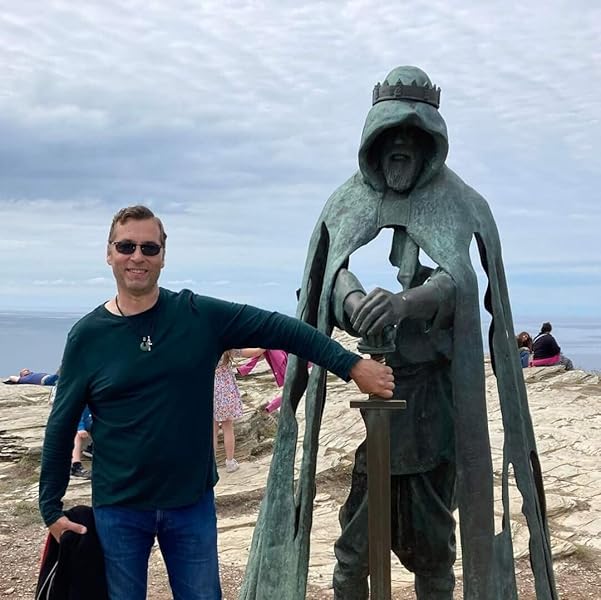
A Shroud of Sorcery centers around a mystic and his companions, simultaneously navigating tribal politics and the emergence of a ritualistic killer. What was the inspiration for the setup of your story?
I visited a hillfort in Shropshire called Bury Ditches about a year before I started writing. Whilst there, I imagined what it would be like at the pivotal point in ancient British history when these Iron age tribes with their pagan beliefs and mysticism came up against the technologically advanced but brutal Roman Empire as they took over Britain. Other sites, such as the great stone circles at Avebury, inspire me to think of what spiritual and magical beliefs led the builders and successive generations to build and use these monuments. What if they were not just meeting places or locations to celebrate the dead, but, instead, they were used by tribal mystics, mages, and seers? In this book, I wanted to use these ancient sites more dramatically to weave a fantastical, yet believable tale, and still within a real historical framework.
A Shroud of Sorcery continues to explore the tensions within the Cornovii. Big characters such as Toryn remain loud and full of bluster, and just when you think he and Alba are getting along, it can change in an instant. These interactions are forced into cooperation both by the ritualistic killings and the ongoing Roman threat. It was important to me that the characters should be believable, yet colourful enough for the reader to understand their loyalties, emotions, and personal circumstances to explain how they interact. Even lesser characters like Duro had to have a personality that, whilst unpleasant, fits within a culture of its time. In this book, I explore more of Favius’s background – what made him the cold killer he became with a look at his initial history of assassinations within the Organisation. He also represents the opposite of the likes of Toryn, who airs his views and emotions (and anger) openly, whilst Favius connives and plots in secret. Both are strong, both are very different.
A Shroud of Sorcery has several moments where the darkness of the sorcerer’s actions or the threat of the Roman legions are balanced by introducing moments of humanity, and sometimes these prevail, others they do not. This was an exploration of character, and I wanted to illustrate how light and dark, good and evil are not absolutes; there are positions in between these two polar opposites, such is real life. For example, the sorcerer occasionally makes a decision not to kill, but I want the reader to understand why that is, and hopefully that comes through in the book. Favius can be brutal, but he always acts from his own reasoning or logic, dispassionate though it is. Of all the characters, he is the most absolute for there is no compassion in a void.
The sorcerer was conceived to be a complex character, not just someone who kills with barbarity. The story weaves a tale around their origin, which explains where they came from, but deliberately sets up the reader to realize that environment is not always the explainer for evil actions. Yet, there are times when a sliver of compassion hovers intriguingly about their decision to let someone live, but would you rely on it – probably not!
How did you handle balancing the power and use of magic in the story?
I wanted the use of magic to be menacing and dark, but at the same time grounded and believable. The contrast between the sorcerer (dark) and Alba (light) exemplifies how, like our own modern technology, there is no good or bad magic or technology; rather, it comes down to the people who use it for good or ill. As such, magic in the story is a tool, used to project good or evil, but it is still a tool. Because I use it in this way, it becomes an aspect of the characters, who are the real power. In contrast, Favius, who (as far as we know) is not skilled in the dark arts, uses his power to steer the Roman Empire to the will of the Organisation. He does not need tools such as magic and instead uses assets like the sorcerer or his legionary commanders to achieve his aims.
The use of magic in this book is what delivers the main threat. Even Alba, when emotionally compromised, can use it for ill, and at one point we see that when he and Toryn have one of their disagreements. It is the threat of magic and its use for evil that first brings Toryn to Alba, for even a seasoned warrior such as Toryn knows his limitations when faced with such a force.
What do you think were some of the defining moments in Alba’s development?
As a character, Alba had to be first and foremost a man who believed in the old ways – someone who viewed his culture and history as something worth protecting in the face of a powerful conquering empire that regarded him and his kind as nothing more than barbarians and subhumans.
I have set him at a time when the Cornovii’s entire way of life is under threat, including their beliefs in their own gods. Set amongst this, he is one of the last remaining warrior mystics, capable of fighting with sword or bow as well as skilled in ways of magic.
In A Shroud of Sorcery, Alba is also defined by loss. The love of his life is gone, lost to a sickness which would of course have been a constant threat two thousand years ago. Grief often leaves a hole, and for Alba, that is an exploitable weakness as we see the sorcerer take advantage of (and for other reasons!). Alba worries about his tribe becoming redundant and subsumed within the Roman empire, but there is also the doubt he has over his own skills becoming redundant. This is not merely because his is a declining art but also that his knowledge and his own skills in magic have become stale and stuck. In contrast, the sorcerer has knowledge that he does not have, and this plays out in his mind as a character flaw.
Alba’s balance is often Argyll, who, with friendship and humour, keeps him centred. I originally conceived Alba as more of a loner, potentially with just a horse or dog as a companion, but I wrote Argyll as someone who could provide a deeper interplay – someone who can hold his own in a fight, who backs up Alba in a fight, and who keeps him focused on his own abilities in the face of whatever threat faces them.
Can fans look forward to seeing Book 3 of the Alba Mysteries released soon? Where will it take readers?
Planning for Book 3 is underway, and I aim to start writing in October. I have outlined the overall plotline and visited some of the locations that will feature in it.
I have also started writing a side novel, focused on Favius and the Organisation he works for. Set in multiple locations, it explores his younger years when he was climbing the ranks of the Organisation and becoming one of their top assassins. I have not yet decided whether to release this before or after the third book – we will see!
Author Links: Goodreads | Website | Amazon
“In all the legends the child is taken and trained in the magickal arts. Seldom do they return.”
Attempting to subvert the native Cornovii to Imperial rule, the Romans are increasing their presence in one last effort to turn the barbarian to Roman rule. Legionary commanders want all-out war; an opportunity to defeat Cornovii resistance once and for all which will send a powerful message to other British tribes who resist.
The Organisation, the hidden overlords of Imperial rule, deploy a new asset to encourage the barbarian Cornovii tribe to turn to Rome for their protection. A series of brutal murders follow where victims bear witness to ritual magick and sorcery.
Cornovii warrior mage Alba must uncover an adversary who has deep knowledge of the dark arts, perhaps exceeding his own. Their identity is a mystery reaching into the most ancient myths of the craft. The killer uses illusion to subjugate their victims and soon Alba finds himself battling elemental entities, hexes and even traps laid in the dreamworld.
Chieftains, tribal elders, spies and assassins inhabitant the turbulent and often violent world of Roman Britain, where the old ways of magick and tribal allegiance slam into Empire and Imperial domination.
Set in the mysterious landscape of ancient Britain amongst stone circles, hillforts and rock caves, A Shroud of Sorcery takes the reader on a journey into the mists of another time where magick, conflict and a secret organisation will determine the future of an entire tribe.
A Shroud of Sorcery is the second book in the Alba Mysteries.
Where history meets fantasy; where magick meets reality.
Case Files from the Nightfall Detective Agency: Fury of the Vampire
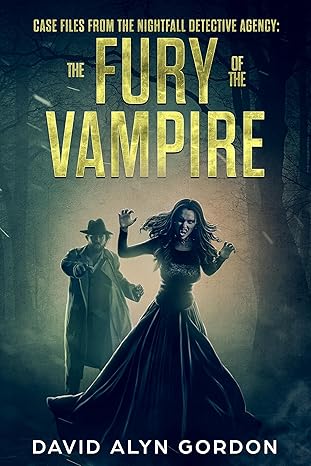
David Alyn Gordon’s Fury of the Vampire is a sweeping supernatural thriller that jumps across centuries, from ancient Jerusalem to 1920s Arizona, weaving together myth, history, and horror. The story follows vampires, werewolves, jinn, and humans caught in webs of betrayal, love, and ambition. At its heart is the eternal struggle between Lilith, Abram, and a cast of characters tied to mystical objects like the Ring of Solomon. Intertwined with this are political conspiracies, mob dealings, and the simmering tension of racial injustice in early 20th-century America. It’s a bold mix of folklore, pulp action, and noir detective work.
I enjoyed how daringly the author blends myth with history. Seeing Lilith spar with Abram in one chapter and then finding myself in the smoke-filled dance halls of Prohibition-era Tucson in the next kept me hooked. The pacing is brisk, and the action scenes pop with energy. I found myself leaning in whenever vampires clashed with werewolves or when political schemers whispered in dark corners. The dialogue can be blunt, sometimes even melodramatic, but it fits the pulpy, high-stakes feel of the book. It reminded me of flipping through an old serialized adventure, where the thrill matters more than polish.
Some passages carry raw emotional weight, like Malia grieving for her cousin, while other scenes are exaggerated. That didn’t ruin the ride for me, though. If anything, it made the book feel unpredictable. I enjoyed how unapologetically it leaned into its own wildness. It’s not a quiet or subtle novel; it’s brash, bloody, and loud. And I have to admit, I had fun with that. Sometimes I rolled my eyes, other times I grinned, and a few moments genuinely made me pause and think, especially the parts dealing with cultural memory and injustice.
I’d say Fury of the Vampire is best for readers who love fast-moving supernatural adventures, who don’t mind a little chaos in their fiction, and who want something that feels both familiar and refreshingly strange. If you’re into folklore reimagined as a gritty pulp detective saga, this is your book. It’s messy, it’s fierce, and it absolutely has bite.
Pages: 164 | ASIN : B0FLTB1L71

Authenticity and Spirituality

Grand Illusion follows a gifted Balinese fabric artist who meets a wealthy heir from the Emirates, who introduces her to a world of opulence and power, far from her roots and heritage. What was the inspiration for the setup of your story?
The setup began at the ending of Moroccan Sunset. Zayn Al Farooq was introduced as the youngest of Elena’s older brothers. We saw that he was into the privileges his family’s wealth provided. Yet he was fascinated by Mara’s ethereal beauty and creative talent.
When I began Mara’s book, I felt like I knew her character by now and could envision her unease in falling into Zayn’s lifestyle. Her cultural beginning was always about authenticity and spirituality. The cultural and religious barriers soon followed, making Zayn and Mara’s romantic connection next to impossible.
The entrance of Wayan, with a similar background, brought home the importance of her roots.
It seemed like you took your time in building the characters and the story to great emotional effect. How did you manage the pacing of the story while keeping readers engaged?
To allow Grand Illusion to be read as a standalone, I had to walk a balance between readers who knew the characters intimately and those who were first being introduced. That required just enough backstory for new readers to catch up.
Basically, I had to focus on speeding up the less important moments between the characters, yet slowing down the primary moments. A good example is with Annie and Mara on the sailing yacht. Throughout the series, readers learned how much Annie loved that moment when the sail is hoisted. I have written it multiple times, so it was easy for me to speed through it. However, in this case, my editor, who had not read the other books, told me to write it like it was the first time, but now seeing it through Mara’s eyes. It completely changed the scene.
Now that you have finished your Annie’s Journey series, have you discovered anything about yourself while researching and writing these women’s stories?
I have a wide circle of friends, many of whom have faced serious stumbling blocks in their lives. The same applies to me. Personally, I believe in the ‘angels among us’ theory. In my writing, there is always someone who comes along to impart wisdom or insight. It can come from typical sources like a relative or close friend. But sometimes it is from a stranger, like the little old woman in the Bali market who cryptically told Annie, “The time to be happy is now.” Or it could be a stone like the one Annie gave to Sarah before her first art exhibition, or the blue diamond ring that Ramone gave Annie.
I finish each of these books with a sense of hope and anticipation about the future. Hopefully, readers experience that as well.
What is the next book you are working on, and when can fans expect it to be released?
Grand Illusion is being referred to as the 5th and final book in the Annie’s Journey series. Currently, I am taking 2 months as an author-in-residence in Blueridge, GA, to find inspiration for a new series. Although there is much to draw from here, I have to admit there are two characters from the series who keep whispering in my ear that their story hasn’t been told. Would it be so horrible if there were a sixth book???
Author Links: GoodReads | Instagram | YouTube | Facebook | Website | Pinterest | Amazon
The 5th and final book in the ANNIE’S JOURNEY series, Grand Illusion: Lesson of a Balinese Lotus, finds young Balinese fabric designer, Mara, at the pinnacle of the fashion world! Her success is bolstered by the charming and enigmatic Zayn, an Arab financier whose influence opens doors to a world of opulence and power. Yet, behind the glittering façade, Mara’s identity is lost in a labyrinth of illusions.
One fateful night, Mara meets Wayan, a fellow Balinese soul and costume designer to the legendary opera diva, Antonella Rossi. Both Wayan and Antonella are entangled in their own webs of deception, struggling to maintain authenticity amidst the pressures of fame and fortune.
As Mara and Wayan’s paths intertwine, the echoes of their homeland call them back to Bali, where the roots of their heritage await to ground them once more. But even if the wisdom and symbolism of their ancestors offer clarity, can they find the courage to redefine their paths?



 LITERARY TITAN