Blog Archives
The Blessing Book
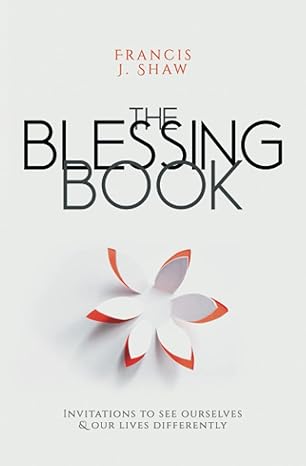

Francis J. Shaw’s The Blessing Book is a gentle and soul-stirring journey through life’s messy, beautiful terrain, shaped into 18 poetic reflections. More than a self-help book or spiritual guide, it’s a tender conversation between writer and reader. With themes like presence, forgiveness, purpose, and love, Shaw uses everyday moments, sneezes, dogs, and sunrises as entry points into deeper wisdom. There’s no rigid structure, no “how-to.” Just soft lanterns of insight illuminating the reader’s path.
What struck me immediately was the tone of the writing. It’s gentle, reassuring, and remarkably personal. In the opening reflection, “Life Interrupted,” Shaw’s voice comes through with such clarity and warmth that it feels as though he is speaking directly to the reader. He takes something as simple as listening and shows us how starved we are for it. “When we speak, we repeat something we already know and when we listen deeply, we hear the real message,” It resonated deeply and stayed with me long after I read it. I found myself nodding, thinking about how often I talk over people, or worse, myself. Shaw makes the ordinary feel sacred.
I especially loved how he weaves in story and metaphor. He describes life as a long journey where he kept asking questions, where, when, why, and how the voice of wisdom finally came through the silence. That bit where he says, “Wisdom whispers,” actually made me pause and put the book down for a second. It’s quiet and easy to miss, and I needed that reminder. Another particularly memorable passage is found in “Reflection 12,” where Shaw explores the theme of stress through the lens of the fight-or-flight response, and then quite unexpectedly draws insight from the flight patterns of birds. By highlighting their instinct to fly at varying heights and to veer right, he offers a simple yet profound metaphor for navigating personal conflict. It’s a surprising analogy, yet it’s remarkably effective.
That said, the book does not avoid addressing difficult subjects. Themes such as pain, anxiety, and grief are present throughout. Shaw approaches them with compassion rather than despair, offering gentle acknowledgment and allowing these experiences the space to be seen and understood without becoming overwhelming. Shaw owns his masks, his lies, the roles he’s played. And then he flips it with compassion, urging us to treat ourselves with the same care we give others. It’s like therapy wrapped in poetry. And maybe that’s what this book is at its core, a poetic kind of therapy.
I think this book is for anyone feeling a little frayed around the edges. Anyone craving something real but not preachy. If you’re just trying to catch your breath in a noisy world, The Blessing Book might be exactly what you didn’t know you needed. It doesn’t fix your life. It doesn’t pretend to. But it makes the mess feel holy, and honestly, that’s a blessing.
Pages: 316 | ASIN : B0992L5B68

You Are So Much More: Truths Shared by Spirit


Laura Muchmore’s You Are SO Much MORE: Truths Shared by Spirit is a deeply personal and unflinchingly honest exploration of self-worth, spiritual growth, and otherworldly encounters. The book chronicles Muchmore’s journey from childhood through motherhood, nursing, grief, and awakening, told with raw vulnerability and a heart wide open. At the center of the narrative is her experience with quantum hypnotherapy and communications with non-physical beings—including her past selves, extraterrestrial entities, and what she calls the Divine Mothers. It’s a memoir and a metaphysical diary rolled into one, interspersed with session transcripts, blog entries, and soul-baring revelations that read like confessions under a starlit sky.
I found the writing honest to the point of being gut-wrenching at times. Muchmore doesn’t sugarcoat a thing, and that’s what makes her voice magnetic. Her recounting of a dream where she meets her deceased mother in a celestial garden nearly undid me: “She began handing me what looked and felt like boxes; each box contained information to store away. One after another, at rapid speed…”. That imagery stayed with me. It’s rare for a book to feel both confessional and cosmic, but this one hits that sweet spot. Even her most bizarre experiences—like her hypnotherapy session where she relives a past life as a young enslaved boy in a desert civilization—don’t feel performative or forced. She writes them with humility, as someone still trying to make sense of it all, just like the rest of us.
The book jumps between timelines, tones, and topics, sometimes abruptly. One moment she’s talking about body shame in adolescence, the next she’s recounting a visit from a Grey alien. That might be off-putting for some, but for me, it felt like a true representation of what it’s like to live a life full of spiritual detours and emotional avalanches. I especially loved the parts about her body image battles. She doesn’t offer herself as a guru or an expert. She’s a wounded healer, messy and brave, and that’s exactly why I trusted her.
This book is for anyone who’s ever felt like there’s more to life than what we can see. It’s for the seekers, the misfits, the spiritually curious, and the broken-hearted. If you’ve been down the rabbit hole of self-help, grief, or metaphysics and came out the other side still wondering what it all means, this book might be a kindred spirit. I wouldn’t hand it to a skeptic or someone looking for polished, linear storytelling. But for those open to hearing a soul speak its truth—loud, awkward, brave, and beautiful—You Are SO Much MORE will stay with you long after the last page.
Pages: 258 | ASIN : B0DT2H24Y2
The Keys to the Kingdom
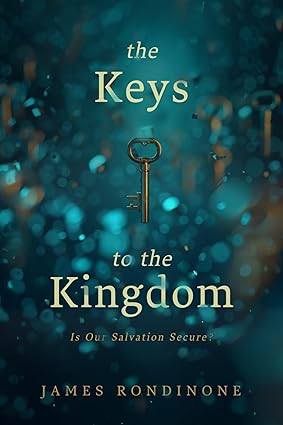
James Rondinone’s The Keys to the Kingdom is an exhaustive exploration of the question that quietly haunts many believers: Is salvation a permanent gift or a fragile prize? Through an uncompromising dive into Scripture, personal reflection, and theological comparison, Rondinone breaks down differing views on salvation—particularly the debate between works-based and grace-based doctrines. The book travels from his early religious upbringing to a detailed scriptural defense of the irrevocability of salvation, all while tackling complex theological terms with a conversational tone that invites even the uncertain reader to engage.
What I liked most was Rondinone’s willingness to pull back the curtain on his own journey. He doesn’t hide behind academic distance. In Chapter One, for example, he shares how disillusionment with ritual-based religion pushed him to seek a personal connection with God, not just a checklist of behaviors: “I needed a God who would become personal, i.e., my best friend”. That moment resonated deeply—it’s raw, vulnerable, and speaks to a yearning so many of us wrestle with but rarely say aloud. His later explanation of Ephesians 2:8-9, emphasizing salvation as a one-time, grace-given gift and not something that can be earned or lost, is powerfully clear: “These believers received the reality of being saved because they accepted grace at a point in time in the past with present continual results…”. That kind of clarity gave me peace.
Rondinone is passionate but there were parts, especially in the middle chapters, comparing theological interpretations, where the repetition of scriptural exposition started to feel a bit heavy. That said, the inclusion of contrasting views (like those of Catholicism, Mormonism, and Buddhism) was enlightening. It helped me see how widespread and diverse the interpretations of salvation truly are. I also appreciated the real-world cautionary tale of the “miracle car” scam. It was jarring, sad, and served as a necessary reminder of how spiritual vulnerability can be exploited—even in God’s name.
The Keys to the Kingdom challenged me, encouraged me, and made me reexamine what I thought I understood about salvation. I would recommend this book to Christians who feel unsure about where they stand in their faith—or who want to better understand why others believe what they believe. It’s not an easy read in terms of length or emotional weight, but it’s sincere, Scripture-rich, and deeply personal. If you’ve ever laid awake wondering whether God’s grace really holds, this book might be exactly what your heart needs.
Pages: 137 | ASIN : B0F1DD2JH4
Harmonious Living

Three Minutes to Heaven: Musings of a Ballroom Dancer explores the transformative power of dance, weaving personal anecdotes and philosophical insights into a poetic guide for living gracefully. Why was this an important book for you to write?
The stories in this book represent ideas that came bubbling up in my psyche during my dance education. The feelings I experienced were quite unique and presented a challenge to me to express them in words. I didn’t plan to write a book, but over the years I had quite a collection of these writings which made their way to a book via the desire to share them with others.
How do you balance technical insights with philosophical reflections to engage both dancers and non-dancers?
Dancers are drawn to dance for the movement, the social interaction, the music, and many other superficial reasons. But often without even realizing it, the reasons for dancing go much deeper. As they learn about dance, dancers are also learning about life. The immersion into dance carries with it a natural force guiding a new way to think about things. Through extrapolation, these lessons help dancers become more aware of the opportunities to engage in much deeper experiences in their everyday lives. The technical aspects of dance can be dry, so I tried including some in poetic fashion. Dancers immediately recognize the technical jargon, while those who never before engaged in partner dance training seem to become more curious, often ending up pursuing dance.
What were some themes that were important for you to explore in this book?
It’s easy to fall into life’s mazes that go in circles. You might be caught in a deadend job, a relationship that’s not working, or behavioral patterns that prevent personal growth and success. Every dancer at some point is asked the simple question in casual conversation — “Why do you dance?” This tiny nudge toward introspection can often lead to bigger questions, like “Why am I working this job? or “Why am I in this relationship?” or even “What is my purpose on this Earth?”, ultimately showing a way out of the maze. The core theme running throughout the book is that dance, as a microcosm of life, can teach us about life by focusing on analogous situations between dance and life. For example, Chapter 8, “Foundations,” and Chapter 18, “The Beauty of Entanglement” attempt to describe how you can address things that go awry in your life with the same approach you use to fix glitches in your dance technique. Other related themes include analogies between navigating the dance floor, improved mindfulness, dancing to the beat of the music, and harmonious living.
What’s the most meaningful feedback you’ve received from readers about how this book has impacted their view of dance or life?
I learned from a friend that she gave a copy of the book to her elderly landlady and noticed on occasion that her eyes became blurry with tears as she read certain passages. When my friend asked if she was ok, the landlady indicated some of the writings touched off happy memories. Perhaps she was a dancer in her youth and was touched by the nostalgia. Perhaps others are touched by reading what they’ve always felt but could never formulate the words to express those feelings. To me, it’s gratifying, as my hope has been that at least one chapter in this book would touch the reader in some special way – on the dance floor or on life’s journey.
Author Links: GoodReads | Facebook | Website | Amazon
Recommended as inspirational reading one chapter each day during a quiet moment at the beginning or end of the day.
My Authentic Self
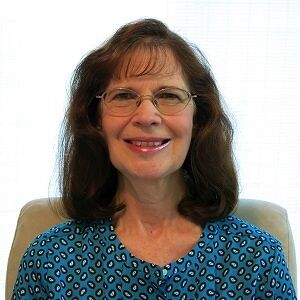
Invitation to Co-Creation: A Spiritual Path from Child Abuse and Religious Trauma to Love, Healing, and Oneness is a personal and courageous exploration from the scars of childhood abuse and religious trauma. Why was this an important book for you to write?
There were a number of reasons why it was important for me to write my memoir. The process of healing childhood and religious trauma was empowering and transformational. By sharing my journey I hope readers are inspired to discover their own unique paths to healing and know that it’s always possible to overcome adversity.
I also wanted to tell my story because many of my traditional family and friends were unfamiliar with my traumatic background and current progressive Christian beliefs. They had no frame of reference to understand my spiritual experiences or belief in a loving, inclusive God. Through my writing, I tried to create a bridge to help my loved ones know me better. I had hidden my authentic self most of my life. My intense fear of rejection kept me silent. It took a leap of faith to share so vulnerably and publicly. It was freeing when I finally found the courage to speak my truth.
Though it was my personal goal to create a bridge of understanding from the traditional to the nontraditional for my family and friends, it became clear that, in this era of polarization, we need a way to span the gaps between our differences now more than ever, so that we can engage more respectfully with one another. Thus, my personal goal of bridging divides expanded into a broader purpose for this book.
The actual inspiration for my book occurred in 2015 when I reached out to Blessed Mother Mary for healing and direction for my life, and I received a message to write Invitation to Co-Creation. As I reflected on the traumas I had experienced and where I was stuck in my life, I was encouraged to make changes and then write about them. It was also important for me to showcase another message I received from Mother Mary – a vision of oneness and global harmony that all are invited to co-create. It wasn’t until I was further along on my journey that I realized my personal healing goals intertwined with this collective vision.
What were some ideas that were important for you to share in this book?
It was important to share my understanding of co-creation as a dynamic, interactive process between a benevolent God and humanity. I initially experienced co-creation thirty-seven years ago when I developed a debilitating medical condition that stymied traditional medicine. After a prayer for healing, I was divinely guided step-by-step (through signs, intuitions, and synchronicities) to complementary healing practitioners and treatments until I was healed. This was the first time I experienced co-creating my life with the Divine, even though I didn’t have a word for it back then. Through the process of co-creation, I was also led on a divinely guided journey to heal from childhood and religious trauma, which freed me to know self-worth, find forgiveness for my parents, experience peace in my progressive Christian beliefs, and live with love, joy, and authenticity.
However, co-creation isn’t just for me. It’s part of everyone’s spiritual heritage as a child of God and the Universe to ask questions and receive answers. In my book, I describe the process of co-creation and how to tune into divine guidance in greater detail, and I offer additional personal examples.
Oneness is another concept I wanted to bring to life. Mother Mary shared her vision of oneness– that we’re one interconnected human family– and her hope that this awareness would lead to a peaceful world. When we remember we’re all in this together, we’re more likely to focus on our commonalities and engage in collaboration and cooperation to find personal and global solutions that work for all.
(Incidentally, oneness doesn’t mean uniformity; rather it’s a unity that also honors diversity, where everyone is included, valued, and respected.)
I deeply resonated with Mother Mary’s vision of oneness. It was easy to imagine standing in a circle holding hands with diverse, unknown people from all corners of the world, coming together as one. However, on a personal level, I also struggled with this vision, because I felt separate from those that hurt me. My traumatic experiences from childhood and religious trauma threatened our bonds. It took an inner journey where I learned to live from my heart, instead of my hurt, to rekindle my connection with them. By healing the rifts within myself and the disconnection in my relationships, oneness became a real-life experience.
I suspect I’m not alone in finding it easier to align with an ideal vision of oneness. It’s far more challenging to come back to the real world and heal the hurts that keep us alienated from one another and engage respectfully across our divides. But this nitty-gritty work is exactly what we need to do.
We’re at a crossroads. Major polarizations and divisions are pulling us apart.
We have an opportunity to reverse this course. We’ve been invited to build bridges to one another, reconcile our relationships, and see the world as an “us”, rather than as an “us versus them.” Invitation to Co-Creation offers inspiration and practical tools to make the dream of oneness in our relationships, communities, and world a possible reality.
What was the most challenging part of writing your memoir, and what was the most rewarding?
Hands down, the most challenging circumstances to share were the traumatic events from my childhood that reverberated into adulthood, impacting every area of my life. However, writing was also very therapeutic. It was gratifying to see and experience the healing that brought me to the place where I am today.
Without diminishing the negative influence that childhood and religious trauma have had on my life, these core wounds also acted as catalysts for my spiritual growth. These life challenges were the hidden gifts that moved me out of victimhood and into empowerment. As I became the author of my life I found meaning, passion, and a purpose that went beyond my personal healing to collective healing. It has been very rewarding to share my journey and the broader purpose of my book– Mother Mary’s vision of global oneness.
What do you hope is one thing readers take away from your story?
When you co-create your life with the Divine you’ll be embarking on your most rewarding spiritual journey ever. You’ll realize that the Divine is always available to empower, support, and guide you to become the best version of yourself and to live the beautiful life you’re meant to live. The significance of undertaking your journey can’t be overstated because all personal healing leads to collective healing. When you transform yourself for the better, there’s a ripple effect, and you transform the world for the better.
Author Links: GoodReads | Amazon
This spiritual memoir tells a story of hope and transformation that invites readers to embark on their own journey for personal and collective healing.
Lorrie’s harsh childhood and toxic religious upbringing echoed with punishment and abandonment. Trauma ruled her world. For years fear kept her from sharing her true self, beliefs, and family secrets. But after a prayer for healing, she was invited on a mystical, co-creative journey that changed her life. Divinely guided inner work freed her to know self-worth, find forgiveness, and experience peace, and joy. She found the courage to live her truth. She left the wrathful, excluding God of her childhood behind and was welcomed by a benign, compassionate, inclusive God.
While praying to Mother Mary, Lorrie received a message to write this book, as well as an inspired vision of unity in diversity–a circle of global harmony that all are invited to co-create. This vision mirrored her progressive Christian belief in a loving God, inclusive of all faiths and spiritual paths.
But how do you live in oneness when beliefs and views clash and emotions are triggered?
This timely memoir details one woman’s journey to heal past traumas, honor differences, and expand the circle of inclusion–and reveals how you can too.
Invitation to Co-Creation offers tools for individual and communal healing and is for you if you’d like to:
Find inspiration to overcome life challenges, heal trauma, and make a difference.
Discern divine guidance and experience your own co-creative journey for an amazing soul-purposed life.
Discover how an inclusive spirituality promotes a sense of being one interconnected human family.
Create bridges and foster healing in relationships and communities to bring the dream of global oneness one step closer.
A More Fruitful Future
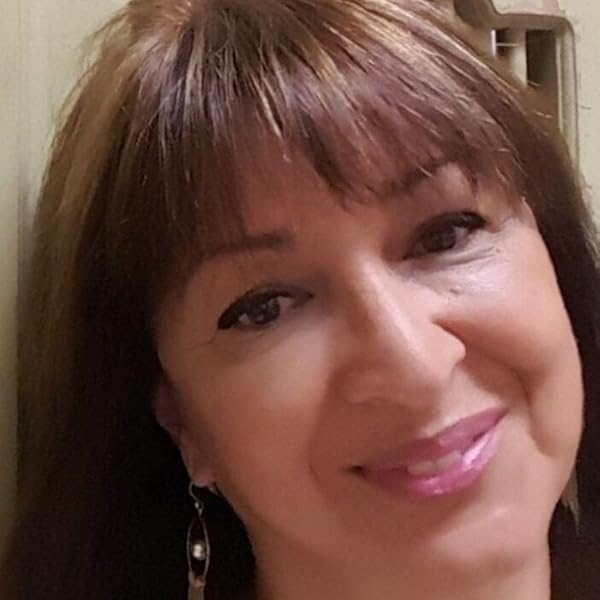
The Sound of an Ordinary Life shares with readers your journey to revisit your seven-year-old self after six decades to confront and heal from the personal challenges of a painful childhood and dysfunctional family dynamics. Why was this an important book for you to write?
The reason I wanted to write this book was mainly to confirm that I had survived my sad beginnings while letting the world know that, no matter how discouraging life is for many unsuspecting journeyers, resilience, hope, and faith are the most necessary elements in overcoming difficulties. A life is not meaningful enough unless we turn every experience into a learning platform for everyone to benefit from.
What were some ideas that were important for you to share in this book?
Writing The Sound of an Ordinary Life helped me find self-love, self-respect, and self-compassion, none of which I received due to my dysfunctional formative years. Though I realize many others might be going through far more challenging experiences than mine, I also know healing and giving the past pains a decent burial are crucial steps to moving forward into a more fruitful future.
What do you hope is one thing readers take away from your story?
The one thing I’d like for my readers to take away from reading my story, though the challenges they endure at any given point are anything but ordinary, the fact that there is no growth and maturity without those hardships is the most ordinary theme of life. Therefore, embracing them as a valuable lesson is way better than trying to fight against them, which would only stall our much-needed mental, emotional, and spiritual maturity.
Author Links: GoodReads | Facebook | Amazon
Invitation to Co-Creation: A Spiritual Path from Child Abuse and Religious Trauma to Love, Healing, and Oneness
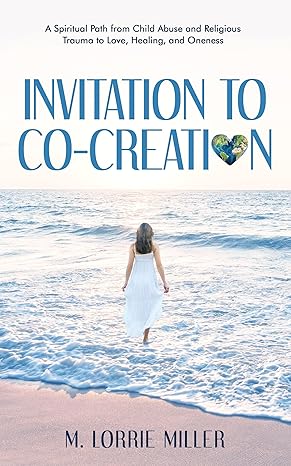
M. Lorrie Miller’s memoir, Invitation to Co-Creation, is a deeply personal and courageous exploration of healing from the scars of childhood abuse and religious trauma. Lorrie’s early years were fraught with abandonment, harsh discipline, and the weight of a toxic religious environment. These experiences led her to retreat into herself, concealing her beliefs, emotions, and painful family secrets. Everything changed when she embarked on a transformative journey. Through inner work and spiritual growth, Lorrie uncovered forgiveness, self-respect, kindness, and a profound sense of self-love. Most significantly, she found peace and love within herself. This journey allowed her to shed the trauma of her past, step into a healed version of herself, and share her powerful story of redemption and growth.
In her memoir, Lorrie answers universal questions such as how do we survive life’s most devastating challenges? How do we move forward to find hope and meaning? Her narrative is raw and vulnerable, written to inspire readers of all backgrounds—spiritual, religious, or otherwise. She bares even the darkest moments of her life to show that healing and transformation are attainable.
This book is both deep and thought-provoking. I was moved by the depth of her story and its ability to offer hope and inspiration to anyone seeking healing, regardless of their spiritual or religious beliefs. Lorrie’s unflinching honesty makes her journey relatable and impactful. While I enjoyed the book, I felt the book’s writing style occasionally affects its clarity. At times, Lorrie’s intentions were less clear, which could make it challenging for readers who are less familiar with spiritual or religious concepts to fully engage with certain passages. However, once the rhythm of her voice becomes familiar, the narrative flows more smoothly. This memoir deserves recognition for its authenticity and courage.
Lorrie’s journey is one of resilience, transformation, and the pursuit of inner peace. Invitation to Co-Creation stands as a testament to the strength of the human spirit, and I honor her willingness to share her story with such openness. Its message of healing and hope makes it a meaningful read.
Pages: 297 | ASIN : B0DPB773X8


 LITERARY TITAN
Sweet Mystery of Life
Mar 21
Posted by Literary Titan
June Raleigh’s Sweet Mystery of Life is an ambitious exploration of Judeo-Christian theology, blending biblical exegesis, historical analysis, and scientific interpretation. The book attempts to weave together scripture, philosophy, and anthropology to provide a comprehensive perspective on faith, morality, and the divine nature of existence. Raleigh is unafraid to challenge conventional narratives, presenting an argument that faith and logic, rather than being at odds, are two sides of the same coin.
Raleigh’s writing is passionate and gives the book an engaging voice. One of the book’s strongest points is its discussion of The Blood, where Raleigh connects the biological, symbolic, and spiritual significance of blood in Christianity and Judaism. She eloquently describes how the concept of atonement is central to Christian belief, linking it to Leviticus 17:11 and the crucifixion of Jesus. The book’s claim that human blood contains the same elemental components as seawater as part of a divine design is poetically intriguing.
Another compelling section is Influence of Man, where Raleigh critiques how religious texts have been altered over time, pointing to additions in the New Testament, such as the contested passage in 1 John 5:8 regarding the Trinity. The discussion is thought-provoking and offers a fresh perspective on church history, though some readers may find its critical approach challenging. Raleigh’s research is extensive, and her arguments are compelling, yet incorporating a broader range of scholarly sources could have further strengthened her analysis of scriptural changes and their influence on Christian doctrine.
One of the most striking moments in the book is its defense of women’s roles in early Christianity. Raleigh dismantles the long-held misconception about Mary Magdalene, arguing instead that she was a central figure in Jesus’s ministry whose influence was deliberately minimized by church patriarchs. Her analysis of Paul’s writings, particularly the infamous 1 Corinthians 14:34 passage about women remaining silent in church, is refreshing and well-articulated.
Sweet Mystery of Life is an earnest attempt to reconcile history, science, and faith. Raleigh writes with conviction, and for readers who appreciate a theological deep dive with a unique blend of perspectives, this book offers much to consider. I’d recommend it to those interested in biblical studies, church history, and the interplay between science and religion.
Pages: 81 | ASIN : B08ZB5K1ZF
Share this:
Posted in Book Reviews, Four Stars
Leave a comment
Tags: author, book, book recommendations, book review, Book Reviews, book shelf, bookblogger, books, books to read, Christian Bibles, Christian Commentaries, Christian History, ebook, goodreads, indie author, Jewish Sacred Writings, June Raleigh, kindle, kobo, literature, nonfiction, nook, novel, read, reader, reading, Religious Studies - Science & Religion, spiritual self-help, story, Sweet Mystery of Life, Sweet Mystery of Life: A Judeo-Christian Exegesis, writer, writing