Blog Archives
Pause, Reflect, and Reconnect

In Weeds to Wishes, you share your own journey as an educator and the valuable lessons you learned through listening, encouraging others, and even hardships. Why was this an important book for you to write?
Weeds to Wishes was an important book for me to write because it grew out of a deep desire to help others through the lessons I’ve learned along my own journey. There were times in my life when everything felt very heavy.
I felt like I had accumulated so many “weeds” throughout life… the expectations, noise, pressure, and self-doubt, that I had lost touch with who I truly was. I wasn’t allowing myself the quiet moments I needed to pause, reflect, and reconnect with myself. Writing became therapeutic for me, allowing me to release what no longer served me. It allowed me time to shut out the noise, sit with my thoughts, and dig deep within my soul.
Through writing, I learned that I needed to release the “junk” that was weighing me down in order to make room for the treasures and a new beginning. Weeds to Wishes became a way for me to shed, heal, and trust God’s plan and purpose for my life. My hope is to share this with others who may feel the need to do the same.
I appreciated the candid nature with which you share your story. What was the most difficult thing for you to write about?
Thank you. The most difficult thing for me to write about was losing my father and how his death changed my life in so many ways I never expected. I wasn’t ready, but truthfully, I don’t think anyone ever is. He was the glue that held our family together and the strong presence in my life that I leaned on.
Writing about his loss required me to sit with grief that I had often pushed aside in order to keep moving forward, especially since I didn’t know how to deal with it for many years. It forced me to acknowledge how his absence shaped the way I lead, treat others, love, and carry responsibility. Including that part of my story felt vulnerable, but it was necessary for me to move on and become the woman my father would be so proud of. Sharing it was both painful and healing, and it reminded me that some of our greatest growth comes from our hardest moments… our weeds.
Did you learn anything about yourself while writing Weeds to Wishes?
While writing Weeds To Wishes, I learned that I can do anything I set my mind to, even during the tough times. I learned that I needed the tough times (the weeds) to help strengthen me and create the person I was always intended to be. Without the “tough stuff,” I couldn’t have written the book and, in turn, couldn’t help others along the way.
What is one thing you hope readers take away from your experiences?
I hope readers take away that showing up and truly listening matter more than having all the answers. Some of the most meaningful growth in my life came from the hardest moments, the ones I never would have chosen, but that shaped me and strengthened me. I want readers to see that even in the tough times, something good can come from it (a blessing in disguise) when we stay open, present, and willing to learn. In the end, it really does come down to mindset and choosing to see challenges not as endings, but as opportunities for growth and purpose.
Author Links: GoodReads | Amazon
Have you ever felt that quiet tug — the one that whispers, “You’re meant for more” — yet doubt and fear keep you from stepping forward?
Leadership can feel exhilarating… and absolutely terrifying all at once.
Maybe you’re stepping into leadership for the first time and wondering if you’re really ready.
Maybe you’ve been leading for years but feel tired, unseen, or unsure if you can keep going.
Maybe you’re asking yourself, “Can I really make a difference?”
You’re not alone.
In Weeds to Wishes, author and educator Sheryl Brown opens her heart and her 34-year leadership journey — sharing raw, honest stories of courage, missteps, and growth. Through laughter, tears, and lessons learned, she shows you how to turn life’s weeds — the struggles, doubts, and hard seasons — into wishes that bloom into strength, confidence, and purpose.
Part memoir, part how-to guide, this book offers eight keys to becoming the leader you were meant to be, paired with reflective activities and quick reference points to guide you through your own leadership journey.
You’ll discover:
How to rise from burnout with renewed purpose
How to find your voice, even when it trembles
How to transform obstacles into opportunities
And how to lead with heart, courage, and resilience
Because your challenges become your victories.
Your lessons become your strength.
And your courage? It’s just fear with the bravery to keep going.
It’s time to take the leap — to stand tall, rooted and radiant — and finally become the leader you were always meant to be.
Buy the book now!
Weeds To Wishes: Blossoming into the Leader You Are Meant to Be


Weeds to Wishes follows Sheryl Brown’s journey as a teacher and principal who learns to lead through listening, healing, encouraging others, and growing through hardship. The book moves through eight “keys” to leadership that blend personal stories, school memories, emotional turning points, and practical activities that teams can use to connect and communicate. The mix of stories and reflections creates a guide that shows how leadership rises from real life and not from titles or rules.
While reading this book, I felt pulled in by the author’s warmth and honesty. The stories hit hard because they feel like moments pulled straight from a life lived fully in service to others. I kept thinking about the scene with the bomb threat evacuation and how she steadied herself in chaos. I could almost feel the cold air and the fear and the fierce need to protect people. Her writing style is simple and easy to fall into. There were times I stopped and thought, wow, she really went through that, yet she still chooses hope. I liked that. Her voice feels like someone sitting with you at a table, talking softly, telling you the truth. It got to me more than I expected.
The ideas in the book made me think about leadership in a more human way. She focuses on trust, grace, listening, and being present. Those are not flashy things. They are small habits that change everything over time. I caught myself reflecting on my own tendencies to jump to solutions instead of hearing what people are really saying. Her chapter on “Whispering” resonated with me because it showed how leadership grows in quiet rooms, on long car rides, and in moments when your heart is breaking but you still choose to show up. I loved the activities she built into each chapter. They felt practical and playful, which made the leadership lessons feel less heavy and more doable.
I would recommend Weeds to Wishes to new leaders, veteran educators, and anyone who wants to lead with more heart and less noise. The book is especially good for people who are burned out or doubting their path. It feels like a gentle hand on your shoulder, reminding you that you are allowed to grow, stumble, try again, and still make a difference.
Pages: 203 | ASIN : B0G1CSM2GG

Our Unfinished Selves

The Courage Gap explores fear and courage, walking readers through five steps to help them shift their focus, rewrite the stories they tell themselves, regulate fear, step into discomfort, and learn from the moments when things fall apart. Why was this an important book for you to write?
Because I’ve watched too many capable people—including myself—stay stuck in the space between knowing and doing. This wasn’t because we lacked the ability to take action but because our fear kept us stuck in place, distorting the risk-magnifying the danger of acting, minimizing the cost of staying put, and shrinking our courage to step forward and back ourselves fully.
Over 25 years coaching many diverse people across the world to meet their challenges and navigate change, I’ve heard countless versions of the same story: “I knew what I needed to do, but I couldn’t bring myself to do it.” The woman in the soul-draining job. The parent avoiding a hard conversation. The person with a dream who keeps finding reasons to wait.
What struck me wasn’t that people feel fear—we all do—but how often they mistake its source. They think they’re being prudent when they’re actually protecting their identity in some way, avoiding disapproval, or clinging to what’s familiar because it feels safer and less confronting than making a change.
Finally, I wrote this book because often we end up suffering more over time from not taking the brave action we know we should be taking than by risking what we fear. That suffering shows up in many forms – ongoing tension and hurt in relationships, the quiet ache of unfulfilled potential, roads not taken, words left unsaid. Right now, when everything feels uncertain, that gap has never been wider. This book offers a practical step-by-step path to move through it.
How did you come up with your five-step process for helping people reprogram their patterns of thought and behavior that are self-sabotaging?
By distilling a lot of research and insights from broad spheres as well as watching what actually worked—not just with clients, but in my own life when fear and doubt have grown really loud or when I’ve come to a moment and hesitated for fear of being ‘exposed’ as not wholly worthy of sufficient in some way. The five steps are a synthesis of research, and experience, and observing people who consistently lead brave and meaningful lives.
The people who closed their courage gap followed a pattern: They shifted focus from worst-case scenarios to what becomes impossible if they don’t act. They chose the mindset they would operate from, rewriting their stories—recognizing narratives about risk were often inherited or outdated. They regulated fear instead of waiting for it to disappear (it never does). They braved awkward moments we are wired to steer away from, and stepped into discomfort incrementally through small acts of bravery. And they learned from setbacks, seeing them as information rather than proof they shouldn’t have tried and made some semblance of peace with the fact that they are innately fallible and a ‘work in progress.’ As I wrote in the book, extending grace and compassion inward, forgiving our ‘unfinished selves’ is a foundational act of courage that can be profoundly transformative.
It’s not linear—it’s messy. But the sequence matters because you can’t regulate fear you haven’t acknowledged, and you can’t step into discomfort if you haven’t challenged the story that discomfort equals danger.
How can implementing the ideas in your book help shape better leaders and encourage growth?
The book helps anyone—leaders, parents, people in transition—close the gap between who they are and who they’re capable of becoming.
As I wrote in the book, sharing a story of my childhood on my parents’ farm, “Growth and comfort can’t ride the same horse.” That is, growth doesn’t happen without exertion or discomfort. It happens when you speak up with a shaky voice. When you try something new, knowing you might fail. When you have the difficult conversation instead of letting resentment build.
The book helps people distinguish between real dangers and magnified fears. Your brain evolved to overreact to threats, which kept ancestors alive, but now makes a tough conversation feel as dangerous as a physical threat. It makes starting something new feel riskier than staying in a situation that’s slowly diminishing you.
When you recognize that fear of judgment isn’t actual danger, or that doubt isn’t incompetence, you can take action despite fear rather than waiting for it to disappear.
For anyone leading—a team, a family, their own life—this matters because people become what they’re willing to confront. Those who act despite fear create environments where others feel permission to do the same. That permission to be imperfect while stepping forward? That’s how everyone grows.
What is one thing that you hope readers take away from your book?
That not only can anyone become a braver version of themselves, but that courage isn’t the absence of fear—it’s choosing to act while fear tags along.
Most people wait to feel brave before acting. But courage doesn’t work that way. You don’t eliminate fear; you change your relationship to it. You learn to distinguish between real dangers and magnified fears.
The shift I want readers to make:
When you ask “What’s the risk?” also ask “What’s the cost if I don’t act?”
That reframe—from “What could go wrong?” to “What will definitely go wrong if I don’t?”—unlocks stalled decisions, avoided conversations, deferred dreams.
I want readers to finish with a quiet push toward things they usually avoid. Not because fear disappeared, but because they realize staying stuck hurts more than stepping forward. The courage they think they lack isn’t something you’re born with—it’s something you build, one uncomfortable step at a time.
If readers take even one brave action they’ve been avoiding, that changes something fundamental. Not just for them, but for everyone who would benefit from them showing up more authentically and backing themselves more boldly – toward their bold goals but also in meeting their biggest challenges too. We all have them.
Author Links: GoodReads | Amazon
Fear creates the gap. Courage closes it.
This powerful guide from the bestselling author of You’ve Got This! cuts through the hype to connect the ‘why’ of courage to the ‘how’ of courage. Drawing on cutting-edge research woven together with stories that compel head andheart, The Courage Gap will help you bridge the think/do gap between what you’ve been doing and what you can do; between where you are and where you want to be—in your career, relationships, leadership, and life.
Distilling theory and hard-won wisdom spanning from Margie’s childhood in rural Australia to her decades of living around the world and coaching ‘insecure overachievers’ in Fortune 500 organizations, Margie shares a powerful 5-step roadmap to reprogram the self-protective patterns of thought and behavior that sabotage success to bring your bravest self to your biggest challenges and boldest vision.
At a time when courage seems in short supply, in a culture continually stoking insecurity and anxiety, this book will transform your deepest fears into a catalyst for your highest growth and the greatest good.
Applying the five steps will:
Ignite passion and unlock the potential fear holds dormant
Rewrite the scripts that have kept you stuck, stressed, and living too safely
Reset your ‘nervous’ system and embody courage in critical moments
Transform discomfort as a cue to step forward and expand your bandwidth for bold action
Reset your relationship to failure and make peace with the part of you that wimps out
For leaders, The Courage Gap provides a guide to operationalize and scale the courage mindset across your team and organization to deepen trust, dismantle silos, foster innovation, accelerate learning, and unleash collective courage toward a more secure and rewarding future.
Be Clear and Intentional
Communicate Like a Champion provides straightforward advice for enhancing professional communication, along with strategies that emphasize clarity and empathy. Why was this an important book for you to write?
This book was important for me to write because I’ve seen time and again that the success or failure of projects, teams, and even careers often comes down to communication. As a leader in telecommunications and during my doctoral studies, I recognized how often components of communications, such as clarity and empathy, were missing in professional exchanges. I wanted to create something concise, practical, and easy to use, something people could apply immediately in their workplace, whether they’re leading teams, collaborating across departments, or simply trying to be better understood.
What is one misconception you believe many people may have regarding effective communication in the workplace?
One of the biggest misconceptions is that communication means more words. People often think that long emails or detailed presentations equal effectiveness. In reality, effective communication is about being clear and intentional, saying the right thing, not everything. Another misconception is assuming silence means agreement. “No questions” doesn’t always mean understanding or alignment, and that’s where leaders need to confirm, follow up, and create space for feedback.
Did you learn anything that surprised you while you were researching and writing Communicate Like a Champion?
What surprised me most was how consistently small actions can create significant results. It wasn’t the grand speeches or high-stakes presentations that made the most significant difference; it was the everyday habits that mattered most. Things like summarizing a meeting in a single clear sentence, asking one good clarifying question, or pausing to reflect before responding. Those small, consistent habits are what transform someone into a “champion communicator.”
What is one thing you hope readers take away from this book?
If there’s one thing I want readers to take away, it’s that communication is a skill you can practice and improve. It’s not just for extroverts, executives, or “natural speakers.” With small, intentional steps clarifying intent, listening actively, and following up, you can become the kind of communicator who builds trust, fosters collaboration, and leads with confidence. That’s what “communicating like a champion” is all about.
Whether you’re a new professional, a seasoned leader, or someone navigating the complexities of hybrid teams, Communicate Like a Champion offers practical, proven strategies for improving your connection, leadership, and collaboration in the workplace.
This concise and actionable guide walks you through the core elements of strong communication—from clarifying your intentions to using empathy and follow-up effectively. With relatable examples, reflection prompts, and a 28-day challenge to build habits over time, this book helps you go beyond just “getting your point across.”
You’ll learn how to:
Communicate clearly across departments, hierarchies, and mediums
Recognize internal and external factors that influence every message
Use tone, clarity, and follow-up to earn trust and foster collaboration
Apply tools and tech that elevate your tone and clarity
Lead conversations with empathy, even when conflict is unavoidable
Whether you’re sending an email, running a meeting, or managing change, this book provides a reliable framework for ensuring your message lands and builds stronger relationships.
Communicate Like a Champion
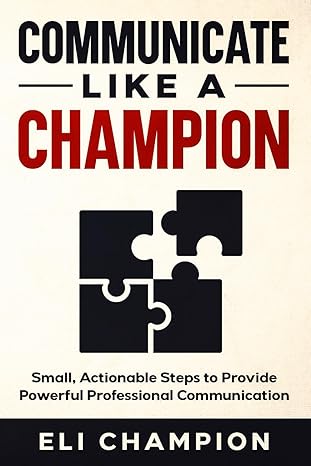
Eli Champion’s Communicate Like a Champion is a straightforward, practical guide to improving professional communication. The book breaks down why communication matters, how intentions shape interactions, what factors influence the way messages are received, and how to put strategies into practice with clarity and empathy. It’s full of simple, actionable steps, like clarifying your purpose before a meeting, checking tone in emails, and following up after conversations, that aim to make anyone a more confident and respected communicator.
What stood out to me initially was the book’s emphasis on practical application rather than abstract theory. Champion illustrates this with the example of a manager calling for “a quick meeting” without providing context. As he explains, such ambiguity often leaves employees uncertain and anxious, unsure whether they have erred or whether the meeting is merely routine. I found this example particularly resonant, having experienced the situation from both perspectives as the uneasy employee and as the manager who failed to provide sufficient clarity. The recommended adjustments, such as stating the purpose of the meeting at the outset or clarifying next steps before closing, are deceptively simple yet highly effective. I could immediately envision how these practices would have alleviated unnecessary tension and improved understanding. This emphasis on directness and transparency exemplifies the book’s core message: communicate with precision to minimize confusion and foster confidence.
I found the chapter on the “7 Components of Communication” particularly instructive. While the framework, clarity, confidence, respect, listening, tone, empathy, and follow-up may appear familiar, Champion’s illustrations prompted meaningful reflection on my own communication practices. One example contrasted the response “I don’t think that will work” with the more considerate phrasing, “I see your point, but can I offer another perspective?” The distinction is subtle yet powerful, highlighting how word choice and tone can determine whether a message is received as dismissive or constructive. Confronted with this comparison, I recognized moments when I have defaulted to the blunt response, often unintentionally undermining collaboration. The example served as a useful reminder of the value of consistently striving for a more respectful approach.
Another notable feature of the book is the 28-day communication challenge. Organized around weekly themes, such as clarity, listening, empathy, and follow-up, it provides daily prompts that encourage practical application, including exercises like restating a colleague’s point to confirm understanding or sending a follow-up email after a meeting. I appreciated that this section moves beyond theory to establish a structured practice routine. When I applied one of the suggested exercises, clarifying my intention at the beginning of a meeting, I was struck by how much more effectively the conversation unfolded. The challenge, paired with the book’s approachable tone, created the sense of being guided by a mentor offering encouragement, rather than being instructed by a prescriptive voice.
I found Communicate Like a Champion to be highly practical and accessible. Rather than relying on jargon or overly complex frameworks, it presents straightforward tools and encourages consistent application. I would recommend this book to early-career professionals seeking to develop confidence, to managers aiming to strengthen their leadership presence, and to anyone who has left a conversation feeling uncertain about its outcome. With reflection and deliberate practice, the strategies outlined here have the potential to significantly improve the way one engages in meetings, correspondence, and professional interactions more broadly.
Pages: 65 | ASIN : B0FG71T9MZ
How Change Really Happens

Sierra Melcher’s How Change Really Happens is part guidebook, part heart-to-heart open discussion, offering readers a warm and honest exploration of personal transformation. Framed around metaphors from nature—trees, butterflies, and lotus flowers—it walks the reader through both the emotional and practical aspects of change. The book is structured in two parts: the first dispels common myths about transformation, and the second offers a “tool belt” of strategies to help you move through life’s messier moments with more grace, awareness, and intention. It’s clear this book was written by someone who not only teaches these lessons but lives them.
I found Melcher’s writing style incredibly approachable. She doesn’t lecture—she chats. Reading this book felt like talking to a wise friend who isn’t afraid to laugh at life’s chaos while still taking your growth seriously. There’s a deep tenderness in how she shares her own stumbles and breakthroughs. I appreciated that vulnerability. And she doesn’t pretend to be a flawless guru either. She reminds you constantly: you’re the expert on your own life. That humility made the whole thing feel more real. The idea of “micro-shifts”—tiny, consistent actions—was a standout for me. It took the overwhelming bigness out of “transformation” and made the process seem manageable.
The book leans heavily into metaphors, and many of them were beautiful. The butterfly one, for instance, is familiar territory in self-help, but Melcher does offer a more nuanced view of it. Her insights about the fear of change, the pushback from others, and the need to sit in discomfort instead of forcing outcomes felt deeply relevant. She doesn’t sugarcoat things. Change is hard. Messy. Sometimes lonely. But she makes you feel okay about that. Like you’re not broken for struggling.
I’d recommend this book to anyone standing at the edge of something new—whether that’s a life transition, a career shift, or an internal reckoning. It’s especially good for folks who are burned out on the hustle culture and looking for a gentler, more sustainable way to grow. If you’ve ever felt stuck but unsure why, or if the idea of transformation feels too big to tackle, this book will meet you exactly where you are and gently nudge you forward.
Pages: 118 | ASIN : B085H9LGG9

Value Chain of Wealth
Financial Freedom in 100 Months is a step-by-step guide to escaping financial dependence in just over eight years while exploring happiness, simple living, and long-term fulfillment, making it more than just a wealth-building manual. What inspired you to write this book and share your knowledge?
In today’s world, many people are struggling with money and don’t know how to build wealth. As a CPA, management consultant, and value investor, I would like to share my knowledge to help people succeed. Financial Freedom is not just a dream. With proper knowledge, everyone can achieve financial freedom.
What were some ideas that were important for you to share in this book?
To achieve financial freedom, firstly, people need to understand the value chain of wealth. This is a very important concept for building wealth. This value chain of wealth begins with education, followed by career development and culminating in personal finance, including retirement planning. The more you earn, the more you save, the more you can invest your money and achieve financial freedom.
There are 2 ways to achieve financial freedom: the easy and slow way is index investing; the hard and fast way is active investing.
For successful active investment, people need to look for value and have a deep understanding of the investment opportunities. Stock investing is the easiest one to start with, you need to have a good understanding of macro analysis, fundamental analysis, technical analysis, and cycle analysis. There is really a lot to learn for successful investment. I have recommended some must-read books in Chapter 8.
In this book, I have also shared a hidden gem stock investment opportunity. Since the book was published in October 2024, the stock has already appreciated more than 100% in just 3 months. This shows the power of value investing. This stock still has lots of room for growth.
What is one thing people point out after reading your book that surprises you?
One reader mentioned that he liked the sections on building happiness and the importance of a well-balanced lifestyle. I’m glad to see that people are interested in a balanced life instead of just focusing on money. The whole purpose of financial freedom is to enjoy a better life. So I have included some chapters specifically for achieving a better life.
Another reader thinks there is too much on living healthy, diet, happiness, friendships, and psychology. I have tried my best to include only the most critical ideas in the book. I believe they are very important ideas that can help people achieve financial freedom while living a more balanced life.
What is one thing you hope readers take away from Financial Freedom in 100 Months?
To achieve financial freedom in 100 months is hard, but achievable. You need to have a positive mindset and believe in yourself. The book has laid out a foundation for your success, but you need to put in great efforts and try your best. Good luck to your financial freedom journey!
Author Links: GoodReads | Website | Amazon
This book will answer the most important questions about financial freedom:
1. How much do you need?
2. Cost of living and quality of life.
3. The value chain of wealth.
4. The best investment vehicles and how they work.
5. The untold truth and secret weapons about money, that only the rich people understand.
6. How to live a balanced life and enjoy ultimate happiness?
In the bonus chapter, the book will introduce a hidden gem stock that can pave the way to your financial success.
Imagine waking up each day without the stress of money controlling your life—this book shows you how to make that dream a reality. You’ll learn to set clear financial goals, save and invest wisely, and protect yourself from common financial pitfalls. With chapters that break down everything from understanding the cost of living to mastering the art of simple living, this guide offers a complete roadmap to financial independence.
Whether you’re looking to retire early, build a safety net, or simply live a more secure, comfortable life, Financial Freedom in 100 Months is your blueprint for success. Backed by proven methods, this book is filled with actionable advice, real-world examples, and secrets used by millionaires. Start your journey today, and in just 100 months, you could redefine your future, living life on your own terms. Your path to financial freedom starts now!
Strategic Planning For a Prosperous Retirement
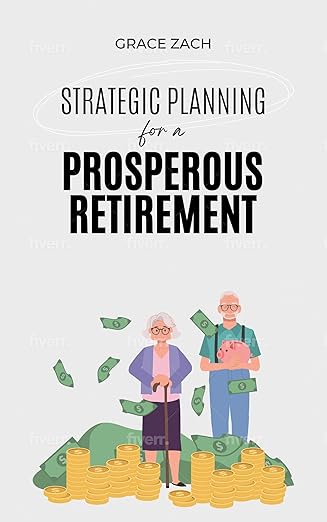
Grace Zach’s Strategic Planning For a Prosperous Retirement is a comprehensive roadmap to navigating the intricate world of retirement planning. With a pragmatic tone and detailed instructions, Zach takes readers step-by-step through strategies for financial independence, healthcare planning, and income management. The book covers everything from maximizing savings and investment strategies to understanding Medicare and estate planning. It’s essentially a toolbox for anyone wanting a retirement free from financial stress.
What I liked most about Zach’s writing was its clarity and accessibility. Retirement can feel like a maze of spreadsheets and calculators, but she makes it approachable. For example, in Part 1, Zach breaks down the basics of estimating retirement needs into clear categories. Her advice to “picture your mornings, afternoons, and evenings” when defining your retirement goals adds a personal touch that makes planning feel less like a chore and more like dreaming. It’s practical advice like this that keeps the book grounded.
The advice, while solid, occasionally circles back to the same principles—like the importance of diversifying investments or the 4% withdrawal rule. Still, the repetition works for readers new to these concepts, as it reinforces key ideas.
Zach also shines when tackling healthcare and insurance. Her section on Medicare is a fantastic. She demystifies terms like “Part A” and “Part D” with simple language, explaining how each piece fits into the bigger picture of retirement health. The book doesn’t shy away from difficult topics like long-term care insurance or rising medical costs, which I appreciated. It’s practical without being alarmist. The tools she includes, like healthcare cost estimators and worksheets, are a thoughtful addition that makes the guide actionable.
The Ultimate Retirement Survival Guide is perfect for those starting to think about their golden years or those deep in planning who need a nudge in the right direction. If you’re someone who enjoys straightforward advice without unnecessary complexity, this book is worth your time. I’d particularly recommend it to readers who appreciate practical tips, real-world examples, and easy-to-follow planning tools.



 LITERARY TITAN