Blog Archives
Visibility is Everything

Be Recognized is a step-by-step guide that lays out a clear path for experts who want to build authority, grow their business, and embrace AI rather than fear it so that they can stand out in the crowd. Why was this an important book for you to write?
This book had to be written! Jenn and I saw this huge shift happening right before our eyes. AI was exploding, and people were either running toward it with curiosity or running away in fear. We thought, what if we could show experts how to embrace it? Because let’s face it: if you’re not standing out, you’re blending in, and no one gets discovered by hiding in the shadows.
We’ve helped hundreds of authors build their brands through books, but this time, we wanted to take it up a notch. We wanted to empower entrepreneurs, coaches, speakers, and business owners to not only be seen but to be recognized as the authority in their space. And AI, when used right, can supercharge that.
AI has a negative reputation, particularly in the creative and publishing industries. What advice do you have to help those hesitant to use AI recognize its value, the direction this technology is taking, and how it can add value to their industry and business?
AI is not here to replace your voice. It’s here to amplify it. The way we look at it is this: AI is a tool, just like your laptop, just like your phone. It’s how you use it that matters.
I always say, imagine having a research assistant, an idea bouncer, a content booster, all available 24/7. That’s AI! And in publishing? It helps with brainstorming, outlines, editing, and even marketing strategies. But the soul of your book, your brand, your story, that’s all you. AI just helps you get it out there faster, smarter, and more efficiently.
So my advice? Don’t ignore it. Leverage it. Learn to work with it and let it enhance your creativity, not replace it.
What were some ideas that were important for you to share in this book?
There were so many, but a few key ones stand out. First, visibility is everything. You can’t be in business if no one knows you exist. So we really hammer in on how to build your personal brand strategically, through publishing, speaking, and showing up online consistently.
Second, authenticity beats perfection. AI can help polish and scale your message, but your story, your voice, that’s what makes the difference. And finally, we wanted to show that being a thought leader isn’t reserved for celebrities. You can start right where you are with the knowledge you already have. You just need the right engine, and that’s what we give you in this book.
What is one thing that you hope readers take away from Be Recognized: The AI Authority Engine for Experts Who Want to Be Known, Be Profitable, and Be Published?
If there’s one thing, it’s this: you already have everything inside you to be recognized. You don’t need to wait for someone to discover you. You have a story, expertise, and value the world is waiting for. The only thing you need is a system to shine, and that’s what this book gives you.
I want every reader to walk away feeling inspired, equipped, and empowered to show up as the authority they are. And when you combine that with the tools of today, like AI and publishing, there’s no limit to what you can achieve.
Author Links: GoodReads | Facebook | Instagram | YouTube | Website | Amazon
Dominate your niche. Automate your growth. Become the authority.
In a world where AI is reshaping every industry at lightning speed, standing still is not an option. Be Recognized: The AI Authority Engine for Experts Who Want to Be Known, Be Profitable, and Be Published is the ultimate playbook for business owners, CEOs, consultants, and thought leaders ready to rise above the noise and lead with unstoppable momentum.
Authors Melanie Johnson and Jenn Foster, trailblazers in digital marketing and authority publishing, pull back the curtain on how high-level experts are using AI not just to survive, but to scale, sell, and succeed faster than ever before. This isn’t a book about future trends or theory. It’s a step-by-step execution plan to:
Position yourself as a Category King in your industry
Build an AI-powered content machine that never sleeps
Automate customer engagement, sales, and visibility
Turn a single book into a lead-generating empire
Launch high-ticket offers with authority and ease
Future-proof your brand with intelligent systems that scale
Whether you’re just AI-curious or already experimenting with tools like ChatGPT, this book meets you where you are and takes you where you need to go. The strategies inside have already helped countless entrepreneurs go from overlooked to iconic.If you’re ready to stop dabbling and start dominating, Be Recognized is your blueprint to become the face of your field in the AI age.
The old game is over. It’s time to build your authority engine and own your future.
Build Your Cloud Career: A Professional’s Guide to Cloud Engineering
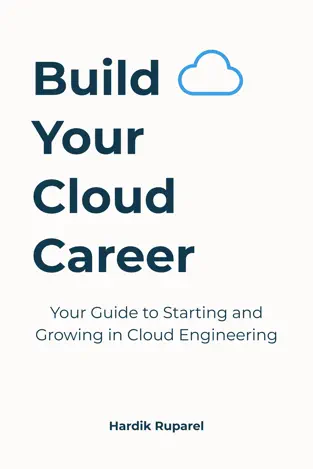

Build Your Cloud Career lays out a clear path into cloud engineering. It starts with simple explanations of what the cloud is, then moves into the major providers, the different engineering roles, and the skills needed to build a career in the field. It mixes technical basics with career advice. The writing stays grounded in real situations and aims to give beginners confidence as they enter a fast-growing and sometimes intimidating area of tech.
Reading it felt smooth and surprisingly friendly. I enjoyed how the author kept things practical without stuffing the pages with jargon. The explanations made complicated ideas feel lighter. Sometimes I caught myself nodding along because the examples matched real workplace moments. I also liked the honest tone around certifications and career paths. It never tried to oversell or hype anything. It just told you what works and why.
A few concepts flew by fast, and I found myself wanting more stories or more hands-on guidance. Still, the author’s experience comes through in a warm way. It feels like sitting with someone who actually wants you to succeed. That personal touch gave the book more heart than I expected from a tech guide.
The chapter Cloud Engineering Roles in Depth was particularly relevant to me. It helped me see how each cloud role fits into real projects and why those differences matter. It gave me clarity on which responsibilities align with my strengths and interests, especially when comparing paths like DevOps, security, and architecture. It also made the career landscape feel less confusing since I could finally picture where I might fit and what skills I should focus on next.
All in all, I think this book is great for students, career switchers, and anyone curious about cloud work. If you are feeling lost or overwhelmed by AWS and Azure and all the big words floating around the internet, this book gives you a place to start. It is calm, clear, and encouraging. I would recommend it to anyone who wants to break into cloud engineering without feeling like they are drowning in technical noise.
Pages: 139
Governance in the Quantum Era

Quantularity: A Quantum Framework for the Human Experience challenges the theory of Singularity by hypothesizing that, instead of one super-intelligence consuming everything, there is a world where many minds —human, artificial, cultural, and even biological —intertwine without collapsing into sameness. Where did the idea for this book come from?
The idea for Quantularity emerged from years of questioning whether the dominant narrative of Singularity truly captures the future we are heading toward. Ray Kurzweil’s vision of one all-consuming super-intelligence felt incomplete. I began exploring an alternative, a framework where many minds, whether human, artificial, cultural, or even biological, remain distinct yet interconnected. Instead of collapsing into sameness, they amplify one another through entanglement. That seed of thought became the foundation for this book.
In your book, you cover philosophy to technology to governance, weaving stories of history, myth, neuroscience, and quantum theory into a vision that feels both speculative and strangely practical. How did you approach researching this book, and what was your process for compiling it?
My research was intentionally multidisciplinary. I drew from neuroscience (especially work on the neocortex), philosophy of mind, cultural studies, and quantum physics. I also leaned heavily into myth, religion, and history. I believe meaning arises at the intersections. The process itself was nonlinear, much like the ideas I write about. I journaled, drafted essays, debated with colleagues, and mapped connections across fields until a coherent framework emerged. The writing then became an act of stitching these threads together into a narrative that feels both visionary and grounded.
What were some ideas that were important for you to share in this book?
Several core ideas guided me:
That cooperation and entanglement, not domination, are the forces driving the next chapter of human and technological evolution.
That consciousness is not limited to humans or machines, but can emerge across networks, cultures, and even ecosystems.
That governance in the quantum era must be decentralized, transparent, and adaptive, designed for multiplicity, not centralization.
And most importantly, that our humanity is not diminished by technology. Instead, it can be expanded if we build with intention.
What is one thing that you hope readers take away from Quantularity?
I want readers to leave with a sense of possibility. We do not have to accept a future of either machine domination or human obsolescence. Instead, we can imagine and design a world where multiplicity thrives, where diversity of thought and being is preserved, and where our interconnectedness becomes a source of resilience and creativity.
Author Links: GoodReads | X (Twitter) | Website | Amazon
In Quantularity: A Quantum Framework for the Human Experience, visionary thinker and technologist John Wingate dismantles the myth of the Singularity—that moment when artificial intelligence eclipses human thought—and offers a bold alternative: a future where intelligence doesn’t converge into one mind, but expands into many. A future defined not by domination, but by connection.
Spanning quantum physics, AI, distributed systems, neuroscience, and spirituality, this groundbreaking book explores the emergence of a new kind of consciousness—layered, networked, and co-created between humans and machines. Wingate weaves deep science with poetic insight, challenging readers to rethink intelligence, identity, value, and the very architecture of reality.
Inside, you’ll explore:
Why the Singularity is a flawed and incomplete vision of the future
How consciousness may be fractal, recursive, and quantum in nature
The role of AI as a mirror—not a master—of human dreams
How distributed ledgers can serve as society’s new trust fabric
The shift from scarcity economics to coherence economics
New models of education, governance, and collective memory
Why choice—not control—is the foundation of reality’s unfolding
This isn’t science fiction. It’s a blueprint for what’s already emerging.
With 20 thought-provoking chapters, Quantularity is a guide for leaders, technologists, spiritual seekers, and anyone who senses that something deeper is awakening in our relationship with intelligence—human or otherwise.
Wingate calls us to remember that we are not passive travelers in this next era. We are co-creators, resonant nodes in a conscious, evolving universe. As we move beyond mechanistic systems into fields of entangled awareness, the most important question isn’t “Will AI surpass us?”—it’s “Who do we become when we remember what we are?”
Whether you’re a futurist, founder, developer, or philosopher, Quantularity offers a bold new lens—and a call to action.
This is not the end of our story.
This is the beginning of our remembering.
The Psychology of Technology

Hal F. Gottfried’s Psychology of Technology dives headfirst into the murky and complicated waters where human psychology meets digital design. From our dwindling attention spans to the creeping influence of algorithms, Gottfried dissects the impact of our screen-saturated world with a blend of personal insight and hard research. Across its chapters, the book charts how digital life is rewiring not just how we work and play, but how we think, feel, connect, and even perceive reality. It’s a thorough, often unsettling look at how deeply the digital frontier has seeped into our minds.
What stood out to me most was the book’s voice. It’s casual, punchy, and brutally honest. Gottfried doesn’t lecture. He talks to you like a friend. He explains complex neurological and behavioral ideas without drowning them in technical jargon. I appreciated how grounded his examples were. Like reaching for your phone during a movie, or reading a news feed that mysteriously only shows you one side of a story. These familiar moments hit home. There were times when the repetition of certain themes, like the dopamine loop or “continuous partial attention,” felt like a warning bell being rung many times. Still, the urgency is warranted, and the message never feels hollow.
I also admired the book’s refusal to just dunk on tech or idealize some unplugged utopia. Gottfried knows we’re not giving up our phones anytime soon, and he doesn’t ask us to. Instead, he offers practical, reasonable ways to set boundaries, reclaim attention, and use tech more mindfully. His writing on the illusion of control created by algorithms was especially sharp. It made me realize how often I feel like I’m making choices, when I’m really just clicking what was nudged in front of me. The chapter on relationships was another highlight. It’s raw, relatable, and a little heartbreaking. It reminded me that sometimes the most human parts of us, connection, empathy, presence, are the ones we trade away for convenience without even noticing.
Psychology of Technology is for anyone who’s ever felt scattered, anxious, or just plain tired after a day online and wondered, “Why do I feel like this?” It’s not a tech detox manual or a scarefest. It’s a wake-up call wrapped in kindness and realism. Whether you’re a digital native, a burned-out remote worker, a worried parent, or just someone trying to stay sane in the noise, there’s something in here for you.
Page: 190 | ASIN : B0DYPK8RS1

Bots & Brilliance: 101 Things You Should Know About Artificial Intelligence
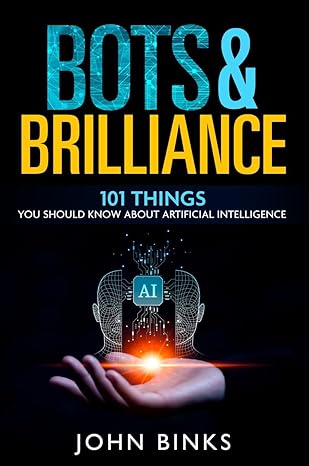
John Binks’ Bots & Brilliance is a crash course in artificial intelligence that reads like a lively conversation rather than a textbook. The book walks readers through 101 essential things to know about AI, from its history and daily applications to its ethical dilemmas and future possibilities. Whether you’re an AI newbie or someone with tech chops, Binks keeps things engaging with humor, real-world examples, and just enough technical depth to make you feel smarter without overwhelming you. It’s part explanation, part think-piece, and an enjoyable ride through the ever-evolving world of AI.
One of the standout features of this book is its knack for making AI accessible. The early chapters, like “AI, A Love Story” and “AI for the Complete Beginner,” strip away the intimidating layers of AI and present it as something we already interact with daily, such as smartphones, streaming services, and even online shopping. Binks compares AI to a “super-smart parrot” that mimics, learns, and sometimes surprises us, a metaphor that sticks. He also dispels common AI myths grounding the discussion in reality without killing the excitement. This approach makes the book perfect for readers who might be curious about AI but don’t want to wade through pages of technical jargon.
The book shines brightest when it explores how AI is already shaping our lives. The chapters “AI in Your Daily Life” and “AI at Work” are packed with examples of how AI is seamlessly integrated into everything from social media feeds to financial markets. Binks’ take on AI-powered streaming recommendations had me chuckling, he describes Spotify’s algorithm as a “magical music cauldron” that somehow knows you better than your best friend. The way he blends humor with insight keeps things engaging, and his examples make you realize just how deeply AI is embedded in everyday experiences.
Binks also doesn’t shy away from the darker side of AI. In The Dark Side of AI, he delves into bias, job displacement, privacy concerns, and the looming question of AI ethics. These are serious issues, but Binks presents them in a way that feels like a necessary reality check rather than fear-mongering. His discussion of AI bias, where AI can inherit and amplify human prejudices was especially eye-opening. He makes a strong case for why ethical oversight is crucial and why we can’t afford to let AI develop unchecked. This section adds depth to the book, making it more than just an AI enthusiast’s handbook, it’s also a call for responsible innovation.
In the end, Bots & Brilliance is a fantastic read for anyone curious about AI, whether you’re a beginner or someone who wants to connect the dots between tech and real life. It’s especially great for professionals trying to grasp AI’s impact on their industries without getting lost in tech-heavy explanations. If you want a book that makes AI feel less like a sci-fi concept and more like an everyday reality, while keeping you entertained, this one’s a solid pick.
Pages: 168 | ASIN : B0CVGP852J
AI Today: OI Tomorrow – The Dawn of Organoid Intelligence: Opportunities, Ethics, and the Future of Humanity

AI Today: OI Tomorrow offers a fascinating exploration of the cutting-edge advancements in brain organoid technology and the emerging field of organoid intelligence (OI). With precision and clarity, Edmund J.B. White chronicles pivotal breakthroughs—beginning with brain cells learning to play Pong—and examines the implications of these lab-grown neural networks. The book delves into their potential to revolutionize biological computing, model neurological diseases, and ignite crucial ethical debates about the nature of intelligence and consciousness.
The book tackles themes of innovation, ethics, and human essence with a dual focus on opportunity and risk. White emphasizes the transformative potential of brain organoids to enhance industries and improve lives while warning of their possible misuse. By weaving philosophical questions into the narrative, he compels readers to ponder the meaning of thought, emotion, and existence in a world where the line between natural and artificial intelligence grows increasingly indistinct. The author’s writing strikes a remarkable balance between accessibility and intellectual depth. Complex scientific concepts are rendered comprehensible without oversimplification, inviting readers of varying expertise to engage fully with the material. The prose shifts effortlessly from awe-inspiring depictions of groundbreaking discoveries to measured discussions of the ethical and existential dilemmas they raise.
Vivid imagery, such as a dystopian vision of a totalitarian regime exploiting brain organoid technology, provokes both fascination and unease. Drawing from cutting-edge research, including Cortical Labs’ 2022 milestone, White offers a thorough account of brain organoid development and its implications. The inclusion of philosophical musings on intelligence and consciousness elevates the discussion, sometimes leaving readers with more questions than answers but the kind that linger and spark further thought.
AI Today: OI Tomorrow is both a scientific chronicle and a philosophical guide, presenting an extraordinary advancement that challenges fundamental notions of intelligence and humanity. White’s ability to distill intricate ideas into an engaging, thought-provoking narrative makes this book an essential read for scientists, ethicists, and curious minds. It is a compelling exploration of a transformative frontier one that demands attention, reflection, and action.
Pages: 260 | ASIN : B0D2Z24L2L
Transforming Business with AI: Sustainable Innovation and Growth
Yashwant Aditya’s Transforming Business with AI is a compelling and insightful exploration of artificial intelligence and its transformative impact on modern life, particularly within the realm of business. The book masterfully combines technical depth, contextual understanding, and practical applications to showcase how AI has reshaped industries and continues to drive innovation. By breaking down AI into its foundational components, Aditya provides a clear explanation of how these technologies work together to create intelligent systems capable of learning and making decisions.
The book’s progression is both logical and engaging. Aditya begins by tracing AI’s evolution from its theoretical origins with Alan Turing to its widespread applications in fields such as finance, healthcare, and manufacturing. This historical narrative is seamlessly interwoven with discussions of groundbreaking innovations, including generative AI and explainable AI (XAI). The author’s meticulous approach extends to critical topics like ethical considerations, equity in AI development, governance frameworks, and the pivotal role of leadership in integrating AI into strategic business visions.
Aditya’s writing is a standout feature of the book. His engaging and methodical style ensures that even complex AI concepts are accessible without being oversimplified. The use of straightforward language and richly descriptive prose allows readers with varying levels of technical expertise to grasp the subject matter. Historical anecdotes and contemporary case studies—such as IBM’s AIF360 toolkit—are thoughtfully included, enhancing both the narrative and the book’s practical relevance. These examples not only illustrate AI’s immense potential but also highlight the challenges it poses.
The breadth of content covered is impressive. Each chapter builds upon the last, creating a cohesive and comprehensive guide to AI’s role in business. Aditya explores critical issues such as algorithmic bias, data privacy, and workforce displacement, providing readers with a balanced perspective on the ethical implications of AI. His emphasis on equitable AI development and ethical considerations is particularly commendable, as it underscores the need for responsible innovation in this rapidly advancing field.
Transforming Business with AI is an indispensable resource for leaders, technologists, and policymakers seeking to navigate the complexities of AI and leverage its capabilities for sustainable growth and innovation. Aditya’s thorough analysis and clear explanations make the book both informative and engaging, ensuring that readers come away with a deep understanding of AI’s profound impact on the business world and the tools needed to navigate its challenges responsibly.
Pages: 152
The AI Lead: Overcoming Data Drag to Accelerate Digital Dominance


Brian Lambert’s The AI Lead delves into the complexities of digital transformation in the age of artificial intelligence. The book positions itself as a strategic guide to overcoming “data drag”—the inefficiencies in data utilization that hinder organizational growth. Through detailed explanations, frameworks like the “Five V’s of Big Data,” and real-world examples, Lambert crafts a roadmap for leaders aiming to harness AI’s transformative power for agility, innovation, and customer-centric strategies.
One aspect I deeply appreciated was Lambert’s focus on breaking down the intimidating process of digital transformation into actionable steps. His emphasis on the “cyberfused collective” as the ultimate goal—a state where data drives every decision—is ambitious yet inspiring. It made me rethink how organizations, large or small, often overlook the foundational role of well-managed data.
Lambert’s writing shines when he bridges technical concepts with leadership strategies. I particularly enjoyed his candid acknowledgment of the challenges posed by “data silos” and “outdated governance.” The writing occasionally felt dense with buzzwords like “AI-enabled strategies” or “digitization vs. digitalization.” While these are critical distinctions, they might overwhelm readers who are less familiar with the jargon. While the book provides a wealth of practical insights, some chapters, such as the one on advanced analytics tools like Apache Kafka, could have benefitted from simpler explanations for broader accessibility.
The AI Lead is a compelling guide for executives, data strategists, and forward-thinking leaders eager to embrace AI’s potential. Its strength lies in its holistic approach—melding data science with organizational change. I’d recommend this book to anyone navigating the digital frontier, especially those seeking practical tools to overcome the pitfalls of fragmented data systems. Lambert’s book is both a wake-up call and a handbook for achieving digital dominance.
Pages: 668 | ASIN: B0CW1HXLRR



 LITERARY TITAN