Blog Archives
The Psychology of Technology


Hal F. Gottfried’s Psychology of Technology dives headfirst into the murky and complicated waters where human psychology meets digital design. From our dwindling attention spans to the creeping influence of algorithms, Gottfried dissects the impact of our screen-saturated world with a blend of personal insight and hard research. Across its chapters, the book charts how digital life is rewiring not just how we work and play, but how we think, feel, connect, and even perceive reality. It’s a thorough, often unsettling look at how deeply the digital frontier has seeped into our minds.
What stood out to me most was the book’s voice. It’s casual, punchy, and brutally honest. Gottfried doesn’t lecture. He talks to you like a friend. He explains complex neurological and behavioral ideas without drowning them in technical jargon. I appreciated how grounded his examples were. Like reaching for your phone during a movie, or reading a news feed that mysteriously only shows you one side of a story. These familiar moments hit home. There were times when the repetition of certain themes, like the dopamine loop or “continuous partial attention,” felt like a warning bell being rung many times. Still, the urgency is warranted, and the message never feels hollow.
I also admired the book’s refusal to just dunk on tech or idealize some unplugged utopia. Gottfried knows we’re not giving up our phones anytime soon, and he doesn’t ask us to. Instead, he offers practical, reasonable ways to set boundaries, reclaim attention, and use tech more mindfully. His writing on the illusion of control created by algorithms was especially sharp. It made me realize how often I feel like I’m making choices, when I’m really just clicking what was nudged in front of me. The chapter on relationships was another highlight. It’s raw, relatable, and a little heartbreaking. It reminded me that sometimes the most human parts of us, connection, empathy, presence, are the ones we trade away for convenience without even noticing.
Psychology of Technology is for anyone who’s ever felt scattered, anxious, or just plain tired after a day online and wondered, “Why do I feel like this?” It’s not a tech detox manual or a scarefest. It’s a wake-up call wrapped in kindness and realism. Whether you’re a digital native, a burned-out remote worker, a worried parent, or just someone trying to stay sane in the noise, there’s something in here for you.
Page: 190 | ASIN : B0DYPK8RS1

Bots & Brilliance: 101 Things You Should Know About Artificial Intelligence
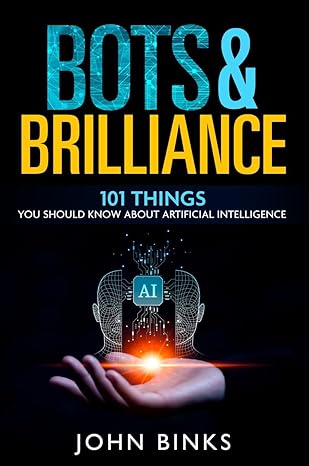
John Binks’ Bots & Brilliance is a crash course in artificial intelligence that reads like a lively conversation rather than a textbook. The book walks readers through 101 essential things to know about AI, from its history and daily applications to its ethical dilemmas and future possibilities. Whether you’re an AI newbie or someone with tech chops, Binks keeps things engaging with humor, real-world examples, and just enough technical depth to make you feel smarter without overwhelming you. It’s part explanation, part think-piece, and an enjoyable ride through the ever-evolving world of AI.
One of the standout features of this book is its knack for making AI accessible. The early chapters, like “AI, A Love Story” and “AI for the Complete Beginner,” strip away the intimidating layers of AI and present it as something we already interact with daily, such as smartphones, streaming services, and even online shopping. Binks compares AI to a “super-smart parrot” that mimics, learns, and sometimes surprises us, a metaphor that sticks. He also dispels common AI myths grounding the discussion in reality without killing the excitement. This approach makes the book perfect for readers who might be curious about AI but don’t want to wade through pages of technical jargon.
The book shines brightest when it explores how AI is already shaping our lives. The chapters “AI in Your Daily Life” and “AI at Work” are packed with examples of how AI is seamlessly integrated into everything from social media feeds to financial markets. Binks’ take on AI-powered streaming recommendations had me chuckling, he describes Spotify’s algorithm as a “magical music cauldron” that somehow knows you better than your best friend. The way he blends humor with insight keeps things engaging, and his examples make you realize just how deeply AI is embedded in everyday experiences.
Binks also doesn’t shy away from the darker side of AI. In The Dark Side of AI, he delves into bias, job displacement, privacy concerns, and the looming question of AI ethics. These are serious issues, but Binks presents them in a way that feels like a necessary reality check rather than fear-mongering. His discussion of AI bias, where AI can inherit and amplify human prejudices was especially eye-opening. He makes a strong case for why ethical oversight is crucial and why we can’t afford to let AI develop unchecked. This section adds depth to the book, making it more than just an AI enthusiast’s handbook, it’s also a call for responsible innovation.
In the end, Bots & Brilliance is a fantastic read for anyone curious about AI, whether you’re a beginner or someone who wants to connect the dots between tech and real life. It’s especially great for professionals trying to grasp AI’s impact on their industries without getting lost in tech-heavy explanations. If you want a book that makes AI feel less like a sci-fi concept and more like an everyday reality, while keeping you entertained, this one’s a solid pick.
Pages: 168 | ASIN : B0CVGP852J
AI Today: OI Tomorrow – The Dawn of Organoid Intelligence: Opportunities, Ethics, and the Future of Humanity

AI Today: OI Tomorrow offers a fascinating exploration of the cutting-edge advancements in brain organoid technology and the emerging field of organoid intelligence (OI). With precision and clarity, Edmund J.B. White chronicles pivotal breakthroughs—beginning with brain cells learning to play Pong—and examines the implications of these lab-grown neural networks. The book delves into their potential to revolutionize biological computing, model neurological diseases, and ignite crucial ethical debates about the nature of intelligence and consciousness.
The book tackles themes of innovation, ethics, and human essence with a dual focus on opportunity and risk. White emphasizes the transformative potential of brain organoids to enhance industries and improve lives while warning of their possible misuse. By weaving philosophical questions into the narrative, he compels readers to ponder the meaning of thought, emotion, and existence in a world where the line between natural and artificial intelligence grows increasingly indistinct. The author’s writing strikes a remarkable balance between accessibility and intellectual depth. Complex scientific concepts are rendered comprehensible without oversimplification, inviting readers of varying expertise to engage fully with the material. The prose shifts effortlessly from awe-inspiring depictions of groundbreaking discoveries to measured discussions of the ethical and existential dilemmas they raise.
Vivid imagery, such as a dystopian vision of a totalitarian regime exploiting brain organoid technology, provokes both fascination and unease. Drawing from cutting-edge research, including Cortical Labs’ 2022 milestone, White offers a thorough account of brain organoid development and its implications. The inclusion of philosophical musings on intelligence and consciousness elevates the discussion, sometimes leaving readers with more questions than answers but the kind that linger and spark further thought.
AI Today: OI Tomorrow is both a scientific chronicle and a philosophical guide, presenting an extraordinary advancement that challenges fundamental notions of intelligence and humanity. White’s ability to distill intricate ideas into an engaging, thought-provoking narrative makes this book an essential read for scientists, ethicists, and curious minds. It is a compelling exploration of a transformative frontier one that demands attention, reflection, and action.
Pages: 260 | ASIN : B0D2Z24L2L
Transforming Business with AI: Sustainable Innovation and Growth

Yashwant Aditya’s Transforming Business with AI is a compelling and insightful exploration of artificial intelligence and its transformative impact on modern life, particularly within the realm of business. The book masterfully combines technical depth, contextual understanding, and practical applications to showcase how AI has reshaped industries and continues to drive innovation. By breaking down AI into its foundational components, Aditya provides a clear explanation of how these technologies work together to create intelligent systems capable of learning and making decisions.
The book’s progression is both logical and engaging. Aditya begins by tracing AI’s evolution from its theoretical origins with Alan Turing to its widespread applications in fields such as finance, healthcare, and manufacturing. This historical narrative is seamlessly interwoven with discussions of groundbreaking innovations, including generative AI and explainable AI (XAI). The author’s meticulous approach extends to critical topics like ethical considerations, equity in AI development, governance frameworks, and the pivotal role of leadership in integrating AI into strategic business visions.
Aditya’s writing is a standout feature of the book. His engaging and methodical style ensures that even complex AI concepts are accessible without being oversimplified. The use of straightforward language and richly descriptive prose allows readers with varying levels of technical expertise to grasp the subject matter. Historical anecdotes and contemporary case studies—such as IBM’s AIF360 toolkit—are thoughtfully included, enhancing both the narrative and the book’s practical relevance. These examples not only illustrate AI’s immense potential but also highlight the challenges it poses.
The breadth of content covered is impressive. Each chapter builds upon the last, creating a cohesive and comprehensive guide to AI’s role in business. Aditya explores critical issues such as algorithmic bias, data privacy, and workforce displacement, providing readers with a balanced perspective on the ethical implications of AI. His emphasis on equitable AI development and ethical considerations is particularly commendable, as it underscores the need for responsible innovation in this rapidly advancing field.
Transforming Business with AI is an indispensable resource for leaders, technologists, and policymakers seeking to navigate the complexities of AI and leverage its capabilities for sustainable growth and innovation. Aditya’s thorough analysis and clear explanations make the book both informative and engaging, ensuring that readers come away with a deep understanding of AI’s profound impact on the business world and the tools needed to navigate its challenges responsibly.
Pages: 152
The AI Lead: Overcoming Data Drag to Accelerate Digital Dominance


Brian Lambert’s The AI Lead delves into the complexities of digital transformation in the age of artificial intelligence. The book positions itself as a strategic guide to overcoming “data drag”—the inefficiencies in data utilization that hinder organizational growth. Through detailed explanations, frameworks like the “Five V’s of Big Data,” and real-world examples, Lambert crafts a roadmap for leaders aiming to harness AI’s transformative power for agility, innovation, and customer-centric strategies.
One aspect I deeply appreciated was Lambert’s focus on breaking down the intimidating process of digital transformation into actionable steps. His emphasis on the “cyberfused collective” as the ultimate goal—a state where data drives every decision—is ambitious yet inspiring. It made me rethink how organizations, large or small, often overlook the foundational role of well-managed data.
Lambert’s writing shines when he bridges technical concepts with leadership strategies. I particularly enjoyed his candid acknowledgment of the challenges posed by “data silos” and “outdated governance.” The writing occasionally felt dense with buzzwords like “AI-enabled strategies” or “digitization vs. digitalization.” While these are critical distinctions, they might overwhelm readers who are less familiar with the jargon. While the book provides a wealth of practical insights, some chapters, such as the one on advanced analytics tools like Apache Kafka, could have benefitted from simpler explanations for broader accessibility.
The AI Lead is a compelling guide for executives, data strategists, and forward-thinking leaders eager to embrace AI’s potential. Its strength lies in its holistic approach—melding data science with organizational change. I’d recommend this book to anyone navigating the digital frontier, especially those seeking practical tools to overcome the pitfalls of fragmented data systems. Lambert’s book is both a wake-up call and a handbook for achieving digital dominance.
Pages: 668 | ASIN: B0CW1HXLRR
Climate Dragon: Treachery, Pestilence & Weirding Weather
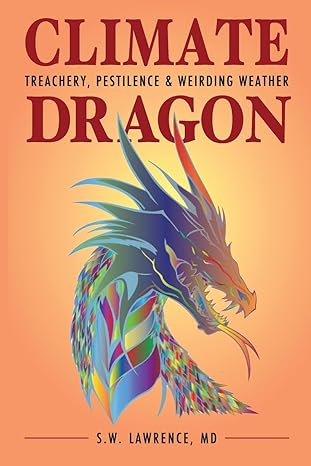
Climate Dragon is a thrilling and intellectually stimulating novel that delves into the multifaceted challenges of our rapidly changing world. Through a mix of speculative fiction, scientific discourse, and suspenseful narrative, author S W Lawrence presents a tale where the existential threats of climate change, cyber warfare, and pandemics collide in a world that feels unnervingly close to our own. The novel’s protagonist embarks on a journey that not only confronts these global crises but also offers a glimpse into the ethical and personal struggles that come with facing such overwhelming challenges.
From the outset, I found Lawrence’s writing to be both engaging and deeply informative. On one hand, the in-depth exploration of nuclear energy, climate science, and cyber threats adds a layer of authenticity and urgency to the story. For instance, the chapter “Quantum Weirdness” meticulously breaks down the intricacies of nuclear physics in a way that is both accessible and relevant to the plot. However, there were moments when I felt the technical exposition might feel overwhelming to those not already familiar with these subjects. Lawrence strikes a delicate balance.
Lawrence crafts characters that are both relatable and complex, each embodying different facets of the larger themes at play. The protagonist’s internal conflict, caught between personal desires and a sense of global responsibility, is particularly compelling. I found the dynamic between the protagonist and secondary characters, such as Emmanuelle and Ben, to be a highlight, adding depth and emotional resonance to the narrative. The portrayal of the protagonist’s evolving perspective on the ethical implications of their actions was thought-provoking, especially in the context of the novel’s broader commentary on climate change and human impact on the planet.
Despite the novel’s many strengths, there are sections where the pacing slows, particularly when the story delves into more technical discussions or philosophical musings. While these segments are integral to the book’s thematic depth, they may not appeal to readers looking for a more fast-paced, action-driven narrative. However, for those willing to engage with these slower moments, they offer valuable insights and add layers of meaning to the overall story.
Climate Dragon is a novel that will resonate with readers who enjoy speculative fiction grounded in real-world science and contemporary issues. Lawrence’s ability to weave complex themes into an engaging narrative makes this book a standout in the genre.
Pages: 298 | ASIN : B0CWPRTVD9
Reshape the Digital Landscape

Let’s Meet Blockchain educates readers on blockchain technology using terminology and examples that even those without a technological background can understand. What were some ideas that were important for you to share in this book?
My goal was to provide a thorough but fun and uncomplicated explanation of not only what the components of blockchain are and how they work, but also how they are being used around the world today using simple, easy-to-understand language. The book is broken down into four sections: Blockchain, Cryptocurrency, NFTs or non-fungible tokens, and Web3. Each section includes a bit of history for context, pop culture references, and websites where readers can go to get their feet wet.
What is a common misconception you feel people have about internet security?
To a certain degree, people assume technology is infallible.
What do you hope is one thing readers take away from Let’s Meet Blockchain?
I want readers to know that blockchain is a movement designed to protect online privacy and offer data protection, while at the same time reducing transaction costs by removing the middleman. It’s still in its infancy with great potential to reshape the digital landscape, upending the way we do business.
Author Links: GoodReads | X (Twitter) | Facebook | Website | Amazon
It’s called blockchain, and it promises to disrupt the way people interact with one another online, whether it’s messaging, banking, keeping up with medical records, land records, booking a vacation, socializing, or voting. Programs are also being developed to use blockchain to serve as one’s identity “papers.”
Blockchain technology is based on the idea that all online transactions should be between two people without the need for public or private third-party oversight. Blockchain technology developers believe thoughts and ideas should be shared, not quashed. It’s a world where web platforms are governed by their members, not a board of directors; privacy comes first, and one’s personal information is kept private, not for third parties to take and sell as they, please.
Blockchain technology offers everyone opportunities to take part. Anyone can participate in the fast-growing world using non-fungible tokens (NFTs), where works of art, music, literature, and poetry can be tokenized and sold or traded on a blockchain.
These components comprise the next generation of the World Wide Web, which is referred to as Web 3.0. Billions of dollars are being spent to create infrastructure to create a viable framework to mainstream blockchain.
This book offers a peek into this new world with examples of how this technology is being used today as well as the hurdles, including legal challenges, it must overcome to be viable.
So, if you’re ready, let’s meet blockchain.
Societal Observations and Reflections

Desuetude follows an elite hunter of dangerous creatures struggling to find her place in an ever-changing world dominated by factories and growing cityscapes. What was the inspiration for the setup of your story?
The inspiration for my story was watching society develop and change, both as a whole and in my personal life. I have a background in the social sciences. This allowed me to see the underlying trends and possibilities for the future impartially. My hometown had transformed over the last fifteen years from about 50K people to 150K people. I watched my world being bulldozed and remade; this was a huge influence on my writing of Desuetude.
How long did it take you to imagine, draft, and write the world your characters live in?
I started the book in 2020. My final first draft was completed in 2022. It took me over another year of editing before I got it copyrighted in 2023. This work taught me a ton as a writer and helped me grow immensely.
There was a lot of time spent crafting the character traits in this novel. What was the most important factor for you to get right in your characters?
Isolation and observation were the most important factors for Desuetude. I wanted Val to seem and feel intensely separate from the world she was thrust into. The other characters she interacts with were designed to have a distant feel to them. Most of the characters don’t have name, and that was done purposely for reinforcing Val’s sense of isolation as Val’s world caves in around her. For the observations, Val was a hunter. Her entire job was to watch, study, and track her query. This translated over to her societal observations and reflections. Being detached gave her a unique perspective on urban life and technology. It gave her an objective view, free of technology’s influence.
I find a problem in well-written stories, in that I always want there to be another book to keep the story going. Is there a second book planned?
No. For this book there will not be a sequel. Val’s story is complete in this one installment.
Author Links: GoodReads | X (Twitter) | Facebook | Website | Amazon
Technological selection is coming. There is only so much land left. Where there were once vast open spaces, there are now never-ending streets. Where there was once plant life, there are now factories and rows of buildings. Progress knows no mercy.
Val is aware of this. She has become a foreigner in her own homeland. Her hunting profession is dying out. Val is struggling to find her place in the new world, but what can one person do in a society that has forgotten them?
Desuetude is the exciting new literary sci-fi from Nicholas “Tac” Whitcomb.


