Blog Archives
The Dreamer (The Black Stone Cycle Book 1)


The Dreamer follows Ash Bennett, a teenager drifting through space with her parents until her life is split open by terrifying visions, mysterious strangers, and an attack that shatters everything she knows. The story blends sci-fi adventure with a deep emotional undercurrent as Ash realizes she may be connected to powers and histories she never understood. The tension builds fast. The quiet opening on the family ship gives way to vivid danger on Phobos, then to loss, rescue, and a strange new path that forces her to decide who she is meant to be. It feels like the start of a much bigger saga.
When I first settled into the book, I expected a familiar space-opera vibe, but the writing surprised me. Scenes snap together in quick bursts. The images are sharp and sometimes dreamy, and they made me feel like I was walking through Ash’s memories and fears rather than just reading about them. I liked that the story never waited around. It pushed forward with a kind of breathless energy, and even the quieter moments carried this low buzz of anxiety that kept me hooked. I found myself caring about Ash morwe quickly than I expected. Her mix of sarcasm, loneliness, and curiosity felt honest. I appreciated that her voice didn’t get swallowed by the big world around her.
As the story unfolded, I felt a tug in two directions. On one hand, I loved the ideas: the fractured past between humans and other species, the mystery around her abilities, and the sense that Ash is tied to something ancient and powerful. On the other hand, the worldbuilding sometimes hit me like a sudden gust. New terms and cultures arrived fast, and I occasionally had to pause to catch up. Still, I liked the rawness of it. The author took risks with emotion, especially when Ash witnesses what happens to her parents. That whole sequence hit harder than I expected. It left me feeling unsettled in a good way. I could feel the shock in my chest as she tried to understand what she’d seen.
By the time I reached the later chapters, I realized I was rooting not just for Ash but for the strange little group forming around her. The mix of loss, found family, and growing danger pulled me in. I liked that the book didn’t wrap things up neatly. It left questions hanging in the air, teasing a bigger truth waiting on the other side. I enjoy stories that don’t talk down to me, and this one trusted me to sit with the unknown.
I walked away feeling both satisfied and eager for the next piece of the story. I’d recommend The Dreamer to readers who enjoy character-driven sci-fi, especially those who love fast pacing and emotional stakes. It’s a good fit for teens and adults who want a world that feels lived-in and messy, with a heroine who is still figuring herself out. If you like stories that blend danger, heartache, and a spark of wonder, this one is worth your time.
Pages: 328 | ASIN : B0G32FG96C

Ghost Brother
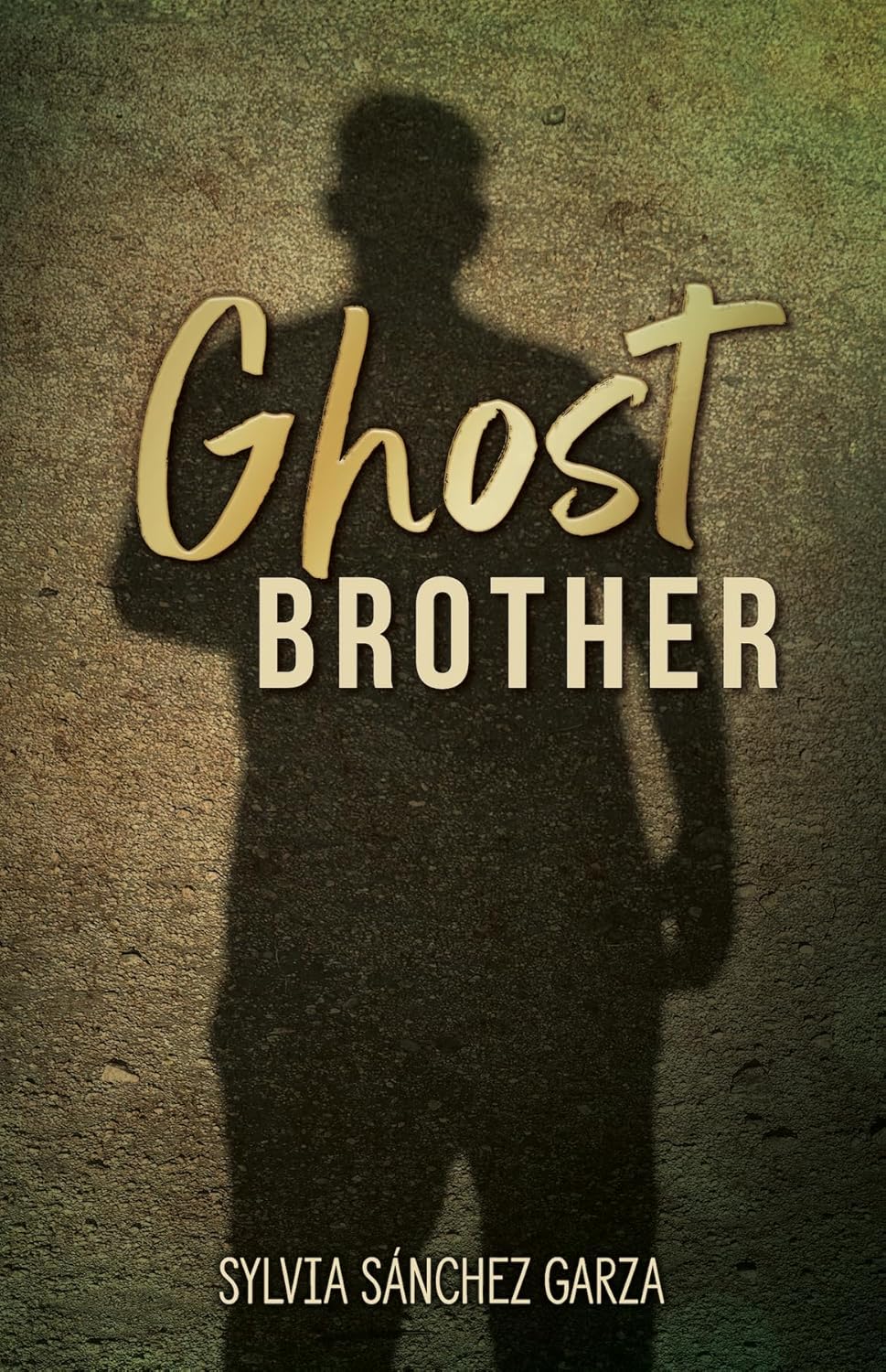

Ghost Brother is a young adult novel that opens with twin brothers, Cris and Carlos, heading to a school dance in South Texas, only for a violent storm, a pair of bullies, and a disastrous crash to shatter their lives. Carlos dies instantly. Cris survives. What follows is a story told in both of their voices, one alive and drowning in guilt, the other watching as a ghost who can see everything but cannot be heard. The book blends grief, memory, and mystery as the brothers struggle, separately and together, to face what happened and what it means for their family.
Reading it felt like sitting with someone who is trying to talk through the hardest moment of their life, stopping and starting, sometimes whispering, sometimes spilling over. The writing is simple and direct, which fits the teen voices. I liked that the author didn’t rush past the emotional fog after the accident. Cris moves through the world as though he’s wrapped in wet cotton, and Carlos drifts with this strange mix of clarity and longing. Their alternating chapters make the tragedy feel bigger and messier because you’re seeing it from both sides of the veil. Some scenes hit with sharp force, like the mother collapsing when she hears the news or Carlos watching her cry and being unable to touch her. Others move slowly, the way real grief does, circling the same memories again and again.
I was also drawn to the author’s choices around culture and community. The book is rooted in Mexican American traditions, beliefs, and rhythms that shape how the characters mourn and how they make sense of death. There’s a spiritual layer here that never feels like decoration. Carlos isn’t just a ghost for plot convenience. His presence echoes the stories their grandmother told, the prayers their mother whispers, the sense that the dead stay close. The supernatural moments glide in quietly, almost like a breeze shifting the curtains. At other times, they feel heavier, especially when Carlos tries to warn his family that the sheriff may twist the truth about the accident. The blend of realism and the supernatural makes the book feel like a hybrid of contemporary fiction and ghost story, but always grounded in teen experience.
By the end, I felt like I’d spent time with a family trying to hold itself together. The story doesn’t pretend grief is tidy or that answers neatly appear. It sits in the uncertainty, in the fear that justice may not come easily, and in the hope that love still stretches across impossible distances. If you like young adult fiction that honestly explores loss and adds cultural depth and a touch of the supernatural, this book is for you. It’s especially suited for readers who appreciate emotional stories that explore family bonds, healing, and the invisible threads that connect us even after death.
Pages: 182 | ASIN : B0CZPLPB7P
Panacea: The Age of AG

Panacea: The Age of AG drops readers into a glossy, engineered utopia in the 31st century, where humanity lives inside massive domes run by an all-powerful artificial superintelligence called AG. Dolthea Thorpe, a sharp and restless teenager can’t shake the feeling that perfection isn’t what it seems. As she questions everything from her society’s genetic design system to the mysterious fate awaiting citizens at age one hundred, readers watch cracks spread through a world that insists it has no flaws. It’s a science fiction dystopian tale that blends sleek futurism with that intimate, unsettling feeling that something is deeply, silently wrong.
Author Richard Carson Bailey’s writing is easy to sink into, especially when he focuses on Dolthea’s sharp observations. The world is bright and carefully built, almost too polished, which seems like the point. I found myself irritated right alongside her when the adults around her shrugged off every uncomfortable truth. The book uses simple scenes to raise big questions, like why no one ever sees a body after someone “goes to sleep” at age one hundred or why teenagers suddenly bolt through the dome in a chaotic stampede. Those moments land not because of spectacle but because they disturb the rhythm of a world that claims to have eliminated disorder.
What I enjoyed most was how the story lets curiosity feel dangerous again. The author doesn’t rush to answer big questions. Instead, he lets tension build through conversations, gestures, even the way a robot tilts its head. Some choices feel intentionally claustrophobic, like the ever-present androids and the parents who seem more like products of their environment than people with thoughts of their own. At times, I wanted the prose to linger longer on emotional beats or dig deeper into the strange beauty of the dome, but there’s something effective about its straightforward style.
I was hooked by both the worldbuilding and Dolthea herself. This is the kind of science fiction that works well for readers who like dystopian stories with clean lines, unsettling questions, and a character who refuses to accept the world she’s given. If you enjoy YA-leaning sci-fi that mixes bright surfaces with creeping unease, you’ll find Panacea: The Age of AG very entertaining.
Pages: 364 | ASIN : B0F5WQ8RMK
The City of Arches

The City of Arches follows Princess Sitnalta as she uncovers a long-hidden letter, one that reveals the past of her mother, Learsi, whose own journey from starving street thief to reluctant partner of the wizard Kralc becomes the heart of the book. It’s a fantasy novel through and through, built on quests, hidden cities, magic, danger, and old wounds, yet it moves with a personal focus that makes the stakes feel close to the skin.
I found myself reacting less to the grand fantasy quest and more to the author’s choices in shaping her characters. Learsi’s early chapters hit me hardest. Her hunger, the cold stone under her bare feet, and the constant weighing of risk and survival felt vivid and relatable. Even her wary dance with Kralc, a man who can feed her, manipulate her, or save her depending on the moment, brought a tension that carried far beyond the tavern scene. The writing is straightforward and sincere. It doesn’t try to dazzle with flowery language, which I actually appreciated. The pace is steady, letting me sit with Learsi’s exhaustion, Kralc’s prickly solitude, and Sitnalta’s shock as she pieces together her mother’s past.
The fantasy elements are threaded in with a kind of quiet confidence. The legend of the City of Arches, for example, is both eerie and oddly beautiful: enchanted arches emitting a soothing song that masks the slow decay of a cursed people. I liked how the author lets the myth sit without over-explaining it. The emotional beats land more softly than dramatically, but they linger. Even the small moments, like Kralc awkwardly realizing he cannot knock on a deaf girl’s door or Learsi racing to shovel stew into her mouth, gave the book a grounded feel. Sometimes the dialogue is earnest, sometimes the plot steps into familiar fantasy rhythms, but those qualities made the story welcoming and easy to follow.
By the time I reached the later chapters, I felt as if the book was less about a magical quest and more about the way people try to rebuild trust after their world has broken apart. The stakes grow, of course, but the heart of the story stays with Learsi and her slow opening up to someone who might actually mean her well. I rooted for her, even when she second-guessed herself or snapped defensively. Her reactions felt real.
I’d say The City of Arches is best suited for readers who enjoy character-driven fantasy: people who like quests but care more about the companions on the road than the monsters in the woods. If you want something gentle yet still full of secrets, something that balances fairy-tale simplicity with emotional weight, then you’ll heartily enjoy this book.
Pages: 226 | ASIN : B0G46P9D3T
Friends and Relationships

The Secret of Spirit Lake follows a 14-year-old who has her life uprooted and finds herself experiencing haunting events in her family’s new Victorian lake home. What was the inspiration for the setup of your story?
I grew up in a small town where everyone knew everyone else, and I actually thought it would be great to move somewhere new where no one knew me. So I decided to write a book exploring the journey of a teenage girl who does just that. The house where I grew up was over 200 years old, and several family members claimed it was haunted, although I never saw or heard anything, and I am actually pretty skeptical when it comes to ghosts. But I find the possibility intriguing enough that it found its way into my story. Also, I moved to a lake in Virginia when I retired, and I wanted to write a story set at a lake.
What is it that draws you to write books for teens and young adult readers?
For the past eight years, I have been volunteering for an organization called Childhelp, which serves children who have been abused and/or neglected. Over that period, I have run several book clubs with some of the older girls, aged 11-14. Having read many young adult books with them, I gained some insight into what types of plots and characters appeal to them. I also have three grown daughters, and I remember the types of books they liked to read as teenagers. I have always wanted to write, and teenagers, especially girls, seemed like a natural target audience for me.
What were some themes that were important for you to explore in this book?
I was interested in how both Amy and Penny face the different challenges that life throws at them, and how they mature as a result. How teenagers deal with hardship. The importance of friends and relationships, even with a ghost.
I find a problem in well-written stories, in that I always want there to be another book to keep the story going. Is there a second book planned?
I am not planning to write a sequel to The Secret of Spirit Lake, because I am not sure where I could go with it. But I am working on a book tentatively titled Glo-kids, which is about teenagers who discover that they are half-alien. They can transform into energy, and they need to fight an evil energy being. It is currently in the editing process, and I am now thinking about a sequel. Writing young adult novels is fun!
Author Links: GoodReads | Facebook | Website | Amazon
Set against the backdrop of a picturesque North Carolina lake, The Secret of Spirit Lake weaves the tales of Amy and Penny, two young girls separated by time yet connected by fate. In 2023, Amy moves into the old Victorian house with her family, feeling lost and resentful of her new life. The transition is daunting, especially with her parents uprooting her from her childhood home and friends. As she grapples with her feelings of isolation, Amy discovers the tower bedroom, where whispers of the past linger.
Eighty-five years earlier, Penny faces her own challenges as a young nanny after losing her parents in a devastating fire. Orphaned and placed with distant relatives, she suspects their intentions are less than noble. Struggling to protect the children in her care, Penny’s resilience shines through as she navigates her new reality.
The connection between Amy and Penny deepens when they encounter Sally, the ghostly nanny who haunts the tower. Sally’s tragic story unfolds, revealing dark secrets and a shared history of loss. As Amy and her friends delve into the mystery surrounding Sally’s past, they uncover the truth about Penny’s fate and the injustices she faced.
Through courage and friendship, both girls embark on a journey of self-discovery, ultimately finding strength in their shared experiences. The Secret of Spirit Lake is a haunting tale of resilience, love, and the bonds that transcend time.
Guiding Principles

Aries I – The King of Mars follows a 13-year-old boy who, after his mother’s death, ends up part of the Mars colony, leading him on a journey of self-discovery and understanding of what survival really means. What were some of the emotional and moral guidelines you followed when developing your characters?
When developing my characters, I followed emotional and moral guidelines rooted in loss, survival, and empathy. The death of my son last year fundamentally changed how I understand pain, resilience, and what it truly means to endure. Grief stripped away any interest I had in shallow motivations or easy answers. From that point on, I felt a responsibility to write characters who carry weight, who hurt, adapt, and keep moving forward, not because they are fearless, but because stopping isn’t an option.
One of the strongest guiding principles was an understanding that all life is engaged in a constant struggle to survive. Whether human, animal, or even systems we build to sustain ourselves, survival is never abstract; it is physical, emotional, and moral all at once. I wanted my characters to reflect that truth. Their choices are often imperfect, driven by fear, love, guilt, or hope, but always grounded in the instinct to protect what remains and to find meaning in continuing on.
Emotionally, I allowed characters to be shaped by loss rather than defined by it. Grief does not disappear; it changes form. I tried to honor that reality by letting characters carry their wounds quietly, sometimes awkwardly, and sometimes in ways that create conflict. Morally, I avoided clear heroes and villains in favor of people making the best decisions they can with the tools they have at that moment. Survival, after all, rarely allows for clean moral lines.
Ultimately, these characters exist because I believe survival itself is an act of courage. Every living thing fights to breathe, to belong, to matter—even in hostile environments. Writing from that place, shaped by personal loss, became a way to acknowledge pain without surrendering to it, and to recognize that continuing forward, however imperfectly, is one of the most human acts there is.
What were some themes that were important for you to explore in this book?
At its core, this book is centered on a single idea: life fights to survive. Everything else grows out of that truth. My experience with loss helped me to see survival, not as something dramatic or heroic, but as something constant and relentless. Life persists even when it is broken, even when it is exhausted, even when it has been reshaped by loss. That realization became the emotional foundation of the story.
I wanted to explore survival in all its forms, not only the physical struggle to stay alive, but the quieter, harder fight to keep going emotionally and morally. Every living thing is engaged in that struggle, adapting to hostile conditions, scarcity, fear, and uncertainty. In the book, survival demands resilience, cooperation, and sacrifice, whether the challenge comes from an unforgiving environment or from the weight carried inside a person’s heart.
The idea that life continues forward also shaped how I approached legacy and responsibility. Survival isn’t only about the present moment; it’s about protecting what remains and making space for what comes next. Even after loss, life pushes forward through memory, through purpose, and through the act of building something that can endure.
Ultimately, this story is about the stubborn persistence of life. It doesn’t deny pain or minimize grief, but it recognizes that choosing to continue—to breathe, to build, to hope—is itself an act of survival. Life may be fragile, but it is also determined, and that determination is what drives the heart of this book.
Where do you see your characters after the book ends?
When Aries I: The King of Mars ends, the story is really just beginning. The characters may have survived the first and most dangerous step, arriving and establishing themselves, but survival is only the opening chapter of a much larger journey. Mars is not a destination that stays still; it pushes back, changes the people who live on it, and forces them to evolve.
Aries, in particular, is only at the beginning of becoming who he will be. By the end of the book, he has proven he can survive, adapt, and contribute, but leadership, identity, and consequence are still ahead of him. Mars will demand more than intelligence and resilience; it will test his values, his relationships, and the kind of future he believes is worth fighting for.
The other characters follow similar arcs. What starts as cooperation for survival will grow into conflicts over control, legacy, and what it truly means to claim a new world. Some characters will rise in unexpected ways, others will fracture under pressure, and alliances that seem solid at the end of this book won’t remain untouched by time or hardship.
In many ways, Aries I is the foundation stone. The next chapters explore what happens after survival, when building, ruling, and protecting a world brings new dangers that are no longer purely environmental. This story was always envisioned as a trilogy, and the later books dig deeper into the cost of leadership, the weight of inheritance, and how far people will go when Mars is no longer just a place to live, but something worth fighting over.
Author Links: GoodReads | X (Twitter) | Facebook | Website | Amazon
At first, Mars is just another hostile frontier, a place for scientists, soldiers, and survivors. But when disaster strikes and no one listens to the boy who knows the colony best, Aries must choose: follow orders or forge his own path.
What begins as rebellion becomes legend. Alone among the wreckage, Aries discovers that survival means more than oxygen and water, it means leadership, courage, and the will to challenge Earth itself.
In a world where every breath is borrowed, one boy dares to claim a planet.
The Secret of Spirit Lake

In The Secret of Spirit Lake, a young adult mystery with a gentle paranormal twist, we follow fourteen-year-old Amy, yanked away from her old life and dropped into a big yellow Victorian on a quiet Virginia lake. She ends up in the tower bedroom, where strange things start happening that point to a girl named Sally who used to live there. The story moves back and forth between Amy’s present-day summer of swim practices, new friends, and family tension, and the late 1930s life of a farm girl named Penny whose path slowly, uneasily, begins to overlap with the lake and the house Amy now calls home. The mystery sits in the space between those timelines, asking what really happened at Spirit Lake and what it means for the people still living there.
I really liked how the book uses that alternating structure. At first I was more invested in Amy, mostly because her voice feels so familiar: grumpy about her parents, irritated by younger siblings, convinced no one understands her, then slowly softening as she gets pulled into swim team life and real friendship. But Penny’s chapters crept up on me. Her world is harder and narrower, full of chores and exhaustion, and then that terrible fire that takes her parents hits with real emotional weight. The mystery works because those two stories start to rhyme. Amy is lonely and displaced; Penny is lonely and trapped. Sally is caught between them as a literal ghost, but also as this symbol of what happens when adults fail kids. The writing itself is clean and straightforward, the kind of YA prose that trusts younger readers to keep up while still feeling approachable. Short chapters keep things moving, and the ghost scenes are eerie without ever turning into nightmare fuel. There is a soft, almost cozy feel to a lot of the pages, even when the subject matter is dark.
What stood out to me most was the way the author chose to center safety and care instead of just creepiness. The ghost is sad more than scary, and the book keeps circling back to the question of who looks out for children when their parents can’t or won’t. You see it in Penny’s encounters with the state worker at the hospital, who is doing her best inside a rigid system, and in how Lucy and Henry neglect and emotionally abuse Hal and Millie behind the façade of a beautiful lake house. You see it again in Amy’s realization that her “annoying” little siblings are actually kind of adorable when she lets herself pay attention, and that her parents, while imperfect, are trying very hard to give their family a better life. As a YA mystery, the book leans more emotional than plot-twist-heavy, and sometimes the coincidences that help the girls solve the decades-old case feel a little convenient, but the emotional payoffs mostly earned my trust. I cared more about Millie hugging her long-lost brother on a sunny balcony than about every logistical detail lining up perfectly.
By the end, I felt like I’d spent a summer at the lake myself, watching Amy grow into her own skin, cheering through swim meets, and then sitting up way too late trying to fit together scraps of diaries and old letters with her and her friends. The paranormal element stays light, but the feelings underneath are not. The Secret of Spirit Lake is the kind of YA mystery I’d hand to a thoughtful middle schooler or young teen who likes ghost stories that are more about healing than horror, or to adults who enjoy warm, character-driven young adult fiction with a bit of intrigue. It would fit well in school and library book clubs, especially with readers who are ready to talk about grief, neglect, and found family in a safe way.
Pages: 335 | ASIN : B0FLM38VSC
Friendship and Abandonment

High School Epic follows a teenage girl through her high school years in the early 1990s who struggles with issues of abandonment and with discovering who she is and who she wants to be. What was the inspiration for the setup of your story?
My own life is definitely the inspiration for High School Epic. I had a friendship and boyfriend breakup at the onset of high school that resulted in a type of heartbreak that only emphasized the feelings I had buried of abandonment from when my father left us (the first time) when I was six. Although he did return and remain with my mother for another 11 years, their relationship was shaky at best. Deep down, I was always anticipating when he would leave again for good.
In many contemporary coming-of-age novels, authors often draw on their own life experiences. Are there any bits of you in this story?
Yes! Every event is based on real events from my middle and high school years. Characters are derived from real friends and classmates. The main character has traits that are similar to me, but she really is her own person and not me.
What were some themes that were important for you to explore in this book?
Friendship and abandonment are the most important themes in the book, even within the context of the romance that happens.
What is the next book that you’re working on, and when can your fans expect it out?
I have a current project that is part memoir and part short story collection, all with the themes of relationships, love, loss, and heartbreak. I’m hoping it will come out sometime by the end of next year.
Author Links: GoodReads | X (Twitter) | Facebook | Website | Amazon
Left behind, Dani meets Kevin Martin, an outsider who seems to give her everything her world is missing. Until betrayal cuts deep, leaving her reeling once more. Dani’s circle keeps reshaping again and again: new friends like Ryan O’Leary offer comfort, while old wounds resurface.
Through each season of high school, Dani is tested through heartbreak, mistakes, and hilarious missteps, as she wrestles with who she is and who she wants to be.
Told in a unique blend of letters and chapters, Hannah R. Goodman’s HIGH SCHOOL EPIC captures the chaos of teenage life in the early 1990s with raw honesty, humor, and heart.



 LITERARY TITAN