Blog Archives
The Truth About God

Is There Evidence for God?: An Economist Searches for Answers examines the question, “is there a God?” and provides readers with a researched-based look at the question. Why was this an important book for you to write?
I always wondered about God. When my ninety-year-old Mom suddenly told me she didn’t think God was real, nor was there anything after death, I had no answers. My belief in God was based entirely on what others had told me. From a logical standpoint, believing in something because others told you it was true, is unacceptable. I felt a need to approach questions about God as I had approached so many difficult research projects. My objective was to seek the truth about God wherever it might lead.
What were some ideas that were important for you to share in this book?
The most important idea is that there is a great deal of evidence for God. The scientific research on life after death, on miracles, and on personal experiences provides a great deal of evidence. More evidence comes from religions of the world and holy books. Evidence since Biblical times strongly points, not only to the existence of God, but to what he is like and what he wants from us.
How much research did you undertake for this book and how much time did it take to put it all together?
I spent over a decade working on this project. After the incident with my mom, it took me a long time to determine how to approach such a unique project, as well as the potential life-changing implications for what I might find. I decided to begin with an examination of atheist beliefs. If their case for not believing in God was strong enough, my project would come to an abrupt end. After reviewing the atheists’ arguments, the magnitude and expanse of the project became apparent. In order to deal with the atheists’ arguments, I would have to study history, philosophy, archeology, science, theology, religions of the world, religious texts and other events in a search for answers.
What do you hope is one thing readers take away from your book?
The main point I hope readers will take away from my book is how there is an overwhelming amount of evidence for God. The more I examined the evidence, the more I sought a closer relationship to God. My great hope is that others will take a journey similar to mine. Search for God. Find Him. Then, experience the incredible love, peace, and serenity only God can provide.
Author Links: Amazon | GoodReads
As an economist who has written five books, I had spent more than half a century researching complex economic issues. I decided it was time to embark on what would become my most ambitious project ever, the search for evidence for God and answers to the big questions in life.
While there are many ways to search for God, my approach had to be different. It would be logical and systematic. I would approach the project as Mr. Spock, the fictional character from Star Trek, who would meticulously examine evidence, weigh the odds, and reach a logical conclusion.
My approach involved examining atheists’ views, looking into evidence for life after death, searching for the evidence surrounding the world’s religions, and exploring post-Biblical evidence for God.
My quest lasted many years. It had all the sensations of an Indiana Jones movie—frightening discoveries, sleepless nights, and fulfilling Ah-ha! moments with background music. There were unpleasant moments when I became terribly discouraged and depressed, times when I wanted to throw in the towel, took time off and even considered quitting. This book takes you through my search for the evidence for God. If you decide to come along, I must warn you—a quest for evidence of God can produce some disturbing discoveries. If you are anything like me, there will be times you will wish you never started, times you question long-held beliefs, times you want to quit, and times you’ll be glad you didn’t.
I invite you to join me on what became the journey of a lifetime, my search for evidence for God.
A Successful Next Life

“What Is Life About? – Life Is About the Soul” takes readers on a transformative journey of self-discovery and purpose, exploring various aspects of life from a refreshing and accessible perspective. Why was this an important book for you to write?
This was to be the central theme for a six book series that would help people to have a successful next life. People go through life and learn a great deal about many things that in the end do not matter. The things that matter are related to whatever helps them succeed. Nothing is more important than the basics and the most basic thing is that their existence continues past death. Thus life is about the soul since it is forever.
Can you share some insights into your approach to discussing God and how readers can establish a personal connection with the divine?
There is only one way to connect with God and it is His way. It cannot be my approach for what do I know about things outside our realm?
What are some practical steps readers can take to apply the lessons from your book in their daily lives?
The things that are practical may be that there is nothing that would seem practical. The emphasis is on the spiritual and in that sense there are practical everyday things. Such as avoiding sin, seeking God and following th The things that are practical may be that there is nothing that would seem practical. The emphasis is on the spiritual and in that sense there are practical everyday things. Such as avoiding sin, seeking God, living characteristically with these things:love, joy, peace, longsuffering, kindness, goodness, faithfulness, gentleness, and self-control.
What do you hope is one thing readers take away from your book?
Life is short and you need to get it right. God wants you to succeed but you need to overcome what you want from the world and live for Christ.
Author Links: Facebook | Website
Certainly, science has dominated the thinking of much of the world. Typically, that means claiming directly or indirectly that God does not exist and that everything, including humanity, happened naturally. Their allies are the size of the universe and the age of everything. The “apparent” conclusion is God was not required. This is wrong on so many levels, and they will be discussed in their obviousness. It turns out the most significant ally of those who reject God, and particularly the God of the Bible is because they want no God, no rules. Thus we have a nice fit between what science teaches and the people who will not be aggressive in considering anything different. The science story is overwhelming with tremendous graphic displays, movies, grand discussions of DNA-related matters, tons of supposed evidence like the fossil record, and the dedication of thousands of careers devoted to nothing else. However, like all matters, you cannot build a conclusion any stronger than the weakest link. If you can accept the weak link as being true, then the story might seem to be true. As it turns out, the Theory of Organic Evolution and the Theory of The Big Bang has many foundational problems. Although those will be revealed, there is a more powerful way to debunk these theories by providing the truth about our existence, and there are no foundational problems.
Is There Evidence for God?


In Is There Evidence for God?: An Economist Searches for Answers, author Robert Genetski embarks on a compelling exploration of religious beliefs, existential questions, and the intricacies of faith. Drawing on his background as an economist, Genetski offers unique insights and informed perspectives on a range of topics, from the existence of God and life after death to miracles and atheism. Throughout the book, he shares personal anecdotes and inspiring stories that have shaped his own spiritual journey, inviting readers to reflect on their beliefs and form their own perspectives.
Opening with the thought-provoking question “To believe or not to believe,” Genetski sets the tone for a balanced and inquisitive examination of faith. He approaches each topic with logical reasoning and thorough explanations, ensuring that readers are given a comprehensive understanding of the subject matter. Moreover, Genetski’s objectivity and intentionality in presenting his findings make for a refreshing and engaging read.
The book’s structure lends itself well to an organized and systematic exploration of complex themes. Divided into five distinct parts, Genetski delves into topics such as the concept of an eternal God, supernatural life, world religions, and evidence of God in the contemporary world. The fifth section, a more personal account of the author’s own experiences and lessons learned in his search for God, provides a captivating and intimate touch.
One standout topic is the examination of world religions, which offers readers an enlightening and unbiased look at the doctrines and practices of Hinduism, Judaism, Buddhism, Christianity, Islam, and other faiths. Additionally, the discussion of historical divine sightings and events, such as the children of Fatima, Jesus’ burial garments, and the occurrences at Tepeyac Hill, Mexico, in 1531, provides intriguing evidence for those seeking to understand the divine.
I highly recommend this book to those interested in religious studies and history. Genetski’s impartial and informative approach will appeal to readers seeking to broaden their understanding of faith and engage in thoughtful reflection on their own beliefs.
Pages: 216 | ISBN: 0998222720

He Would Inspire Me To Write

Godly Riddims is an inspirational book sharing with readers the mysteries of God. What was the inspiration for the original and fascinating idea at the center of the book?
The inspiration for this book was my worship with God. As I would worship God, he would give me downloads as he would inspire me to write, and that’s why Godly Riddims was formulated.
What were some ideas that were important for you to share in this book?
Some ideas that are important to me are revealing the mysteries and twists of God in his word by putting hits and bits of his word in the book, which will bring forth a greater revelation of God.
What do you hope is one thing readers take away from your book?
One thing I want readers to take away from my book is to establish a bond with God, as they seek him in Spirit and truth. However, seeking God is one of the most life-changing experiences because it will change your life and open you to a new world of experience.
Is this the first book in the series? If so, when is the next book coming out, and what can your fans expect in the next inspirational book?
Yes, this is the first book of the series. However, the next book is coming out shortly and the name of it is called Circles of God. This book is more exciting because the poems are even more powerful than the first.
Author Links: Amazon | Facebook
Dianne Lindsay’s first book will enlighten people and give them a burst of joy and laughter about who God is and what he is about. Captivating and breathtaking, this book stands apart because it gives and sharpens understanding.
In Godly Riddims by Dianne Lindsay, we experience the great joy of laughter as we become encouraged by the words of God and the word that is utilized in the text. As the Bible states “iron sharpens iron” so this book sharpens the understanding of a person’s knowledge about God, as they’re encouraged by him.
Self-Actualization in the Age of Crisis

Self-Actualization in the Age of Crisis by R. Rivers is a book that discusses the human experience: the crises, life’s encounters, and many other developments within a lifetime. The author writes comprehensively about several major topics as they relate to humanity in a technical but well-thought-out manner that makes it easy for the reader to follow. Each of the chapters has a technical theme and tackles various concepts, including divinity, individual actualization, and the age of crisis.
Rivers delves deeply into many aspects of our existence, which makes this book an interesting, thought-provoking read. From the start, we are invited to examine the universe, its vastness, and all the elements that we can’t control but impact us differently. Using simple but observable illustrations, Rivers discusses the various ways of human growth, experience, evolution, technology, and from various perspectives: the past, present, and future. He does a great job of educating readers on how to grasp the unknown components of life and the universe.
Every topic was eye-opening and held my attention, with graphics and engaging language that kept me reading from one chapter to the next. Reading this book is a great step toward becoming more self-aware and learning about how we interact with our environment, other people, and occurrences in our life. I like the style of writing and language, which keeps the book consistent and interesting. I highly recommend Self-Actualization in the Age of Crisis by R. Rivers as a compelling, intelligent read.
ASIN B0BCXF9ZK3 | Pages: 509
The Church of God or Church of Man
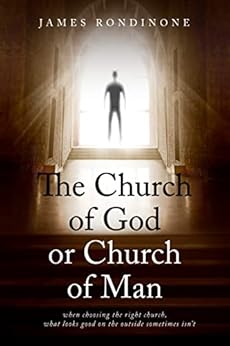

The Church of God or Church of Man by James Rondinone helps believers choose churches that align with God’s ways and the teachings of the Holy Scripture. The author wrote an essential book for Christians, as many may not be aware of what goes on in the churches that they attend and how ministers, bishops, and pastors run their places of worship. In this book, Rondinone includes biblical references, how to worship, and what to look out for in a pastor and a church.
While some people may find this book a bit controversial, the author’s aim is to improve Christian worship and the growth of churches worldwide. I appreciate how Rondinone is raw and writes about the good, bad, and ugly sides of what’s often concealed in places of worship. His intentions are clear in that he aims to guide individuals to find a church with high leadership standards and scriptural ideas. It’s essential and vital to ask questions before joining a church, and the author offers a comprehensive checklist with features often skipped or forgotten.
Rondinone provides an in-depth look at the importance of joining a place of worship with programs for various groups, such as men, women, youth, children, and ample accommodations for weddings, social gatherings, and community involvement. He also invites readers to review a church’s principles concerning being a charitable ministry, how well leadership supports members, and other elements that contribute to being an excellent place to worship. The author also covers the ability of a church to closely follow the doctrines of the Christian faith, if the leadership is qualified, and how they ordain pastors and ministers. The book thoroughly delves into all aspects of practicing one’s faith and finding the right church for worship and community.
The Church of God or Church of Man by James Rondinone is a respectful, insightful look at churches and a guide for Christians and those unfamiliar with organizational structures and scriptural ideas. It’s a compelling read, and I recommend it as it brings positive changes and guidance in finding the right path for worship while promoting well-organized churches and supportive ordained leaders.
ASIN B0BRQVPHS8 | Pages: 126
Our Endeavor For Eternal Life

A Fresh Look At Living Forever looks at the question of evolution vs. creation using both religion and science to support your views in a meaningful way. What inspired you to write this book?
Once I was introduced to the theory of evolution, I was inspired to determine which one was more realistic, creation or evolution. I decided to start with the one I was most familiar with first which is religion. Once I started my research, it didn’t take long for me to realize that I needed to take notes on all the information I was accumulating. Frankly it was too much information to remember. After creating and organizing my personal notes, I soon realized that there is a lot of information about our religion that many people may not know about. Providing this information for interested readers was my inspiration.
What were some ideas that were important for you to share in this book?
One of the most important ideas to me was about who is God and what being the Most High is all about.
Another important idea is the three major concepts that guide us to the will of the Most High and aid us in our endeavor for eternal life as promised by the Most High. A third important point is the misconceptions that reign in our religions.
What is a common misconception you feel people have about creation?
I’m not sure about people’s misconception about creation but I am sure about misconceptions most people have about religion, believers and nonbelievers, which is based on misinterpretations or bogus information. The most common misconception people have is about what happens to us after we die.
What do you hope is one thing readers take away from your book?
Seeking eternal life is a straight forward and simple process and not as burdensome and difficult as most people think.
Author Links: GoodReads | Amazon
With clear answers to your deepest questions, Donald L. Thomas guides you through the questions that call from your soul.
If you’re a curious person, A Fresh Look at Living Forever takes you to the source of ultimate wisdom. With information from historical records and scientific discovery, nothing is ignored in this essential guide.
What Happened on Saturday
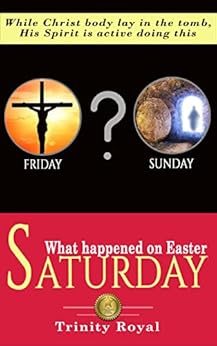
What Happened on Saturday is an illuminating book that delves into the thirty-six hours between the death and resurrection of Jesus Christ.
One of the standout features of this book is the way it weaves together historical facts with compelling storytelling, creating a rich and immersive reading experience. I enjoyed this thought-provoking book as it presents a well-researched argument on the topic. Even though the author acknowledges that there is more than one interpretation the author provides plenty of facts, research, and personal experiences to bring clarity to a subject that many think is lost to time.
Author Trinity Royal uses easy-to-understand language throughout the book, which removes the scholarly veil which has shrouded the subject and makes it easy to understand and deeply compelling to the general public. If you are at all interested in the events that took place during the thirty-six hours between Christ’s death and resurrection, I highly recommend this book because it brings excellent lucidity to a short but important period in history.
This informative book provides a wealth of history and facts to support the research and personal experiences shared within. This is a must-read for theologians, and devotees, and will also be valuable to anyone with an interest in history. It is incredibly enlightening and reveals new insights about Jesus and his teachings. This is an impactful book that answered many of my lingering questions, offered profound new questions and answers, and helped me strengthen my spiritual connection.
I highly recommend What Happened on Saturday to anyone seeking to understand Christ’s life better, or to readers who have always wanted to know what happened between the time of Christ’s death and resurrection. What Happened on Saturday is a thought-provoking and engaging read that is sure to appeal to readers.
Pages: 73 | ASIN: B0BMZP4F8N



 LITERARY TITAN